
Crisol: Theater of Idols – Review

La Isla Tormentosa
You’ve surely heard of Blumhouse, the famous American production company that has delighted us with films like Paranormal Activity, Insidious, The Purge, Five Nights at Freddy’s or even Whiplash, for the more discerning cinephiles. The idea behind the company was to allow unknown directors to bring their vision to life, benefiting from complete creative freedom and a relatively low budget compared to giant Hollywood productions. The first film to follow this model was Paranormal Activity itself, which had a budget of just $15,000 and grossed $193 million globally. Although the company’s initial focus was the horror genre, the production house also tried its luck with other genres, such as drama or comedy, and recently expanded its activity beyond films for the big and small screens.

In an attempt to become a transmedia company, Blumhouse Productions founded the Blumhouse Books division in 2014, to offer a chance to writers and screenwriters who were not taken seriously by large publishers, and in 2023, the famous production house launched Blumhouse Games, a division specialising in original horror games. Unfortunately, it doesn't function as a developer itself, but as an incubator and distributor, providing different teams with the necessary tools to create interesting titles. As with films, the gaming division's mantra has remained the same: small budgets and absolute creative freedom. Even if a budget of $10 million might seem large, in the world of game development it represents a relatively modest sum for projects with AA or even AAA ambitions.
In the short time since its establishment, Blumhouse Games has announced and funded no less than seven different projects:
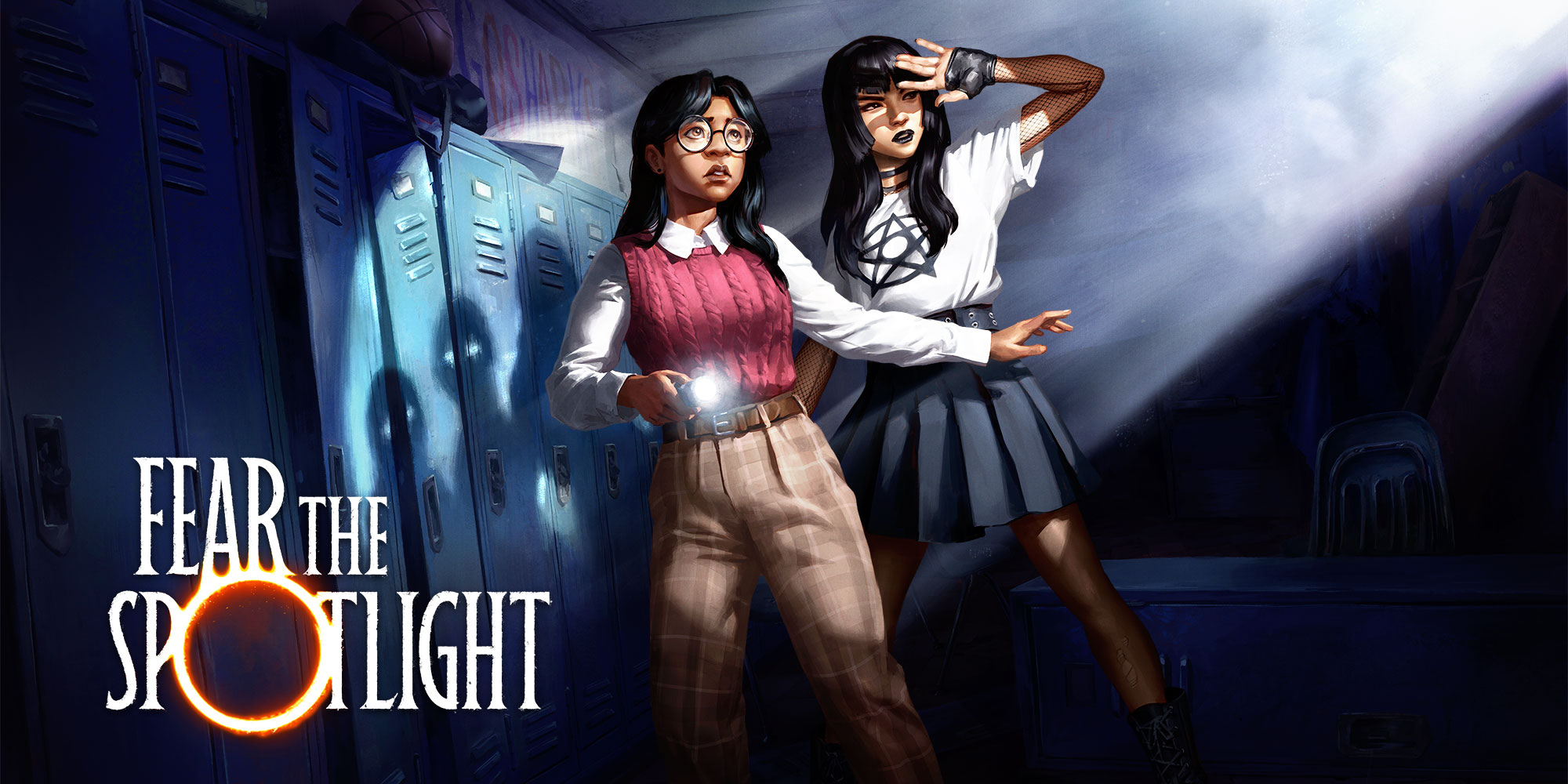
- Fear the Spotlight, by Cozy Game Pals;
- Eyes of Hellfire, by Gambrinous;
- Sleep Awake, by Eyes Out;
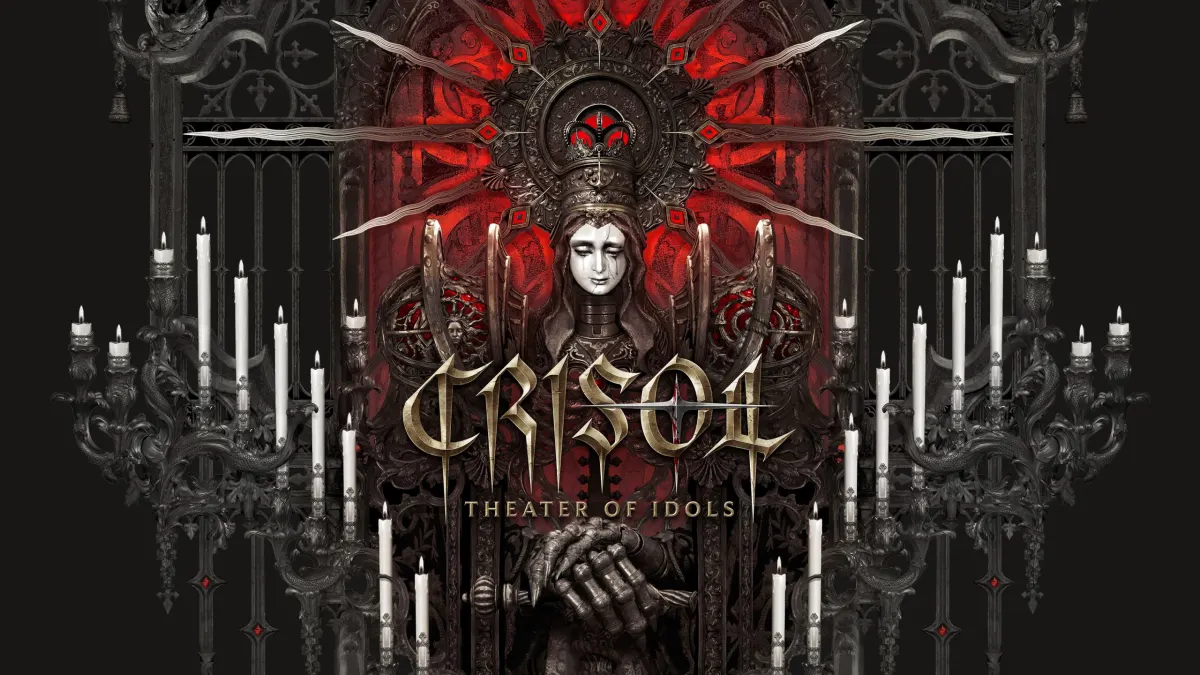
- Crisol: Theater of Idols, by Vermila Studios;
- Grave Seasons, by Perfect Garbage;
- The Simulation, by Playmestudio;
- Project C, by Half Mermaid Productions.
As you can see, all of them have two common elements: they are indie titles and belong to the horror genre. From the initial presentation at Summer Game Fest 2024, the titles that stood out the most were Fear the Spotlight and Crisol: Theater of Idols. The first was an interesting, short experiment, lasting about three hours, in which two high school students try to escape a haunted school after a disastrous attempt to communicate, using a Ouija board, with the spirits of students who perished in a fire. Although it was very well received, its relatively short duration made many players and critics reluctant to call it a proper game, which is why it was included among the titles offered by Epic Games during Halloween week in 2025.
Fortunately, the situation is not the same for Vermila Studios' creation. Crisol: Theater of Idols is a full-fledged game, inspired by the best survival horror titles of the last 20 years. The marketing materials piqued the curiosity of many players due to its typically Spanish aesthetic, unmistakable cultural elements, and strong religious influences that underpin both the game and the story. Unfortunately, the final result fails to live up to the expectations created, and Crisol would certainly have been one of the must-play titles of the year if it had benefited from another six months of development. As we've accustomed you to by now, let's start with the story!
Crisis of Faith
The narrative thread in Crisol: Theater of Idols is a peculiar one. Silviu recently said, in his review of Saros, that the game is dragged down by a story that is too human, in the most banal sense of the word. Crisol does the exact opposite: it manages to humanise the gods and show us that behind a perfect facade lie emotions and egos that are all too familiar. To my great disappointment, the narrative thread fails to elevate the title due to the poor quality of the script.
Let's get back to it. Crisol: Theater of Idols takes place in an alternative version of 20th-century Spain, where Catholicism has been replaced by the religion of the Sun. Although similar in almost all respects to the Christianity we know, as well as to the unmistakable aesthetic of Spanish Catholicism, the religion of the Sun differentiates itself through its central figure: the Sun god, an omnipresent entity who speaks directly to the most faithful of his parishioners. And, unlike the real world, where you'd be sent straight to a mental institution if you claimed God contacted you telepathically, here you'd be considered a true believer. Thus, the protagonist of Crisol, Gabriel Escudero, a former soldier, is chosen by the Sun god to investigate the disappearance of believers from the island of Tormentosa. The island, recently shrouded in a perpetual storm, welcomes us with open arms and bared fangs, but also with a ravenous hunger, as the protagonist is the sole survivor of the shipwreck caused by the extreme meteorological phenomena that hide the island from the all-seeing eye of the deity.
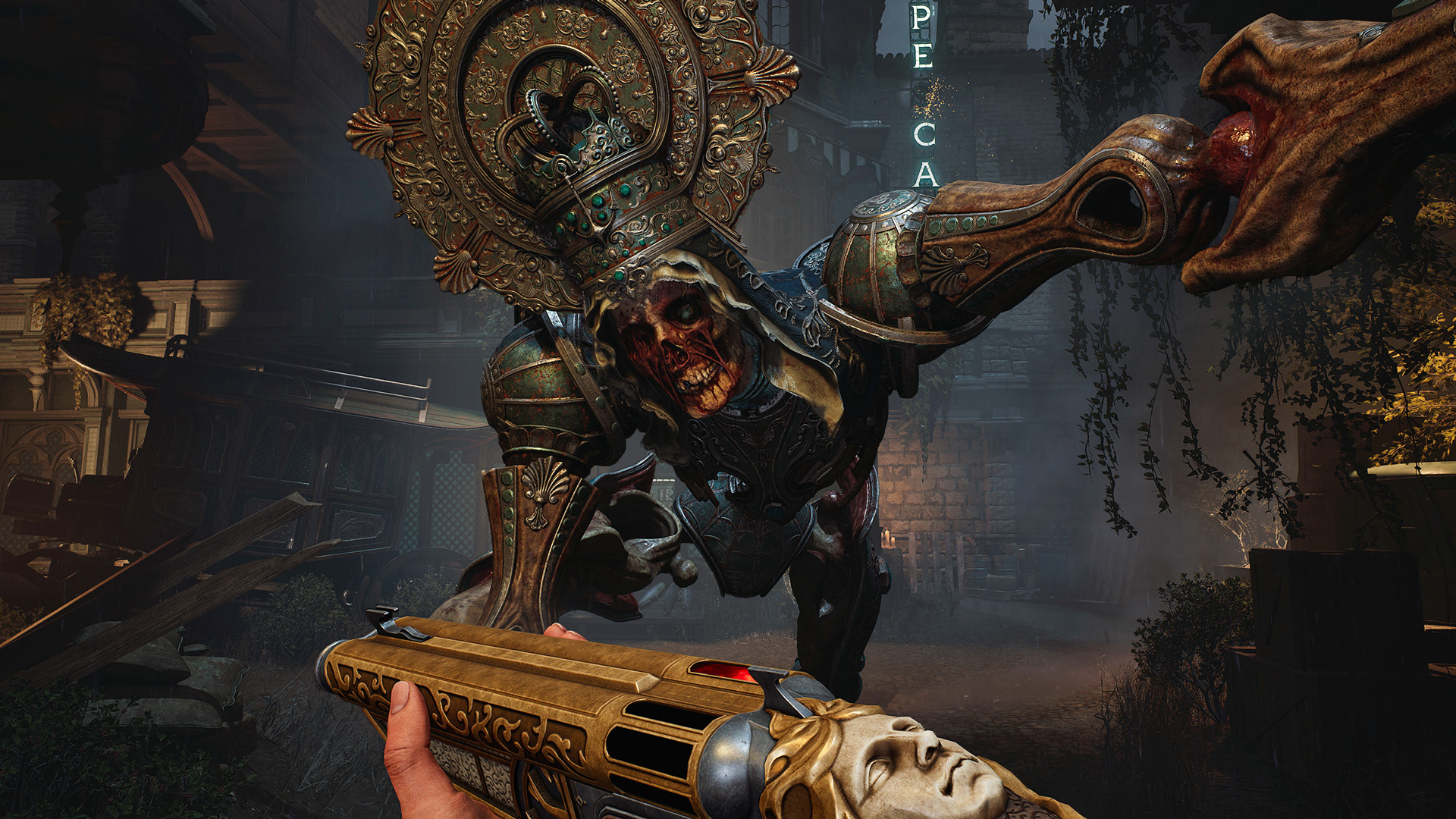
Here, in these foreign lands, Gabriel discovers a civil war between the followers of the Sun and those of the old faith, a form of paganism that worships the sea and has radically altered the creatures on the island, transforming them into marine creatures adapted to life on the surface. But the influence of this faith is not limited to living beings; it also affects the religious statues on the island, bringing them to life and using them as weapons against those who follow the Sun's faith.
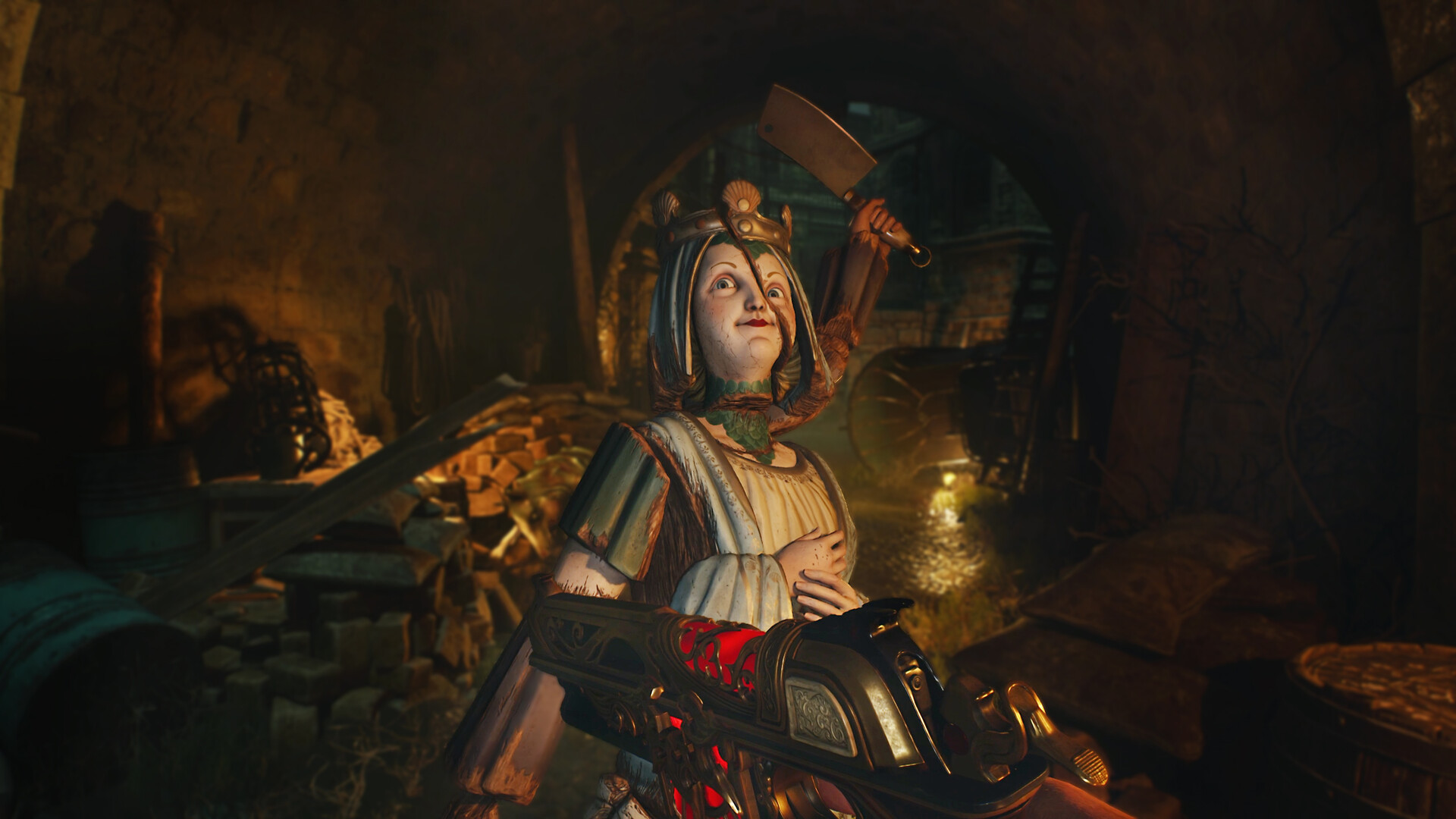
Gabriel's mission is simple: to kill the sea god. Nothing goes according to plan, however, when the protagonist discovers that the annihilation of a deity cannot be achieved through barbaric methods, such as shooting them, but through complex rituals. In this case, these involve using magical knives, forged from the blood of Tormentosa's four founding families. Said and done, nothing simpler than hunting for some MacGuffins!
This seemingly simple premise quickly reveals a complex world and an uncomfortable truth about the Sun god, and Gabriel finds himself in an internal struggle where his faith and relationship with the divine are questioned. This literary device, common in video games, is used effectively in Crisol, but everything goes to pot due to a rushed ending that tries to answer all questions at once. As expected, and as I mentioned a few paragraphs earlier, the two warring gods are not perfect, and the presentation of divine sins is interesting and casts certain aspects of the story in a different light. Unfortunately, the big surprise at the end spoils the charm of the narrative, invalidating most of the actions and events in the game and making some of them even illogical.
Imperfection of the Gods
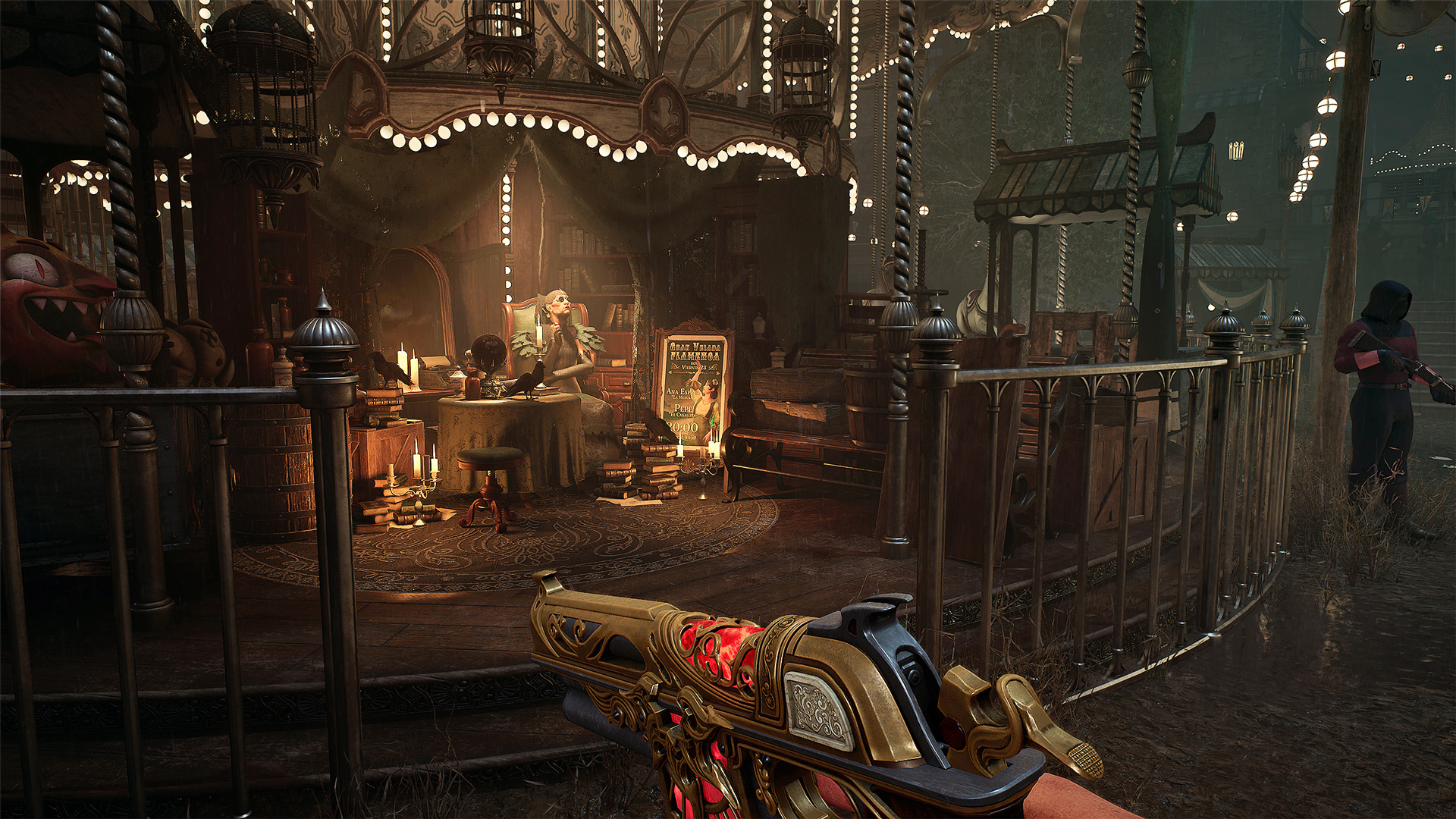
The game is a horror-tinged FPS, inspired by classic titles like Bioshock or Dead Space, reinterpreted through a Catalan sensibility. Unfortunately, the central mechanic, i.e., shooting, isn't as responsive as you'd expect. Gabriel moves sluggishly, as if he's limping or has a nasty muscle strain in his legs, and aims his weapon as if he's underwater. To differentiate itself from other titles, Crisol introduces a unique reloading mechanic: the weapon uses the protagonist's own blood. In theory, reloading comes with a massive cost, namely significant chunks of the health bar. In practice, however, this risk-and-reward mechanic only becomes a problem in the first area of Tormentosa, where healing items are rare. Starting from the next level, the problem disappears, due to the large number of corpses we can find. If something seems wrong with what I just told you, here's the explanation: the Sun god offers Gabriel divine blood to combat the horrors on the corrupted island, and this serves as ammunition against the dark influences of the sea god. The protagonist must, however, restore his health, and healing occurs through two methods: using plasma syringes or a form of blood-magic, which allows the transfer of blood from discovered corpses directly into the protagonist. Don't bother with blood types, Gabriel is probably a universal recipient.
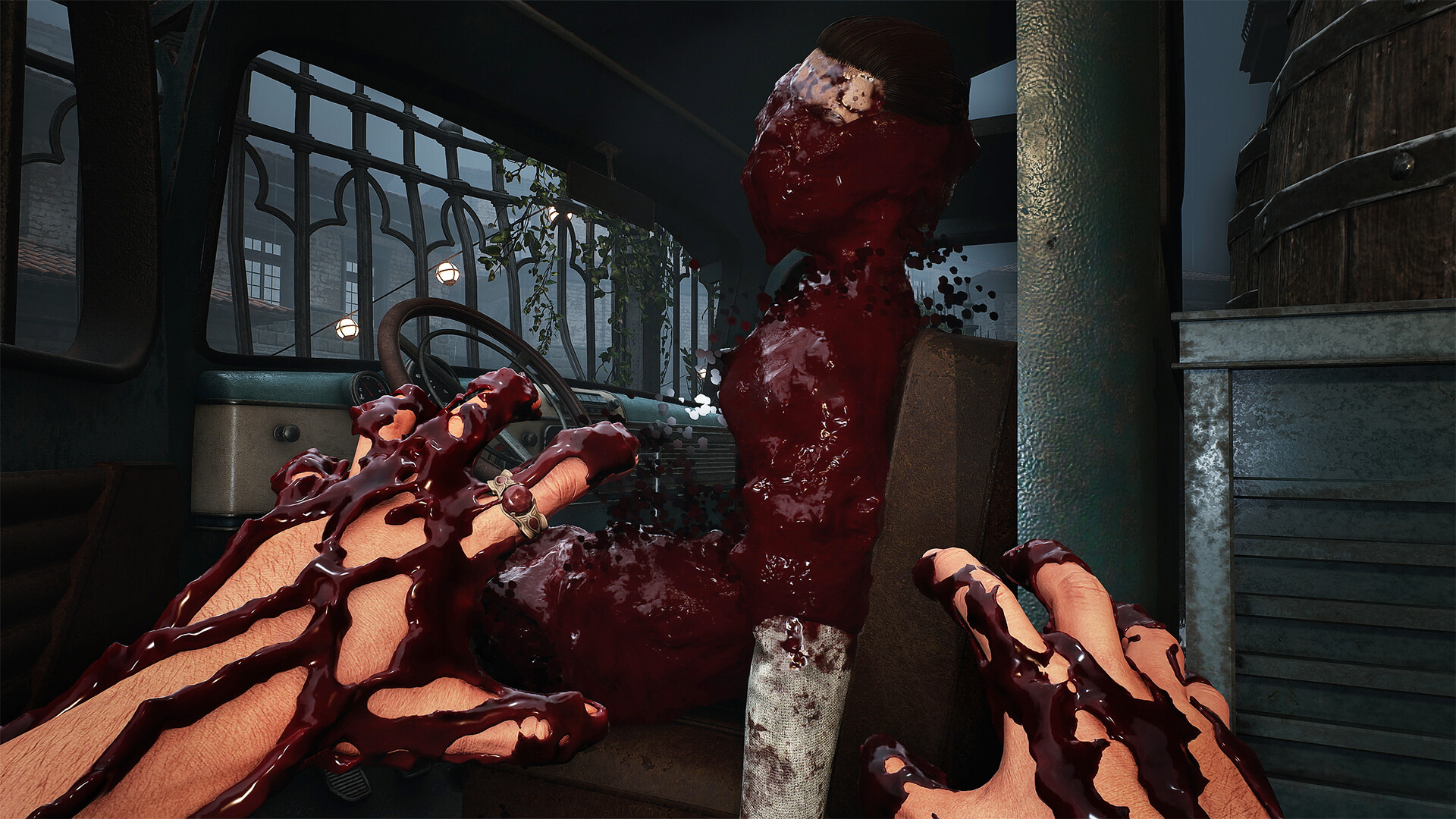
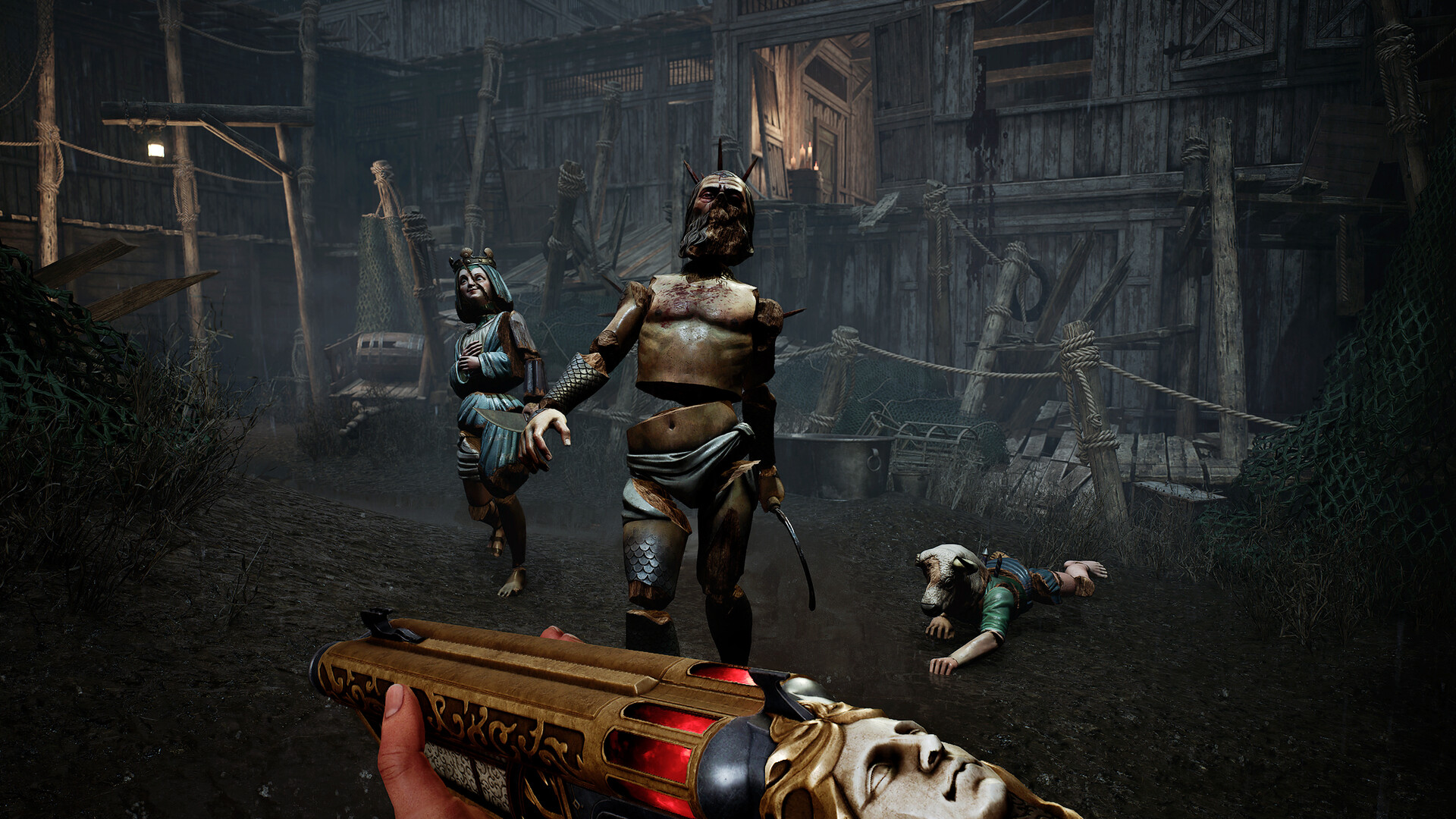
The early fights are arduous, as the pistol and shotgun are weak, and enemies require up to seven or eight shots to be defeated. The possessed statues resemble the necromorphs from Dead Space, as torture doesn't affect them much. Not being living creatures, a headshot will destroy their head, but it won't stop their advance. Their legs can be destroyed to slow them down, and their arms to stop their attacks, but there were many situations where I found myself fighting a walking bust or a pair of legs that wouldn't give up. For this reason, battles quickly become an exercise in patience, not a tense confrontation where we weigh risk and reward. The number of hits needed to defeat enemies decreases with weapon upgrades, and the increasingly numerous healing sources make the game an unchallenging experience. In addition to firearms, there's also a dagger, used in emergencies or to parry enemy attacks. However, it's completely useless: at first, a single attack destroys it, and towards the end it becomes redundant, as the other weapons eliminate enemies before they get close to us.
Speaking of them, the opponents aren't very varied. Almost all of them are a kind of statue or wooden doll, representing different saints from the Sun religion, but they all have the same behaviour, dictated by the type of weapon they carry. Those with melee weapons will rush at the player like a bull, while those with crossbows will stay as far away as possible and try to turn us into an oversized pincushion. There's also a golem made of stained-glass pieces, as well as a creature pulled from the darkest depths of the ocean, but both appear rarely. Even so, enemies won't be a problem, as they have an A.I. that's missing either a few neurons or a few lines of code. Between you and me, the xenomorphs from Aliens: Colonial Marines are smarter than these soldiers of the sea god.
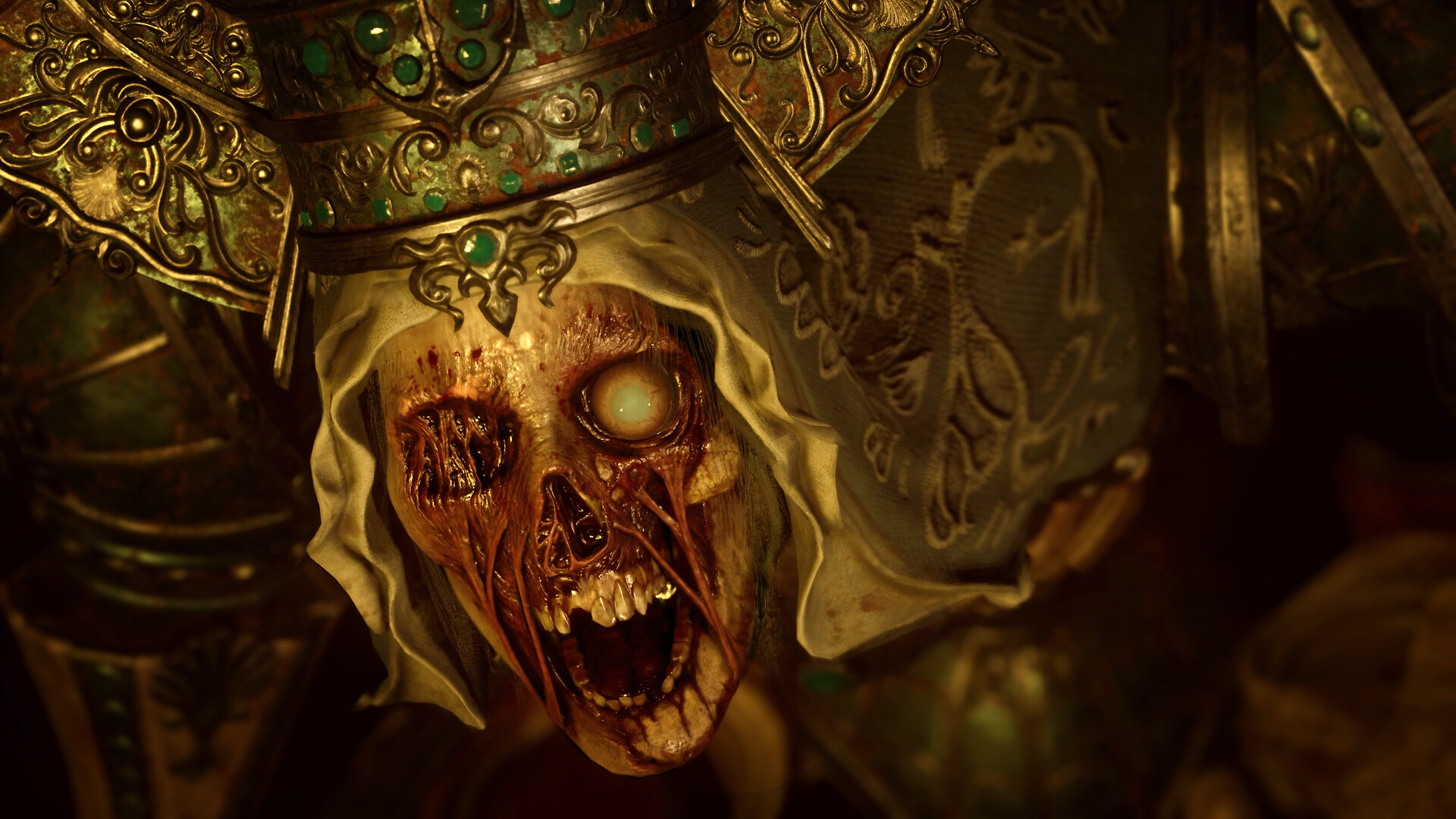
The main attraction in terms of horrors hunting Gabriel is, without a doubt, Madre Dolores. This monstrosity is an amalgam of pain, metal, and porcelain, within which lie the remains of a person. She plays the role of a stalker enemy, in the tradition of Nemesis, Mr. X, or Lady Dimitrescu from the Resident Evil series, but, unlike them, the poor thing doesn't really know how to carry out her mission of destroying the protagonist. The sections where she appears are arduous, as they force the player to sneak through different arenas. If we stand up from the crouch position, Dolores comes straight for us, but if we fire a few shots at an enemy, she pretends not to hear anything.
For the most part, Crisol: Theater of Idols is an FPS, but it has a few short interludes where it becomes a puzzle game. Unfortunately, these don't seem to have been thought out or tested at all, ranging from puzzles that are far too easy to some with logic as obscure as that in Discworld.
Neogothic Paganism
Alright, you get the idea. In terms of gameplay, the game isn't extraordinary, but it tries its best to compensate with aesthetics. Graphically, Crisol looks brilliant. The developers drew inspiration from classic Catalan style and used Gothic and Baroque influences, typical of Spain. The game takes place at the beginning of the 20th century, and this can be seen in the strong contrast between the technology that appears occasionally and the prevalence of wood in the environment. Each of the game's four areas represents a strong element associated with Spain: carnival, bullfighting, or the Catholicism with which the country is often associated, all reinterpreted and carefully used in Crisol.
Although it tries its best to compensate with design and aesthetics, the game leaves much to be desired in terms of sound and optimisation. The beginning is tense, thanks to the creaking wood, which makes you believe there's an enemy around every corner. However, the excessive use of the same sound, both to signal the presence of enemies and to create the impression that Gabriel is walking on old floors, detracts much from its effect. The actors' performance is, in turn, disappointing. I'm not the type to recommend playing a title in English if it was originally conceived for another language. Personally, I play most JRPGs in Japanese, with minor exceptions, and I've played the METRO series exclusively in Russian, with subtitles. Crisol is clearly a product of Spanish culture, but I cannot recommend playing it in Catalan, as the actors' performance dissipates any trace of horror or tension the developers aimed for. The chosen actors seem to have been rejected by Telemundo and TelevisaUnivision, as most of the Spanish lines sound like they're from telenovelas. Therefore, the only recommendable option remains English. Even so, some lines are annoying or hilarious, the exact opposite of what the developer would have wanted.
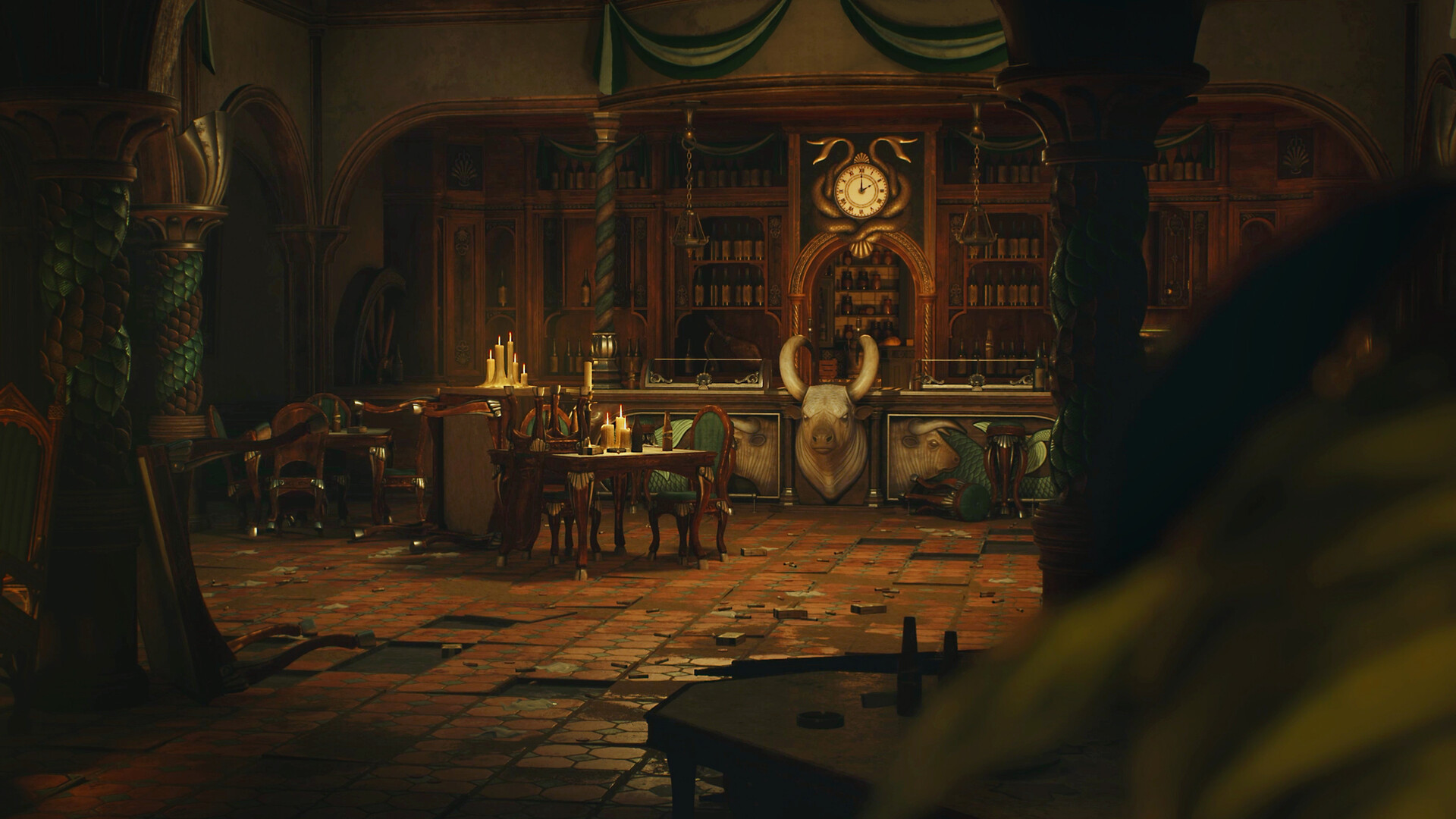
Unfortunately, Crisol doesn't fare well in terms of optimisation either. During the 11 hours spent in Tormentosa, I encountered many frame drops, a few audio glitches, and, most annoyingly, a bug that completely blocked my ability to aim or direct Gabriel using the right joystick.
The idea behind Crisol: Theater of Idols is very good, but the execution failed to bring the developers' vision to life. Honestly, I feel sorry for the game, but what bothered me most was Blumhouse's approach. They have talented consultants and screenwriters at their disposal, which is why more careful QA would have been enough to raise the game to the quality level desired by both the publisher and the developer.
Thanks to Blumhouse Games for the review code and the opportunity to play Crisol: Theater of Idols.

Available on: PlayStation 5, Xbox Series X/S, PC
Played on: PlayStation 5
Release date: 10 February 2026
Developer: Vermila Studios
Publisher: Blumhouse Games
Plus
- Atmosphere
- Design
Minus
- Story
- Enemy A.I.
- Glitches and bugs
0 votes
Scroll down here and stay on the page for at least 30 seconds to vote.
Pick a score from 0 to 10 (halves are allowed).