
Keeper – Review

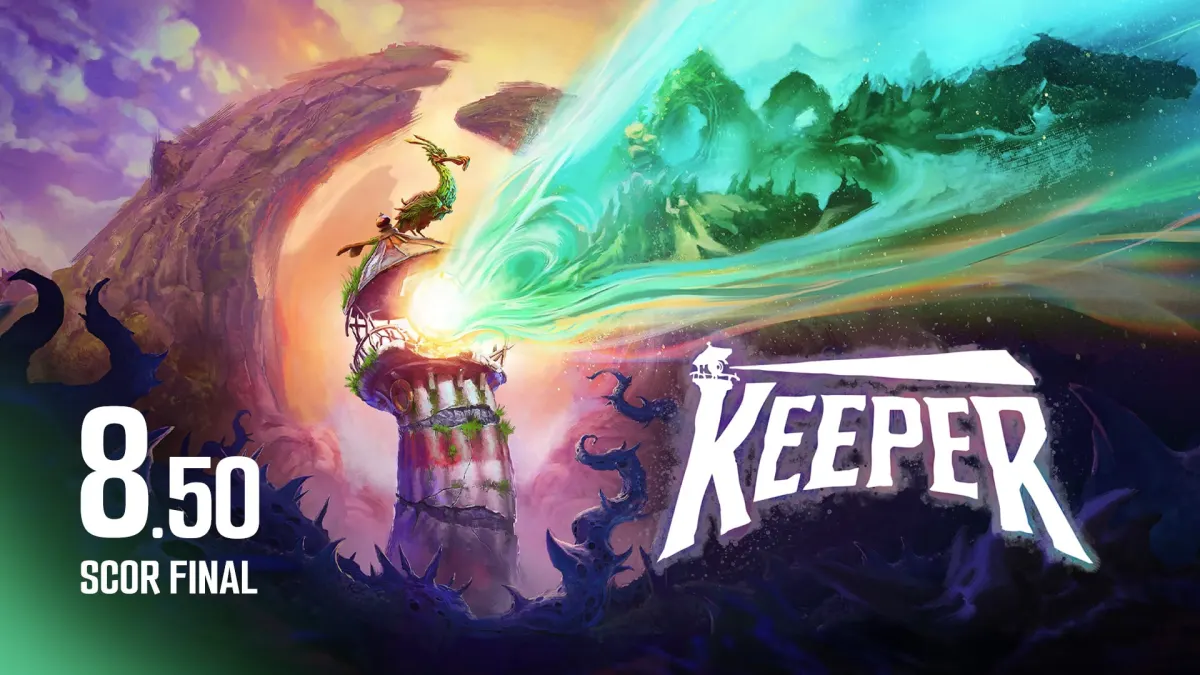
This game is definitely a keeper!
I'll start this article right at the end: the score the new game from Double Fine Productions receives is a well-deserved 8.5. Keeper is one of this year's games that delights with new gameplay and storytelling perspectives, but unfortunately, what makes it unique also drags it down.
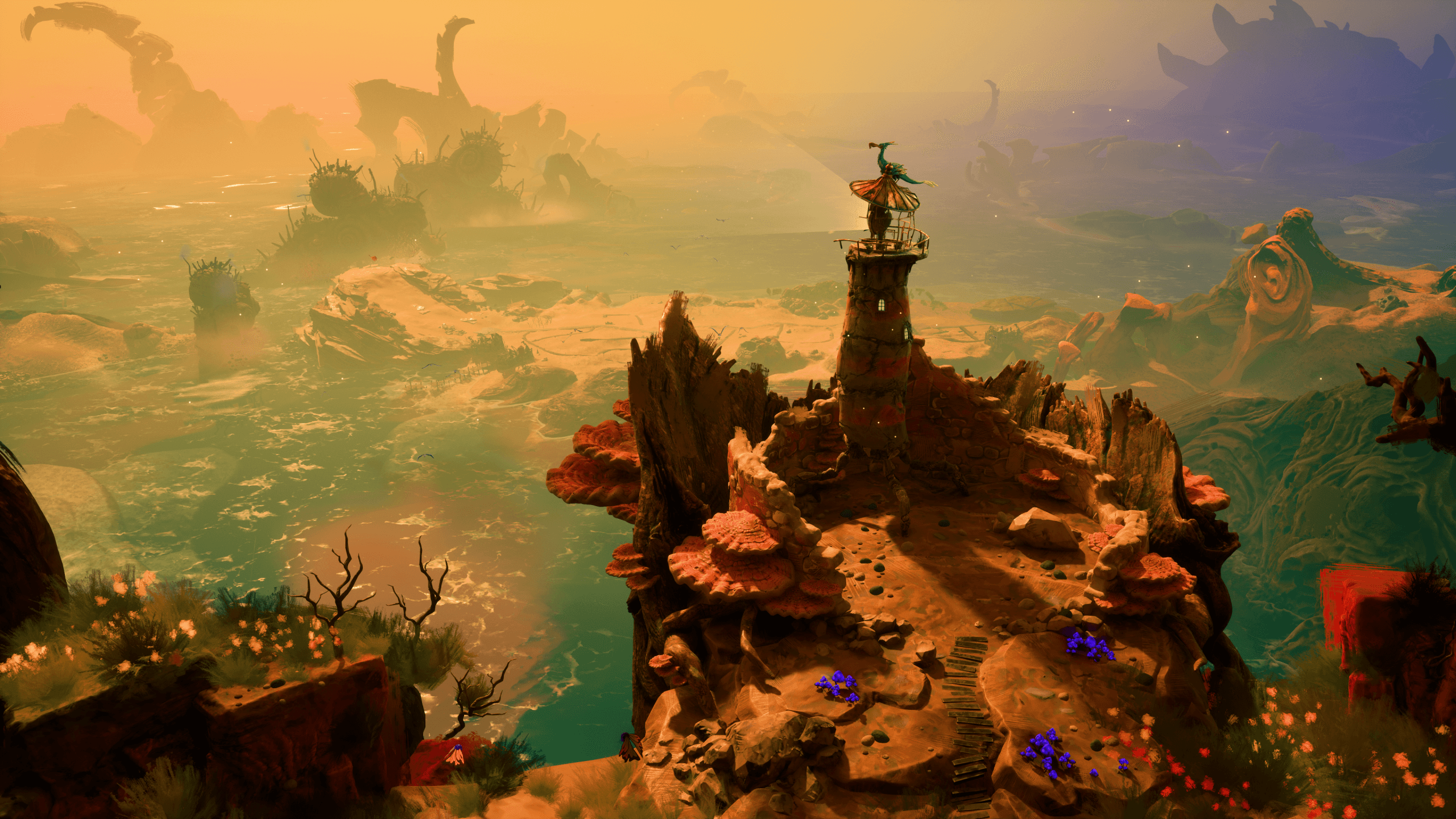
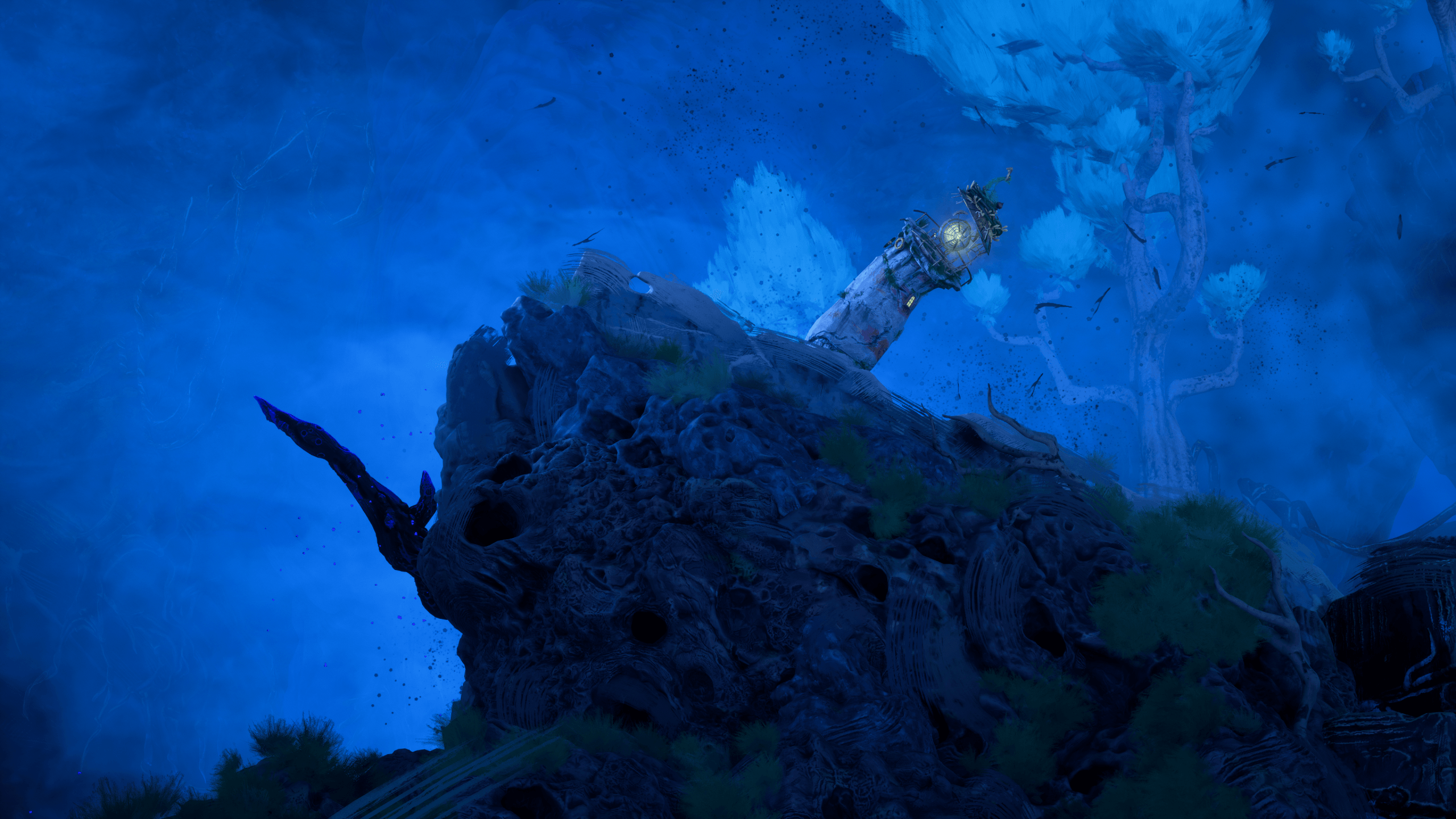
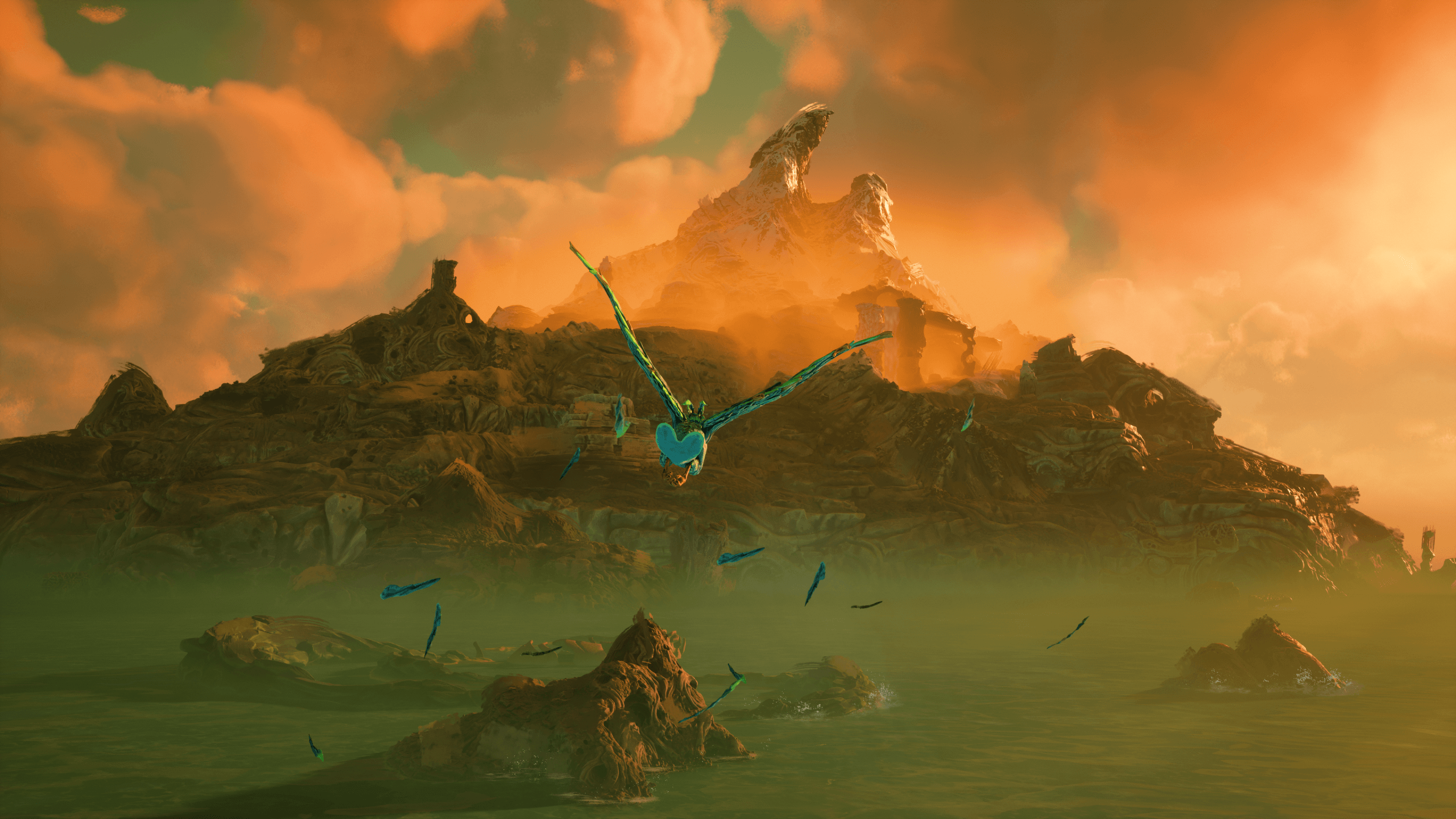
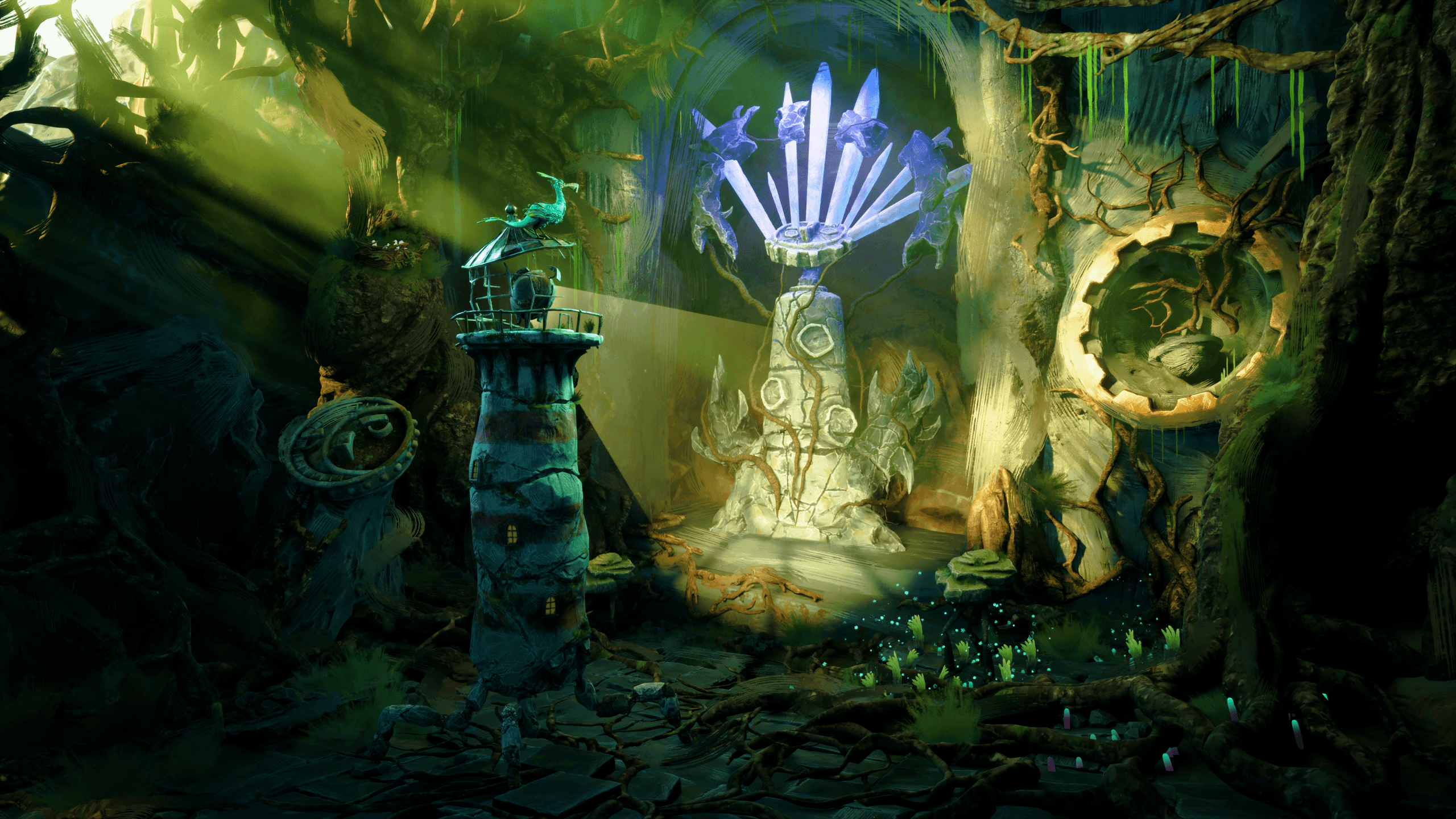
The entire game is a metaphor, an adoration dedicated to the belief in the hope of rebirth and the victory that light must always have over darkness.
Its creator, Lee Petty, confessed that the idea behind the story came to him during the pandemic, a period when the American studio's creative director had time to reconnect, through nature, with long-lost or latent values. The pandemic offered us all the opportunity to realign our personal convictions, to look at life differently, driven by the deadly and immediate danger of COVID, and to better understand how it should be lived.
Personally, I remember some images from that period, with nature suddenly exploding in several parts of the globe. It was a clear sign that we are the disruptive factor, the evil in this game of survival corrupted by the needs of billions of people on the planet. And, through the lens of the game's events, you could say that this is what this new IP is about. Indeed, part of the story signifies nature's struggle against human intervention. But the personification of the main characters also refers to how our species has faced dangers over time and how it has used its will as a guiding light.
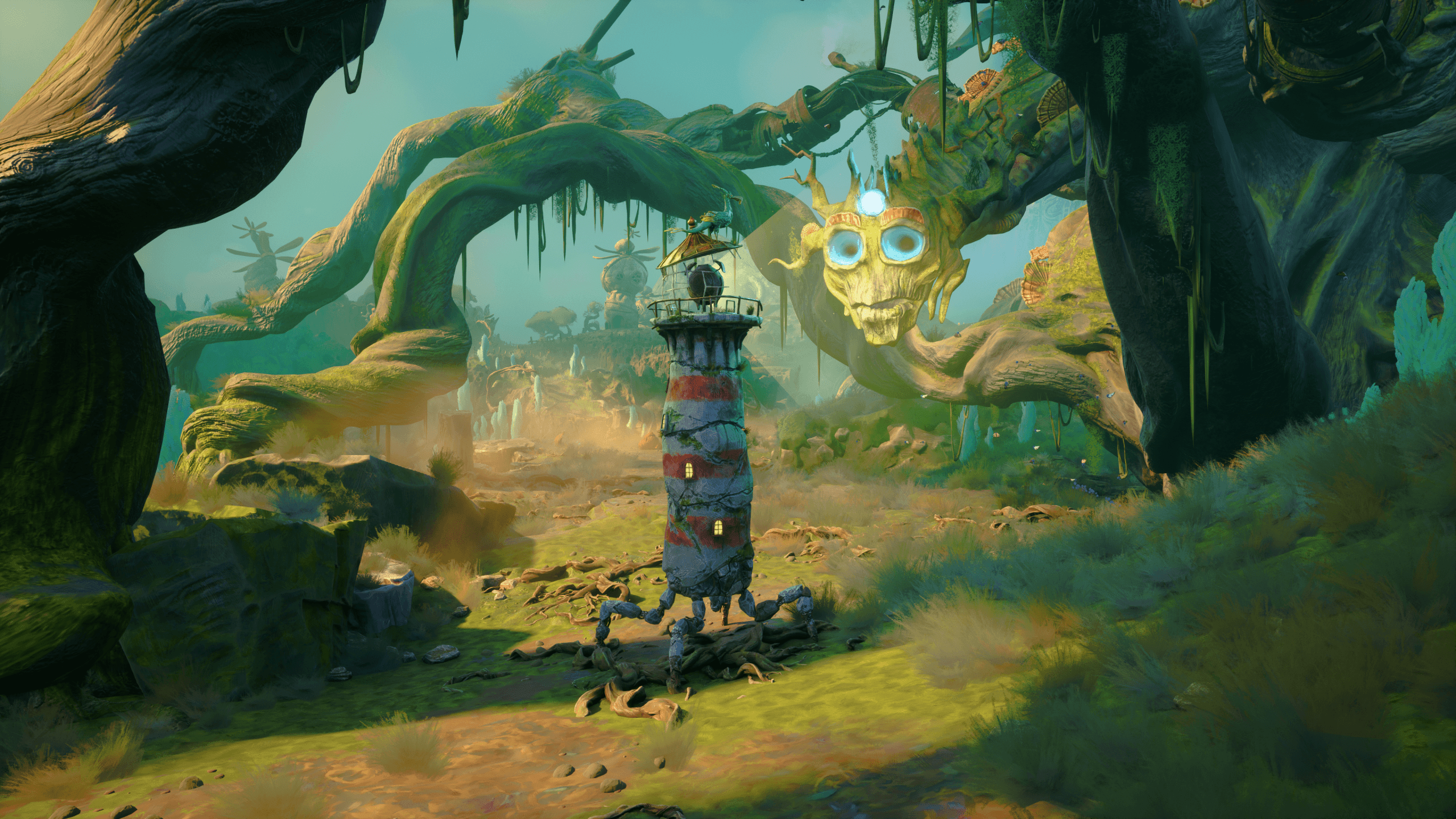
Speaking of characters…
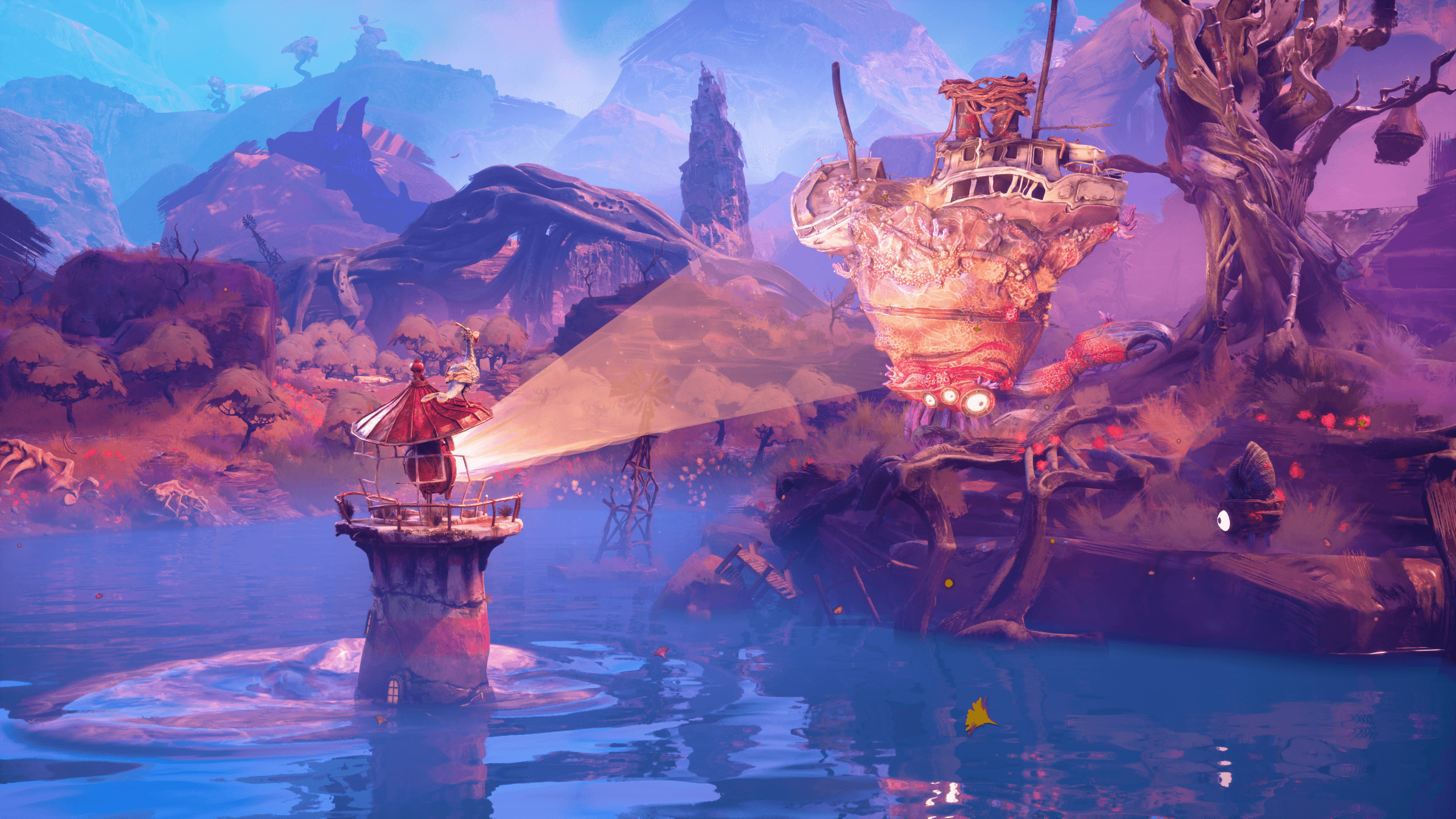
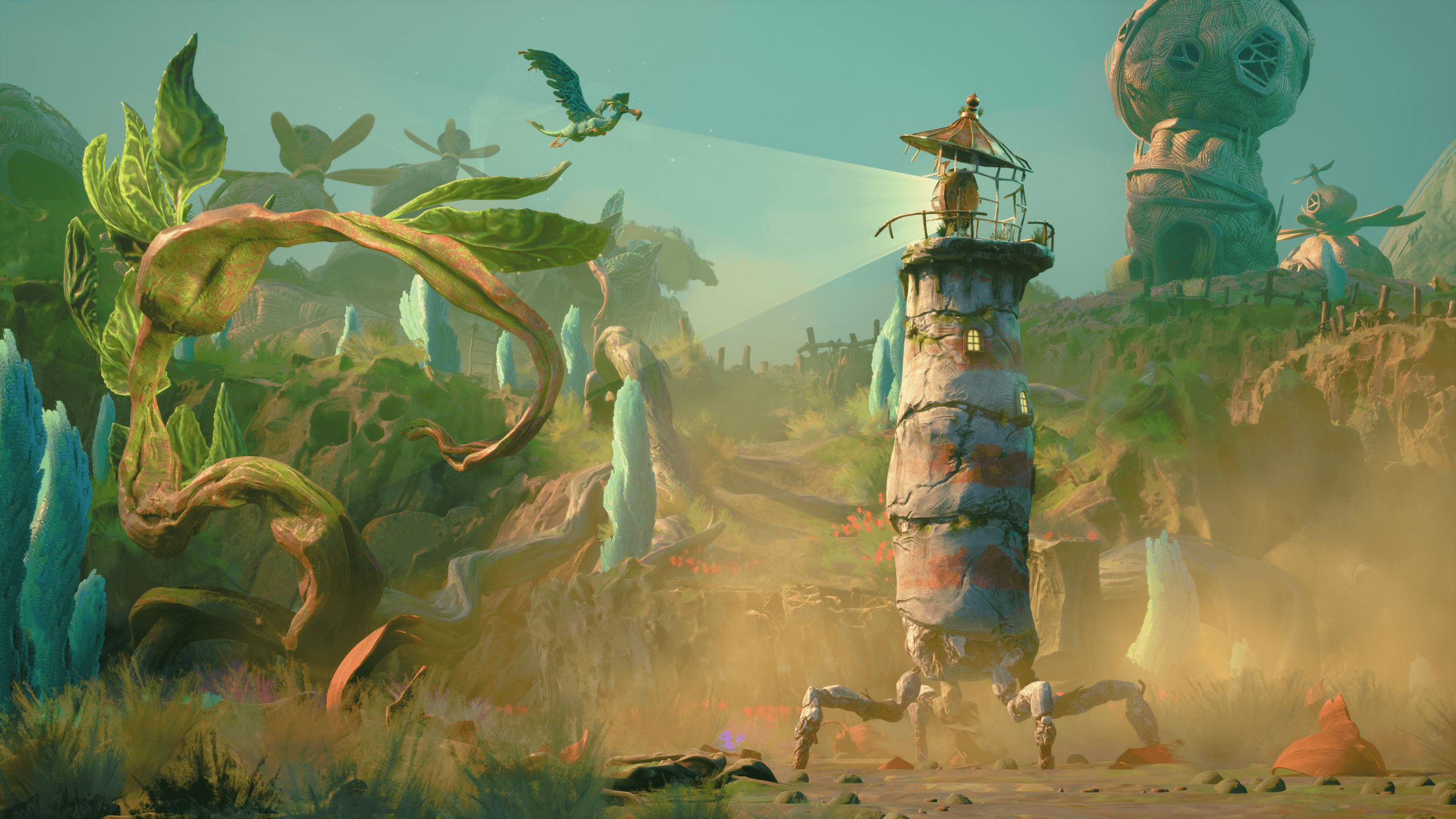
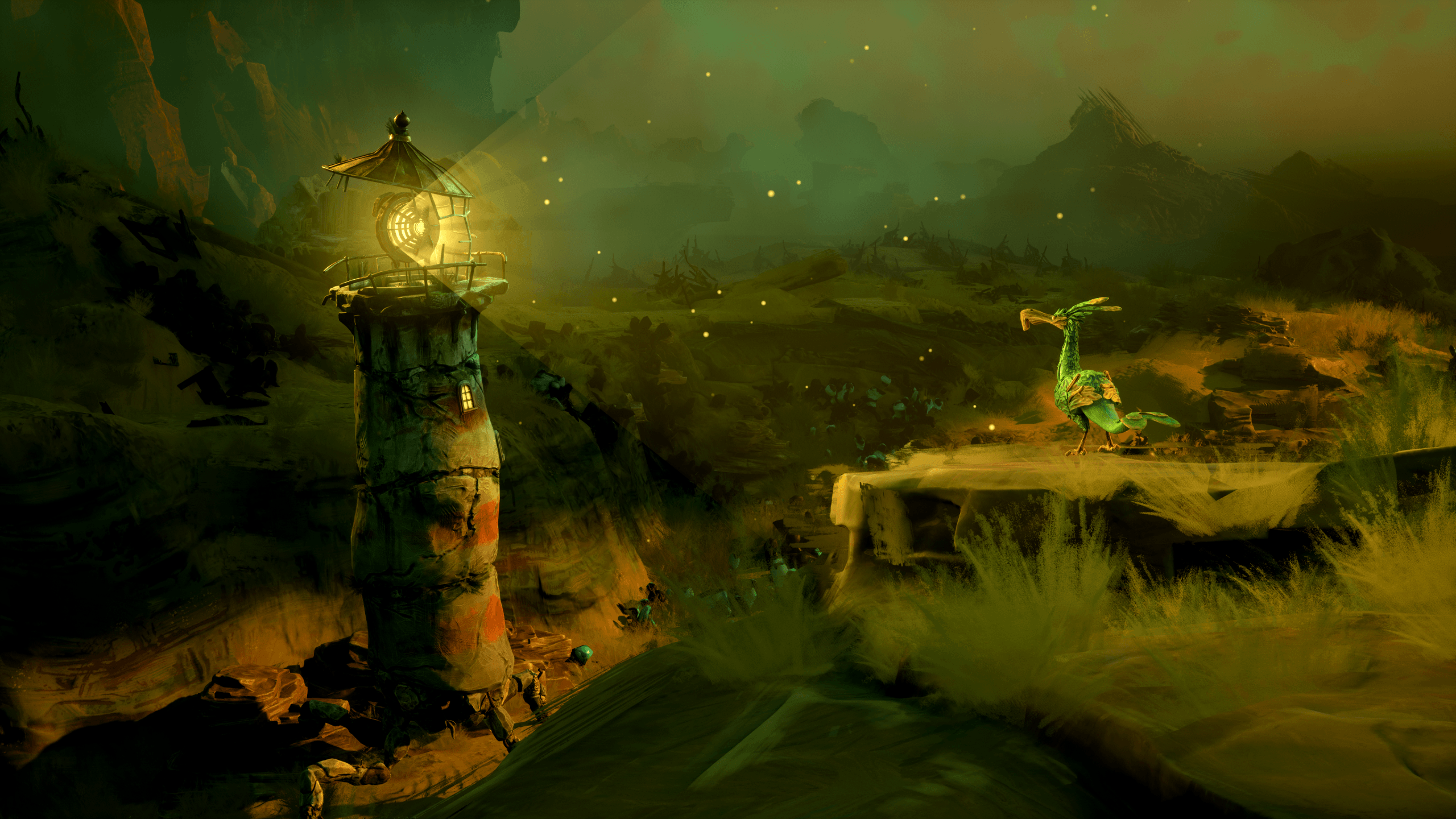
It all begins with a lighthouse. It extends its long, warm arm of light and saves a seabird, Twig, from a swarm of enemies. This is the start of a camaraderie that will last almost until the end of the game.
Their communication is non-verbal: a chirp here, a rusty creak there, a flap of wings, or even some crumbling plaster. So, don't expect long dialogues, whether audio or subtitled. In fact, don't expect any dialogue at all. One of the game's unique elements is the translation of interaction between the controllable characters (well, "controllable" is a strong word) into moments full of emotion, empathy, support, and mutual care.
The lighthouse and Twig go through a series of trials together that seal their friendship over time. Regardless of the good or bad times they experience, they are forced to face major changes that affect not only the course of the narrative but also that of the gameplay.
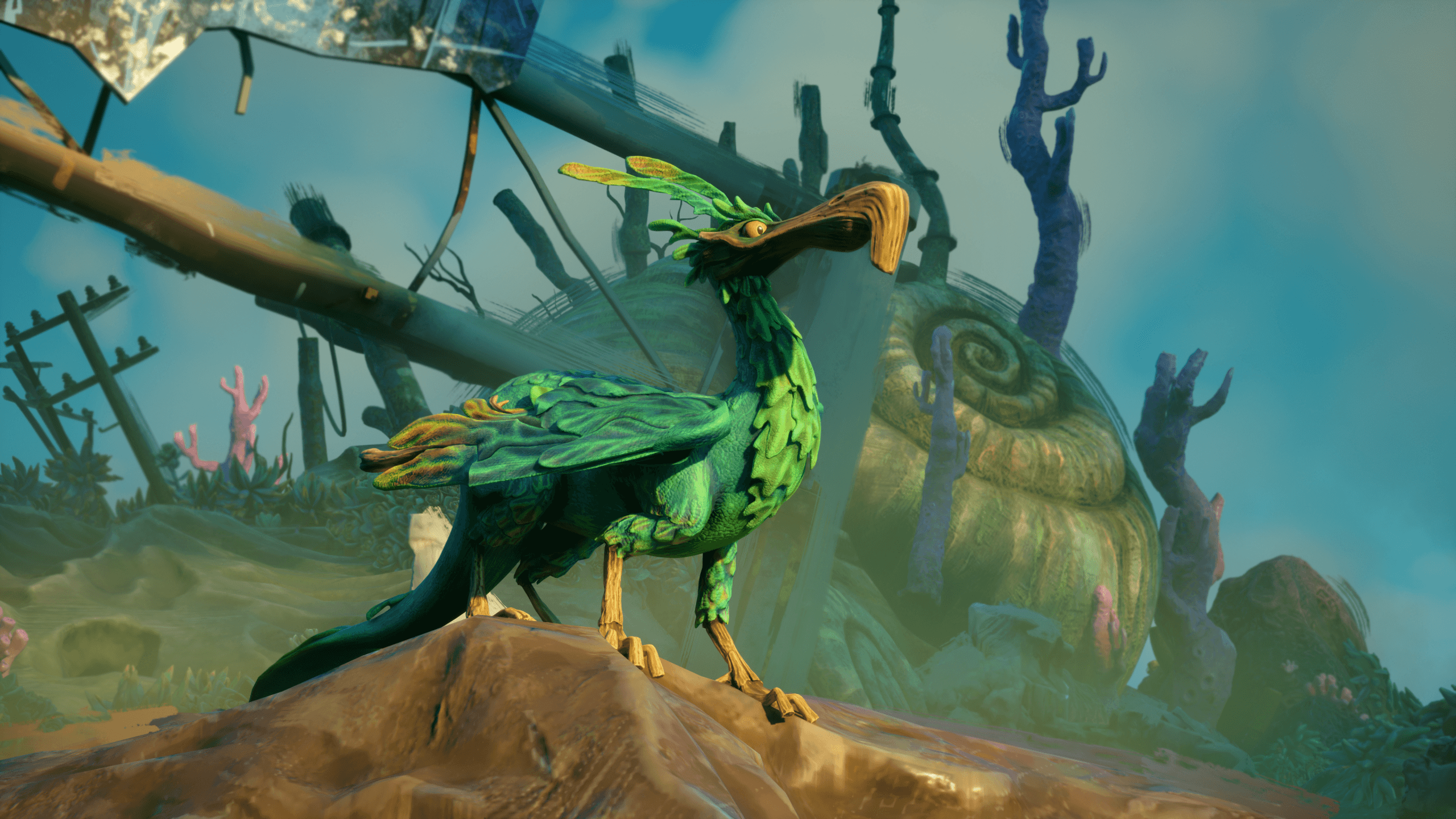
The narrative is closely linked to the visual aesthetic.
The mastermind behind the game, Lee Petty, clearly indicated the sources of inspiration for both the narrative and graphic aspects. The motifs that inspired the struggle between good and evil and the visual concepts come from cinematic and artistic productions of the 80s. The Dark Crystal (1982) and Nausicaä of the Valley of the Wind (1984) are the two big-screen references that populated the game's world with creatures and architectural elements seemingly teleported from one world to another. The surrealism from the works of great artists Max Ernst and Salvador Dalí dominates the visual tableaux generated by each frame.
The subject of this visual novella is a terrible tragedy that transformed a once colourful and vibrant world into a dark one, now governed by the meanderings of a monster that devours every trace of brilliance. Awakened, the lighthouse sets off with Twig on a mission to restore the ecosystem that functioned perfectly before the "extinction", trying to fix everything with the power of its light.
Each chapter brings a new, artistically captivating theme, and the environment offers a new type of gameplay.
The gameplay evolves throughout the game. You'll go from a boring walking simulator to more demanding puzzles and much more dynamic control of the main character. Due to fixed camera angles, maintaining the correct direction can sometimes become problematic. I played it with a keyboard, but I would recommend a controller. There's no skill tree, abilities, or different builds here. ASDWR, Shift, and Click are the only buttons used. There's no health or magic bar, and that's because you can't die!
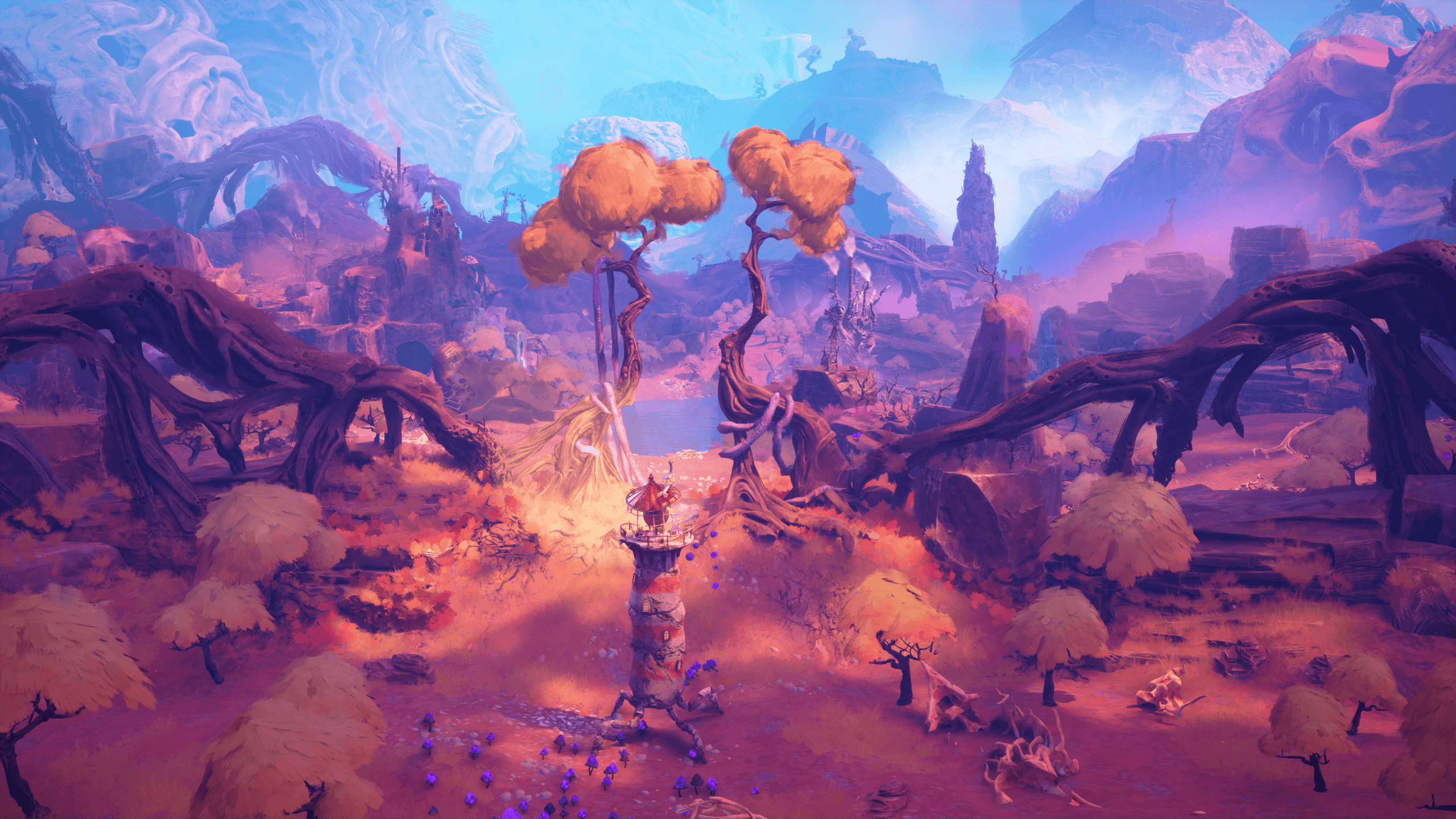
This game isn't about breaking players' will by making them fight immense, hard-to-kill bosses that steal your real-life time with every attempt. Through its mechanics, Keeper wants to show that there's another way, that there can be a game that represents a mental coffee break in a gaming industry dominated by violence and increasingly frantic rhythms.
What drags it down?
The concept is unique, but I'm afraid it will be misunderstood if the "instructions" aren't read beforehand. I've always appreciated indie games because they have to deliver immersive experiences without huge budgets or large teams behind them. And how do you do that? By inventing concepts. Keeper has a huge idea behind it. I'm lucky enough to have the time, and the duty to do research, to discover as much as possible about the reviewed title. This way, I can understand what "the poet wanted to say" and can look at the experience with different eyes.
If you come from a background where your gamer life means League of Legends, Call of Duty, Battlefield, or Fortnite, Keeper's pace will seem too slow, especially since there are no rewards, apart from the fact that you can advance along the path. Many gamers seek recognition for performance through points, badges, or level-ups.
Even if the non-verbal language is well-executed, I believe it's not intense enough. Yes, you can understand many feelings silently, but sometimes a narrative voice in the background would have been appropriate to highlight certain emotions and give more weight to the intrigue.
Then, no matter how beautiful, mysterious, captivating, unusual, and amazing some areas are, the fixed angles and linearity of progression sometimes become limitations that stifle your desire for exploration.
Ultimately, for these reasons, I can't go above an 8.5.
Conclusion
Keeper cannot be called a full-fledged game, but rather a story that delights and morally satisfies you. It is that canvas painted by the hands of several artists to create an unusual surrealism in the current gaming industry.
Keeper is the game that can replace your lofi playlist when your soul wants to enjoy a relaxing digital joint.
Thanks to PC Game Pass Romania for the review codes and the opportunity to play Keeper.

Played on: PC (Steam)
Release date: 17 October 2025
Developer: Double Fine Productions
Publisher: Xbox Game Studios
Plus
- Original concept
- Emotional
- Artistic direction inspired by famous and spectacular creations
- Puzzles that don't drive you crazy
- Game intensity gradually increases, becoming more dynamic
- Appropriate length for its genre
Minus
- Lack of rewards
- Sometimes you feel the need for more information
- Lack of exploration freedom
0 votes
Scroll down here and stay on the page for at least 30 seconds to vote.
Pick a score from 0 to 10 (halves are allowed).