
Might & Magic VI: The Mandate of Heaven
First published in GRIND IV, pages 190–195.
The Rebirth of a Legend
Once upon a time – as the saying goes, for if it weren't there'd be nothing to tell – back when a processor was shod with 16 MHz, RAM with 1 MB and a hard drive with 40 MB, well, back then, when I was barely seeing the light of day, an individual by the name of Jon Van Caneghem, founder and leader of the small American company New World Computing, was about to lay the foundations of one of the most beloved game franchises of all time. In 1986 the first of this long line arrived, namely Might and Magic Book One: The Secret of the Inner Sanctum, the game that laid the groundwork for a long run of old-school RPGs.
Riding that resounding success, the sequels were never going to be shy about turning up: Might and Magic II: Gates to Another World in 1988, Might and Magic III: Isles of Terra in 1991, followed hot on its heels by Might and Magic IV: Clouds of Xeen and Might and Magic V: Darkside of Xeen in 1992 and 1993 respectively. Then, a pause. Apart from an unofficial expansion for the Xeen duology called Swords of Xeen, released in 1995, the series seemed to have slipped into the shadows in favour of the franchise's new arrival, Heroes of Might and Magic. Fans were eager for a new Might and Magic RPG, but with the genre starting to lose its popularity in those years, it looked as though New World Computing would never dare put out such a game again.
But the fans' patience finally paid off, and in 1998 the newest title in the series – the subject of today's discussion – arrived with trumpets and fanfare: Might and Magic VI: The Mandate of Heaven. It's also the first game in the franchise to tie the two strands together, with the action taking place in the land of Enroth, immediately after the events of Heroes of Might and Magic II: The Succession Wars and before those of Heroes of Might and Magic – do you remember it? – III: The Restoration of Erathia. Theoretically, every title with the words "Might" and "Magic" in it that New World Computing developed is connected by story, but the tightest link is between Heroes II and III together with M&M VI, VII and VIII. Perhaps one day I'll go into that in more detail, but today I'll stick strictly to the matter at hand.
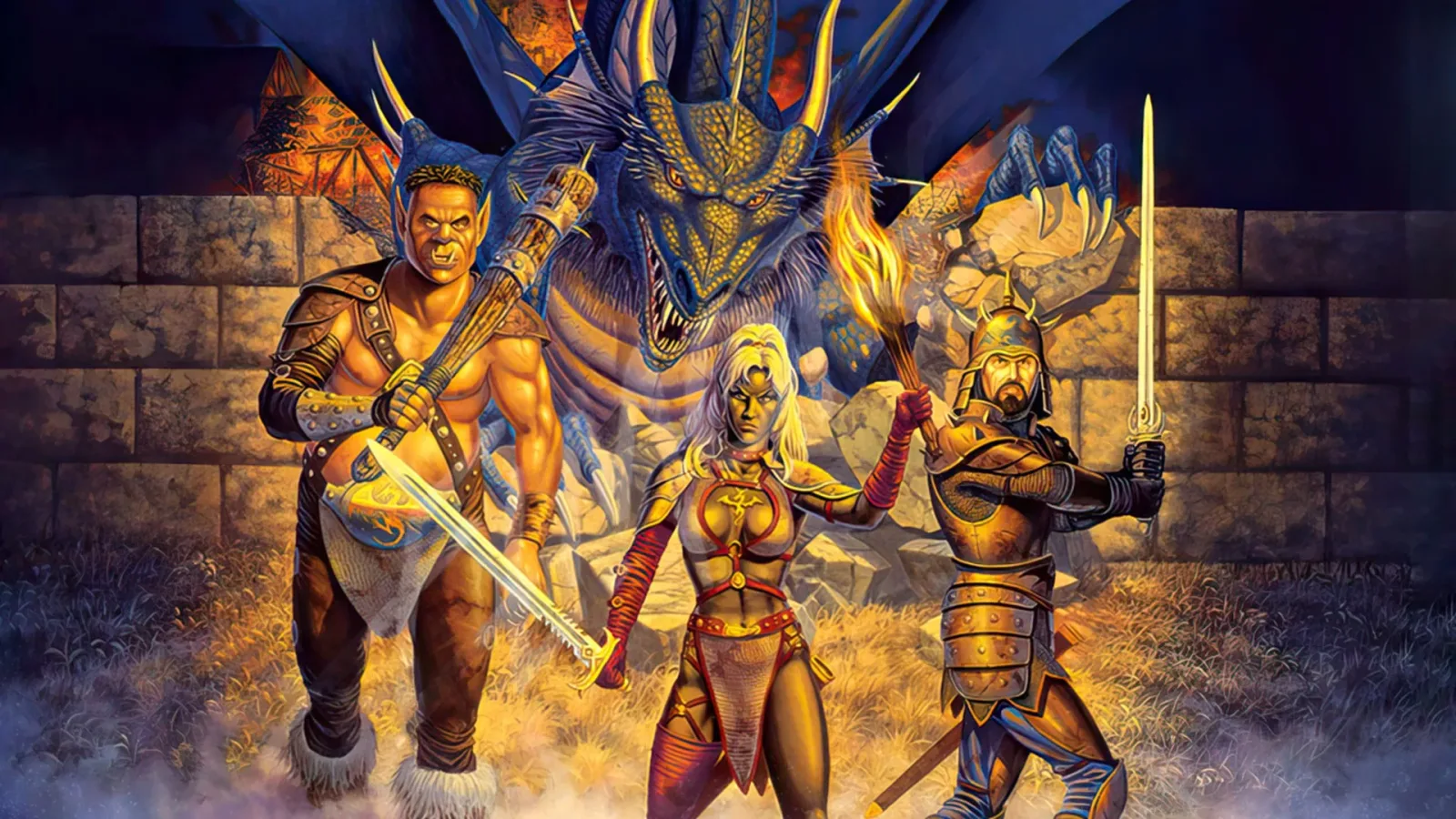
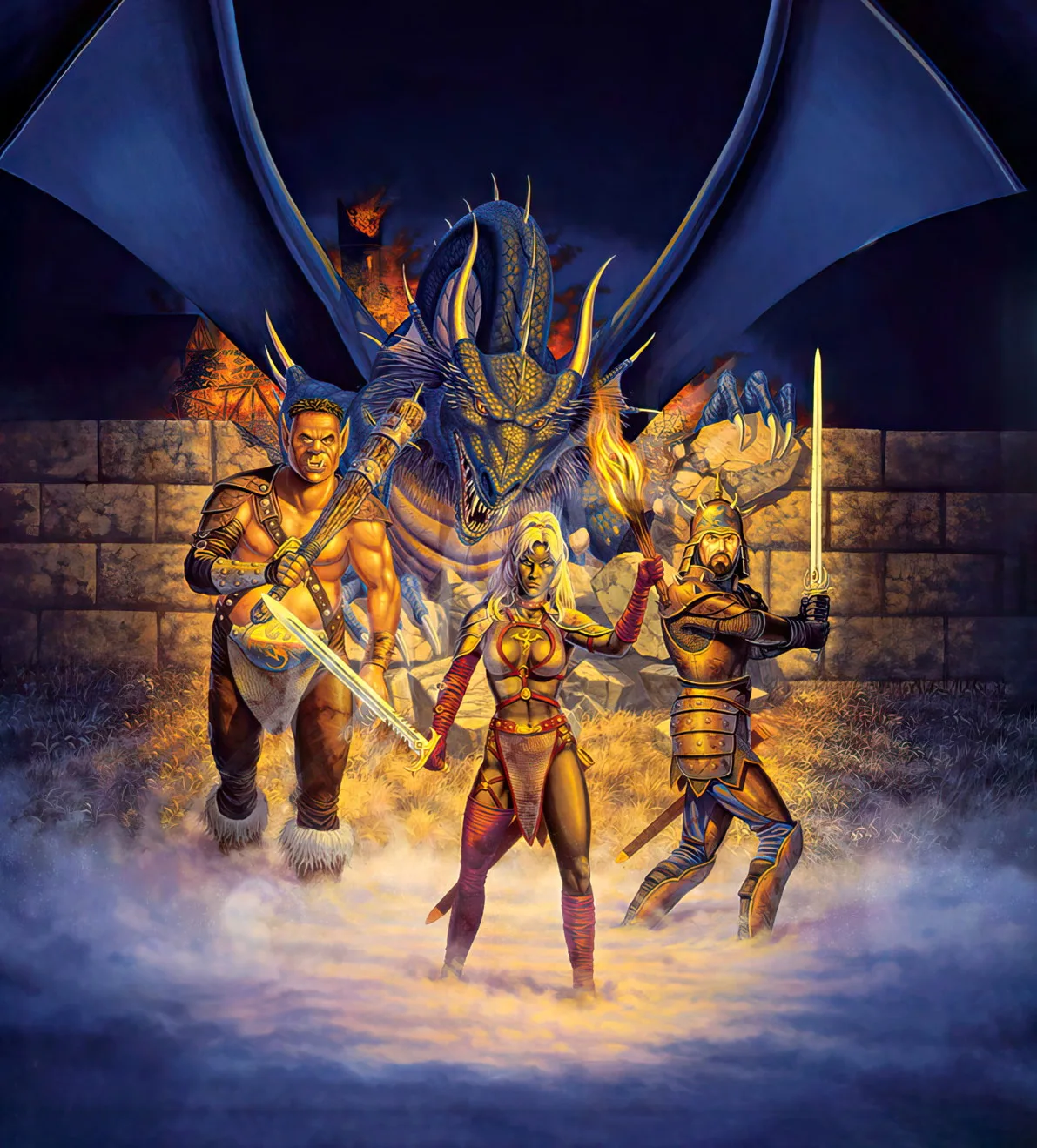
So the game takes place in the land of Enroth, a wonderful, green and pleasant place, ruled by the wise King Roland Ironfist, who a few years earlier (according to the canonical ending of Heroes II) put an end to his brother Archibald's evil plans, turning him into a stone statue with a little help from the court's sovereign, Tanir. One day, though, the long-desired peace comes to an end when a meteorite slams into the surface of the planet Enroth, bringing with it hordes of demons bent on destroying everything in their path. Roland sets off for battle against them, but he and Tanir are betrayed by a wizard named Sulman... and so he is captured. The world now lies in the hands of these demons, the Kreegans. If the name rings a bell, then you guessed it! They're exactly the Inferno faction from Heroes III! In other words, aliens and demons are one and the same thing – a fact Alex Jones confirmed a long time ago. And to think some people say games teach you nothing...
The characters you embody live in the quiet provincial town of Sweetwater, but their lives are turned upside down by the demons, who set up base right there in their town. At the last moment they're saved by the wizard Falagar and teleported to the opposite corner of the continent, to the village of New Sorpigal. Your adventure starts here, and the fate of Enroth now rests in the hands of the four characters you get to create right at the start of the game.
Unlike every other Might & Magic title, in Mandate of Heaven you can only create humans... which is a bit of a let-down if we're being honest. Still, you've got six big, broad classes at your disposal. The Knight has no magical aptitude whatsoever, but is the sturdiest of the lot and will be the last one standing when the odds are against you. The Cleric is indispensable in my opinion, given how useful those healing and buffing spells are. The Sorcerer is perhaps the character with the greatest potential: their magic is not only the most destructive, but also the most useful for exploring and getting around. Those are the basic classes; the next three are hybrids. The Paladin combines knight and cleric, the Archer crosses knight with sorcerer (sounds odd, I know), and the Druid mixes cleric and sorcerer, giving them access to both types of spell. A novice might be tempted to roll nothing but druids and skip the cleric and sorcerer – but that would be a big mistake, as I'll explain later.
Then, obviously, you'll need to invest in attributes. This step matters, and then again it doesn't. You see, M&M VI has what are called diminishing returns. Early on, those few points you put into attributes will be noticeable, but over the course of the adventure they'll climb into the hundreds, thanks to assorted bonuses, whether from weapons, buffs or other sources. On top of that, it's fairly easy early on to bump your attributes up temporarily with potions. I'm not saying the initial investment counts for nothing, but it isn't as fundamental as in other RPGs. Then comes the choice of skills you want to start with. Again, it's not very im- Begone, Satan! portant, except at the start of the game when you've no money to buy them – but over the course of the adventure it'll be easy enough to learn everything you need. And while we're on the subject of skills, I have to say this series does something I like a great deal: it ties character development to exploration. As you level up you gain points to put into whichever skills you fancy, but those skills come in three tiers of competence – normal, expert and master – and for the last two you'll have to go out, explore and find trainers who can take you up to the next tier.
And since we're on the subject of levelling up, I have to mention that Might & Magic is one of the few series of its kind where money matters throughout the WHOLE game, not just at the beginning. Why? Because racking up experience points from killing monsters and doing quests isn't enough. To actually go up a level you have to visit a training camp and PAY for it, and the cost rises from level to level, so the player is permanently on the hunt for loot to sell, scrabbling together the funds for training.
The combat system is one that, at first glance, looks like a load of old rubbish. And on closer inspection, it rather is. The boys and girls who'll save the world. Falagar, the kindly adviser. And yet somehow the game manages not to be a total disaster because of it. In practice it's a combination of real time and turns. You can drop into turn-based combat mode whenever you like, and actions then play out accordingly. There isn't much strategy. I mean, you can leave the mode in order to run away, but that's about where the tactics end. Sure, characters who know magic will have a wider variety of actions available, but generally the best plan is to buff up properly beforehand and then give them a good hiding for as long as you can. Real-time mode isn't much use, generally, until later on, when you get access to some cooler spells...
Right, and now let me tell you a bit about the magic system. There are nine schools: Fire, Air, Water and Earth on one side, and Body, Mind and Spirit on the other, and from the second half of the game onwards the cleric and the sorcerer (and ONLY them!) will be able to access Light Magic and Dark Magic. And those, as you can imagine, come with the most potent spells around. Balance between the schools, and by extension their spells, is more or less non-existent. Earth and Mind, for instance, get the most useless spells, so they're not worth putting points into.
Fire gives you the most destructive spells in the early game, so it's a very good idea to invest there at the start. Air and Water aren't bad on that front either, but they excel in utility spells like Water Walk, Enchant (a VERY good source of money), Jump and, of course, one of the coolest spells in the game, namely Fly, which makes travelling a real delight... especially if you've also got spells like Meteor Shower or Starfall to hand. Just saying. :)
Water also offers Town Portal and Lloyd’s Beacon, which make life so much easier that reaching Master rank in Water should be one of your first goals.
The Cleric obviously has defensive spells. Spirit has a few magical abilities such as Heroism and Bless, which early on will be indispensable to your survival. Healing spells, on the other hand, are generally rather weak in this game. In fact, the best one is Shared Life... which pools the hit points of all the characters and then redistributes them equally. In practice, that means the other characters vampirising the knight(s). A fairly wicked spell when you stop to think about how it works. Those that cure statuses such as disease or poison are semi-useful too, though you should know that such problems are easily fixed with potions. The game has a rudimentary alchemy system that gets much more developed in M&M VII and VIII. Basically, all you have to do is put herbs into bottles and then mix the bottles in a certain order to create increasingly potent potions.
The most powerful spells are the ones in Light and Dark Magic. Not all of them are useful, but a few are downright phenomenal. On the one hand, there are those that apply several buffs at once, such as Day of Power or Day of the Gods. These simplify pre-fight buffing a great deal. Dark Magic has the most powerful spell in the game, called Shrapmetal. Once you find that one, your firepower goes up exponentially. On paper it doesn’t look too impressive. Each shard doesn’t do much damage... but read it more closely and you’ll see that the spell fires multiple shards, so its potential is enormous. On top of that, the damage is physical and there isn’t a single opponent in the game that is immune to it – so no enemy can resist it. At a sufficiently high level you can take down a titan with just two shots! (Yep. That’s the kind of game where you can wield a laser rifle and a sword at the same time.) When it comes to weapons, the game is a little unbalanced. In my opinion, the most useful are swords, daggers and, above all, bows. In fact, my recommendation, and that of many others, is that it’s a good idea to invest in bows for all your characters, since early on they’re quite fragile. The reason is simple: being able to kill enemies from a distance before they reach you is a huge advantage.
As for the various skills, their usefulness varies here too. Repair is absolutely essential towards the end of the game, given that many monsters, such as titans or dragons, have the nasty habit of destroying a random item from your inventory whenever they hit you. Bodybuilding and Meditation increase health and mana respectively, so investing in them isn’t a bad idea. At first glance Identify looks like an absolutely essential skill, since most of the items you find are unidentified and identifying them is prohibitively expensive. Still, it isn’t worth sinking even a single point into it. Why?
Because you can recruit NPCs to help you! They won’t fight alongside you, but they’ll grant you all sorts of bonuses. Some can cast certain spells such as Town Portal, others will add a few bonus points to certain skills, and so on. So it’s very easy, early in the game, to hire a Scholar who, besides identifying ANY item, will also give you a 5% experience bonus. NPCs will want a cut of all the gold you find, but the advantages they bring more than make up for the small change they ask for.
And speaking of NPCs, I think it’s time to talk a little about the graphics. I have to confess that M&M VI is one of my favourite games from an aesthetic point of view. With all its angularity (is that a word?), the graphics are made with a great deal of artistic sense. The colours are vivid without being garish, and all the textures and images are crafted with great care. What I like most are the NPC portraits. I don’t know exactly what their story is. It’s possible that many of them are actually huge photographs of friends and family members of the development team. They look strange at first, but you get used to them over time and, honestly, I wish we saw more of this in games! The portraits of your own characters are very endearing too, and they change expression depending on the situation.
Let’s get a gym membership.
Although the combat system and the character development system are a bit unpolished, by far the game’s strongest point (and the reason I love it so much) is exploration. It is, in fact, the defining element of the series. M&M 6 offers a huge world that the player can explore however they like. Or however they can, of course. I still remember the first time I played it: I had finished exploring a place called Mire of the Damned... an area for levels 10–15 or so. I decide it’s time to go somewhere else – and one of the neighbouring areas, called Dragonsand, catches my eye. No sooner said than done, I head for Dragonsand, but the area has barely finished loading when I come face to face with a dragon that sends me to the other side with a single spit.
Today we’re having cannibal steak.
Each zone is like a Heroes map, in that it is packed with all sorts of points of interest: dungeons here, fountains there, obelisks, and of course towns and monsters. These are laid out just as in the strategy game, that is, in massive clusters that can hardly wait to be wiped out or to wipe out a party of inexperienced adventurers. As I said, there are obelisks too. Visiting one gives you a piece of a message. If you visit them all, you can decipher it and so discover the location of a reward. The game also has an internal calendar, so time matters as well. All over the realm of Entroth there are countless shrines which, if visited at the right time of year, grant you permanent bonuses! Time passes, so even your characters can age... but never mind, because there is a druidic ritual you can perform to become young again. Might & Magic VI is full of little surprises and details like these, and the player never gets bored. There is always a quest to complete, a shrine to visit or a teacher to find, so the game knows very well how to keep giving you something to do.
Through quests, the player is led back and forth across a captivating digital universe. In fact, quests are also the main way of gaining experience. You get some from killing monsters too, nothing wrong with that, but quests are much more generous in this respect. As design goes, they’re nothing special. They generally boil down to finding some item or rescuing some NPC from a dungeon. I must confess that the dungeons in M&M 6 are the coolest I’ve ever been through in any RPG! There are a few smaller ones, but the vast majority are downright colossal. They are very well built, each with its own challenges: whether it’s the monsters, the puzzles or the layout. If you have a poor sense of direction, you probably won’t have much fun with this game... but if you like to explore, then M&M 6 will quickly become one of your favourite titles.
A sunset that looks lifted straight out of Alecsandri’s Pasteluri.
The dungeons in this game are simply EPIC! Towards the end of the adventure, you’ll face some downright... devilish missions. I just want to mention two of the most memorable. First is the Tomb of VARN. In the middle of the Dragonsand area there is a pyramid. You climb its steps, then go inside. You descend a few steps through some Egyptian corridors and assume that’s the dungeon. But at some point you open an enormous set of gates and, looking inside, you see a gigantic pyramid sitting within a vast cavern. So the whole dungeon is actually a pyramid... inside another one! The second I must mention is the infamous Castle Darkmoor in Mire of the Damned. It doesn’t stand out much for its layout, which is fairly banal, but because it’s where you meet some of the most annoying monsters I’ve ever seen in a game. I’m talking about the extremely irritating floating eyes. Why do I say that? Because a good part of the game revolves around buffs. Without them the game becomes extremely hard, so before setting off the player will cast as many strengthening spells as possible, both offensive and defensive. It’s a fairly slow process, but the good part is that buffs generally last long enough that you don’t need to recast them too often. The eyes mentioned above can dispel all your buffs. THROUGH WALLS. NO RIGHT OF APPEAL. On top of that, their attacks can put characters (or the player) to sleep or drive them mad.
By the time the player gets access to Castle Darkmoor, they’re in a pretty advantageous position. The characters are near the peak of their careers, and the spells and items they carry give them a decisive edge over the monsters. But then along comes Castle Darkmoor and turns all the player’s plans upside down! Now the dungeon explorer has to adapt to the new situation and find solutions beyond buffing and killing. A tip: you don’t need to kill everything in the dungeon, and the eyes don’t actually do that much damage... so a useful strategy is simply to make a quick run for the objective. Nightmare though it is, Castle Darkmoor is certainly one of the coolest dungeons ever designed, and proof of a very clever designer who isn’t afraid to give players a bit of a challenge.
A weak point for Might & Magic VI would be the itemisation. All items (with the exception of a few more important ones) are randomly generated. I know some people like this system, but I prefer one built around unique items, or at least some mix of the two. Even so, as I said before, money stays relevant right up to the end of the game, so you'll still enjoy the items you find even when they're generic, because they sell for a pretty penny... especially if you've put a few points into Merchant. One lovely touch: walk into a shop with a fat purse, buy or sell nothing, and the shopkeeper hurls an insult at you... to which your character replies with something like "How rude!". The game is full of little details like that.
Might and Magic VI: The Mandate of Heaven is my favourite RPG. I didn't play it at launch. In fact, back then I wasn't even playing RPGs. I remember reading a review of M&M 7 in a copy of Level and, although I found it interesting in a way, it also struck me as very confusing and complicated. In a way that's true of all these games. It's a breed of RPG you hardly ever come across today, especially in this form, where you can move about freely – yet which at the same time offers two combat systems, real-time and turn-based. And on top of that you have to control four heroes at once. In first person!
It's a game which, analysed element by element, shouldn't even work. M&M VI has a ton of systems that at first glance contradict each other... and yet somehow, I don't know how, it manages not only to overcome all its own clumsiness and shortcomings but to turn them into virtues! This is the longest review I've written so far. I've gone on at length because on the one hand I'm a die-hard fan and love talking about it at every opportunity, and at the same time I wanted to give it the attention it deserves and describe it in as much detail as I possibly could. I'm sure I've missed plenty about it. The game is absolutely immense. It took me 50 hours this time round, when I replayed it, and the first time I played through it I'm convinced it took me far longer than that. After finishing it the first time I swore I'd never touch it again... not because I hadn't enjoyed it, quite the opposite, but because I simply reckoned I'd never be able to finish it again given its sheer size. And here I am, about 10 years after first playing it, tearing through it like a maniac for several weeks... practically spending every spare second with it. Initially I only wanted to install it and play a few hours so I could grab some screenshots for this article, but those few hours quickly turned into a few days, and then into a few weeks, until I'd finished the game all over again. I regret absolutely nothing! Play Might & Magic VI and you'll discover one of the coolest RPGs ever made!
PS: the soundtrack is composed by Robert King, Steve Baca, and of course Paul Romero. What more could you want? ion00 natiuneajucatoare.neocities.org
Why play Might and Magic VI: The Mandate of Heaven in the Current Year?
• • • • Because it's one of the most epic RPGs ever made, offering dozens upon dozens of hours of play. Because it has some of the finest dungeons ever put in an RPG. Because its world is crammed with details just waiting to be discovered. Because towards the end you actually find out that [SPOILER]!