
The Crimson Maid – Review

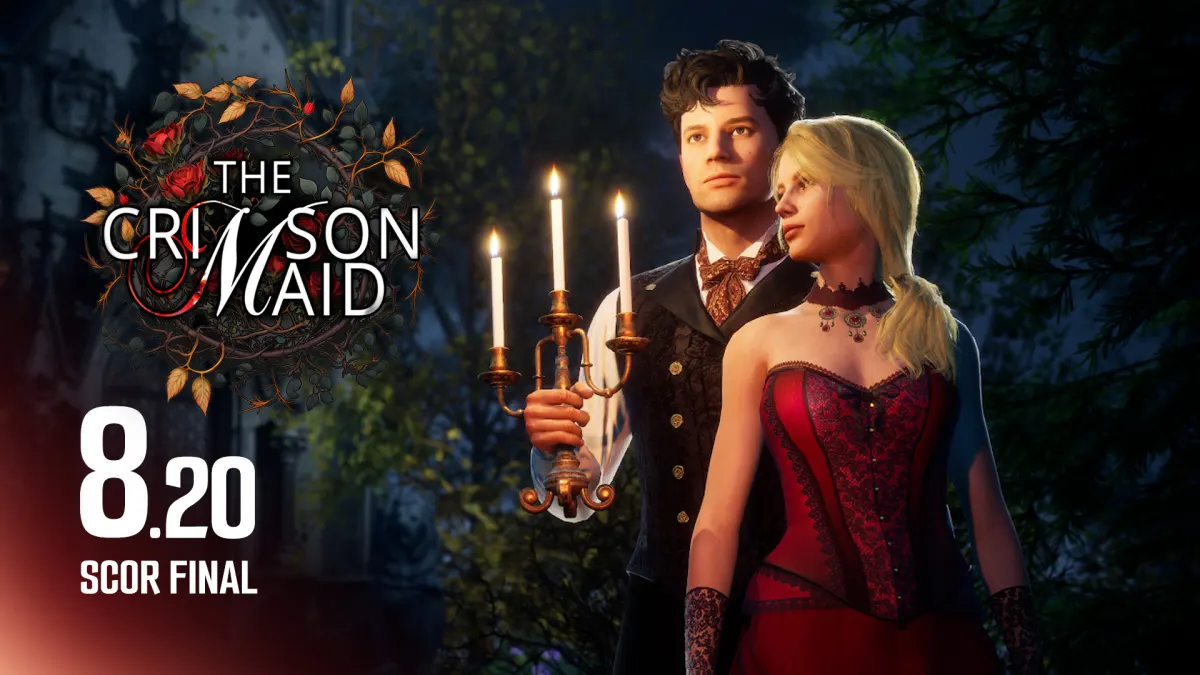
Once upon a time, as in fairytales,
Once as never before,
From Romanian studios,
A fabulous idea…
It's interesting that, despite having so many studios in Romania, we don't have enough games with Romanian elements. Somehow, we've convinced ourselves that there are no beautiful things or stories worth telling in our Mioritic lands. Yet two remarkable studios offer a counter-example: The Crimson Maid. Darkania Works and GrimTalin, two talented local developers with several projects worth trying, return with a spiritual sequel to their last joint project, The Last Days of Lazarus. Don't worry, you don't need to have played the previous game to follow this new adventure.
Perhaps you're wondering what The Crimson Maid actually is. The developers describe it as a marriage between a first-person exploration game and a visual novel, but it is more than that. It's a window onto a period of recent Romanian history, and an experience that captures a zeitgeist most of us never lived through, only knew from books and other people's stories. If I've piqued your curiosity, let's start with the story.
Marius's… Enigmas?
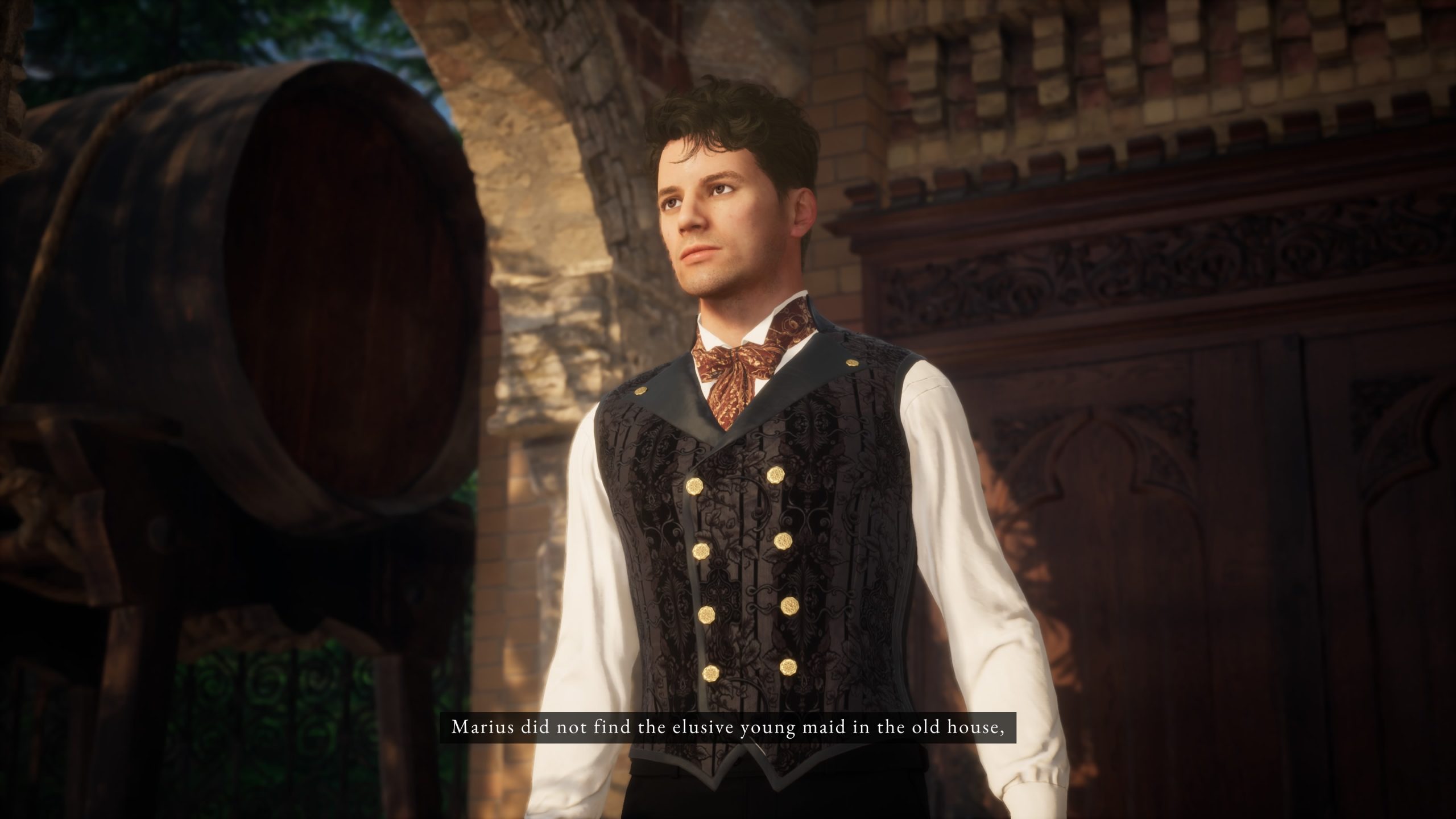
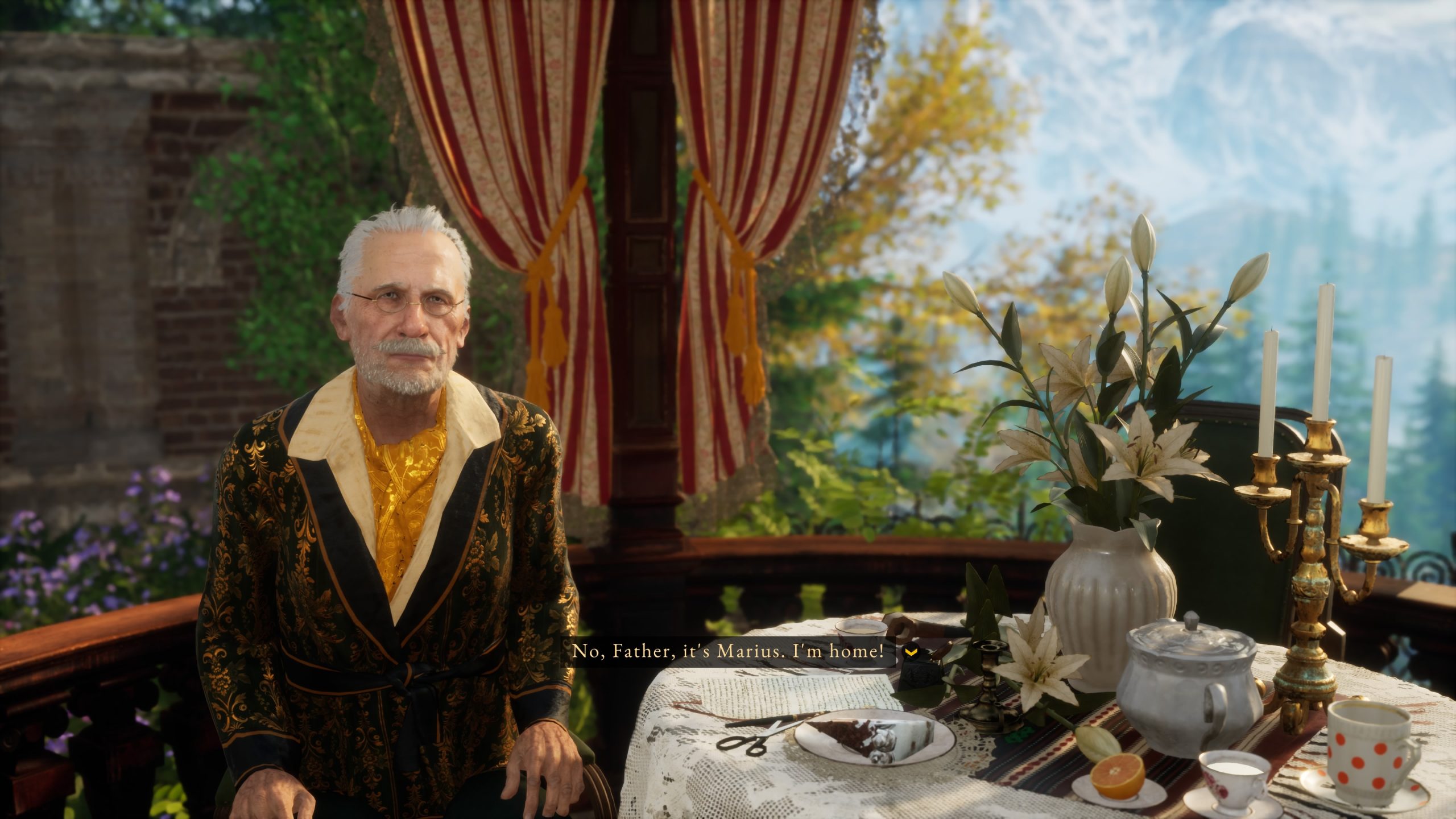
The story of The Crimson Maid is an intriguing one, wrapped in mystery and intrigue. It is set in Romania, and the protagonist is Marius Rosenthal, the eldest son and rightful heir to a successful business. Or at least that was our hero's destiny, until he chose to answer a divine calling and enrol at the theological seminary, giving up the comfortable life that awaited him. The decision came at a heavy cost: Marius was disowned by his own family for choosing to live "in poverty". After several years of study, he learns that his father has fallen gravely ill and is summoned back to the family home. Once there, he must face the sins of the past, mend his relationship with his family and stay by his father's side in his final moments. But in the midst of this sombre setting, a new figure appears: Irina, the Rosenthal family's recently hired maid. Will Marius uncover his family's secrets, or will he fall prey to the mysterious maid's charm and abandon the priesthood?
For fans of detective novels and mysteries, the narrative thread is well constructed, though perhaps a little predictable. Even so, the story is worth living through, thanks to the unique way it portrays the reality of the landed gentry of long-vanished times. It may seem somewhat foreign to Romanian culture, but players will quickly spot the similarities with famous Romanian literary works, such as George Călinescu's Enigma Otiliei or Mircea Eliade's Domnișoara Cristina. The relationship between Marius and Irina closely resembles the one between Felix and Otilia, and Irina shares many traits with the title heroine. What starts out as a simple tale about a bygone age, however, quickly turns into a complex mystery that treats its central subject with the gravity and respect it deserves. What's more, the developers have fully understood their characters and how they should behave. The protagonist often refers to faith and prayer and at one point even pulls out a Bible.
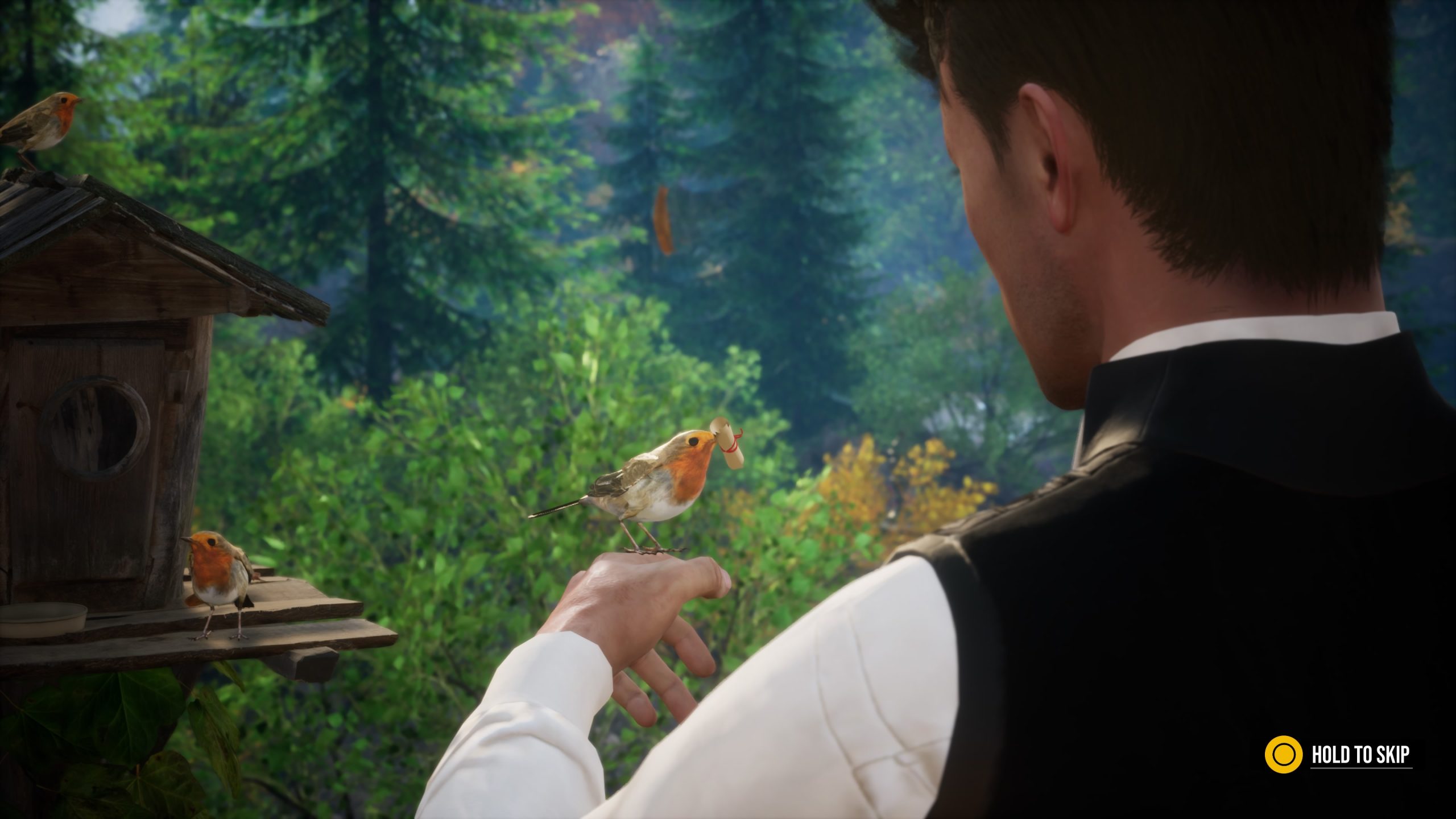
Sadly, there are no side objectives, but the story is built to encourage multiple playthroughs, thanks to a branching-paths system in which certain choices radically change the narrative, along with the ending you get. The game's main emphasis is on the story, and attentive players will enjoy all sorts of easter eggs and references that place The Crimson Maid in the universe of the developers' previous game, The Last Days of Lazarus. If you had the pleasure of playing that one, a certain clock in the Rosenthal family home will probably jump out at you straight away. And if not, you'll recognise the esteemed ladies who recommended the mysterious Irina to Mrs Rosenthal.
For the truly curious, the developers have also included a few historical references, and history buffs, along with the more nosy among you, will discover some interesting events that took place on our own soil.
The Missing Piece
As I explained above, the game's central element is the story, which takes pride of place. But since The Crimson Maid is not a text-based adventure, there has to be an interactive side too. The game sits in an interesting spot, because it's hard to pin down to any one genre. Presented in first person, you'd assume it was a walking simulator, but that impression is immediately upended by the arrival of puzzles and the classic conversation system of a visual novel. As such, The Crimson Maid sits somewhere on the border between these three genres, without fully committing to any of them.
While I have nothing but praise for the story, I do have a few criticisms of the gameplay. The first and most important is the protagonist's movement speed. It varies between "very slow" and "slow", depending on the movement mode you choose. I don't think this will bother many players, but the sluggish pace sits at odds with the game's final chapters, where we're given to understand that the protagonist is rushing to resolve the crisis that has erupted.
Besides the sections where we poke around the mansion, there are two kinds of puzzle. The first is the fetch-quest type, where the protagonist has to find an object, or a combination of objects, to move the story along. The first puzzle we meet, for instance, is the famous cup of water, if you remember the story from childhood. We have to track down a cup, find the well in the yard and then the bucket needed to draw the water. Only once we've found everything and used it in the right order do we get the famous "cup of water" that our folks wait for in their old age. This type of puzzle gave me a few headaches, because the solution isn't always clear and sometimes the missing item is far less obvious than it should be. That was the case with the grain for the sparrows, tucked away in some of the most obscure corners of each level.
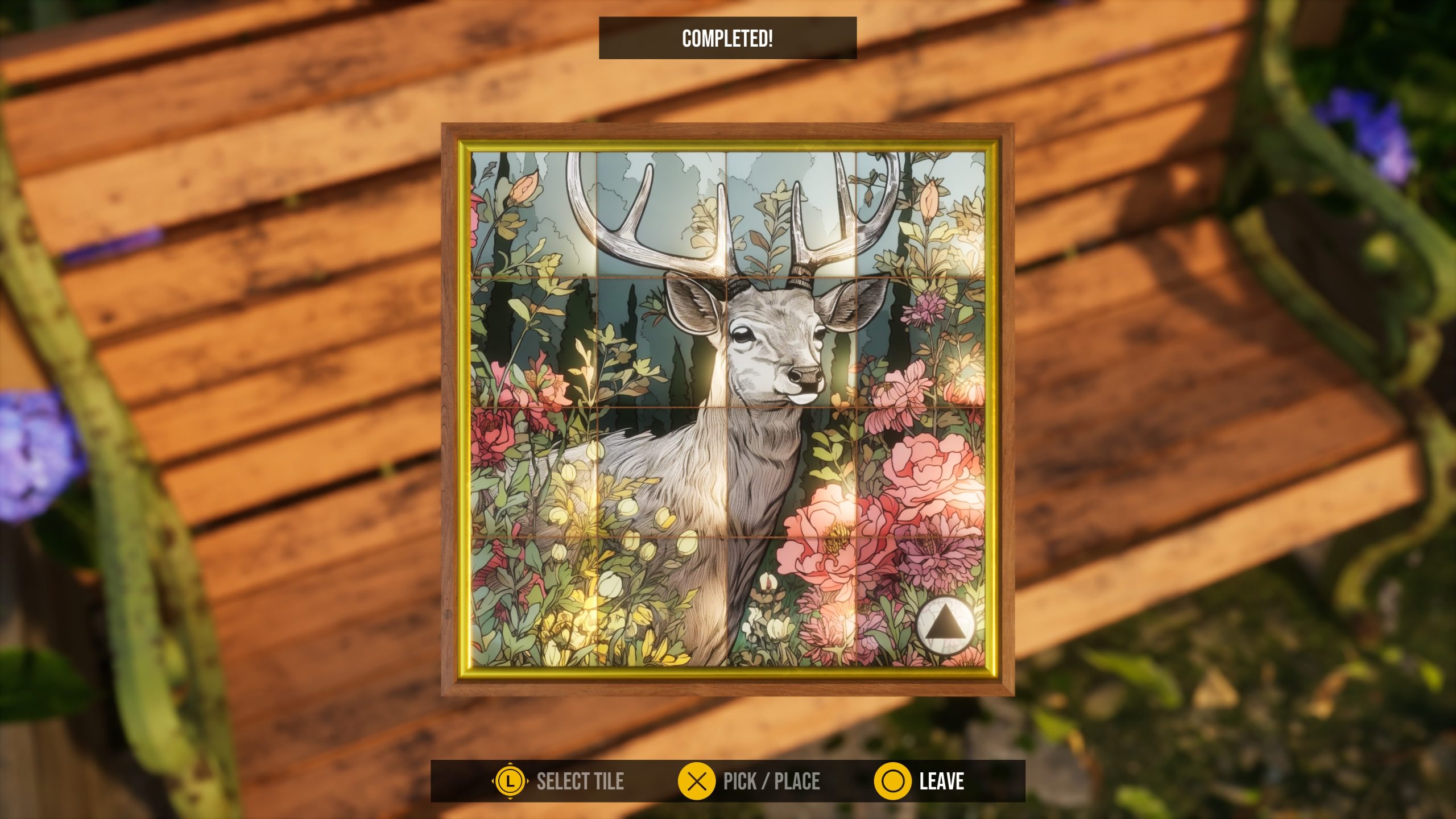
The other type is the classic kind, and of those, the ceramic puzzles struck me as the best. They're simple: you rearrange tiles until they form the complete picture of the animal shown. Almost every level hides one, and towards the end of the game they became my main draw.
The last piece of the gameplay is the dialogue and the branching paths that grow out of it. Depending on the player's choices, the ending can be radically different, from the Rosenthal family reconciling to Marius giving up the divine calling he felt even before the game began. The lines, the characters' reactions and the consequences of both have been carefully thought through by the developers, and whichever ending you get, it will surprise you. And choices and gameplay would mean nothing without an aesthetic to match.
So that we don't get completely lost in the details, the developers have included a journal in which Marius jots down his thoughts and discoveries, along with the photographs and ceramic puzzles he comes across. This tool proves invaluable over the three to four hours spent in the Rosenthal mansion.
Paysanne de la Rosenthal
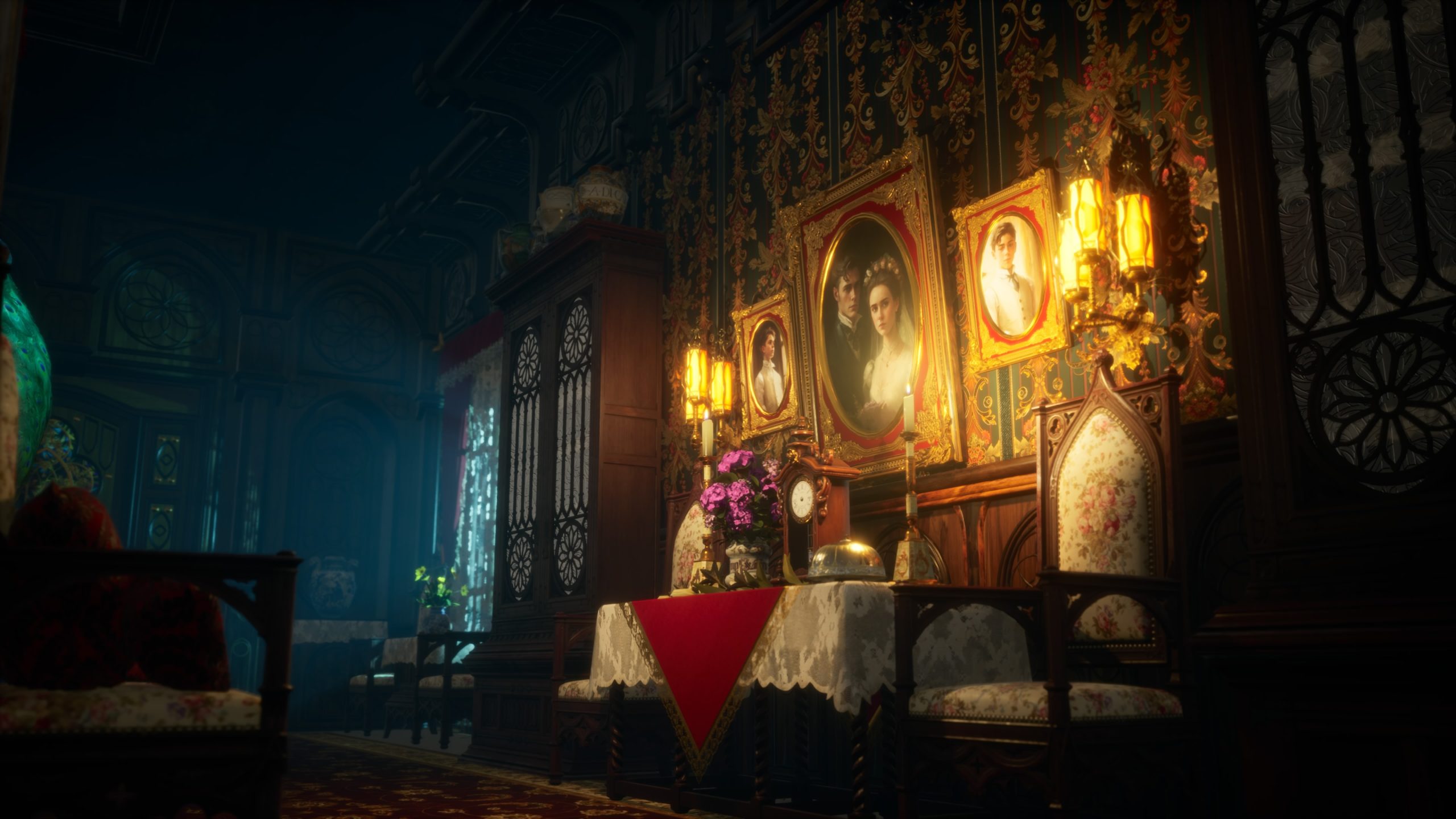
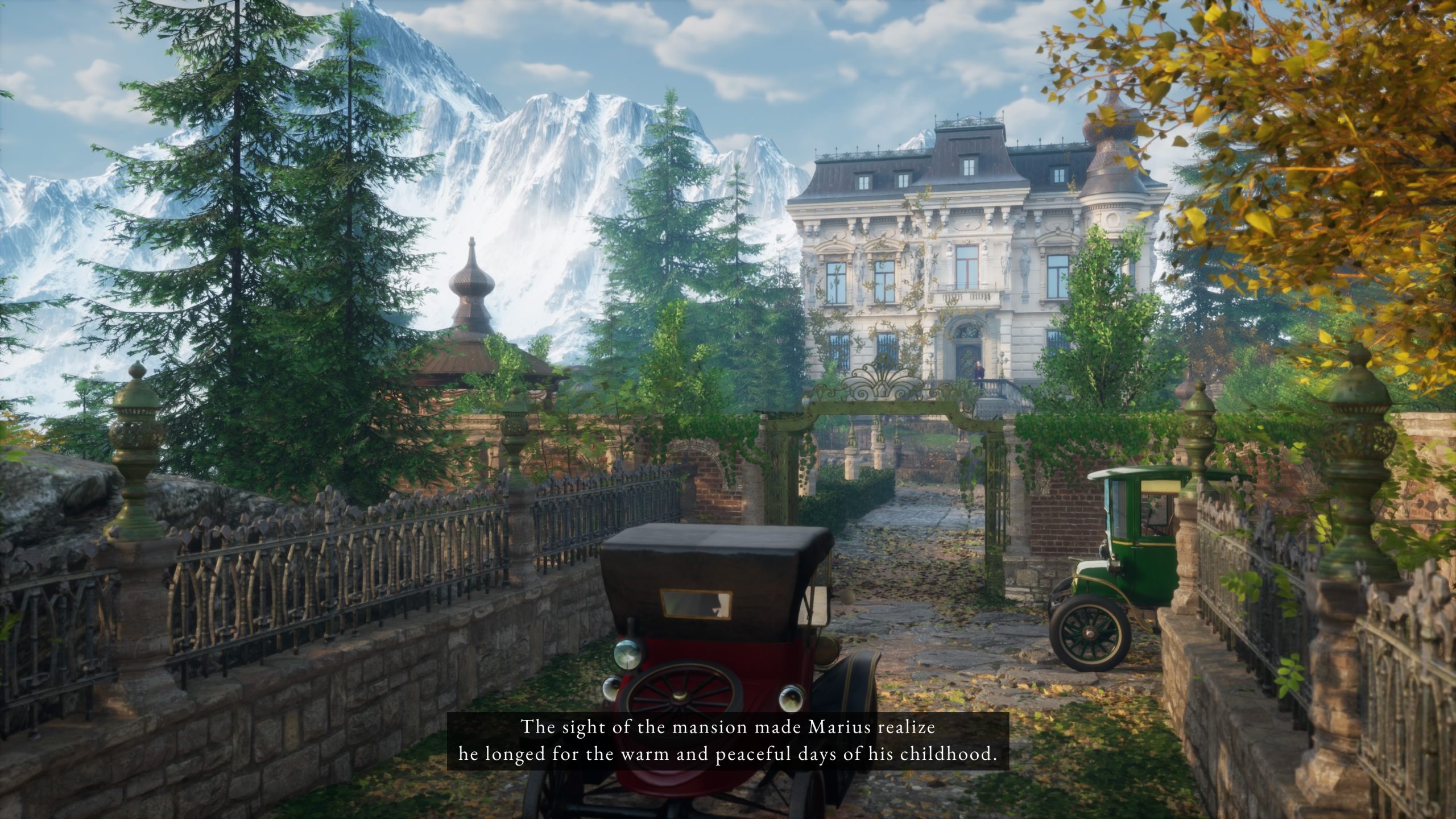
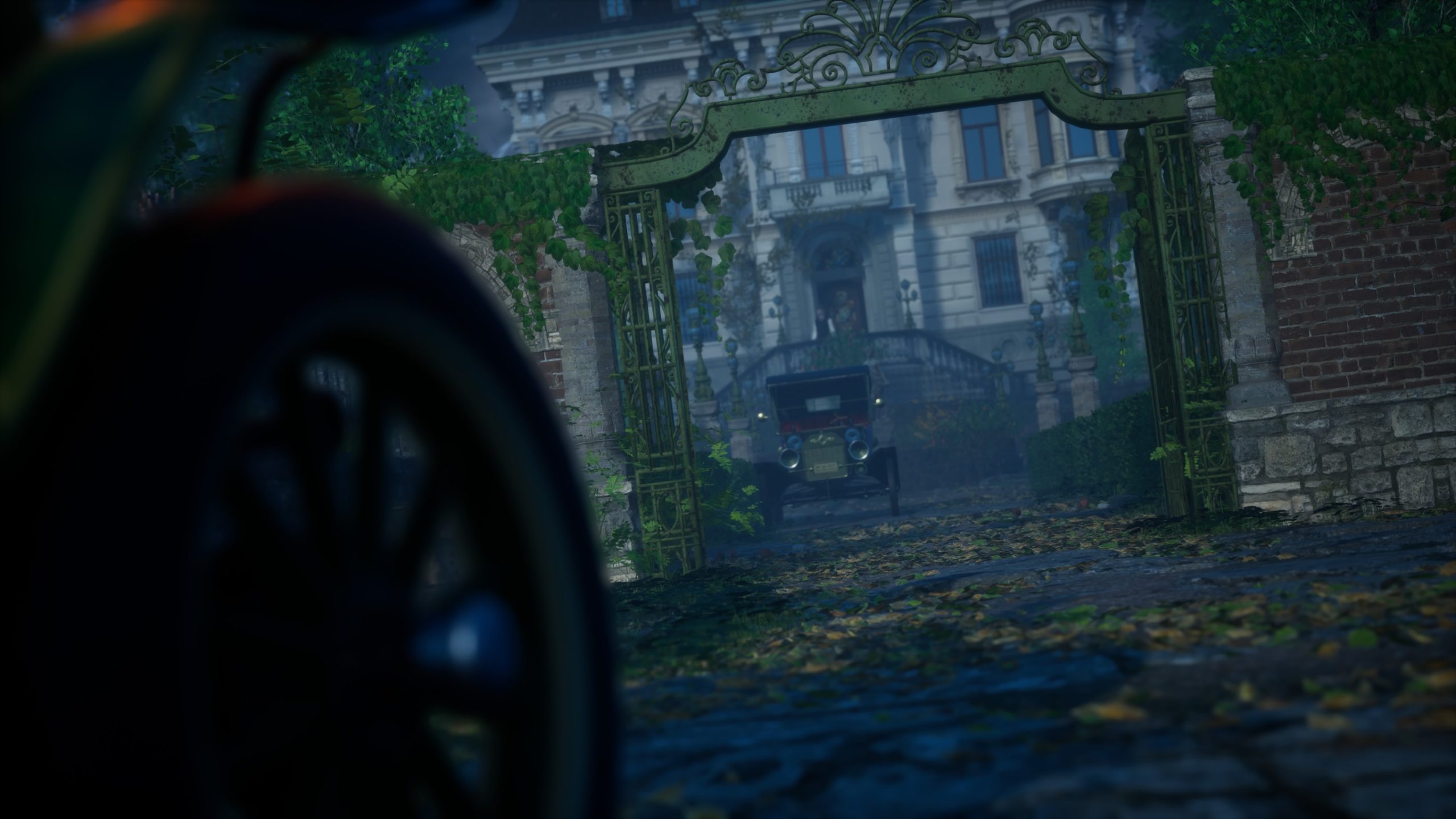
I'd like to congratulate both teams on pulling this off. It's far from easy to capture a long-vanished era faithfully in a game, and to make it accessible both to players who know the elements on show and to those meeting these cultural touchstones for the first time. All the action takes place on the Rosenthal family estate, and it perfectly captures the Romania of days gone by. The family mansion feels like a third main character: it's there the whole time, telling the family's story in a way words can't. It seems inspired by the traditional elements we all know, but reinterpreted through the opulence and grandeur that defined our country's boyar class. The mansion will certainly remind you of Pelișor, but alongside the familiar features of that famous Sinaia attraction you can spot influences from other equally well-known landmarks.
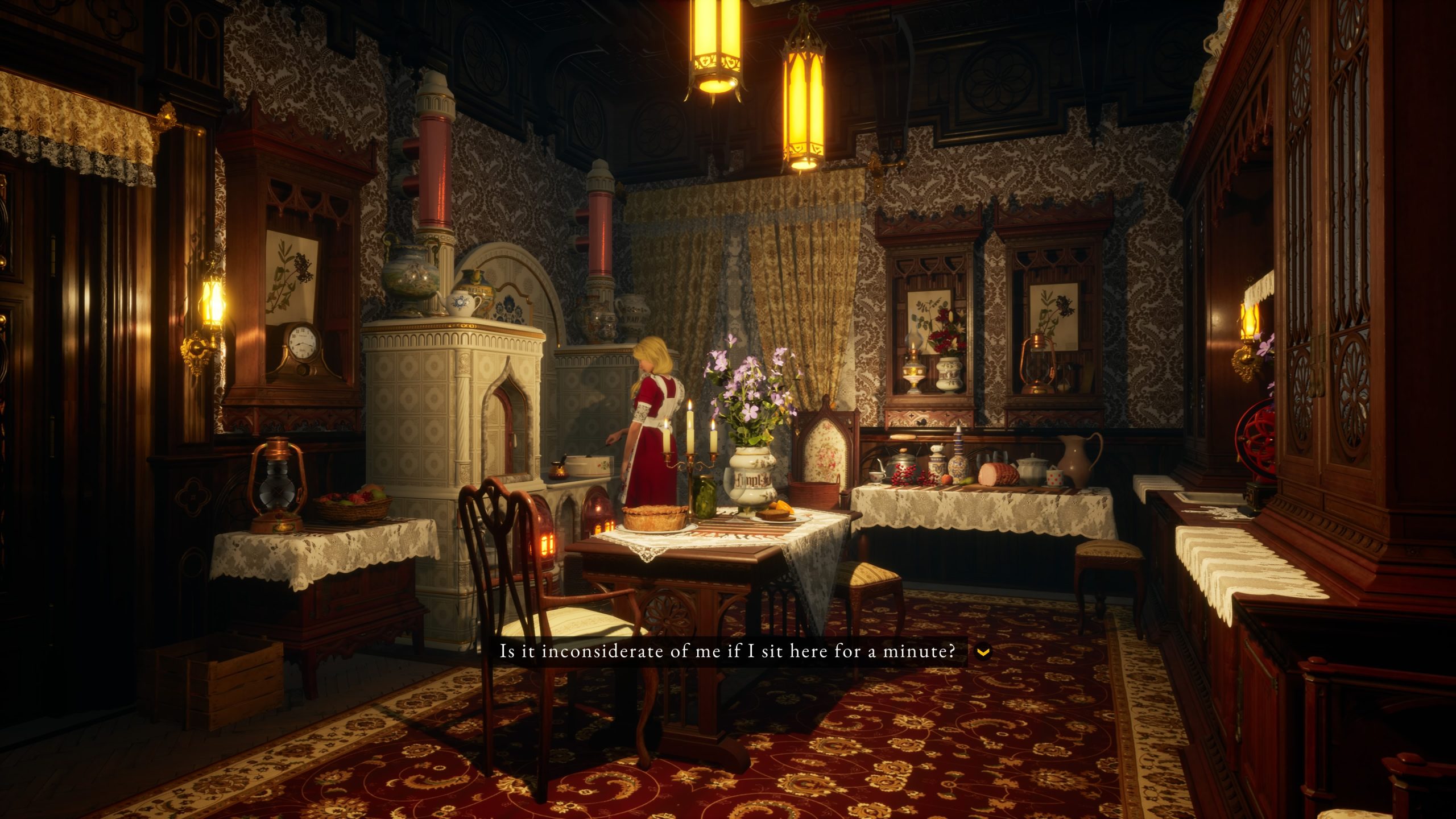
Besides the mansion, with its strong and authentic cultural identity, the characters tell their own story through how they look. I mentioned above that each represents a more or less familiar type, and what makes them truly believable is how they're presented. The Rosenthals dress in a way that reflects their social standing, while Irina wears folk costume and lives in the guest house, which architecturally looks more like a traditional village home.
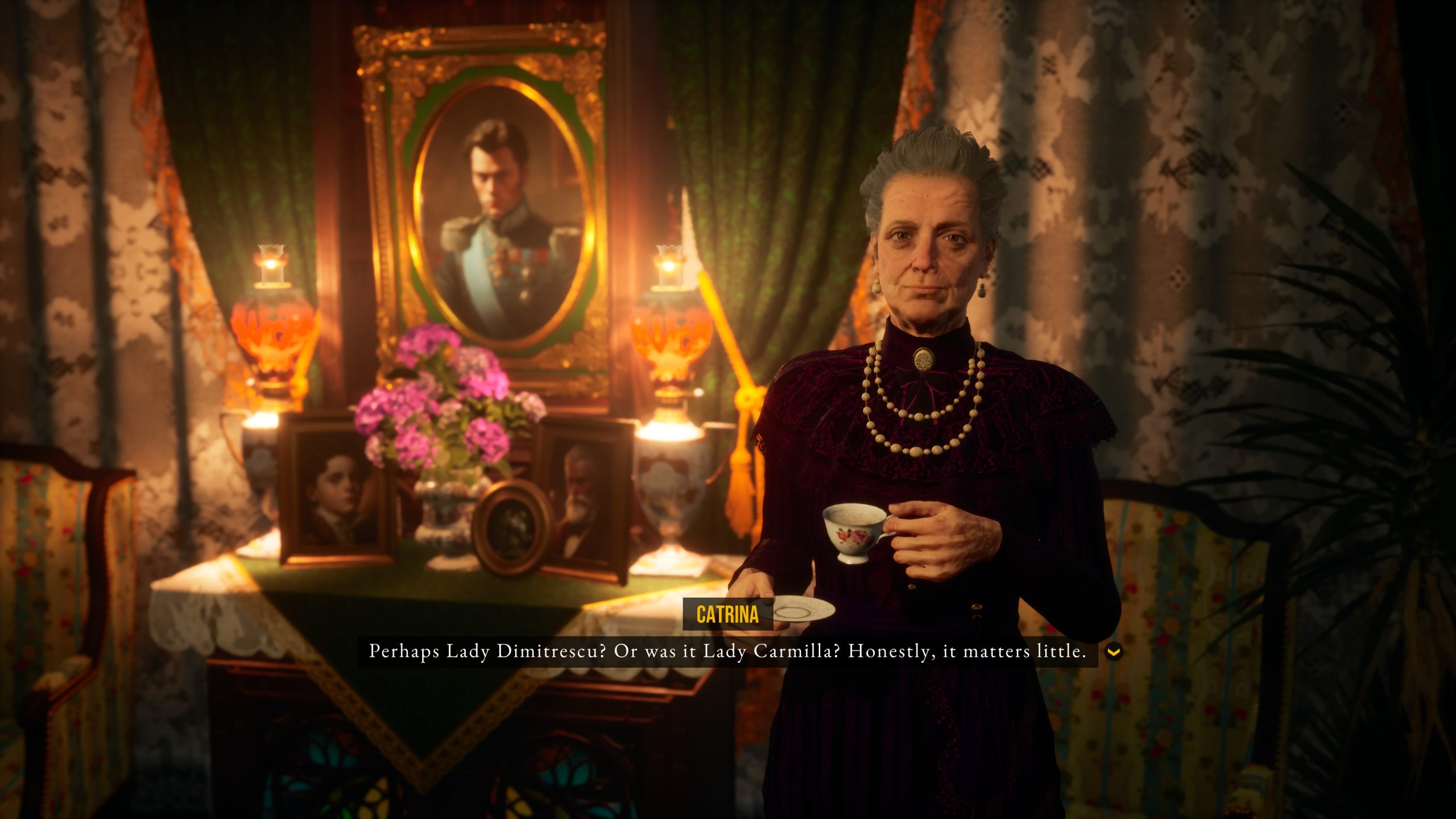
The big surprise came from the sound. The soundtrack is very good and drops us straight into the middle of the action. Unfortunately, there are absolutely no voice-acted lines. Whether you were hoping for professional actors or familiar local voices, the game has no voice-over at all, apart from a narrator we hear very rarely. The biggest surprise, though, was a technical one: the game can't be played in Romanian.
On the optimisation front, the game is brilliant in every respect bar one, which I hope gets fixed soon: the skip button. It has become almost a modern custom to skip absolutely everything, and The Crimson Maid isn't the kind of game where you skip dialogue or cutscenes, but some scenes run a little too long, so you might be tempted to hit the button that moves you along. Except, surprise! The button doesn't work in this context.
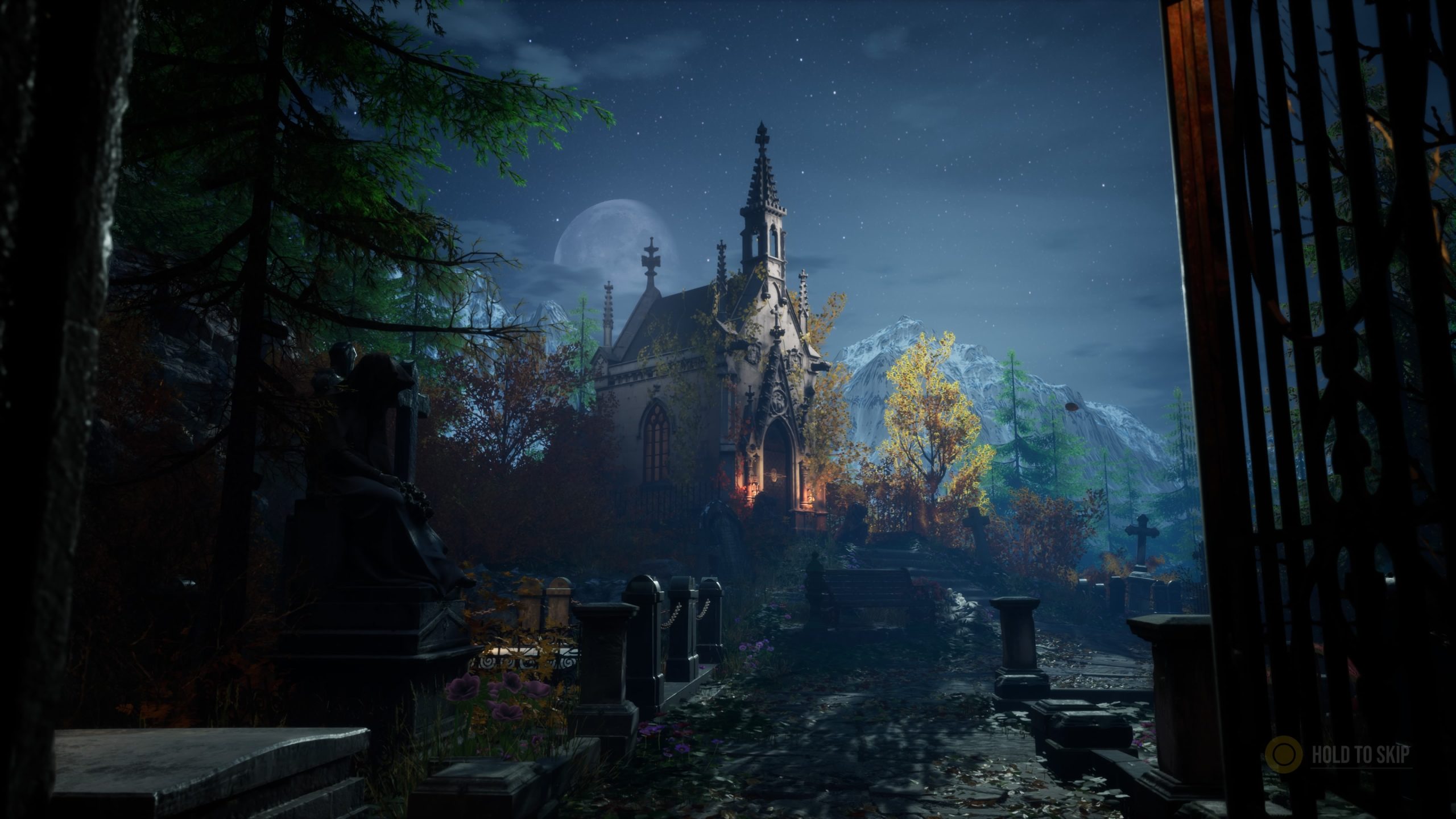
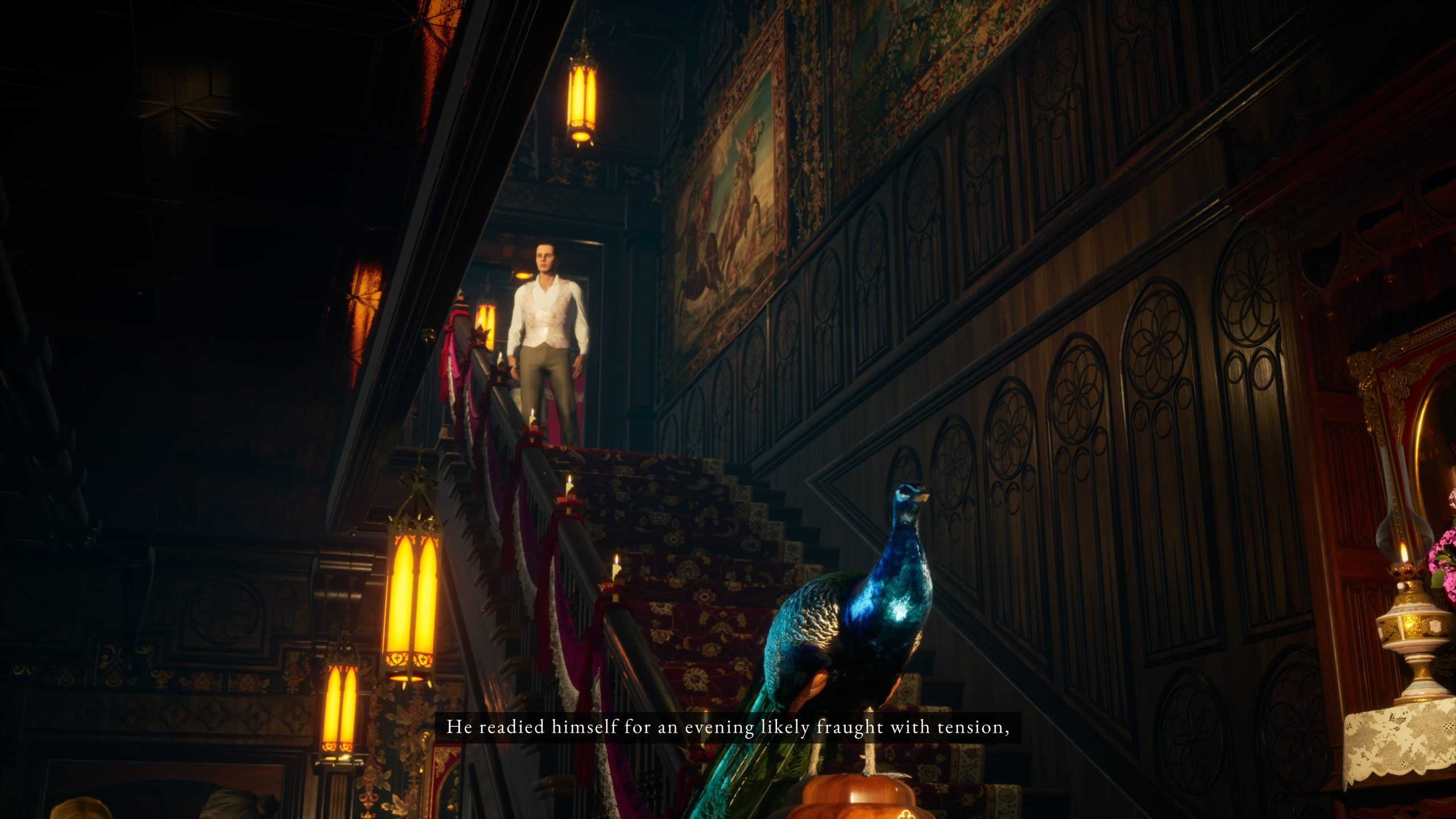
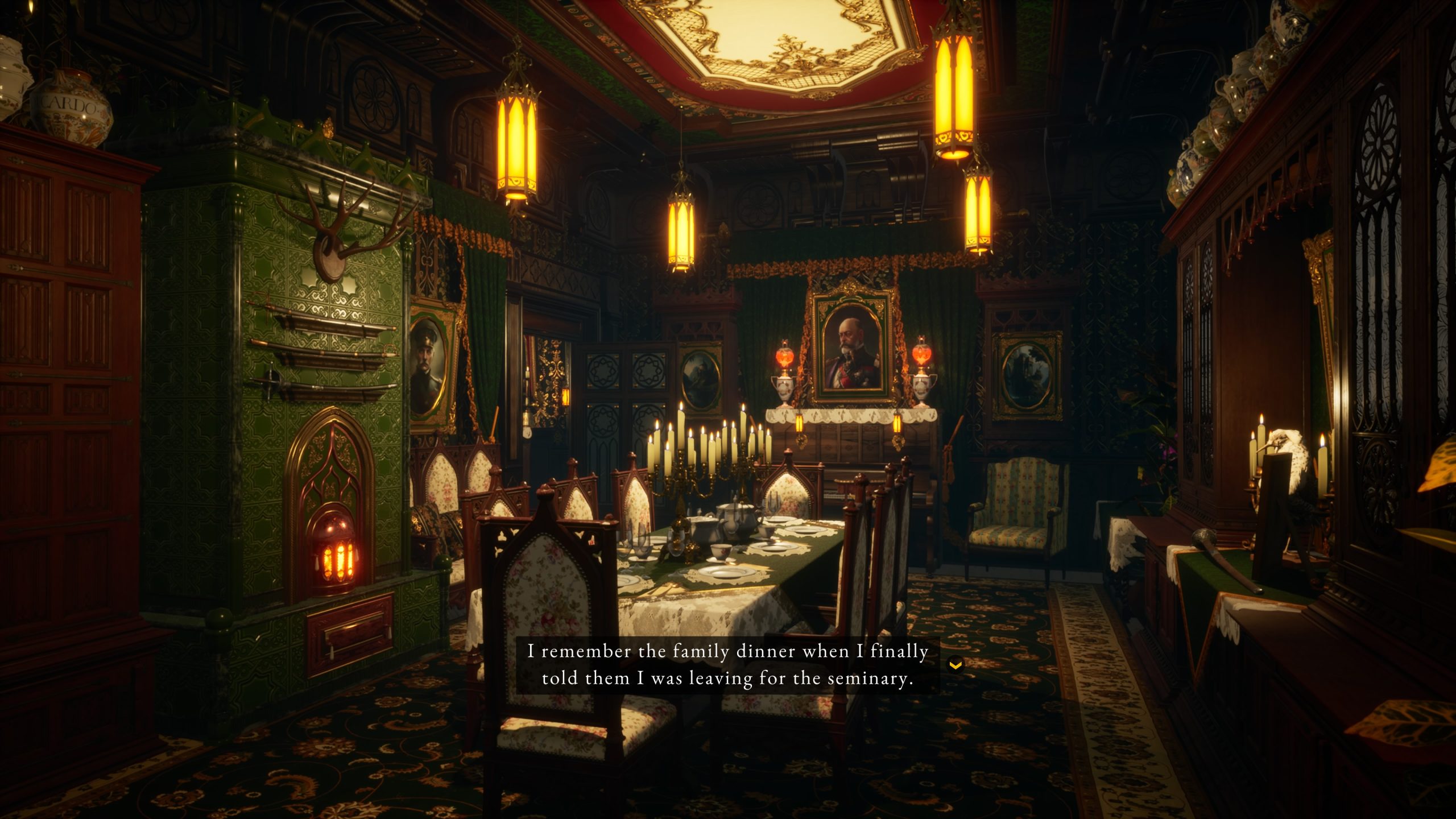
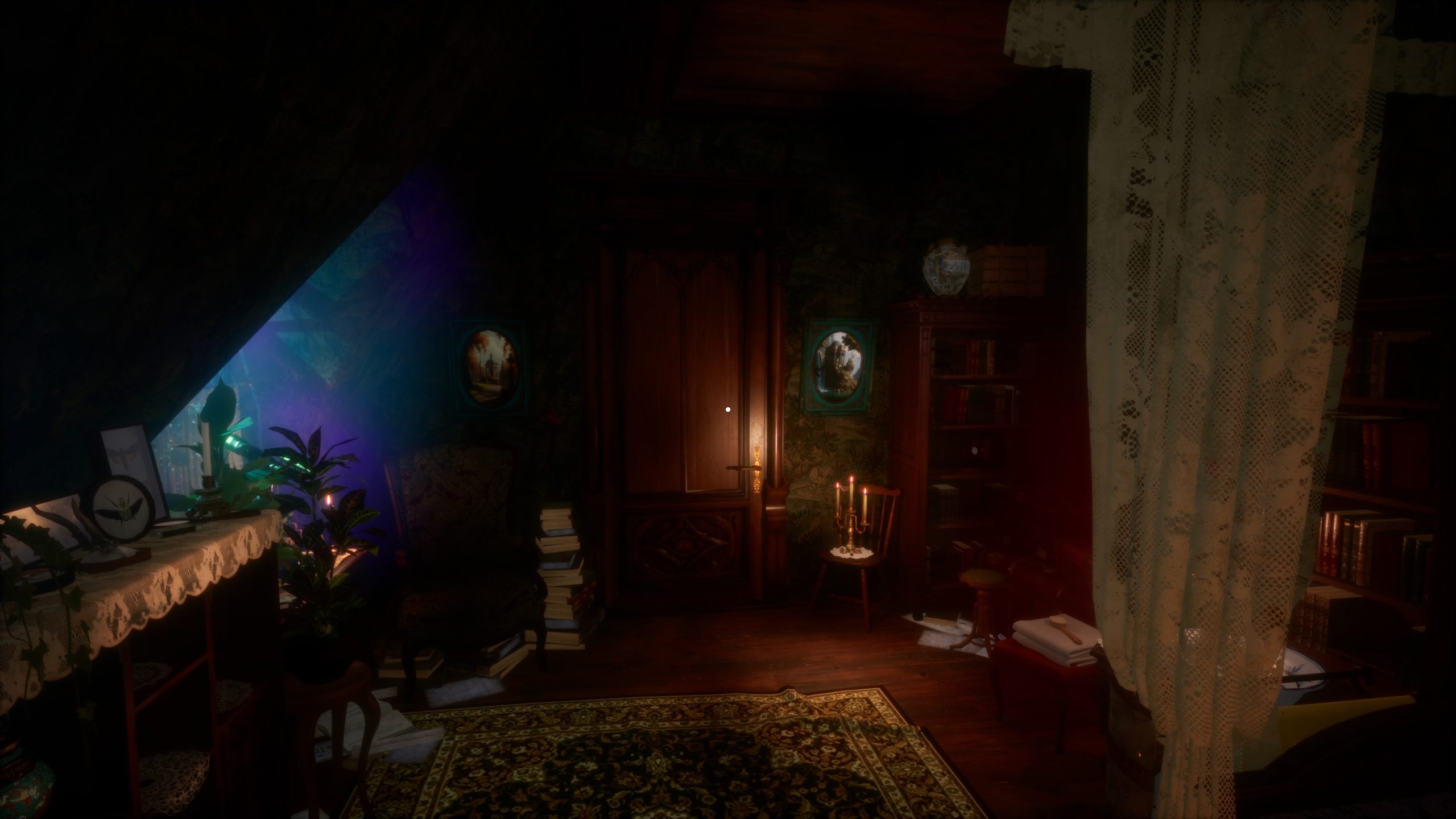
Even with all of the above in mind, The Crimson Maid is an excellent game, both for fans of intricate stories and for anyone after a fresh puzzle game. Culturally, I think it's a remarkable title, one that shows the world Romania is about more than Dracula, Hagi and kitsch.
Thanks to GrimTalin and Darkania Works for the review code and the chance to play The Crimson Maid ahead of release.

Available on: PlayStation 5, Xbox Series X/S, PC
Played on: PlayStation 5
Release date: 14 July 2026
Developer: GrimTalin, Darkania Works
Publisher: Wales Interactive
Plus
- The story
- The atmosphere
- Enjoyable puzzles
Minus
- Short running time
- Marius's slow walking speed
- No Romanian language option
0 votes
Scroll down here and stay on the page for at least 30 seconds to vote.
Pick a score from 0 to 10 (halves are allowed).