
The Thaumaturge
First published in GRIND IV, pages 56–65.
What happens when you make friends with those horrible monsters from under the bed that used to scare you as a child?
March brought a new isometric, story-rich RPG in the shape of The Thaumaturge, developed by Fool’s Theory – the people behind the upcoming The Witcher remake – and published by 11 bit studios – who you’re probably familiar with from titles such as Frostpunk or This War of Mine. The best way to describe the game up front is “If Vampyr had been a top-down game and focused more on immersing the player in the game’s world and story.”
Right. Enough standing around photosynthesising. Let’s get down to it and see whether The Thaumaturge is worth chucking a few bob at.
A Warsaw shrouded in mystery, dark secrets and violent conspiracies
The story takes place in Warsaw, Poland, in 1905. It’s a setting caught between the Polish revolutionaries’ fight for independence and the desperate efforts of the Tsarist Russian authorities to smother any threat that might disturb the peace of an already wounded Russian Empire. The city itself is changing – not only because of the struggle between the two forces mentioned above, but also thanks to the modernisation and urbanisation typical of the age.
In this pseudo-historical setting you take on the role of Wiktor Szulski, a half-Russian, half-Polish thaumaturge born into a bourgeois family. A thaumaturge is someone with the ability to see Salutors – powerful spirits embodying mythological beings drawn from entirely different religions and eras – as well as the ability to read people’s minds, influence their decisions or even pick out the thoughts they’ve imprinted on the various objects they’ve touched – a sort of Sherlock Holmes with supernatural powers. But before our Wiktoraș can unleash his powers in Warsaw, he has to get his health sorted, thanks to a bond with his original Salutor that deteriorates by the day – he was forced to travel the world looking for a cure. Once he’s dealt with his old aches in the game’s prologue and enlisted the help of a folk healer to rid him of them, he has to come home because of his father’s death – the event that actually sets everything in motion.
The first thing that impressed me is that Fool’s Theory kept their word when they said they’d make a story-rich game. You can find newspapers, letters, manifestos and all manner of documents at every turn, documents that help you understand the context and the situation the story unfolds in, even if you’re not a person obsessed with Polish history. The Polish developers really did find a way to pass on their cultural heritage so that an international audience understands what it’s about.
So what was the problem I spotted here? You have to put some effort into getting through all those documents, and it wore me down the longer I played. At first I was genuinely excited to learn all the subtle details of the setting and the context, the people, their beliefs, their hopes and their fears. But as I went on, I began to tire of trawling through page after page of documents – and this is coming from the man who read “Crime and Punishment” in a single day. I was interested, but not interested enough to read every little word on every little page. Fortunately, it seems the developers saw this dilemma coming – I’ll say more about the solution they came up with when we get to the gameplay section.
I also liked that they took the hunt for information to another level, making the most of the fact that the protagonist is a detective with supernatural powers.
They added something new to the classic formula of finding scraps of information, analysing them, drawing conclusions and finally unlocking extra dialogue options with various characters – that something is the ability to read the thoughts and emotions imprinted on the objects people have handled. That way you get straight into the minds and hearts of the characters, instead of merely holding forth like a misunderstood genius with a 900 IQ about what the different pieces of evidence might mean and how they fit together. I don’t know about you, but to me it gives a solid reason for why you know what you know.
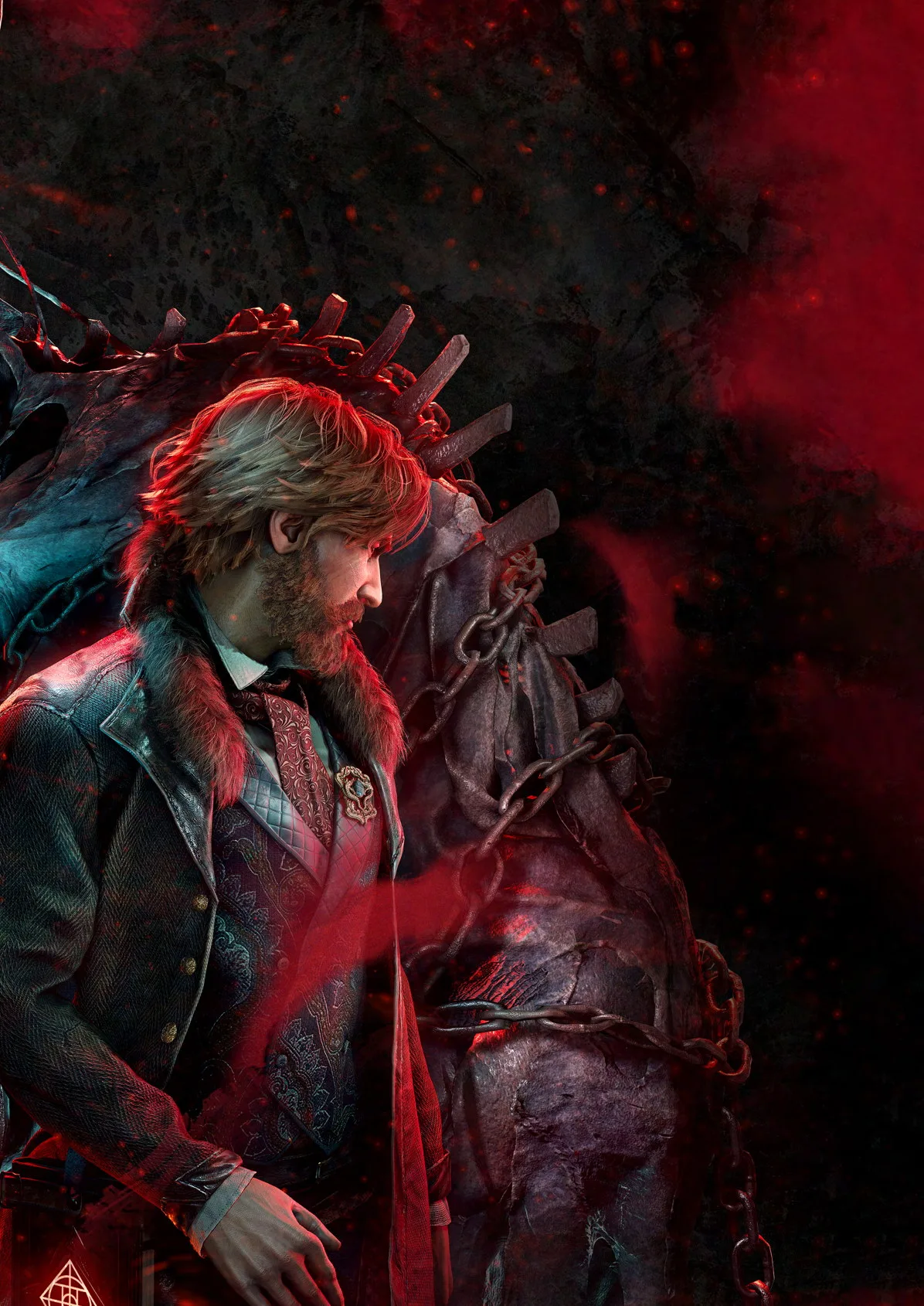
Without going into too much detail and spoiling you, I was impressed by the way they made use of myths from different cultures when creating the Salutors. The first one we’re bound to is Upyr, a demonic creature from Slavic and Turkic mythology and one of the earliest interpretations of the vampire known to modern culture – with the exception of our own home-grown Transylvanian vampires, who are clearly superior. You can see both cultures’ influence on Upyr’s outfit below. And you’ll be even more impressed by how they used other myths to create the remaining seven Salutors you’ll get access to. I’m impressed that they didn’t limit themselves to native mythology and influences and brought in Salutors belonging to other cultures too. What I find even more interesting than the Salutors themselves is the way the game explains how they’re drawn to particular people. The long and the short of it: the game has Flaws. More precisely, it revolves around the personal flaws people carry, because those are how you recruit new monsters to help you. To pull them over to your side, you have to identify the people they’re tied to... and free those people of the flaw by taking it on yourself, so that you can tame the monster. That, and you’ll have to have a bit of a scrap with the Salutors before they give in, but we’ll talk more about that in... you guessed it, the gameplay section.
One issue for international audiences might be that every monster is assigned a gender (he/she) rather than being referred to as “it”. A minor detail, but worth mentioning.
I think Polish developers in general are drawn to portraying worlds and stories in shades of grey, much as we see in The Witcher series – nobody and nothing is entirely good or entirely evil; it’s more a question of perception, and of making your peace with the decisions you take and with how they define you. The branching dialogue with its multiple decision trees is proof of that. An option may look like the right one at the time, but it can have serious long-term consequences for the world and the characters, yourself included. I like it when games put us through this love-hate relationship with our own decisions – it makes you think harder and harder about the moral dilemmas we go through day to day, and about the fact that no decision can ever be entirely good or entirely bad. Better still, it helps you accept the outcome of a given decision even when you’re not 100% happy with everything it led to. As the saying goes, it’s about choosing the lesser evil.
What I like even more is that this moral ambiguity isn’t confined to the characters you meet, but applies to Wiktor himself. Because of his background he lives at the meeting point of three worlds – he’s a thaumaturge tied to the supernatural, he’s the son of a respected Polish father, and the son of a Russian mother whom people don’t think much of. Hell, you can add a fourth dimension if you decide to kick all three of the above to the kerb and just do whatever your muscles tell you, chasing your own selfish motivations. And the kicker is that all four paths look workable, depending on your morality – there are arguments for and against each. For instance, even if you’re an extremely powerful thaumaturge, that doesn’t mean everyone will kiss your feet – some will be openly discriminatory towards you and your whole line of sorcerers, insisting you don’t belong in their society. Again, whether that bothers you or not (and whether you make decisions that make you liked or not) depends entirely on the sort of person you are.
Talking about morality is a perfect segue into the characters. Let me tell you, they’ve done a phenomenal job of creating complex, deep characters – from the ordinary socialist worker who just wants to fight for his rights, to the common thief driven by quick profits, to the aristocrat who sets enormous store by appearances and by how society sees him. You can get inside their heads, into their pasts. And you can even work out what drives them, which makes it very hard to judge a book by its cover – every character is driven by something deeper than they let on. You’ll be hard pressed to find an NPC who just lobs a fetch quest at you and then vanishes into the void – everyone has a role, and the game will give you the chance to understand their motivations and work out what that role is.
What's more, they didn't limit themselves to characters of Russian and Polish origin. Themes such as antisemitism and the way Warsaw's Jews were treated are explored too – you'll get to find out how they were persecuted, and to see that both the persecutors and the persecuted can be right or wrong, sometimes at the same time. And social inclusion doesn't stop there – you'll meet characters of plenty of other nationalities: Germans, Austro-Hungarians, Spaniards, Arabs, Tatars and even Americans. What's even madder is that it never feels as though these characters were forced in with hammer and chisel to fit the historical context we're talking about.
My problem with these characters, though, is how their lines were handled – they can babble whole phrases in their native tongue without you understanding a jot, because you're never given a translation of what they're saying. I could work out what the writers were getting at with a few of those lines, since I'm familiar with some of the cultures in question, but with others I simply gave up. My reaction was something along the lines of: “You know what? Forget it. Even if you're cursing my mother, I won't have a clue.”
Another thing I found problematic was that remnants of Polish lines had survived in the English-text version of the game. To tell the story of the era, they used the collectibles. You can visit historical points of interest, look at stereographic photographs of them, listen to music of the period on a gramophone, and even sketch the various events you take part in. At first it irritated me a little that I kept having to traipse around like a madman to find them all, but then the situation turned 360 degrees when I found out they'd also hidden proper missions that were linked to
A few final thoughts, before we move on to the gameplay section:
The game could do with a story recap option. With so much information, so many characters and events to get through, I'd love to see something like a “Previously on…”. As a writer, I've no problem holding on to that sort of detail. But as someone who streamed the game, and as a marketer who understands that people lose patience and attention fast these days, I'd warmly recommend they add such an option. Personally, I enjoyed putting the recaps together for the audience myself, because they helped me get through the earlier information too. But if I'd had the option to show them a recap, I wouldn't have hesitated to use it. these collectibles when all I expected was to get just a sketch of an event – hats off for such plot twists.
What disappointed me slightly were the sketches, which looked rather rudimentary – they seemed more like concept art they'd used to pad out the content, and it would have been far more interesting if they'd added a bit of colour to them.
As for the points of interest you can view, it bothered me that we're not allowed to admire them for as long as we feel like and then press a button to get back to our adventure. That's more of a gameplay concern, but hey, the game has extraordinary art and environmental design – and I want to be given the option to admire them at my leisure.
Speaking of missions where you collect various items, the game includes side quests you can accept once you find certain characters, so you can learn more about them, help them or not, strengthen your bond with them or not. It all depends on what you want to do with them, but know that they're in the game and genuinely worth experiencing.
Since I've mentioned the sheer volume of information in the documents, it would be appreciated if they added a bit of voice acting for them. If not for all of them, at least for the conclusions Wiktor draws. It gets extremely tiring to read everything. Especially if the developers want the game to gain popularity and people to stream it – it doesn't feel great to make a content creator read the whole story from Adam and Eve, because they'll end up losing their voice; I know I got hoarse at one point and gave up on reading altogether.
Even though the game includes decision trees, sometimes it feels as though you're forced into conflict and fisticuffs, no matter what you tell the characters – some of them really do want to give you a good hiding. I can think of a few potential reasons why that happens, such as showing off all the combat system's capabilities or reflecting how agitated people are because of the tensions they put up with day in, day out. But I think at the end of the day it should be the player's decision whether they want a scrap or want to resolve a conflict amicably – they shouldn't trick us by saying “Yes, this is a peaceful option, no fuss” only for you to find yourself in the middle of a street brawl a second later. After all, you're an all-powerful supernatural detective – how could a street thug get the better of you mentally, when you could very well manipulate him into minding his own business? Even though the atmosphere is dark and tense because of the various changes and conflicts taking place, the writers have managed to slip in subtle humorous remarks to smooth out our furrowed brows. You'll even meet a character whose whole role is to do just that, and they do it brilliantly. Based on the decisions you've made over the course of the game, you can access one of 12 different endings. If you were worried your decisions wouldn't matter, you can rest easy – they will.
Thaumaturgic gameplay – sometimes a blessing, sometimes a curse
The game signals right from the start what you'll be spending most of your time on: collecting a heap of evidence and documents. I do appreciate, though, that they gave us a solid reason to gather all of it, on top of helping us understand the historical context and giving us more dialogue options with various individuals. The reason being that you get experience for it – exactly, you'll level up by discovering documents that hand out experience points. After each new level you'll receive Thaumaturgy Points, which you can spend to gain different abilities. Those abilities are split into four different branches: Heart, Mind, Deed, Word. When you put points into them, not only are you better prepared for future fights, but you also raise the level of each branch. There are two further reasons you'll want to do this:
1. It gives you access to dialogue options through which you can influence and manipulate people's decisions.
2. Certain evidence that's crucial to certain missions can't be interpreted without a certain level in a branch – if you're like me and want to know everything in the moon and the stars before you wade into discussions and make decisions, you'll probably keep an eye on this.
As I mentioned in the previous section, documents are the most important thing in the game, but also one of its weak spots. As a writer, I enjoyed losing myself in the story by reading them, but it became tiring after a while. I even got to the point where I wanted to skip the reading. And I'm glad to see they anticipated that and implemented a few solutions from the off. The first solution is a summary they give you for important evidence you find – instead of having to read a two-page letter, you get an easy-to-grasp summary of some four or seven lines. The second is the Conclusions system – once you've found enough evidence relating to a particular case, you'll be sent to a screen that presents the conclusion resulting from all the information you've gathered.
Speaking of Thaumaturgy Points and levelling up, you first have to tame the first four Salutors (three, because you get Upyr from the start anyway) in order to progress down one of the four branches I mentioned. The game likes to fling Thaumaturgy Points at you like your uncle at a wedding when Adrian Copilul Minune strikes up, and at first I assumed that's how it would be for the whole game – I literally sat there with fifteen Thaumaturgy Points available and nothing to do with them; mind you, I'm also a kleptomaniac dwarf who did a ton of side and optional quests. But as I pushed further into the story, I got the chance to spend them all, depending on what I needed for particular fights, and on what I needed to unlock evidence and dialogue options. As someone with a foot in game development, one possible approach would be to unlock these points as you complete missions.
You don't have to work yourself up too much about finding the initial Salutors I was talking about – you'll come across them naturally, through the missions that advance the story. The other four are entirely optional (with one exception) and you can track them down through side quests. I'm a completionist, so of course I wanted to round them all up like Pokémon and see what each one was about. Optional Salutors also give you additional dialogue options that let you influence certain characters, but you don't need them to do that – it's enough to gather all the evidence that lets you steer people towards similar decisions. If it were up to me, I'd suggest adding these to your arsenal as well, so you have extra options when enemies are spoiling for a fight. Who knows, maybe some of their abilities suit you better than others.
Since we've been talking about combat and how everyone approaches it, I'll give you a few details about how it works. You have Quick, Planned and Damage Over Time abilities available to both Wiktor and his Salutors. The bar along the top always shows you how quickly the actions you pick will play out next to the enemy's, so you can decide whether it's worth going for quick actions that incapacitate your opponent, or powerful but slower ones.
What's more, all these actions come in three tiers during a fight – you unlock the next tier of an action by performing the one below it. Simple. For instance, you can start with the first Quick Attack, which opens up the level-two version, stronger, and eventually the level-three one, the most powerful variation of the lot. Just bear in mind that if you switch between different types of action, you reset the previous one back to level one. So if you use a Quick Attack and then decide to use a Planned Attack, you won't be able to carry on with a level-two Quick Attack – it resets.
My favourite way to approach battles was to lean on Influence-type actions. Why? Every enemy has a Focus bar you can drain. Once it's empty they slip into a vulnerable state, and both Wiktor and his Salutors can pull off a Strong Attack that's faster and hits harder. What I used to do was stack Influence-type actions for Wiktor and his Salutors alike, to strip those Focus bars as fast as possible and be the one dishing out the beating, Târgu Ocna style. And no, you don't have to copy my strategy to tan the enemies' hides – I've got strategies built around offensive actions and I can guarantee they're just as viable as my gentler approach; I just fancied some One Punch Man roleplay.
Another thing that keeps every fight unique is the Weakness system – most enemies come with a bonus you can strip away if you hit them with a specific Salutor. Once you've switched that bonus off, you can go back to your favourite Salutor – you're not obliged to keep the one that disabled the bonus in play until the enemy dies. You can also stack recurring effects on enemies – which sends them into an existential crisis, aka Suffering. A lovely quality-of-life touch is the pre-battle screen, where you can study your opponents' bonuses, vulnerabilities, attacks and health, and just as easily spend any unspent Thaumaturgy Points to improve your abilities and make your life easier. I appreciate that they don't send us back to earlier save files, and that they don't leave you fighting at a disadvantage just because you forgot you had points left to spend.
You can also unlock upgrades for your abilities and make them more effective if you progress far enough down one of the four branches I mentioned. These upgrades do things like slow enemy actions, cancel them outright, chip away at Focus points or make abilities hit considerably harder. They come in three levels too, and you can attach them to your abilities to use their effects. Just remember you can't put a level-three upgrade on a level-one ability. And you needn't worry if you've stuck an upgrade on a given ability and it doesn't seem to gel – the game won't lock your choice, so you can play about with these upgrades and mix them to your heart's content.
I had the chance to talk to the Lead Combat and Gameplay Designer at Fool’s Theory (aka I barged in and we became mates) after reading one of his interviews, and what he said really holds up: “Our combat system seems difficult, but it has intuitive rules. If you pay attention to enemy bonuses and their Focus level, you'll see it's not that hard.” What bothered me about the fights? First off, everything moves slower than a dead man's eye. Even after I set the action speed as fast as it would go, the animations still felt like they dragged. I'd recommend adding an option to skip actions – what can I say, you start to get bored after a while of watching the same manoeuvres play out in combat.
Secondly, your actions lock in once you've chosen one for Wiktor and one for your Salutor. You can change your mind and cancel if you've only locked in one action, but not if you've locked in both. That seems odd to me, because sometimes I just want to see what would happen if I picked two actions and what the result would be, without necessarily committing to them. It'd be nice if they added a “Commit” option to make in-fight decisions easier to make.
Thirdly, fight difficulty is inconsistent across the game compared with what you face against the final boss. You can wipe the floor with most enemies over the course of the adventure – I played on the hardest difficulty and I guarantee that a little patience, enough to get the measure of your enemies, is all you need to plan your actions successfully and win encounters. But when the final boss turns up, it feels like they overdid it a bit. Yes, it's the final boss and it's meant to make your life hell – it has some unique mechanics and decisions too, and I commend them for that – but again, the difficulty seems to spike exponentially compared with the other fights; it didn't feel natural.
Main missions aside, mission progression can feel unintuitive at times. I mention it because I often found myself unable to get at the information I needed to push a mission forward, so I'd toddle off to finish other missions and come back to that one later. There was a bit of frustration too thanks to missions with a time limit on them, where nobody tells you what “limited” actually means – I was constantly afraid I'd cancel one of them by finishing another. Only later did I work it out for myself: they only expire if you haven't done them before moving on to the next act of the main story. They could simply say that instead of telling you your time is limited – it'd be far clearer and more intuitive, given that each act ends once you've finished all the main missions.
The developers also made sure the fashion diva in each of us has something to enjoy, with new outfits – which you may well have no idea how to unlock. I had to go online to find out that unlocking them means hunting down about three documents per clothing set, after which I get pointed towards a fashion magazine I have to show the tailor so he can dress me in something new. You can thank me later for flogging you the tip, and for the fact that you can now collect all the snazzy clobber you want. On the progression front, my narrative-design brain felt a New Game+ option would be phenomenal for a game this loaded with information and story. Why do I say that? Since the main emphasis in a game like this is on the story, it feels a bit of a slog having to set off on a collect-a-thon for documents, points of interest, collectibles and so on just to access the abilities that unlock dialogue options and skills. On top of that, you can't fully upgrade one of the four branches, and that locks off certain dialogue options – I don't know about you, but I'd rather have access to all the dialogue options than get a message saying “You don’t have enough of X dimension to pick this option”. I don't like being forced to pick an option that doesn't fit the sort of character I want to play.
Speaking of role-playing, The Thaumaturge uses the Flaws system (character flaws) to steer you through dialogue options. For example, Wiktor's natural flaw is Pride – you can choose to feed his pride and turn him into an insufferable braggart by picking certain dialogue options marked with
A few things worth mentioning:
The game keeps a dialogue history during conversations. That way you always have the option of leafing back through how each conversation went before deciding on your reply. It also gives you the option of popping to the loo or doing something else for a while if you've gone numb from playing, safe in the knowledge that you can see what lunatic answers you gave when you get back. You also get trams and carriages to travel between Warsaw's districts, depending on which missions you've got on. A neat touch is that this fast-travel mechanic drops you at the closest point to whichever mission you currently have selected. Another neat touch: trams will stop and honk if you throw yourself in front of them, carriages will pull up and the horses will whinny at you, and as night falls you'll notice the lamps being lit by passengers. The sound of Wiktor's fingers when he uses the Perception ability to uncover evidence and documents around the world is oddly satisfying. The game map itself isn't all that vast, but it's easy to forget that given how the developers have built the gameplay, nudging you to revisit each district in search of new secrets. Areas shift in real time after every event or mission you finish, which keeps the experience feeling fresh in a fairly limited space, if you look at it objectively. the symbol of pride. It's worth remembering that you can't bring your Pride level back down once you've started raising it. Get too proud and some of the humbler replies will be locked off in dialogue. Get too humble, and the arrogant lines are off the table. It all depends on how you want to build Wiktor's character. You won't get extra dialogue options if you decide to take on other people's flaws, but you do get certain benefits – for instance, you can be saved from death once, you can double your damage, and so on in combat. To avoid spoiling too much again, taking someone's character flaw on yourself isn't always the best decision, but I'll leave it to you to decide what's best in those situations.
Visually impressive, and plenty of attention to detail
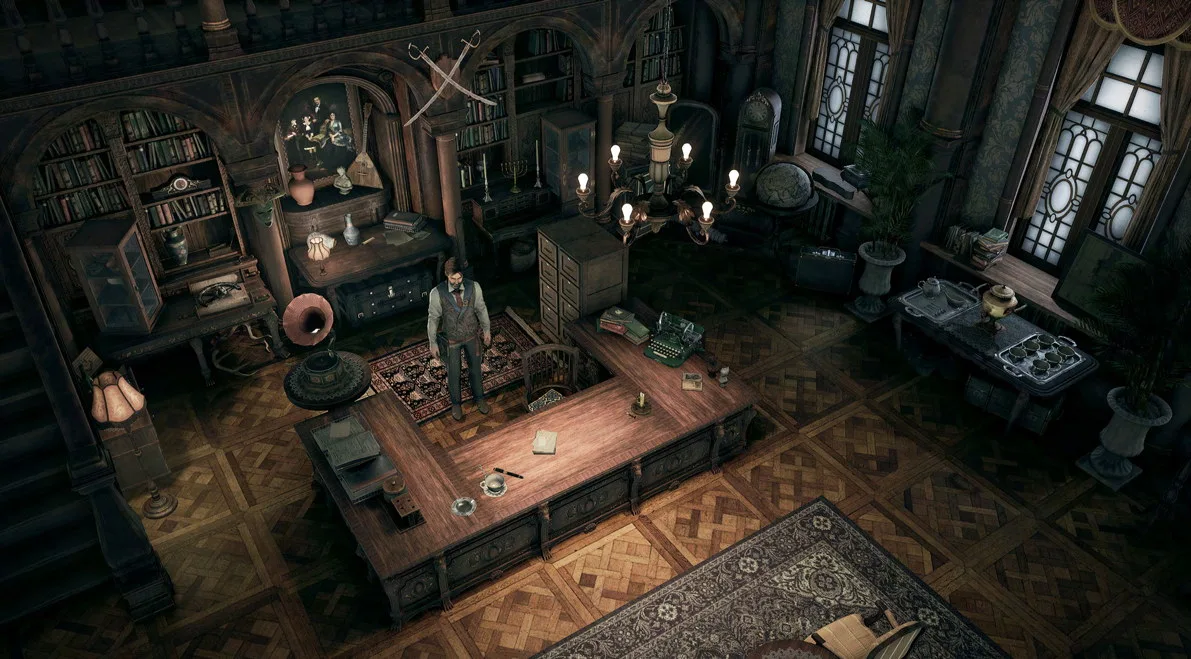
For The Thaumaturge, the people at Fool’s Theory brought with them the experience in making visually impressive games that they picked up on their other released title, Seven: Enhanced Edition. I’d like to “blame” the fact that the Polish developers worked on something very close to their hearts – in a few interviews they even mentioned that some of the developers live in the districts depicted in the game. From the buildings destroyed by the Polish Uprising of 1830-1831 to the mud and puddles on the streets, from the meticulously detailed interiors and exteriors of bourgeois houses to the filthy slums, the 1905 Warsaw they brought to life is impressive.
And it’s not just the environment itself that impresses – it’s the attention paid to the character models too. I often found myself pausing scenes just to admire the detail on Wiktor’s clothes, on some policeman’s uniform, or on a society lady’s dress and jewellery – that’s how fascinated I was. On top of that, the bloom effect, the lighting, the colour palette and the cinematic quality of the visuals made me feel like I was watching a film. The decision to use an isometric perspective went a long way towards showing off what the team can do artistically. I certainly never got bored walking through these gorgeous districts while wondering about my next mission.
A small detail I appreciate: when you use the Perception ability to guide you to your next objective, the pinkish particle trail it leaves behind is reflected in mirrors, windows, puddles and, in general, any surface that ought to reflect light.
The icing on the cake is that different events leave their mark on the environment permanently. If a huge explosion goes off, every time you revisit that area you’ll see the traces of the damage. If people vandalise someone’s property, the same thing happens. It isn’t only the characters who go through a change – the world itself changes alongside them.
As much as the isometric perspective delighted me, it came with one major drawback: it stopped me properly admiring Wiktor’s new outfits and the details on them. However hard I tried to zoom in, I couldn’t – the only option was to stare at them during dialogue, as I mentioned. You aren’t given the option to zoom in or rotate the model even in the dedicated windows, when you change clothes or go to the barber. That’s a shame, given the praise I was heaping on the game a moment ago. I consider it a missed opportunity and I wholeheartedly recommend they let us zoom in and rotate the model in those dedicated windows. What also disappointed me was their physics system and how it handles hair and clothing materials. Both are very static and make the characters feel like plastic figurines. Sure, there are a few items of clothing that move, but they tend to do it chaotically, flailing all over the place every time the camera cuts from one character to another – it’s as if the scarves, veils and ties had been frightened half to death.
And the facial expressions are extremely limited, which only adds to the feeling that you’re looking at plastic figurines. The facial muscles seem atrophied and expressionless, incapable of conveying what the characters are feeling. Wiktor doesn’t have this problem, but every other character does.
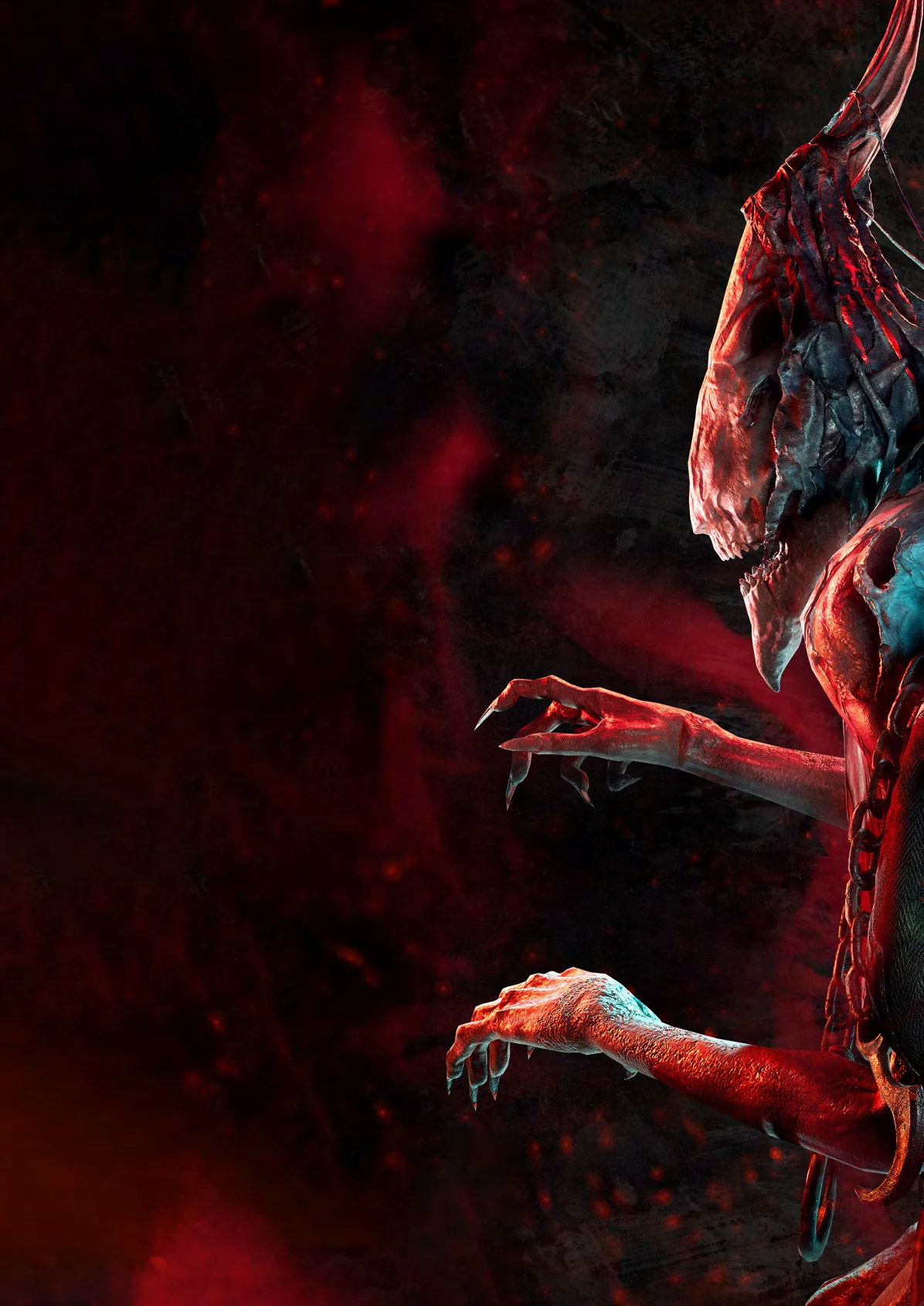
Last but not least, what they’ve pulled off with the monster models is brilliant. One look at them is enough to make you wet yourself with fear. And once you’ve recovered, you can go back to admiring their grotesque beauty.
I played on the highest graphics settings and I didn’t regret it.
Music and sound bring the game to life
I absolutely have to mention and congratulate Agnieszka Wlazły, Sutari and Sebastian Syczyński for the music they supplied for the whole game, helping to give a distinct identity to the characters, the districts and the moments you pass through. The soundtrack has a mysterious, dark, even ritualistic tone that complements the atmosphere and the look of the thing. And it isn’t only the specific Polish rhythms that put you in mind of The Witcher series – if you remember when I mentioned the different cultures they’d worked into the story, you’ll be pleasantly surprised to hear they have melodies specific to those too, to complement them.
Hats off for the voice acting, and for picking a roster of Polish and Russian actors to give us that sense of immersion. It genuinely made a difference to the way characters spoke when they had to use words and phrases in their native language – believe me, it’s easy to feel the difference between an English actor trying to speak Polish and a native Pole saying the same words, especially when the latter is also fluent in English. The one thing that took the shine off their performance was the inexpressive facial models I mentioned.
Some Hell-raisers made sure this game has Flaws
Time to finally unleash the demons that haunted me for as long as I played The Thaumaturge.
I started out on a DualShock 4 controller and even got a prompt saying the game offers native support for it. But I worked out fairly early on that the Perception ability wasn’t doing its job – it showed me the way to my next objective, but it wouldn’t let me search for clues in certain areas. This happened just a few minutes after I’d started the game, and I had to switch to mouse and keyboard. It wasn’t a big thing in my case, but it’s certainly a problem if you like playing with a controller from your collection, especially when the game is supposed to offer native support for it.
There’s also a mechanical problem when you enter or leave buildings, because you can’t move with the keyboard and your character will walk on the spot for a few seconds. The problem doesn’t come up if you use the mouse to move your character. I don’t know why it happens, but it’s certainly a consistency problem when movement with the mouse works and movement with the keyboard doesn’t. The same thing happens if you use a controller to move.
Sometimes it’s hard to get to a particular spot to read a clue using the keyboard; other times it’s hard to do it using the mouse. There are consistency problems where movement is concerned. There are also a number of noticeable differences between the script the actors read and what appears on screen.
I’m a bit disappointed that the icons for entering and exiting buildings, interacting with characters and fast travel are so small, given they’re the only way to access those options – for example, I have to click exactly on the icon to leave a building, and clicking on the doorway itself doesn’t work; or if I want to take a carriage to travel, I can’t do it by clicking on the carriage itself. Speaking of carriages, you can only get into them from the left side, which is odd given they have two doors.
The fact that you can’t add points of interest to the map or mark locations feels frustrating at times. The same goes for missions not showing up on the map, which forces you to use Perception to get your bearings. I know, I said I like hearing Wiktor snap his fingers, but sometimes I just want to know where I’m off to and I’ll manage from there – have a bit of mercy on the poor man’s fingers.
You can only see the map of the district you’re in, and if you want to look at another one you’ll have to travel there first. I find that frustrating when all I want is to see whether there’s a tailor or a barber or a point of interest I fancy visiting, and work out whether it’s worth making the trip. We shouldn’t have to go there just to check that.
Some missions include optional activities, but depending on the order in which you decide to tackle them, some might disappear, which drops you into a vicious game of “Which one should I go to first so it doesn’t lock out the other?”. Sometimes you even have to do If you’re a fan of dark, story-rich games, you should give The Thaumaturge some thought. The way the story is told is solid, decisions have a real impact and even lead to twelve different endings, and it has only minor problems such as triggering conflicts when you’d rather settle a situation peacefully. The environments and the characters are phenomenal, and the attention to detail on both is plain to see. The only problems come down to the fact that you can only admire your character and their clothes during dialogue scenes, you don’t have the option to zoom in or rotate their model in the dedicated windows, and the characters are very inexpressive. The voice acting and music are immersive and create a distinct identity for every character and district, with a sound design that a little save scumming to make sure you’ve discovered everything there was to discover. Speaking of saving, the game overwrites the manual saves you make as you progress through the story, which is annoying if you want to go back to a particular moment you saved by hand to make a different choice. I’d suggest separating manual saves from automatic ones, to give us more freedom of choice – otherwise, why would you even need saves? I’d like to scream about the next thing
Final Verdict
brings 1905 Warsaw to life. Yes, there are a few mechanical problems and gameplay improvements the team should sort out, especially around movement and getting into certain areas, which will frustrate you at times – but not to the point where you'd put a boot through your monitor and never want to play again. They could also even out the combat difficulty across the game – preparing us gradually for the final boss, rather than letting us nearly win (and forcing a scrap on us against our will) and then suddenly clobbering us with a final boss that feels out of place.
I have to confess, after finishing the game 100% I was leaning towards an 8/10. But after going back over my notes and feedback, I leaned towards an 8.5/10. As the truth is usually somewhere aspect towards all developers who include missions where you have to follow an
NPC: STOP MAKING THEM WALK MORE
SLOWLY THAN THE PROTAGONIST! Seriously. I thought we'd worked that one out by now. It's not that hard to adjust their speed so they walk as fast as the main character – they can always stop if they get too far ahead. Last but not least, the lip-syncing doesn't seem terribly well matched to the actors' delivery throughout the game. in the middle, I'll go with an 8.25/10. Go and play The Thaumaturge, dear folks – it's worth every penny, and you'll get at least 30 hours out of your first run, with the option of stretching that to around 40 if you want all the achievements.
I might change my mind when they add the Polish voice acting, since they've said they're working on it – that would add even more to the immersion factor. But that's a conversation for another time. Until then, I've kissed your wallet goodbye. Watch out for the monsters under the bed when you turn the light off – they may be more real than you think.
CONSTANTIN
0 votes
Scroll down here and stay on the page for at least 30 seconds to vote.
Pick a score from 0 to 10 (halves are allowed).