
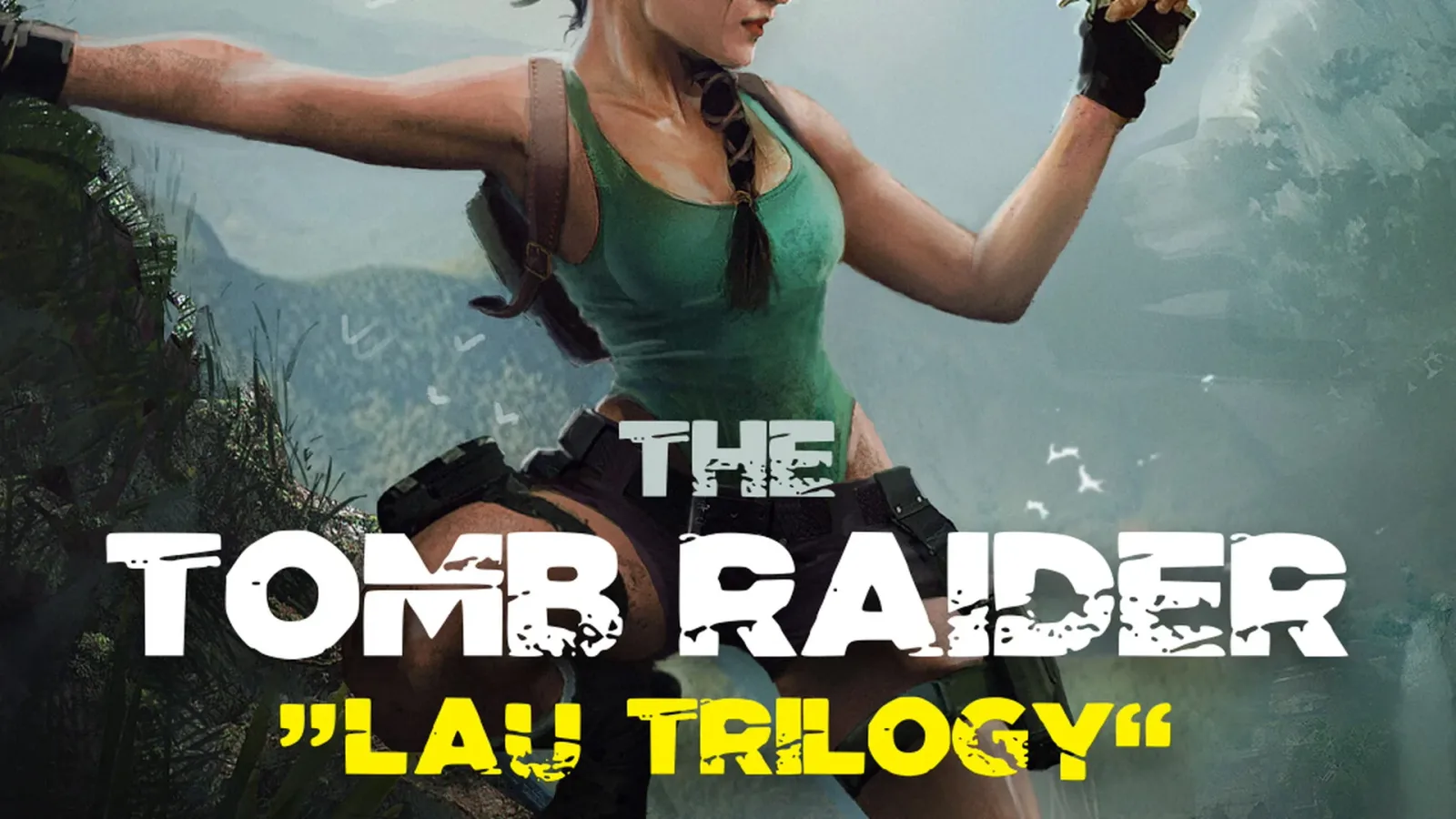
The Tomb Raider “LAU Trilogy”
First published in GRIND III, pages 50–55.
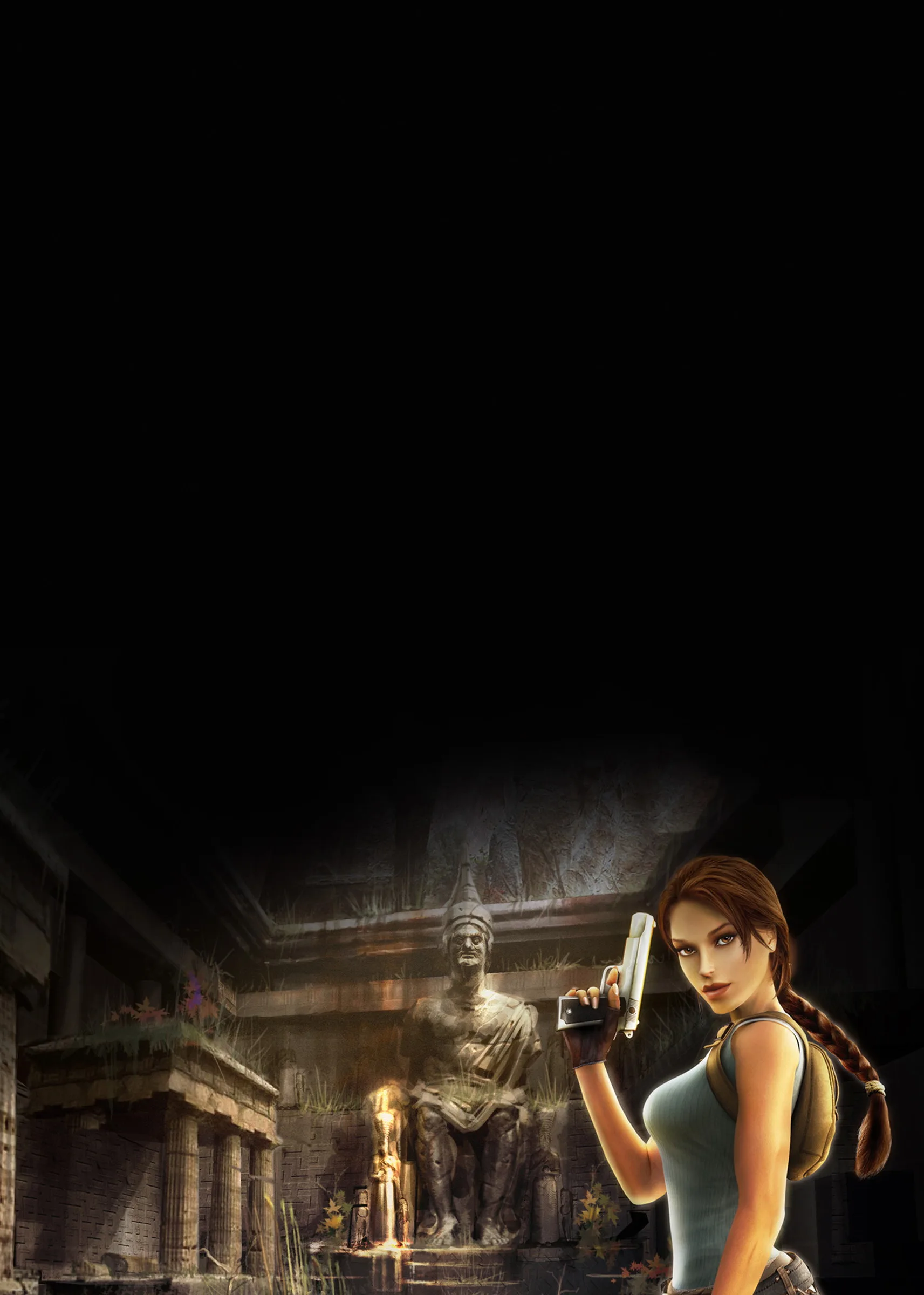
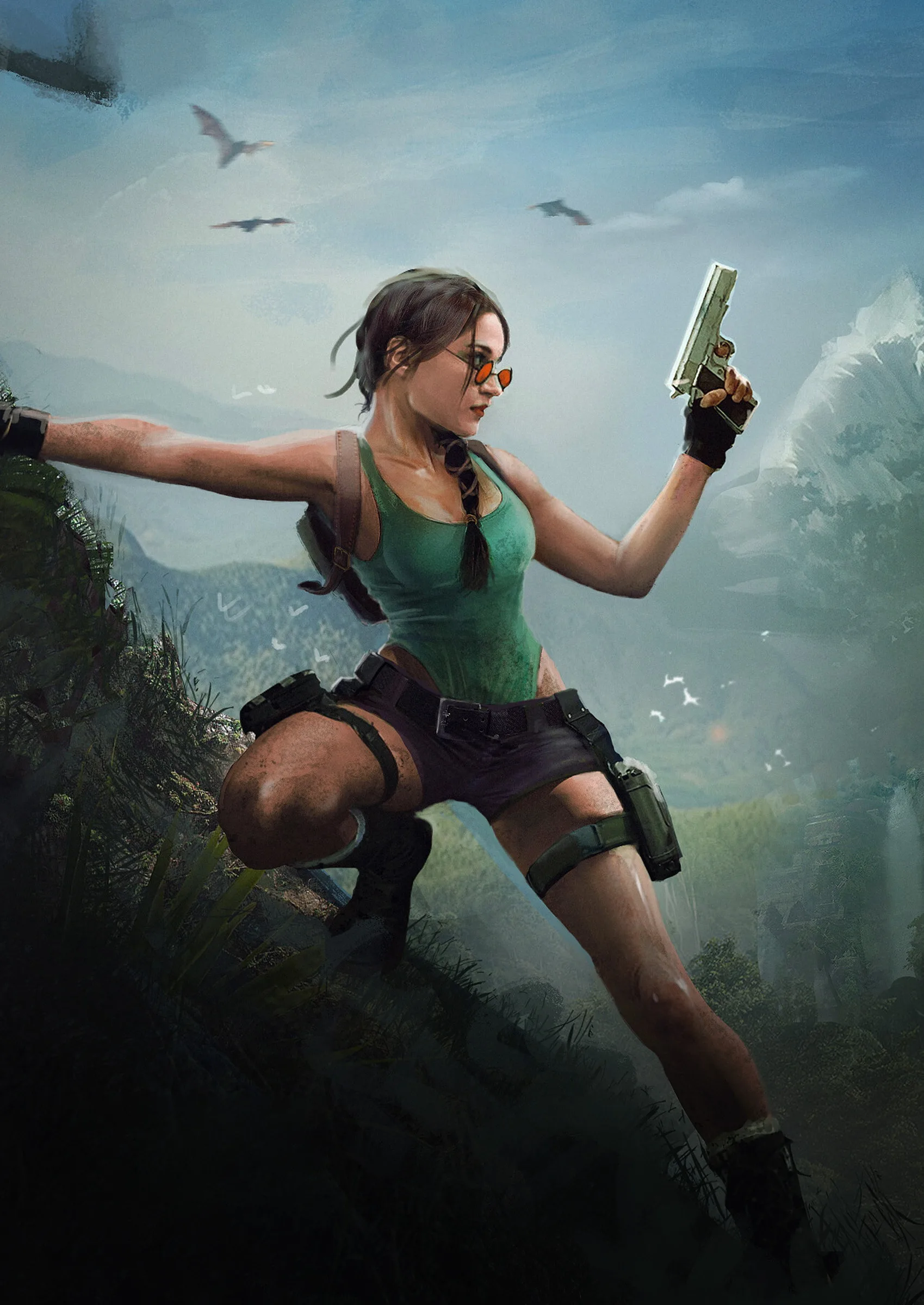
THE TOMB RAIDER “LAU TRILOGY” – The games that propelled Lara a very long way...
If you ask any die-hard Tomb Raider fan, you’ll find that, (un)officially, Lara Croft’s games are divided into three major “eras”. The first, which begins in the famous year 1996 (famous not only for TR fans and the TR franchise, but also for gamers everywhere, because it gave birth to the first game in the series and changed the world of gaming and the trajectory of many others) and ends (tragically and somewhat unexpectedly) in 2003, is called the classic era. It covers the first games featuring Lara Croft, the ones that made her hugely famous and established her as a memorable and remarkable heroine of the video game world. To this day, Lara still rests on those laurels.
The classic games are the ones that propelled Lara a very long way, making her one of the most recognised and best-loved characters in the history of interactive digital entertainment so far. The classic era also tends to be the one TR fans love most – because, in their opinion, the six games from this period (the most beloved being TR: I, II, III and IV/Last Revelation) are the ones that truly embody the original, hugely successful Tomb Raider formula. It consists of putting platforming sections front and centre, with difficult puzzles added on top that sometimes make you bang your head against the wall (I’m looking at you, TR III!!), superb, creative and, for its time, innovative level design, a spectacular soundtrack and, last but not least, a Lara who captivates you from the first moment – not because of her sexy physique, exaggerated in certain places… Lara captivates you with her personality.
Lara is an intelligent, very ambitious woman, quite often mischievous and sometimes even a little cheeky.
You need something like that, after all, if you’re exploring ancient tombs full of enemies and traps. Looking at the Lara of back then, it’s easy to see how infectious her self-belief is: it seems to rub off on you just as easily! Then again, our heroine doesn’t need luck because she makes her own (to quote Lara herself, from TR: The Last Revelation – “I make my own luck”).
There is, however, a third era – the modern one. It is marked by controversy, despite the huge success enjoyed by its three representative games (Tomb Raider 2013, Rise of the Tomb Raider and Shadow of the Tomb Raider). The controversy doesn’t come only from TR fans, but also from ordinary gamers, who perhaps aren’t as invested in the story of the Croft heroine. The three games mentioned above are almost impossible to discuss alongside the first releases. The story is completely new, the atmosphere is entirely different, and the gameplay has nothing in common with the series’ origins. If the heroine had been swapped for any other generic adventurer, Tomb Raider fans wouldn’t even have suspected that this was something aimed at them.
The only common and constant element is the British protagonist Lara Croft, exactly as we know her: passionate about archaeology, history and uncovering the world’s ancient secrets, hidden in ruins belonging to various civilisations. But otherwise... the games are closer to Nathan Drake’s adventures in Uncharted. Where TR players once pressed “Play” expecting to be thrown into the darkest tombs to solve complex puzzles and leap from one platform to another, their goal now is to guide and accompany Lara (much younger, by the way, since she’s at the start of her career) through levels that have swapped challenge for the lowest common denominator of difficulty. Entertainment for everyone, but without the elements that made the series what it is.
Platforming has become elementary, traps are almost gone (the only exception being Shadow of the Tomb Raider), and puzzles are very rare and, when they do appear, mostly come in the form of an “optional tomb” (in a game called Tomb Raider?... Bruh). Fortunately, many of these problems were partly fixed in the last game of the era, though with minor issues of its own. Now… I don’t want to be misunderstood. The games themselves aren’t bad – I, for one, like them. I even think they’re good. For AAA games, they do the job. But as games that keep the memory of Lara Croft alive and should, normally, represent the evolution of the Tomb Raider formula... they don’t quite manage it.
That brings us to the second era – the one I deliberately skipped above: the middle era, made up of the games released one after another between 2006 and 2008: Tomb Raider Legend, Tomb Raider Anniversary and Tomb Raider Underworld. From here on, we’ll refer to this trilogy by the abbreviation LAU.
A perfect blend of the original Tomb Raider formula and the modern elements standardised in the mid-2000s
If we look at the sales Crystal Dynamics recorded between 2006 and 2008, we’ll see that the takings were unsatisfactory. This tells us that the LAU trilogy had the smallest player base (compared with the games from Lara’s other two eras). A shame, I say, because these titles are a perfect blend of the original Tomb Raider formula from the classic era and the modern elements that became standard in the mid-2000s.
For someone who has only tried the new TR games and would like to explore the series at leisure, the LAU era is a perfect starting point. As we’ll see in the paragraphs that follow, the LAU games have stood up to the passage of time very well, and still do. The graphics, somewhat dated in places, still look very good. The story, even if it’s nothing to write home about (don’t expect narratives on the level of Undertale/The Last of Us/Red Dead Redemption/Uncharted/The Walking Dead), proves intriguing and even epic at times.
The level design is very creative, with the games taking you across pretty much every continent in the world – including places that don’t exist, invented purely to stage the action. The games differ in difficulty from one to the next: Legend is the easiest, while Anniversary offers the most memorable challenge. Even so, the difficulty is higher and more engaging than what we find in the modern era. LAU is lucky to have as its voice actress the woman who plays the best version of Lara Croft. Through Britain’s Keeley Hawes, Lara’s personality hits you full on and strikingly. You can’t help but be amazed by the passion with which she talks about the places she visits, and by the playful yet intimidating attitude she takes towards enemies. Last but not least, I can’t help noticing the ingenuity that accompanies her every move and the sharp intelligence that marks every thought, idea and solution.
Tomb Raider Legend (TRL) stands out for the variety of places Lara travels through (Bolivia, Peru, Japan, Ghana, Kazakhstan, England, Nepal) in search of an answer she has been looking for since early childhood: the reason for her mother’s miraculous and inexplicable disappearance. In fact, this is also the story you follow throughout the trilogy – with a slight detour from it in Anniversary, as we’ll see further on.
As I said, the game takes you to all sorts of places, which you explore against a truly su-per-b soundtrack – the composer being Troels Brunn Folmann, who ingeniously used an instrument specific to each country to convey the atmosphere of the place where the action unfolds. At the same time, you cross these exotic landscapes while controlling Lara in an extremely natural, easy-to-learn way – an entirely new experience for old-school TR fans, used to the tank controls of the classic era. Although combat was never a strong point of the TR games, Legend shows a substantial improvement over the earlier titles… but the modern TR releases are still better in this department. It still feels as though the fights exist only to pull the player out of the routine of walking or exploring. They aren’t a central element, but rather an extra challenge.
The levels, though short and relatively simple, are not monotonous in the slightest – in fact, they surprise you with the variety of things they throw your way! Fight off a handful of enemies, get through a puzzle room, follow a corridor with a trap at the end, explore a few halls that give you a little context about the place or reveal episodes from Lara's past, then enjoy some more platforming, either upwards to the highest point of the level or down underground, etc. etc. Several levels also have a miniboss at the end. And to bring it down, it isn't enough just to shoot at it – you have to understand its defensive system. The emphasis is on logic and spotting weak points, not on frantically mashing buttons. Overall, Tomb Raider Legend is a success from almost every angle. Even if it has its weaker points, which even the biggest TR fans are aware of. It strays slightly from the original TR formula of the classic era, being made up of relatively simple, linear levels… but still better than those of the new era. Then again, perhaps that is exactly what makes it such an enjoyable title, accessible to any player and to anyone curious to ‘experience’ or see what an older TR looks like. Clearly, Legend won't give you as many headaches as any of the classic games in the series.
Skipping lightly over Tomb Raider Anniversary (TRA), we arrive at Tomb Raider Underworld (TRU)… which, even though it was the last game released in the LAU trilogy, is the direct continuation of Tomb Raider Legend as far as the story goes. I know, it's a bit confusing, but the story order is: TRA, TRL and only then TRU. Tomb Raider Underworld, although shorter than TRL in number of levels, takes you through underwater tombs in the Mediterranean, then to the surface and underground in Thailand, England (the by now famous Croft Manor), Mexico, Jan Mayen Island and back into the depths of the Arctic Sea. That makes a total of only six levels. Even so, the difficulty climbs exponentially compared to TRL… probably to make up for the smaller amount of content.
The levels, though few in number, are quite large. Sometimes you may have to wander around in them for 2–3 hours straight to reach the end. On top of that, the difficulty rises considerably thanks to puzzles inspired by the classic era: inside huge chambers, you'll find yourself having to complete several small tasks to collect all the pieces and objects you need to advance to the next section/area of the level.
Unlike in TRL, where her headset colleagues Zip and Alister are always in her ear, Lara now faces the challenges alone, just like the angular, polygonal lady who explored ruins by herself in the old games. Her enemies this time are no longer mercenaries (humans) but animals specific to each destination, which are even harder to kill (being your typical bullet-sponge enemies). Once again, the game doesn't really distinguish itself on the combat side. But it does manage to shine in its level design.
The locations either take your breath away completely with their beauty (Thailand is considered one of the most memorable and incredible places Lara has visited in any of her games, from ’96 to the present day) or send your pulse racing with their sinister, gloomy atmosphere (here I'd mention Mexico, whose enemies aren't exactly arachnophobe-friendly). Even the underwater scenes look so realistic that you'll actually catch yourself holding your breath behind the keyboard. In these levels you can fully enjoy the formula that has charmed millions of Tomb Raider players: platforming, puzzle-solving and then more platforming.
As for the weaker points, I'm afraid I have to mention the camera and the control scheme.
To control Lara, you don't have to do anything very different from what you're already pressing throughout the entire LAU trilogy (it only differs where the game adds new acrobatic moves that Lara performs in TRU but not in TRA/TRL). The camera, however, can give you splitting headaches and dizzy spells.
Honestly, I don't know how this awful camera handling (which you lose very easily, and which spins a full 360 degrees from a single wrong or unusual movement of the mouse/controller) went unnoticed by the developers and/or the game testers. Because, apparently, this detail didn't ‘hurt’ enough to get fixed. The other ‘little problems’ (the small number of levels, the rather abrupt ending to the story, the far too numerous artefacts, which can reach 50 per level, the underwater levels that some fans found unsatisfying) aren't big or pressing enough to need describing in detail here.
What is certain, though, is that Underworld is a successful game that ‘imitates’ the old formula of the TR series as well as it possibly can. It combines mystery with action, hard with easy, the frightening atmosphere of the underground levels with the sublime ambience of the lush surface levels. Tomb Raider as it was before 2000, just the version released in 2008.
Speaking of Tomb Raider from before 2000, we now come to the baby of the trilogy – Tomb Raider Anniversary. As you might guess from the name (which was anything but randomly chosen), it celebrates an anniversary. Of what, exactly? Ten years (in 2007) since the release of the first TR game (the 1996 one). Yes, a bit confusing again: Anniversary was released to mark 11 years of TR I… not 10. But it seems the developers started work in 2006, which partly explains the name and the marketing material that came with it.
So: the game presents itself as a remake of the original TR, which conquered the world with its protagonist and with levels that could be traversed in a way never seen before. TRA sets out to be a relatively faithful remake of the ’96 source material. But the developers, knowing that their work would be played mostly by fans who had supported the TR franchise for over a decade, decided to include details that could have been part of the original and were left out for technical reasons.
As a result, in TRA we control Lara as she searches for an artefact called the Scion. This quest of hers is one she shares with her own father. What's more, the pursuit of her father's aspirations becomes a bridge between a decade-old story and the other two contemporary games in the series (Legend and Underworld). To complete her mission, Lara explores four vast locations: Peru, Greece, Egypt and Atlantis. Although I've listed only a quartet of destinations, this is the longest game in the whole trilogy – each location is in turn split into at least 3–4 interconnected parts. For example, Peru has four levels and Greece also has four.
Compared with TRL and TRU, Anniversary is the longest game and, without a doubt, the hardest. Just like the ’96 release, the levels are packed with puzzle rooms (some of them effectively one huge puzzle room whose chambers are all, in turn, smaller puzzle rooms), traps and enemies of every kind. You explore them with a soundtrack in the background that is inspired by the original game but is still largely new. The Danish composer Troels Brun Folmann, who wrote the music for the entire LAU trilogy, left his mark on it. In places, a few of the tunes that delighted our ears in ’96 are played back with a touch of nostalgia, but TRA's soundtrack is a little more emotional in some spots and somewhat more epic in others.
A thoroughly underrated trilogy...
The game is downright superb, because it ticks so many boxes. Plenty of varied levels that you don't just breeze through, precisely because they make you think and stop to ponder a solution, a route, an idea that might help you progress? Check. A soundtrack that draws you even closer to the game and the places you visit? Check. Is Lara easy to control? Check. Are the fights, though not the main strength, engaging and free of frustration? Check. Is it a title worth playing, one that blends the new and the old perfectly and presents the ’96 original in a flattering light, in a modern and more approachable style, without losing its charm or its much-awaited/much-desired difficulty? Check, check, check.
And so we've reached the end. Now you know what the LAU trilogy is about and how it differs from the other two eras. Where it excels and where more work could have been done. In my opinion (and that of other TR fans), LAU, though it was a less appreciated and less popular era during what should have been the peak of its release and playing life, is thoroughly underrated. If the classic games are well known for the impact they had on the whole industry, while the modern releases show Lara in a new and much more sensitive guise, with graphics taken to another level and far more linear levels typical of the AAA formula they follow, then the LAU era should likewise be appreciated for its own achievements: a highly successful blend of an older formula and a newer one, which brings to the fore the best version of Lara that (I believe) we've ever had.
The games are far from perfect, with bugs in places that were never fixed. There's the problematic camera in TRU, and the low level count in TRL and TRU… but despite these shortcomings, the whole trilogy is worth playing. Not just because it does so many things well, but because it keeps the flame of the first Tomb Raider alive, with puzzles and platforming just like in the old days.
0 votes
Scroll down here and stay on the page for at least 30 seconds to vote.
Pick a score from 0 to 10 (halves are allowed).