
Alone In The Dark – Review
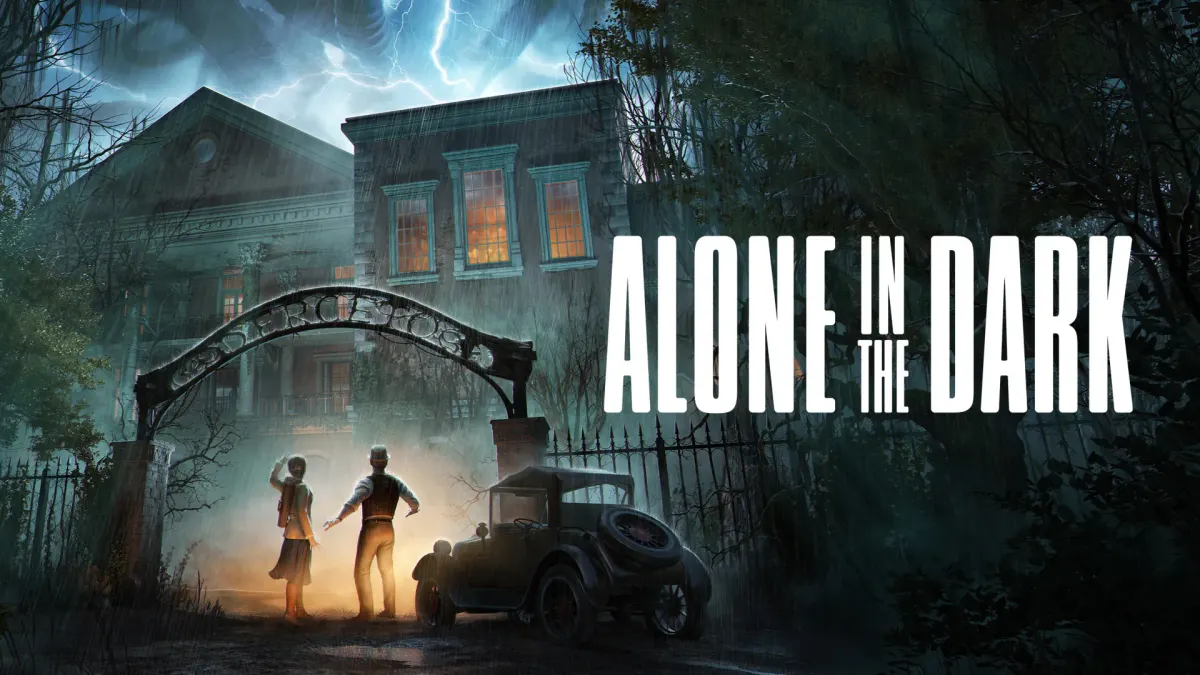
In the depths of madness, you will find me waiting...
In recent years, we’ve seen a resurgence of horror games. Dead Space had an extraordinary remake in 2023, Resident Evil managed to return to its horror game origins with the release of its seventh game in 2017 and show us a modern vision of the fourth game in 2023, Dead Island along with Alan Wake had superb sequels in 2023, and Silent Hill exists. Joking aside, the last-mentioned franchise just had a pseudo-sequel to the series with Silent Hill: The Short Message in February 2024.

Konami's series, along with CAPCOM's studio, are part of the unholy trinity of horror games, and the third franchise has been missing from the release scene for many years. The franchise that completes this series is actually the oldest of the genre and the one that set some of the standards for classic horror games – Alone in the Dark. Silent Hill was released in 1999, Resident Evil in 1996, and Infogrames gave us a new definition of the horror genre and a new genre in 3D in 1992.
Alone in the Dark (1992) received praise from many critics when it was released in the early 90s and was seen by many as the first 3D survival horror game on the market, and the most important source of inspiration for the Resident Evil series. Although it might seem that the original adapts the works of the famous fiction author H.P. Lovecraft, the universe and creatures of the renowned author were only mentioned through various notes in the game. The game's story was original, and the sources of inspiration were films by famous directors such as Dario Argento (known as the Master of Horror) or George A. Romero (the Father of zombie films).

The 1992 game features Edward Carnby and Emily Hartwood as protagonists, two characters who arrive at Derceto Manor with different motivations. Edward is a private detective hired to find a rare piano for a collector, an instrument located in the manor, while Emily Hartwood is there to solve the mystery of her uncle's suicide. Once inside the manor, the two protagonists are caught in a sinister plot by forces beyond human comprehension, and their role is to escape the "haunted" manor. This is the premise of the game created by Infogrames studio, and Pieces Interactive took elements from it to create the current title, which attempts to be a reinterpretation of the 1992 story. The question many fans of the Alone in the Dark series and the horror genre have asked is whether the small Swedish studio team can modernise the franchise that laid the foundations of the current survival horror genre?
Most games today have a problem when it comes to story. They are simply too long. More often than not, the story is filled with a lot of Sisyphean labour that adds nothing to the main narrative. In such conditions, Alone in the Dark is a breath of fresh air, as the game's story is short (10-12 hours depending on difficulty and how we play through the game), and every note or collectible we find is crucial to the story. The premise of Pieces Interactive's game is slightly changed from the original: Emily's uncle is still alive, but he is a patient at Derceto Manor, a clinic for treating the mentally "fatigued", and his niece has hired Edward to find him, as the patient seems to have disappeared. If the inspiration for the game released in 1992 was Argento's and Romero's films, Pieces Interactive's creation was inspired by the Resident Evil remakes and placed great emphasis on the cosmic horror elements for which the famous American author H.P. Lovecraft is known.
The literary genre of Cosmic Horror is difficult to transpose into any medium other than literature, because the central element of the genre is not monsters, but the realisation that we, humanity, are insignificant to the forces that govern the universe, and interaction with beings living beyond our reality has serious repercussions on the psyche. None of the famous Rhode Island author's protagonists have a happy ending, most suffering from depression, psychosis, or catatonia due to having been able to see beyond the veil we call reality. This is also the case for the people who cross the threshold of Derceto Manor, whether they are patients, staff, or main characters. All characters have been affected somehow by obscure forces, and some of them have learned how to transcend this existential plane and move through the mystical paths beyond. This ability is even explicitly mentioned in one of the game's notes, which clearly tells us that the ability allows people to have absolute freedom in the true sense of the word, including from destiny. But the power to cross the threshold of reality requires certain costs, and the payment is most often made in the character's mental health. From the first step over the threshold, we can observe a certain psychological deterioration of the main characters, which becomes increasingly pronounced as the story progresses. Each transition is sudden and sometimes caused by observing truths beyond the veil of reality, and other times it is the result of a ritual involving mystical numerology. Emily and Edward manage to advance through different realities with the same ease with which Randolph Carter passes from one Dreamland to another in search of the city-fortress of Kadath.


The game's story was written by the writer who contributed to SOMA and Amnesia: The Dark Descent, and the emphasis was placed on faithfully adapting the impossible genre of cosmic horror. Mikael Hedberg (former writer at Frictional Games) managed to modernise the story by changing the mansion into an asylum and addressing current themes, such as mental health or traditionalism. These themes blend perfectly with H.P. Lovecraft's works, as non-conformity with societal standards was seen as problems requiring the help of a psychiatrist, and the description of the horrors or worlds that permeate Lovecraft's universe can be interpreted by many as "mad". The manor's patients are not people with mental illnesses, but rather people who do not wish to comply with society's imposed norms. The pre-adolescent girl was institutionalised because her mother didn't know how to educate her, the former journalist is institutionalised because she is seen as an oddity due to her sexual preferences, and the lawyer institutionalised himself due to pangs of conscience. Each character is complex, but we can only get to know them by playing through the game with each main character. Both main characters have different interactions and sequences with the patients and staff of the asylum, and the order of approaching objectives is slightly different depending on the character we choose to play as at the beginning of the game. The big difference lies in a section with a personal charge for the protagonists, and each will have a completely different experience in that particular level.
The game takes place in Louisiana in 1924, and the scorching sun and swamp humidity are apparent from the very first moments of the game. The asylum looks like a neglected building from the outside, and the fact that it is hidden deep within the swamps of the state known for voodoo gives it an aura of danger and mystery. Every room of Derceto Manor has been rendered realistically, and the attention to detail denotes that these rooms are occupied by different people. Jeremy Hartwood's room resembles a workshop, as he is an artist, but among brushes and modelling tools, we can find cult objects next to paintings with elements of sacred geometry. Grace Saunders' room, although full of dolls and tea sets, is in complete antithesis to the girl's personality and behaviour. The plastic artworks in some rooms have a role beyond decorative, and even a boiler becomes an object through which the game tells us the story. The game's artists have succeeded, through the creative choices made, in creating a location that is a stately home with gothic elements that manages to evoke a feeling of loneliness, and moments when we "interact" with other characters (apart from certain video sequences) are indirect and occur through the notes we find throughout the asylum. Every inscription is important, as it gives us clues about the puzzles in the manor, and these inscriptions become even more interesting when we hear each one narrated by its own author. This costly performance has the desired effect, as it keeps us glued to every text, and the main characters are no less impressive in their performance. Both Jodie Comer and David Harbour portray their characters with passion and manage to convey all the emotions Emily and Edward go through. From the first crossing into the great unknown, which evokes feelings of confusion and fear in them, to the happiness the two feel when they understand how to cross the threshold at any time or obtain answers to the manor's mysteries.


Another important element of the game, from an ambiance perspective, is the music. It was lovingly written by Jason Köhnen and Árni Bergur Zoëga, who understood both the game's source material and the importance of music in creating tension in the afterlife or a sense of loneliness in the manor. Many times I tensed up at the slightest sound, because I wasn't sure if it was ambient noise or if a monster was waiting for me around the corner, and the moments of silence in the manor were accompanied by light jazz that invited me to discover the secrets of Derceto.
In terms of interactivity, the game can be divided into two: puzzles and combat. The game allows us to approach it with all the modern systems we are used to, or it can be approached in a classic way, where we have no HUD elements and are given no clues about what to do or where to go. From a puzzle perspective, these are implemented in an intelligent way, requiring both the association of clues and research on our part. One puzzle that stuck with me is one also shown in promotional materials, with a padlock that uses astrological signs instead of numbers. This involves knowledge of astrology and correlating numerology with sacred elements.
The fights with the horrors lurking beyond our reality leave much to be desired. The implemented mechanism for melee combat with various objects, along with firearms that allow us to shoot from a distance at horrors we cannot comprehend, is not complex, and the game pushes us to sneak instead of fight. We have many objects in the environment that we can throw to distract monsters, or that we can even use as weapons (such as a Molotov cocktail), and although we have access to weapons from the start, ammunition is a rare resource. Even if we can use axes, pipes, and/or sledgehammers, melee combat fails to convey the weight and impact of these weapons, and for this reason, they are dry and insubstantial. I imagine that this insubstantial and inefficient system was chosen so that the game would be as faithful as possible to the works from which it draws inspiration, as few characters in Lovecraft's stories can cope with these horrors, and then they succeed due to magical incantations or with the help of fire and not firearms.


Besides the combat system, there is another negative aspect we encounter in the game. Although the game benefits from the appearances of successful actors, and the monsters were created by artist Guy Davies, who often collaborated with Guillermo del Toro, the graphics engine used by Pieces Interactive and the character finishes make Alone in the Dark seem like it's from the previous console generation. This aspect can be overlooked when we analyse the game through the lens of what it is: an AA game, meaning a game that does not benefit from the astronomical budgets of large studios, such as AAA or AAAA games. However, it manages to offer us (through the deluxe version) some filters that emulate the look of the original title, and even a special appearance for the characters (their 1992 look).
Even though I criticised the physical appearance and the combat system, which I somewhat understand through the lens of the works it draws inspiration from, I recommend the title to all people who are fans of the horror genre, Lovecraft's works, and the first Alone in the Dark games. Pieces Interactive's title has modernised the original franchise of the survival horror genre and is one of the only titles that manages to transpose cosmic horror into a medium other than literature.

Played on: PS5
Release date: 20 March 2024
Developer: Pieces Interactive
Publisher: THQ Nordic

0 votes
Scroll down here and stay on the page for at least 30 seconds to vote.
Pick a score from 0 to 10 (halves are allowed).