
Anatomy of a Dark Universe – Interview with Bogdan Simion

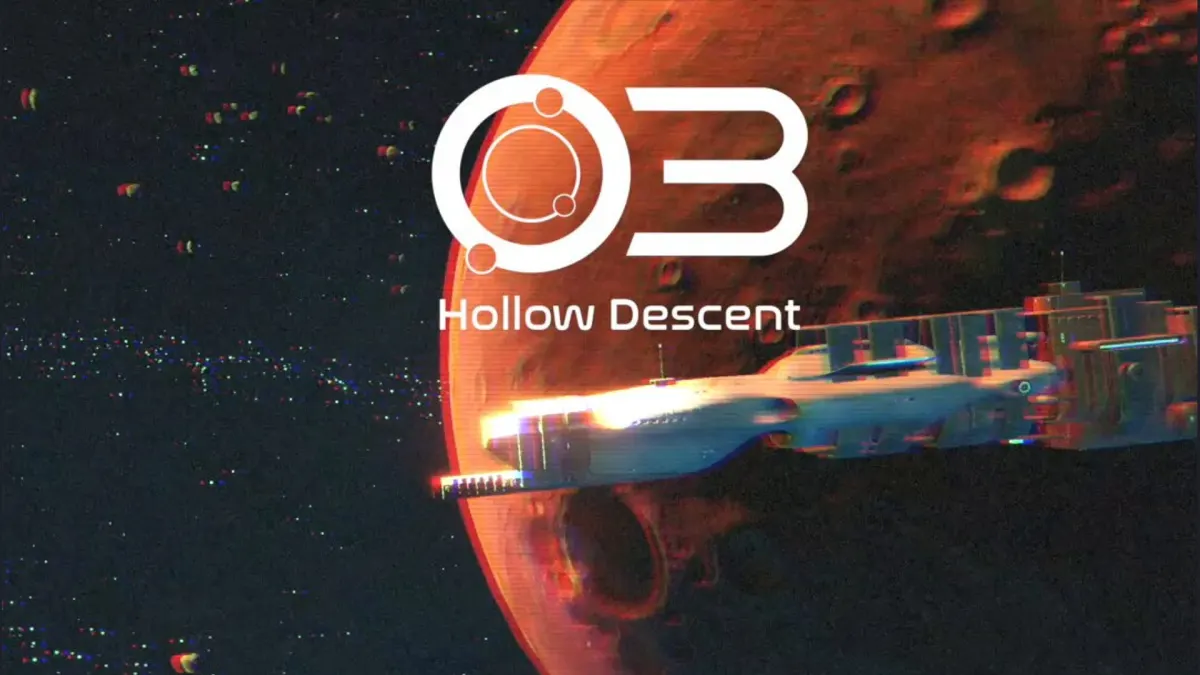
When we talk about indie game development, few names truly stand out for their passion for art.
Bogdan Simion is one of these creators: an artist and solo developer, he has managed to craft a universe with Ta2 Games that combines dark, surreal aesthetics with the brutal and unpredictable gameplay of a roguelike shooter. With O3 – Hollow Descent, Simion isn't just making a game; he's inviting players into an alien, densely atmospheric world where dangers lurk around every corner, and every run is different.

With a solid artistic background and an evident desire to experiment, Bogdan chose to channel his creativity into producing something truly unique. In this interview, we'll try to delve beyond the code and story, to find out what motivates him, how he sees the evolution of O3, and the behind-the-scenes creative decisions that bring this vision to life.

>>>
- Tell us about Ta2 Games studio: Who are you, what is your background, and what led you to dedicate yourselves to indie game development?
Hello to everyone reading and thank you for this opportunity! I'm Bogdan Simion, known online as Simy. I'm 43 years old and a lifelong gamer… I caught the era of the first consoles and have played pretty much everything over the years. Currently, I play on PlayStation, Steam Deck, and Nintendo Switch. Day to day, I work as a tattoo artist, and my favourite artistic style is biomechanical, directly influenced by the art of H.R. Giger, the father of the “Alien” aesthetic. I discovered his book, “Necronomicon”, in the early 2000s, and since then I've been drawing almost daily in this style.
This is where the studio's name comes from: Ta2 Games (read as “Tattoo Games”). I wanted to combine my artistic side and visual experience with my passion for video games. For me, games have always been a form of relaxation and even socialisation; I love getting lost in an atmospheric story like The Last of Us, feeling the tension in Dead Space, or exploring fascinating worlds like in Uncharted. I still keep one evening a week (usually Fridays) to play online with friends… a habit that constantly inspires me.
It all started during the pandemic, when my tattoo studio was closed. I had free time and a long-standing curiosity about game development, so I thought, “let's see what I can do.” I tested Unreal and Unity, but Unity seemed more accessible for a start. I set out to make a simple 2D game, a kind of “Mario-style” platformer. I created the graphics in Photoshop, learned animation, physics, scripting… and I was extremely proud of the first result. From there, I started studying the entire pipeline: Blender, Substance Painter, optimisation, polygons, a complete workflow. Over time, I collaborated with other indie developers on the artistic side, then participated in game jams, where the first version of the idea for O3 was born.
- How did the idea for O3 – Hollow Descent come about, and what inspired you artistically and narratively?
The idea for O3 was born in 2022, during a game jam with the theme “You Are Not Alone”. I already had a few concepts and prototypes, and from them, the visual core of the game came to life. I received a lot of positive feedback, so in 2023, I decided to develop a larger version… a commercial game built in my spare time.
I wrote a basic story to give me a clear direction and chose to go with a top-down perspective because it's the genre that relaxes me the most. First-person games, no matter how immersive, quickly tire me out visually; instead, top-down gives me artistic freedom and control over the design. I wanted a roguelike that combines the atmosphere of Alien with the structure of The Binding of Isaac… the result was O3: Hollow Descent. A project that tested my patience and mental health, but also brought me the greatest creative satisfaction.
- How is the balance between “random” and intentional elements ensured in procedural generation?
I chose a hybrid method. Instead of letting the algorithm generate everything completely, I manually created a base of prefabricated rooms, carefully constructed visually. Then the system randomly combines them from a list, ensuring diversity while maintaining artistic control over the world. Thus, each run is different, but everything remains visually coherent and well-composed.
- How did you approach difficulty and the learning curve? Are there options for casual vs. hardcore players?
Being a roguelike, the difficulty is dynamic. Sometimes you get a lucky combination of weapons and enemies; other times, a run can be very tough. I implemented an internal system called Decaying System, which subtly adjusts the level structure based on player progress. The better you are, the more the game adapts and offers new challenges even in the same areas. Weapons have a passive upgrade based on experience: if you use a weapon often in a run, the next time you find it, it might have improved effects… from damage to special projectile behaviour. Astronaut suits also have unique abilities: speed, armour, tactical abilities… and are unlocked through progress or challenges. For hardcore players, there's also a Survivor Mode without radar, without a map, based solely on memory and orientation. It's a completely different experience.
- What were the biggest technical challenges?
The biggest challenge was optimising HDRP graphics in Unity for good performance on PC, Steam Deck, and, in the future, Switch. It's a difficult balance between atmosphere and performance; especially when you want a game that looks good but runs smoothly. I'm glad, however, that I managed to achieve a solid balance and I know that the final result will be increasingly optimised.
- How did the community react to the demo, and what major changes did you make based on the feedback?
From the beginning, I wanted to offer players a prototype version for testing. Feedback was essential. For example, I added two types of movement: one based on world-space movement and a classic one, based on screen-based movement. I perfected the auto-aim system, improved controller control, and refined the overall experience. Everything is built gradually, with the help of players.
- How do progression and the reward system work?
- Suits: unlocked based on progress and challenges, each with a different playstyle.
- Weapons: evolve gradually, remembering the player's experience and becoming more powerful in subsequent runs.
- World: transforms based on progress… the same areas can appear in different difficulty versions (tiers). All these elements create a cycle of risk and reward that encourages replayability.
- Future plans: DLC, new modes, console ports?
I really want to bring O3 to consoles… PS5, Xbox, and Switch. I also want to add a co-op mode, which can be played separately or integrated into the main campaign. If the Kickstarter is successful, I will go full-time on development and collaborate with a dedicated programmer to expand the game and bring it to as many platforms as possible.
- Looking back, what important lessons have you learned?
Being an artist, I always tend to add new ideas. I learned how important it is to limit the scope of the project and organise strictly. If I were to start over, I would probably work with a programmer from the beginning; it would have saved a lot of time and reduced stress. But all these experiences have shaped me and made me grow enormously.
- What is the long-term vision for the Ta2 Games brand?
I want every game signed by Ta2 Games to be a cinematic, visual, and memorable experience that combines gameplay with atmosphere. Video games are, after all, a form of visual art… and my goal is to create worlds that stay in players' minds and leave a distinct mark on the indie scene.
<<<
As the discussion with Bogdan Simion draws to a close, clear impressions remain: O3 – Hollow Descent is not just an indie project, but an artistic statement. It's a courageous endeavour that combines horror-sci-fi, careful design, and the desire to provoke, to create emotion, discomfort, and to leave a distinct mark on the gaming community. Through every procedurally remodelled corridor, every bullet fired, and every evening of testing, Ta2 Games demonstrates what it means to create with integrity, to take risks, and to believe in a personal vision.

What's next for O3, whether it's the full launch, content expansion, or community feedback, will tell if this indie dream can become a solid reality. But until then, we remain respectful of the ambition of a single man who took it upon himself to bring a game to market that is unlike anything else. And, if all goes well, O3 could become a benchmark for fans of the genre: an experience that combines art, challenge, and originality, exactly what we love to discover in the world of video games. GAME ON, brothers and sisters, and don't forget: Per aspera ad GRIND!
