
Are video games the ultimate art form?
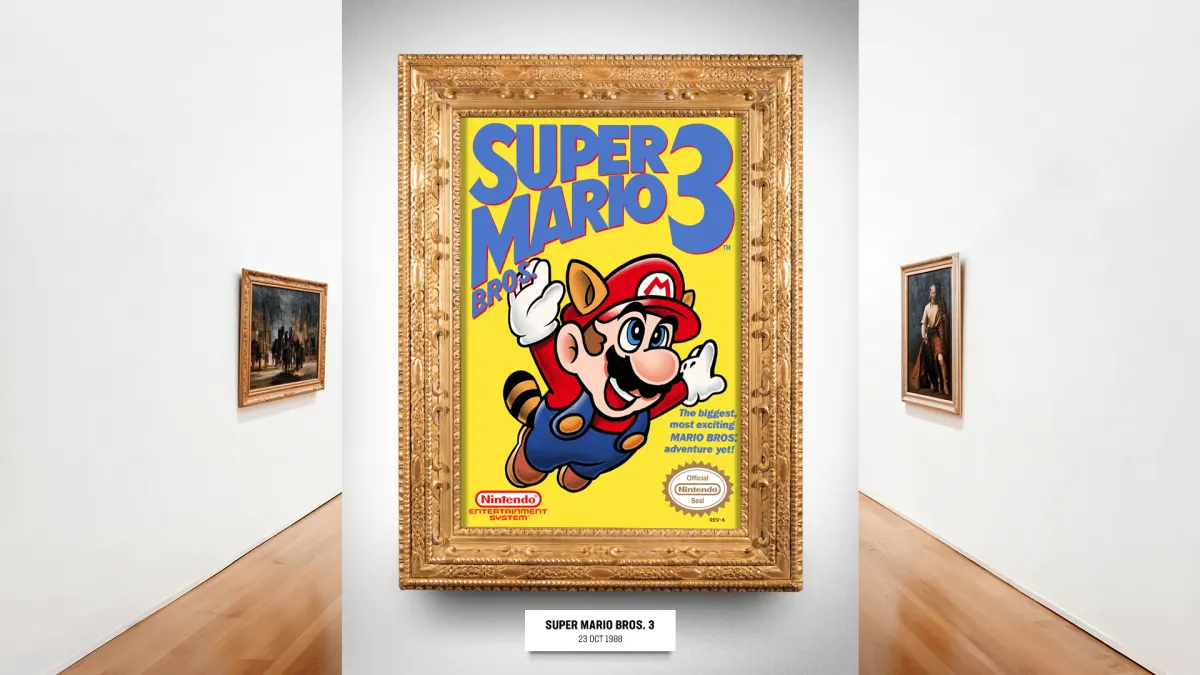
To be or not to be, that is the question…
I’ve been told I’m wasting my time. That I’m “on the computer” instead of reading a good book, going outside, living “real life”. Maybe you’ve been told the same. That a video game isn’t art. That it teaches you nothing. That it’s a kind of Turbo chewing gum for your brain.
But what sweeter irony than the fact that games, those “useless” worlds of pixels, have in recent years become the most complex, vibrant, and honest medium of artistic expression we have? That, between a museum and a console, the console offers you not just a work to look at, but a work to live.
Video games are not static art; they are art in an interactive, remixable, living version. They are Picasso with a controller in hand and Tarkovsky who lets you choose the ending. They are symphonies where you decide the rhythm. And yes, I dare say: they are the ultimate form of contemporary art. Not because they are “better” than the others, but because they contain them all.

The graphics? Visual design that would make any biennale curator envious. The music? Soundtracks that surpass many award-winning film scores in intensity. The narrative? Sometimes deeper than novels that ask you to “imagine everything”. And on top of that, you also have the freedom to choose, to make mistakes, to get lost in the world and find meaning again. Which is exactly what life does, but with less burnout.
What painting responds to you in real time? What novel changes its narrative thread depending on who you choose to save or betray? What play lets you be the hero, victim, witness, and director all at once?
That’s what a game does. It gives you the author’s hand and says: “come on, let’s write the story together”. It’s a silent collaboration between designer and player, between code and emotion, between the story that wants to be told and the person who wants to live it.
“But not all games are art!” comes the objection. Correct. Not all films are cinema. Not all paintings are museum-worthy. Art, as always, slips between mediums. But when Journey makes you tear up without a single word spoken, or when Disco Elysium asks if you still believe in yourself, despite everything you’ve destroyed… then it’s no longer about gameplay. It’s about catharsis. And about truth.

Art isn’t just about being beautiful; it’s about hurting, inconveniencing, making you ask difficult questions. That’s exactly what some games do, perhaps better than any other medium. When The Last of Us Part II makes you hate and then forces you to understand. When Hellblade: Senua’s Sacrifice forces you to hear what a fractured mind sounds like. When Papers, Please makes you complicit in a dictatorship just to feed your family. You’re no longer watching a story; you’re part of it. And you can’t leave it the same way you entered.
Anyone who says video games can’t deal with mature, ethical, or philosophical themes hasn’t played Spec Ops: The Line. They haven’t felt the weight of decisions in Mass Effect, haven’t woken up alone in Outer Wilds, without a tutorial, without directions, just with an existential question in the background: What do you do with your time when you know it’s running out?
This is no longer “entertainment”. This is digital intimacy. It’s art that walks through you, not just on a screen. And the most beautiful part? Each player experiences a different version of the same story. No museum can give you that.

And the future? It’s no longer just projected by visionary architects or sci-fi directors. We’re building it pixel by pixel in VR. We’re seeing it augmented over grey blocks in AR. Games like Half-Life: Alyx, Lone Echo, or Tetris Effect: Connected are not just technological demonstrations; they are new forms of sensibility. Here you don’t just “see” art. You touch it, you live it, you breathe it. And when reality seems to break into pieces more and more often, perhaps these alternative worlds help us understand our own better.
Perhaps we won’t see video games exhibited in major art galleries anytime soon. And perhaps they don’t need to be. Because games no longer need the validation of museums. They are the museum, the theatre, the film, and the novel of our generation. We live them with our hands, with our eyes, with our decisions. We don’t admire them from a distance; we feel them to the core of the pixel.
To say that video games are “just entertainment” is like saying literature is “just printed paper”. It’s a poetic misunderstanding, but profoundly wrong. Because in every soulful title, be it indie or blockbuster, a new form of catharsis pulses. A “here and now” where art is no longer just what you see, but what you do.

So next time someone tells you that you’re wasting your time playing, you can smile. Not because you have something to prove. But because you know. You know that you’ve just traversed a dream called Journey, carried the burden of humanity in NieR: Automata, cried in the face of a choice in Life is Strange, or remained silent for a long time after Inside ended. And that’s not a game. That’s pure art.

