
Cronos: The New Dawn – Review

Fascination, frustration, and an unexpected nostalgia for the 80s
My personal connection with Bloober Team
I held back from writing about Cronos: The New Dawn, beyond a few notes, until I had at least finished it once. Throughout the game, I imagined several beginnings for this review, sometimes expressing diametrically opposed ideas, because Cronos itself is a mix of feelings: with ups and downs, imperfect, but at the same time made with great passion by a studio that, I admit from the start, I am very fond of (if you can say that about a studio specialising in horror and all its subgenres) – Bloober Team – who surprised us with the excellent remake of Silent Hill 2 – which was by no means easy to achieve.
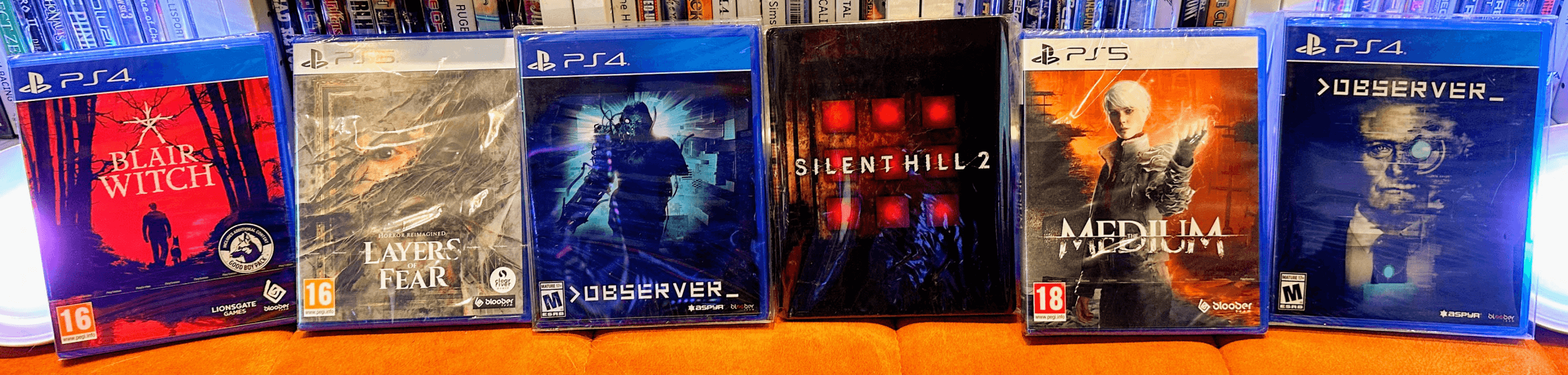
I've been following them ever since they published Observer, an incredibly atmospheric cyberpunk adventure, starring the cyberpunk actor Rutger Hauer (Blade Runner) in his last role, unfortunately. Then came, for me, The Medium, a horror adventure that looks and sounds fabulous, with music by Akira Yamaoka (Silent Hill) and Arkadiusz Reikowski. I also tried Layers of Fear, Blair Witch, and, of course, Silent Hill 2 Remake. With each new game, I felt I had to keep following them, because I love projects that feel made with passion, even if they don't have mega-budgets behind them (except, probably, Silent Hill 2 Remake, where Konami was also involved). Thus, Bloober Team found its way into my small 'heartfelt' gallery, alongside NightDive and CD Projekt Red.
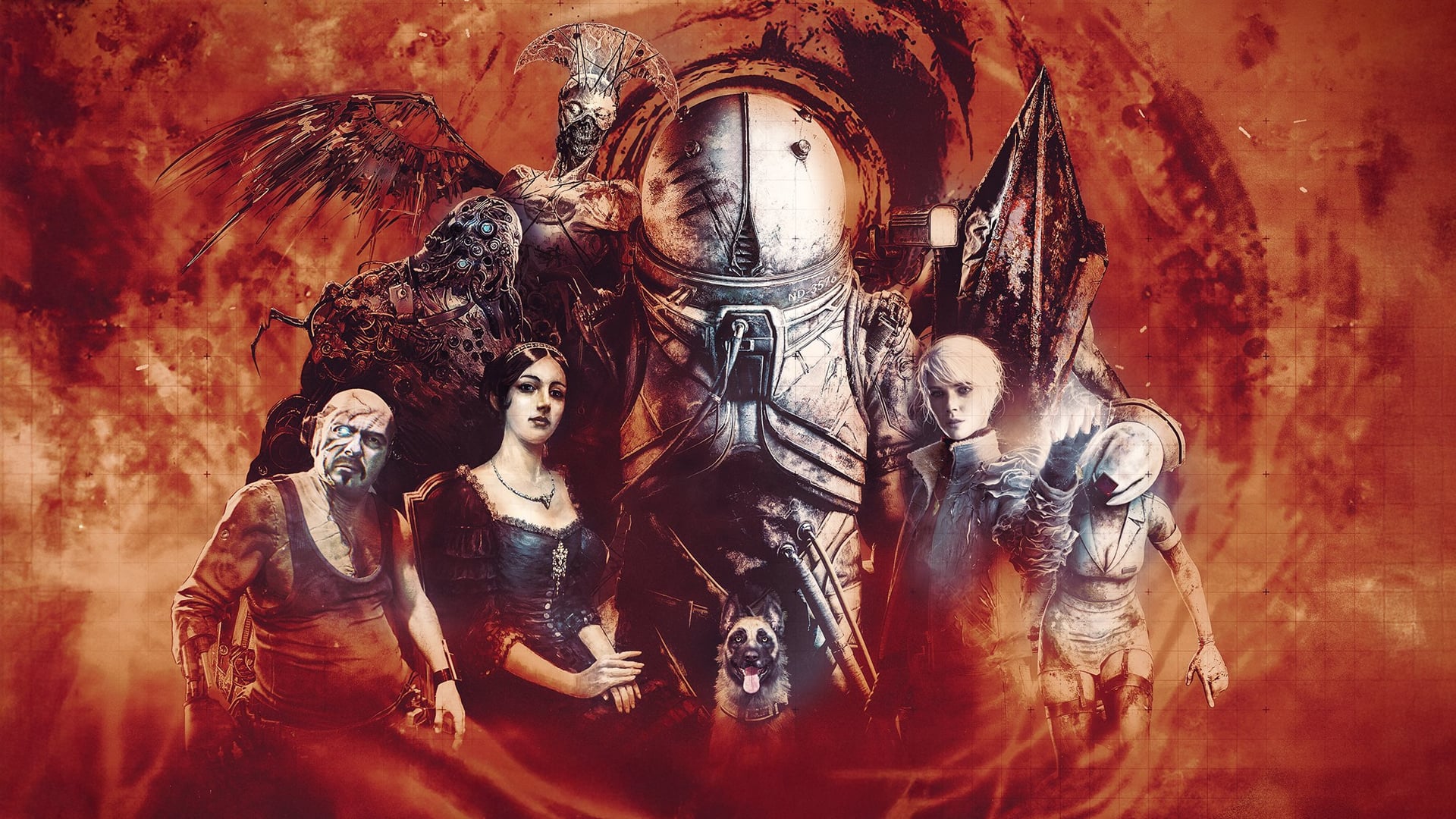
After Silent Hill 2 (and somewhat in parallel – Bloober Team always has at least two teams working simultaneously), the logical step was to develop their own IP in the survival horror genre. A game where they could freely juggle ideas, without constraints, and which would give them the chance to develop and self-finance as a studio in the long term.
Thus, I entered Cronos: The New Dawn with the expectation of evolution and the confidence that the experience would be a satisfying one.
Story and atmosphere
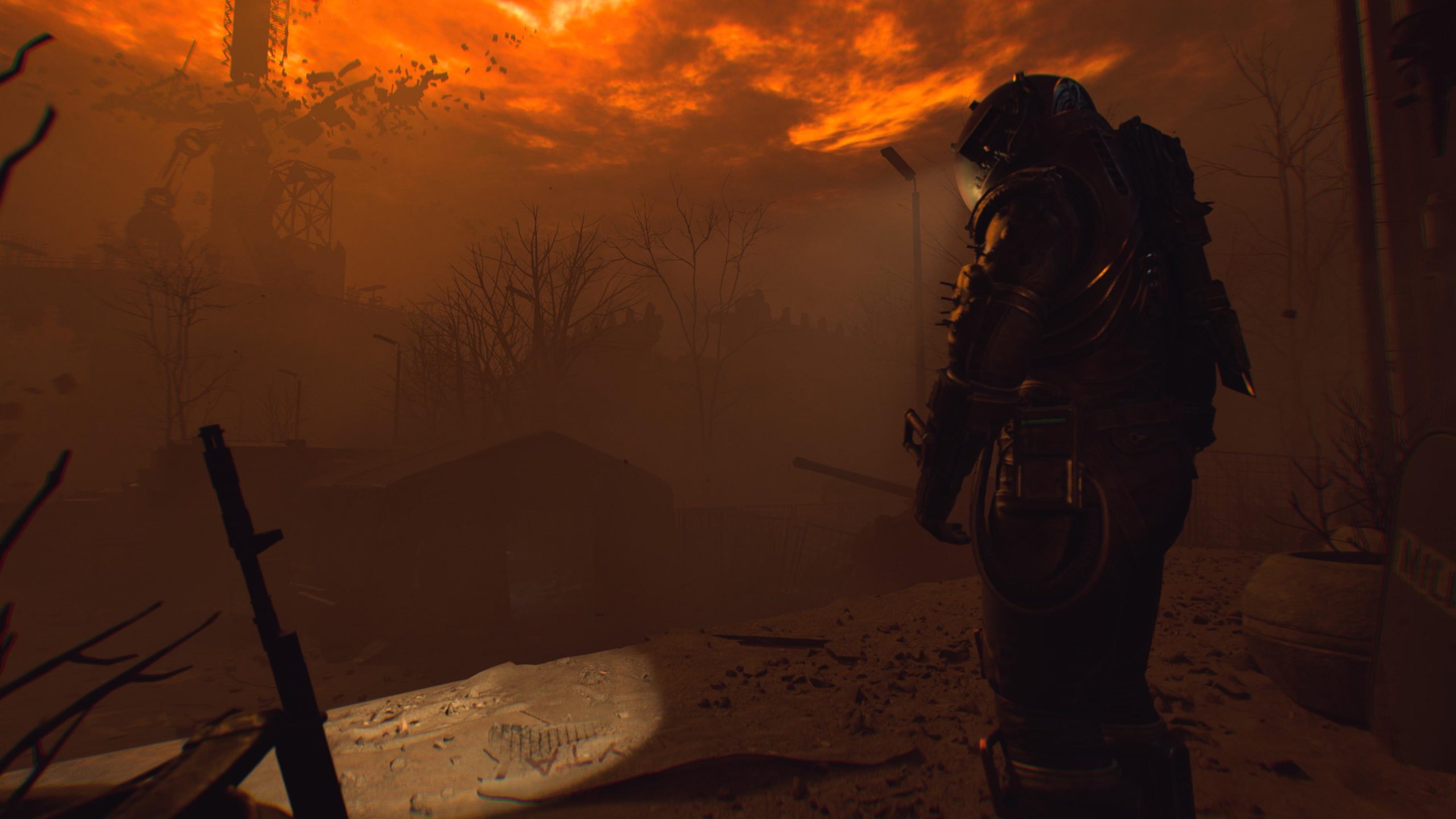
In Cronos, you play as a time and space traveller, brought back to “life” by the disappearance of a certain predecessor, with the – rather intuitive – goal of investigating an apocalyptic event that occurred in 1980s Poland, in an alternate reality. The game doesn't offer much context at the beginning; in classic style, you don't know who you are, and as a bonus, not even what you are. However, the story takes shape gradually, through a self-exploratory style: every note, every location, every character, and even the enemies contribute to a fragmented, yet surprisingly coherent picture.
Since I'm the type who avoids story trailers, I prefer to go into games and movies with as few spoilers as possible, so I'll keep the story mysterious here too. I'll just mention that I liked how everything is very focused, without unnecessary subplots, which greatly helps the cinematic experience.
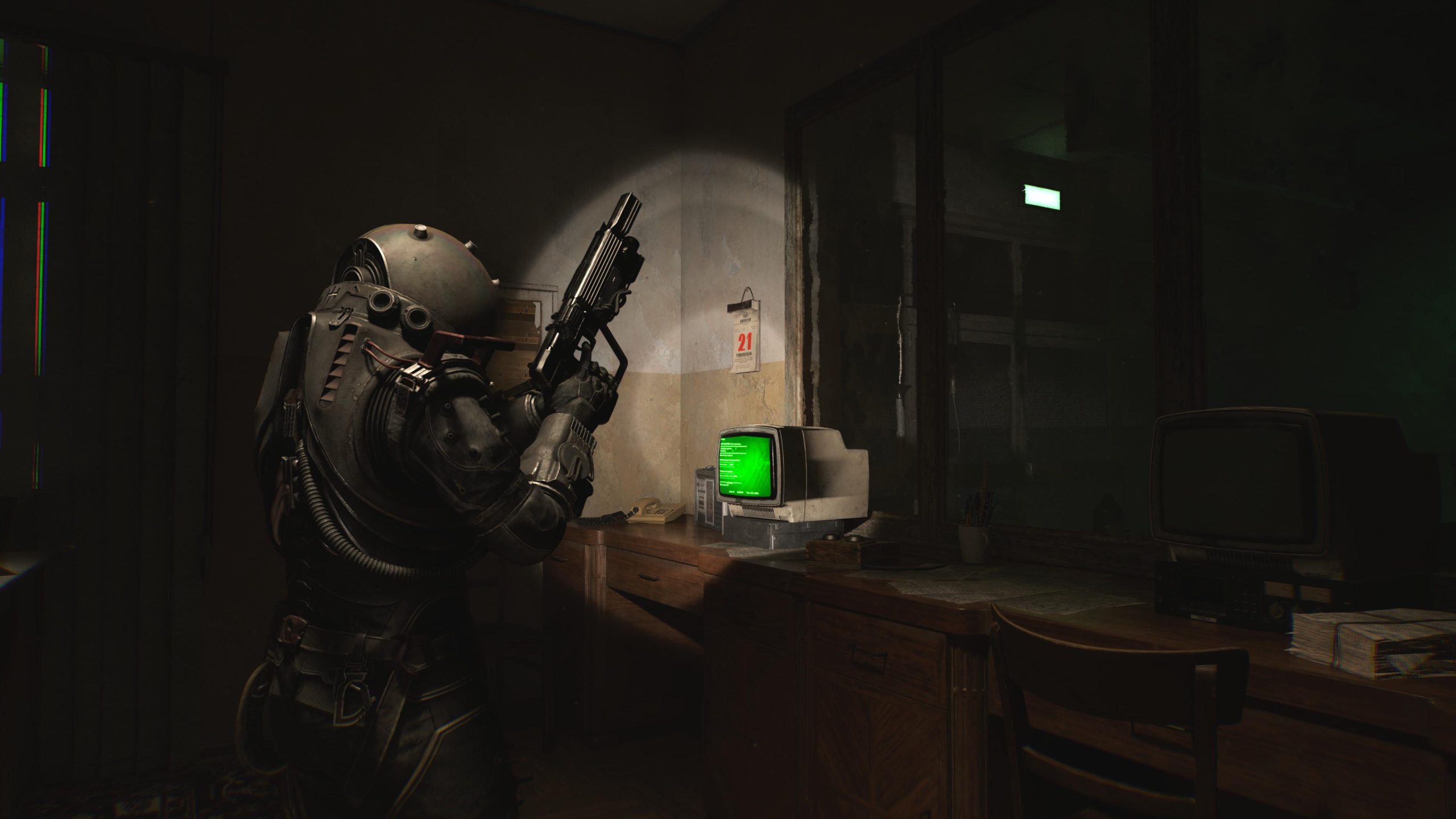
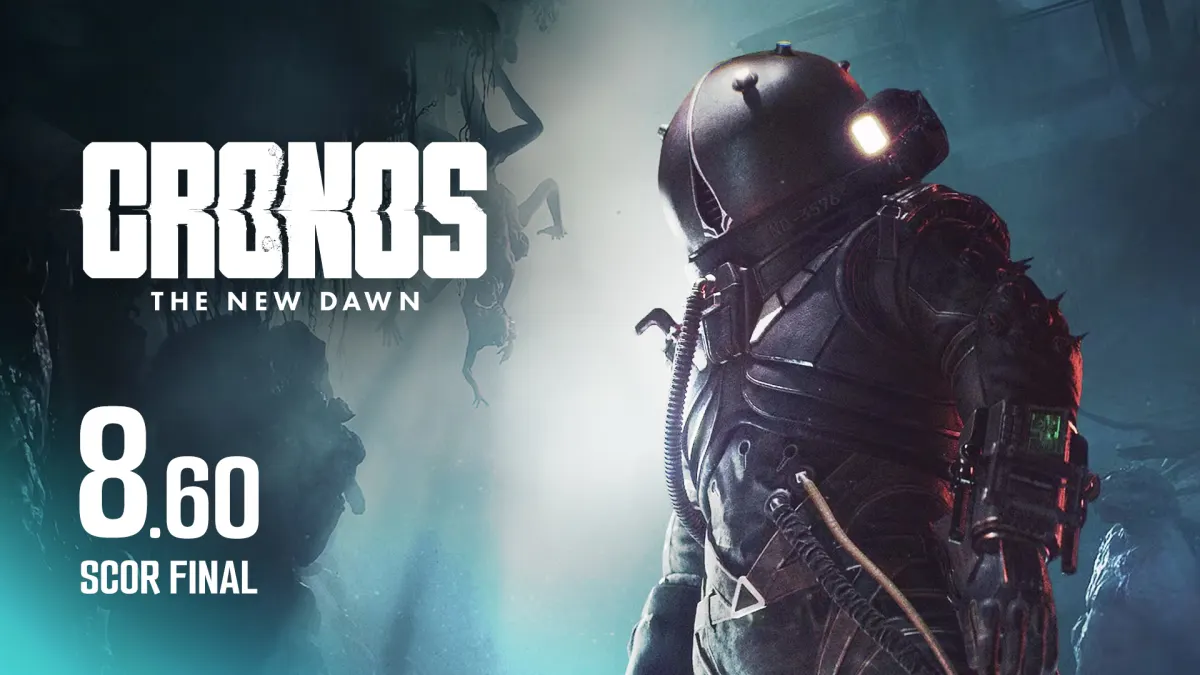
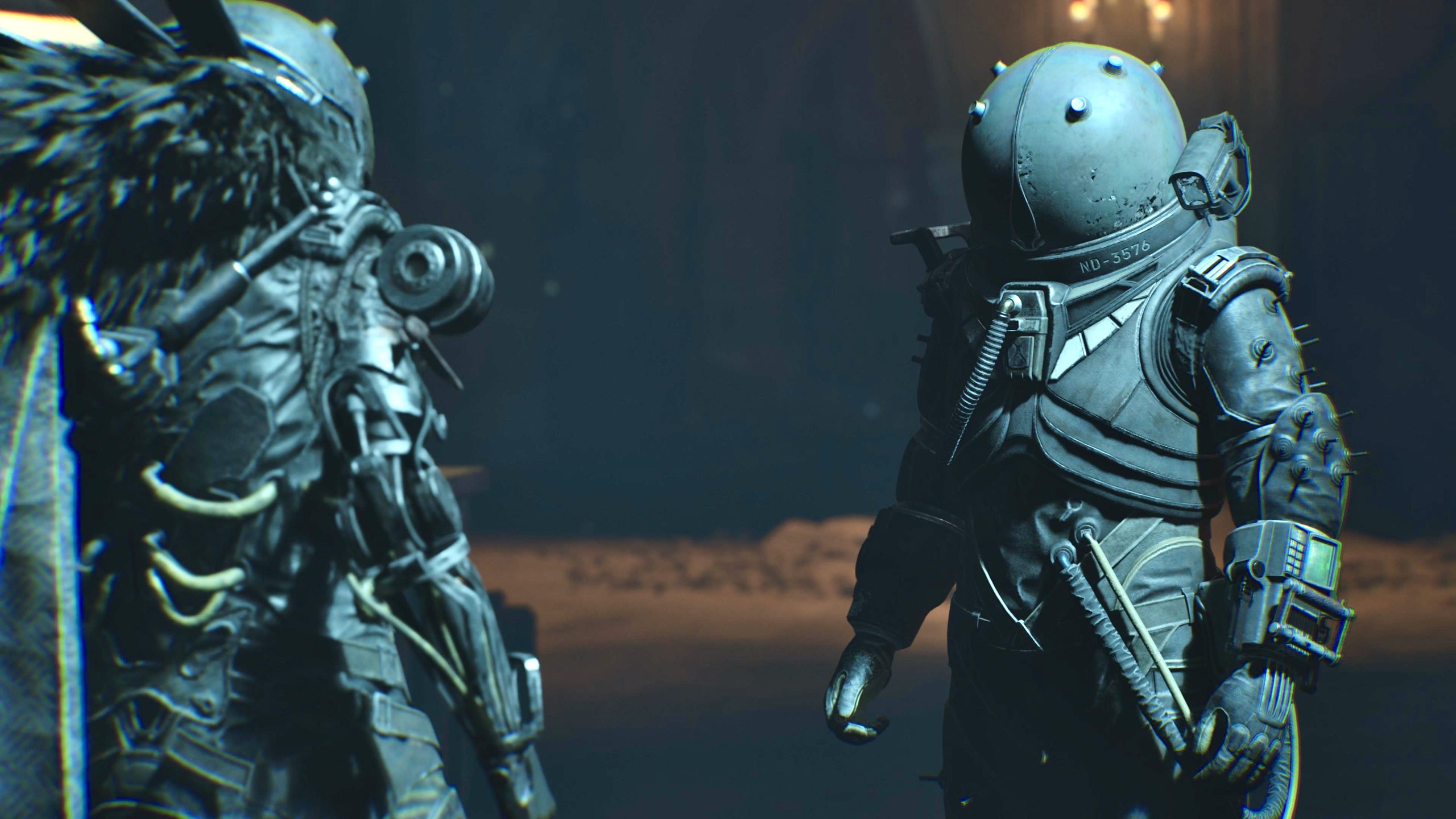
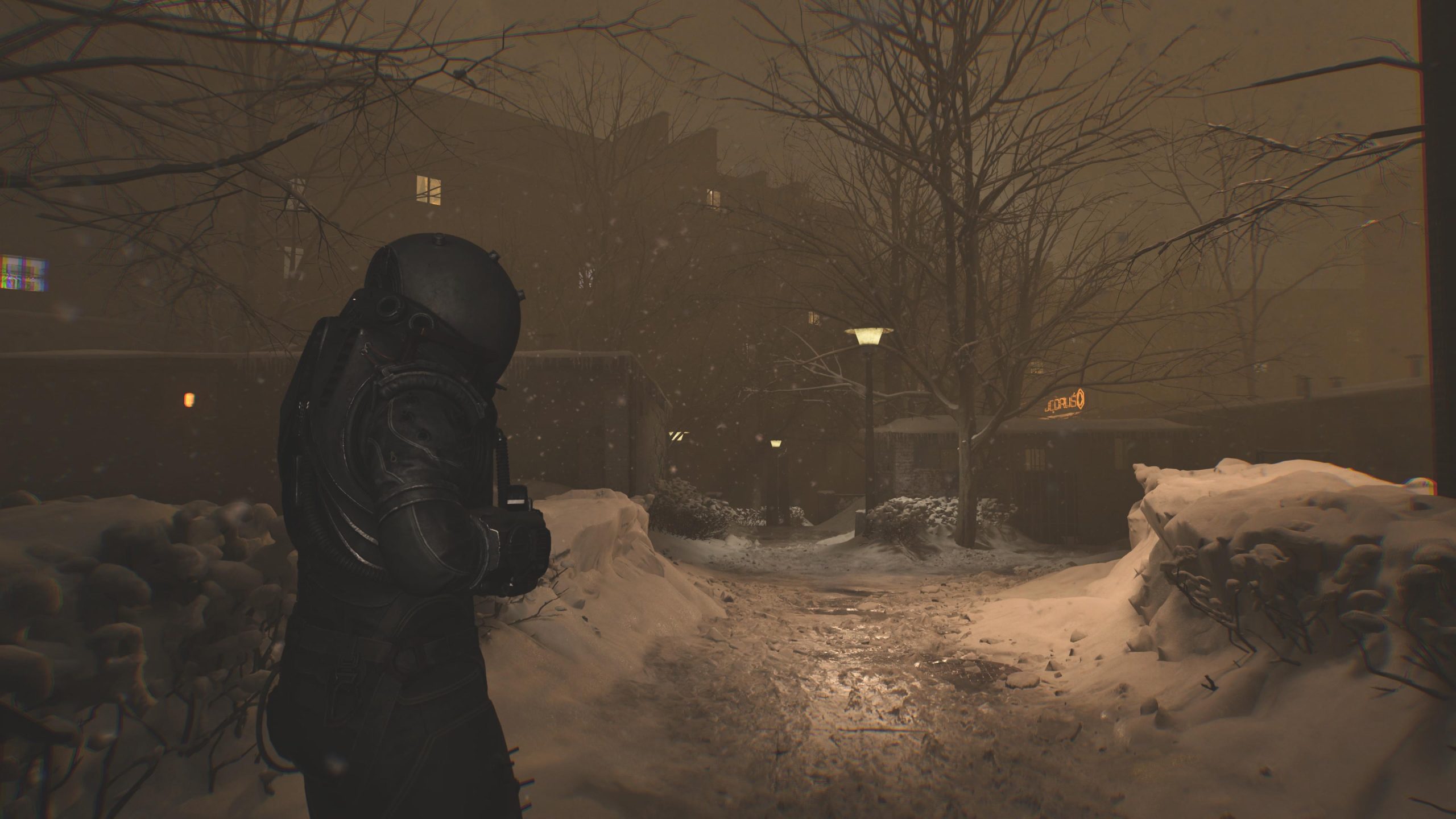
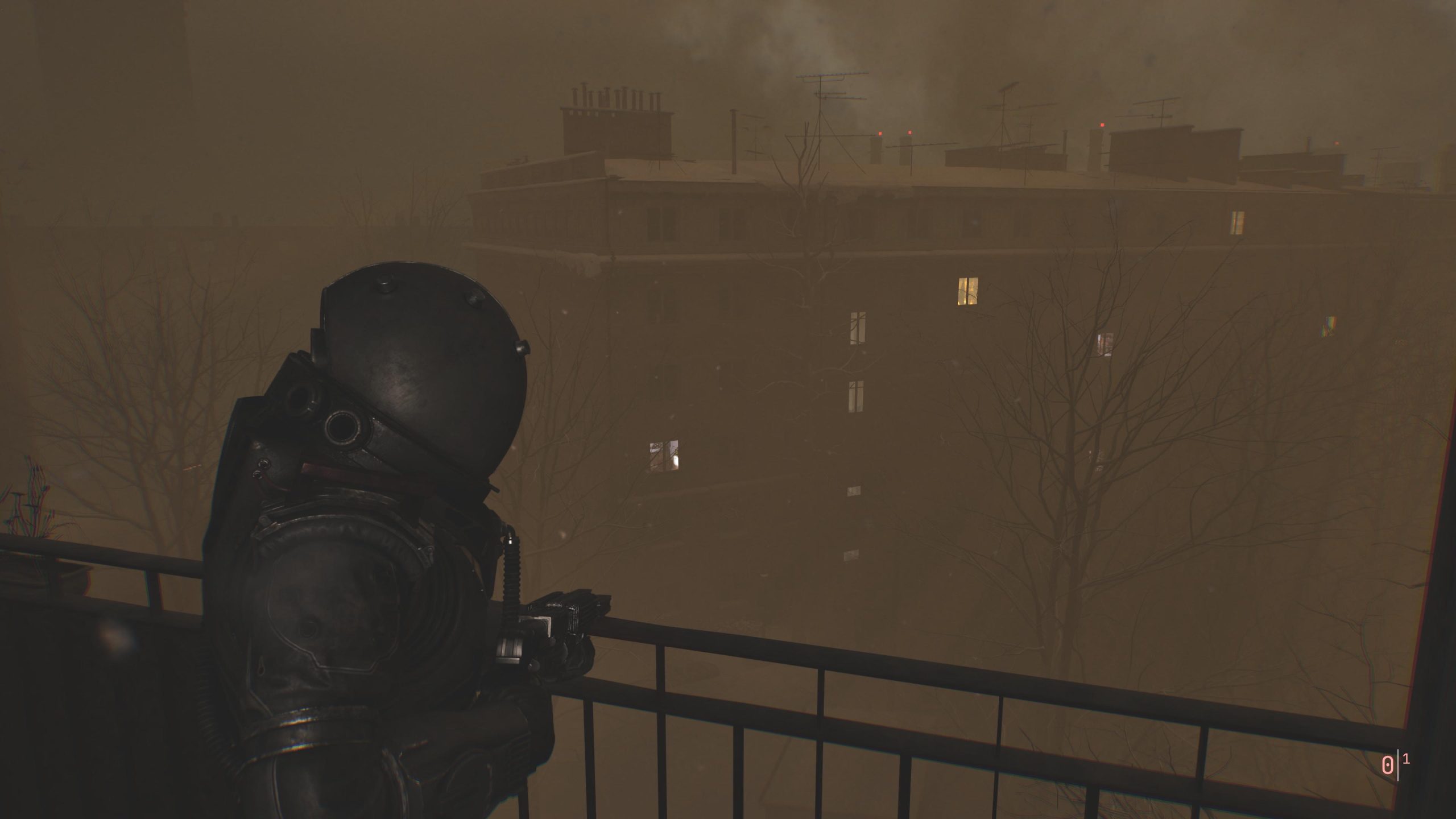
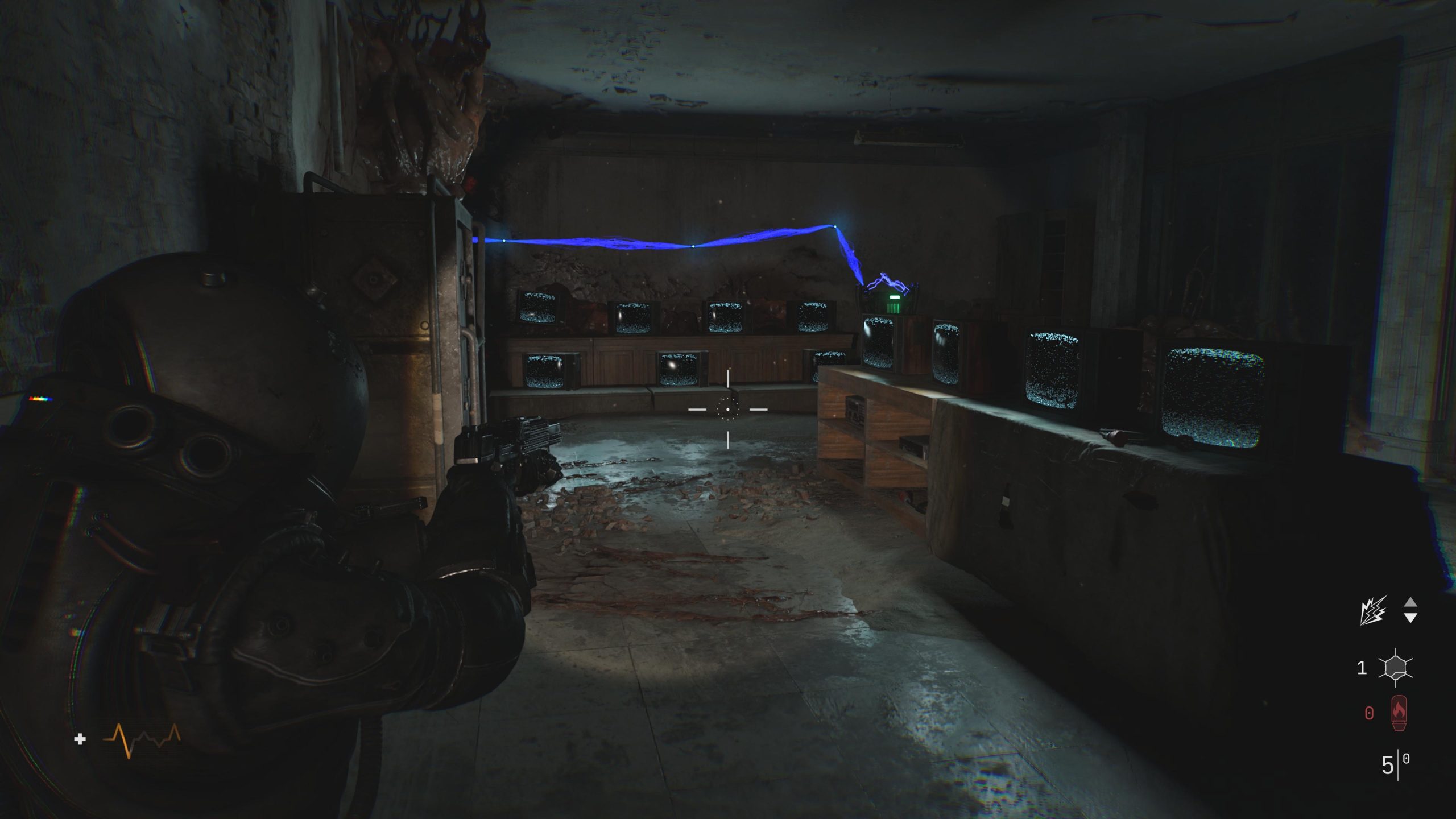
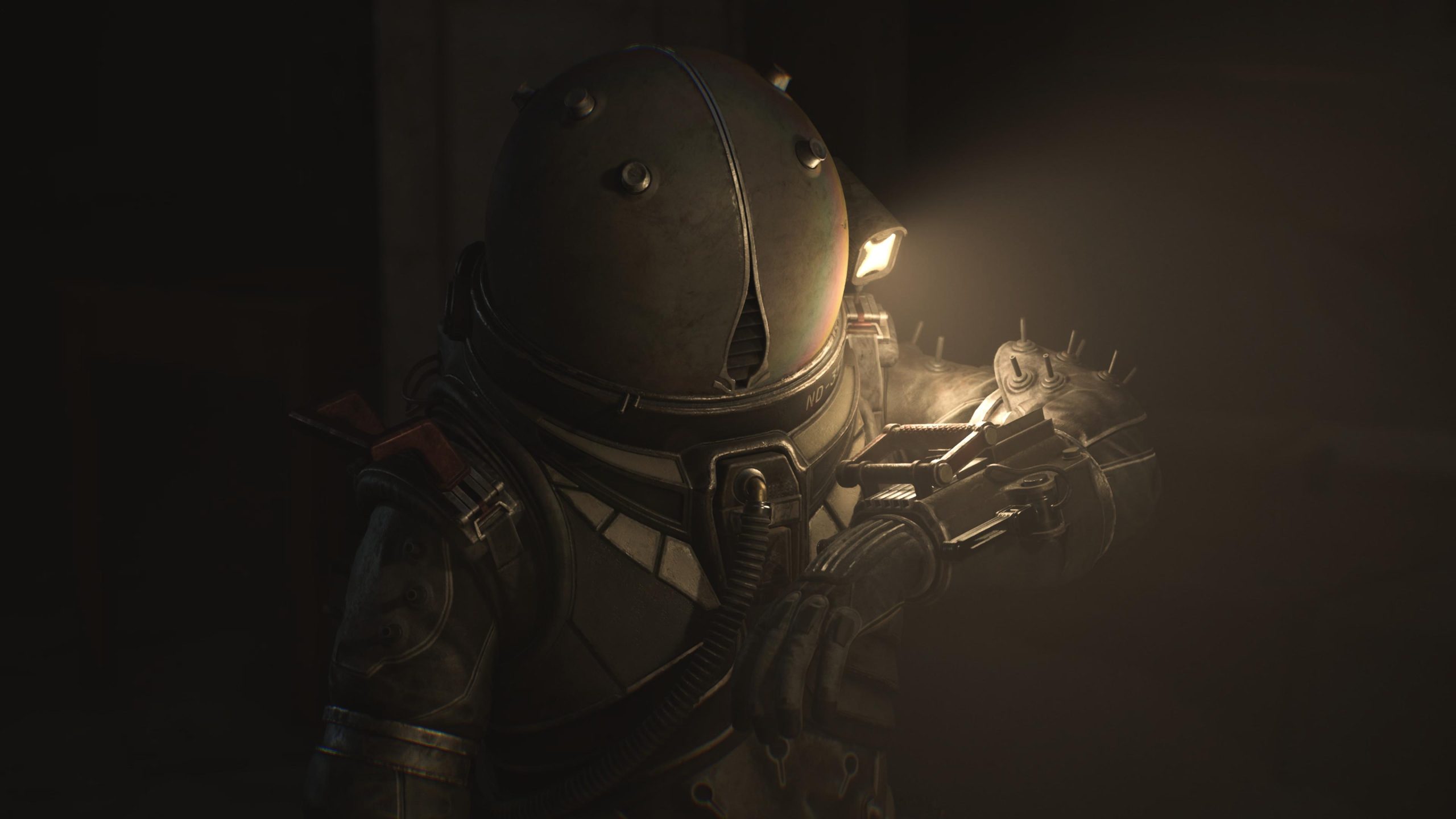
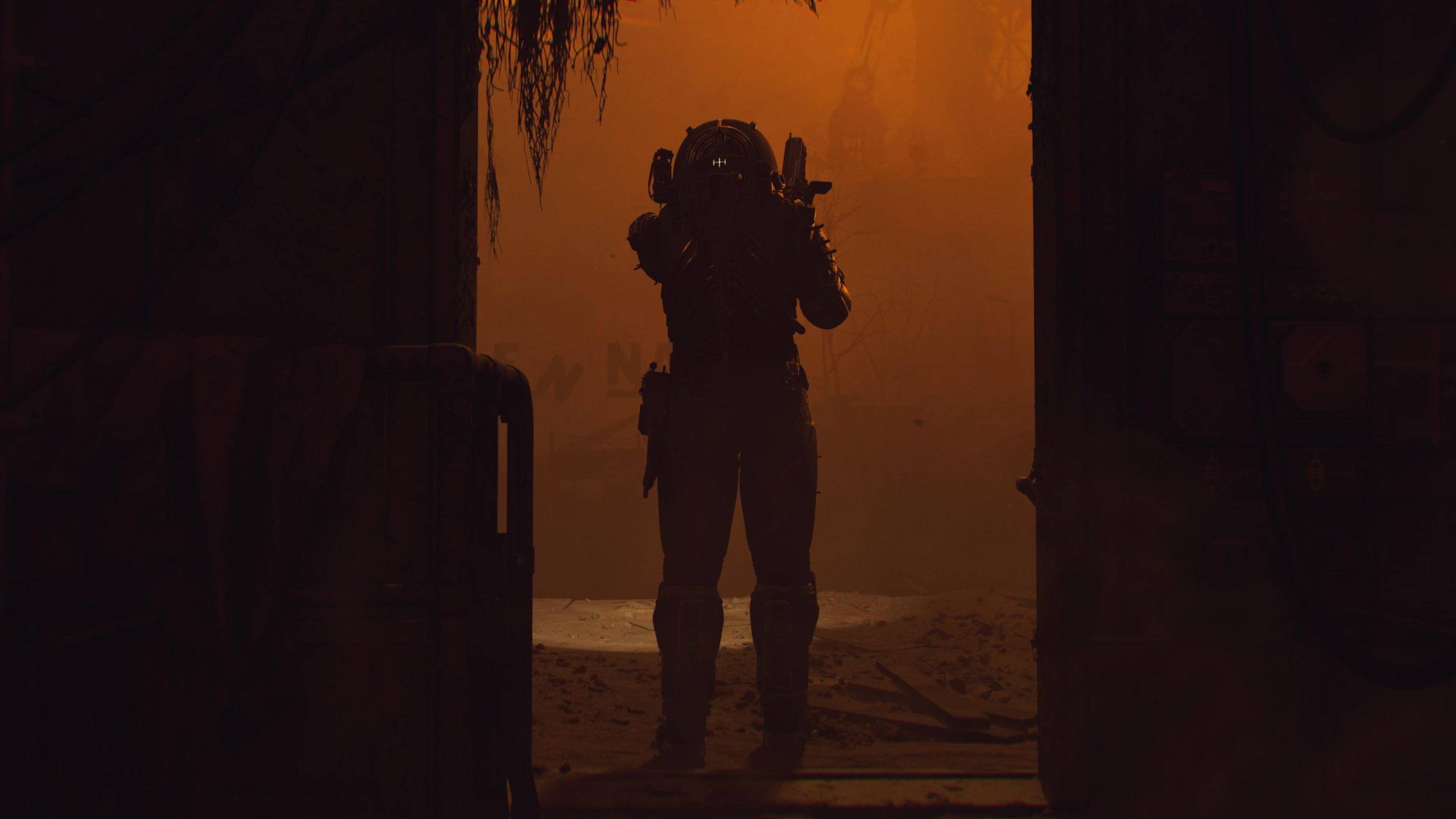
Cronos aims to be a modern, third-person survival horror, with obvious influences (Dead Space, Callisto Protocol, The Thing) which you will approach from an “over the shoulder” perspective à la Resident Evil 2 Remake but somewhat more zoomed-out. We control a massive character, with slow movements, but who is by no means a “tank” in terms of resistance – at least in the first hours of the game. The explanation is that we are encased in massive armour and a helmet reminiscent of early Soviet cosmonaut suits. Indeed, the artistic direction remains constant: Cronos being an SF influenced by the aesthetics of the 70s–80s (Alien), dominated by analogue technology and CRTs “all over the place”.
The first thing that struck me when I started to immerse myself in the game was the overall sound quality. Voices are clear and oppressive, weapons have a punchy impact, and the subtle music makes its presence felt exactly as much as it needs to. All of these contribute decisively to creating an atmosphere capable of transporting you into the game's world.
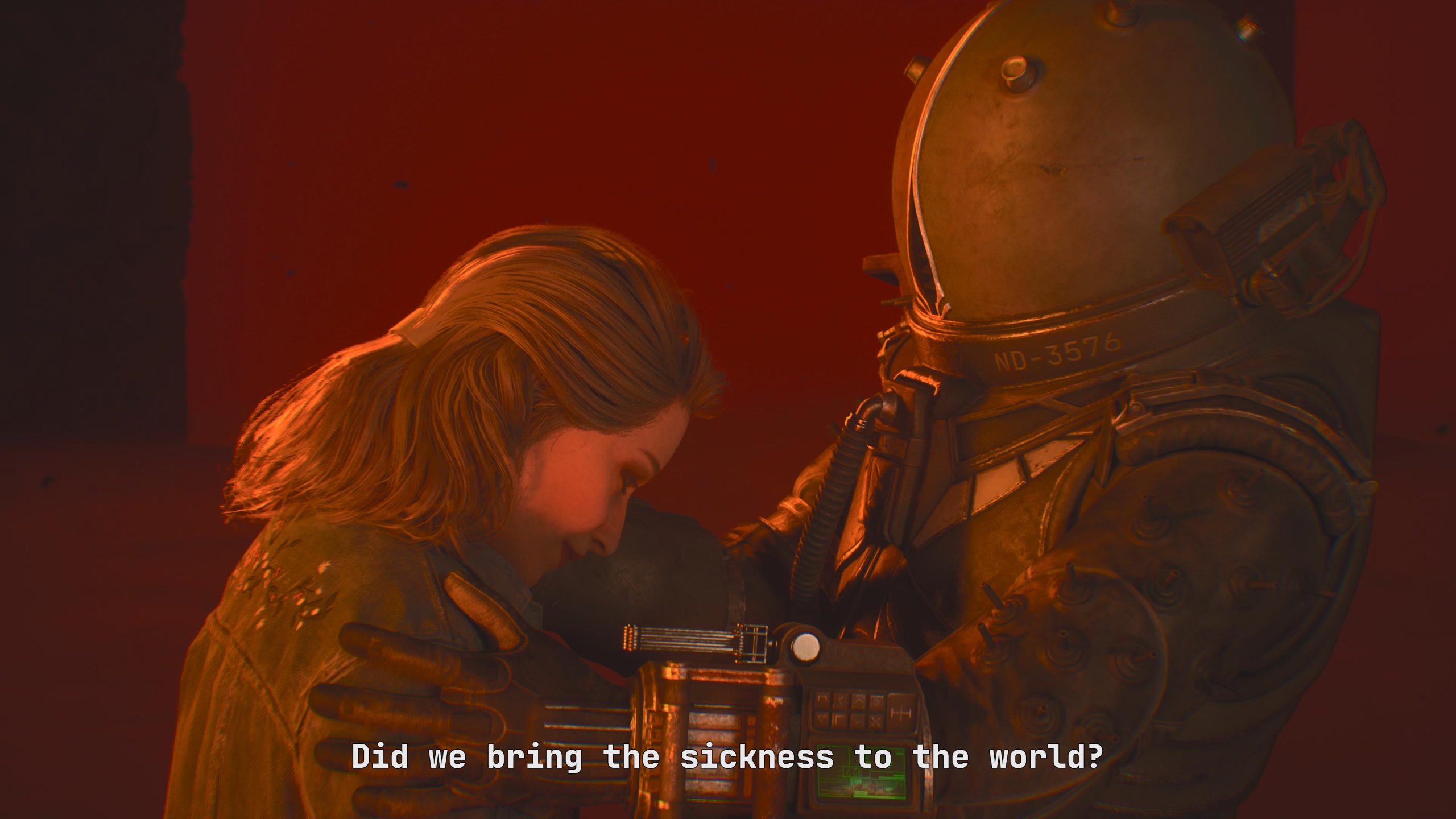
Memories of Communism
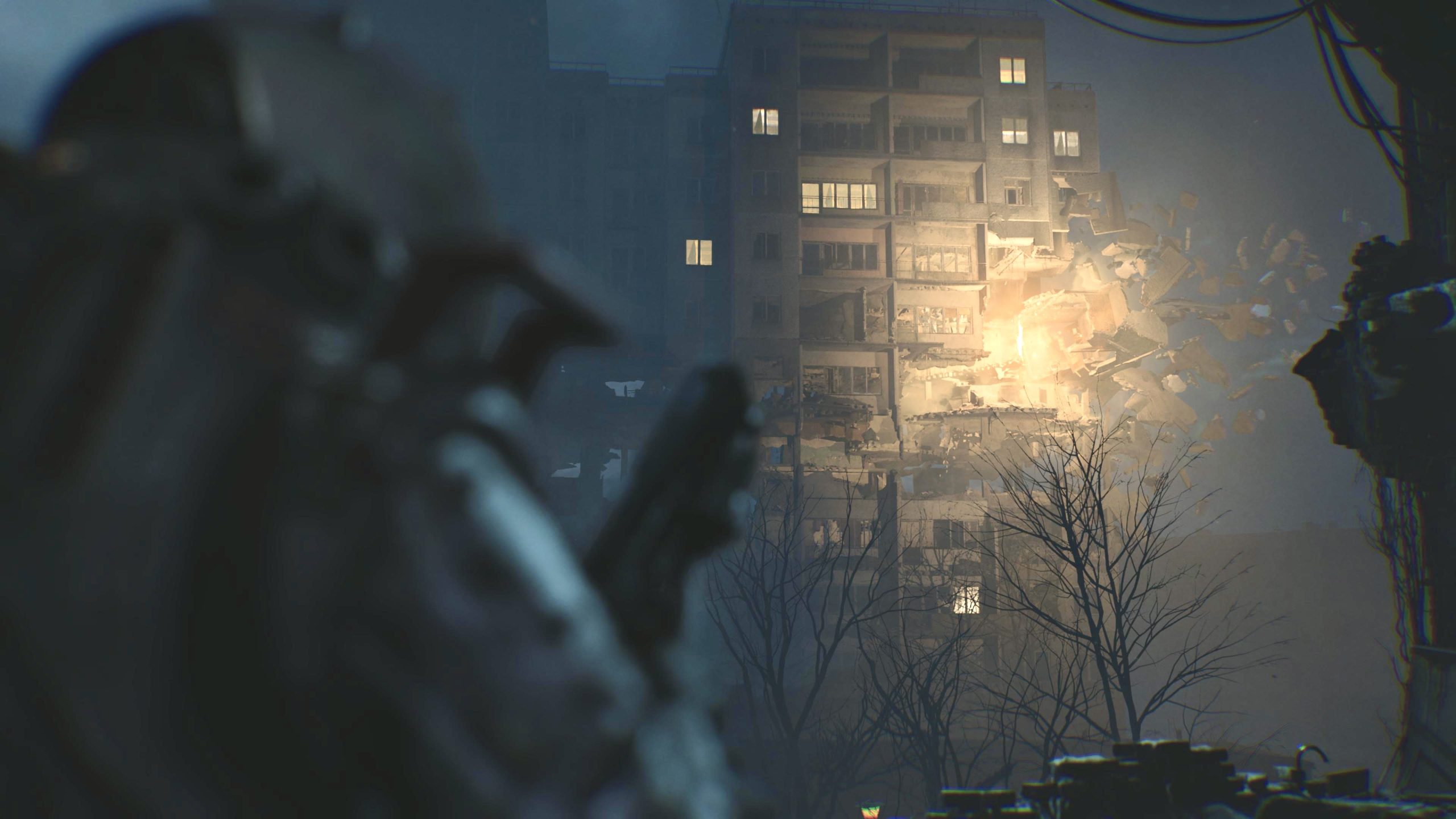
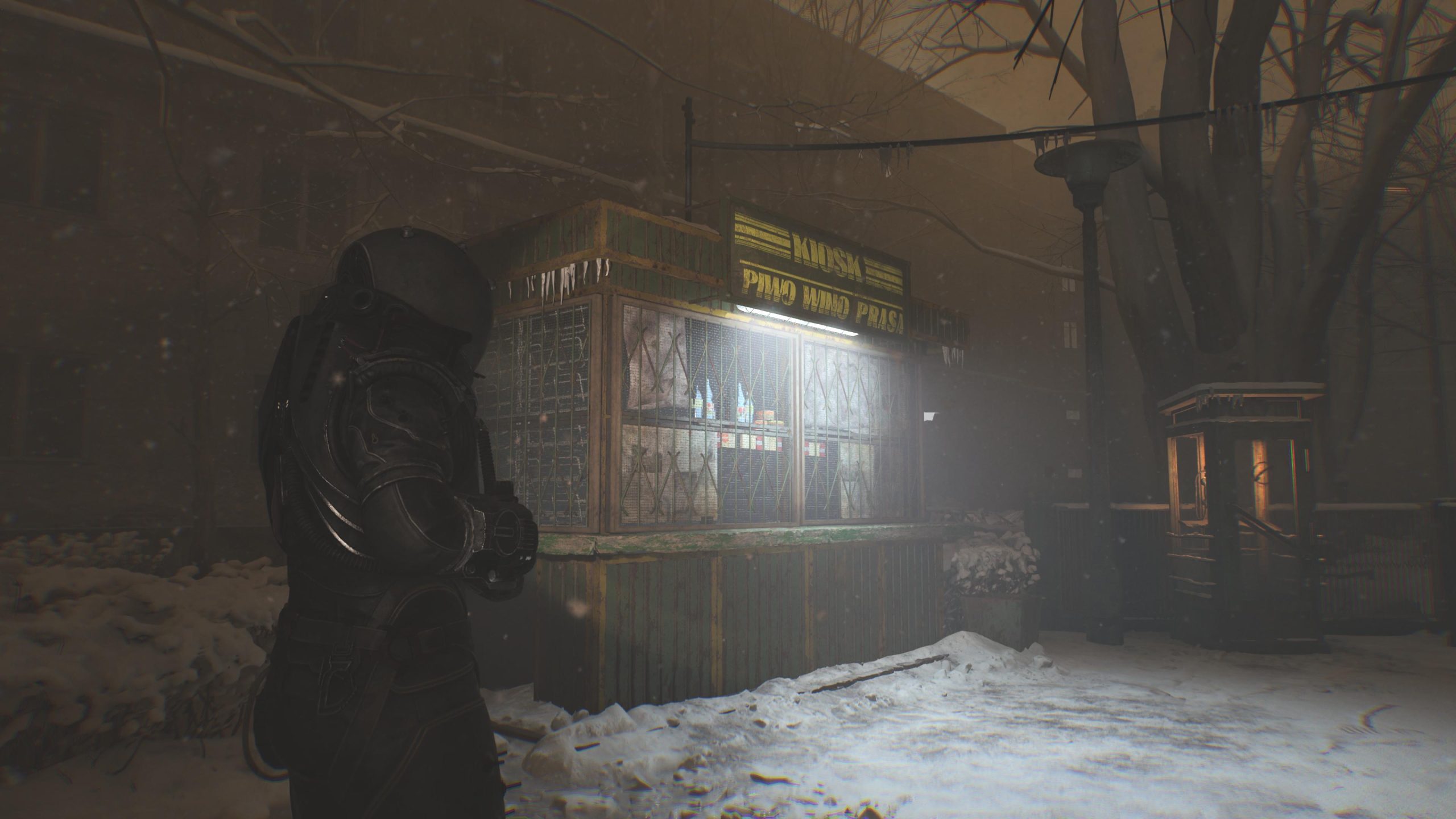
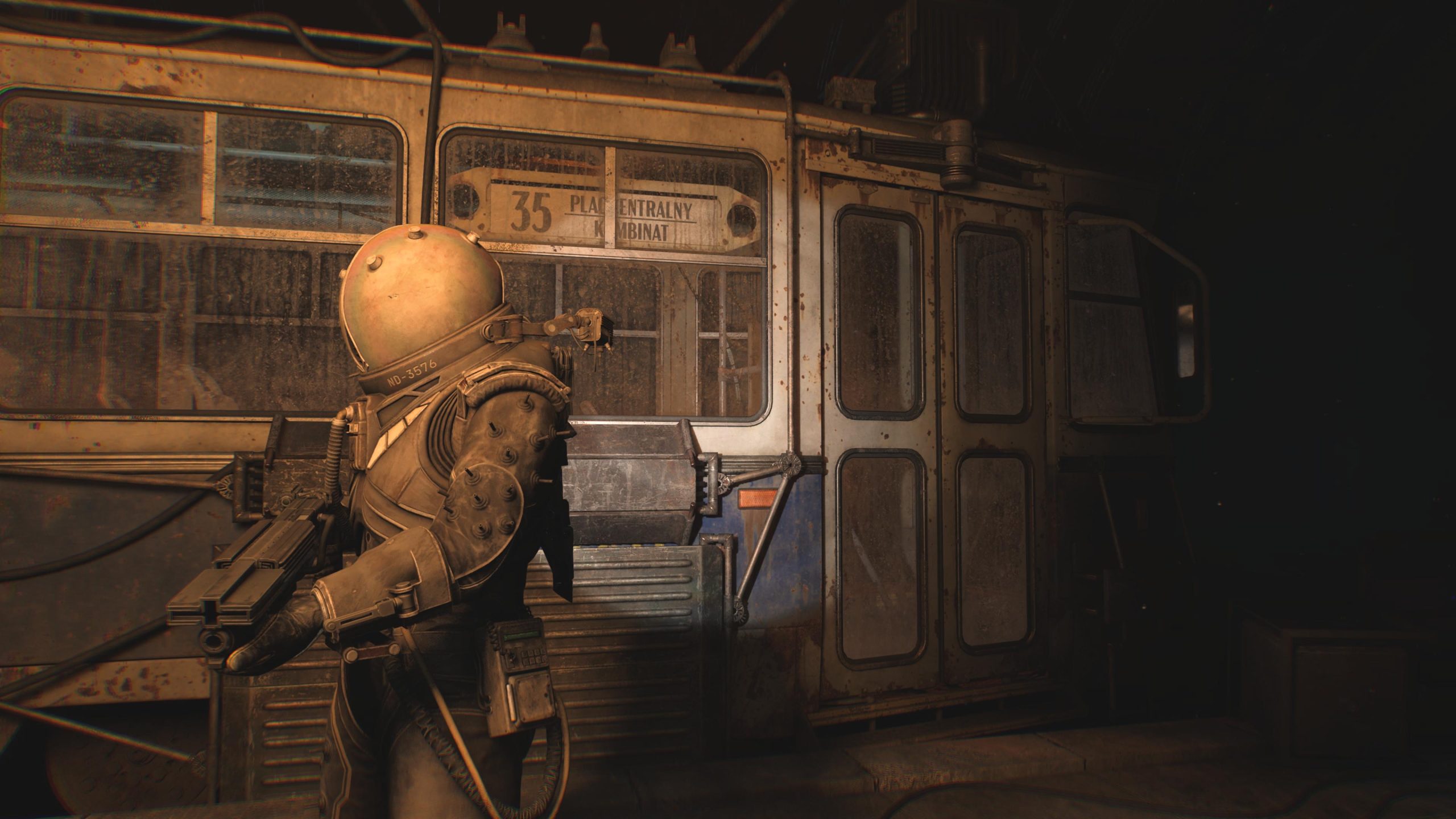
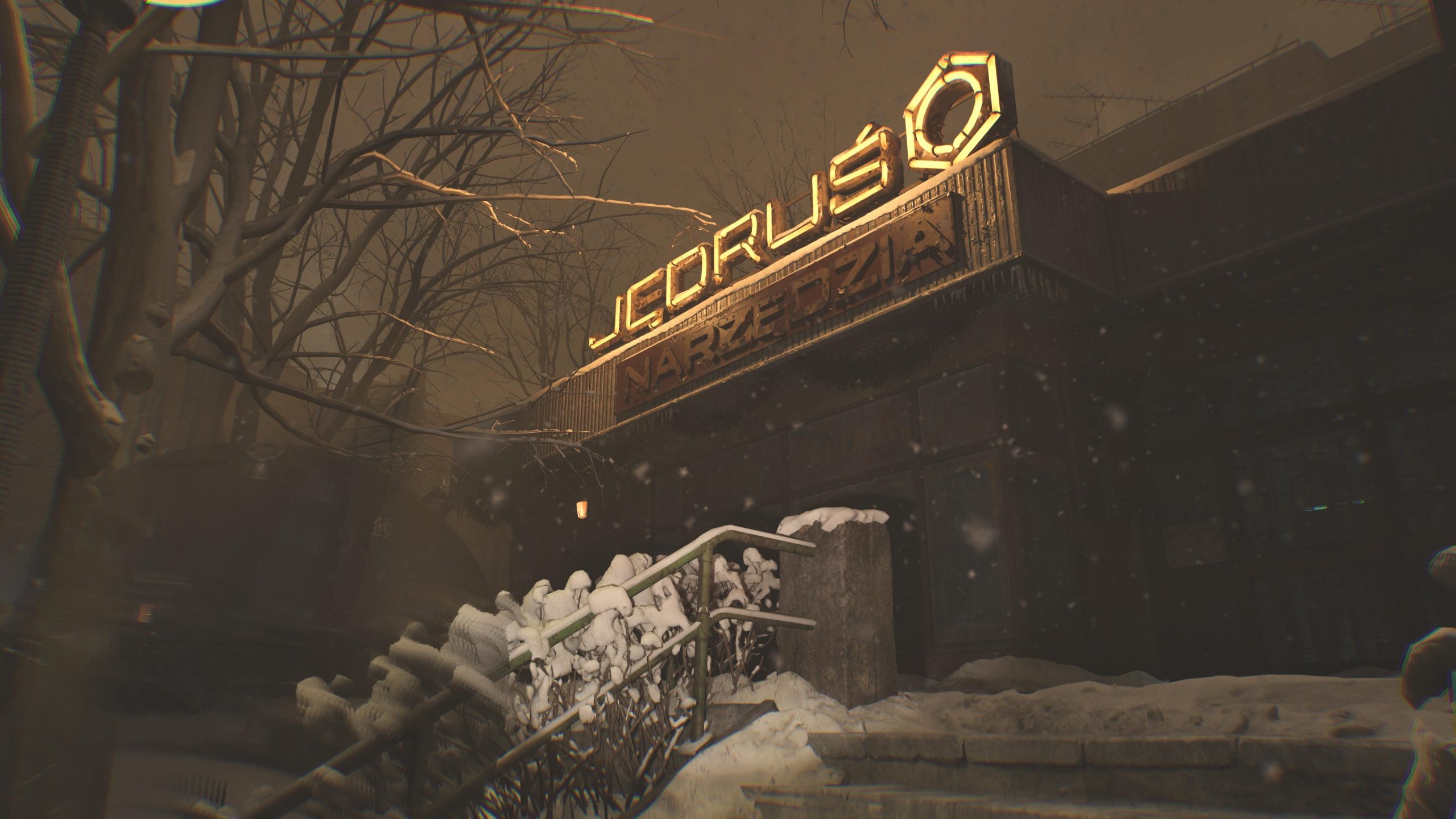
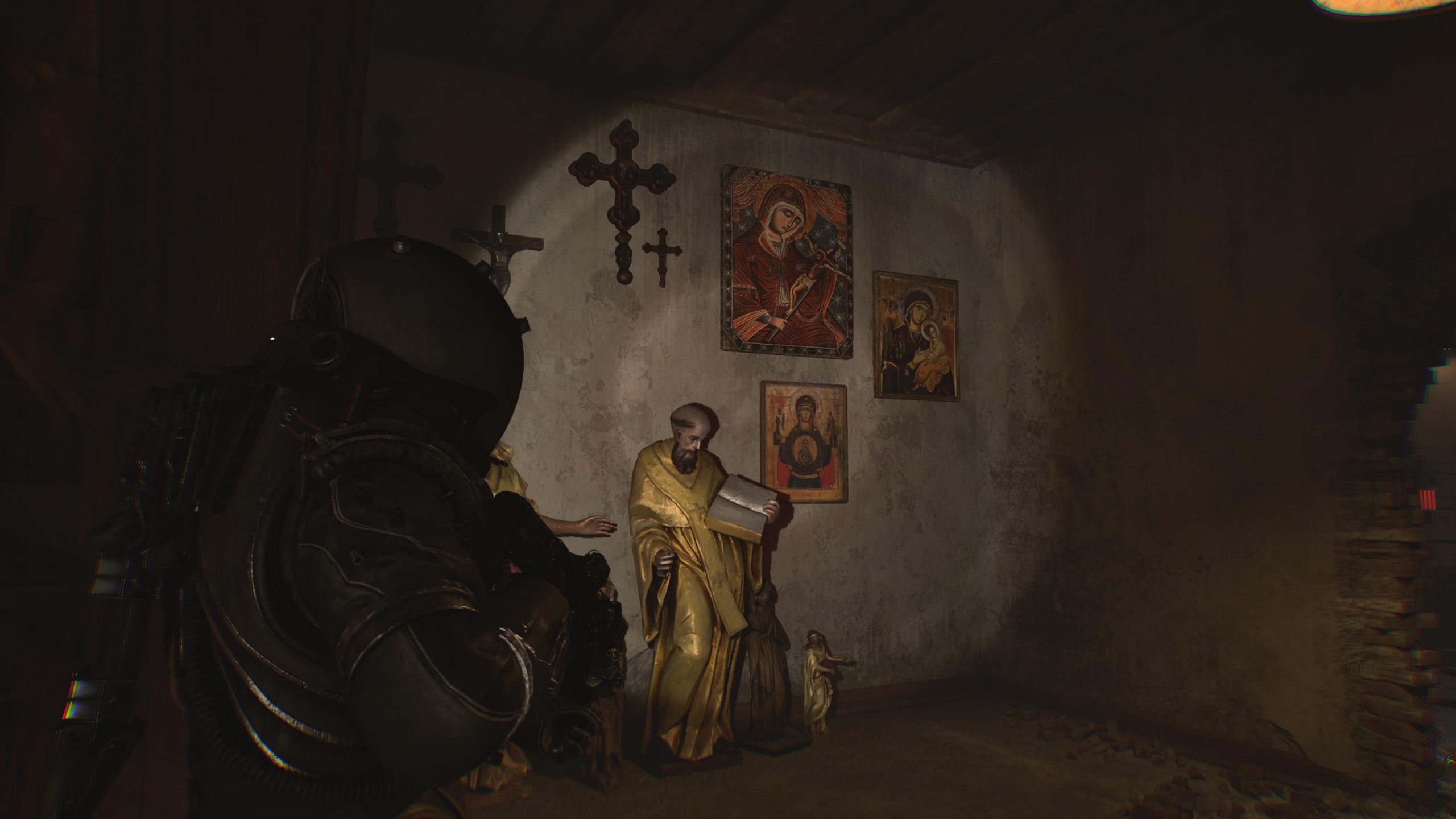
At the beginning of the game, I found myself in a sequence that stirred my childhood nostalgia like no other title before. A grey, eighties-era block of flats staircase: cold mosaic on the floor, plastic banisters yellowed by time, dusty ficus plants on each floor, dirty windows, and flickering light bulbs barely keeping the darkness at bay.
On the ground floor, a notice board full of yellowed papers and two Pegas bicycles – there weren't Pegas in the game, but my mind filled in the detail itself, to complete the perfect picture of memories.
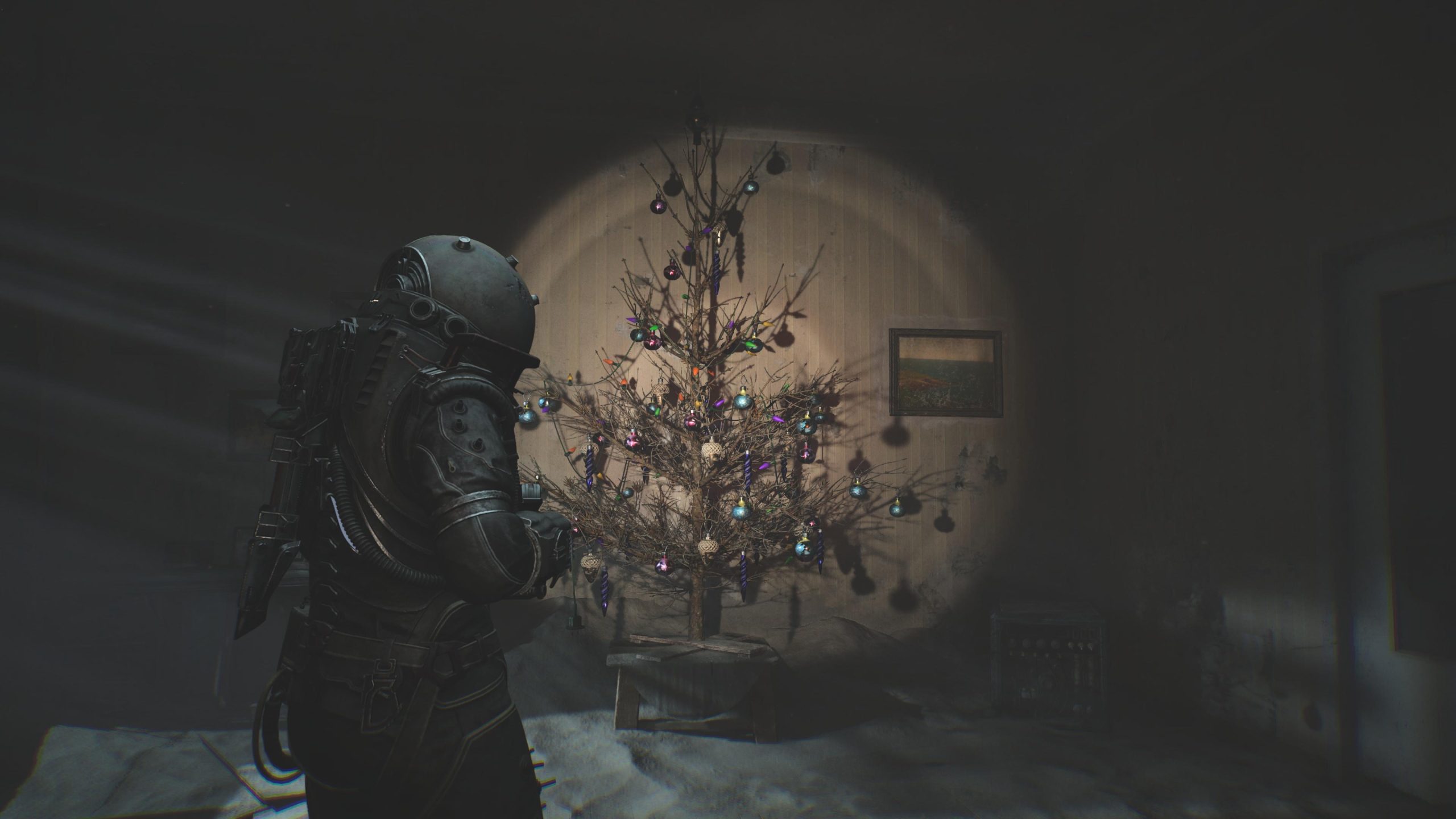
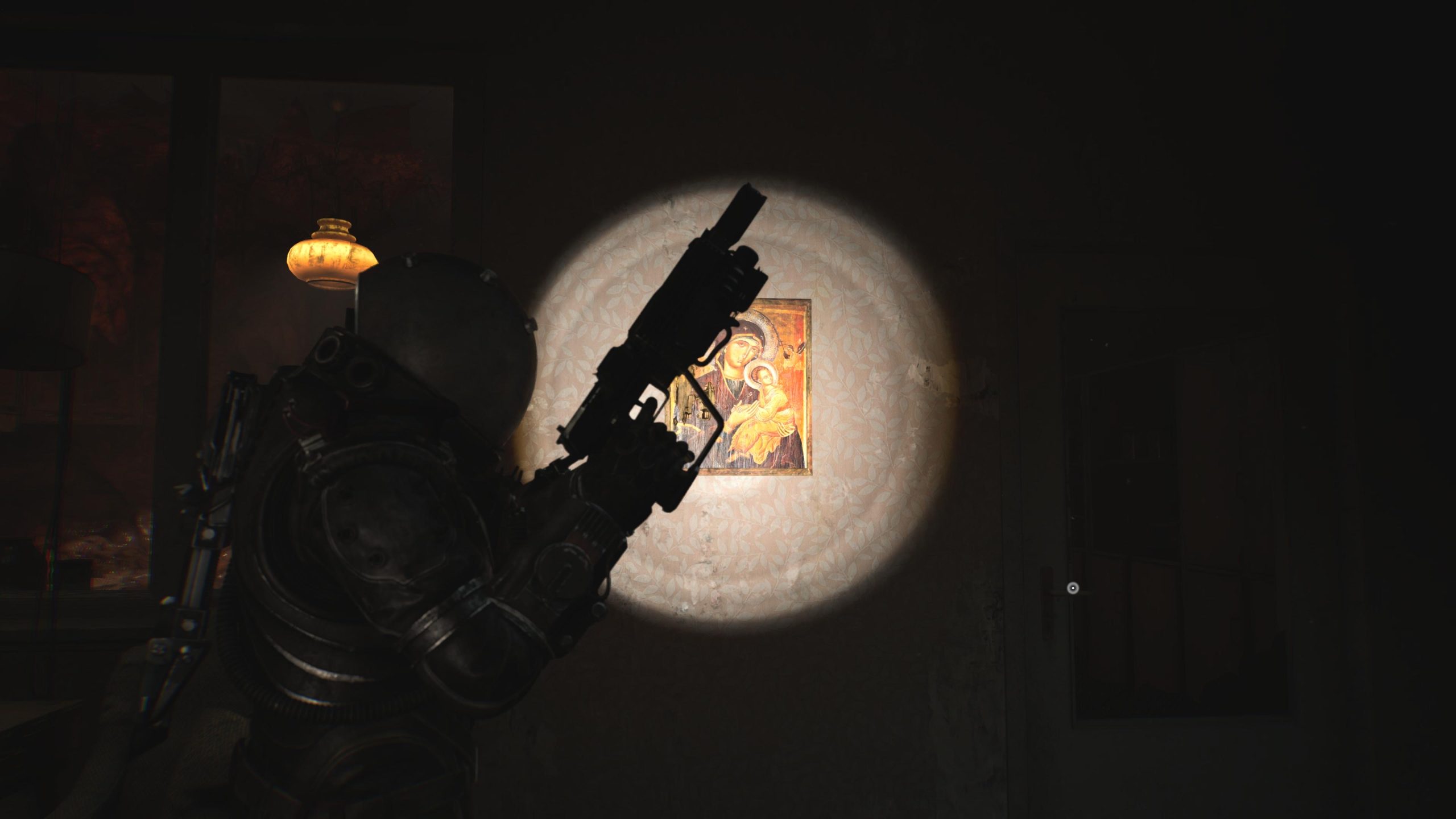
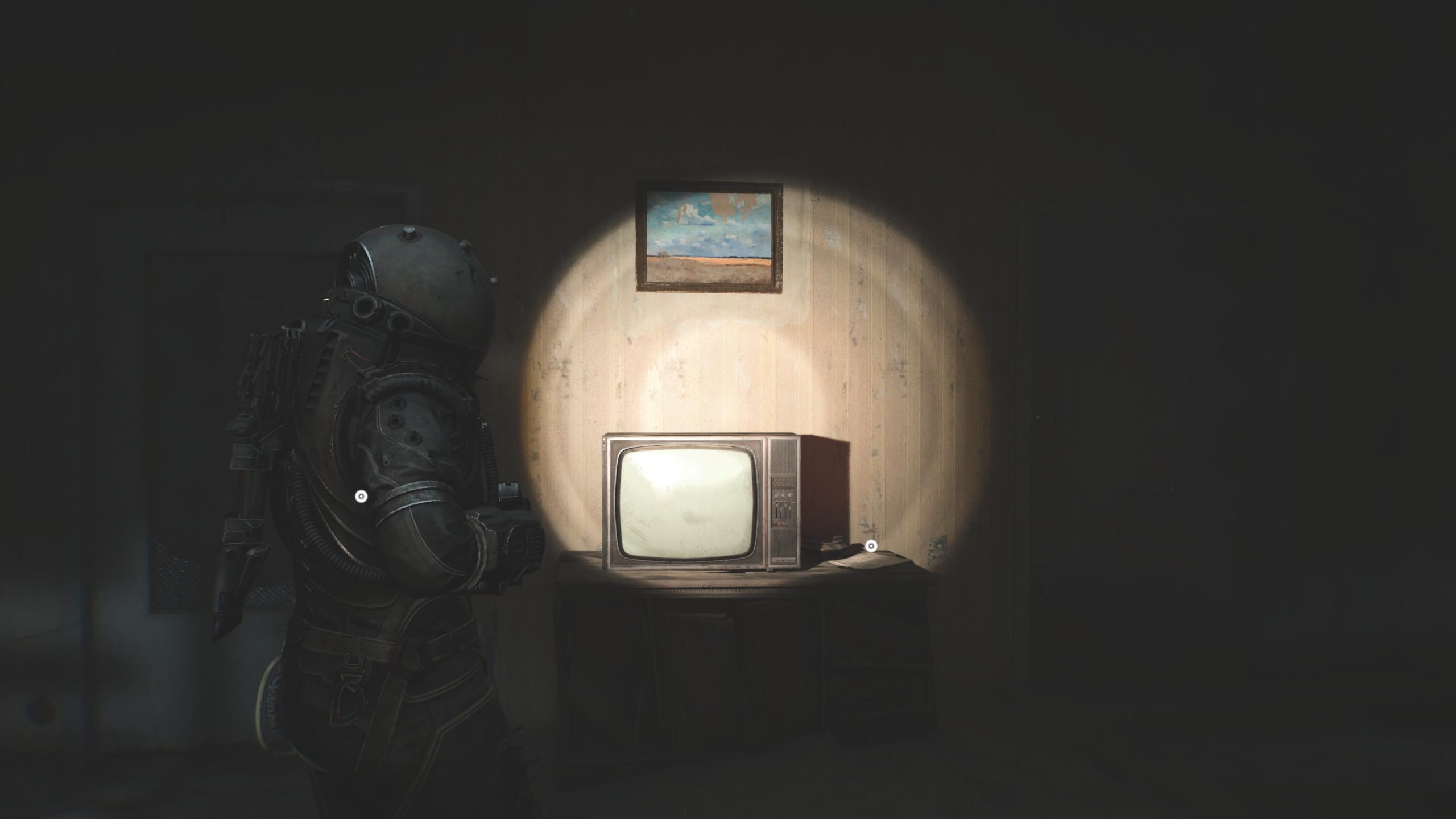
One floor up, a half-open door invited me inside. In the child's room, on a rickety shelf, awaited the ubiquitous plastic truck and the rubber-beaked duck. In the living room, a bare Christmas tree, with sparse branches, was sparsely decorated with a few elongated glass baubles and the inevitable silver tinsel. In the corner, a black-and-white tube television “delivered” only static – that familiar chaos of dots and lines dancing on the screen, which back then meant the absence of signal, but which today has transformed into a sign of lost time.
For anyone who lived through those years, it's impossible not to notice the authenticity of this real neighbourhood in Krakow: Nowa Huta (“New Steel Mill”), a veritable museum of communism, but still inhabited today.
Gameplay, combat and puzzles (survival or action?)
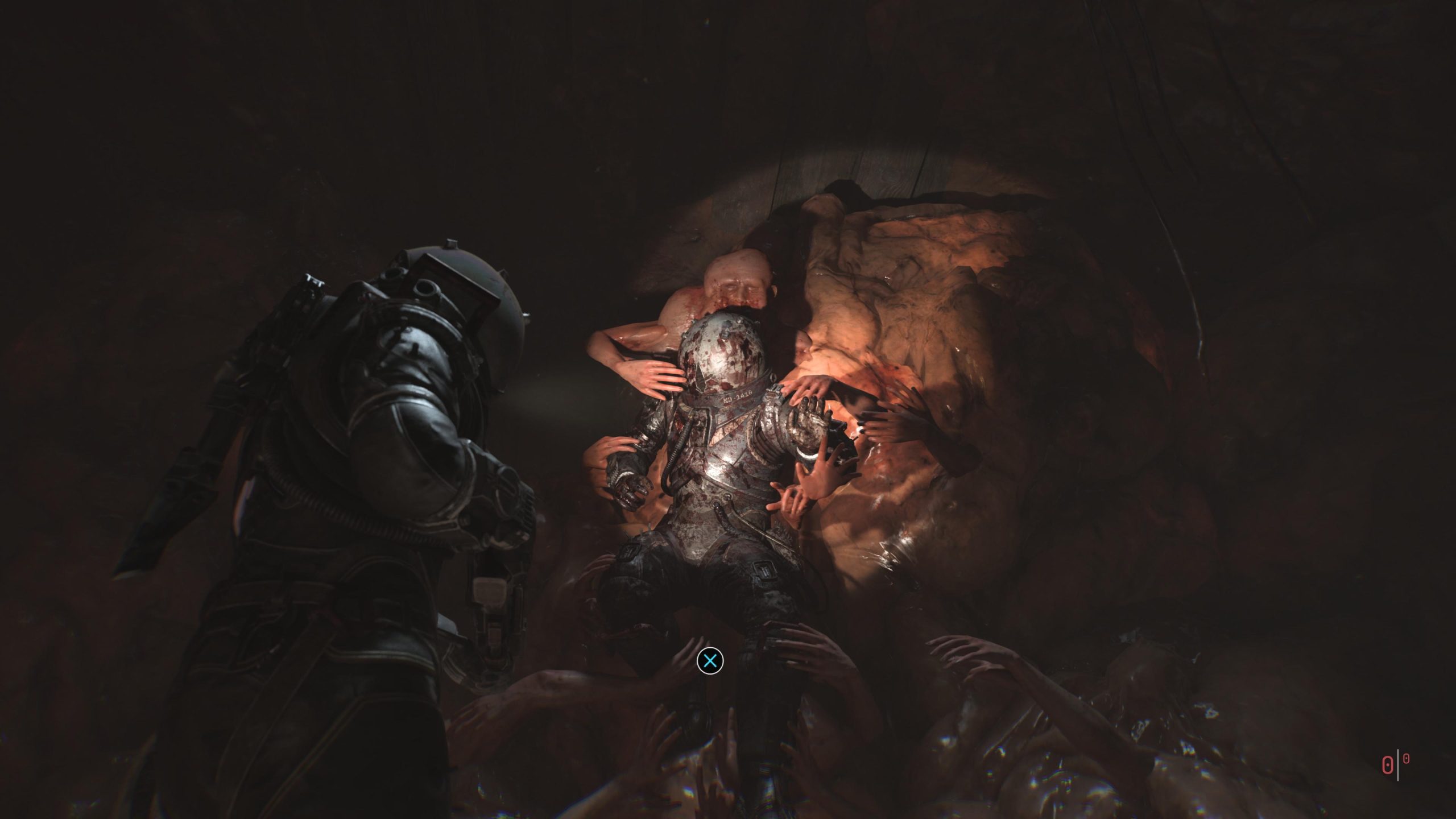
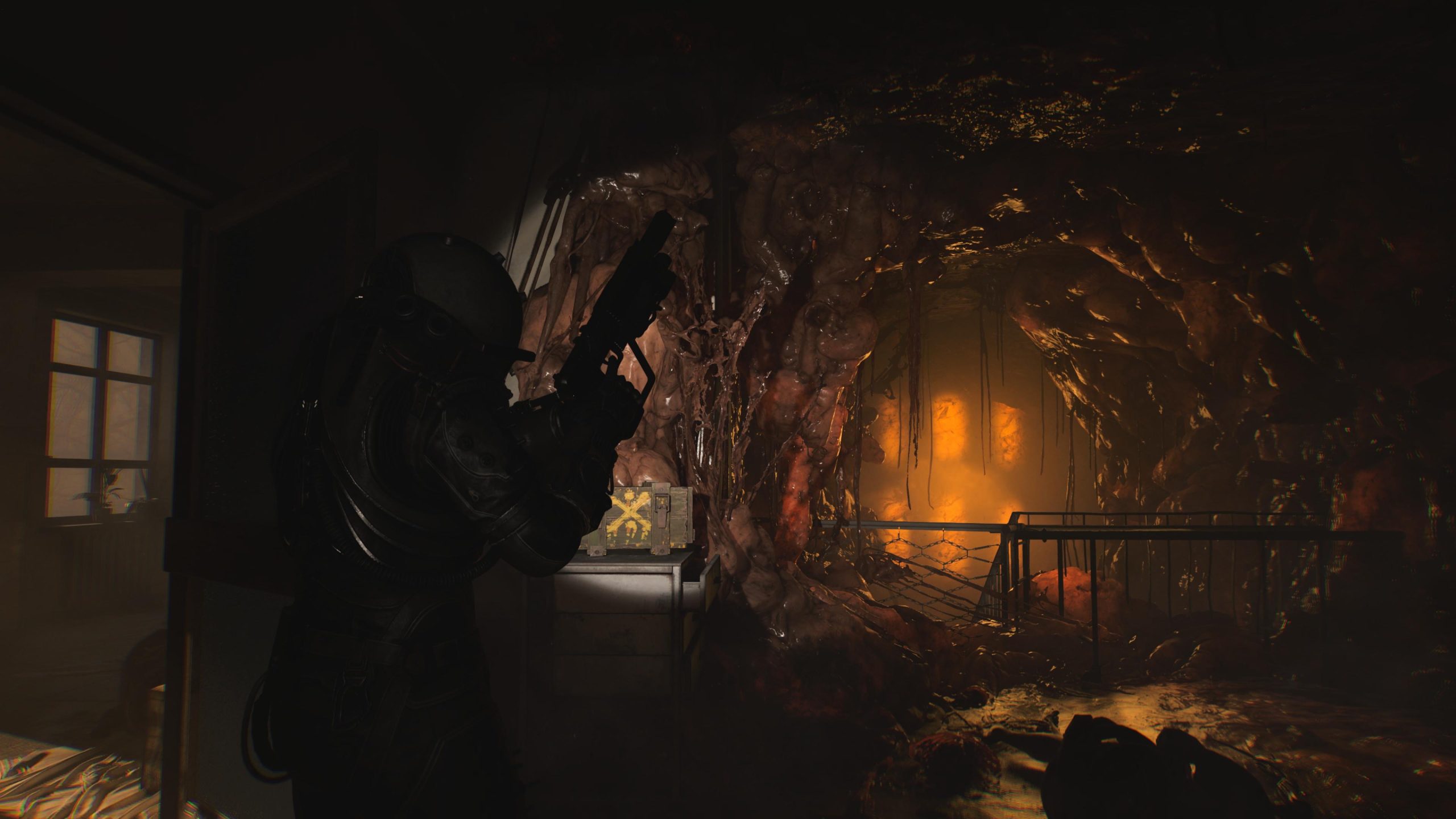
The apocalyptic event we are investigating – The Change – is, in fact, a disease/anomaly that causes grotesque mutations, leading those affected to fuse into an omnipresent biomass. The influences from John Carpenter's The Thing are impossible to ignore: the resulting biomass directly evokes the body horror from the film – people merged into monstrous forms, flesh and armour melted into a sinister amalgam. Just like there, fire becomes the ultimate weapon against this type of enemy, the Torch being the equivalent of the flamethrower, indispensable in confrontations. Even the mechanic by which Orphans “merge” (two enemies combine and give birth to a more dangerous version) speaks to the idea of continuous metamorphosis, where the danger is not just the present one, but also what the adversary is about to become.Battles mostly take place in enclosed arenas, which don't reopen until you eliminate all enemies. This pushes the game more into the action zone. I'm exaggerating a bit, but often I felt like I was in some kind of Gears of War – only without any cover mechanics, apart from using fire.
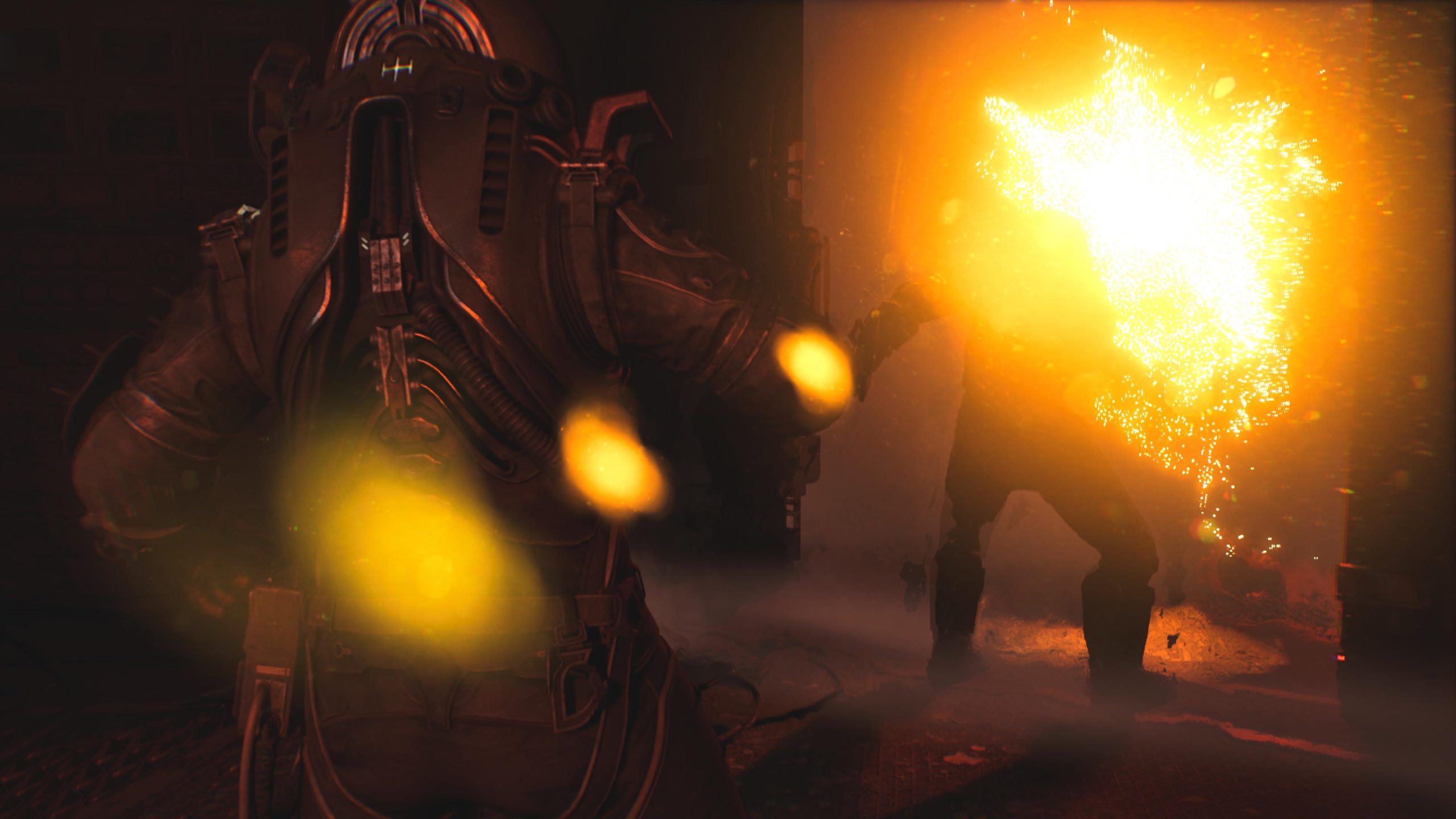
At the beginning of the campaign, I wandered almost aimlessly through the levels, making sure to set fire to all Orphans left behind or already found on the ground. This reflex probably comes from Resident Evil 1 Remake on GameCube, where burning downed zombies guaranteed peace for subsequent incursions through the mansion, because you no longer risked them rising from the dead in an even more terrifying version.
In Cronos, burning Orphans (sounds strange, I know) only makes sense in the heat of battle, because there isn't that kind of backtracking from Resident Evil, where you constantly revisit the same areas. And, unlike RE, where you could escape by running from zombies when you ran out of bullets, here you can get into serious trouble if you don't have enough Torches and they start merging like crazy. Each merge gives birth to a more hideous and dangerous version, which also borrows characteristics from the enemy it merged with – for example, you barely put down an “acid thrower” and immediately another one merges with it, transforming into a monster with massive armour and corrosive attacks.There are also a few bosses in the game, each with a trick to exploit to take them down, and some of them go through the classic 2–3 phases before you put them down. I liked that they are different, not just stronger variations of ordinary enemies. The battles with them were quite satisfying and, apart from the last two – especially the final boss – I didn't have big problems. However, even with the bosses, we remain locked in arenas, and after finishing Cronos I admit I felt like trying an open world, just so I could roam freely.
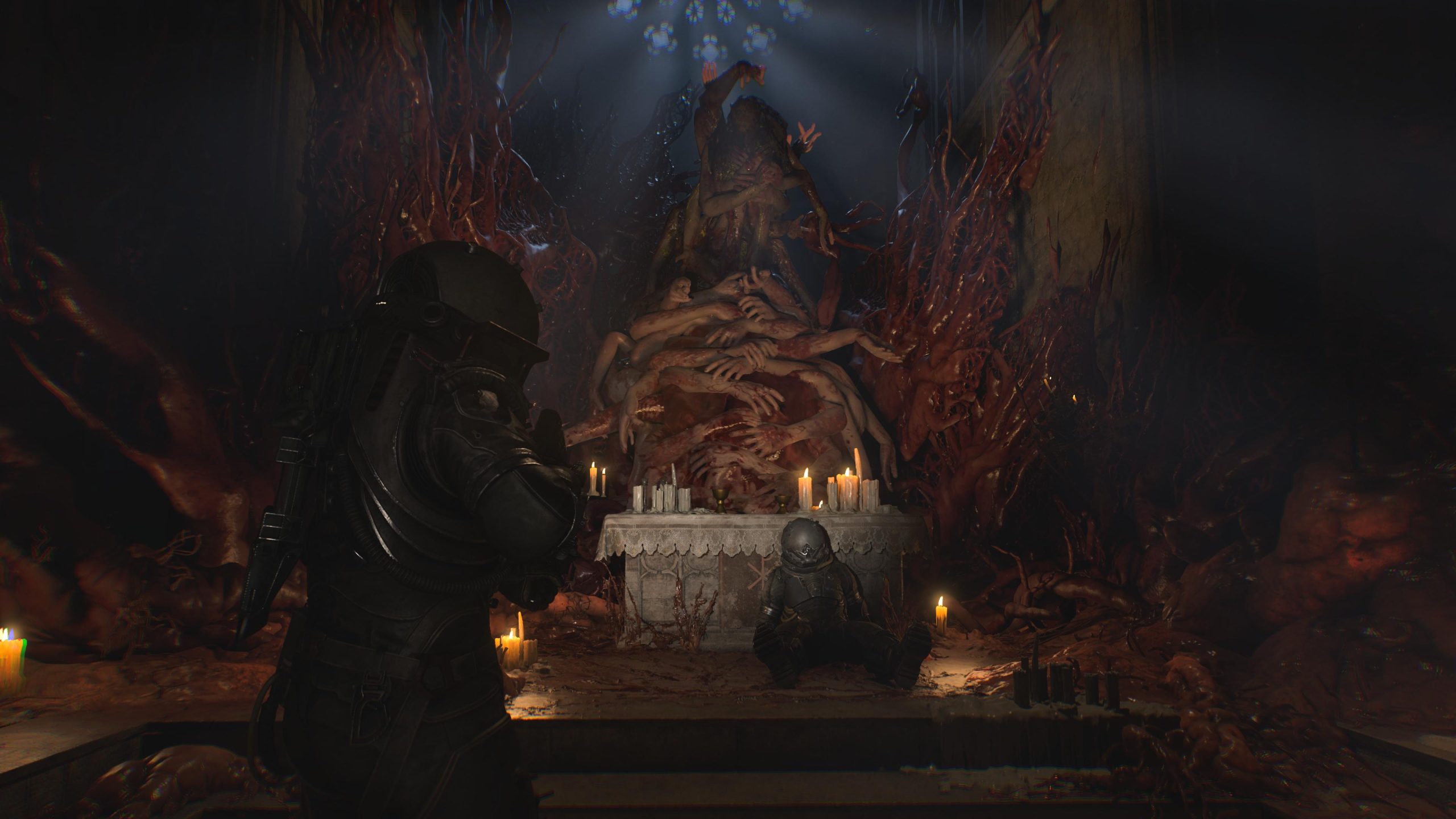
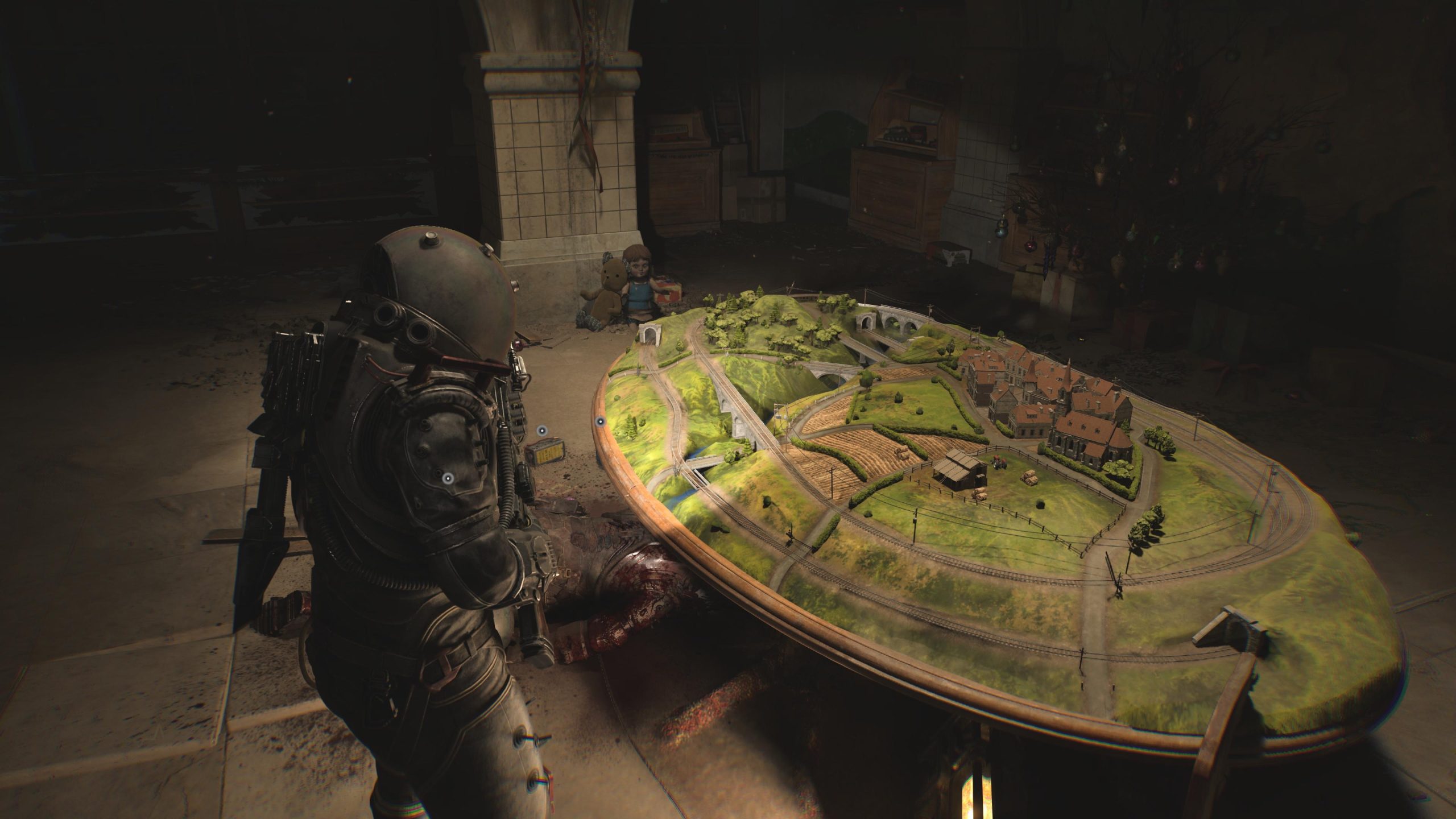
The game also has a few puzzles, especially towards the end, and these are classic: find a fuse to restore power, find the right key for the door, connect a power source to the control panel, or arrange certain objects in an already “spoon-fed” order.
If in The Medium we had real-time dual-reality puzzles, in Cronos something more interesting appears: anomalies. These are distortions in reality, ruptures in space-time or areas where physical and narrative rules no longer work as you would expect.
You encounter them in various forms: sometimes visible – cracks, vortices, objects suspended in an energy field – other times much more subtle, through changes in light, distorted sounds or memories “recorded” in space.
From these, a few puzzles arise, where you have to, for example, divert energy flows through these anomaly zones, but only if you look from a certain angle or if you move the correct objects into the distorted field.
I don't know whether to classify this aspect as puzzles or rather as parkour sequences: here and there – especially towards the end of the game – we find structures built by our predecessors that facilitate movement through the anomalies. Basically, these are platforms from which you can catapult yourself to other platforms, to navigate more easily through the distorted chaos of these zones. Finding the correct path from one platform to another can be seen as a mini-puzzle in itself. The jumps here immediately brought to mind the zero-gravity movement sections from Dead Space, only in Cronos the feeling is closer to controlled parkour, where you have to intuit the correct direction. This mechanic is also used creatively in one of the boss fights, which breaks the monotony and makes the battle memorable.
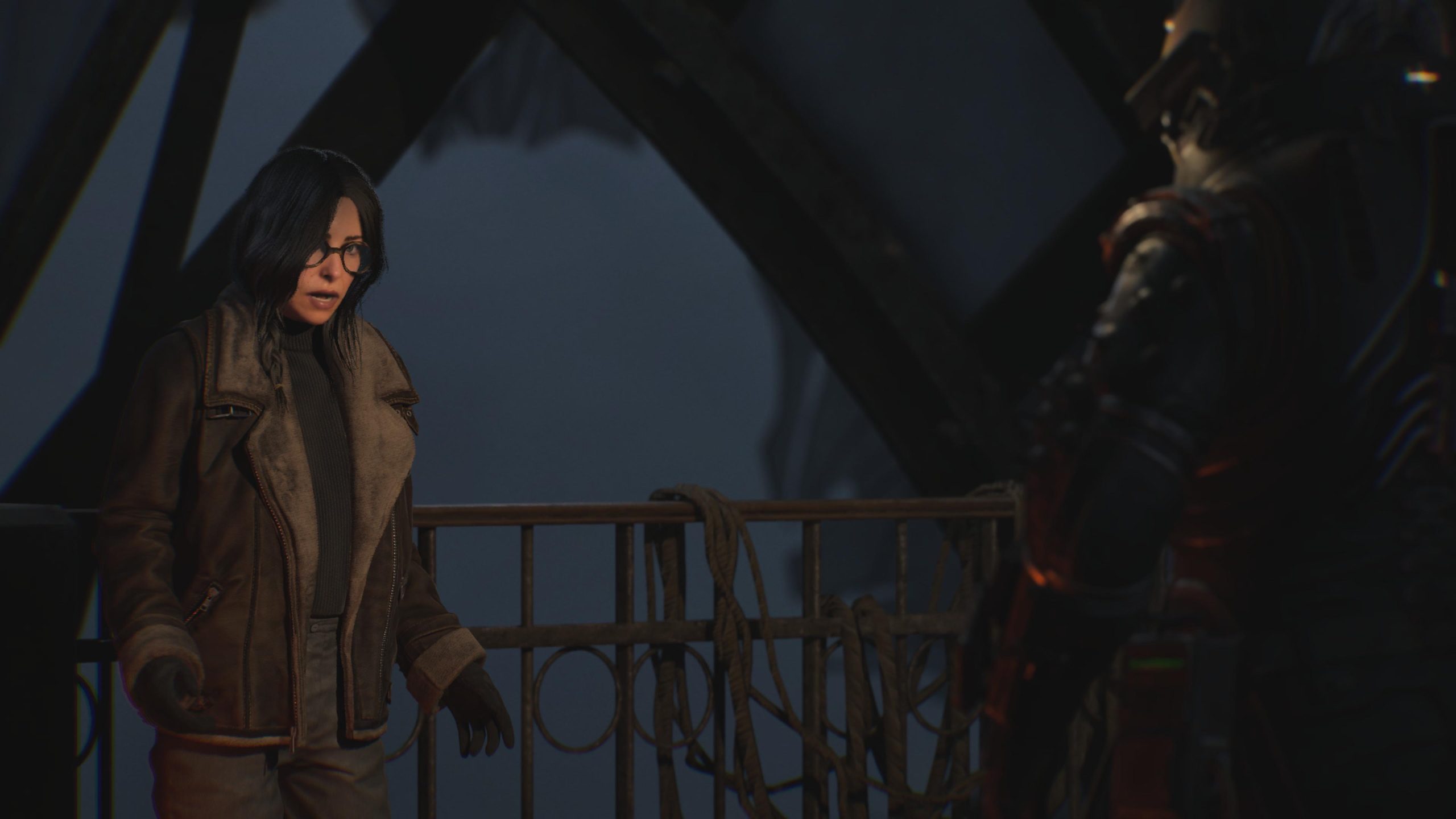
I'm massive and barely move, but I have many souls
I've already written that the character is very massive and, at least on a controller, difficult to control. I had to increase sensitivity and activate medium auto-aim to cope in the first playthrough. My suspicion is that the game is more approachable with mouse + keyboard, although I haven't tried that combination. I say this because some enemies have multiple “sensitive” areas that need to be hit precisely, and if you rely on auto-aim, it doesn't always select the part you wanted to attack.
The game doesn't offer you the option to choose between multiple difficulties until you finish it once on the default. “Under the hood,” however, there are systems that dynamically adjust drops, depending on the resources you have and how well or poorly you're doing. The result is that, often, when you finish a battle, you do so with the last bullet in the chamber.
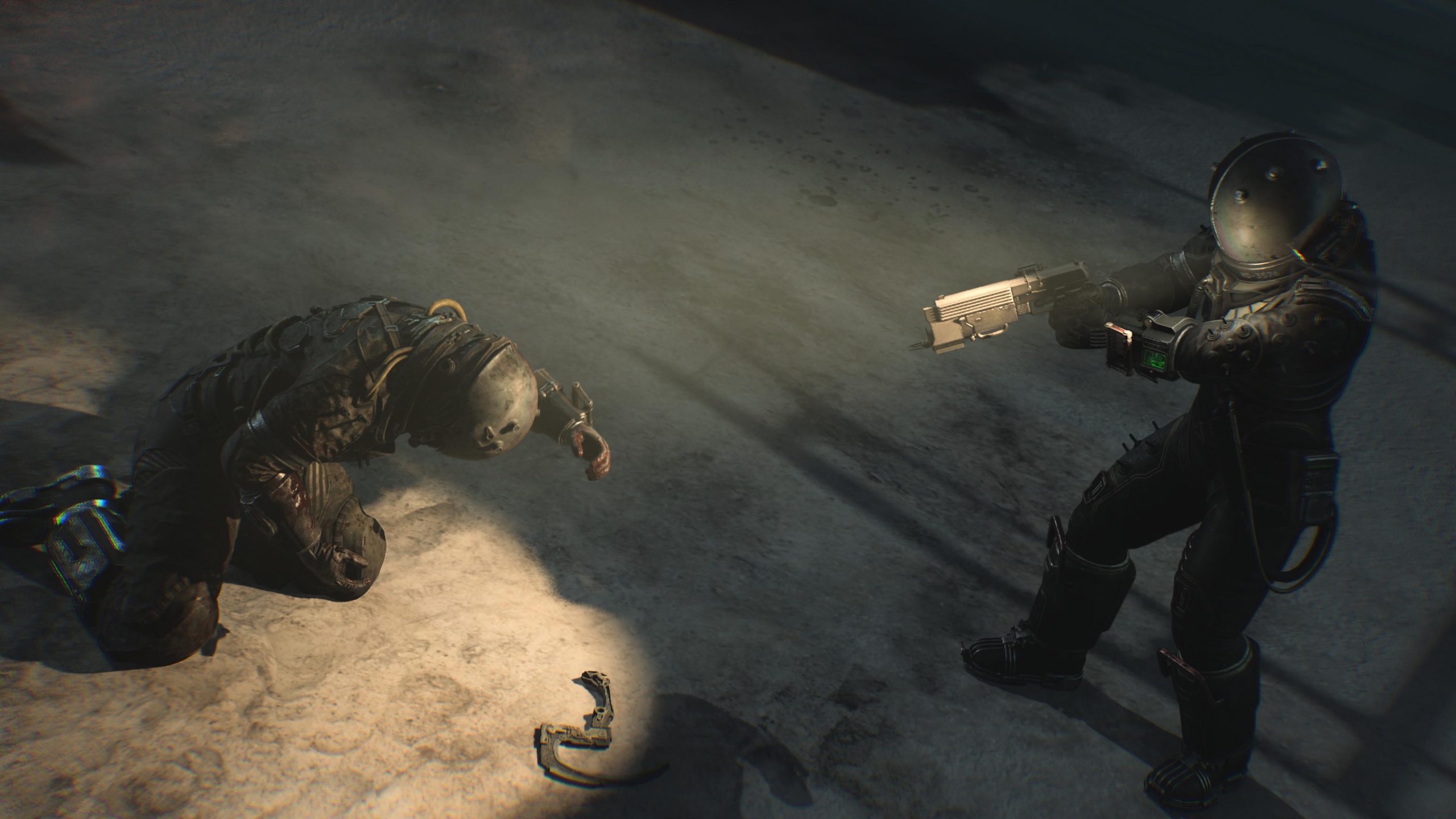
Although I initially found many shortcomings (you can't parry, for example, and melee is a bad joke), over time I adapted to the rules designed by the developers. I started to pay more attention to the environment, to approach battles more strategically and – something I really liked – to use the entire arsenal: all weapons and both types of grenades. It's a rarity in modern games, where you usually limit yourself to 1–2 favourite weapons, but here, in Cronos, this is also dictated by the extremely limited resources. In the end, I had the satisfaction of hard-won victories, which at first seemed only frustrating.
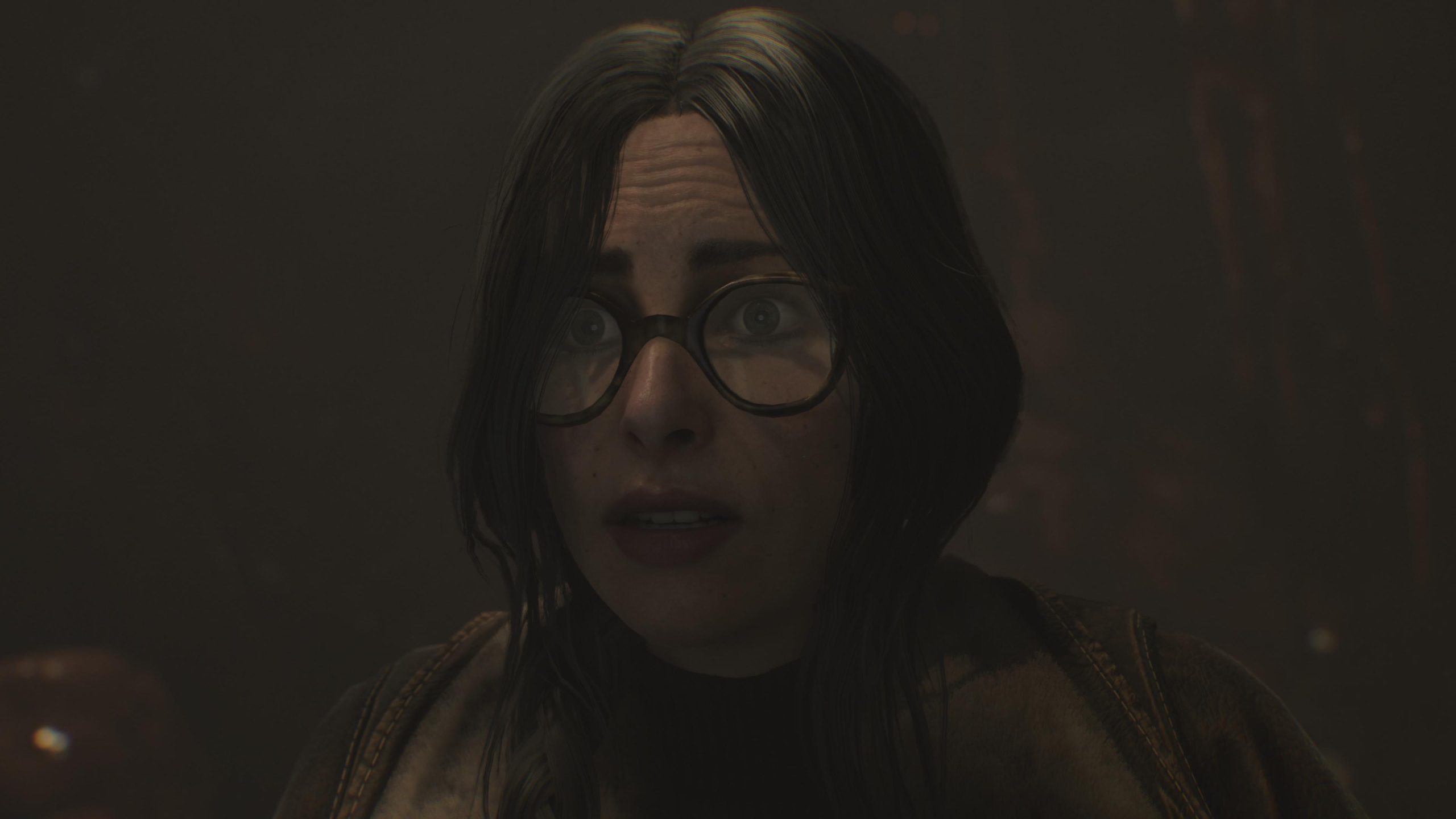
Ever since I first played Fallout 2, I've appreciated games that offer perks you can attach to your character. These types of passive bonuses also exist in Cronos, but in a different form. Throughout the game, you'll be able to extract the Essence of key characters, absorbing their memories and gaining a perk: some give you offensive bonuses (for example, increased damage against burning enemies), others improve your mobility or aiming precision, and some have a utilitarian role (more efficient crafting, reduced resource consumption). Your character can be seen as an empty vessel, defined by these Essences – the build is, practically, a collage of souls.You can have 3 souls simultaneously, and if you want to add a new one, you have to give up an existing one – without knowing beforehand what perk the new one will offer. This adds tension and an interesting narrative layer, because each soul also comes with memories that can be unlocked at certain resonance points.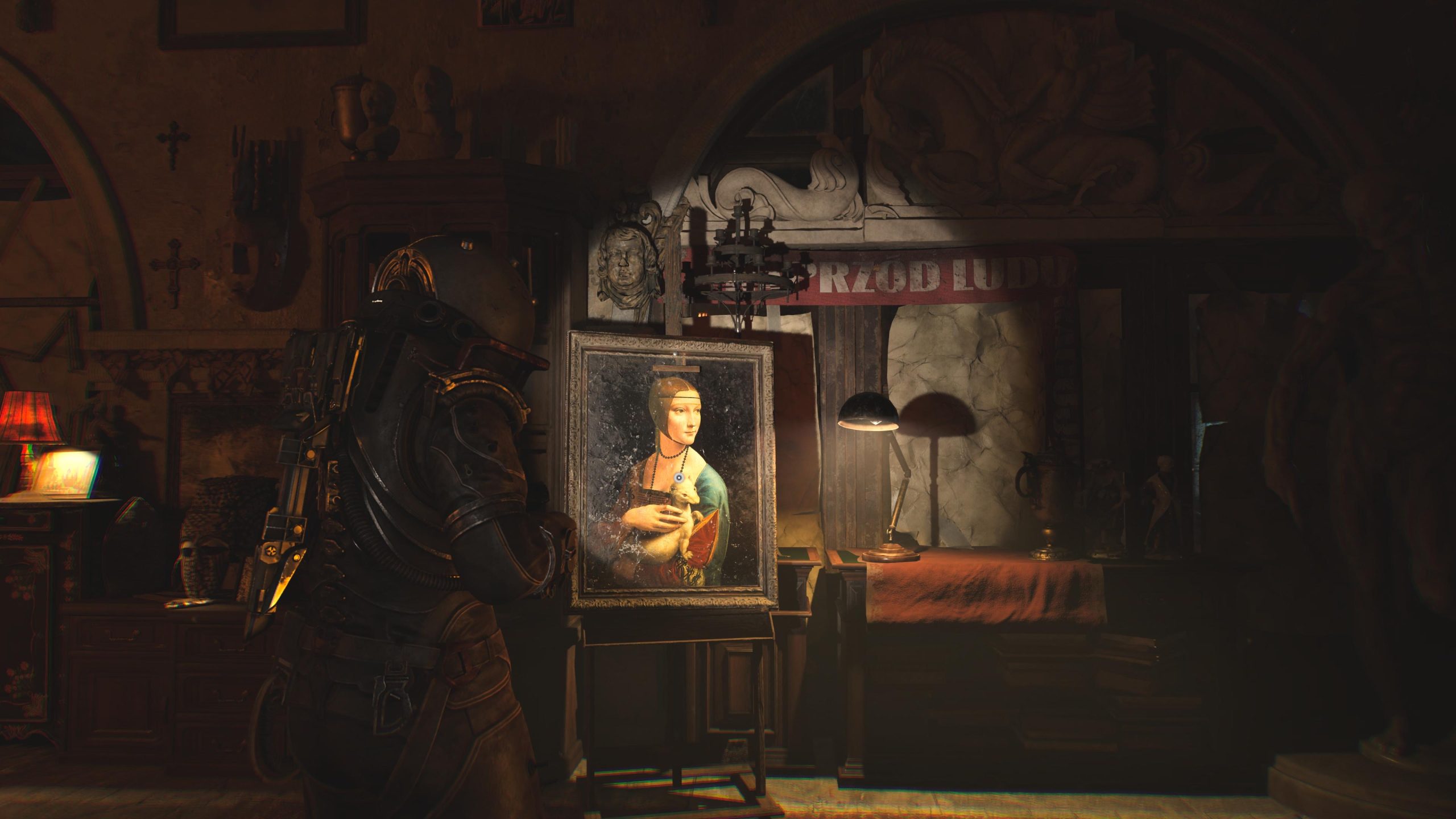
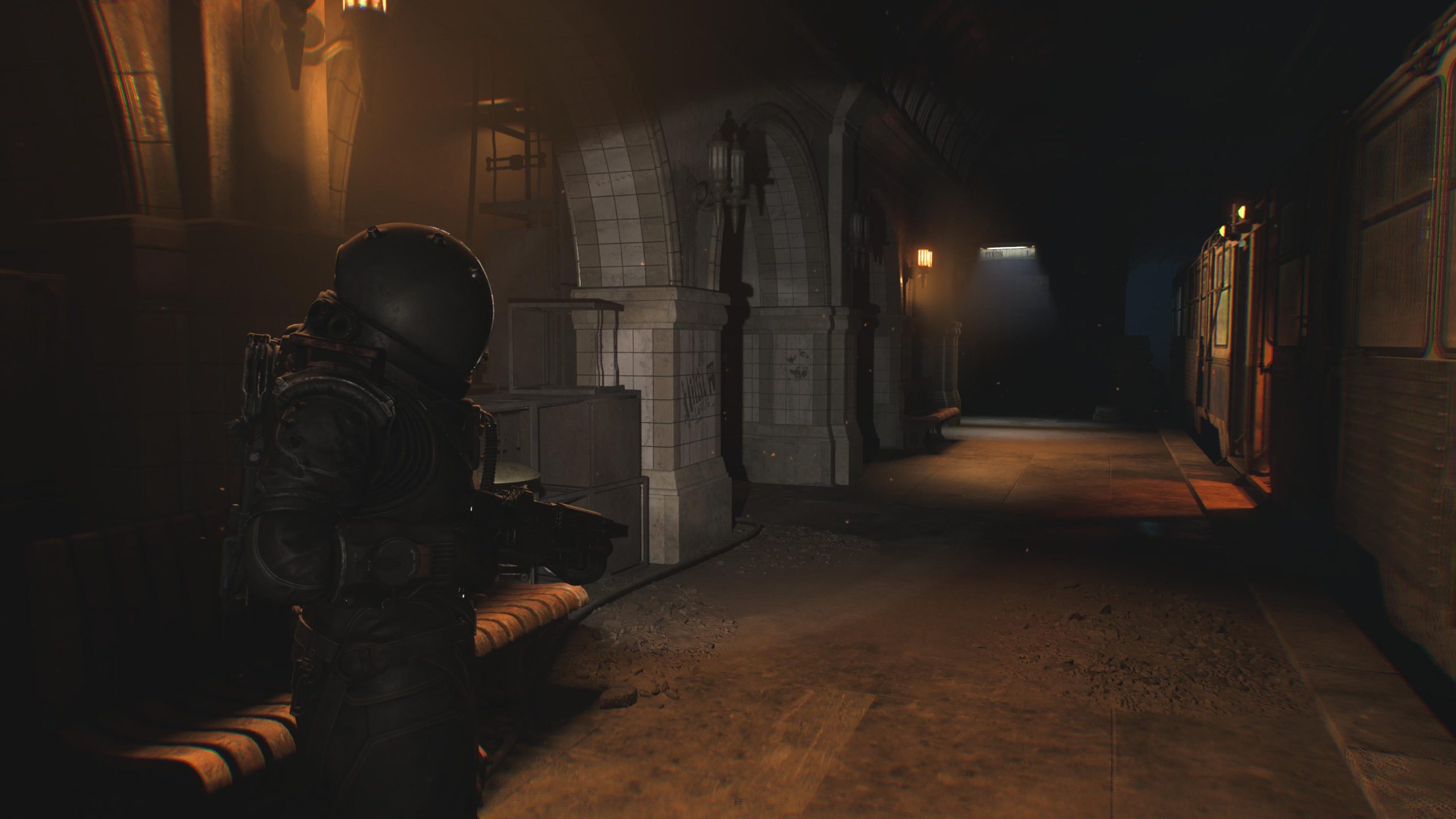
The levels felt quite claustrophobic to me – I had the same feeling when I played The Thing – especially at the beginning. It's probably a realistic effect, considering that the level design is based on the “matchbox” apartments in communist blocks. There's no risk of getting lost or feeling the need for a map, and although you will revisit some areas, this happens in a linear way – when the story takes you back. This moves it a bit away from classic survival horrors and closer to a narrative 3D action game.
Weapons and armour
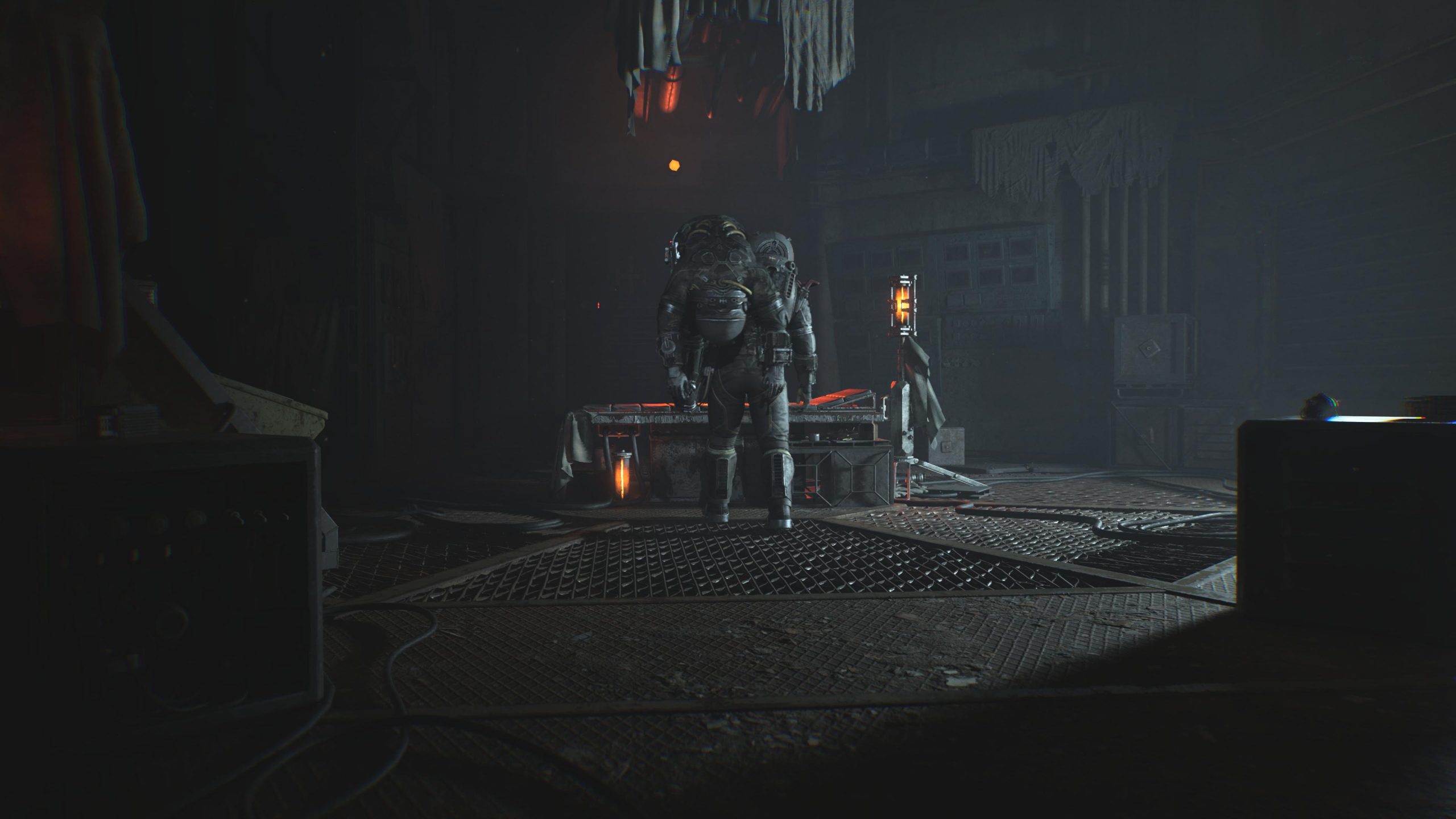
Armour and all weapons can be upgraded at workstations, following the established Dead Space model. Both the armour, the “Torch” (incendiary grenade, which I recommend maximising as early as possible) and the “Pyro” (motion-detonated grenade) use an extremely rare resource – Cores. There are fewer than 40 in the entire game, so every choice matters and must be used carefully.For armour, you can improve protection, the number of inventory slots, and space for crafting resources (I'll come back to this aspect). Torch and Pyro, on the other hand, can be upgraded in duration, range, and crafting capacity. A larger inventory means fewer frustrating decisions about what to leave behind, and a maxed-out Torch practically becomes an indispensable “panic button” when Orphans start to gather too quickly. Pyro, on the other hand, shows its true value in boss fights or with large groups of enemies, where it can save precious conventional ammunition.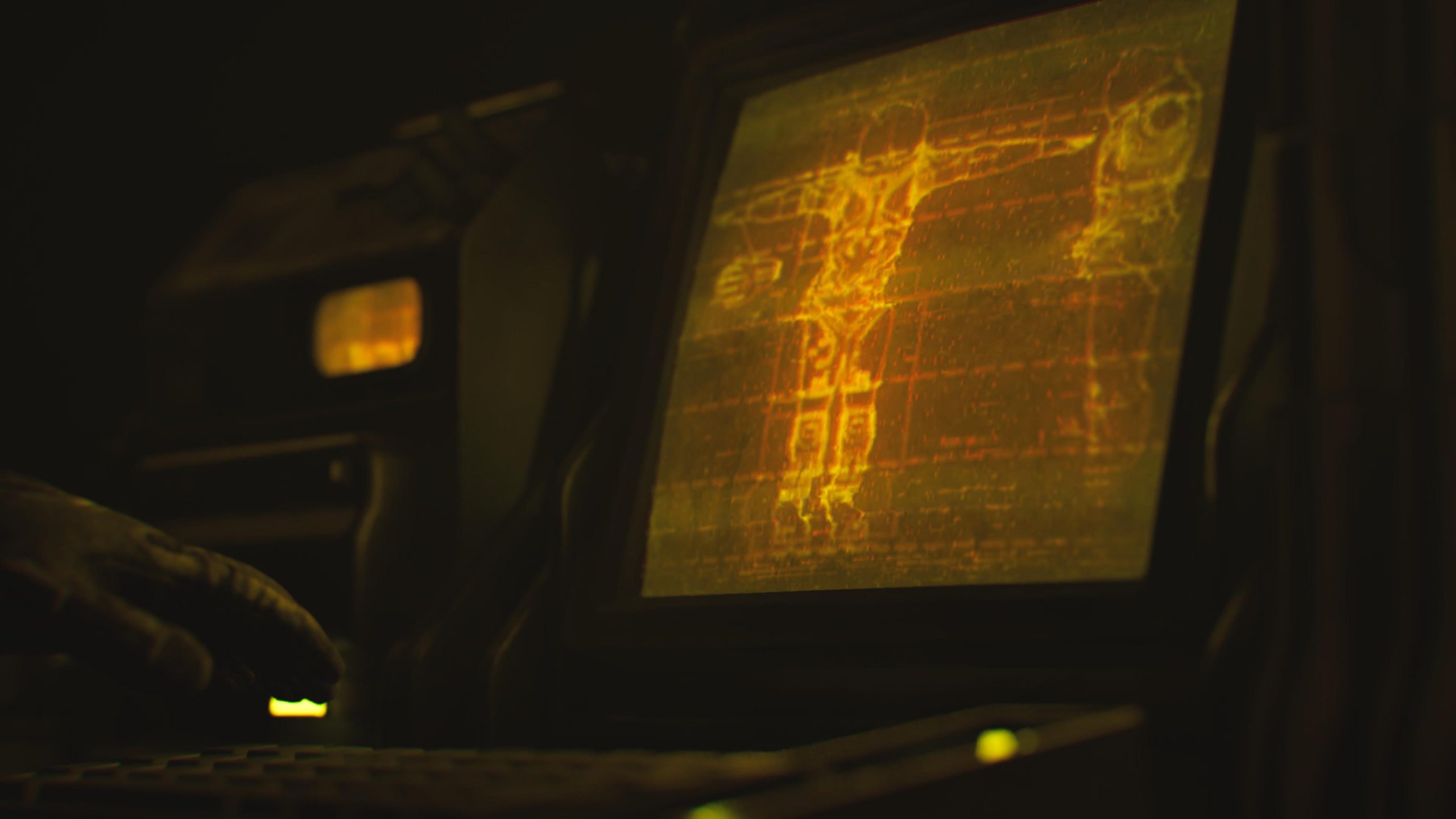
Kitty, kitty, kitty, I dreamt of you last night!
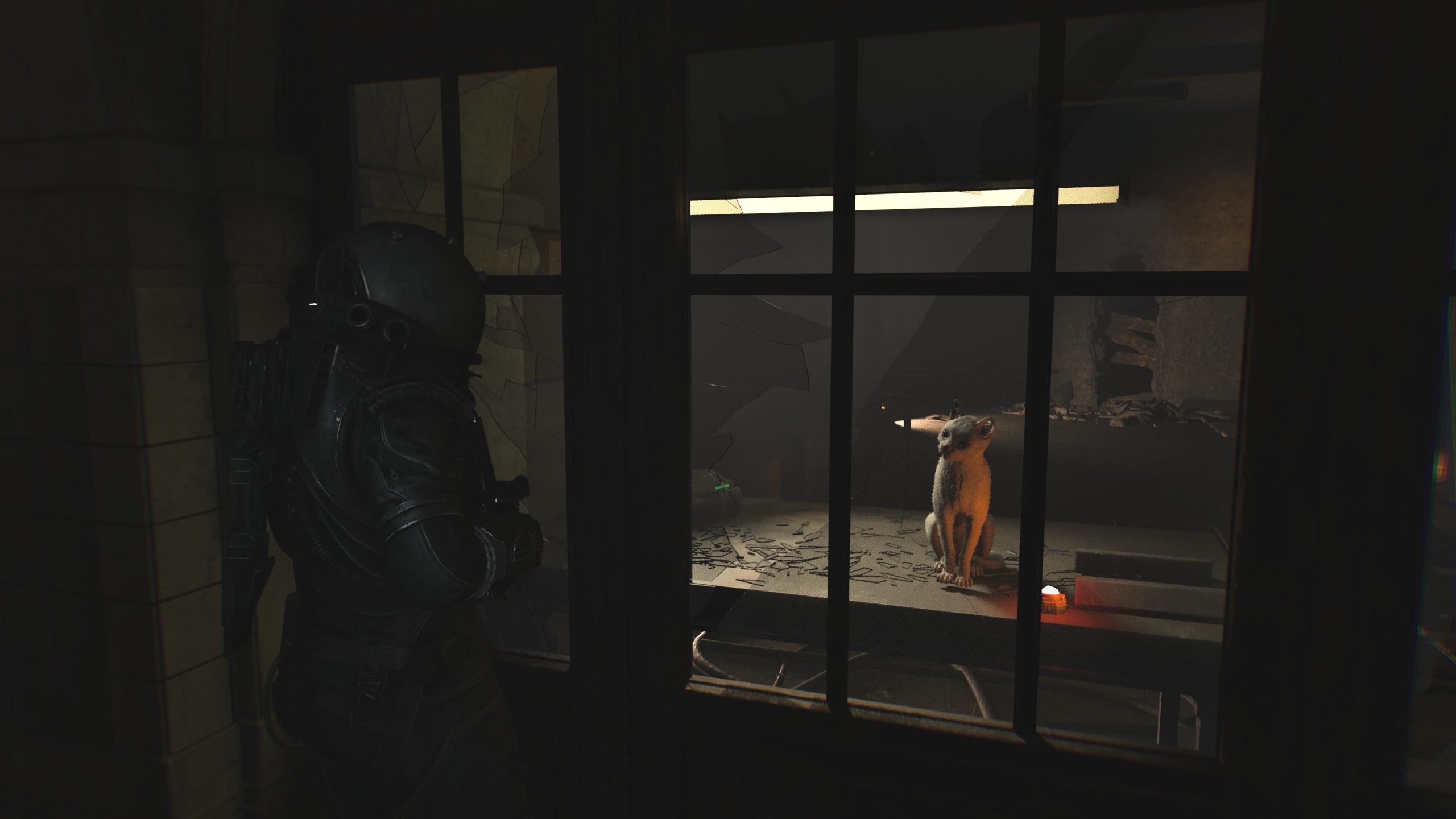
If there are any feline lovers among you, you'll be happy to know that they have a well-defined role in the game and can be of great help. The contrast between the gloomy universe and their calming presence creates a direct emotional bridge with the player. You encounter them mostly in abandoned spaces – apartments, basements, dark corridors – where they seem to be the only form of calm life in an otherwise hostile world. In addition, they can also act as guides: often, if you follow them, you'll reach an important area for story progression (a puzzle, an anomaly, a key item). And once petted, you'll be able to find them in your base, like a small “living collection” that brings a touch of humanity amidst the chaos.I played Cronos slowly, because I liked what I saw. I explored every nook and cranny, took screenshots, and admired the graphic style born of much passion. The pacing is well-measured: after every demanding battle, longer moments of pressure-free exploration follow. My first playthrough took almost 20 hours, but the game can be finished in less than 15. I also started New Game+ on Hard, which I haven't finished yet. This time, progression is much faster, because you already know the levels and start with the build inherited from the first run. And the fact that, in addition to maximising armour and weapons, you can experiment with different combinations of “souls”, discovering new memories and unlocking other endings, makes New Game+ more than just a simple replay pretext – it's an experience that truly adds something new, unlike other games where it just seems like a menu tick-box.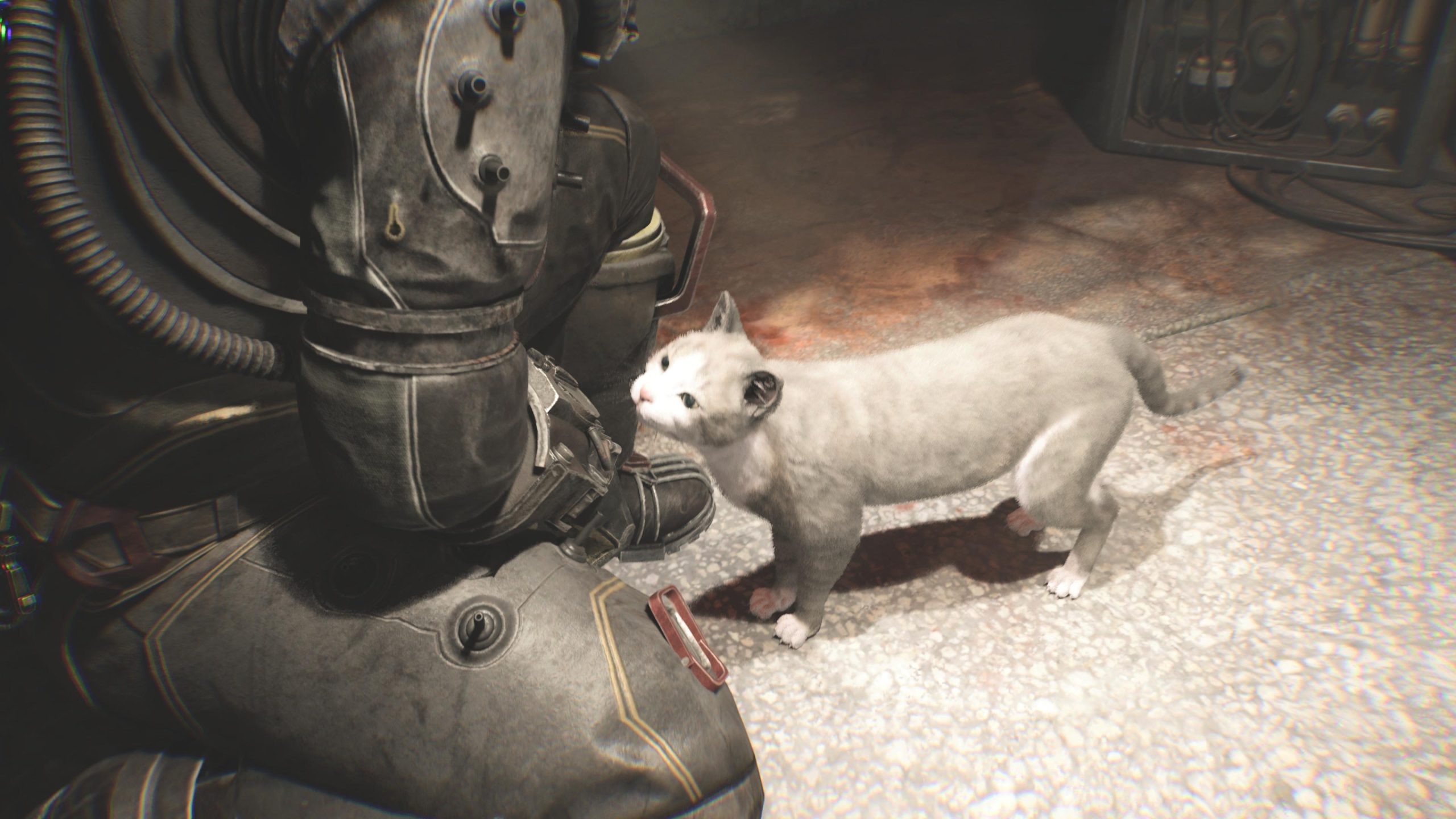
In the shadow of the great N
ND-0004763 here, the traveller also known by the codename tazhunter.reviews. Time is a suspicious concept, as the idea itself is as detached as possible from what it truly represents. Due to its circular nature, I don't know if I am the predecessor or successor of the traveller known by the codename Klamath, but I do know that my adventure in New Dawn took place on what the ancestors called “Nintendo Switch 2”. The small console didn't seem capable of running the Traveller's adventures in Cronos: The New Dawn in a stable manner, let alone faithfully rendering them to the vision of Bloober Team. However, appearances are deceiving, and what was presented at the Nintendo Direct showcase does not seem to coincide with reality.Like most horror fans, I was sceptical that this platform could meet the demands of such a detailed and visually distinct game. But the experience surprised me more than the disappearance of an orphan in this sci-fi universe. The game runs at a solid 30 fps, with minor hitches, but nothing that affects the experience. I wouldn't call this version inferior, because it isn't. The developer had to use a series of tricks to preserve the atmosphere that defines Cronos: the darkness is oppressive, light plays through the ruins of communist blocks, and the colour palette perfectly highlights the power of the small console.Despite the Herculean efforts made by Bloober Team, not everything conforms to the rules imposed by the COLLECTIVE. Textures, which most of the time look impeccable in handheld mode, tend to appear slightly unfinished in docked mode, as if it were an internal build and not the final version. The puzzle sections, which involve manipulating time to reconstruct paths, sometimes suffer from glitches that cause black spots to appear on manipulated objects. Worse is the fact that these flicker, an aspect that leads to a decrease in immersion.Even so, what the developer managed to do on Switch 2 is a small technical miracle. I highly recommend this version to all who own the great N's newest console. And now it's time to return to my mission. Was that Orphan really on the floor when I started this recording...? Tudor Enea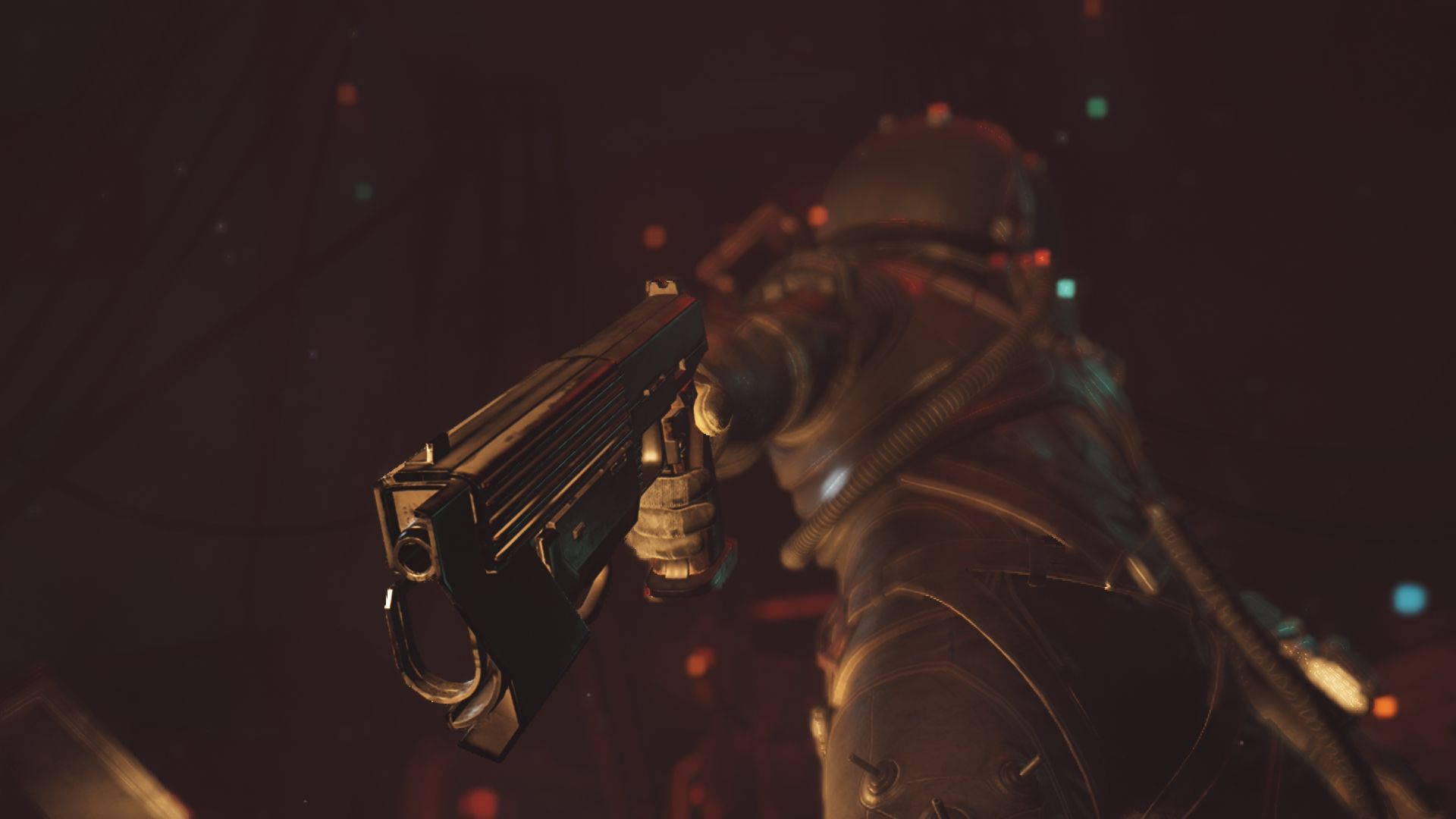


Played on: PS5 and PS5 Pro
Release date: 4 September 2025
Developer: Bloober Team
Publisher: Bloober Team SA
Genre: Survival/Action Horror
Playtime: 15-20 hours (first playthrough)
Recommended for: Fans of Resident Evil, Dead Space and The Thing
Plus
- Sound, graphics, and atmosphere are very well done
- Unusual setting for Westerners, but extremely familiar to Eastern Europeans
- Above-average story 🙂
- Essence system: varied builds, memories, and multiple endings
- Good pacing: intense battles alternated with quiet exploration sections
- “Games are art” – The Warden
- Cats ❤️
Minus
- Doesn't manage to be truly scary
- Puzzles are too simple
- Some battles become frustrating
- Clumsy movement on controller, auto-aim almost mandatory
0 votes
Scroll down here and stay on the page for at least 30 seconds to vote.
Pick a score from 0 to 10 (halves are allowed).