
EA SPORTS FC™ 27 – Review

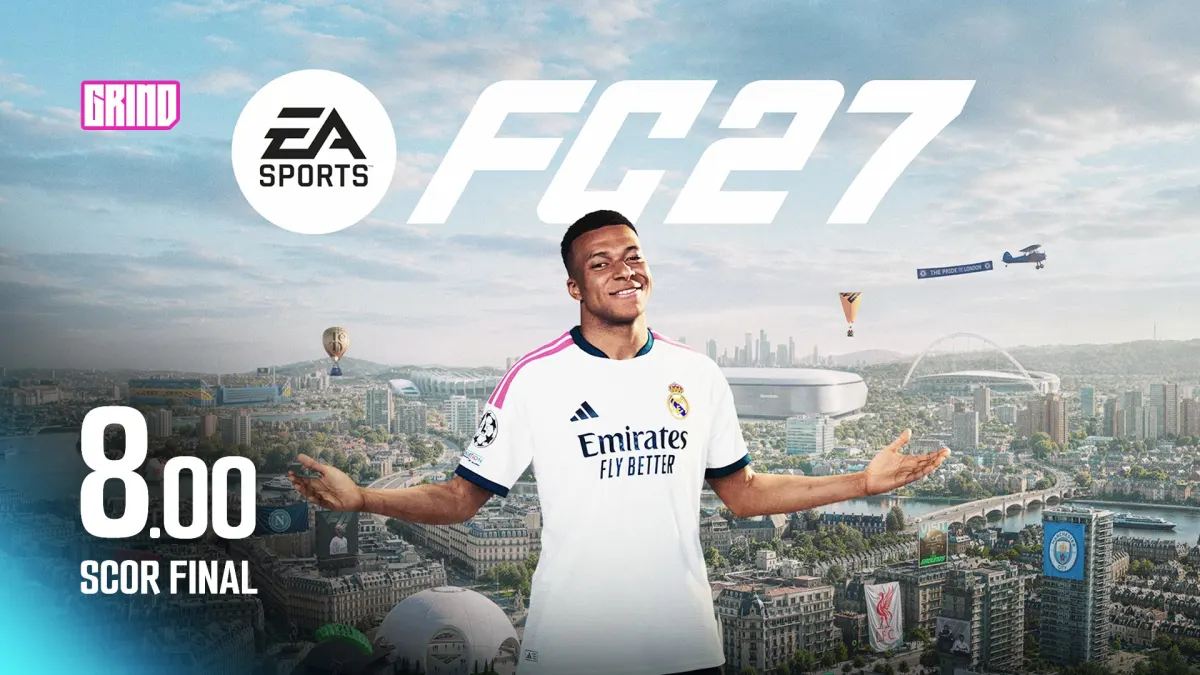
Another one
I’m not a football fan. I can’t even pretend to follow the phenomenon closely enough to get wound up on a Sunday evening because a certain manager swapped a certain player in a certain minute. But every now and then it’s no bad thing to see what they’re up to with football in gaming. FIFA, now EA Sports FC, is one of those series that exists almost independently of the rest of the industry. Every year a new one comes out, every year people say it’s the same game, every year other people sink hundreds or thousands of hours into Ultimate Team and, obviously, every year EA tries to explain why, this time, something really has changed. EA Sports FC 27 doesn’t break with tradition, but I have to admit that, coming to it without that almost religious attachment to the series, the differences are easier to spot than I expected.
It’s not a revolution, and I don’t think it could be. There’s a limit to how far you can reinvent a game in which 22 people chase a ball before you end up accidentally inventing another sport. What EA can do is change the pace, the way players behave, the intelligence of the AI-controlled ones, the systems in Career Mode and all the packaging around the match itself. And here FC 27 genuinely tries for more than a simple “we’ve changed the menu, updated the squads, see you next year”. It’s still obviously an annual product, sometimes painfully so, but the football itself is surprisingly enjoyable when its systems don’t decide to clash.
What’s new in FC 27
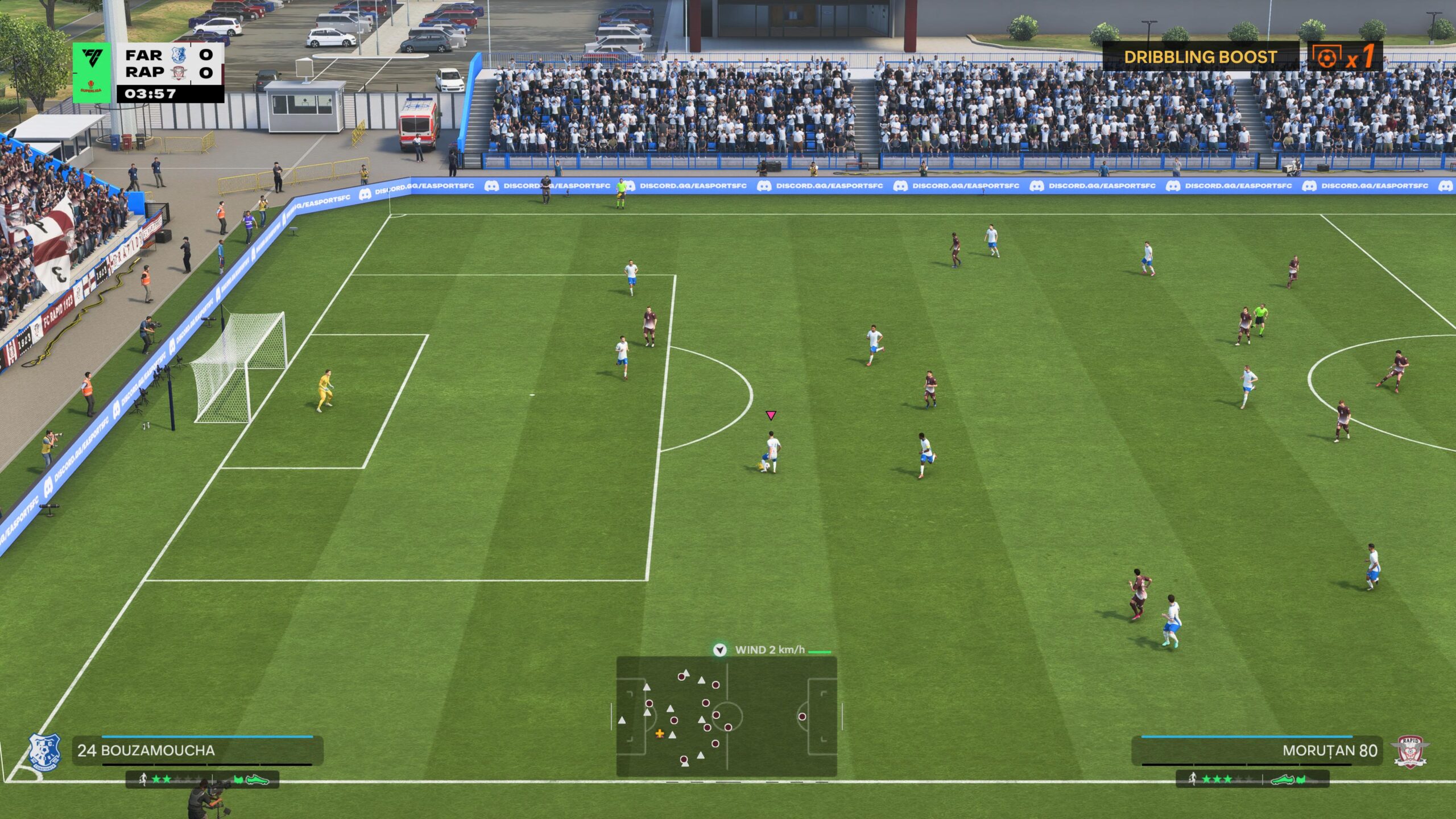
The first change you feel is the pace. FC 27 lets you choose between Competitive Gameplay and Authentic Gameplay, and the difference is more than a name in a menu. Authentic is slower, more calculated, and tries to look a bit more like a football match than two people who’ve each downed three energy drinks and are trying to get from one goal to the other in seven seconds. The ball has a little more weight, the midfield matters more, and the game nudges you to think for a moment before trying the same pass between the defenders for the fiftieth time. Competitive remains the faster, more predictable option for people who want to go online and find out who knows best which mechanic can be exploited this week. EA has deliberately built the two styles around different philosophies: Authentic is the more measured experience, Competitive the one focused on speed and responsiveness.
Defending is also far more manual, and that’s probably one of the most welcome changes. The game no longer wants the AI to do all the work while you control a player somewhere in the vicinity and hope the rest of the team sorts it out. AI-controlled defenders hold their position and try to limit space, but the actual moment of winning the ball is more in your hands. When it works, it’s much more satisfying. You feel you’ve made a real contribution to stopping an attack, rather than watching an animation the game decided to trigger by itself. Tackles carry more force, and physical duels look a bit more natural. That’s not to say everything is perfect. Sometimes all it takes is for the defender to brush the opponent and the ball seems to feel it has to change hands immediately, but I’ll always take that over a defence in which the console plays half the match for me. The shift towards more manual defending is one of the directions EA has explicitly stated for this edition.
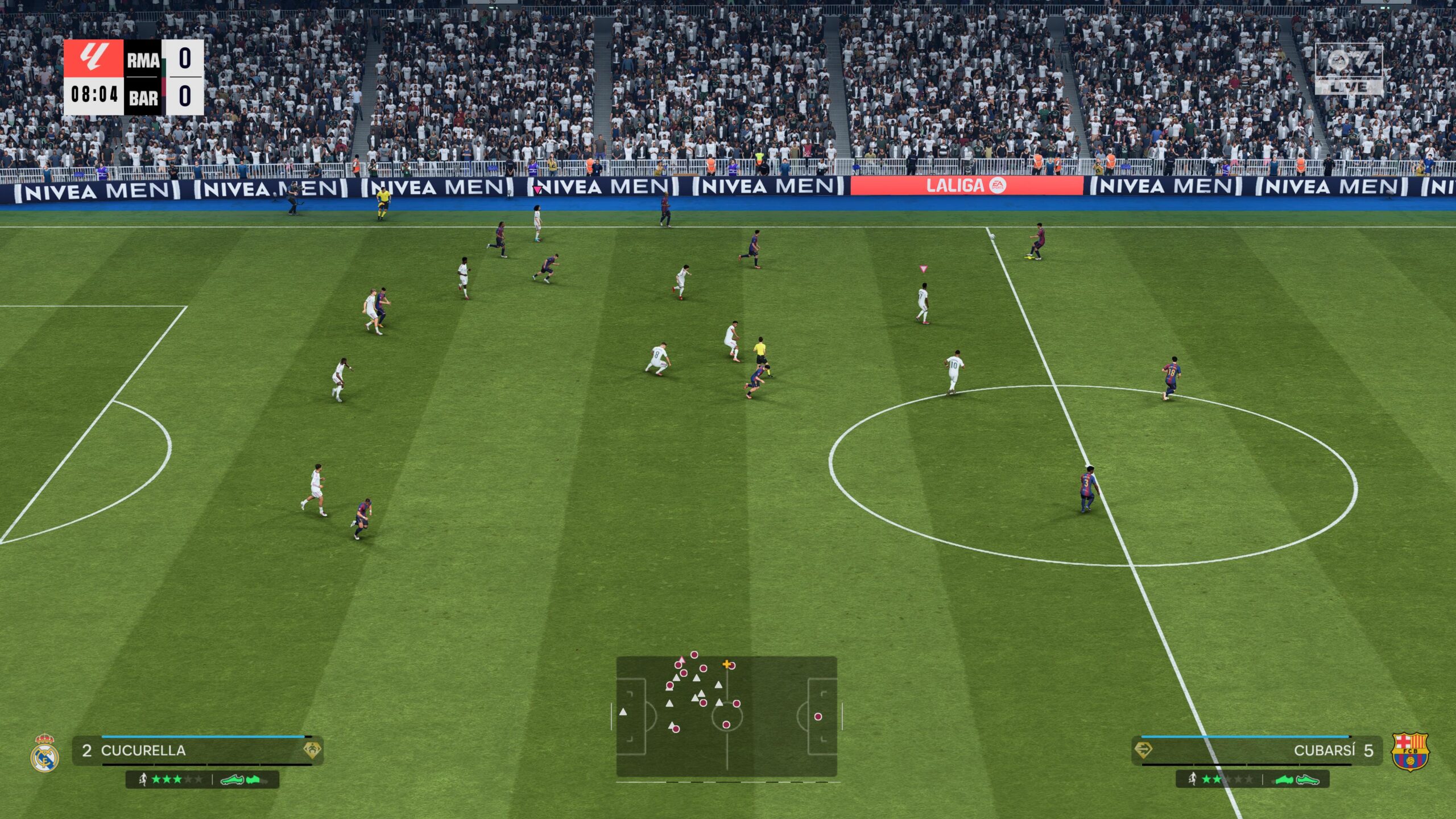
Passing is probably where FC 27 gets most contradictory. In theory you have more control: through balls, crosses and attacking build-up are designed for greater precision, and teammates’ new curved runs can create some really tasty moves. When it all clicks, you genuinely feel you’ve built a move, rather than pressed three buttons until someone ended up one-on-one with the keeper. But sometimes the game decides that the person you obviously meant to pass to isn’t the person you meant to pass to. And then comes that classic FIFA moment where you stare at the screen and explain to a video game that NO, THAT’S NOT WHERE I PASSED IT. You’re probably shouting at the telly. Short passes, in particular, can produce dubious results, and the strikers’ new runs also have moments where they look very clever until the player sets off in a direction you have absolutely no intention of following with the ball. It’s one of the points on which reviews and players have largely agreed: the system theoretically offers more control, but the AI and target selection can undermine the very control the game says it’s giving you. It giveth with one hand and taketh away with the other – and I won’t even mention the hand, since that doesn’t work in football.
Tactics, though, are very well done. You can change far more clearly how the team behaves with and without the ball, and individual roles mean players are no longer just little men dropped into a 4-3-3 diagram. You can ask a player to move inside, hold the width of the pitch, help out defensively, or behave differently depending on the phase of play. Even for someone who doesn’t pore over game plans at breakfast, the system explains well enough why you’d make those changes that you start tinkering with them. And that’s exactly where I think FC 27 succeeds: you can just jump in and play a match, but if you want to dig a little deeper, there’s enough complexity that you don’t feel every team is the same, just in different shirts.
Career Mode probably gets some of the most interesting changes, for those who’d rather steer clear of the Ultimate Team madness. Transfers are more elaborate, other clubs can barge into a negotiation, there are instalment payments, performance bonuses, fees and more variables that make negotiating feel a little more like running a club (FC MANAGER 27, maybe?) and a little less like “I’ll give you 70 million, yes or no?”. Dynamic OVR also makes player ratings fluctuate with form, morale, fitness and other factors, which gives the season a bit more life. On paper it’s exactly the kind of system you want in a Career Mode. In practice, there are still problems with transfers, scouting and long-term management that can turn running your team into a fight with the game rather than with other clubs. But at least there’s a sense that EA has got its hands on Career Mode this year and done something with it, instead of leaving it in a corner for the people who still refuse to buy cards.
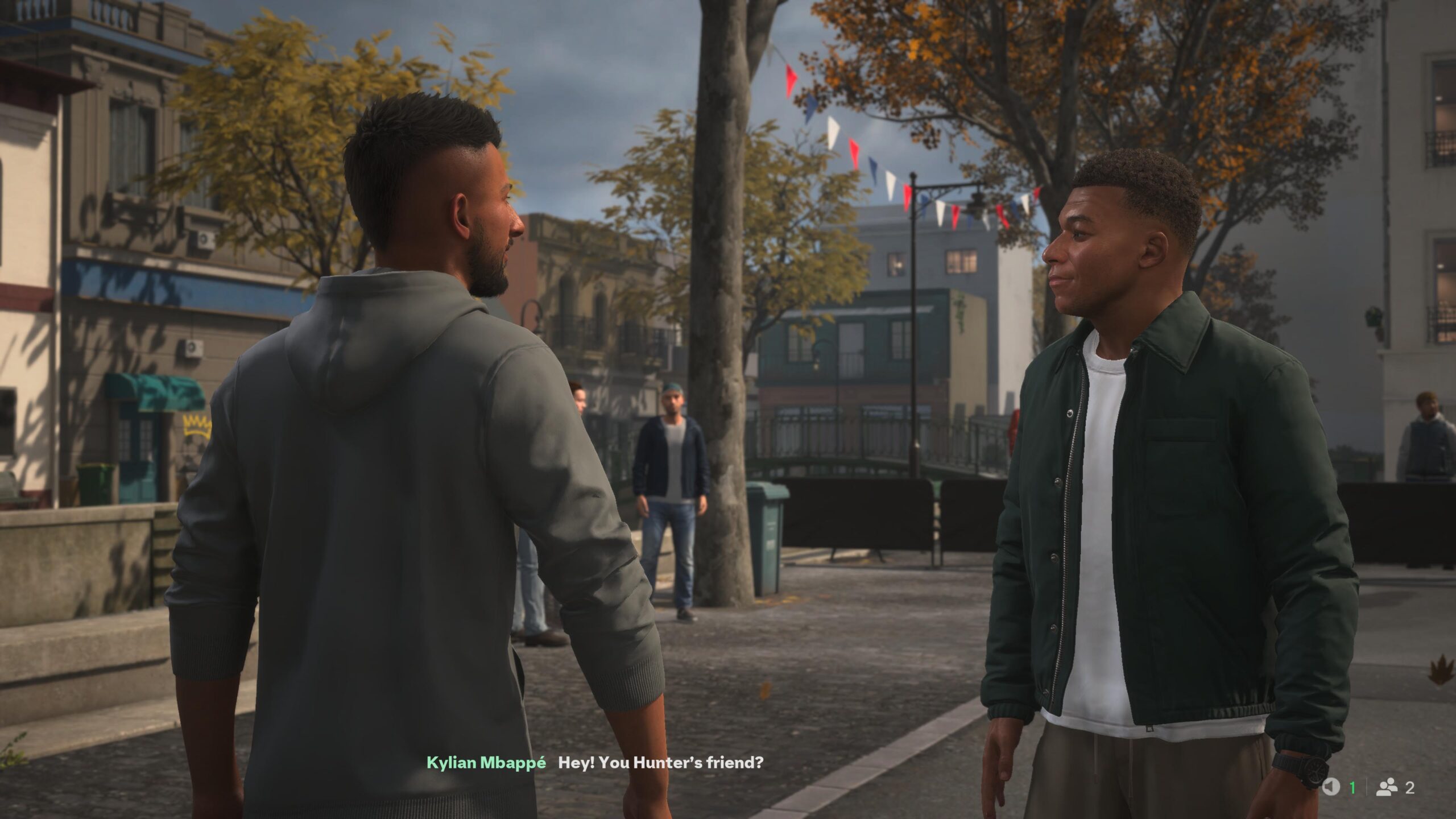
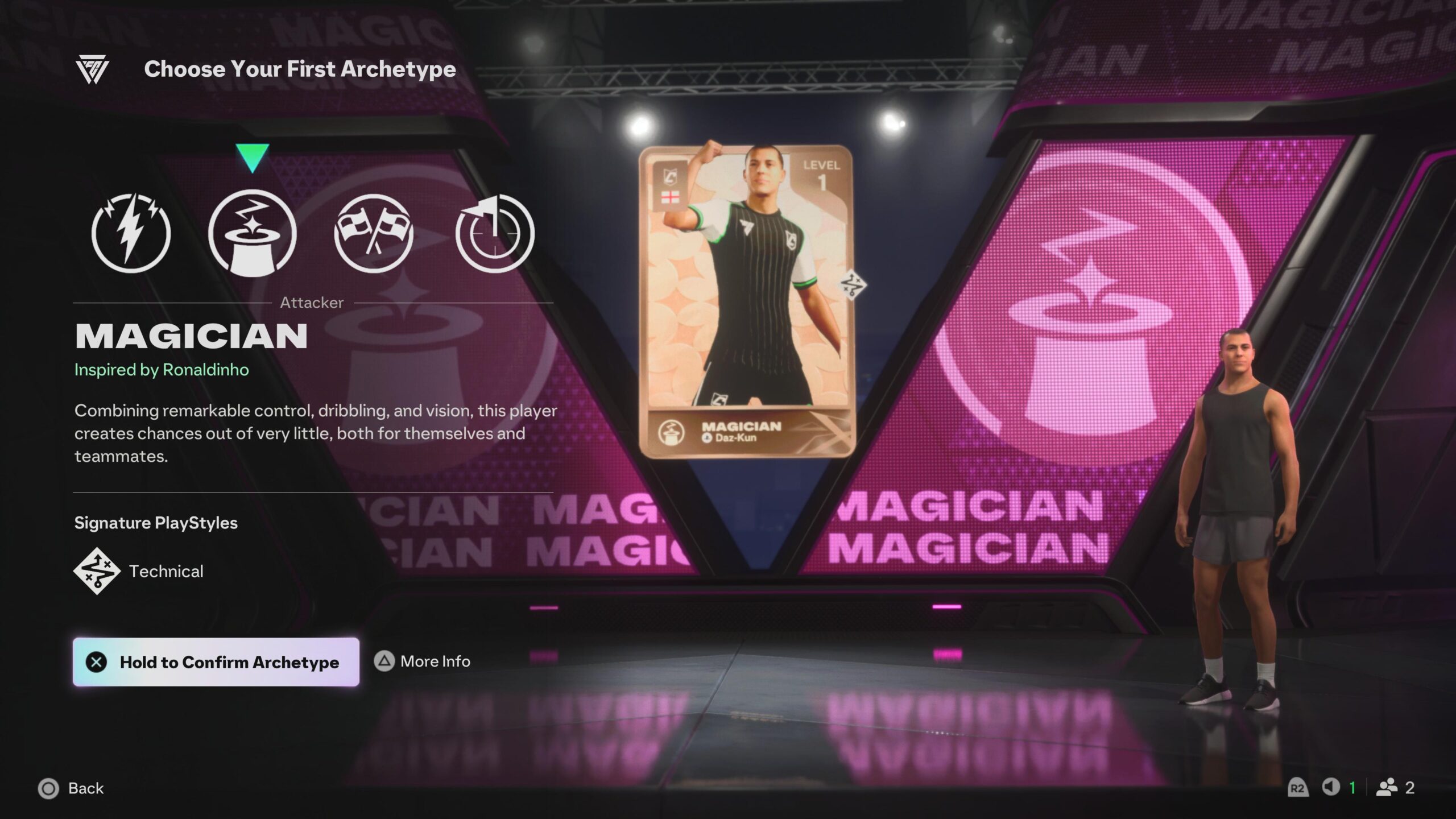
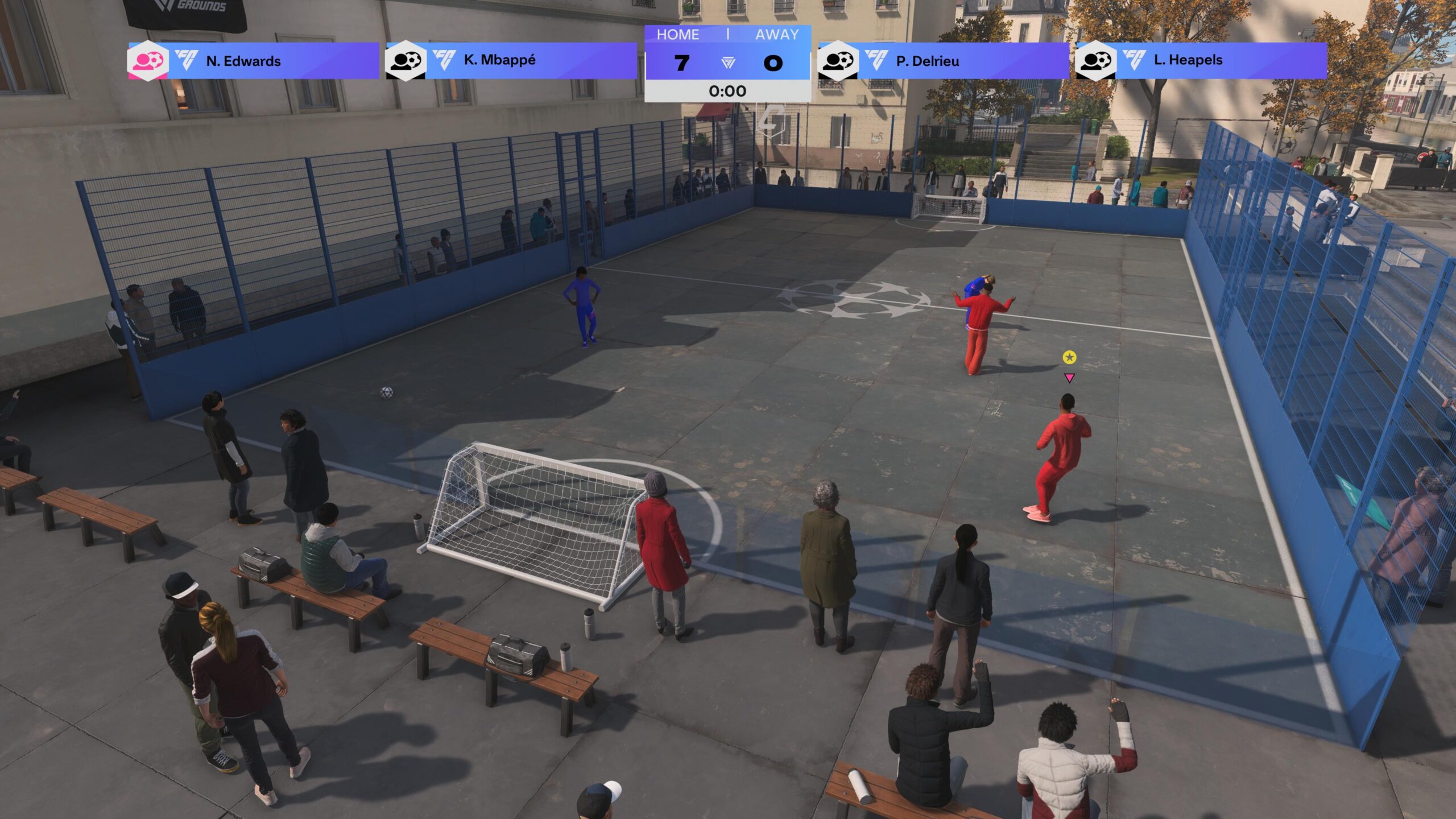
And then there’s The Grounds. Because apparently someone at EA looked at NBA 2K and said: “You know what our football game is missing? Running around a hub with an avatar.” It’s an online space split into zones inspired by Britain, France and Argentina, where you can meet other players, jump into matches, try activities and mini-games and level up the character you’ve created. The idea isn’t bad and has a bit of FIFA Street buried in there, especially in the small-sided matches and the more arcade-style activities. The problem is that it quickly becomes obvious a menu could do some of the same things in about three seconds. It’s the kind of feature that could turn out interesting if EA genuinely develops it over the next few years, or it could end up as yet another enormous virtual space we run around in just to reach an activity we used to select by pressing X.
What does football look like in 27?
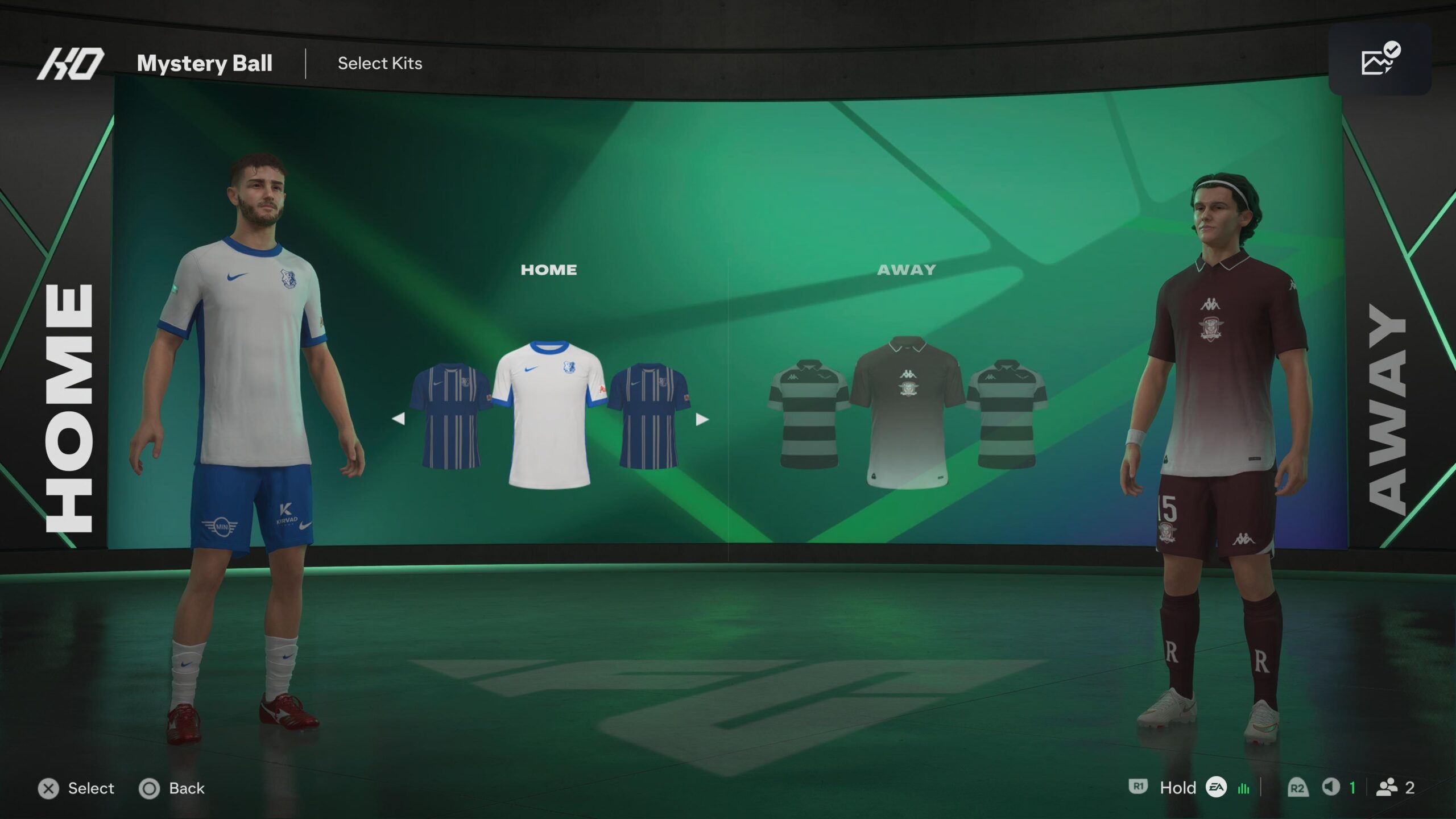
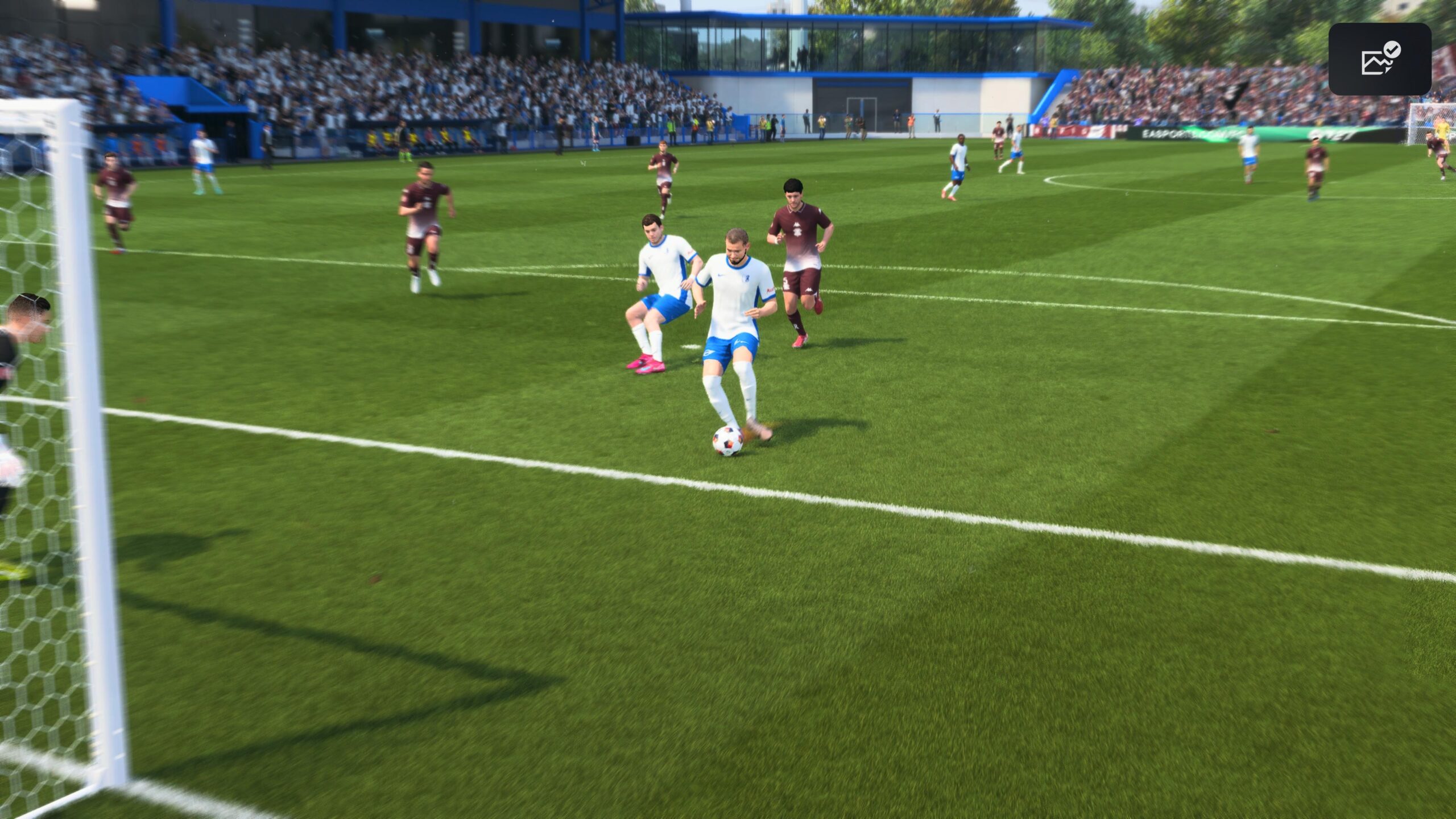
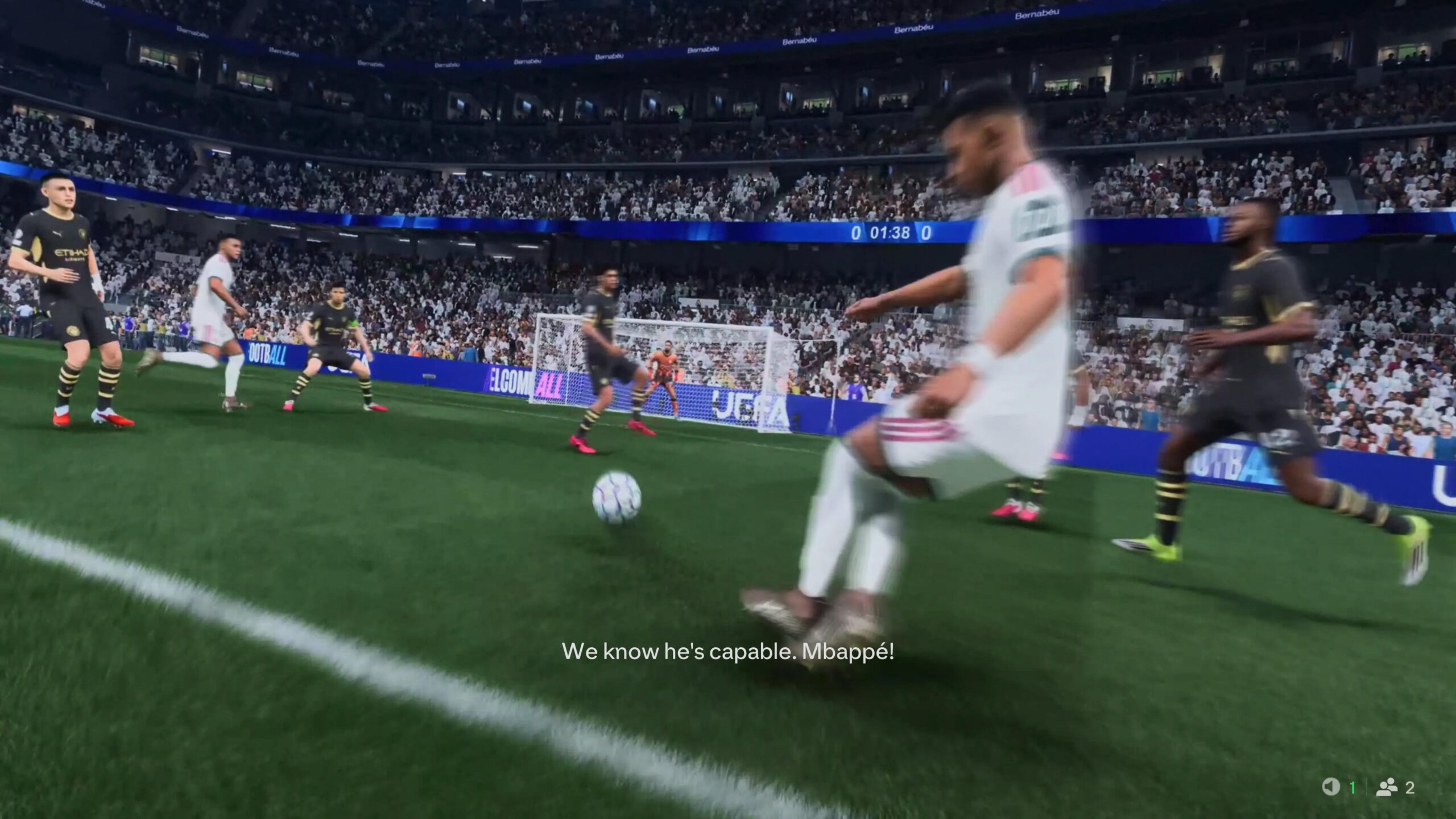
Visually, the series reached the point some time ago where it’s hard to make that leap from “looks good” to “Holy Cristiano, look at that”. FC 27 looks very good on PlayStation 5 Pro, but it’s not the kind of game you boot up to show guests why you bought such an expensive console. It’s the details that make the difference. The models of the big names are excellent, and the kit materials, the grass, the night lighting and especially the stadium presentation all add to the feeling of a televised match. Real football is so present in visual culture that these games have a rather thankless job: they don’t just have to look good, they have to look exactly how you expect football to look when you watch it on TV, only, well, controlled by you.
The animations are probably more important than the raw polygon count. Players shove, lose their balance, try to hold their position, change direction and make contact in a slightly less robotic way. Not all the time, obviously. FIFA has always had a unique knack for going, in half a second, from “look at that incredibly realistic animation” to two people who look glued together like something out of an 80s body horror film. But overall the movement is convincing, and different footballers’ styles genuinely start to feel different in play. A quick, agile player no longer feels like the same puppet with the Speed stat set to 92, and the physically strongest ones can actually create space with their body and positioning. Taken separately it’s a small difference, but spread over hundreds of plays it makes the game look more natural.
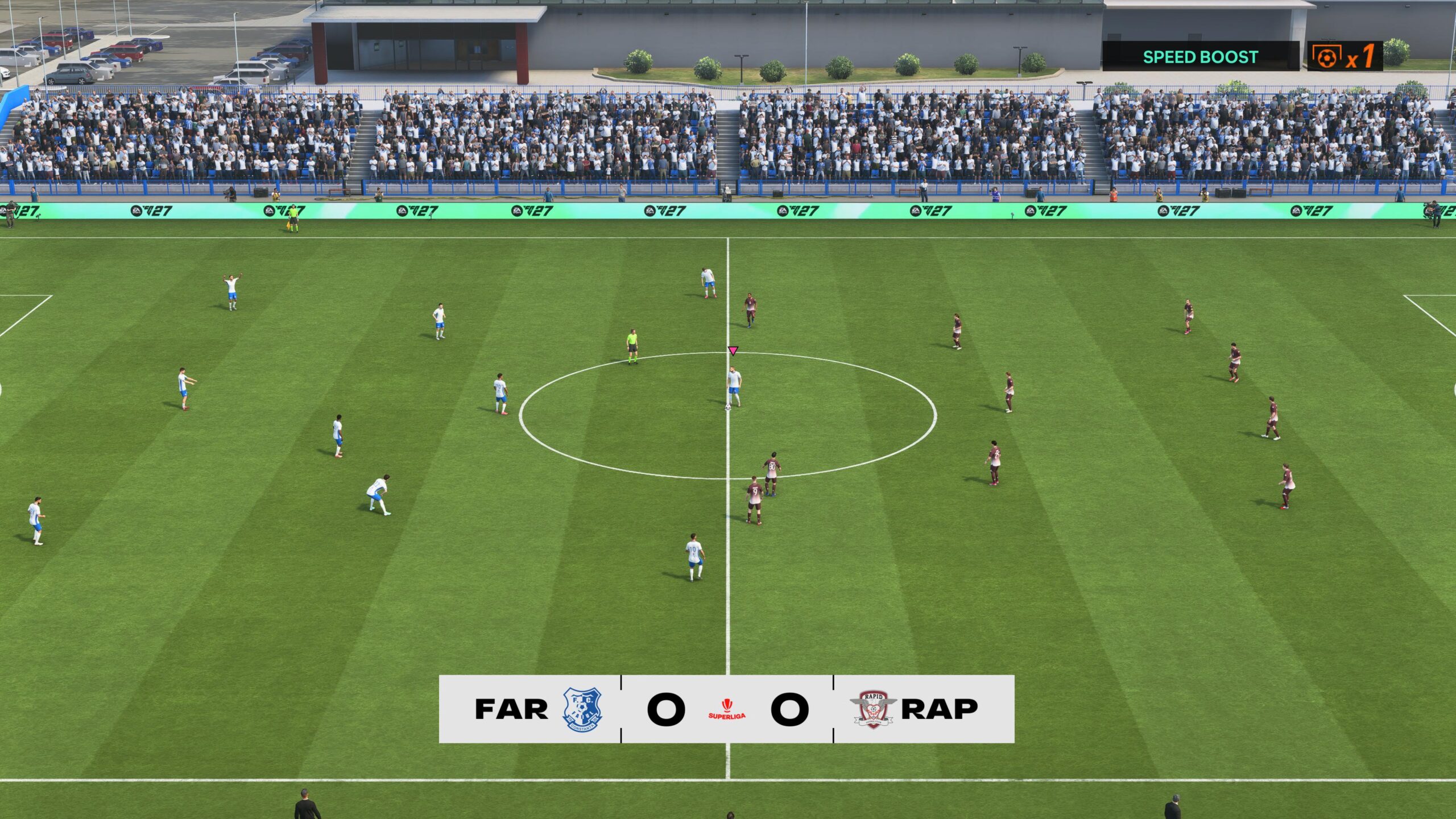
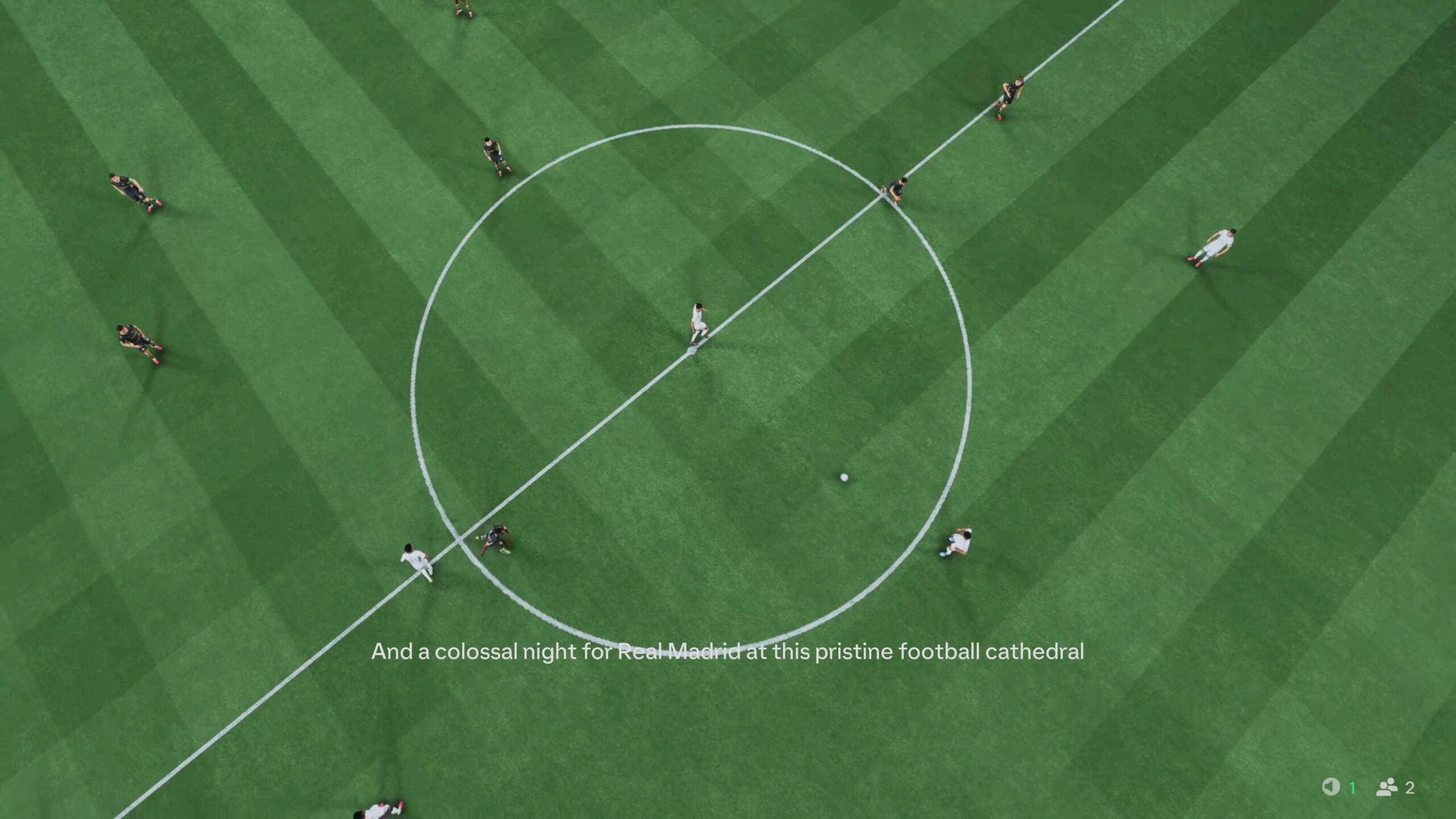
The presentation before and during matches remains one of the areas where EA is very hard to beat. Shots of the stadium, the crowd, the banners, the rivalries and the reactions from the stands all build the sense of an event very well. Sometimes EA gets a little too excited and throws you into cinematic transitions that make a league match feel like a mission briefing from “Battlefield”, but at least the spectacle is there. And since I’m not coming to the game as someone who has watched the same animations over the last 600 hours of Ultimate Team, I can still say that, viewed simply as a sports game, FC 27 presents itself excellently.
Booing from the stands or the sofa
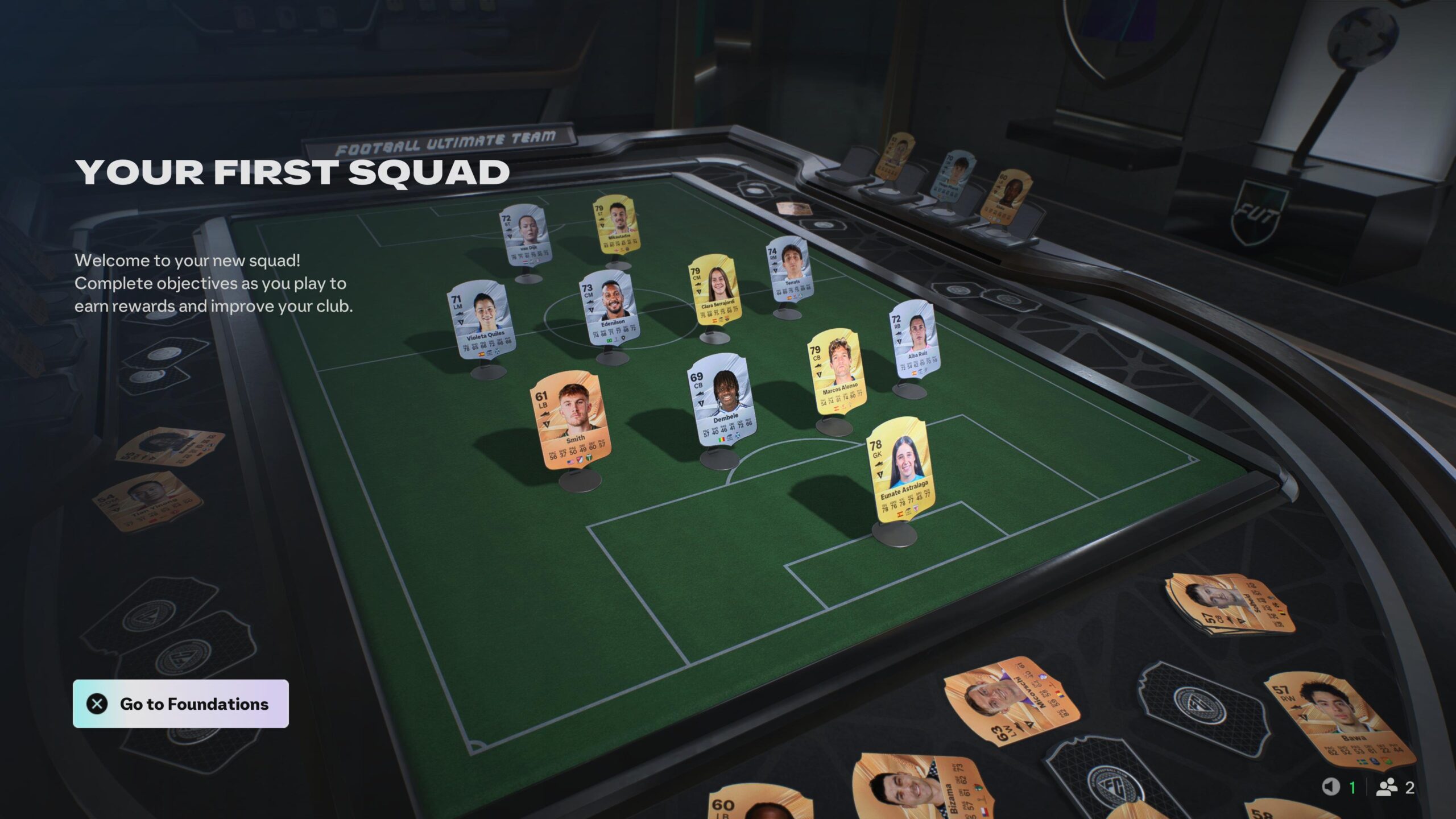
You can’t talk about EA Sports FC without inevitably ending up at Ultimate Team. It’s the elephant in the room, except this elephant has colourful cards, holographic effects and now and then asks for your bank card. The basic system stays the same: you build teams from players obtained through packs and other rewards, and on top of it more and more systems are added to keep you hooked. FC 27 introduces Gallery, where your card collection can be organised and used for rewards, and Squad Building Challenges are a bit quicker and less annoying. But it doesn’t change the fundamental argument. Ultimate Team remains a system built around an extremely aggressive reward loop and the chance to spend real money. For some people it’s the main reason they buy the game. For me it’s exactly the part I can happily do without.
And this year the debate has become even more interesting, because PEGI has given the game a 16+ rating over its “loot box” mechanics. The argument about how close Ultimate Team’s structure is to gambling has been running for years and I’m not going to settle it here, but you don’t need to be a professor of behavioural psychology to see that those packs are built precisely around that “maybe the next one’s the good one” feeling. Even Eurogamer notes the same tension between the very good football game underneath and the way Ultimate Team wraps it in a monetisation system that keeps courting controversy.
Beyond that, there are much more mundane problems, perhaps more irritating in the middle of a match. As I said, passing can become inconsistent: sometimes you press a button and the reaction comes too late or seems not to come at all, player switching isn’t always your friend, and the AI can do things that wreck a beautifully built move. Which brings up the eternal problem of a competitive game: where does my mistake end and where does the game start doing something stupid? If my opponent beats me because they built a better move, fine. If they beat me because the defender I’m trying to select decides to run off in another direction for two seconds, then the experience very quickly turns from “football” into “actively arguing with the telly”.
The Grounds has its own technical problems too. Other reviews have reported framerate drops, odd animations, lag and disconnections, which isn’t exactly the ideal foundation for a social mode built around the idea that you have to stay connected alongside other people. I’m not saying the mode lacks potential, because it has plenty, but for now it feels a bit like someone building an entire mall just to sell you the same coffee you used to get from a kiosk.
The playlist matters most
If there’s one thing the FIFA games have almost always got right, it’s the music. And FC 27 is no exception. The official soundtrack has 120 tracks from 36 countries, and the selection runs from Interpol, The Strokes, The Neighbourhood and Royal Blood to Little Simz, Chase & Status and a pile of artists I’d probably never have sought out willingly, but whom I end up listening to because I hear them fifty times in the menu. It’s one of the traditions the series really deserves to keep. Over the years, FIFA has had a strange ability to turn a song you didn’t know into something that, five years later, instantly takes you back to a particular menu and a particular season. (Saint Motel’s My Type in FIFA 15, wasn’t it? I think so. Whoever’s reading this, say so in the comments.)
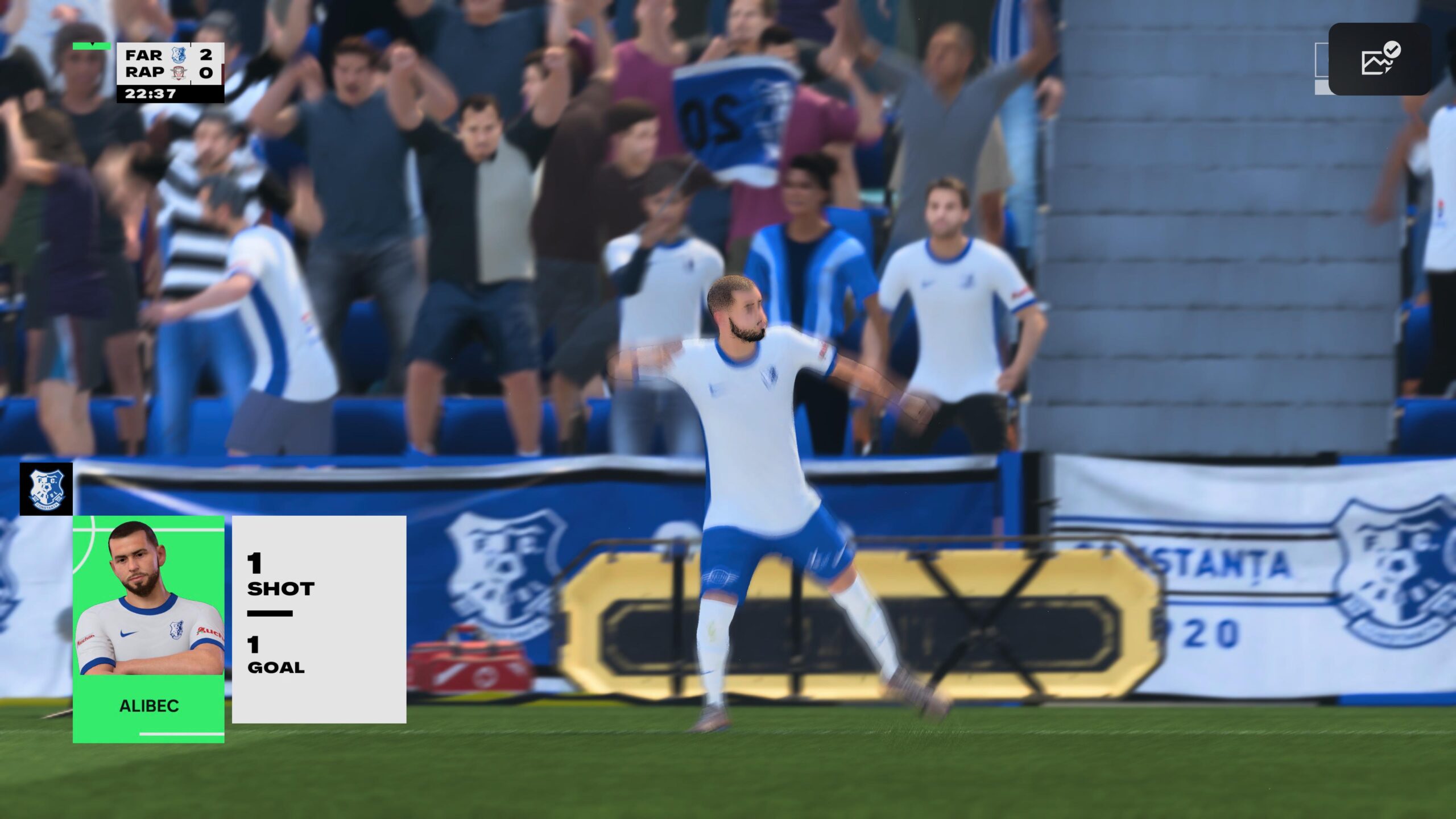
During matches, the stadium sound is probably even more important. The crowd reacts well to the rhythm of the game, the chants and noise from the stands shift with the situation, and the atmosphere of a tight match is completely different from a 3-0 in which half the crowd is probably already wondering what's for dinner when they get home. I think I read an SB Nation review that picked out exactly these details: away fans can end up dominating a stadium sonically, the stands empty out when the home side is being humiliated, and the shirts and banners add to the visual and aural authenticity.
The commentary remains good, even if you inevitably start hearing the repetition once you've played enough. But the sound of the ball, the contact in tackles, the roar of the stadium after a goal and the small touches in the presentation do enough to sell the moment, or the illusion of real football. And for a sports game, I think that's everything, isn't it? A goal shouldn't just go into the net; you have to feel that something has happened. When the stands erupt, the controller reacts and the whole stadium changes for a few seconds, FC 27 still knows exactly how to create that moment. It's not as if they haven't had years to work on it.
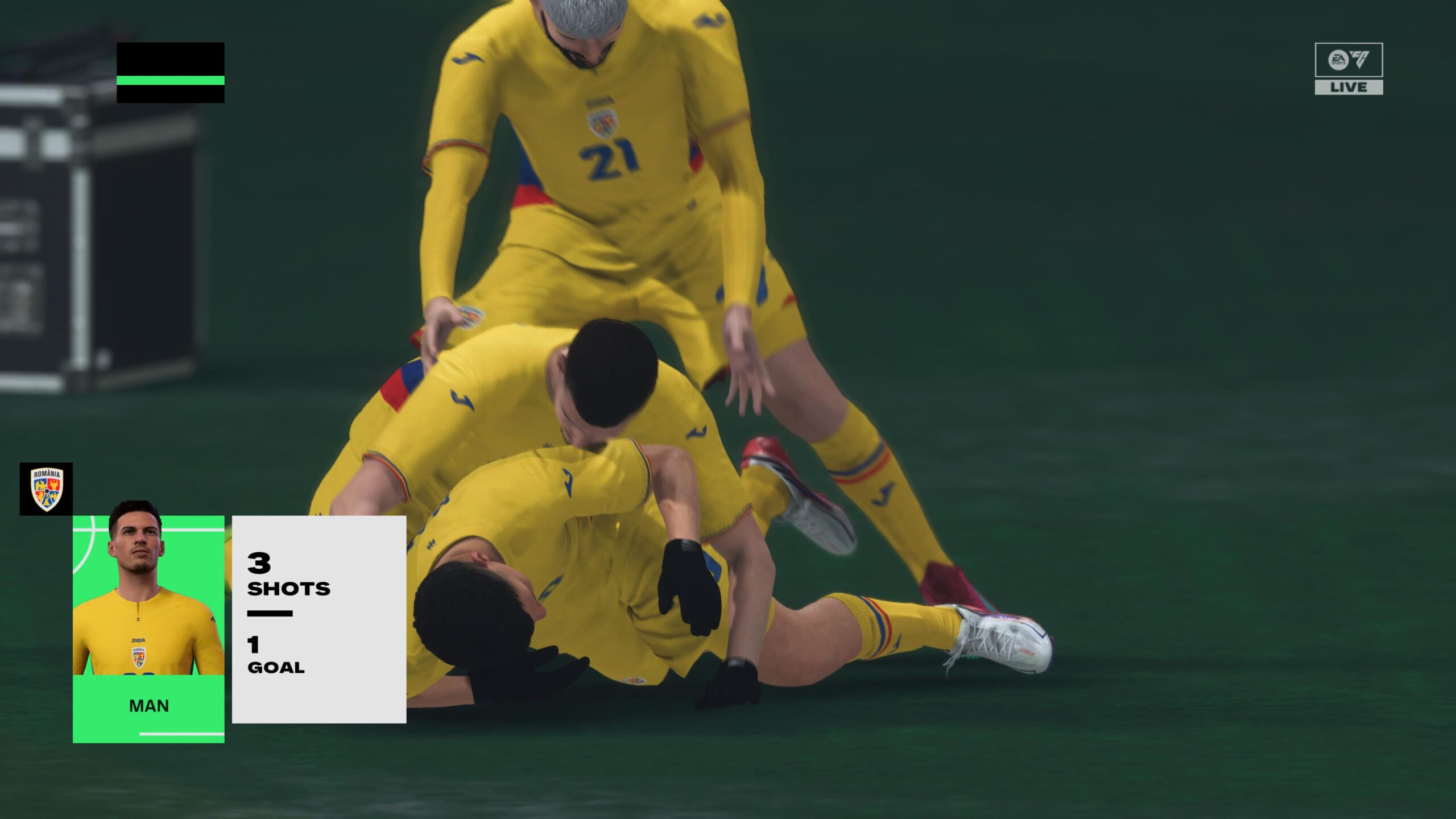
Shot, and the keeper tips it over
EA Sports FC 27 is in a strange place. It's very easy to glance at it from a distance and say it's just another FIFA with a different number, especially if you've bought every edition for the past ten years and can pick out the exact animation that was already in FC 25. But if you actually look at what's been changed this year, there's enough here that I can't write it off as a simple squad update. The more measured pace of Authentic Gameplay, the more manual defending, the better tactical system, a somewhat more serious Career Mode and the differences between players make the football itself, in many moments, very good.
At the same time, all the classic problems are still lurking somewhere. The passing that sometimes decides to have a mind of its own, the AI that can turn a good move into a comedy sketch, the monetisation in Ultimate Team, The Grounds hub that sometimes seems to exist because NBA 2K has one too, and the general feeling that EA is constantly trying to build ten more systems around the thing people actually bought, which is football. But here's the funny part. The football itself is good.
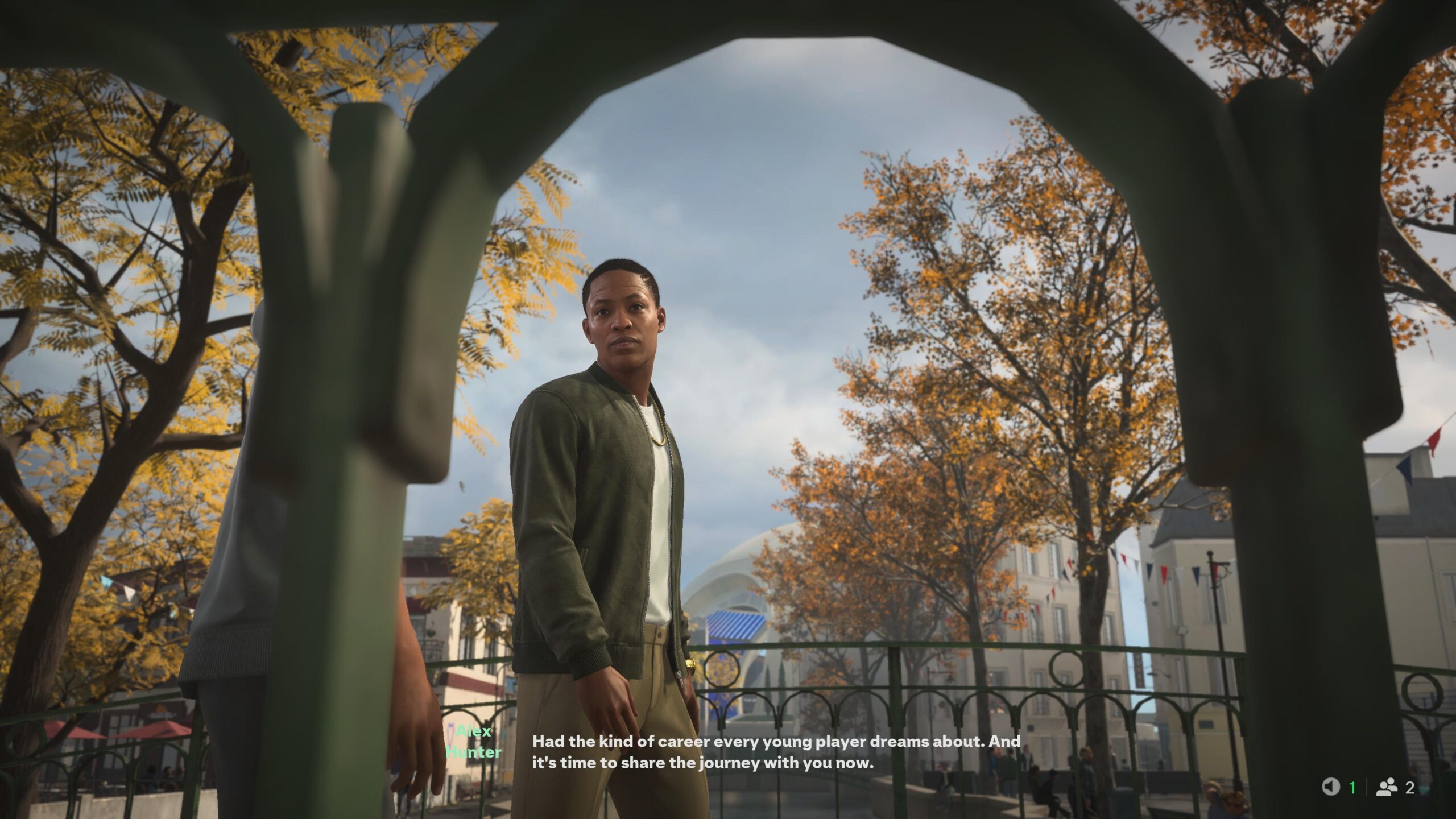
I’m not a fan, and I probably won’t wake up tomorrow to pore over the Premier League table with my morning Monster, but I’ve played enough FC 27 to understand why people can disappear into this series for hundreds of hours. When the game flows, when passes go where they should, when you manage to read a play and win the ball back manually, or when you build an attack that actually looks like something that could happen on a real pitch, it’s hugely satisfying. We’re all used to hearing a phrase that we, ChatGPT and other LLMs trot out far too often: “It doesn’t reinvent X, and probably doesn’t even try to.” But this game really doesn’t reinvent anything. It’s just one of those editions where EA seems to have nudged a few important things in the right direction. The problem is that, this being EA Sports FC, right after the good stuff it’s probably inviting you to open a pack.
Thanks to Golin Romania for the opportunity to play EA SPORTS FC™ 27.

Played on: PlayStation 5 Pro
Release date: 25 September 2026
Developer: EA Romania, EA CANADA
Publisher: Electronic Arts
Plus
- Authentic gameplay
- The music
- The animations
Minus
- Nothing truly new
- Ultimate Team
- The central hub
0 votes
Scroll down here and stay on the page for at least 30 seconds to vote.
Pick a score from 0 to 10 (halves are allowed).