
Fatherhood in Games
First published in GRIND IV, pages 136–145.
Over the last decade I couldn't help but notice a trend among developers: giving us games that drop us into the shoes of characters who, among other things, also play the part of parents, fathers above all. I'm inclined to think the explanation for this phenomenon perpetuating itself is that the people who grew up playing video games, the ones whose childhoods were marked by the magic of this digital form of entertainment, are adults now, past thirty, and parents with it. So they felt the urge to share these new experiences, emotions and states that come with parenthood (themselves, incidentally, very hard to express, describe and pass on) through one of their oldest passions – video games. In my modest opinion, although games still aren't recognised as works of art, their syncretic nature lets them compete with, and at times even outclass, art forms such as cinema, folding in artistic elements from music, graphics, cinematography and literature (among others). More than once I've been taken aback to witness genuine explosions of talent, overflowing imagination and infectious passion while working my way through masterpieces that tackled a wide spectrum of subjects, from philosophical jewels contemplating human nature, existence or identity to nihilistic works about the horrors of war or the inevitability of death. One thing's certain: whatever feeling or sensation is meant to be shared, from despair and resignation to joy and hope, as far as I'm concerned there's no fitter medium for carrying it than video games, which put you, the player, right in the thick of events. And I can only be glad that developers – whose average age I now share – have decided to paint characters on the virtual canvas who put you in the position of a parent, unleashing a series of sensations and emotions I hadn't felt until recently, and which are a breath of fresh air in this industry.
I can't say exactly which of the games I've button-mashed my way through over the course of my life was the first to cast me in that role, but I can say with certainty that the one that opened my eyes and made me realise the protagonist was a parent is “The Witcher 3: Wild Hunt”. Of course, it isn't the only game that takes this approach; the list can be filled out with others released mainly after 2010. To name just a few, I'll point to “The Last of Us”, “God of War”, “BioShock Infinite”, “Heavy Rain” or even “Red Dead Redemption”, but the list is far from exhaustive.
GERALT THE MONSTER SLAYER
Let me say right from the start that I'm a huge fan not only of The Witcher game series but also of the books written by Andrzej Sapkowski. So forgive me if I don't let up on the praise for both games and novels. And of course, as you've come to expect from me, major spoilers follow, especially for “The Witcher 3: Wild Hunt”.
Although these days few people haven't heard of Geralt of Rivia – he's managed to transcend several cultural media – my first encounter with the character came in 2007, when “The Witcher” was released and almost nobody had heard of him. Some time before that I'd read an article about it in Level magazine, in the section announcing new game projects… and the details I picked up then left me curious, even enthusiastic: a Polish company working on a fantasy RPG set in a mature universe inspired by Slavic culture, with a protagonist who kills monsters for a living and carries two swords – silver for the fantastical beasts, steel for the human ones. For all its shortcomings, at launch I was hugely impressed by the finished product: the maturity of the story, the morality and consequences of the decisions you make (even a choice made with the purest intentions can have negative consequences), but above all by the complexity and credibility of the characters, and of Geralt in particular, one of the best-drawn characters in a video game.
The series carried on in 2011 with “The Witcher 2: Assassins of Kings”, an improvement in almost every respect: a new graphics engine that left your jaw on the floor, a more fluid combat system closer to the witchers' fighting style, memorable and believable characters with motivations and interests of their own, a branching story that took you down different paths depending on your choices, and – most importantly – a more complex, better-developed protagonist, more grounded in reality and in the present day. We're given the chance to relate to the people who matter in Geralt's life on a far deeper level; we're told about the character's past, about the traumatic experiences he's been through, but also about the things and the people he holds dear that offer him comfort and solace, so that we come to understand better what his personality is built on, the principles and rules that guide him through life.
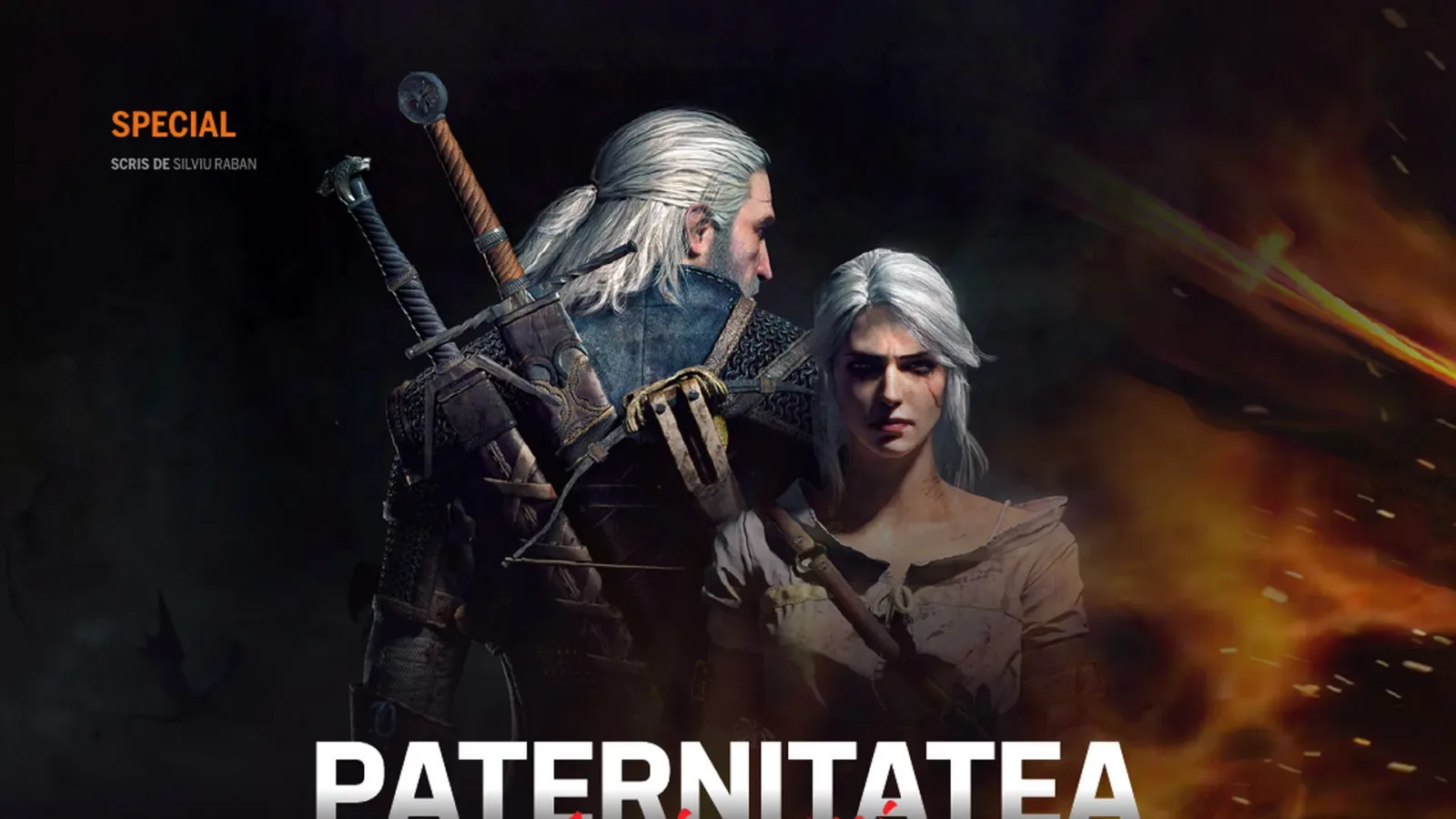
And yet the moment the series came as close to perfection as it ever has was the release of the third iteration, “The Witcher 3: Wild Hunt”. The story turns intensely personal for Geralt, who finds himself having to track down and save his daughter after she becomes the target of an interdimensional faction that wants to harvest her blood in order to replicate her ability to travel unhindered through space and time. This is where Geralt becomes whole as a character. I can't go on without praising the genius of the writers who helped shape this character (and the whole series), who managed to bring to light so many facets of human nature, so many interconnected, interleaved layers wrapped around a core of personality, making the protagonist a more human and more interesting individual than many people I know in real life. And the element that contributes most to ‘completing’ the character is his status as a father. Fatherhood sits at the centre of the game and reverberates through its every pore. Along the way you'll run into all sorts of fathers, there to contrast with Geralt's own situation, and you'll get caught up in (or rather, be drawn into without meaning to) complicated father–daughter and father–son situations and relationships.
GERALT AND FRIENDS
There are many parallel strands that make “The Witcher 3: Wild Hunt” a masterpiece of a game, and I'd have neither the time nor the space to lay them all out here. So I'd like to focus on the one that impressed me most and that goes furthest towards rounding out and defining the protagonist: the way the relationships between Geralt and the people close to him are portrayed (especially his relationship with Ciri). First I want to mention his friendships (Zoltan Chivay, Dandelion, Dudu) and his fellow witchers, who are like brothers to him (Eskel and Lambert). The situations and conflicts they get caught up in convey a genuine sense of camaraderie, knocking down the barrier of the screen and giving you the feeling that you really are dealing with real personalities rather than puppets moulded out of polygons. That's down to the skill of the writers, who built original, memorable quests on a foundation of delicious dialogue. Over the course of the game we'll stir up trouble in Novigrad's underworld simply because Zoltan is a Gwent card collector; we'll leaf through Dandelion's journal to uncover his latest conquests and try to work out the mystery of his disappearance; we'll set up an ambush to stop the convoy moving the bard from one prison to the next; or we'll try to stage a play to help Dudu get past his psychological block and give up the disguise. These are just a fraction of the memorable moments the game offers, backed up superbly by dialogue to match. All these situations and circumstances you're catapulted into hit a high level of immersion and credibility, and every interaction and conversation with the central characters leaves you with the impression that you're caught up in the whirlwind of events alongside old childhood friends you've known all your life, friends you can share anything with, without reservation or hedging, frankly and to their face. I remember very clearly moments like the one where I asked Zoltan to stand with me at the Battle of Kaer Morhen, and he, true friend that he is, answers: “You'll have me, and my axe.” Or the climb to the mountaintop with Lambert, an absolute delight from beginning to end, which perfectly captures what a hike like that with my brother would look like: seriousness levels would drop through the floor and the jokes and pranks would hit their peak. That's more or less how the hike with Lambert goes: from sarcastic remarks to dirty little rhymes. The high point comes when Lambert mocks and parodies Geralt over his line from the “Killing Monsters” trailer. I don't know if you remember, but before the game came out a trailer of that name was aired, in which Geralt, unable to stand by while Nilfgaardian soldiers carry out a death sentence by hanging on a young woman (probably rightly accused), decides to step in. Dismounting, the witcher walks menacingly towards the soldiers, and one of them asks, panicking and stammering: “What are you doing?” “Killing monsters!” came the reply that freezes the blood in your veins, and all hell broke loose. I told myself it was a pretty successful little promo that decently did its job of raising excitement levels, even if the line is a bit worn. But after that sensational parody number, the trailer became epic. I don't know whether the developers put Lambert's moment in from the start or added it in response to the feedback the video got, but what's certain is that they showed a high level of versatility and competence, knowing not to take themselves too seriously when there's no need to.
GERALT AND LOVERS
Before moving on to his relationship with Ciri, I want to flag one more thing: the unique way the protagonist's romantic options and entanglements were implemented. Geralt can choose to get involved with either Triss Merigold or Yennefer of Vengerberg. Both are extraordinary women, with strong and very different personalities, well capable of looking after themselves. Yennefer, on the one hand, is an enigmatic character, hard to read, who makes no effort to explain herself to the person she's talking to unless she considers it strictly necessary — or unless they sit far below her intellectual or social level. She is sarcastic and temperamental, which makes it difficult to relate to her and build a connection. Although her aim is to project the image of a selfish, uncaring person, deep down Yennefer remains a warm soul who comes to genuinely love Geralt and Ciri, and who risks her life for those close to her. Even though she loathes putting her true feelings on display, wanting to be thought of as a sorceress with a heart of ice, Yen would do anything for a just cause and to protect her friends and loved ones. Triss, on the other hand, is a soul who radiates gentleness and compassion, always ready to lend a hand even to a stranger in trouble — as her efforts to evacuate all the mages from Novigrad during the pogroms prove. She is an empathetic person, guided by a well-defined set of moral norms. Triss is sincere and charismatic, with the instincts of a born leader. And Geralt oscillates between these two women like a celestial body caught in the gravitational field of now one star, now the other. Because these characters and their relationships are portrayed in such a mature, credible way, it is a genuinely difficult choice. In the novels, Yennefer is the love of Geralt's life, their destinies joined and bound by the powerful magic of a djinn, but Triss is the woman with whom he built a relationship so wonderfully developed and represented in the first two games. Yen's personality is similar to Geralt's, and it is easy to see why these two, whatever they have been through, end up together again in the end. Triss's personality is the opposite: she represents everything Geralt has been denied and everything he is not but aspires to be — stability, compassion, serenity — so it is easy to see why he would choose a comfortable life at her side. Even the way the protagonist speaks to the two of them differs. With Yen he adopts a more incisive style and sharper lines (not out of disrespect, but rather because she too dislikes saccharine flourishes), whereas with Triss he uses a gentler, more comforting tone. For me — coming to this universe and its characters when the first game came out in 2007, before reading the books — the obvious choice was Triss Merigold… even though it breaks my heart when you have to give Yenn the news on that mountaintop after the fight with the djinn. And not because I dislike the brunette (on the contrary, I find her a fascinating character), but because the developers did such a good job of building the relationship with Triss in the first two games, through very well-written situations and dialogue, that my heart would not let me betray her the moment I was reunited with Yenn. The scene in the second game where you give Triss a “rose of remembrance” strikes me as the high point of the art of the declaration of love, and it fits Geralt like a glove. I couldn't just wipe that moment away because I had reconnected with Yennefer. And since, every time I play “The Witcher 3: Wild Hunt”, I make sure to import my saves from the previous game, in Triss's wrecked home in Novigrad I can find the rose and give it to her again — which plucks at my heartstrings and melts my heart, because she kept it, despite six months apart, and because it was a moment and a gift that meant a great deal to her as well. Once again I want to praise the genius and maturity with which the writers handled these characters and scenes, which feel so plausible and manage to connect with you on a level few media products reach. Even the way Yenn's reaction was implemented if you choose Triss is admirable and feels lifted from real life. If you take the defensive route and keep apologising, pleading amnesia and claiming you didn't remember your relationship with her, she will eventually lose her temper and teleport you into the middle of a lake. But if you choose to take responsibility and admit that you genuinely regret what happened, telling her you are sorry, she will understand and accept it, because she is a mature, intelligent woman who knows when to simply let things run their natural course — and when to walk away.
GERALT AND THE LADY OF TIME AND SPACE
The relationship between Geralt and Ciri is the central element of the story, the axis around which every other secondary narrative thread turns. The hero's main objective is to find his daughter, long since disappeared and with evidence pointing to her return from her inter-dimensional travels. But the protagonist is infertile, a price paid for his mutations, so how can he have a daughter? Things are rather complicated: the bond between the two is a special one that has its origins in the moment when Geralt, at Queen Calanthe's invitation, attends a betrothal ceremony for her daughter, Pavetta (Ciri's mother). Geralt's intervention makes possible the marriage between Pavetta and Prince Duny, and lifts the curse that had been laid on the prince. As a reward, the witcher invokes the “Law of Surprise” and promises to come back to claim the unborn child (Cirilla), with no real intention of seeing the plan through. Things take a tragic turn, however: the kingdom of Cintra is attacked by the Nilfgaardian Empire, led by Emhyr var Emreis, who turns out to be Prince Duny, and young Ciri disappears. Geralt feels duty-bound to look for her and to stop the imperial forces from capturing her. Bound by destiny, the two go through many adventures and grow very close. Geralt comes to love Ciri and to think of her as his daughter. The developers understood that the relationship between the two is the core of the narrative, and that the way you interact with Ciri is one of the game's central elements. In your search you are almost always one step behind Cirilla: you can find traces of her passage through various places and feel her presence, as she leaves her mark on places and people she has come into contact with. Often you will feel you were too slow, and a sense of guilt will set in — the feeling that you haven't done enough, that you would have found her if you had been harder on yourself. Eventually your efforts pay off, and the reunion scene is masterfully crafted, one of the best in video game history and more than a match for serious film productions. The way the wind moans as Geralt stares, at a loss, at the doorway and decides to approach with hesitant steps; how he pushes the heavy door and his shadow, cast by a sad twilight, stretches across the floor to the bed where Ciri lies; the way the camera sweeps hurriedly over several inanimate objects in the room and the violins let out a drawn-out, mournful creak — every single time it turns my heart to the size of a flea and takes my breath away. After a
GERALT AND FATHERHOOD
I was saying that one of the central themes of the game is fatherhood, the implications and responsibilities that stem from the role of a father. After the reunion, the game shines in this regard, and you will have ample opportunities to interact with Ciri and strengthen the father–daughter relationship. The situations are varied and reach a high level of complexity, putting you in all sorts of positions where you must decide what is best for your daughter and weigh up what impact could a moment of hesitation, Geralt makes his way with faltering steps to the bed and, with a trembling hand, touches Ciri, who slumps inertly onto one side. Pain and despair seize him as he clutches his daughter's lifeless body tightly to his chest. The sound of the violins swells and, accompanied by the weeping of plucked strings, rises into a crescendo that peaks the moment Ciri opens her eyes, her arms regain their strength and hold Geralt tight. This is the moment when I lose control and burst into tears, even though I have watched the scene dozens of times. I cannot help but put myself in the protagonist's shoes and imagine that feeling, how my daughter's arms, which I thought lifeless, come back to life and wrap me in a fierce embrace. The scene continues with a flashback in which little Ciri and Geralt run towards each other and hug. have your decisions on her moral, social or emotional development. At the climax of the story, Cirilla must face and stop a cosmic entity known as the “White Frost”, which has destroyed countless worlds and civilisations. Her survival after this confrontation depends on how well Geralt (that is, you, the player) has discharged his parental duty. Through your advice, decisions and actions you can build her self-confidence and strengthen her morale, so that Ciri comes through this ordeal untroubled, confident and without faltering, knowing that she can count on you and that you will always be by her side. The game doesn't tell you how to do this; you have to learn it for yourself from the experiences and interactions with the other fathers you meet, as well as from their attitudes and the way they approach their relationships with their own children.
Cirilla's fate depends on how you react to her and how you approach her at certain critical moments she goes through. One of those moments is when, after the Battle of Kaer Morhen, Ciri trains to gain better control over her powers but fails. You will be faced with two options. The first is to dispel her frustration by emptying a few glasses of alcohol. If you were paying attention to the characters you met, to the motives set out and to the messages the developers want to put across, you'll remember Phillip Strenger (the Bloody Baron), who stands for the archetype of the parent who failed in his task. Often away on military expeditions, preferring the company of his comrades-in-arms and of alcohol, the Baron was not there for his wife and daughter when they needed him. And when his family left him, he found refuge at the bottom of a bottle and became a deplorable man. So you will realise that the best option for Ciri is not to drown her upset in alcohol, but to lift her spirits by making her forget the burdens weighing on her for a few moments and getting her into a fun snowball fight.
Another example is the situation where you visit Avallac'h's laboratory and discover that he wasn't exactly a friend to Ciri, being more interested in her from a scientific point of view: in her extraordinary abilities and in how she came by them. Ciri gets angry, and you are once again faced with two options. The first is to suggest she calm down and remind her of the genetic gift she was endowed with, which is a burden at the same time. You will put a medallion round her neck symbolising her noble lineage and appeal to her sense of duty. But again you will remember Emhyr var Emreis, the girl's biological father, and the fact that he wants his daughter back only to wipe out his competition, to find her a worthy husband and to have an heir to the throne. Only a sharp sense of duty makes the emperor go looking for his daughter. So you will realise that the ideal option is to help Ciri forget the enormous responsibilities weighing on her for a few moments and, to bring her stress level down further, to kick off a cathartic session of vandalising the lab.
A third example is the one where the “Lodge of Sorceresses” wants to interrogate Ciri. You will be tempted to go with her, to make sure the Lodge members don't overstep the mark and to protect her… but you will remember Crach an Craite and the way he handles his relationship with his children, Cerys and Hjalmar. It's true that he asks Geralt to give them a hand in their attempts to prove their abilities, but if Crach backs them and trusts that they are capable of uniting the island clans and leading them into war, then Ciri is certainly capable of holding her own in a conversation, even one held with some of the most powerful women on the continent. So you will encourage her, telling her she has nothing to fear, and you will let her face them alone. Because, although she is your daughter, she is an adult who doesn't need to be led by the hand every time and who has to rely on her own abilities. There are many such situations, all meant to develop a balanced father-daughter relationship.
One of the final objectives is the confrontation with Eredin, whom you end up crossing swords with and defeating. After that fight you suspect that Avallac'h is a traitor and has his own plans for Cirilla. I have to confess that, after a frantic race, when I reached the tower where I thought she was being held prisoner, I was expecting another fight. To my surprise, the whole thing was part of a plan laid out well in advance. It is the moment when I understood that not every problem can be solved with a sword in your hand. It is the moment when, although I wanted with all my heart to forbid Cirilla from trying to stop the cataclysm, I understood that she had to choose her own path in life. Although I had crossed the continent looking for her and we had spent so little time together, I understood that she would not always be “little” Ciri and that she has her own battles to fight. So I chose to tell her that I understand and support her decision, that I will always be by her side and will wait for her to come back. I confess that, however much
GERALT AND HIS TEACHINGS
The theme of fatherhood abounds throughout the game, present not only in the main narrative threads but also in the side quests. “Madman Lugos” exempts you from a prison sentence if you agree to go to the cave of dreams and help his son. The cave shows you your greatest fears in an attempt to help you overcome them, and Blueboy Lugos's fear is his own father. Lambert wants revenge on a witcher who killed his best friend. The situation gets complicated when you find out that the killer repents his deeds and is trying to become a better man, starting a family. I had to convince Lambert that the man was—the fight with and the defeat of Eredin, who persecuted her and hunted her through countless dimensions, cannot compare to the fulfilment I felt when I learned that Ciri had survived the ordeal. Although one of the game's objectives is to lock horns and flex your muscles in a ferocious battle with the antagonist, it pales in comparison to another main objective: a father and husband now, probably truly regretting the life he led in the past. And I cannot fail to mention Vesemir, the man who raised and trained Geralt. His sacrifice adds new layers to the wonderfully built father-son relationship, and the moment when you have to attend his funeral broke my heart.
I was 28 in 2015, when “The Witcher 3: Wild Hunt” was released. In very many respects, but above all through its unique approach to characters, the game blew me away. I can't describe the satisfaction I felt when I landed the best ending without any other meddling on my part, without consulting any kind of source for guidance. Although at the time I wasn't yet ready to become a father, after going through the adventure a sliver of courage took root. Even though the game is just an entertainment media product, which is incapable of encompassing the complexity of the parental act, that of contributing to building Cirilla's self-confidence, of instilling in her, in my role as a father, the moral values and qualities needed for a healthy development of character, for her growth and completion as a person. The developers knew how to weave the two strands together masterfully, portraying the father-daughter relationship in a unique and balanced way and presenting a different kind of paternal masculinity. in its entirety, to a certain extent it paved the way and gave me confidence that I would be a capable enough parent. In the second half of the previous year I finally became a father, which made me reflect even more deeply on how the developers implemented the relationship between Geralt and his adoptive daughter, Ciri. They showed us that the protagonist, a well-built man with a deep voice, a body criss-crossed with scars, tempered in many battles and a very efficient killing machine, can also be empathetic, sensitive, emotionally vulnerable, with a heart of gold and a steadfast symbol of fatherhood—an approach that keeps bringing me back to the game with pleasure, even though I've finished it eight times so far, clocking up around 2,000 hours.