
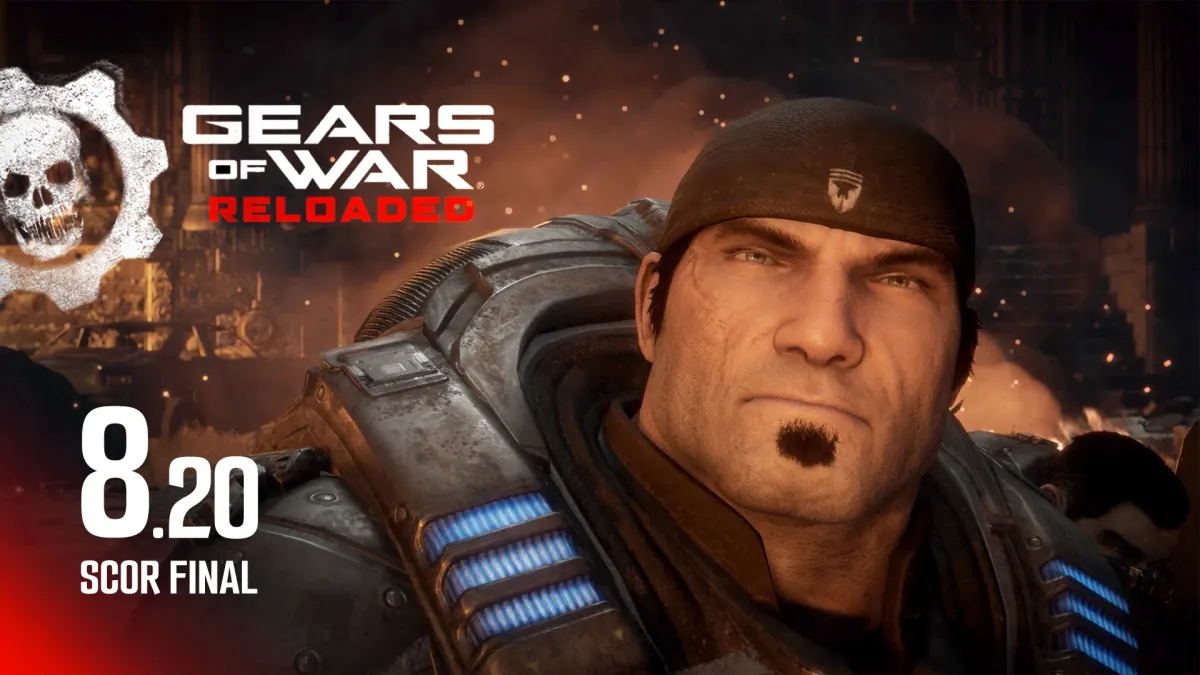
Gears of War: Reloaded – Review

When the hell did the notion of taking cover become such essential mortar in the masonry of an action game?

These days, it's hard to find a third-person shooter that doesn't somehow make use of some form of sticky walls. The examples are numerous: the Mafia series, The Last of Us (and implicitly the Uncharted series), Star Wars: Outlaws, Mass Effect, or any of the lesser-known clones of the above patterns, such as 007: Quantum of Solace or Japanese iterations à la Vanquish. I dare say that 007: First Light won't stray too far from this recipe either, but anyway, when the hell did the notion of taking cover become such essential mortar in the masonry of an action game?
Indeed, the current formula of this mechanic first revealed itself to the public in a PS2 title called kill.switch, although marketing magic and a more polished presentation somehow cemented the idea of the incipient cover shooter in the collective consciousness in the form proposed by Gears of War, now more than 18 years ago.
Almost two decades means three console generations and hundreds of adventures and universes that have pushed the boundaries of what can be done and what is fun, so I had to calibrate my expectations for the game as you would if you had to study a museum piece and not a brand new title. And then, quality things somehow manage to age elegantly, especially in the memory of those who experienced the phenomenon from the first wave. So let's see if we're dealing with the type of intellectual property
that increases in value over time or just a new coat of paint over a crumbling wall.

A Troubled World
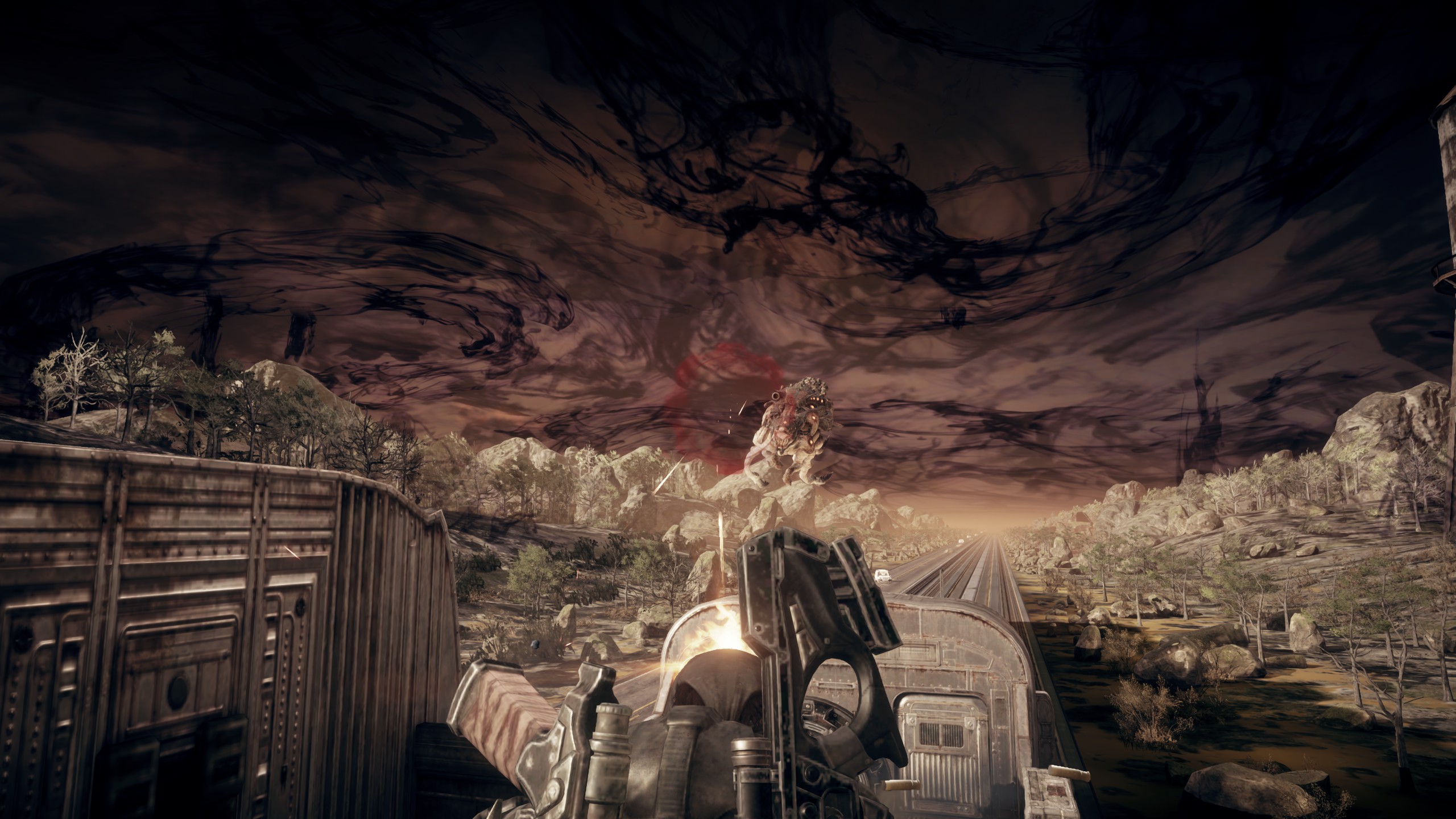
Sera is what a Star Trek character would call a Class M planet. Similar to Earth in terms of climate and vegetation, the planet has suffered an alternation of periods of technological development and wars that have threatened the survival of humans as a species for millennia.
More importantly for the game's events is the last phenomenon that the human population of Sera (Seran?) went through, the so-called Emergence Day. Imagine a cataclysm where monsters emerge from tectonic plates, and anyone who didn't have the foresight to install marble flooring or, I don't know, reinforced concrete, wakes up to a huge slobbering beast in their living room staring at them like a hairy chicken leg with opinions.
So, 14 years after the aforementioned life-interrupting event scraped off about a quarter of humanity in a single day, the toughest of our kind are still grappling with the beasts, and you witness and contribute to all the ruckus in the chrome boots of Sergeant Marcus Fenix, already a war veteran when the game's action begins.

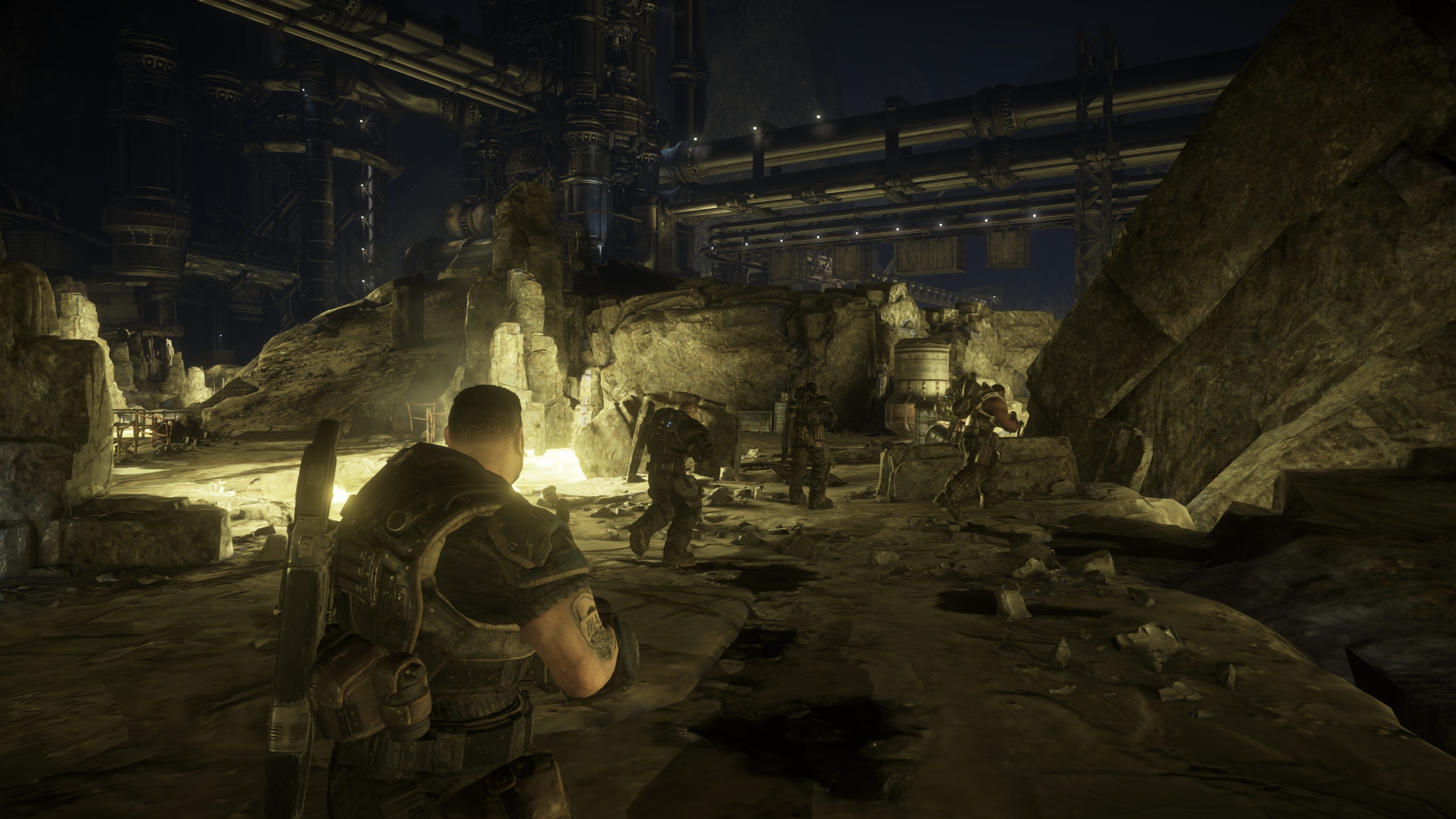
Freshly sprung from the cooler to help his Delta Squad comrades in a desperate mission on which, naturally, the entire fate of humanity hangs. These are, in order, Cole, Baird, Santiago, and you, a bunch of burly blokes with exactly the kind of tank-like physique needed to carry the absurd arsenal they have on their backs.
Through the very title of the Sera armed forces operators (Gears), we are given the idea that we are just a cog in the war machine, an idea that somehow also finds its way into the gameplay. You will almost never stray too far from at least one of your teammates, and at an interactive experience level, I can tell you from the outset that Gears of War is a much more complete product in co-op. This is not only because it becomes easier and less bullet spongy (the AI has the unique talent of orbiting between absolutely useless and cannon fodder), but also because the maps are designed in such a way that two people can attack any enemy position from two directions with spectacular results in tandem.
The few hours I managed to play with friends were much more fun and easier to beat, regardless of difficulty level, than the entire solo campaign on Insane, where it's clear that the game is built with a co-op experience in mind.

The campaign, overall, is quite short (five acts that can be completed in about ten hours on the hardest difficulty level), but it compensates for its linearity and limited content with a design that favours methodical approaches in each encounter. Overall, even in boss fights, it's more about observing your environment and looking for angles (the daily bread of a shooter player) than eliminating endless waves of enemies.
The secondary characters (apart from the three work colleagues) are either non-existent or completely unmemorable, I don't even remember, but overall the entire story in the first game is very stingy with details and lacks any kind of depth, treating the narrative context as a generic fog for the gameplay loop which, admittedly, makes most of these 10 hours fun even if you only use 2% of your brain.
The invasion points can be prematurely closed with well-placed grenades, and most of the Locust beasts have the reaction speed and self-preservation instinct of a tortoise on a motorway, an aspect that hasn't changed since the game's initial release.

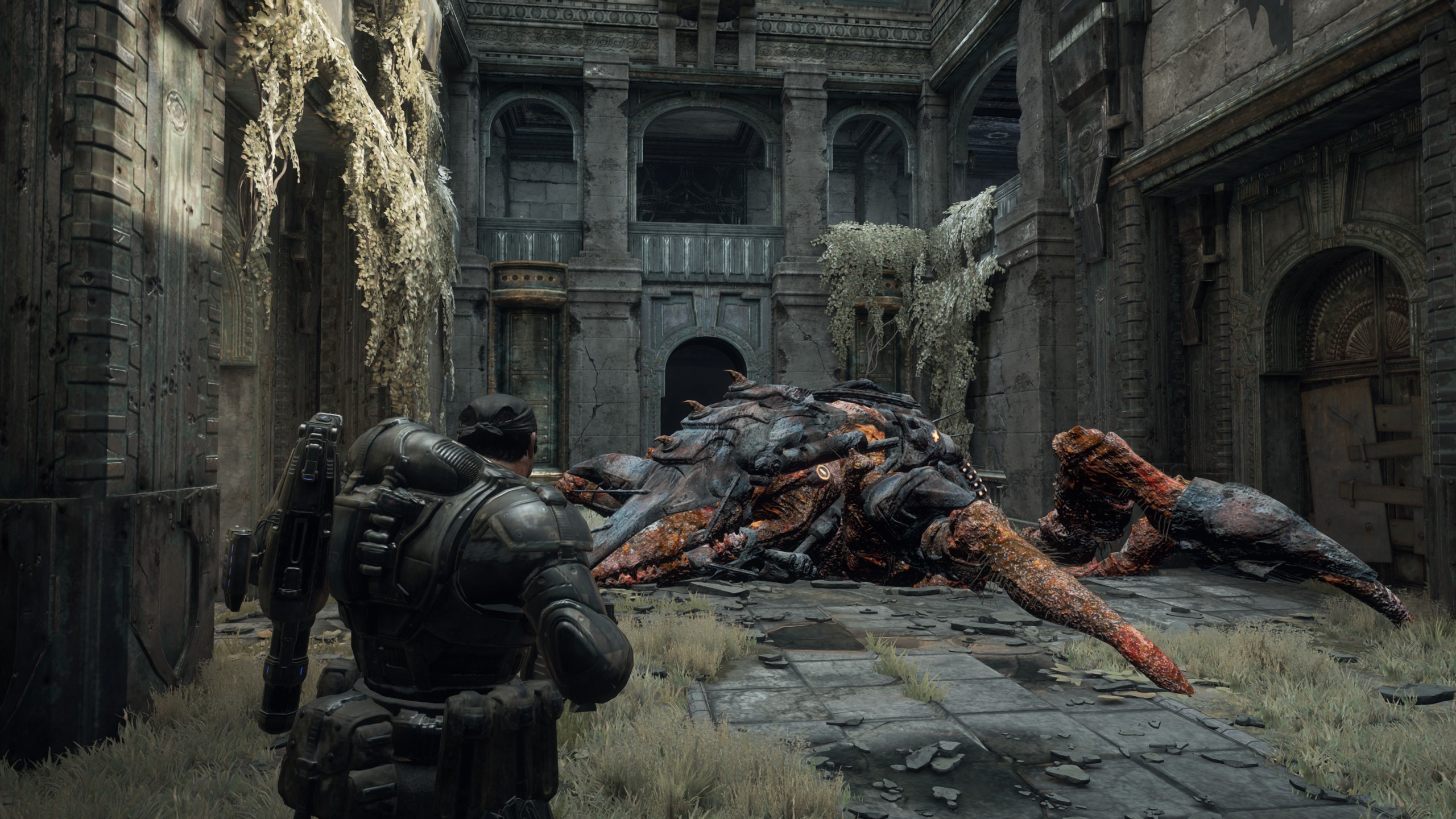
As you traverse the urban ruins, massive vestiges of a civilisation with a clear sensibility for art, evident in the architecture (an interesting mix of Art Deco, Renaissance art, and Baroque details) and the paintings, statues, and monuments you visit in the first part of the game. I had the sensation of exploring a bygone and vulnerable world, ravaged by an invasion that has zero interest or understanding for the intellectual concerns of the food it consumes.
I confess I would have liked a system of notes and collectibles that would develop the lore of this world and add a secondary narrative dimension to the exploration. There are collectibles, don't get me wrong – identification tags of dead soldiers – and they unlock comic books that offer short stories about the Pendulum Wars, but the franchise has so much context and background story that what initially seems generous – 33 pages of illustration – turns out to be too little to highlight the work put into world-building, especially since it focuses on events not directly related to what's happening in the campaign.

Ballistic Dinners
A synesthetic ball of nostalgic pleasure sown in my brain by this series is triggered by sniper headshots. The gunplay appetizer isn't much: machine gun bursts aren't lethal in acceptable doses, and often you invest a magazine or more in the death of a single enemy. Then, you discover, one by one, a menu of classic weapons, increasingly crunchy, punctuated by occasional executions, gibbing, and ultraviolence that remind us that the game's core comes from the Unreal series.
A main course with a side of shotgun, absolutely devastating in close combat. You moisten your palate with the iconic chainsaw attached to the remains of the starter, and by the time you've finished digesting the conventional weapons, you're presented with grenade launchers and explosive arrows.
The tempo is kept up by the active reload system – basically, if you press the same button a second time at the right moment when reloading, you get a small damage boost or reload faster. Now we somewhat consider this minigame a tired old trick, but at the time it was a new approach that shortened periods of inactivity during reloading in contemporary games.

And for dessert, you're served a Hammer of Dawn, a marker that summons the fury of a satellite directly from orbit. How could you not be full?
As for those targeted by these wonderful carnage devices, they come in several shapes and sizes that favour different weapons depending on the clientele. Wretches, the smallest and fastest of the monsters, look like puppies left in the microwave for 4 minutes and can be lethal up close if you don't find the melee key fast enough. Drones are the most common type of enemy, with weapon variations that reflect your own arsenal, and Boomers are Drones who went to the gym and were rewarded with a grenade launcher. There are also a kind of mini-bosses – Berserkers – and a handful of boss fights which, perhaps in the context of the two decades I mentioned earlier, are outdated.
The soundtrack is orchestral, competent but somehow operates in the tones and conventions of an 80s action movie and which I have to actively make an effort to remember. The game knows when to be silent and when to inspire you to jump into the fray.

Asphalt Tango
GoW's Versus mode will probably be the component that sells more copies than its museum piece value or whatever pretentious whining I was rambling about in the introduction to this review. This is due to the nature of multiplayer, which has no beginning and no end, and which you can inject in doses of one or two matches for indefinite periods of time, but also because, I'm happy to say, the maps are still fun, the player base is massive (it generally takes less than a minute to find a match in any game mode on the day of writing this article) and cross-platform worked flawlessly for me from the very first solo queue.
The game modes support up to 8 players connected via Microsoft (you'll encounter both Xbox, PlayStation and Steam players randomly distributed in both competitive and social modes), and there are 8 maps.
The playlist is composed of classic genre variations: Team Deathmatch pits two teams of four people against each other until they run out of respawn tokens. One Shot, One Kill is the same thing but only with sniper rifles. 2v2 Gnasher Execution keeps the objective, halves the teams and arms them only with shotguns. Warzone has the same goal but in the no-respawn format of Counter-Strike. Assassination is identical to Warzone except the objective is to kill a specific member of the enemy team. And finally, we have the Domination-type modes (zone capture), King of the Hill and Blitz, the difference between the two being whether you have to stay in the zone or not to collect points.

The cover system somehow dampens the control differences in many of the scenarios you face in Versus mode. What I mean by that is that in principle, when it comes to tracking, the mouse is clearly the fastest and most suitable controller, how quickly you aim at the enemy matters less than you might expect in GoW.
A greater weight in winning a match, regardless of mode, lies in the efficient use of the cover system for traversal and fundamental map control, picking up weapons, positioning. It frequently happened that in the last round in modes that allow such a scenario (Warzone and Assassination) I saw a single player intelligently using the obstacles and natural routes of the map to kill up to four enemies against whom he was left alone. These are the kind of stories and moments for which I was still playing The Last of Us multiplayer on PlayStation more than two years after its release, although, like Gears of War Reloaded or almost any AAA title with a multiplayer component, the content is quite limited and the skill ceiling is not huge.
This also makes it somewhat more approachable – compared to Quake or other decades-old shooters, understanding movement and physics is a breeze, given that you can't jump and you're crammed into small environments where flanking decisions and attack angles are obvious.
Of course, don't kid yourselves, there are people who spend an impossible amount of time in this game and who will win almost every match, but by chance, the experience I've had so far has been a positive one.

Alpha Dudebro Taskforce Five
If you have difficulty understanding who and what Gears of War is talking about, a screenshot is enough. The protagonists are beefy, the story is straightforward and doesn't waste time with too many twists, but it fully includes what you might expect from it.
Weapons have weight and explosions are felt, you don't have much room for manoeuvre but you are free enough to demonstrate moments of creativity with limited resources. Multiplayer is fast and furious, with matches ending in a few minutes but during which plot twists can happen even more than on Love Island. Even 18 years after it first saw the light of shelves, Gears of War shows that the essence of third-person shooters hasn't changed, and robust design has no expiration date.
Reloaded's mission was simple: to deliver a stable build from day one (the last remaster of the same game, Gears of War: Ultimate Edition, was a technical disaster at launch) and to bring to the attention of a new generation of gamers an ensemble of elements that delighted their parents.

The mission was accomplished, with the caveat that by its very nature, namely a remaster of a remaster, the game only promised to be that museum piece, with all the imperfections and idiosyncrasies of the era in which it was created. It also lacks some essential elements (promised, moreover) that would have perfected it (such as split-screen, which at least for now is completely absent, or limitless framerate), but that didn't stop me from spending tens of hours chasing people around the map with a shotgun and a pistol looking for glory and blood.
If you understand that it's more or less a glorified patch, but you want to relive the pleasure of revving a chainsaw into the chest of a basement orc or if you want to see what all the fuss was about with the Xbox 360, Gears of War: Reloaded might be the throwback shooter you need at the end of this summer.


Played on: PC (Steam)
Release date: 26 August 2025
Developer: The Coalition
Publisher: Xbox Game Studios
Plus
- A classic title, in a modern form
- Level design focused on tactics and flanking
- Engaging co-op
- 8 versus modes on small but complex maps
Minus
- Not all promised features are available at launch
- Shotgun is broken in multiplayer in the current build
- Extremely poor AI, to the point where, if you have a choice, I recommend avoiding the solo campaign
- Short and superficial campaign, which barely scratches the surface of the universe the franchise explores
0 votes
Scroll down here and stay on the page for at least 30 seconds to vote.
Pick a score from 0 to 10 (halves are allowed).