
Ghost of Tsushima
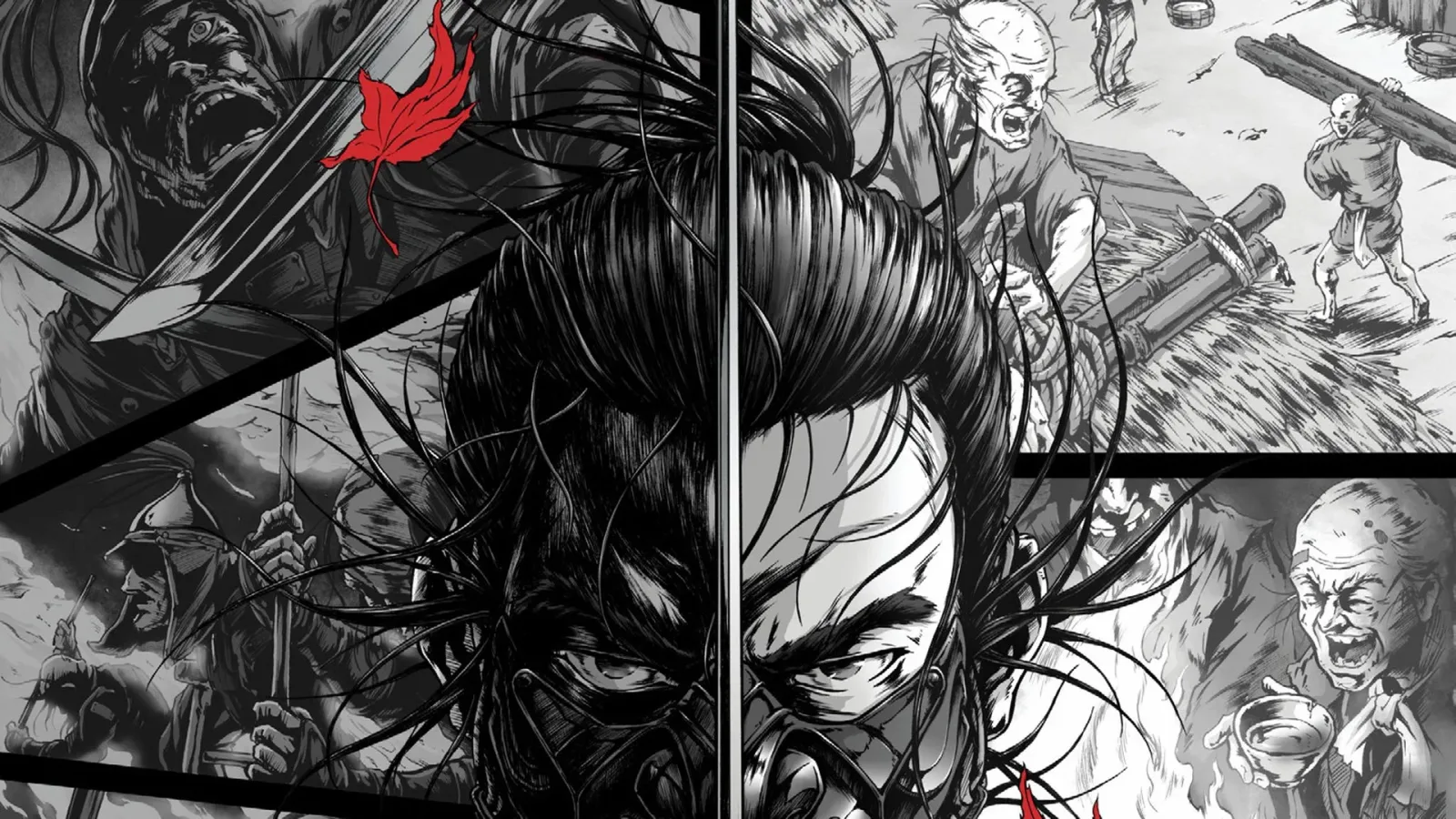
First published in GRIND II, pages 12–17.
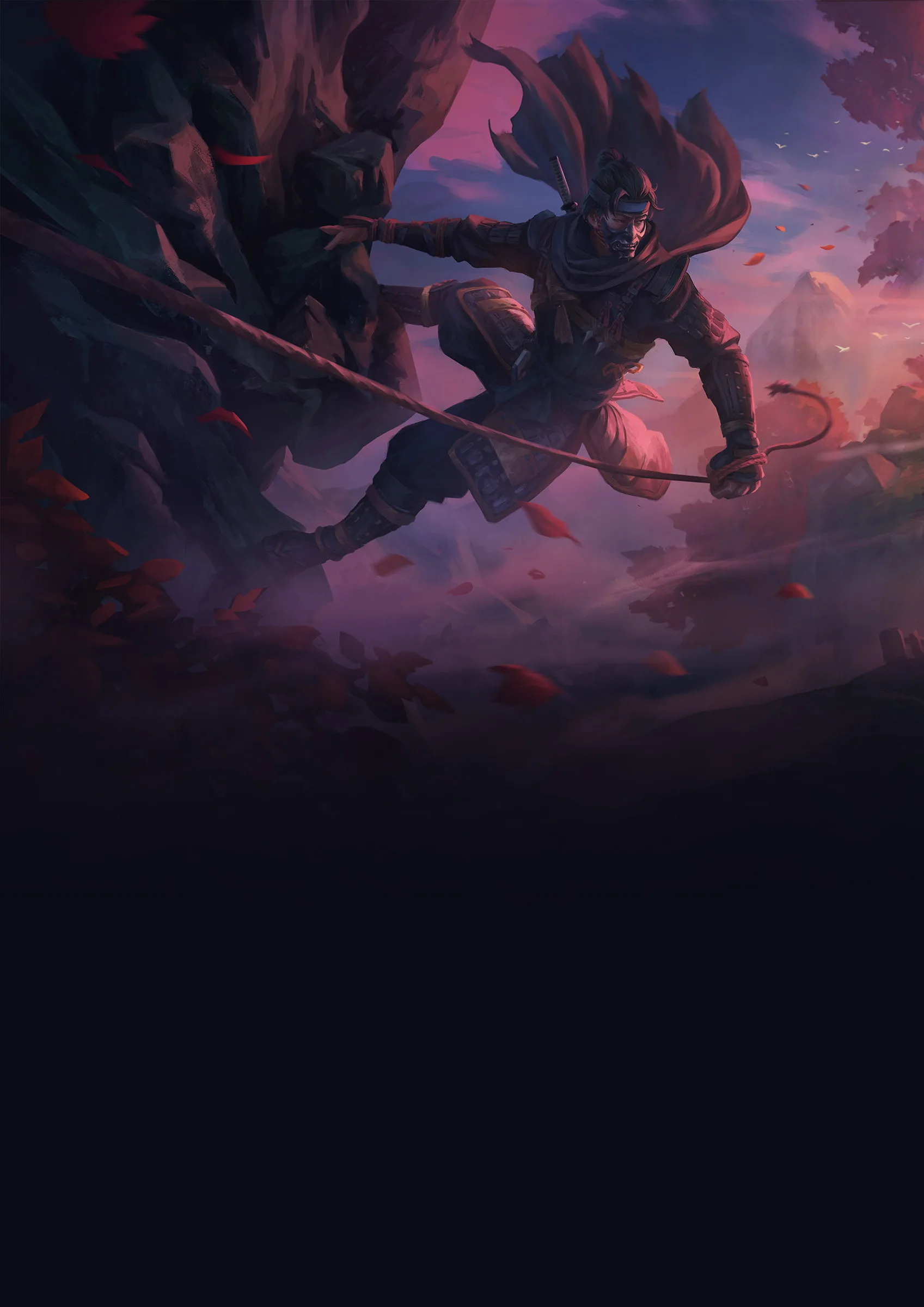
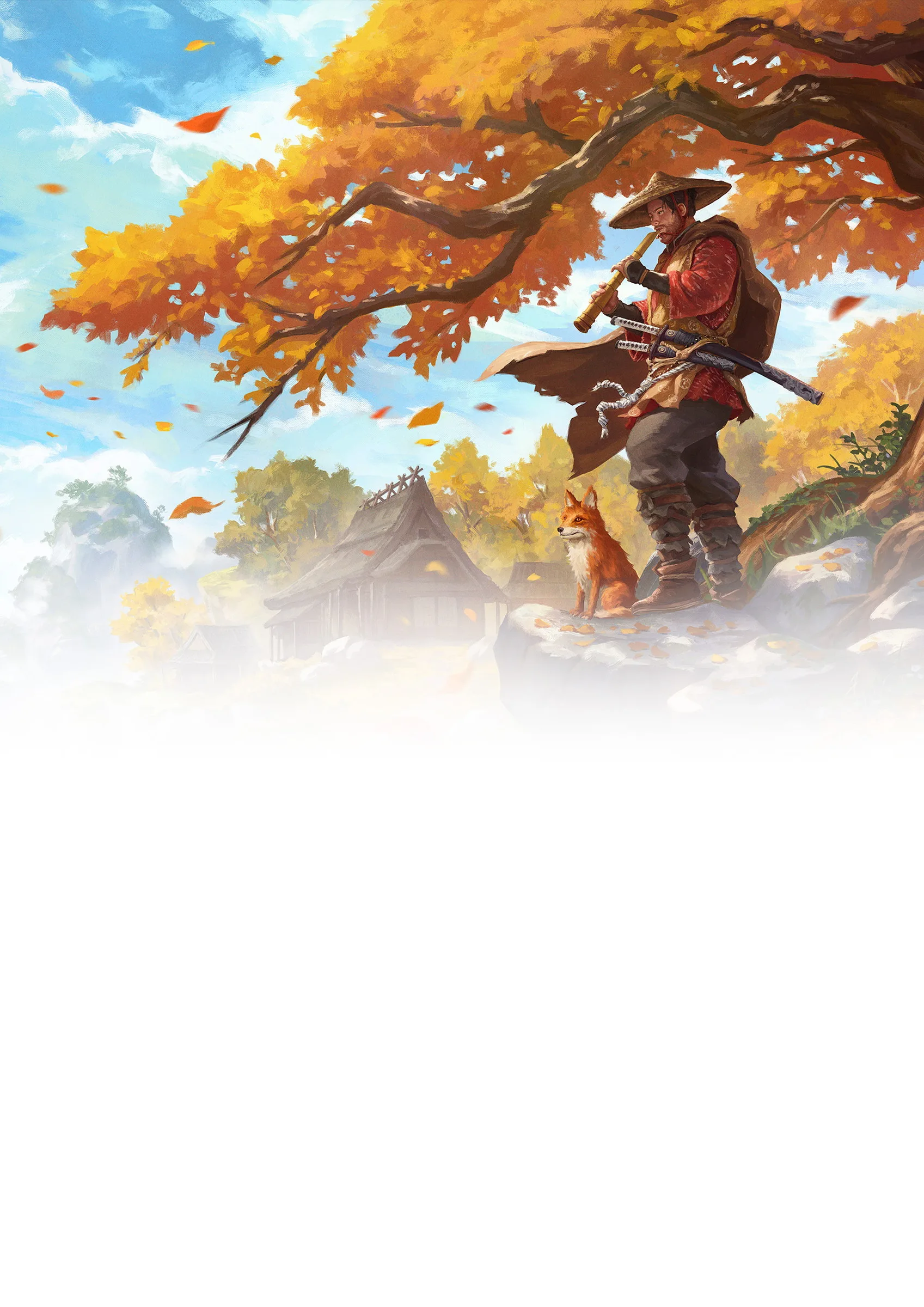
...it became, shortly after its 2020 release, a rule breaker and a trendsetter when it comes to samurai combat
ゴーストオブツシマ The game I'm writing this wonderful ode about, nestled among the colourful pages of this splendid magazine, has in its DNA both the desire to entertain us as players and the intention to make us focus on the elements that make the experience truly unique.
Ghost of Tsushima doesn't set out to be just a tamer copy of titles like Nioh or Sekiro: Shadows Die Twice. Shortly after its 2020 release, Ghost of Tsushima became a rule breaker and a trendsetter when it comes to samurai combat. And I'm only half right there, because this creation from Sucker Punch puts equal emphasis on the discovery of Japanese traditions and values.
We're talking about the undisputed winner of the Best Art Direction category at The Game Awards 2020. Because 'Art' could well be the subtitle of this painting by Sony Interactive Entertainment – a collaboration between Sucker Punch and Japan Studio, two sacred monsters of interactive polygons that tickle the eye.
The collaboration between the two studios offers PlayStation players a game that's like a film awarded at the most prestigious ceremonies in cinema.
And that happens thanks to the inspiration drawn from films written and directed by Akira Kurosawa. Seven Samurai (1954) or Throne of Blood (1957) are just two of the director's best-known pictures. Because we're talking about that Kurosawa, the one with multiple nominations and accolades at the BAFTA Awards, the Oscars and the Venice Film Festival.
Other, more recent stories with the samurai's honour at their core include 47 Ronin and The Last Samurai. their clan is close to Lord Shimura Because Ghost of Tsushima bor- – the one who makes the law throughout the land. rows elements from everything that We're talking about many good years of barbecues in is good.
family, going together to Buddhist monasteries and walking the kids among the “Your hero’s name cherry blossom-filled forests… which somehow are is a young man from the cini family
Jin Sakai – a who comes the Sakai clan, with old roots on Tsushima island”
The Sakai are by no means a bunch of nobodies who accidentally shipwrecked on the island. On the contrary, interrupted by the uninvited guest on the island, Khotun Khan. A Mongol with money to burn wants a bit of property on Tsushima too… because, you know, he'd heard people flock to that coastline even more than they do to Golden Sands in Bulgaria. And so Khotun Khan settled there with his small family, armed to the teeth and embarked on his fleet of yachts full of gunpowder and other “medieval accessories” of mass destruction. The Mongol invasion of the island is dated in Japanese history books between the years 1274–1281, a period during which the action unfolds
対馬のキツネ and the action of the game presented.
Left as one of the few survivors of the landing, Jin Sakai regains his strength with help from an essential female character in the story, who also teaches him a different way of fighting his enemies from the one he had been indoctrinated with. The way of the samurai is a straight, just and fair one for both adversaries. But the threat and danger posed by the island's invaders require a completely different approach. So Jin learns to bend the rules of the ancient code, geared solely towards honour, to slowly become the lethal assassin in the enemies' shadow.
All right, I admit you can choose to fight “honourably” against the scoundrels who cross your path… but once you run into the brutes and the higher-level commanders, your idea of a fair duel will surely change beyond recognition.
The combat system in Ghost of Tsushima has very well-defined mechanics, making it one of the few games I've enjoyed without spraining a finger on endless, convoluted button combinations. Other titles demand far more effort to pull off their spectacular fighting moves. The swordplay is meticulously crafted and inspired by genuine katana techniques.
And although there are special moves that let you kill several enemies at once, the game never gave me a sense of shallowness or extreme exaggeration on that front.
There's a menu dedicated to upgrading your combat styles which, though it looks complicated, actually comes down to how many experience points you have available, giving you the chance to unlock almost every option. It's easy to understand and to navigate. Don't get me wrong, though: you'll find plenty of complexity to let you prepare your hero exactly as you want. What I'm trying to say is that the way the menu elements are organised doesn't put you off using them.
And fights are always waiting for you at every turn and every crossroads, because the Mongols love a scrap.
You'll fight them almost everywhere on the map: in cemeteries, on roads, in fields, under cherry trees, in villages, on ships and in castles. Because the map is big enough for everyone – not as vast as RDR2's (where it takes an age to get anywhere), but not so short either that you don't get to enjoy the inviting cinematic view of the flowering fields. The towns and temples make some attempt at historical accuracy, but in some cases a bit more hustle and bustle here and there would have made the landscapes feel more alive. One unwelcome element may be the lack of access to some of the towns you liberate. And in that case I can't work out whether it's a bug or not.
As for side activities, you can choose between rescue missions, revenge missions or liberating the various villages. Many of them will at some point give you a sense of repetition. But there are enough secondary narrative threads that seem beautifully woven into the game's overall picture. See them through and you get big chunks of experience or more special armour. Speaking of combat gear, you're born and die with the same sword, whose skin is all you can change. You've also got a few options for bow fighting, arrows with assorted poisons, and little bombs, each fancier than the last.
Let me come back briefly to the optional activities, because this is also where you'll find the chasing of sacred foxes for the Japanese, or of little yellow birds that lead you to holy places or special locations. You can, for instance, discover an open-air spa where you can treat your hero's posterior (a shame there's no option to pick a female character) and regenerate some health points. And on the
美しく細工された馬 next to the bath you can slip into a deep state of meditationnnnn.... mmmmmm.
And so, little by little, hidden in the foliage, perched on rooftops and tucked behind every stone, you become the ghost of an island that needs saving. Ghost of Tsushima has been called the Assassin's Creed of our day by some. Stealth killing and the whole idea of a struggle between the forces of good and those of a malevolent entity are the elements that brought back memories of assassins clashing with Templars in the old games of that series. I still reckon Sucker Punch's work has managed to build an identity of its own, though, and can stand out from the crowd through the way it makes you believe you're part of a film directed by you.
The game also has a multiplayer side called Legends (so legendary that nobody talks about it) and a continuation in the shape of a DLC that unlocks another part of the island. The basic idea is the same, though, adding a few extra hours with nothing new or special. The same Mongols to kill, the same landscapes.
終わり Unfortunately, Ghost of Tsushima was denied its chance to become the game of the year 2020. Thanks to a more aggressive marketing campaign and an immense community of fans, The Last of Us Part II is the work that came to dominate the scene and hog players' attention. The Fata Morgana of the first pandemic year, the beauty everyone dreamed of and which ended up breaking the heart of every knight/samurai/hacker out there, also got more attention than it deserved – at least compared with Ghost of Tsushima. I mean Cyberpunk 2077 here, which whipped up hysteria and soaked up the negative energy of gamers the world over. Without that hysteria, perhaps the number of daring samurai would have been far higher.
“For those who appreciate quality, Ghost of Tsushima is the deserving winner of the game of the year 2020 title”
Because, despite the title, this creation from Sucker Punch and Japan Studio has nothing ghostly about it. On the contrary, the game hits you head-on with magnificent visuals, traditions inspired by Japanese culture, engaging stories for the secondary characters and plenty of fights that will make you think, rather than just fling your blade in every direction.
You'll fight Mongols, ronin (fallen samurai), bandits, and even your closest allies. But when your gamer soul fancies another magical journey through the medieval lands of Japan, you'll almost certainly fall prey to the temptation to replay Ghost of Tsushima.
Enjoy the show! Whoop! Sorry — I meant: happy gaming!
Bogdan Menci
0 votes
Scroll down here and stay on the page for at least 30 seconds to vote.
Pick a score from 0 to 10 (halves are allowed).