
Heroes of Might & Magic: Olden Era – Preview

Olden but Golden. In Erathia's shadow…
Some games stick in your mind like old photographs, found in a drawer you haven't opened in years. In my case, the photo is pixelated, in strong colours, and bears the name Heroes of Might and Magic III. I remember staying up one summer night, with the window open and mosquitoes coming in as if they owned the place, just to play one more turn. Another day on the game's calendar, another mine conquered, another battle fought to the end. It's hard to explain that feeling to someone who hasn't lived it: the sweet tension of waiting to see what lies beyond the fog of war, the beauty of growing your castle, building by building, or teaching your hero new spells, like an eager disciple.
But the series didn't stop for me at that moment of glory. I continued to play even Heroes VI, a title that pleasantly surprised me and which I still replay today, because it has that “something” that still keeps me hooked. Unfortunately, the joy was broken with Heroes VII, which left a bitter taste and made me believe, for a while, that the magic had died forever.
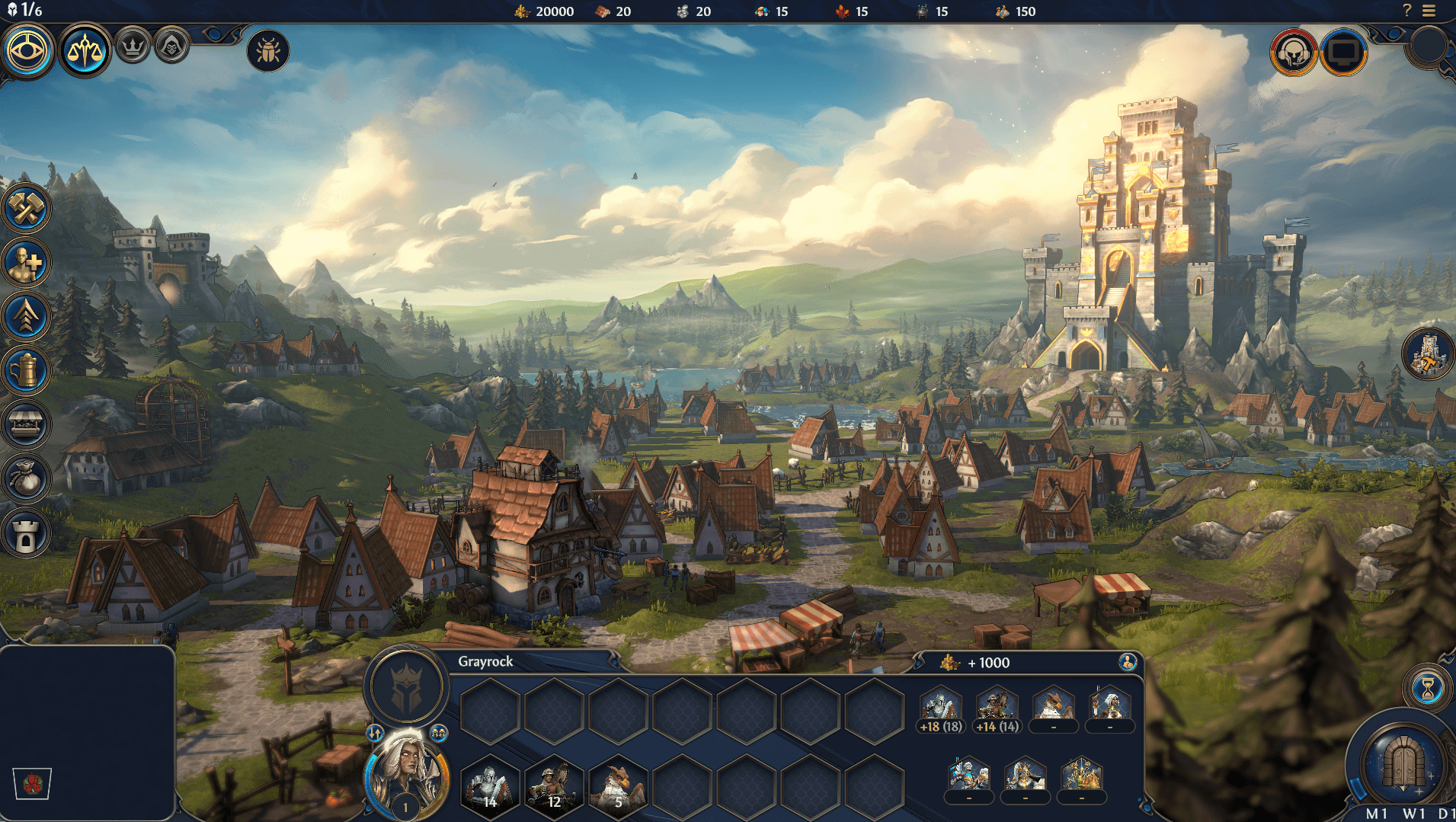
However, here we are, in 2025, at the gates of a new game that tries to bring back that sparkle: Heroes of Might and Magic: Olden Era. The title carries the weight of a huge legacy. It's not just an indie experiment, nor even a nostalgic tribute. It is, at least in the developers' intention, an official return, blessed by Ubisoft, to the universe that taught us what turn-based strategy means. And not just any return, but with the promise that we will relive the beginnings, on the continent of Jadame, where stories came to life before 3D graphics and controversial decisions muddied the waters.
Beyond the legacy
To talk about the legendary franchise inevitably means talking about Heroes III. That title remains, even today, the absolute benchmark of the genre, the game that perfected the formula. And yet, you can't understand what Olden Era means without also looking at its less fortunate successors.
Heroes IV was an experiment. It risked enormously with heroes present directly on the battlefield and with a more dramatic, darker tone. For some, it was too much; for others, a breath of fresh air. It remained a controversial, but important, chapter, because it showed that the series isn't afraid to try new things.
Heroes V brought the transition to 3D and managed, in its own way, to refresh the recipe. It was visually spectacular for its time and solid in gameplay, but perhaps too dependent on the established formula. Still, it was a completely respectable game that kept the flame alive.
Heroes VI continued on exactly the same lines, refining what V had done. It was enjoyable, but it didn't stand out in any particular way. It went with a safe recipe, without that touch of magic to make it shine.
Then came Heroes VII. And here you saw everything that can go wrong when a franchise is rushed and lacking resources. An unfinished game, with a lot of “cut corners”, which left a bitter taste even for the most loyal fans. Instead of marking a new beginning, it seemed more like a confirmation that the magic was lost.
Now comes Olden Era, and the question becomes inevitable: can it be that sequel that doesn't just live off past glory, but builds a future for the series?
The world and factions
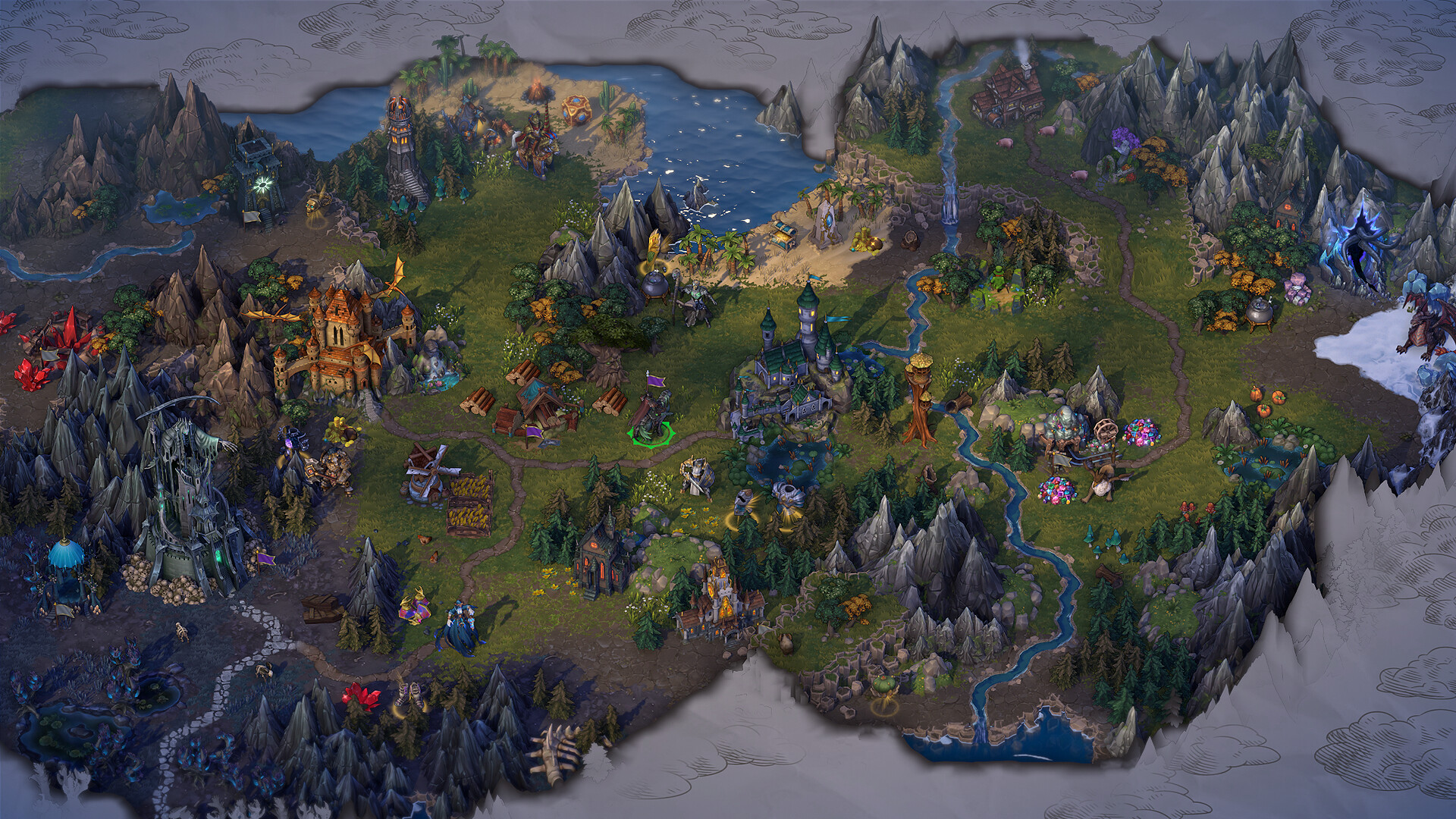
The new Heroes aims to be more than a dose of nostalgia. From the very first screen, the game sends you back to the continent of Jadame, where legends came to life before being buried under waves of 3D and ill-advised decisions. The choice is no accident: Jadame is fertile ground where you can write new stories, but with roots deeply embedded in the series' tradition.
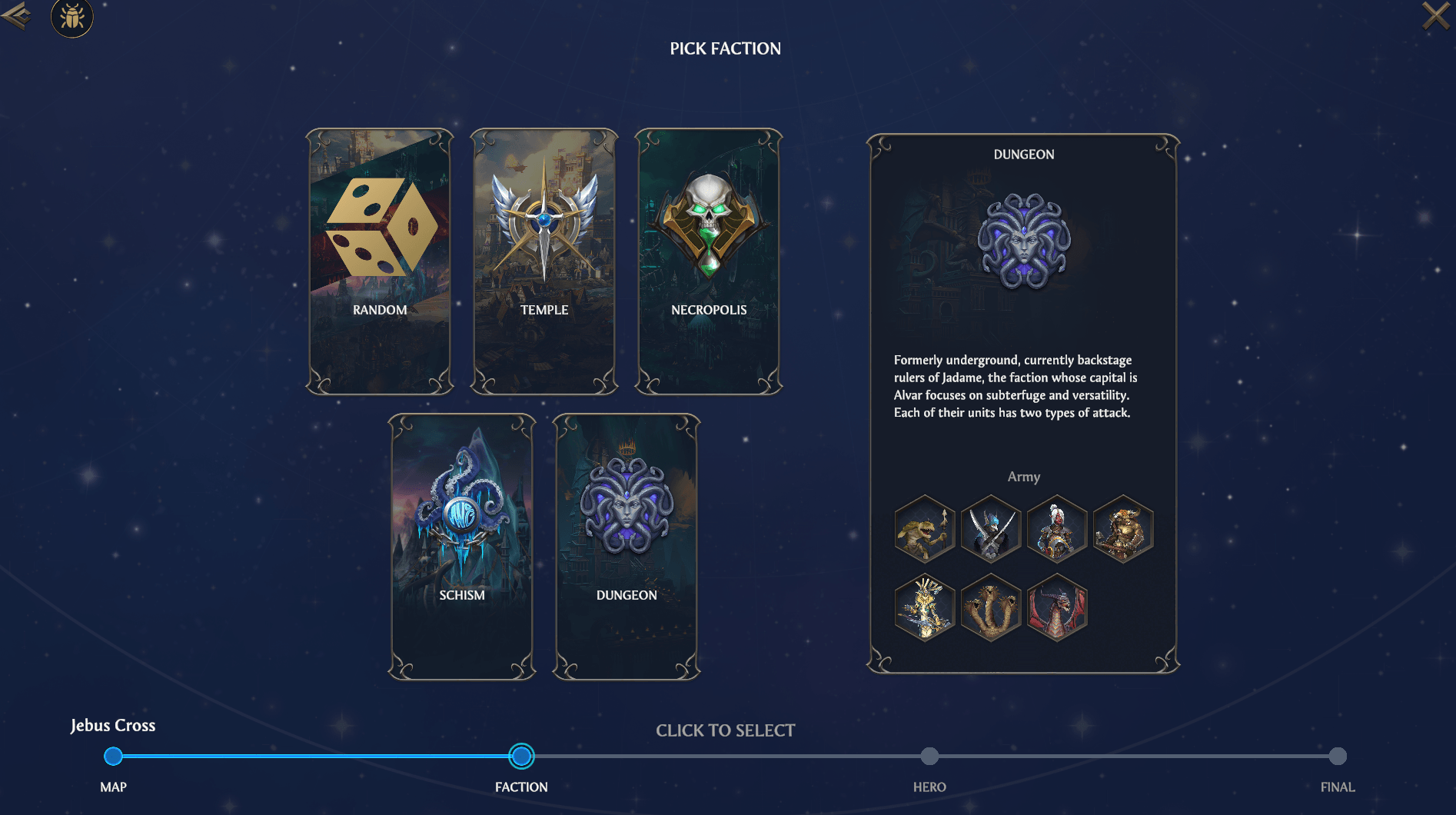
The four factions available in the demo: Temple, Necropolis, Dungeon, and Schism, are not just simple gameplay options, but fragments of identity for the world that Olden Era wants to rebuild. Temple is order and faith, Necropolis is the fascination of death and the power of rebirth, Dungeon is insidious darkness and subterranean strategies, and Schism… is the first courageous attempt to add something truly new to a recipe we know almost by heart. For now, the narrative context is missing; we don't know who these heroes are, what stories connect them to the continent, or why the faction has its place in this picture. Even so, their presence says something about the project's direction: the developers don't just want to copy, but to create.
Perhaps this is the key! Each faction is like a promise: a blank map on which a larger universe is yet to be drawn. Instead of just offering the nostalgia of bygone eras, the developer seems to be saying: “look, we have the classic material, but also a blank page where we can start a new chapter.”
Ye Olden Demo
To talk about a demo as if it were the final product is unfair. And yet, Olden Era manages to show you, even through this provisional build, the direction it wants to go. We have a piece of a puzzle in front of us, not the complete picture, but the pieces are already falling into place in a promising way.
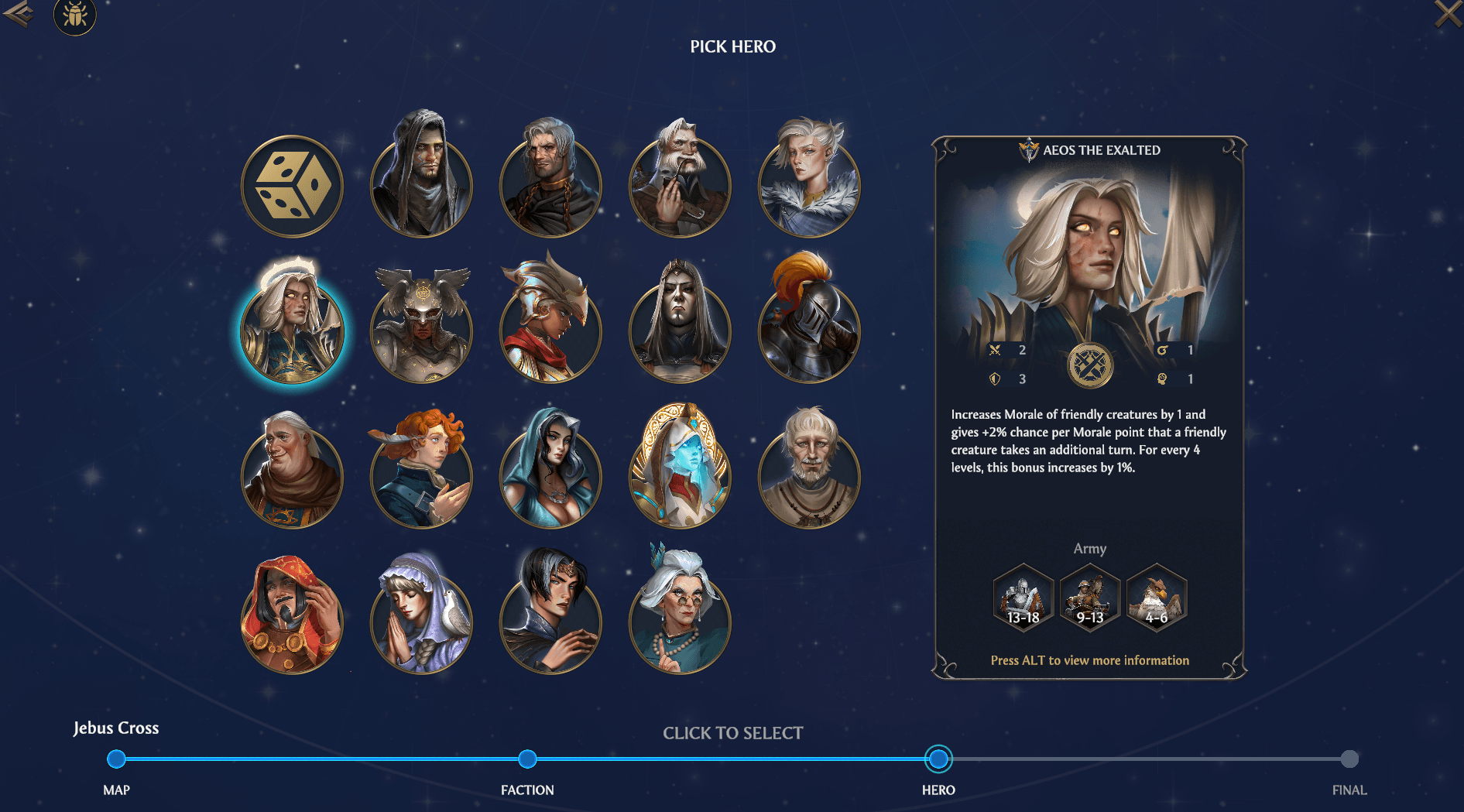
The demo offers three game modes: Classic, where the traditional formula is left to breathe; Single Hero, a tense variant where the entire fate is tied to a single leader; and Arena, designed for those who want quick battles, detached from the economic and logistical context of the map. It's a triad that speaks to the developers' intentions: to preserve the classic essence, but also to offer alternatives for different types of players.
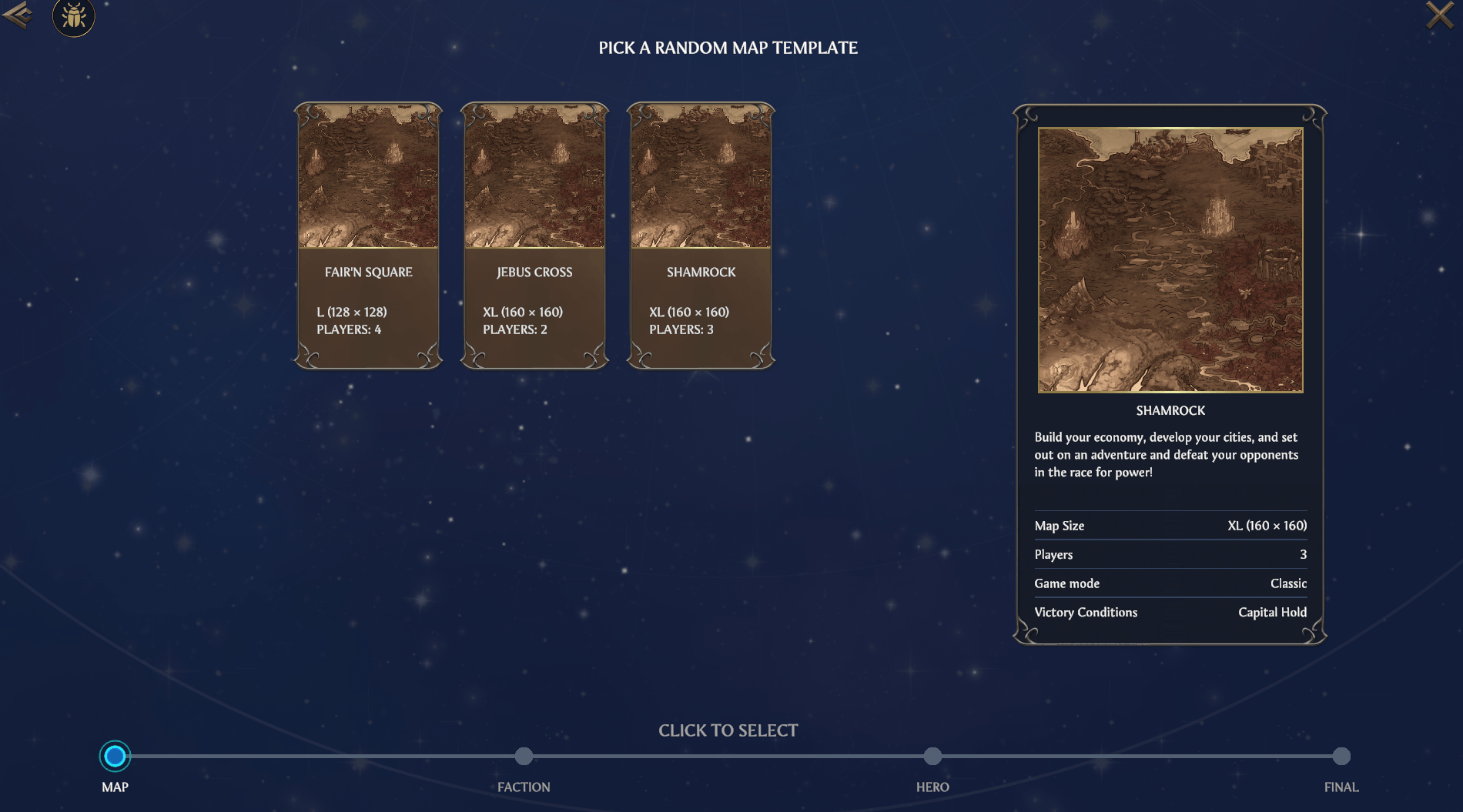
Another notable element is the procedural map system. Instead of fixed scenarios that you'd replay until memorisation, here you get “templates” that guide the algorithm to build new worlds with each run. The result isn't chaotic, but familiar enough to feel like you're playing a Heroes game, yet different enough that you don't feel like you're repeating the same story. It's a subtle step towards replayability, but also an invitation to exploration.
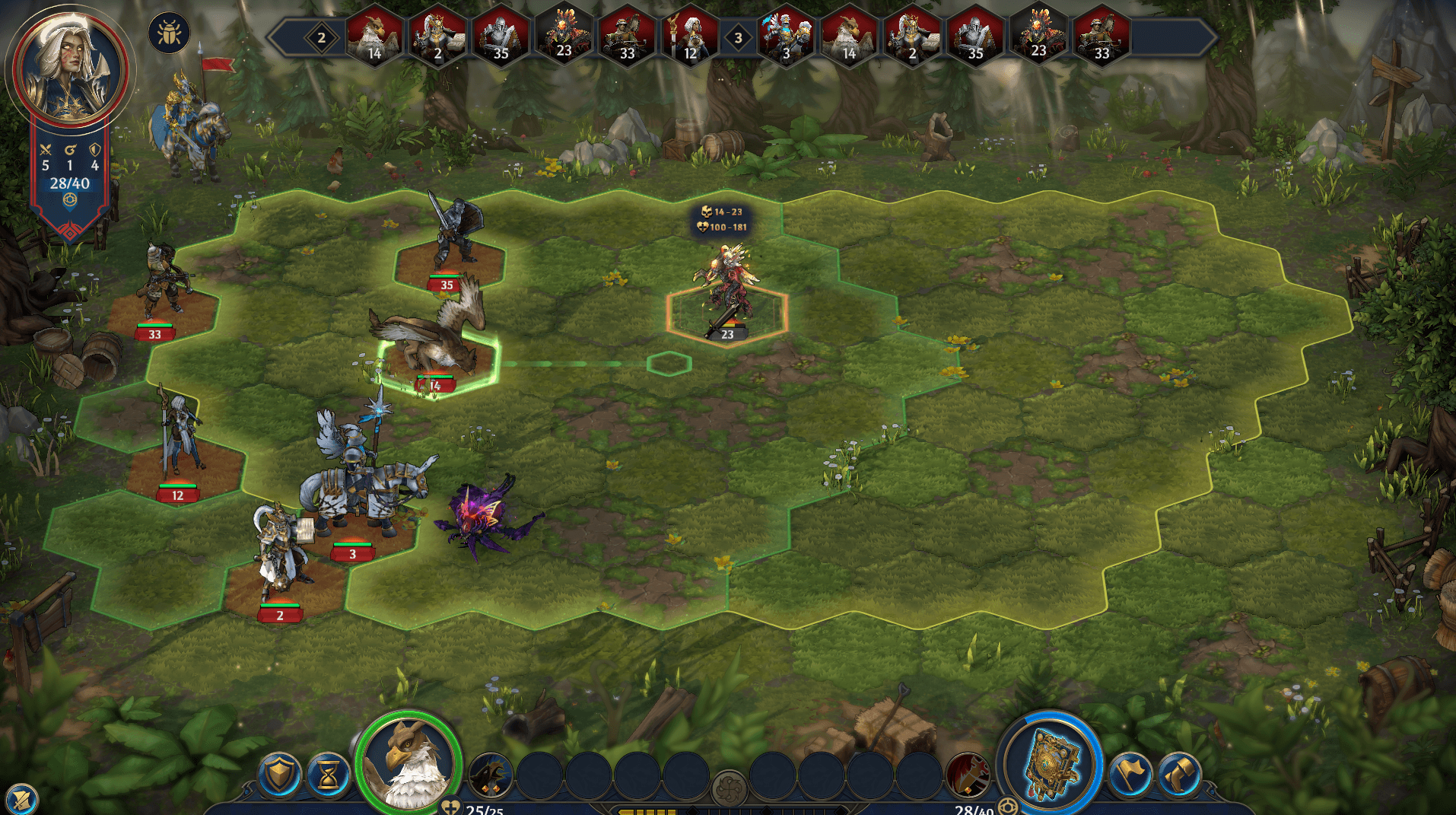
Sure, the build isn't finished. The interface still bears the marks of a construction site, the balance between factions isn't solidified, and many of the more complex mechanics are only sketched out. But even so, the direction is clear. Olden Era isn't trying to reinvent the wheel, but to make it run smoother.
If you look at the project through this lens, you realise that its value lies not in what it offers now, but in what it promises. And it promises something rare: a return to a classic formula, without getting stuck in the museum of nostalgia.
Journal of a shortsighted hero
What game do I have in front of me now? A demo. Not even Early Access, but a carefully cut slice, with four factions and three modes, laid on the table to show us the direction. And yet, in this small slice, something alive pulsates. I know I'm on a construction site: the interface still creaks, the balance between factions is fragile, here and there you feel that everything is unfinished. But despite all this, I always find myself drawn back. I close it, start something else, and an hour later I get the urge to try another turn. If that's not magic, I don't know what is…
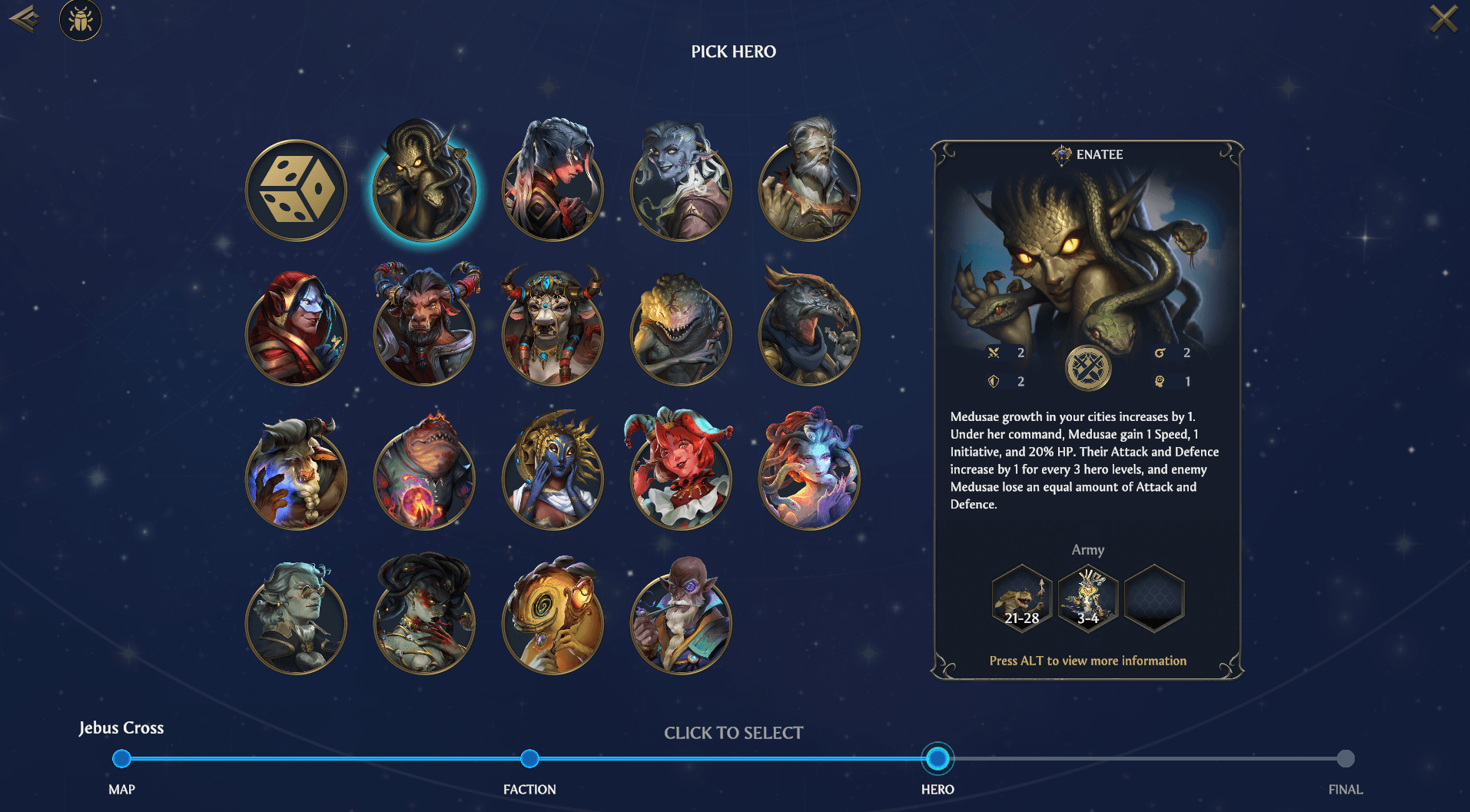
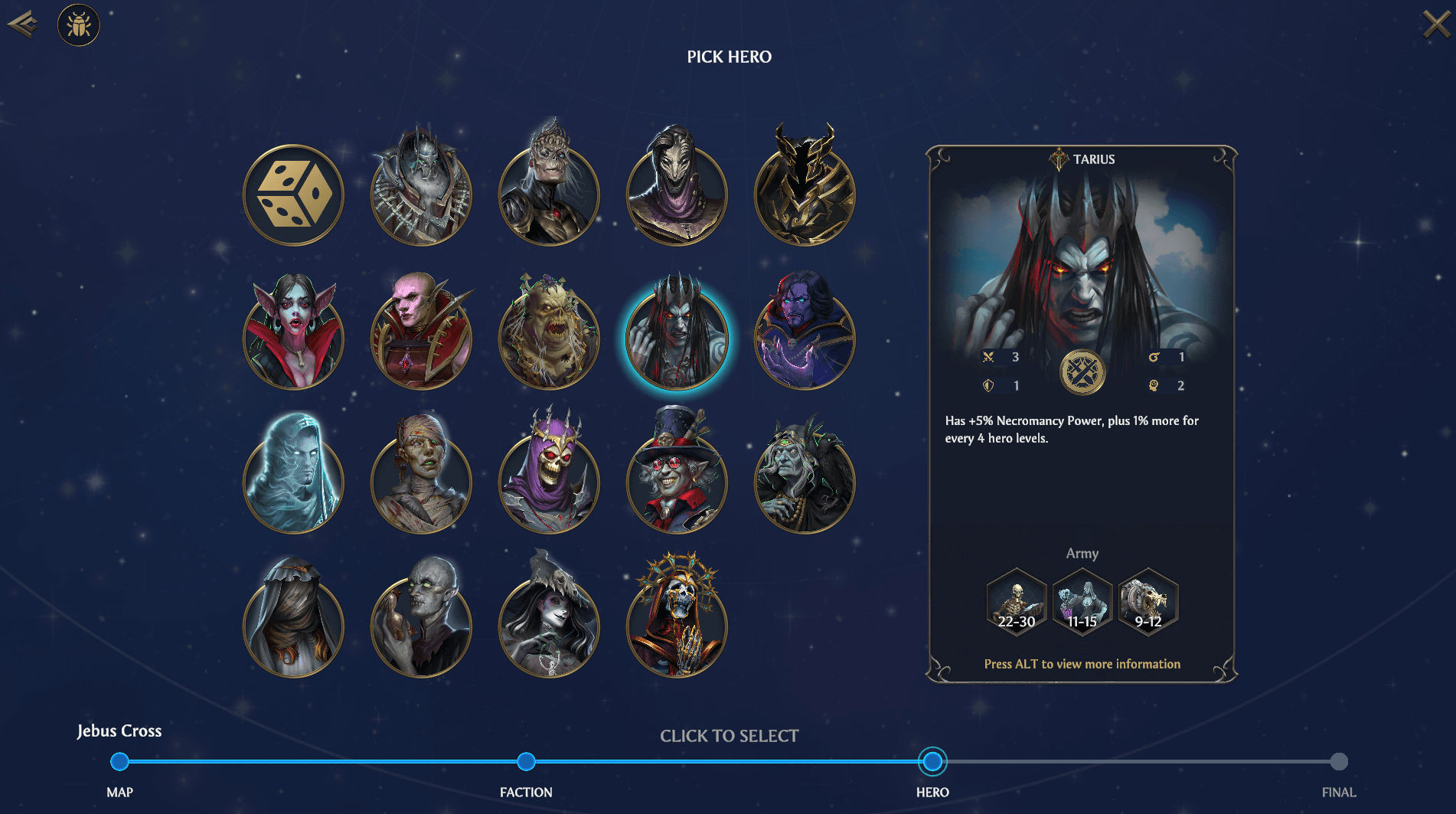
The four factions are the heart of this provisional build. Temple and Dungeon come as old friends, familiar and easily recognisable. Necropolis, however, is where I feel at home. I've always had a weakness for necromancy, for the idea that every defeat of the enemy is just the beginning of a new army for you. In Olden Era, the feeling is the same: implacable, cold, and fascinating. Moreover, there's a special hero among the necromancers directly inspired by Iratus: Lord of the Dead, Unfrozen's previous game. A small homage, but enough to give me the feeling that the developers haven't forgotten their roots.
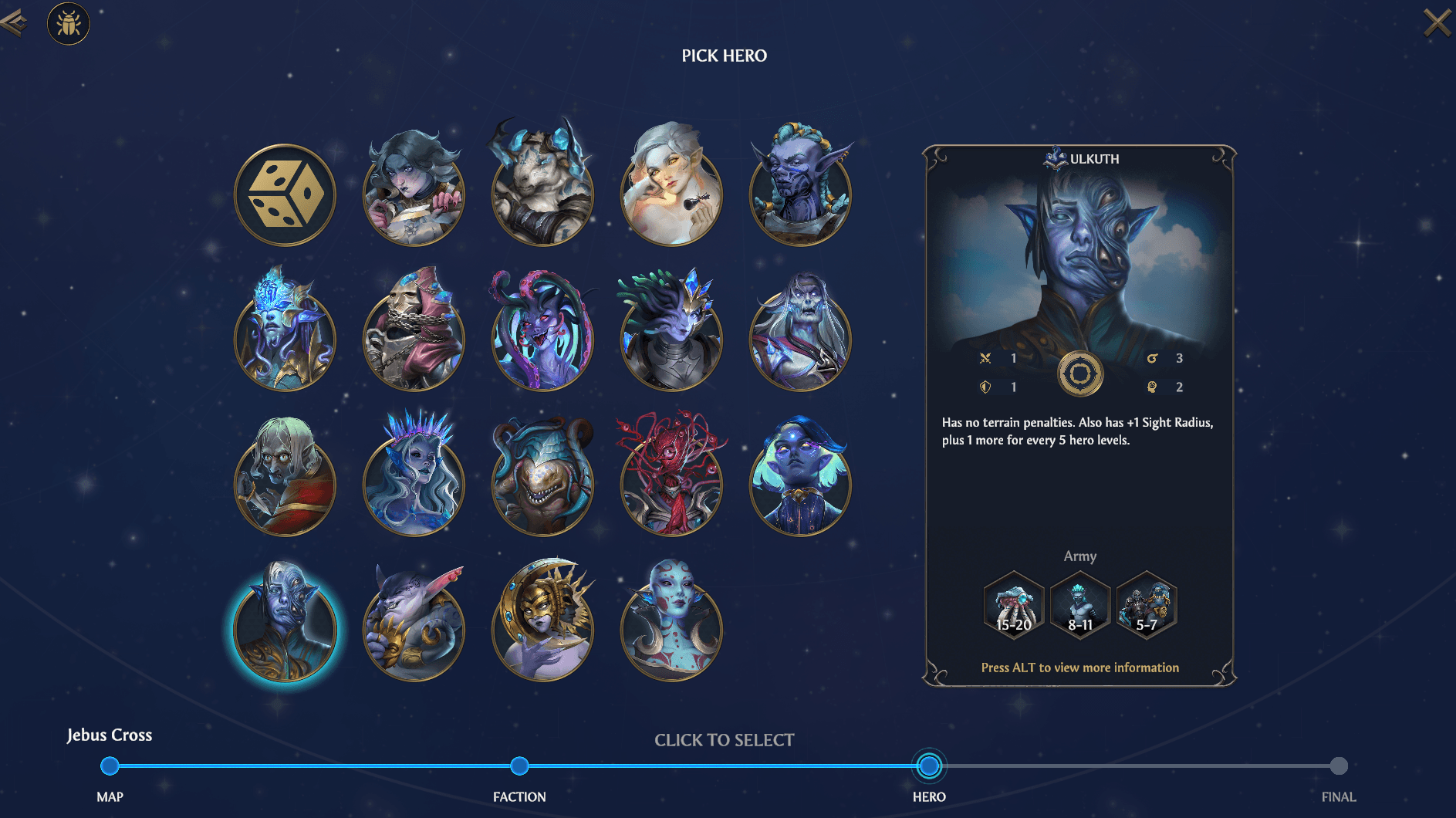
Then there's Schism. A mysterious, new appearance that breaks the routine of established factions. I like their courage, but without a narrative context, without worldbuilding, it currently seems like a puzzle piece placed on the table before you see the box. It piques your curiosity, but remains suspended, like a question to which we still have no answer.
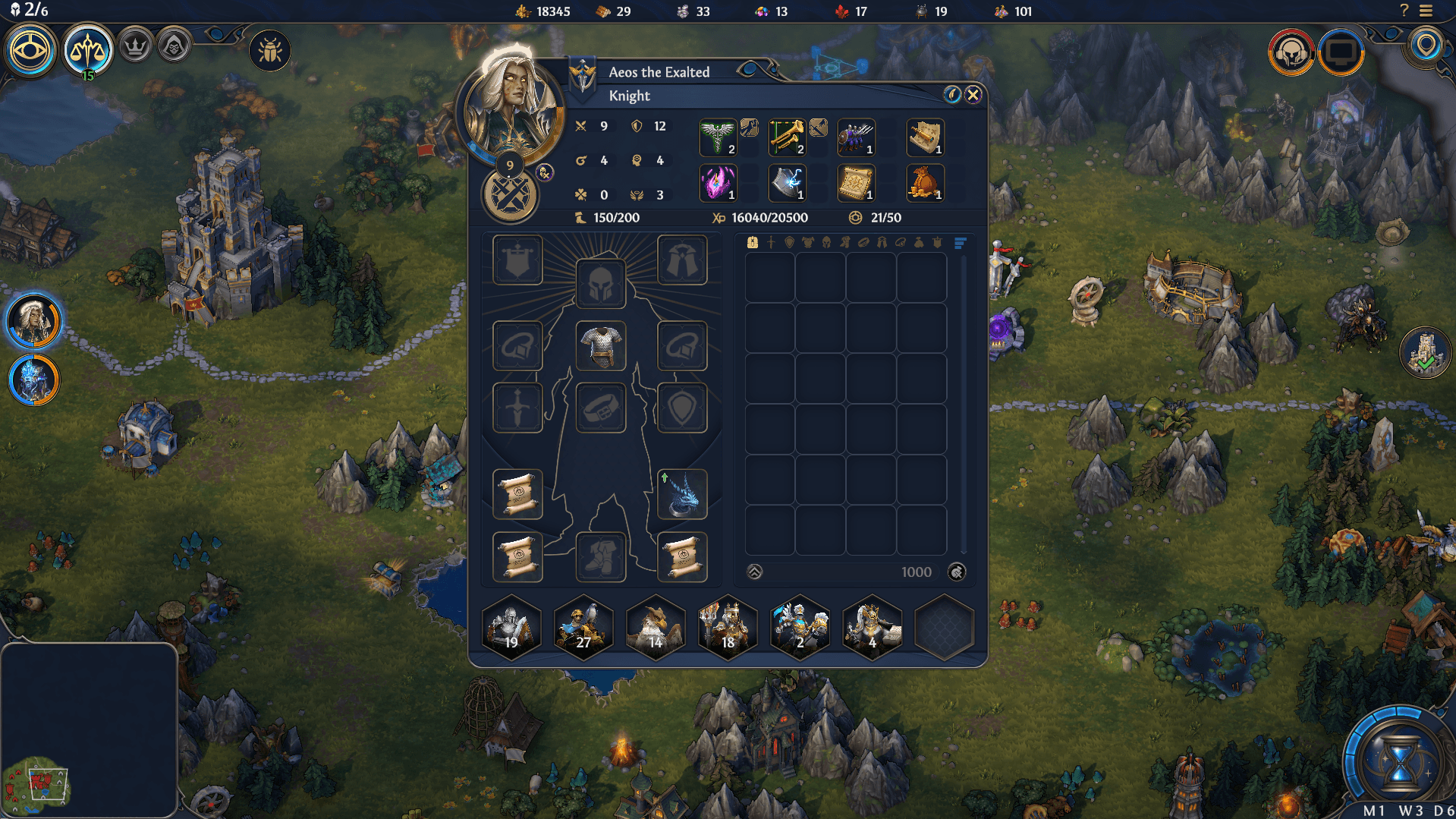
Each faction comes with sixteen heroes to choose from. Sixteen! That means not just variety, but pure replayability. Even Arena Mode, designed for quick confrontations, breathes the same diversity: here you customise your hero from scratch, from skills to artefacts and even the initial army, all randomised. The result? No battle is like another. It's a microcosm of replayability that makes you say: “let's try another combination, another draft, another crazy idea”.
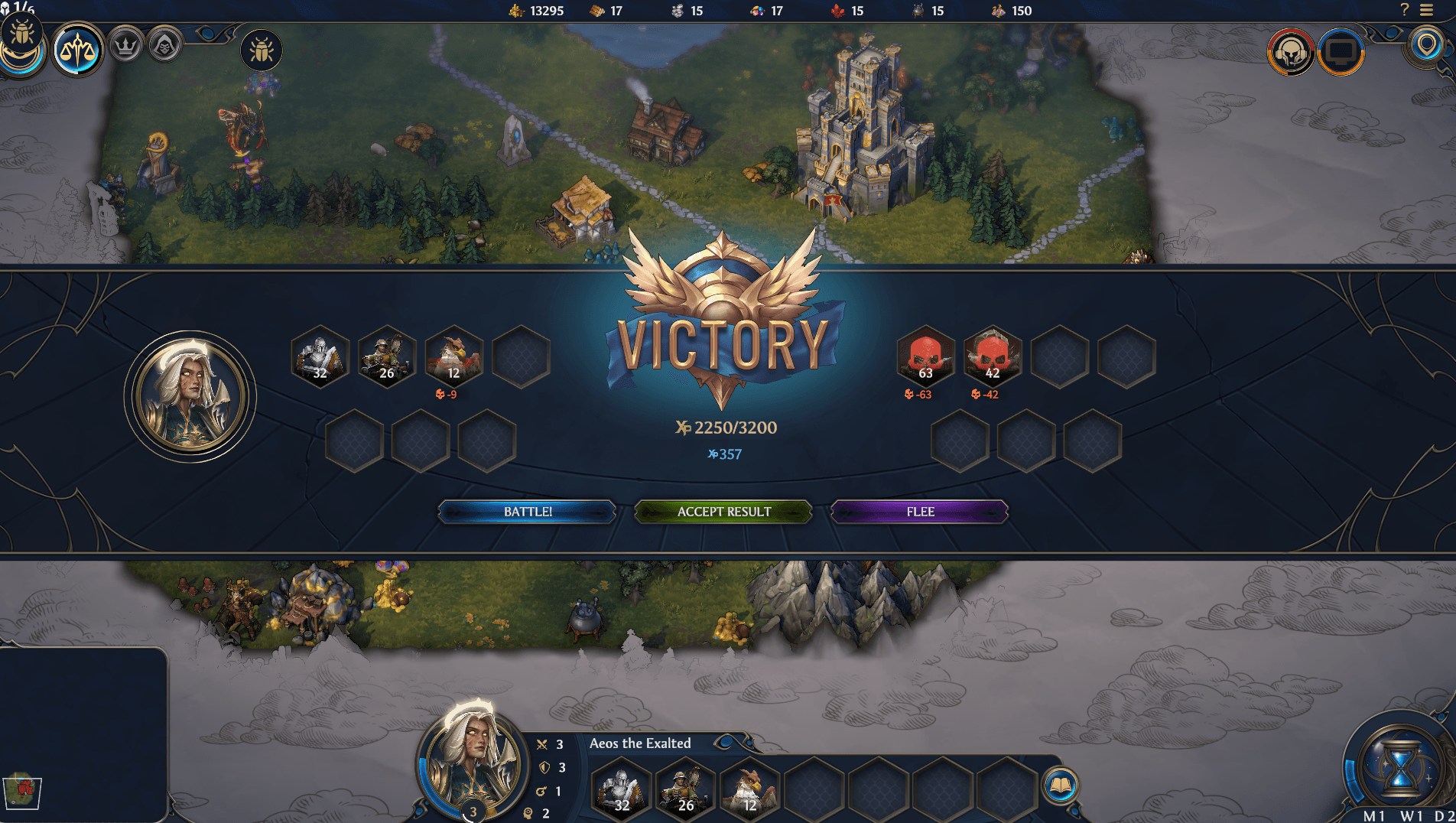
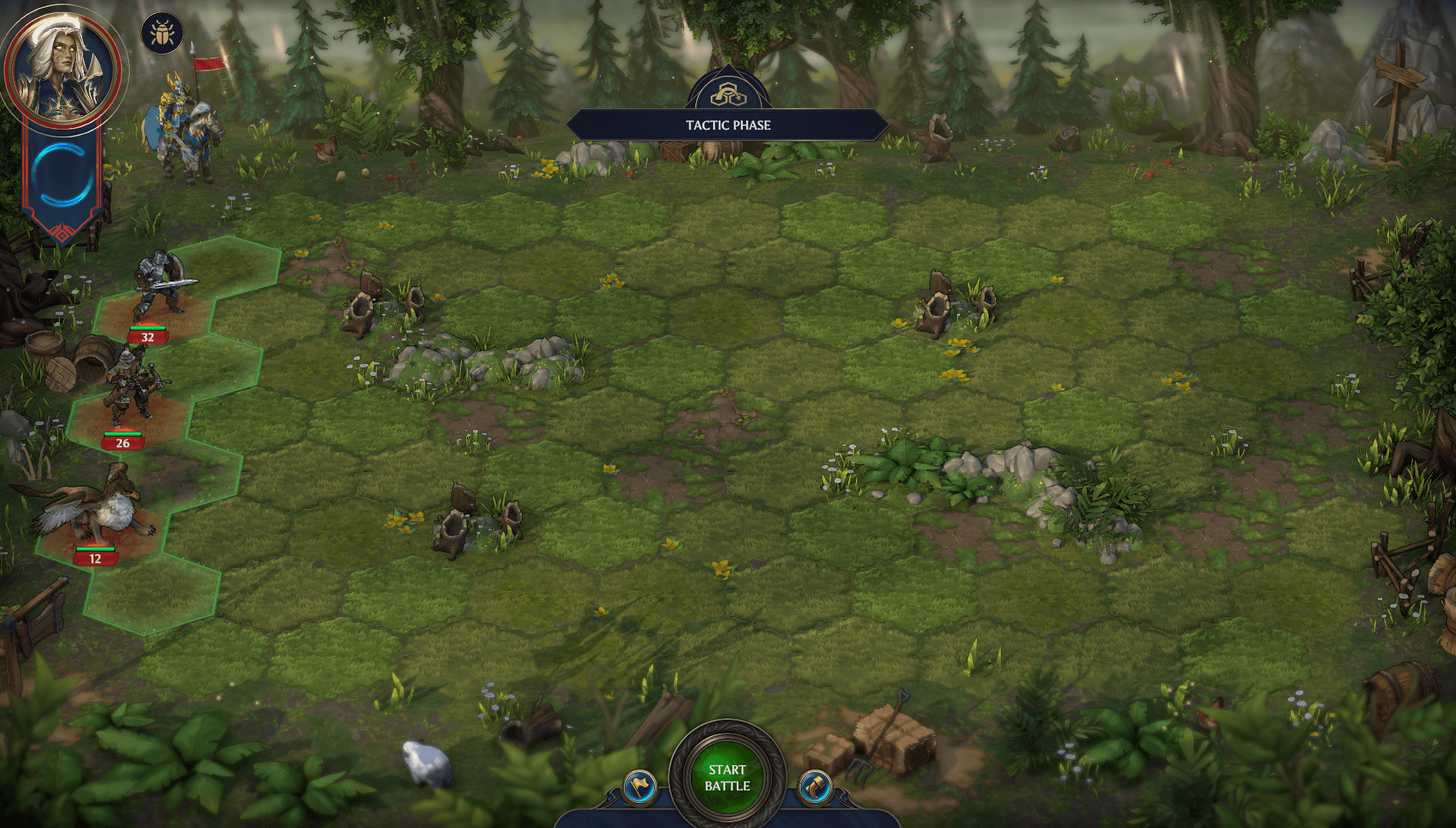
And since we're talking about battles, the title brings a simulation system that surprised me. When you're facing a weak enemy, it's perfect: you press a button and that's it, victory is yours, time saved. But when you see that you're losing units in the simulation, a dilemma arises. Do you enter the battle yourself, spend ten minutes, but save half your army? Or do you accept the quick verdict and move on, with the losses on your back? It's a small psychological game within the big game. And it's precisely these dilemmas, these seemingly trivial moments, that give substance to the experience.
What impresses me most is the sense of discovery. I don't want to go into technical details down to the last digit. The game deserves to be discovered, or rather rediscovered. It's like receiving a Christmas present. You hold it in your hand, but it has no recognisable shape, no clue on the outside. All the mystery only comes when you tear the paper and see what's inside. That's how Olden Era feels: familiar and mysterious at the same time.
And yes, we always compare it to Heroes III. It's inevitable. But after many hours in the company of this demo, I realise that maybe we should let the ghost of Erathia rest. The current title, even in its raw state, is how it should be. It has that magnetism that matters, the rhythm that hooks you, the diversity that promises sleepless nights, and the courage to tell us: “look at me, not just the past.”
The problem of time
There are games that demand reflexes, constant attention, and adrenaline sprints. They are built for today's world, where time is fragmented into short breaks between two notifications. Olden Era does the exact opposite: it asks you to slow down.
In an age where everything must be consumed and forgotten quickly, the beauty of this game is that it refuses to rush things. Each turn is an investment, each decision has echoes hours later. It's not about instant gratification, but about the patience to build something step by step, like a castle built stone by stone.
The essence here isn't just the gameplay, but the philosophy behind it. Heroes has always been an experience of stretched time, of sleepless nights where you'd say “just one more turn and that's it” until the sun came up. The demo evokes this feeling and reintroduces it to a world that has forgotten it. In an industry obsessed with “faster, more, louder,” Olden Era has the courage to say: “slower, deeper, better.”
A half-built castle
Heroes of Might and Magic: Olden Era is like a castle seen from afar, at sunset. The walls are already standing, the towers remind you of Erathia's grand architecture, but if you get closer you see the scaffolding, the gaps, the unpolished stones. It's not yet a fortress where you can retreat and say “that's it, it's complete,” but it already has the silhouette of a promise.
The four factions currently available, along with modes that cover both classic nostalgia and the desire for quick battles, and maps that never cease to offer surprises, demonstrate that Olden Era has a solid foundation. But it's clear there's still a long way to go: the interface needs refinement, the balance needs polishing, and the community has already noticed the rough edges.
Perhaps that's the difference between a tribute and a successor: a tribute merely copies, but a successor knows how to give you reasons to hope. Olden Era isn't yet the perfect sequel, but it has the right values. It's a living organism, shaped by feedback, that acknowledges its roots but refuses to get stuck only in them.
This year, the series celebrates its 30th anniversary. Three decades in which we've seen glory, failed experiments, and silence. On 9 October, in the anniversary stream, Unfrozen promises a surprise related to the project. It might just be a symbolic detail, or it might even be the moment when Early Access becomes a reality – a speculation, perhaps just wishful thinking on my part, but one I embrace with all the hope of an old fan.
What isn't speculation, however, are the numbers: over 800,000 players have already wishlisted Olden Era on Steam. An entire community wants a new Heroes! This says more than any analysis: we're not just talking about nostalgia, but a real desire for an experience that nothing else has managed to replace.
If the developers manage to listen to the community and build further on this foundation, then we might witness not just a nostalgic-symbolic return, but a new beginning. And perhaps, on a not-too-distant night, we will say again, with tired eyes and cold coffee on the desk: “Just one more turn and that's it.”
Three things that won me over 👍🏻
- The classic magnetism: it has that feeling that defines a true Heroes game.
- Diversity and replayability: 4 factions, 16 heroes per faction, varied modes and randomisation that always give the game a different flavour.
- Courage and direction: it doesn't just copy the past, but tries to add something new (Schism, procedural maps, experimental modes).
Three things that keep me on guard 👎🏻
- Lack of narrative context: without clear worldbuilding, some factions remain suspended, without roots.
- Fragile balance: the balance between factions and units is still shaky; it feels like a construction site.
- The ghost of HoMM III: inevitably, the game will be endlessly compared to the title considered perfect. Even if the project has its own identity, this legacy can become both a blessing and a curse.
Verdict
In its current state, the demo for Heroes of Might and Magic: Olden Era is a welcome experience for fans of the series, as well as for new players. It's not finished, it's not perfect, but it is how it should be: alive, captivating, and with that something that makes you come back to it. Due to nostalgia, and the fact that I was pleasantly surprised, I consider what I experienced deserves a 9, but this is my personal opinion. Once it is complete and well-balanced, I expect to see it mentioned alongside the greats of the series, not just a nostalgic copy, but a new classic in its own right.
