
My Experience at The Art of the Game

Recently, I stepped into Hanul Gabroveni, that old Bucharest spot with historic arches and bricks…
…I wasn't there for a simple tourist stroll. I went to The Art of the Game (TAG), the first large-scale cultural exhibition dedicated to video games and related arts, organised by ARCUB. And all I can say is: WOW! (Yes, really, WOW! I've said it before.)
Usually, video games are seen as entertainment, escapism, and wasted time. But TAG made me look at them a little differently: as an artistic language, an educational and social resource, a space where creatives and communities connect. And, besides these more serious reflections, I also felt like a child again in front of a retro console.
What is The Art of the Game?
According to the organisers, The Art of the Game is a curatorial endeavour designed to guide the public towards an interdisciplinary exploration of video games: not just the game as an entertainment product, but the game as an artistic, social, and educational form.
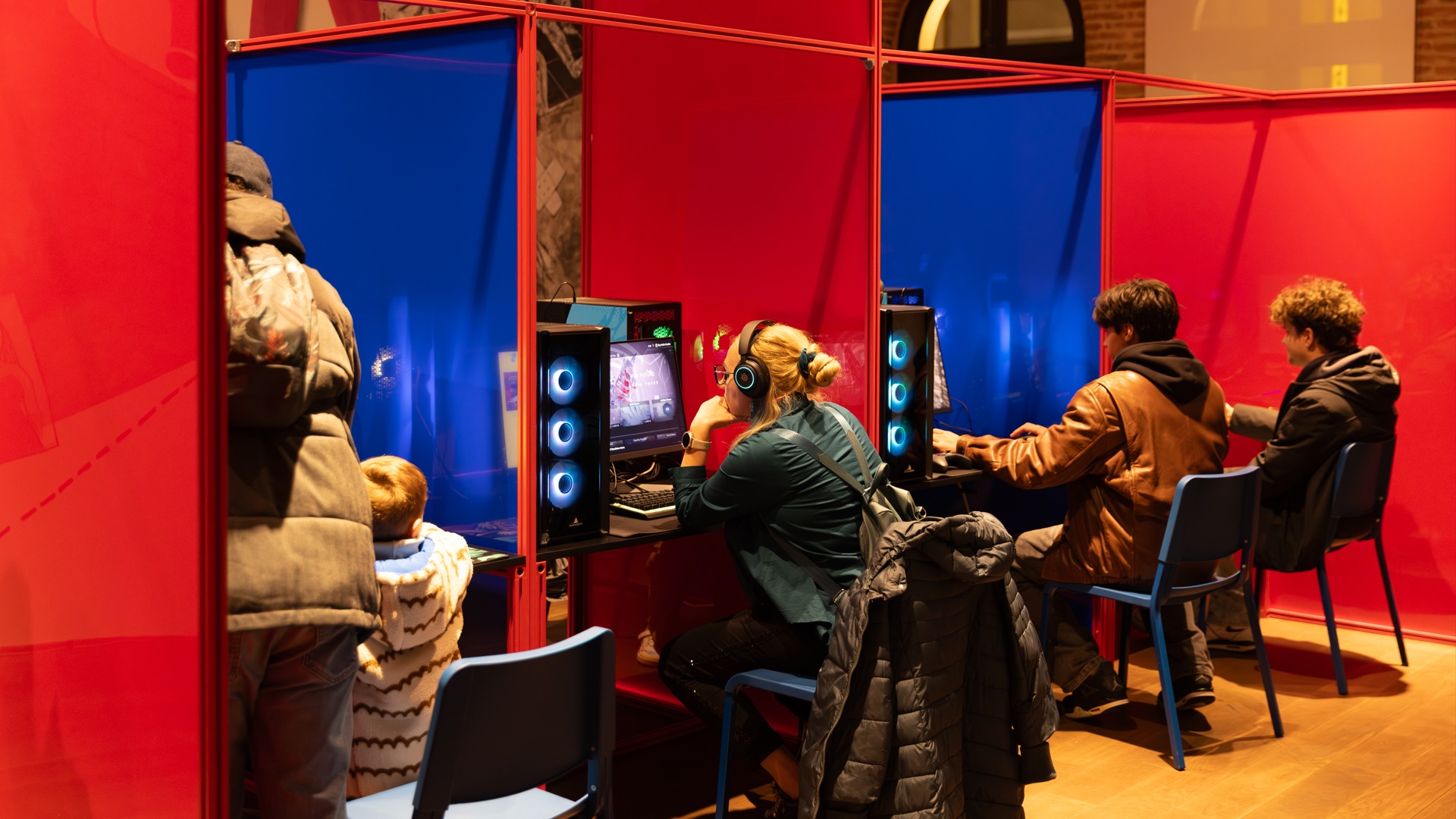
The exhibition can be viewed through the lens of four experiences, each designed to offer a different perspective on the world of games: DISCOVER – PLAY – LEARN – IMMERSE.
If you're already curious, the exhibition is open until 1 March 2026, at ARCUB – Hanul Gabroveni, and visiting hours are: Wednesday-Friday between 12:00 and 21:00, Saturday-Sunday between 11:00 and 21:00.
A tour with joystick twists
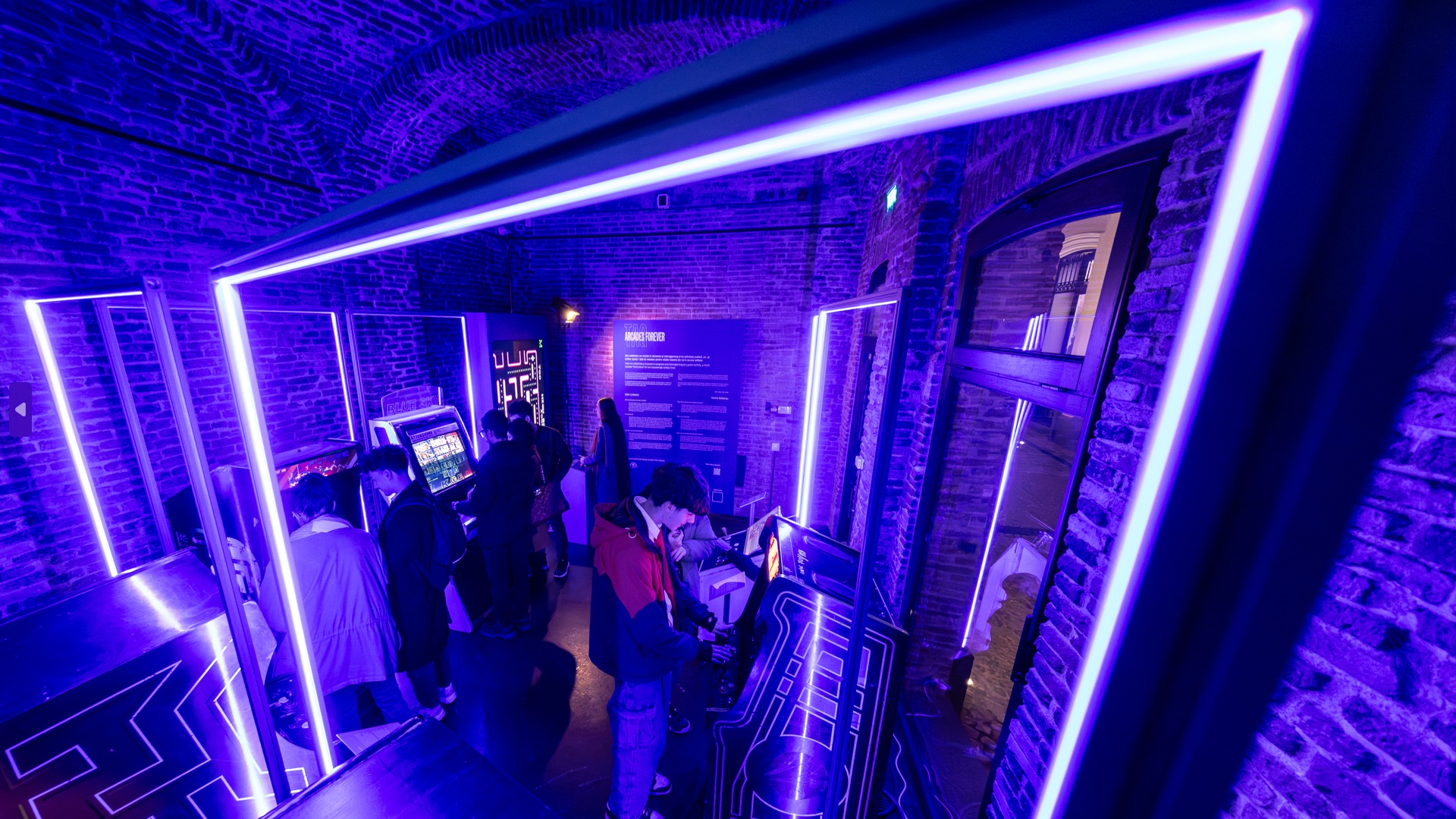
Hanul Gabroveni is a historic space; stone, arches, brick, an “old-school” charm; which contrasts beautifully with modern lights, screens, and digital installations. It's not the sterile white gallery type. It's, rather, a creative workshop temporarily transformed into a cultural gaming hub.
When I entered, I instantly felt the energy: bright areas, panels, installations, consoles you can stop at, but also contemplative corners. It's clear the organisers wanted to create a lively space, not a cold museum.
Sections in action
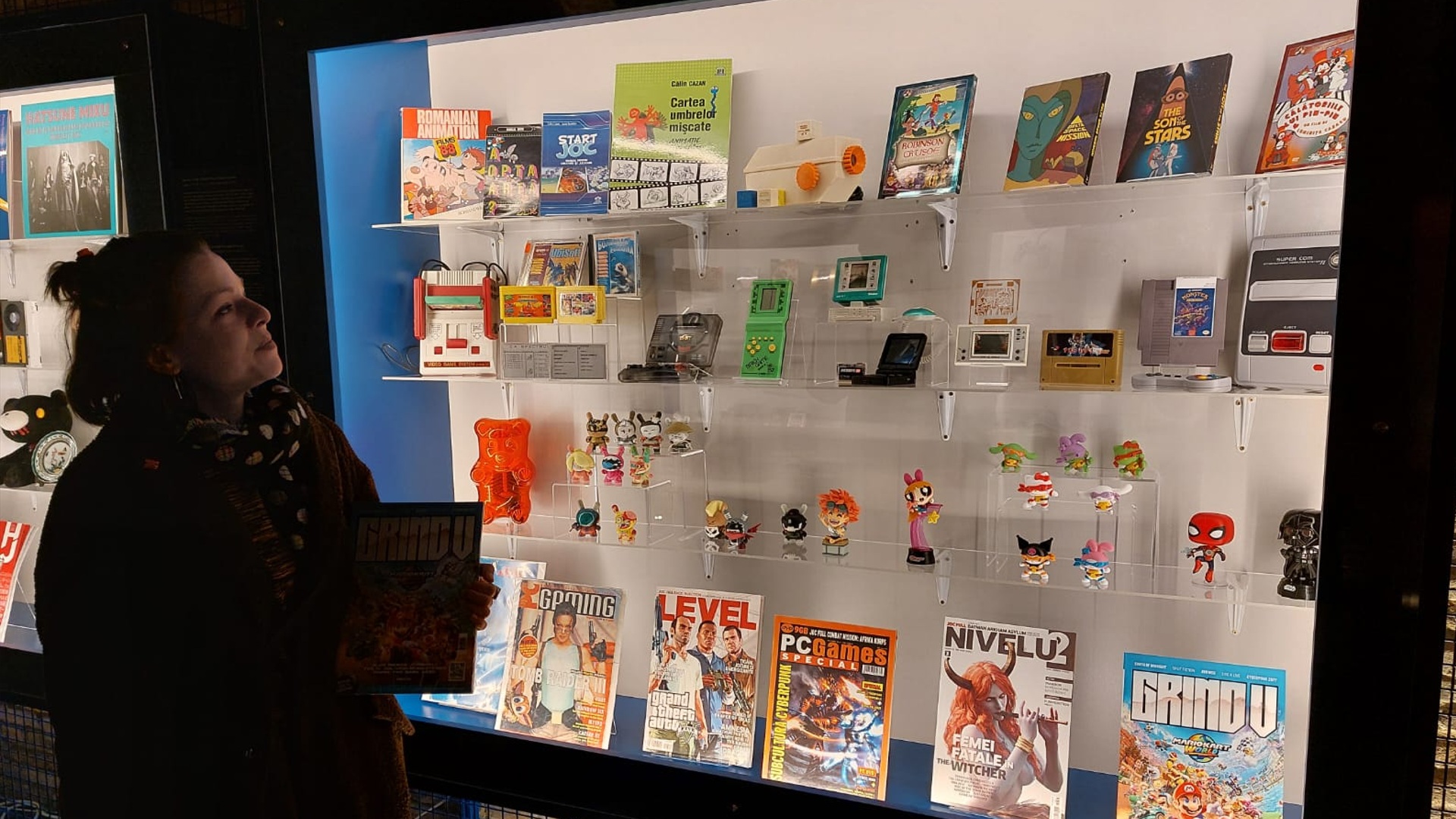
At DISCOVER, I lingered in the frame of illustrations and comic books, admiring how much game art has evolved. It's not just pixelated images; these are modern visions, concept art, and illustrations that could easily hang in “classic” art galleries.
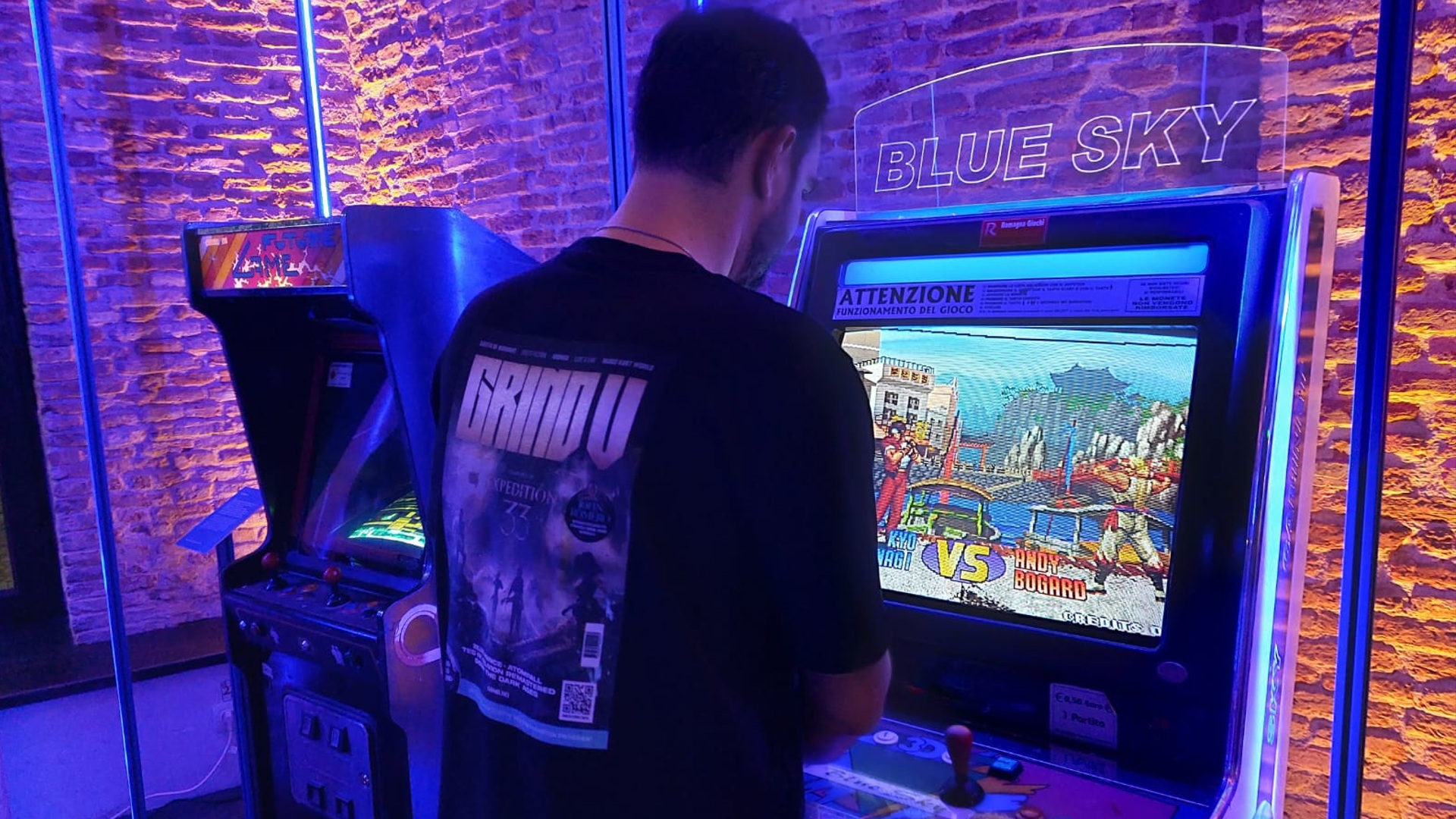
In the PLAY area, I played. Yes, I succumbed to temptation. The retro consoles teleported me back to childhood: classic games, joysticks, and that “who's going to win?” moment. Then, more recent indie games surprised me with their creativity, story, and design, showing that gaming isn't just for “gamers,” but for anyone who wants to experience it.
The LEARN section was one of my favourites: explanatory posters, concept art sketches, explanations about sound design, and how interactive worlds are built. Here, you don't just look, you learn. I found it fascinating, for example, to discover “which parts of the brain” the development team works with when creating a game.
IMMERSE is probably the “wow” part in superlative: experimental VR projects and audio-visual installations that make you feel “in the game,” not just a spectator. Here I explored a space that resembled a portal: lights, sounds, mirrors, all combined to stimulate your senses.
Memorable moments and small revelations
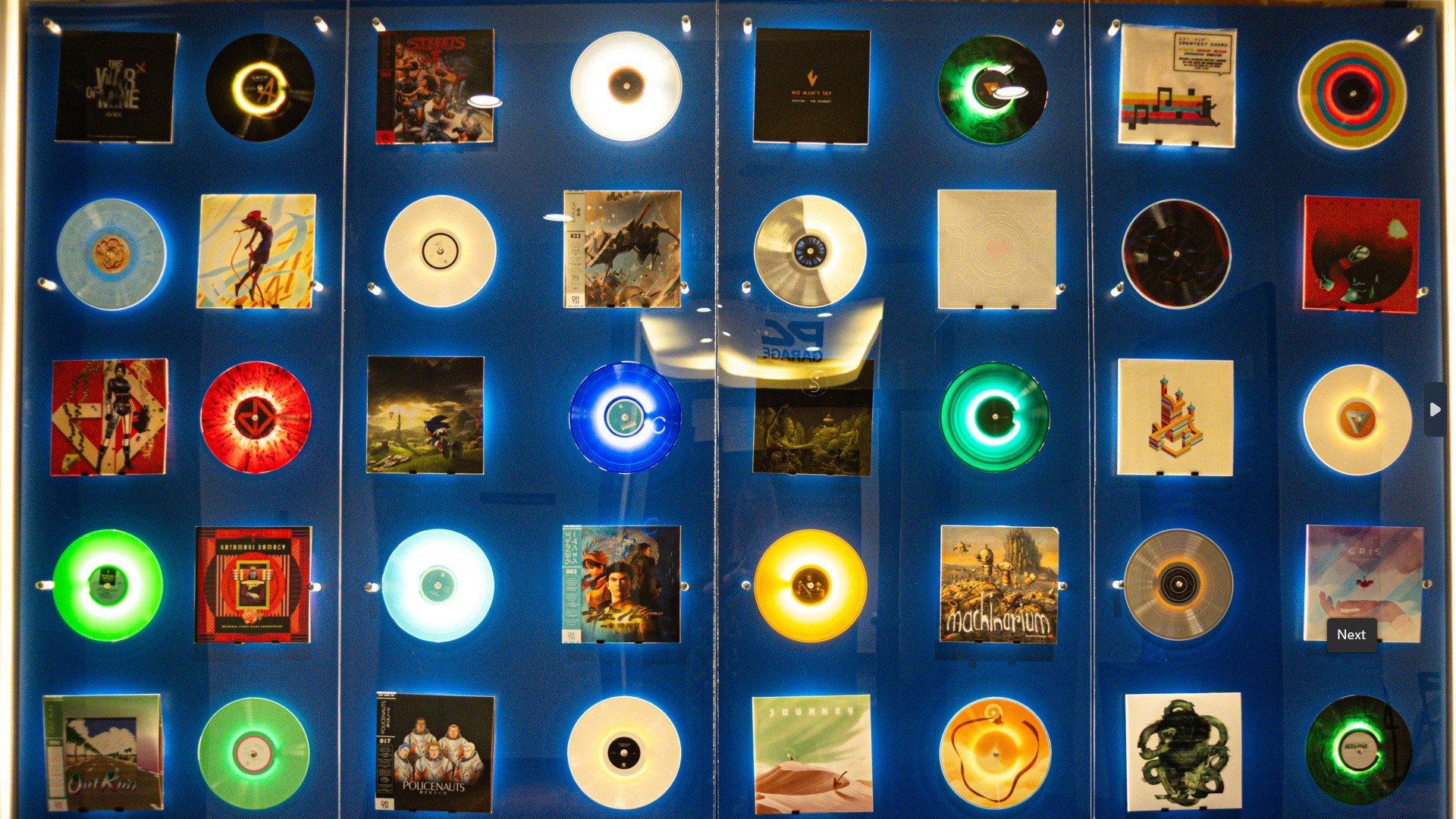
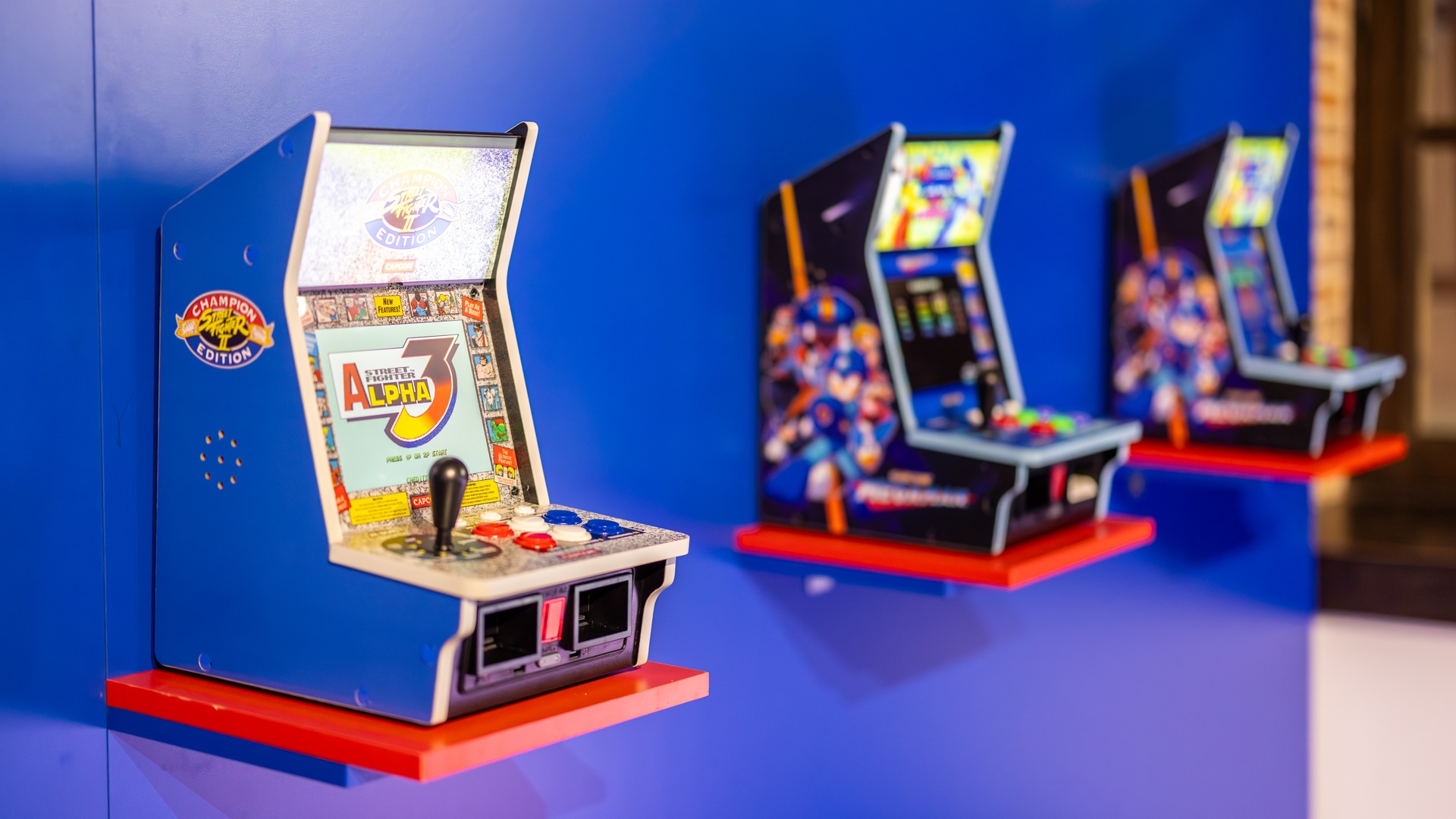
I stumbled upon a corner with vinyl records. Yes, vinyl records! Part of the Otaku Collection (20 original records) caught my eye. It's a brilliant way to link classical music to gaming, through the culture of nostalgia. In another corner, a giant Miss PAC-MAN game, celebrating 45 years since the original's release, made me smile nostalgically and feel a little guilty that games aren't just a “waste of time,” but part of history.
The VR experience captivated me. It was a strange and beautiful sensation: when you connect to the system, you're no longer yourself in Hanul Gabroveni, but an avatar in a world created by others. I found it magical and a little intimidating, I admit.
Conversation with Elvira Lupșa: the curator behind the TAG concept
I had the honour of speaking with Elvira Lupșa, the exhibition's curator (and not just a “curator,” but a kind of cultural architect for this project). I wanted to know what inspired her, what challenges she faced, and what she hopes visitors will take away from the TAG experience.
Here's what Elvira told me in our brief discussion about the project:
GRIND: What can you tell us about yourself in relation to curatorial art, and everything it encompasses?
ELVIRA: About me, about me, what should people know? I think what's relevant is that for the last 15 years I've dedicated myself to trying to create context for things I consider valuable, especially in the visual arts, but not only.
GRIND: How did the idea for “The Art of the Game” exhibition come about, and what was the personal or professional motivation behind this project?
ELVIRA: I conceived this project to open up a broader dialogue about video games, the arts that inspire video games, and the arts that are inspired by video games. The idea for the exhibition came from a desire to explore the spheres where young audiences naturally and organically gather, without being dragged along with a “come on, it's interesting.” And from there I remembered how much I loved video games and how much they've given me over time.
At the same time, I had the opportunity to find in ARCUB and the Centre's Director, Mihaela Păun, a producer eager to organise a cultural event about gaming, and that's how TAG was born.
GRIND: What criteria did you use in selecting the artists and works exhibited, given the increasingly fluid boundary between digital art and video game design? Who was with you on this project?
ELVIRA: A very good question. I approached and discussed with many entities, artists, creators, and I consulted a lot with Alexandru Ciubotariu and Georgiana Toea, and with my assistant on this project: Claudia Ursu. Bogdan Otaku was also among the core creative consultants, to ensure TAG had so much original content. Alexandru and Georgiana were associate co-curators on certain subjects. Alexandru is an artist, Georgiana is a community builder and EDU Manager at AMC, which is a game development studio. So on subjects where I wanted to make sure I covered everything interesting happening in that area, I worked with them.
It was as broad an outreach as possible. There was even an open call for content through RGDA, made for the “Romanian Creators in Video Games” room, conceived with Georgiana. So the criterion was a kind of “map and territory” to try and discover and understand what we could show from what's happening in Romania.
GRIND: How do you see the role of video games as a form of contemporary artistic expression? Can they be considered a legitimate extension of visual art?
ELVIRA: They bring together absolutely all possible art forms, including the performative aspect now present in twitching and streaming. In fact, this exposure of the game as a spectacular moment and the player as a person being watched by the public. So clearly, video games are a contemporary art form.
GRIND: What reactions have you observed from the public, especially from those who may not identify as “gamers,” and how has this dialogue influenced how the exhibition is perceived?
ELVIRA: This would be my ideal audience, those who don't identify as gamers, precisely because I want to show them that gaming, not just gaming as the act of playing, but also video games as cultural totems, are much, much more than what the mass media communicates.
The idea of wasted time, addiction, this toxic psychological aspect, which, unfortunately, is very present, especially in mobile games. I mentioned it by omission, in the sense that no mobile game is included in the exhibition, apart from the Monument Valley series which can now be played on all platforms.
It's also a counter-narrative, another narrative about what video games mean, that they don't just mean toxicity and manipulation to take people's and children's money, that they don't mean a waste of time, and that they aren't just about violent themes and, how can I put it, an implosion of constant stimulation. There are thousands of games now.
It's very important to differentiate between passion and obsession. I mean, it seems to me that, not only for video games, but for anything we do in life, because consumerism leads us to obsession, that's what marketing is. A passion means being able to accept that game X doesn't come out on time and to wonder, perhaps with curiosity, about another game, if you have that play time. To have an openness.
GRIND: Looking to the future, do you think museums and galleries should more actively integrate the video game medium into their curatorial programmes? What would that mean for the Romanian art scene?
ELVIRA: A thousand times, yes. In Romania, a game museum is an idea that has started to circulate in the public space, and I sincerely hope it will materialise. I know there are ambitious initiatives, but here things need to be looked at realistically. A museum means enormous, gigantic costs for location, implementation, collection, preservation costs, meaning once you promise to preserve objects or digital works, it means long-term costs. So you can't have a museum that doesn't have a serious annual budget.
But, indeed, let's start by including video games themselves in permanent collections, as titles, but also video game mechanics as design.
So, not only video games as standalone objects, but also their specific approach that combines collaborative creation, participation mechanics, and particular immersion should be integrated into museums and exhibitions.
Final reflections: what The Art of the Game means to me (and maybe to you)

After the visit, I was left with a few thoughts that go beyond mere joystick button nostalgia. TAG reinforced my conviction that games are not “just” entertainment; they are complex artistic creations. They combine graphics, music, story, design, and technology in a way that has no equivalent in other media.
It's a real learning space. We're not just talking about “educational games,” but about education stemming from the actual process of game development. This can inspire future designers, artists, or programmers.
I found it amazing how the exhibition brings together very different people; not just gamers, but curious parents, educators, artists, and professionals. Thus it became a space for dialogue, not just exhibition.
If TAG is successful, it could pave the way for more such exhibitions. Perhaps even for cultural institutions to take video games more seriously as an art form. (And, honestly, I hope it happens.)
And, yes, a little joke at the end: I thought it would be funny if they gave visitors a real “power-up” on departure, like a badge saying “I survived TAG and recharged my soul with pixels.”
Let's not forget: schedule, tickets, and “bonus levels”
- Schedule: The exhibition is open between 8 November 2025 and 1 March 2026.
- Hours: Wednesday–Friday 12:00–21:00; Saturday–Sunday 11:00–21:00.
- Tickets: Can be purchased via Entertix, on the ARCUB website, or at the ticket office in Hanul Gabroveni.
- Price: Full ticket > 60 lei (weekdays) / 75 lei (weekends);
Children and teenagers (3-17 years) > 40 lei (weekdays) / 55 lei (weekends);
Students/pensioners > 40 lei (weekdays) / 55 lei (weekends);
Group (adults) of min. 4 people > 50 lei/adult – weekdays / 65 lei – weekends;
Group (children 3-18 years) of min. 4 people > 30 lei – weekdays / 45 lei – weekends;
Group (Students, pensioners) > 30 lei – weekdays / 45 lei – weekends. - Partners: The project is organised and produced by Bucharest City Hall through ARCUB, partners: Romanian Game Developers Association (RGDA), Banca Transilvania, Nintendo, and many others.
- Workshops and events: There were concept art workshops (for example, between 6 and 10 October, before opening), where participants worked with professionals and conceived art pieces that were included in the exhibition. Also, TAG EDU events (“Art & Game Dev Days”) were organised with free sessions on game creation, design, production, in November. Every Monday TAG runs a series of giveaways aimed at promoting indie games, as well as gaming-related products.