
Remake?$

First published in GRIND II, pages 72–77.

CONTINUE!
THE GRIND
SCROLL ON!
AND TURN BACK
REMAKE?$ REMAKE?$
Let me anticipate one more reason remakes and remasters are flourishing, even if it's the least plausible of the lot: a lack of better ideas. Why risk putting something new on the table when you can so easily haul something that worked out of the mothballs?
The Silent Hill and Crysis series, or games like Call of Duty: Modern Warfare and Warcraft III, are some of the titles that have landed back on the front pages of games publications after years and years. The reactions were mixed – because although they struck a chord with veteran players, sometimes the High Definition label just isn't enough.
I don't want this to be an outright rant against remakes, but maybe the time has come for studios to put new ideas on the table. Releases like It Takes Two or Cuphead are always waiting round the corner to show us there's still hope for creativity in this industry.
Few titles have genuinely managed to bring back our old enthusiasm, because that was never their aim. I, for one, have grown sceptical, and I'd rather give an original indie game a chance than fall prey once more to the botched projection of a titan... or whatever's left of it.
Enough with the remakes! But do give me a buzz when Max Payne 1 and 2 (re)appear…
In short, people sold nostalgia and hype, not well-made games. And it cost both players and developers. Because we won't be forgetting that swindle any time soon. They played with people's emotions and gave them fresh hope that they'd feel the way they did 20 years ago. It wasn't to be. Maybe our expectations are too high as well, but we've reached the age where we're forgiving too.
When you announce a modern, updated re-release of a game that's iconic for the industry and for the genre it belongs to, expectations run very, VERY high. You can't not deliver. And yet look how many studios keep doing exactly that, while we let them debit our accounts for $40 or $50.
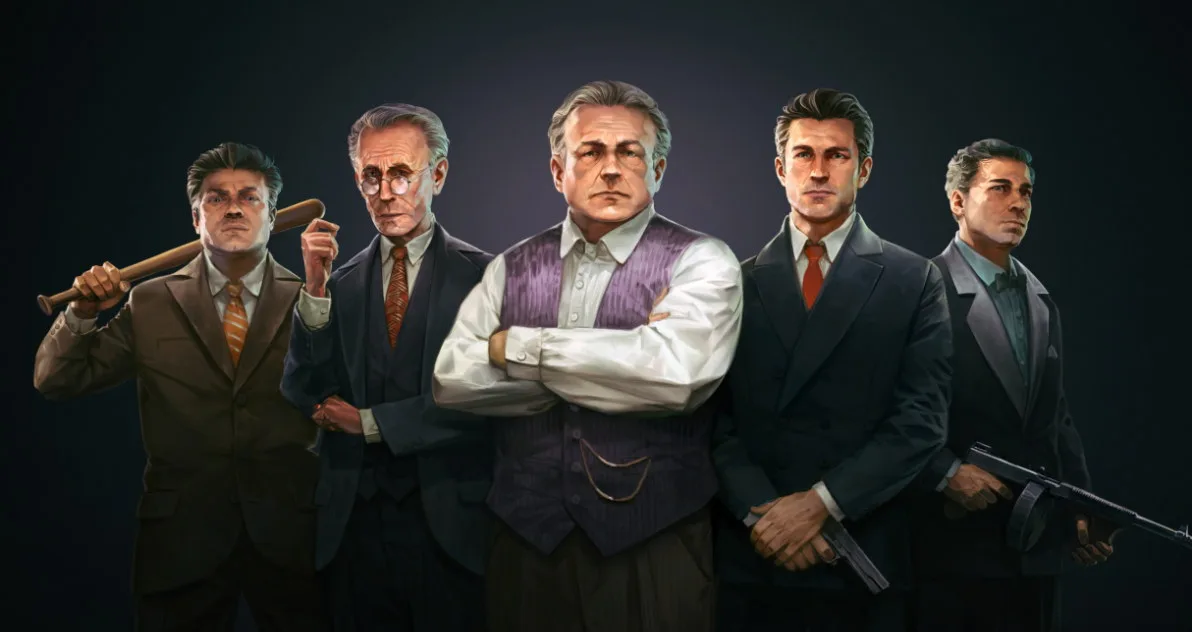
I'm not saying every developer is lazy or acting in bad faith. My all-time favourite game, Mafia 1, got a remake too. Beyond dragging the graphics into the present, they also added some new story and gameplay elements – and I'm scoring the effort with a subjective but firm 10/10. The programmers understood their role perfectly: polish something already very good without breaking it. If more of them grasped that, things might look different.
REMAKE?$ REMAKE?$
A massive remake campaign for games of the 2000s generation would bring two big advantages: it would put the adult, nostalgic audience back in front of a PC or console, and it would pull in younger players looking for an answer to the question 'why is Dad suddenly so much happier about buying me a next-gen console?'
But if we (inevitably) look at the other side of the coin too, very rarely do development studios make this move out of love for the game and its players. Which is where reason #2 comes in: profit. To keep the run of examples going, you surely know that Rockstar Games has already put remasters of GTA III, Vice City and San Andreas on the market. Pardon – we're talking about Grove Street Games, not Rockstar... because the difference is huge. Three games at a Triple-A price (roughly 60 euros) wouldn't necessarily have been the problem, especially since all three are legendary. From the trailers at the end of 2021, I'd have assumed we were getting remakes running on the GTA V engine. But the arithmetic of the player's nostalgic imagination doesn't match the reality that greets you after the double-click: the bugs, the graphics and the models handled more carelessly than a third-grader's artwork (a kid who only had to keep the brush inside the lines, not chase a train on a motorbike) made the launch a disaster. Or, more precisely, one big port. Not only was the attempt a failure that drew some of the most negative reactions going, but gamers posted comparison images left, right and centre and... 2002 has more detail. So the money was taken, the games were delivered, but the expectations and the joy weren't included in the package. They're now trying to put things right with a slew of updates.
If you're a Timothée Chalamet fan, you probably know he's playing the lead in Wonka – a new adaptation of Roald Dahl's novel, due out in 2023. If you're not a fan, you most likely already reckon Johnny Depp was the best Willy Wonka. And you know that without needing to watch the film again. But if you're past your second youth, then those two don't stand a chance against Gene Wilder.
Even if the films focus on different things, they revolve around the same character and the same universe. All the producers are doing is bringing a more or less similar story back to the screen, made for a new generation.
The same thing is happening in video games right now. But if film has an excuse – the cinema industry has been around for roughly 125 years, so producers have a more obvious justification for resurrecting stories already told – the games industry hits the remake button far too often for something with only about five decades behind it. Why? Have they run out of ideas, or are they simply reaching for one of the most powerful feelings there is: nostalgia?
One well-founded reason is the sheer speed at which technology has evolved. I'm a simple man, born in '94 in a small provincial town. Which means I grew up with Age of Empires II, Heroes of Might & Magic 3, the GTA Trilogy (because it has a name now), Mafia 1 and NFS Underground 1 and 2. Those were the ones that 'killed it' outside the block of flats. And we were literally as delighted as kids on CRT monitors and 60GB HDDs spinning slowly enough that we'd be called in for dinner before the game had loaded. Back then we didn't need more, and honestly, there wasn't much more to be had. Years later, we can't help wondering what Tommy Vercetti would look like in 4K, or how a Mazda RX-8 would handle at a 240Hz refresh rate.
REMAKE?$ REMAKE?$
the panic button or
$
profit brother edition Luca Costea