
Saros – Review

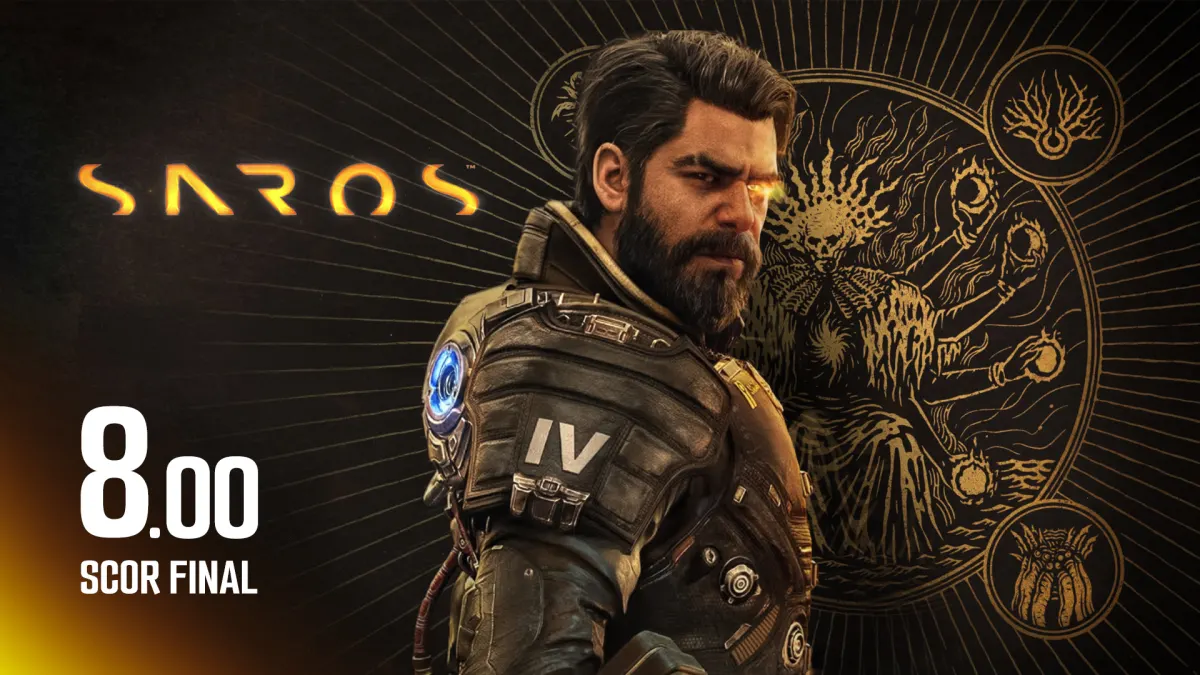
The Arrogance of the King in Yellow
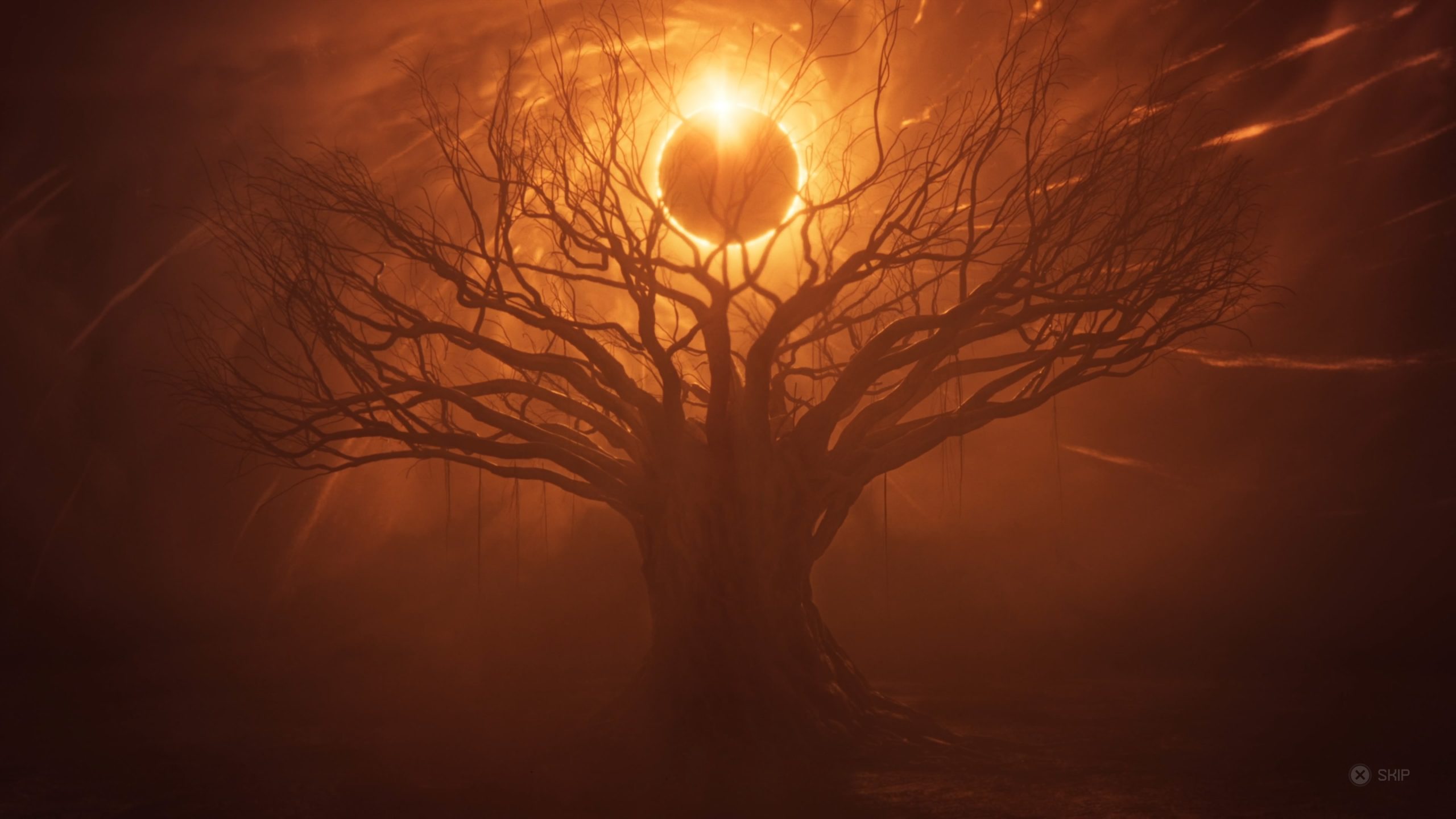
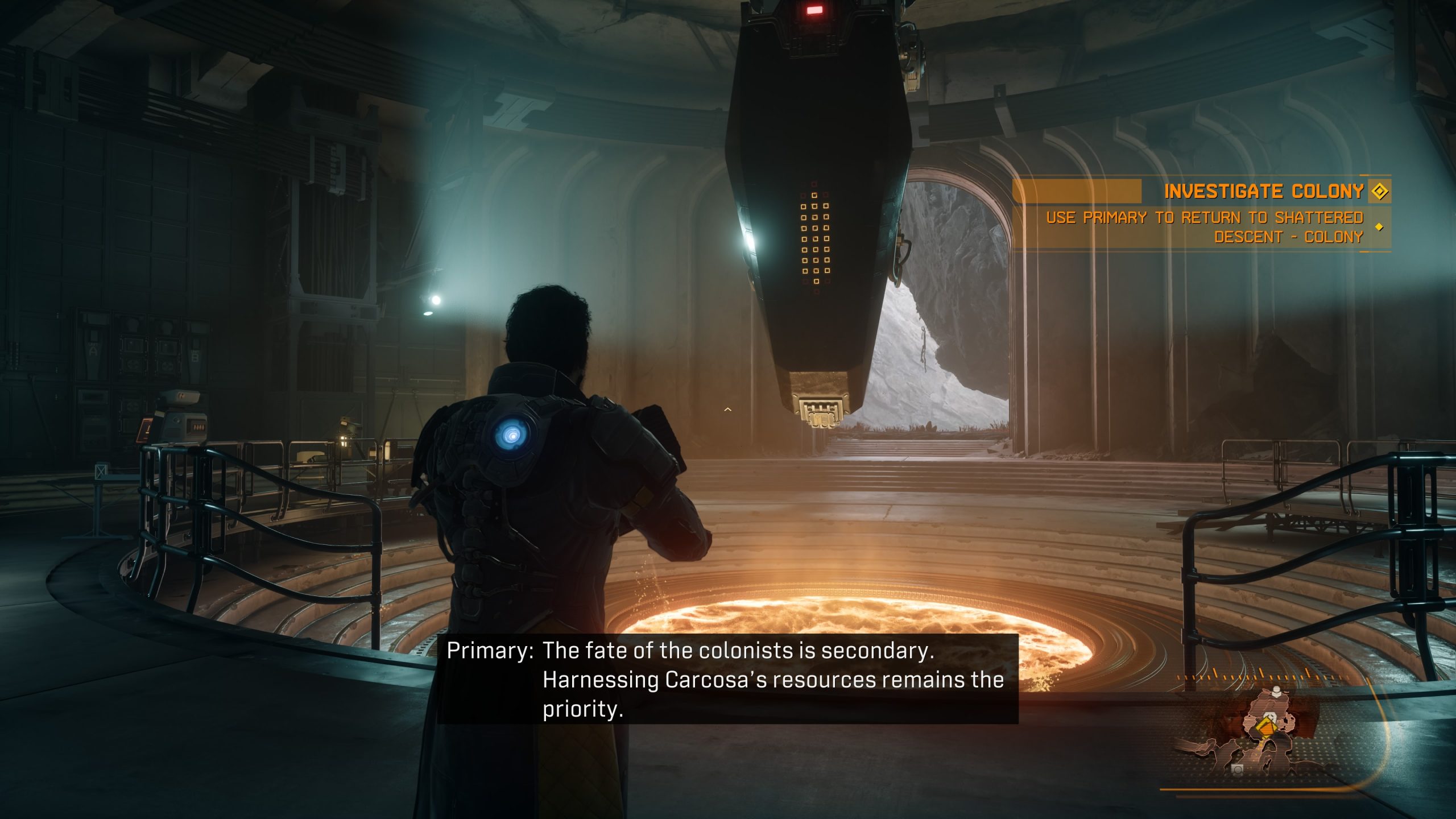
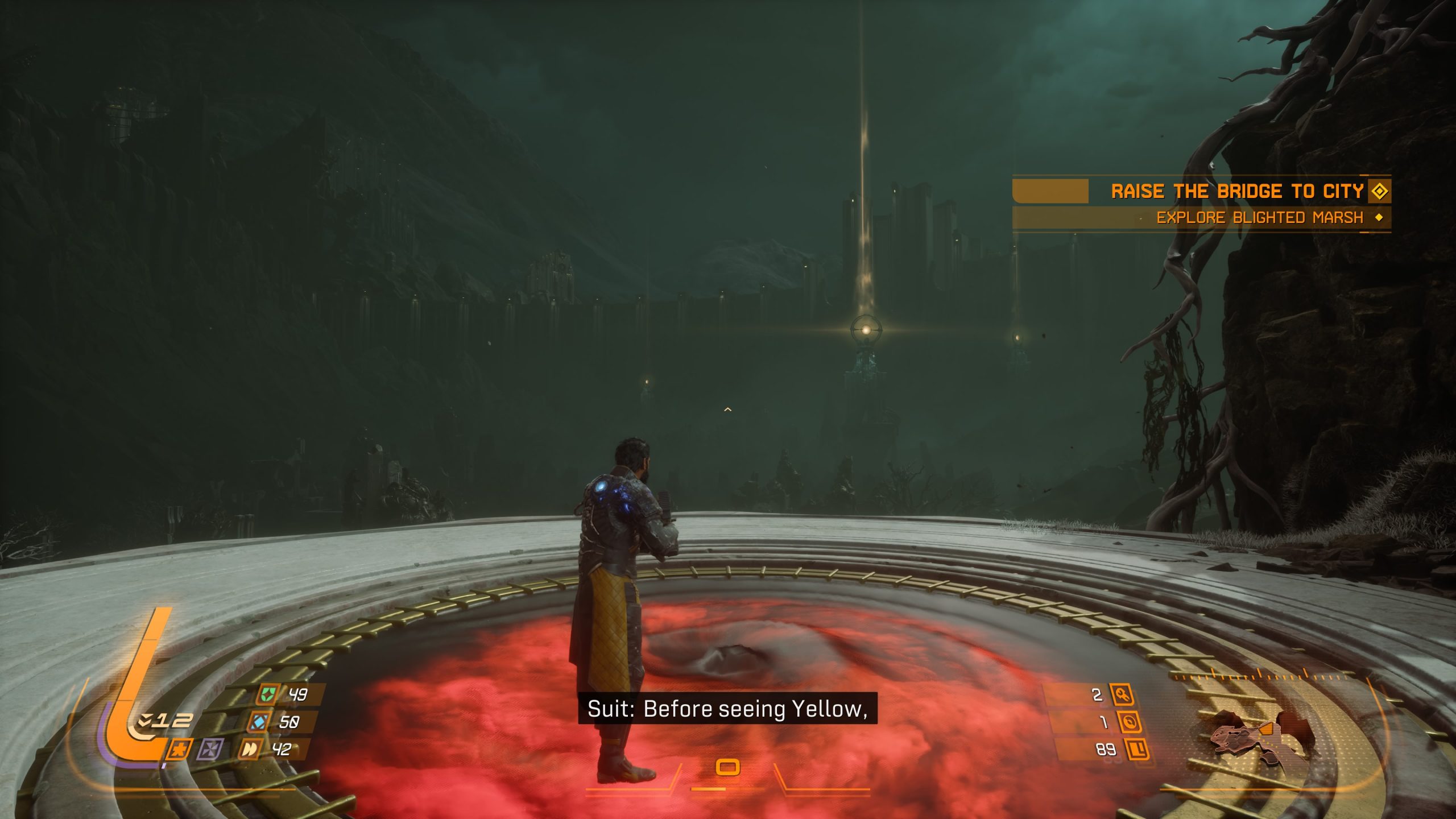
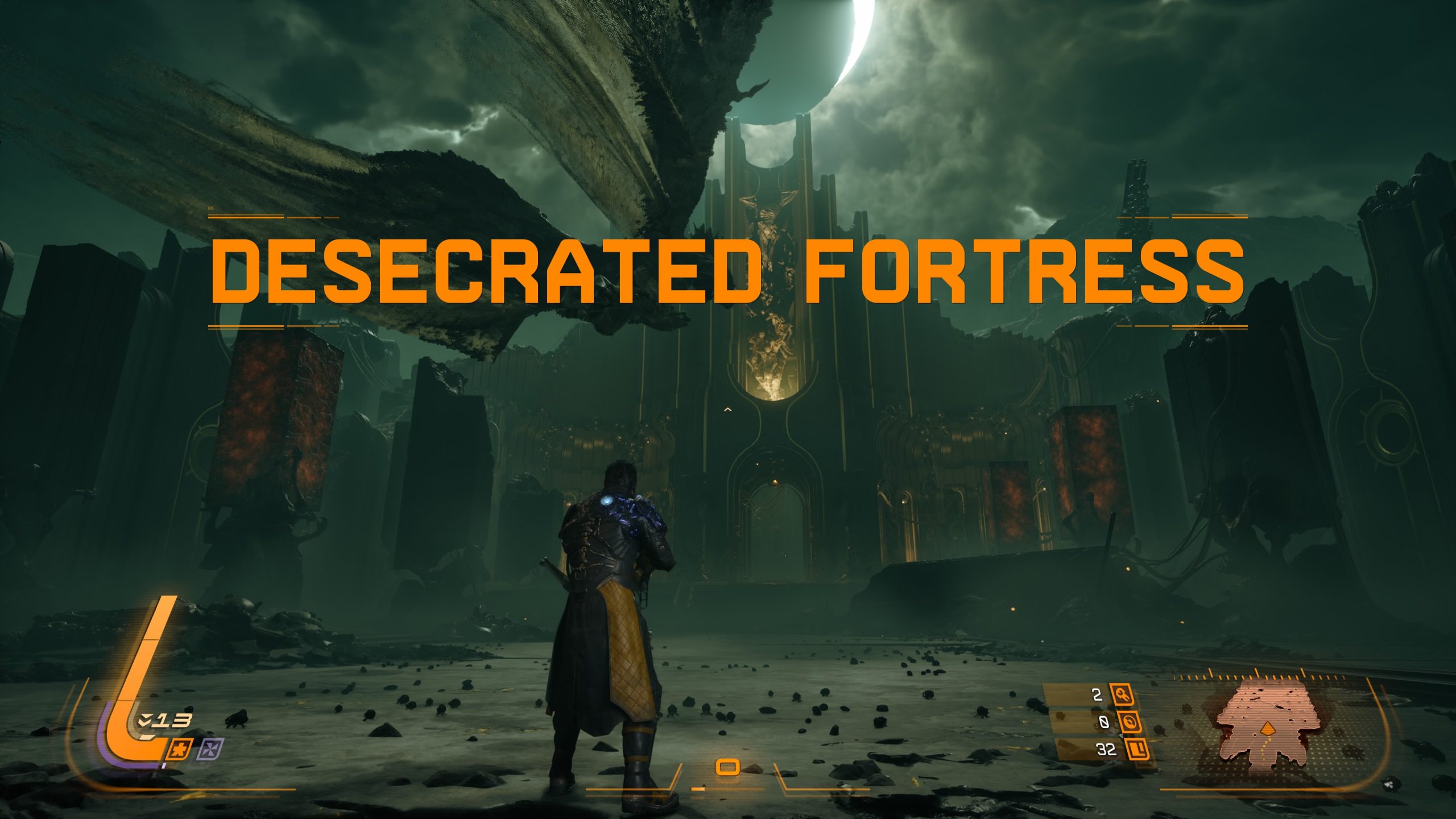
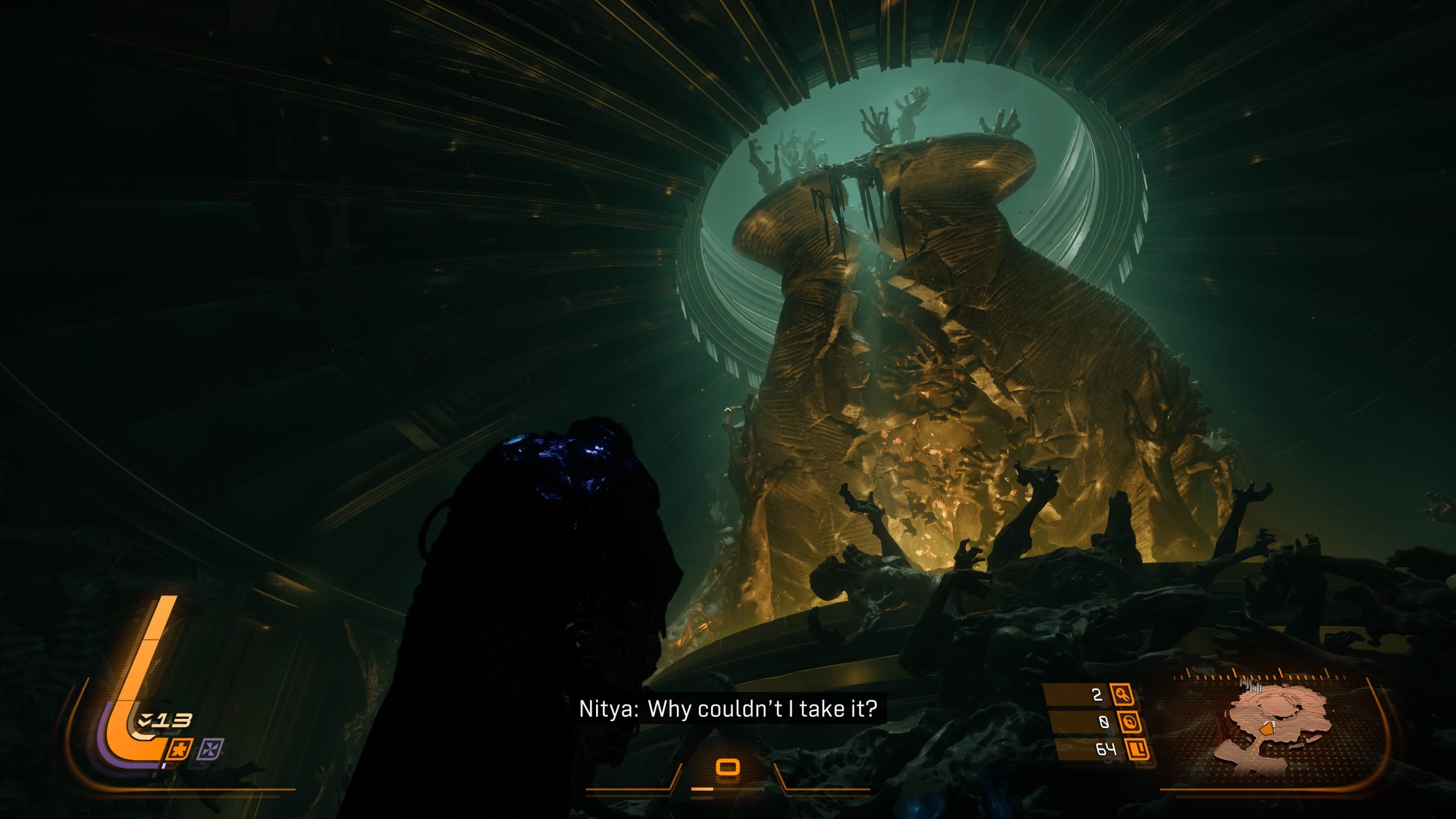
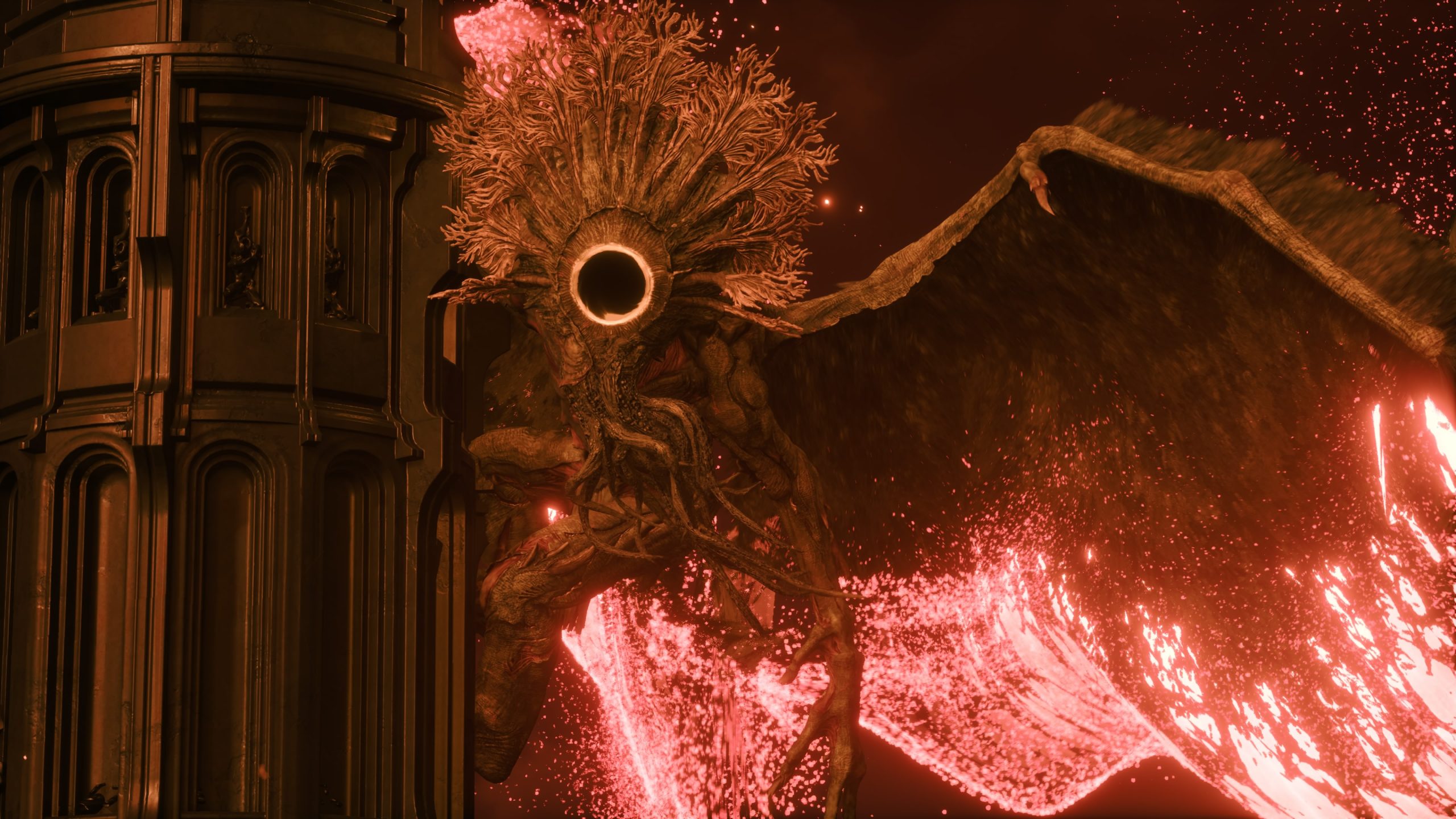
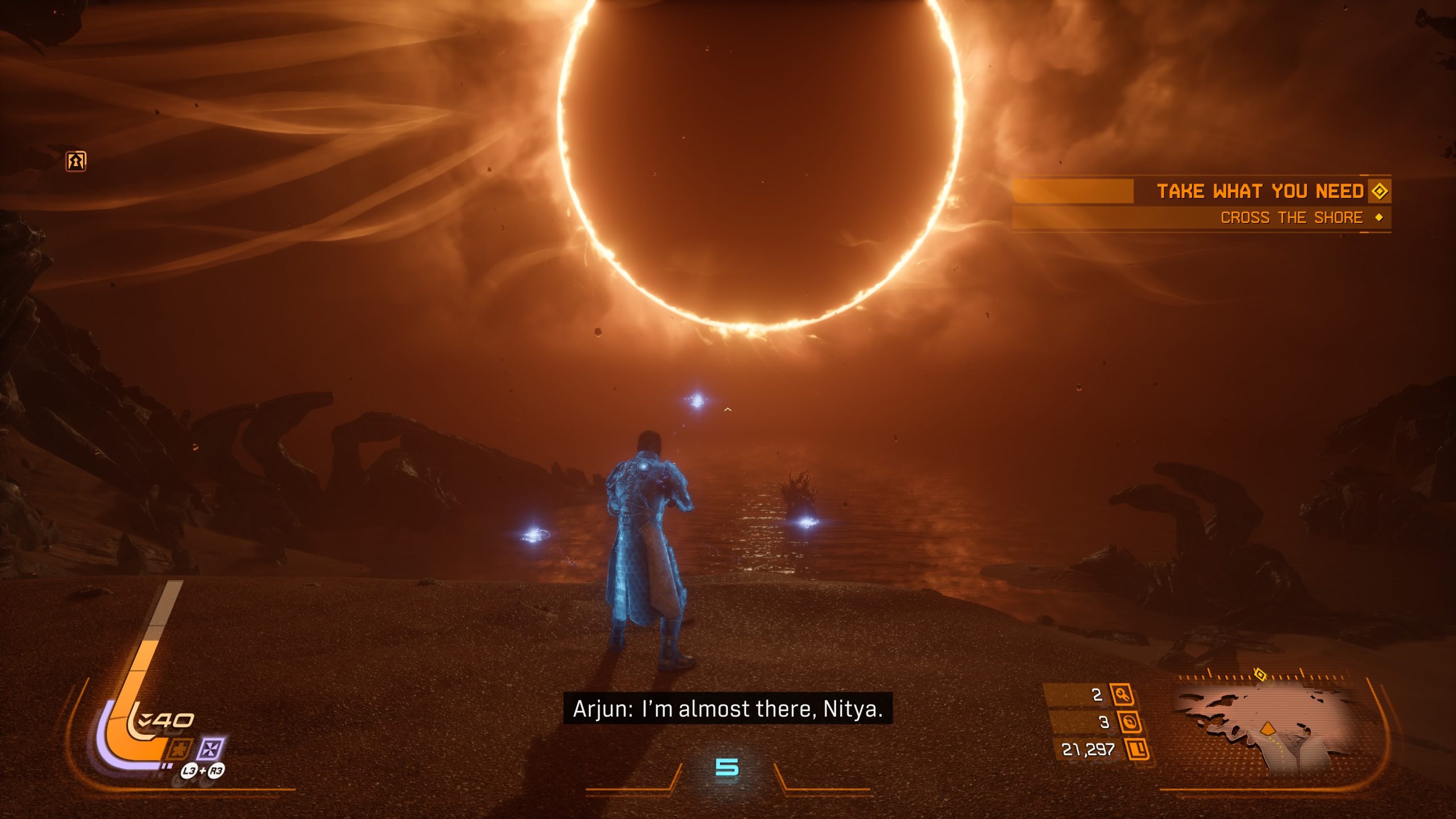
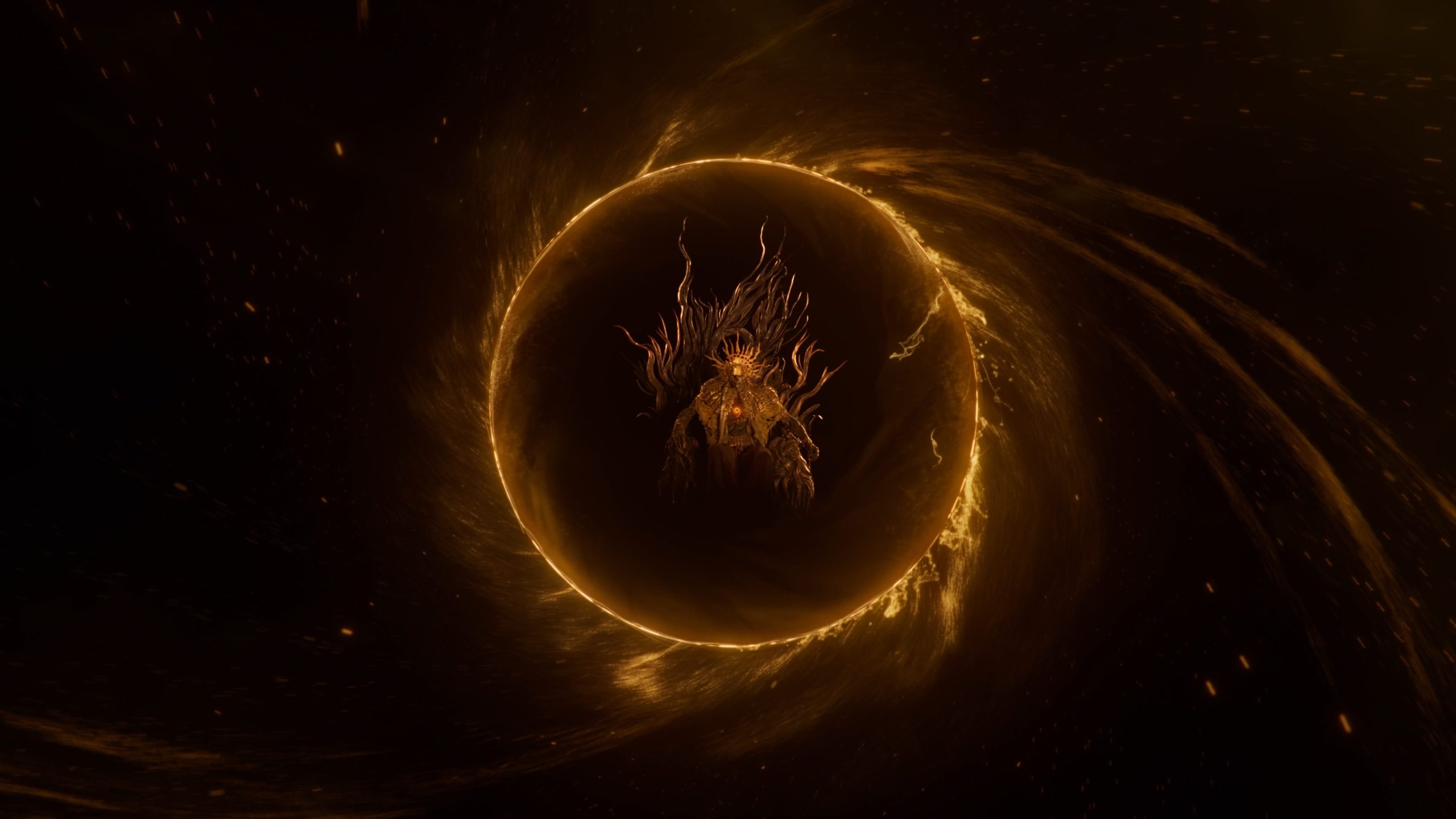
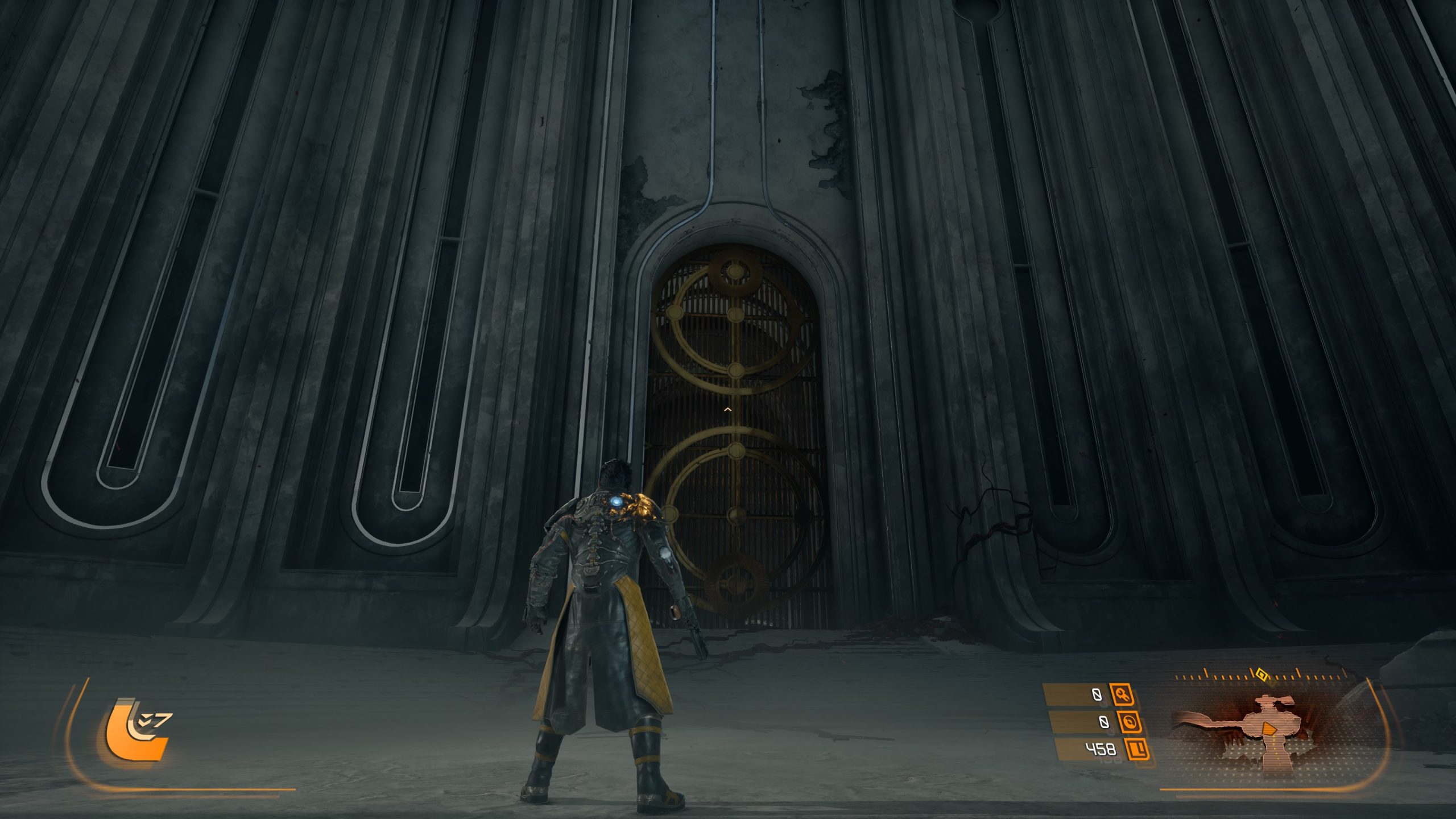
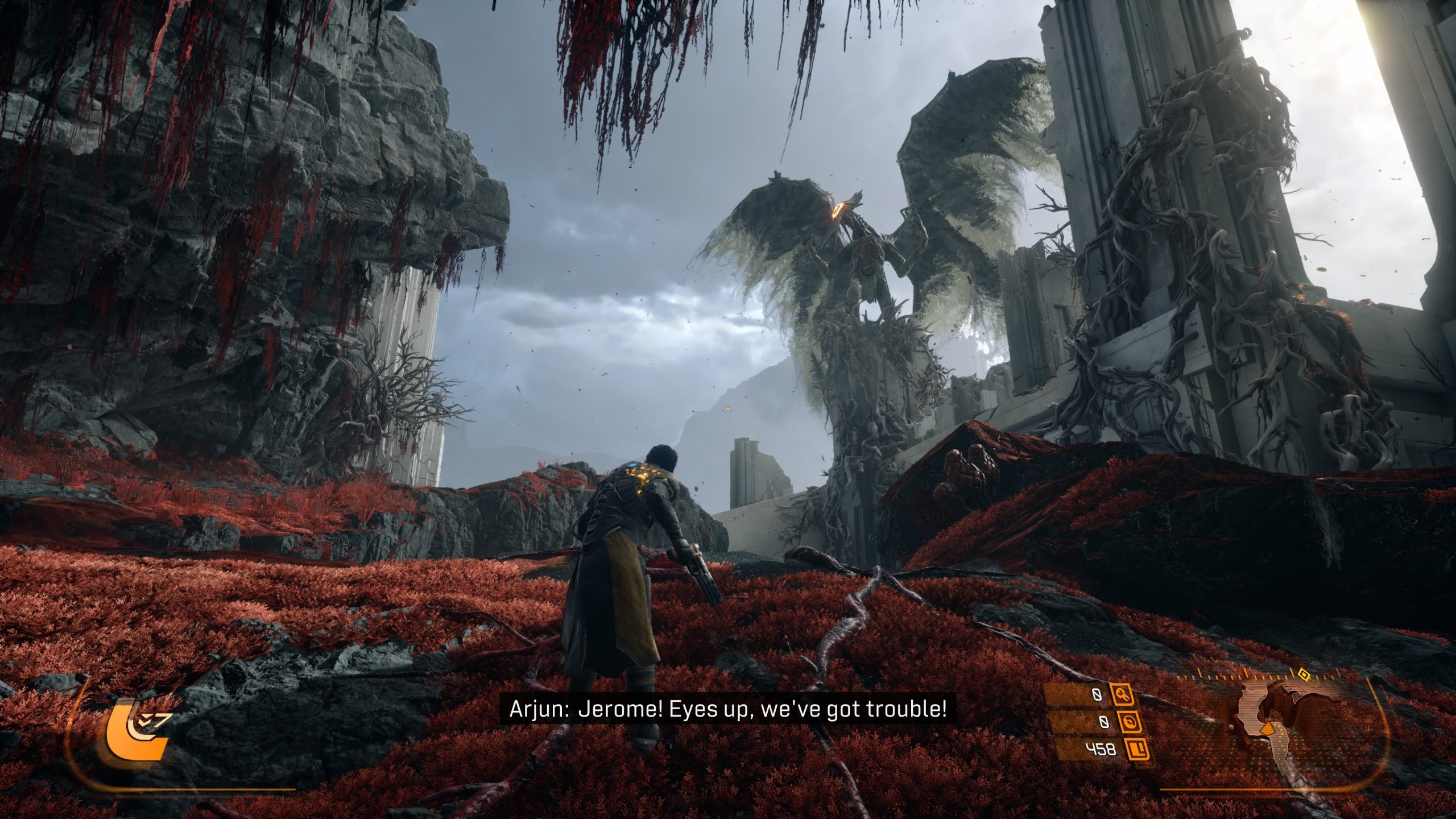
“Saros” doesn’t begin with “Carcosa”. It doesn’t even begin with PlayStation, with Housemarque, or with so-called “bullet hell” games. Before it was a planet, Carcosa was a ruin. A name plucked from “weird” literature, passed through Ambrose Bierce, then definitively infected by Robert W. Chambers around the mythology of “The King in Yellow”. There, Carcosa wasn’t a place you entered to explore, but rather a name that lingered in the mind. Something impossible to explain, linked to madness, forbidden art, revelations, and a form of truth that man cannot fully grasp. “Saros” takes this name and moves it into a dark, violent, very modern sci-fi setting, retaining something essential from it: the idea that there are places that don’t simply kill you, but bring to the surface the part you would have preferred to leave buried. The Carcosa of the game is not just a hostile planet, with ruins, creatures, and a permanent eclipse. Those who arrive there don’t just fight what they see, but also what they bring with them.
On the surface, “Saros” seems like a mission; Arjun Devraj arrives on Carcosa in search of someone. We have the lost colony, we have the shape-shifting planet, we have the cosmic danger, we have that very Housemarque image where every death isn’t final but another attempt to push the line in the sand further. Beneath it, however, lies the second story: Carcosa itself. The planet isn’t just the game’s backdrop, but the character who speaks without speaking. The eclipse doesn’t seem like just a phenomenon, but something much older that appears to infect the planet to its core. Spaces shift, the place is hostile, and each return after death changes the environment. Only beneath these two layers does the story that truly matters begin, and here “Saros” becomes more interesting, but not in a pleasant way. Because, beyond the sci-fi mission and cosmic mythology, the game hides something much more intimate and harder to present as a spectacle: the story of a man searching for what he has lost, perhaps too late, a man who confuses love with the right to reclaim someone, a man who carries a heavy guilt with each return to life. “Saros” isn’t really just about Carcosa. It’s about what happens when the entire universe becomes the stage for a relationship that ended before the protagonist accepted it.
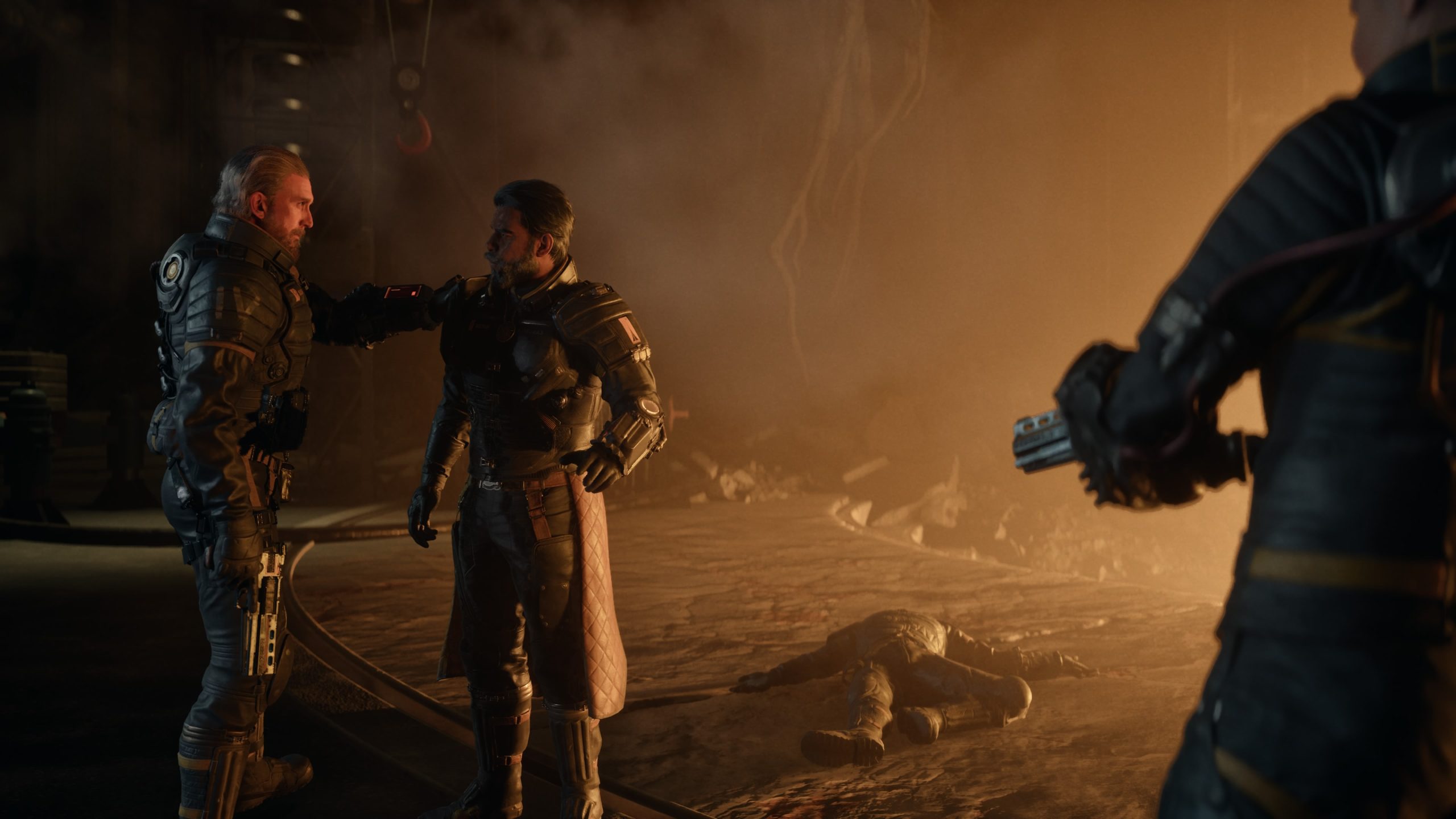
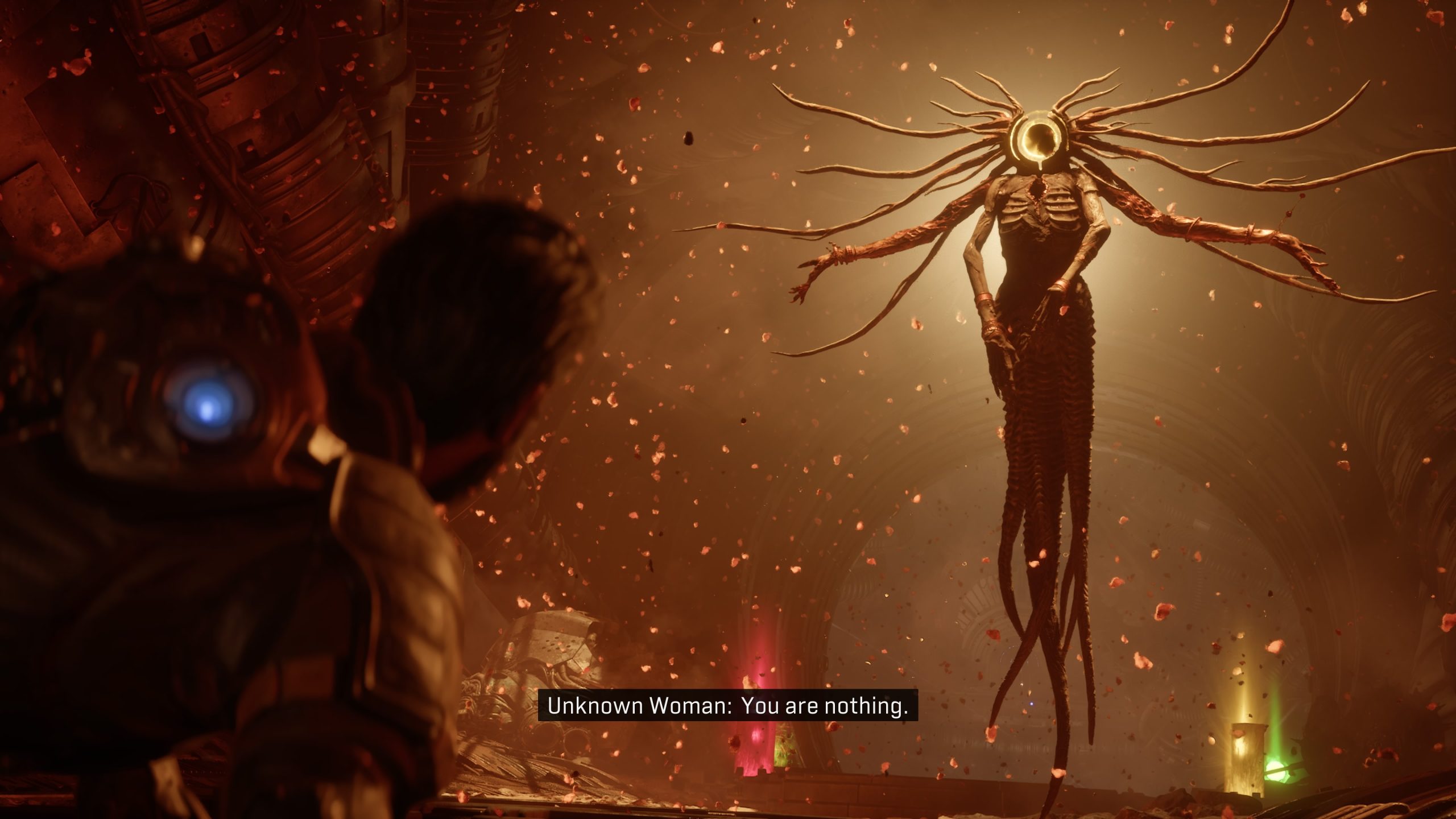
This is where “Saros” starts to annoy. Not because it dares to place an intimate drama within a cosmic-horror scenario. On the contrary, that could have been its strong point. The problem is that the underlying drama doesn’t have the same force as the world surrounding it. The game builds Carcosa, the Eclipse, the King, the ruins, the madness, the promise of a planet that can rewrite man from within, then, at its core, it arrives at a story that is far too human in the smallest sense of the word: a man who cannot accept that the woman he lost has already left, that she loved someone else, that her life no longer needed him to continue. This is why some of the audience reduced, perhaps brutally but not entirely unfairly, the entire construct to the idea of a “divorce simulator”. Not because broken relationships can’t be good subjects for science fiction, but because “Saros” sometimes seems to have placed a Lovecraftian planet around a domestic conflict written with too few nuances.
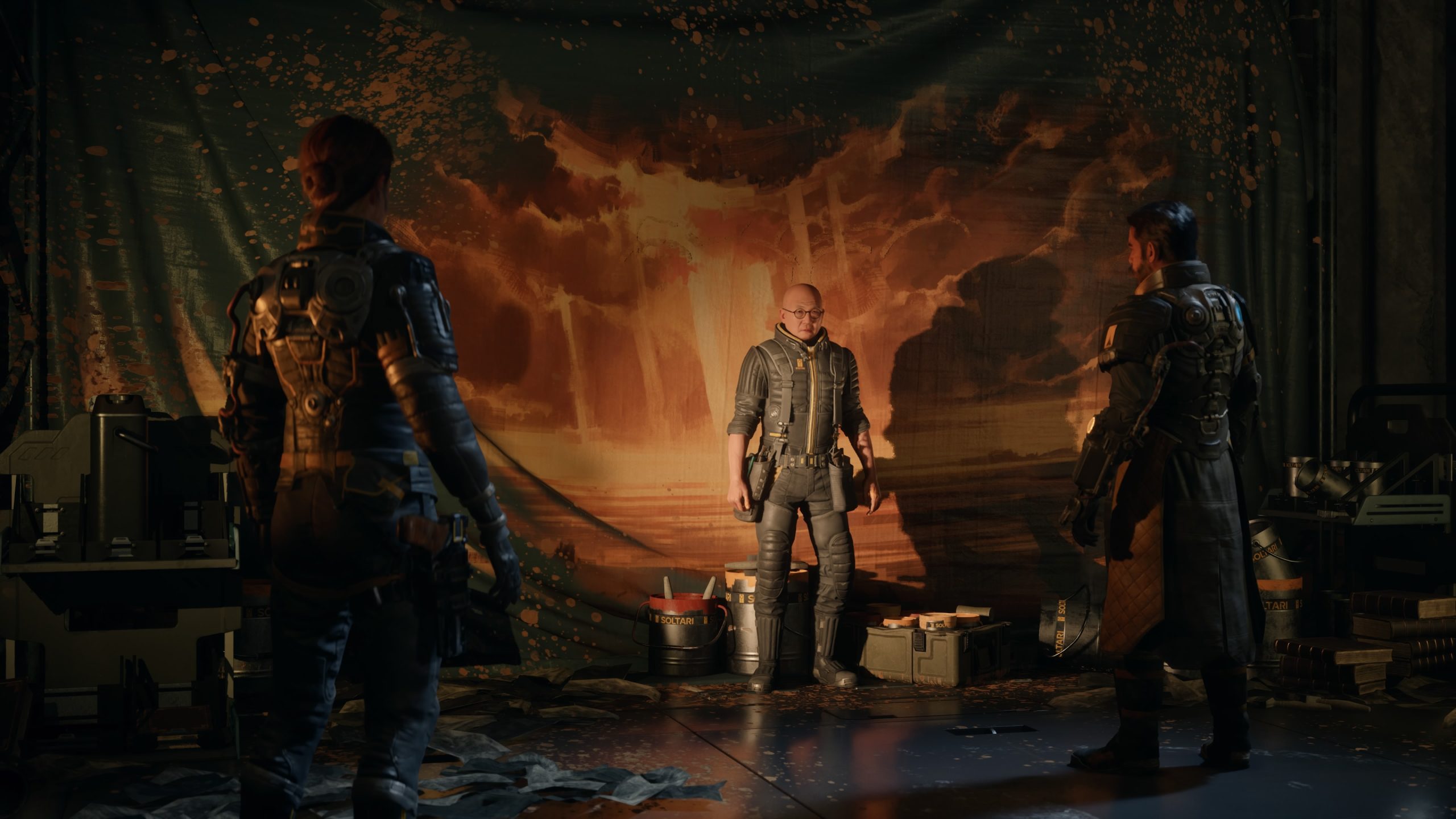
Arjun works better than he might have on paper. He carries guilt, shame, violence, and this almost pathetic stubbornness to turn someone’s salvation into a form of possession. He’s not a clean hero; it’s clear from the first minute you play him, and that’s precisely what makes him interesting. Rahul Kohli keeps him alive even when the script tries too hard to push him towards a moral lesson. The bigger problem is Nitya. She doesn’t seem written as a person caught in the same disaster, but as a constant source of judgment. She appears mostly to explain, to reject, to correct, to preach from a position almost untouched by her own compromises. The game wants to tell us that Arjun is contaminated by guilt and obsession, which works. But at the same time, it seems to refuse to taint Nitya with the same moral curiosity. In a story about a planet that corrupts everything, the fact that certain characters seem exempt from contamination doesn’t feel profound, but merely convenient for the angle the storytellers are seeking.
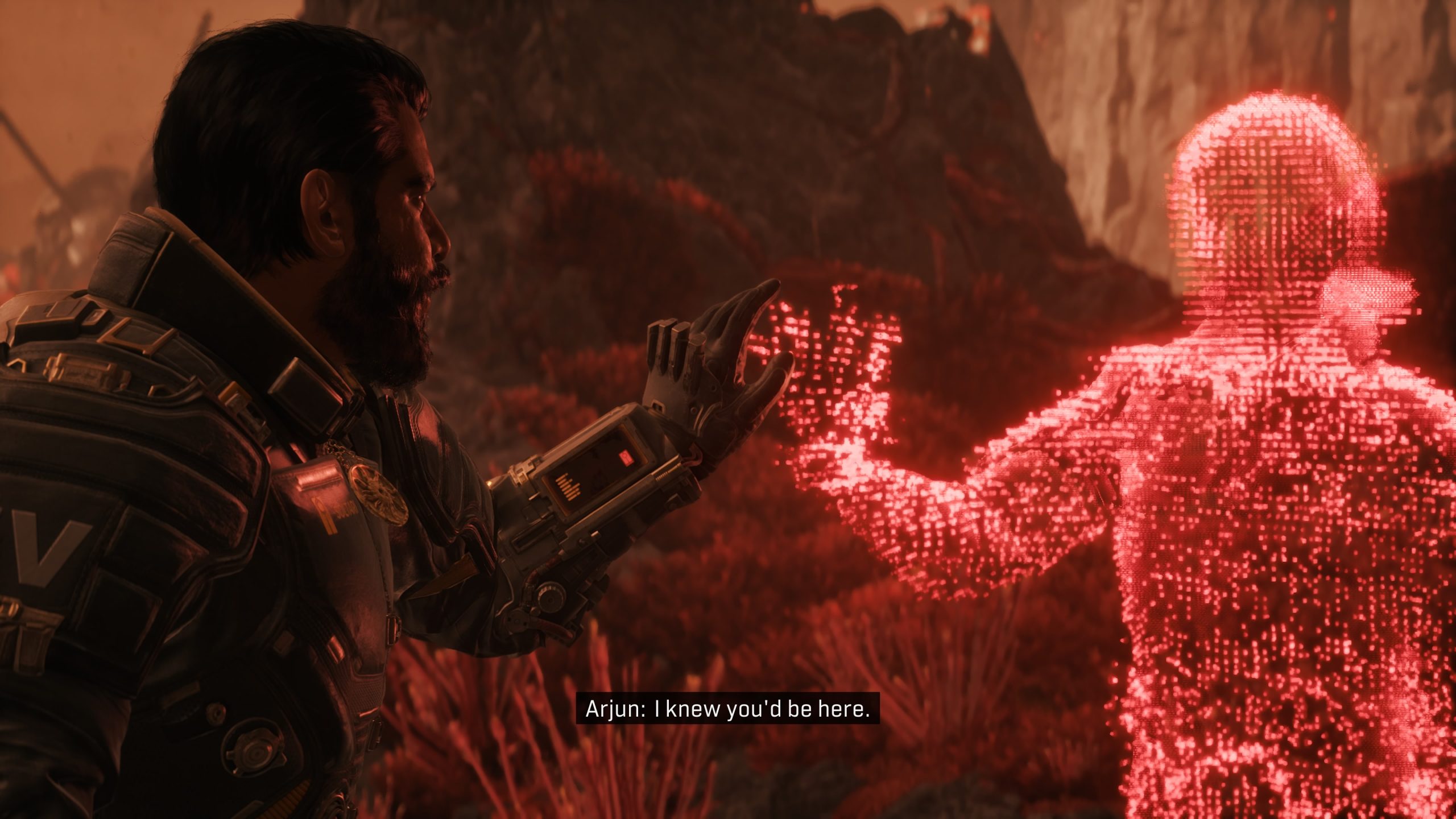
This is where the imbalance comes from. “Saros” isn’t dragged down by the fact that its true story is one of loss, failed love, guilt, and the impossibility of recovering what you’ve destroyed. It’s dragged down by the fact that this story is told with too much need to establish who should be condemned and who should be listened to. Cosmic horror works through uncertainty, through the shame of not knowing exactly what you’ve seen, through the feeling that any complete explanation would diminish the monstrosity. “Saros” has Carcosa, it has the myth, it has the atmosphere, it has a world that should remain partially indigestible. But when it gets to the core, the game shows you the wound and then starts to comment on it. No, it even criticises it. It doesn’t trust the essence of the story itself. And at that moment, Carcosa no longer seems like a cosmic force tearing reality apart, but an immense stage built for a breakup written by people who have something to gain from the social, perhaps even political, vision of this story.
And that’s precisely why it’s almost frustrating how good “Saros” is when you play it. Because after you’ve gone through or past its narrative layer, after you’ve understood where the story falters and why certain decisions can pull you out of the atmosphere, the game itself remains. And there, Housemarque still knows exactly what it’s doing. You can be irritated by the script, you can roll your eyes at certain moments when characters speak as if trying to win a moral debate, but when the combat begins, all these things are pushed aside for a few minutes. They don’t disappear, they’re not forgiven, but they’re pushed elsewhere by gameplay that has something very rare. Perfected gameplay.
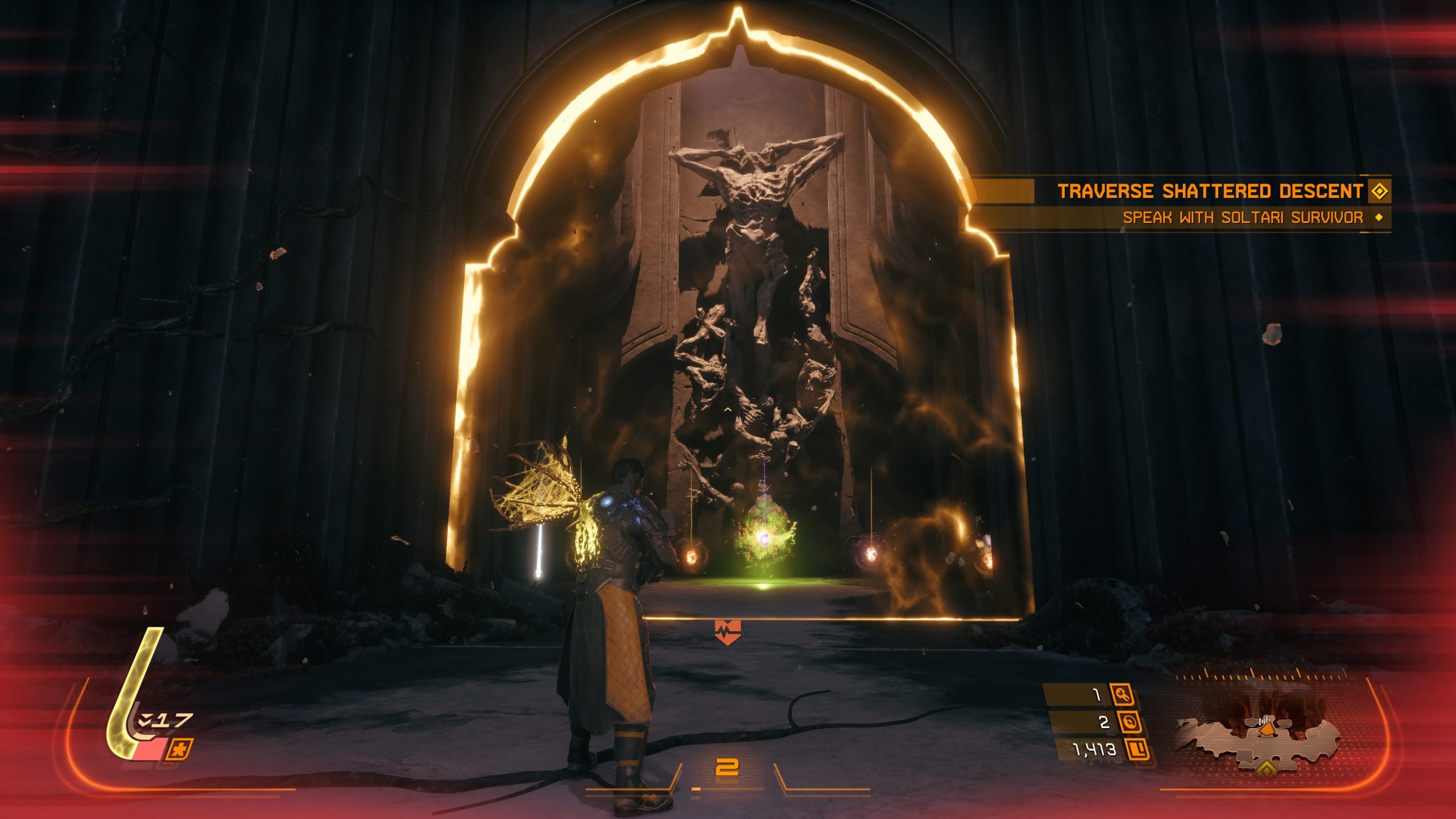
“Saros” is, above all else, a game that feels good in your hands. That might seem like a simple statement, but for this genre, it matters more than any discourse about lore, symbols, or themes. Movement must be instantaneous. The dodge must respond exactly when you ask for it. The weapon must have weight and force. The camera must keep up with you without betraying you because the entire environment is constantly hostile. And “Saros” ticks all these boxes. After a few battles, you stop thinking about each action separately and simply react. The game demands your total attention, but not in a tiring way, but in that way a very well-constructed title manages to hook your fingers before completely convincing your head. And here, the difference between a good shooter and a Housemarque shooter is clearest. In many games, battles are spectacular because a lot is happening on screen. In “Saros”, a lot is happening on screen, but the important thing is that almost all of it can be instinctively read. Projectiles aren’t just visual fireworks, they are patterns; enemies aren’t just targets running towards you, they are patterns; arenas aren’t just beautiful spaces where the action unfolds, they are patterns. When the game kills you, most of the time you know why, whether you die 3 minutes after starting a run or after playing for 30 minutes. You stayed in one place too long. You were greedy. You tried to pump another enemy when you should have retreated. The English term is “hubris”, arrogance. What is essential in a game built on repeated death is to feel that you lost because you made a mistake, not because the system cheated. And 11/10 times, you did something wrong.
This is also where the strength of the idea of returning stronger comes from. It’s not just a marketing slogan, nor just a method by which the game allows you to keep a few upgrades. In “Saros”, returning has a much more concrete logic. Each failure seems to teach you something. Perhaps an approach, perhaps a modification, perhaps an opening, perhaps just a better understanding of an area or a type of enemy. The game doesn’t make you feel like you’ve lost everything, and that radically changes your relationship with frustration. You no longer end the run with that feeling that X minutes of your life have been stolen. Even when you die stupidly, even when you know you died because of yourself, there’s a sense that you’ve pushed the limit a little further. This makes it more digestible than “Returnal”, but not necessarily simpler. The difference is important. “Returnal” had an almost immeasurable cruelty. It asked you to accept loss as part of the game’s ritual. “Saros” doesn’t have the same idea. It gives you more things to hold onto. It allows you to evolve between attempts. For some, this might seem like a weakening of the formula. For me, at least for the most part, it works, because you don’t feel like the game is apologising for the difficulty. You just feel that it has better understood the difference between punishment and progress. Death remains important, but it’s no longer used just as punishment for making a mistake. It becomes part of the game’s rhythm, part of how you learn Carcosa, not just a slap received for not being fast enough.
The battles have moments where they enter an almost hypnotic zone. Not in the trippy artistic sense, but very practically, you’re caught up in the gameplay. You have little health, the arena is full, projectiles are coming from different directions, and the game always gives you the impression that there’s still a way out, if you don’t panic and don’t get lost in button mashing. That’s one of “Saros”’s best qualities. It rarely makes you feel that everything is impossible. It makes you feel that you are two good decisions or two good runs away from survival. And when you escape a fight with “if you slip on a stone you die”, when you enter the next area with a bead of sweat on your forehead, the true pleasure of the game appears. It’s not the story that pushes you forward. Not Arjun and his drama. It’s the very simple desire to see if you can go further and further. The weapons and abilities support this rhythm well, even if not all of them are equally memorable. There’s a clear pleasure in the way the game lets you combine distance, aggression, and defence. It’s not enough to shoot well. You have to learn when to push, when to run, when to accept that you’ve messed up. The best moments are when “Saros” forces you to be aggressive without being stupid. To get close to danger, but not to the point where you become cannon fodder. To use the shield, movement, and timing not as separate options, but as parts of the same reflex. When everything connects, the game has an excellent, fast, responsive, clean, and very satisfying rhythm. However, even here there are small limitations. I wouldn’t say the arsenal is weak, because it isn’t. But if you’re coming fresh from “Returnal”, “Saros” can sometimes seem a little more calculated, more settled, less willing to surprise you. It doesn’t always have the same sense of discovery that completely changes the way you think about a run. It’s more refined. This makes it easier to get into, more coherent, perhaps even better paced for a wider audience. But it sometimes takes away from the madness. And in a game that uses Carcosa as a name and basis, a little more madness wouldn’t have hurt.
Even so, the gameplay remains the reason why “Saros” rises above its own narrative problems. Not because the story doesn’t matter, but because the game has enough strength in hand to make you continue even when you have serious objections to the way it writes its characters. It’s the kind of experience where you can finish a scene and be annoyed by the dialogue, then enter a fight and forget for ten minutes that you were upset. Not because the game convinced you intellectually, but because it hooked you physically. And in an exceptional video game, these two things should exist in parallel, not force you to choose one or the other, because that will turn it from exceptional into just a good game.
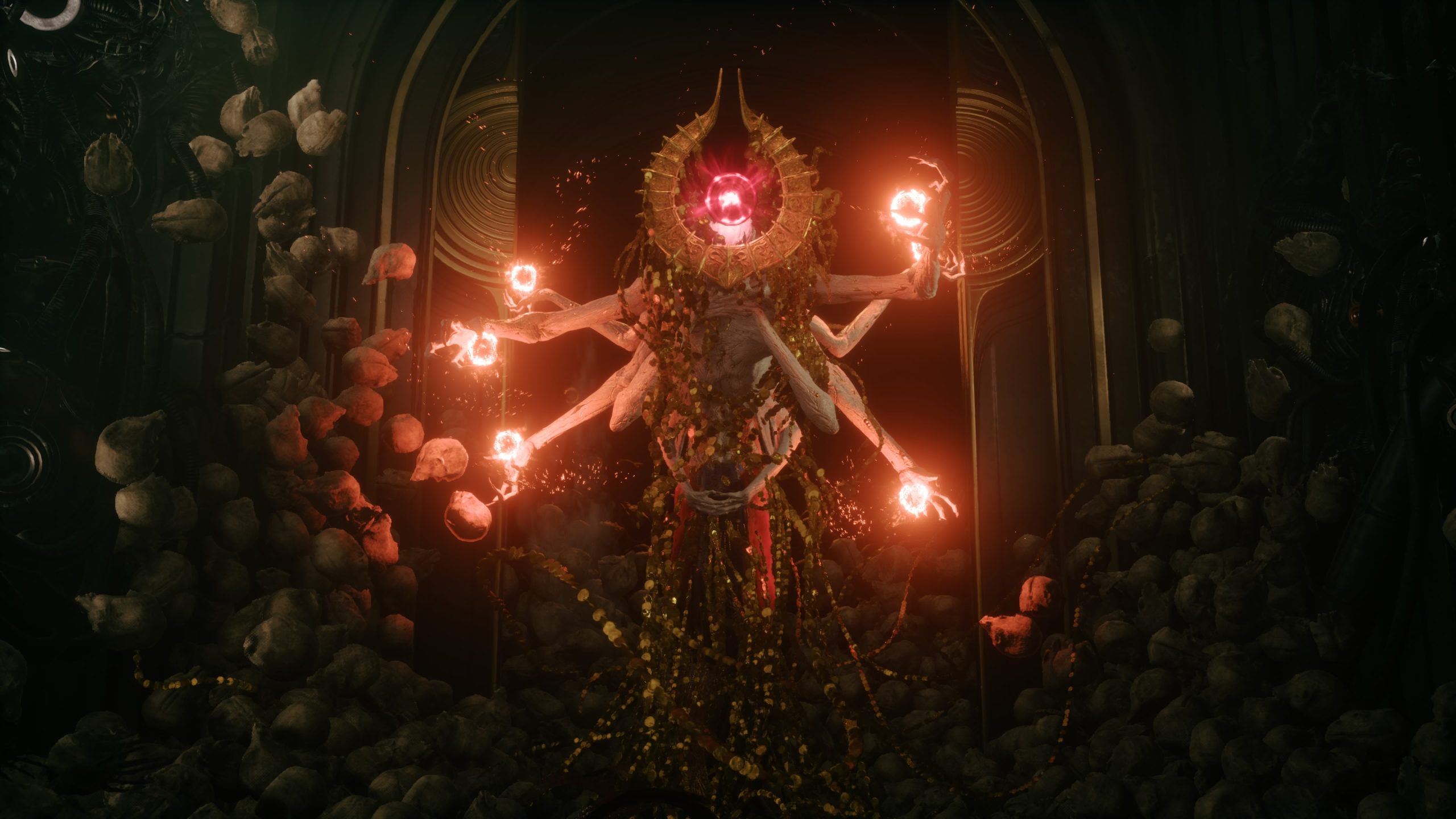
This is, after all, the most honest verdict I can give about “Saros”: we are facing a game that is too good to be reduced to its story, but the story is too important to be forgiven. I can’t say it left me cold, because that wouldn’t be true. When it enters combat, when Carcosa opens up before you, when the controller responds perfectly, when the sound tells you where death is coming from before you see it, “Saros” is exactly the kind of exclusivity PlayStation should have more often. It looks expensive, moves flawlessly, has rhythm, has force, has moments where it reminds you why Housemarque is one of the few studios that understand that a video game must, above all, be felt.
And that’s precisely why it’s more annoying when the script doesn’t live up to the rest. Because “Saros” isn’t a mediocre game that hides its shortcomings under graphics and weird literature. It’s a very good game that, from time to time, stumbles over its own need to explain, to judge, to shrink a great mystery into a human drama written far too weakly. I’m not bothered that beneath Carcosa lies a story of failed love, guilt, and loss. I’m bothered that the game sometimes seems convinced that the mere existence of this drama is enough, without giving all characters the same complexity, the same ambiguity, the same weight.
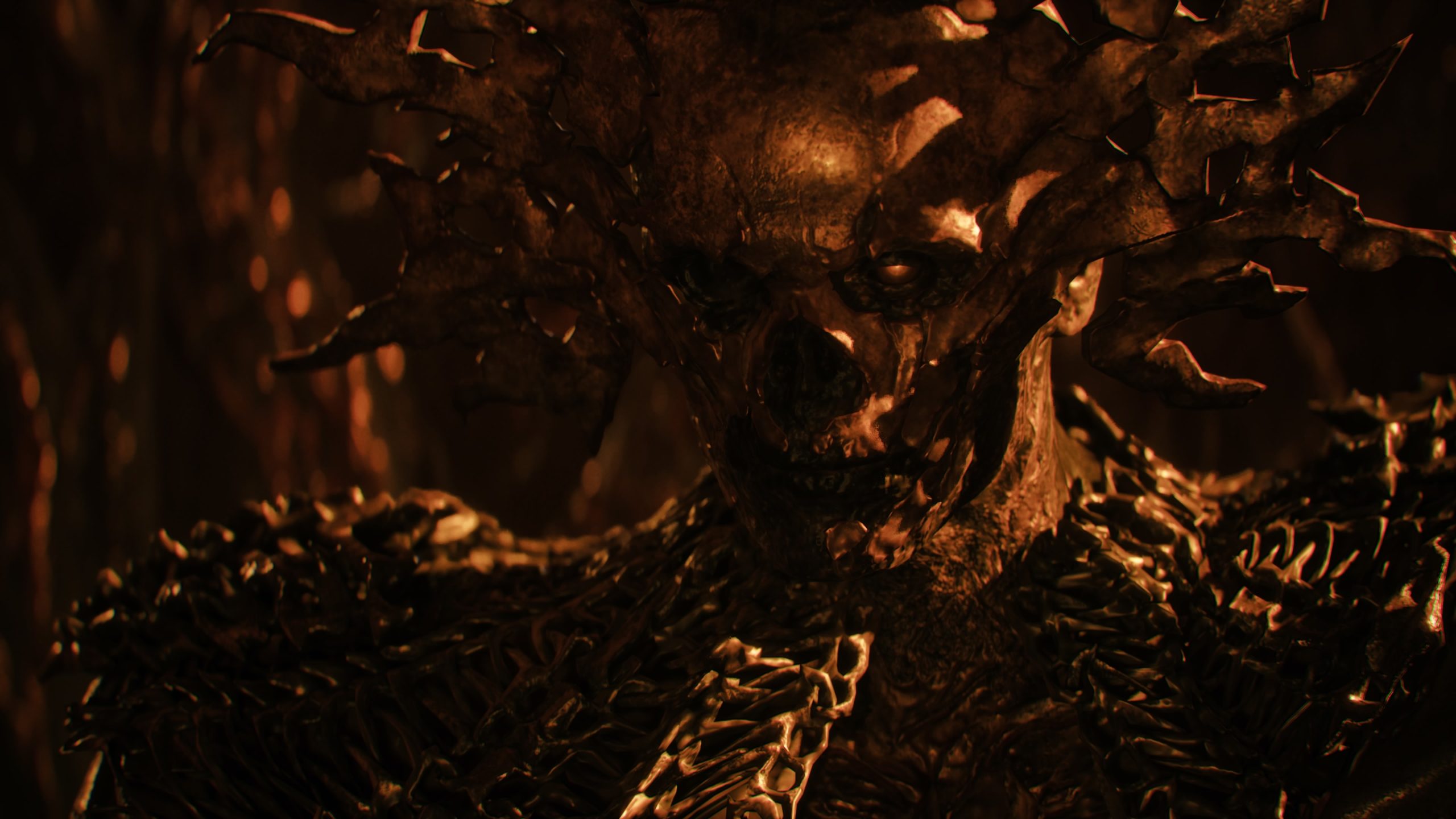
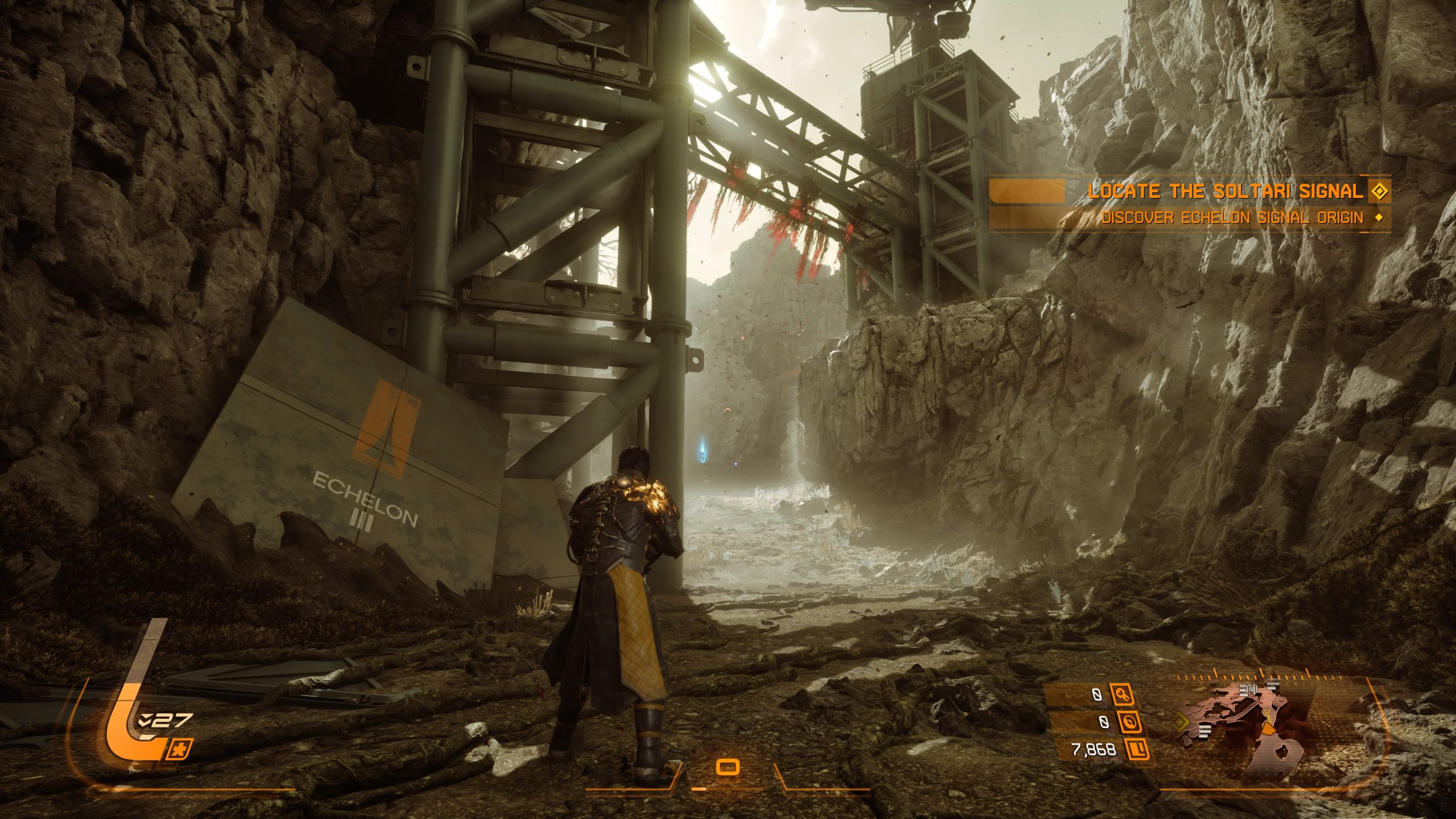
But if you ask me if “Saros” is worth playing, the answer is yes, without much hesitation. Not because it’s perfect, not because it surpasses “Returnal” in all respects, not because it fully executes all its ideas. It’s worth playing because when it works, it works with a precision that very few current games possess. It’s fast, tough, beautiful, intense, precise, and sometimes almost impossible to put down. It annoys you, challenges you, makes you try again, then again, then one more run that was supposed to be the last. For me, “Saros” remains an almost exceptional game, dragged down by a story that wants to be more important than it manages to be. This is no small feat. Often, games make the opposite mistake: they have good ideas but don’t know how to be played. Here we have a game that plays almost flawlessly, but fails to narratively support the huge world it builds. Carcosa perhaps deserved a deeper, stranger, harder-to-explain wound, and instead sometimes receives only moral lessons. Everyone on their high horse. Even so, I kept coming back, and that says quite a lot.
Thanks to PlayStation Romania and Smartpoint for the review code and the opportunity to play Saros!

Played on: PlayStation 5 Pro
Release date: 30 April 2026
Developer: Housemarque
Publisher: Sony Interactive Entertainment
Plus
- Gameplay loop
- Responsive
- The planet
Minus
- The story
- Most of the characters
- Some weapons are too weak
0 votes
Scroll down here and stay on the page for at least 30 seconds to vote.
Pick a score from 0 to 10 (halves are allowed).