
Senua’s Saga: Hellblade II
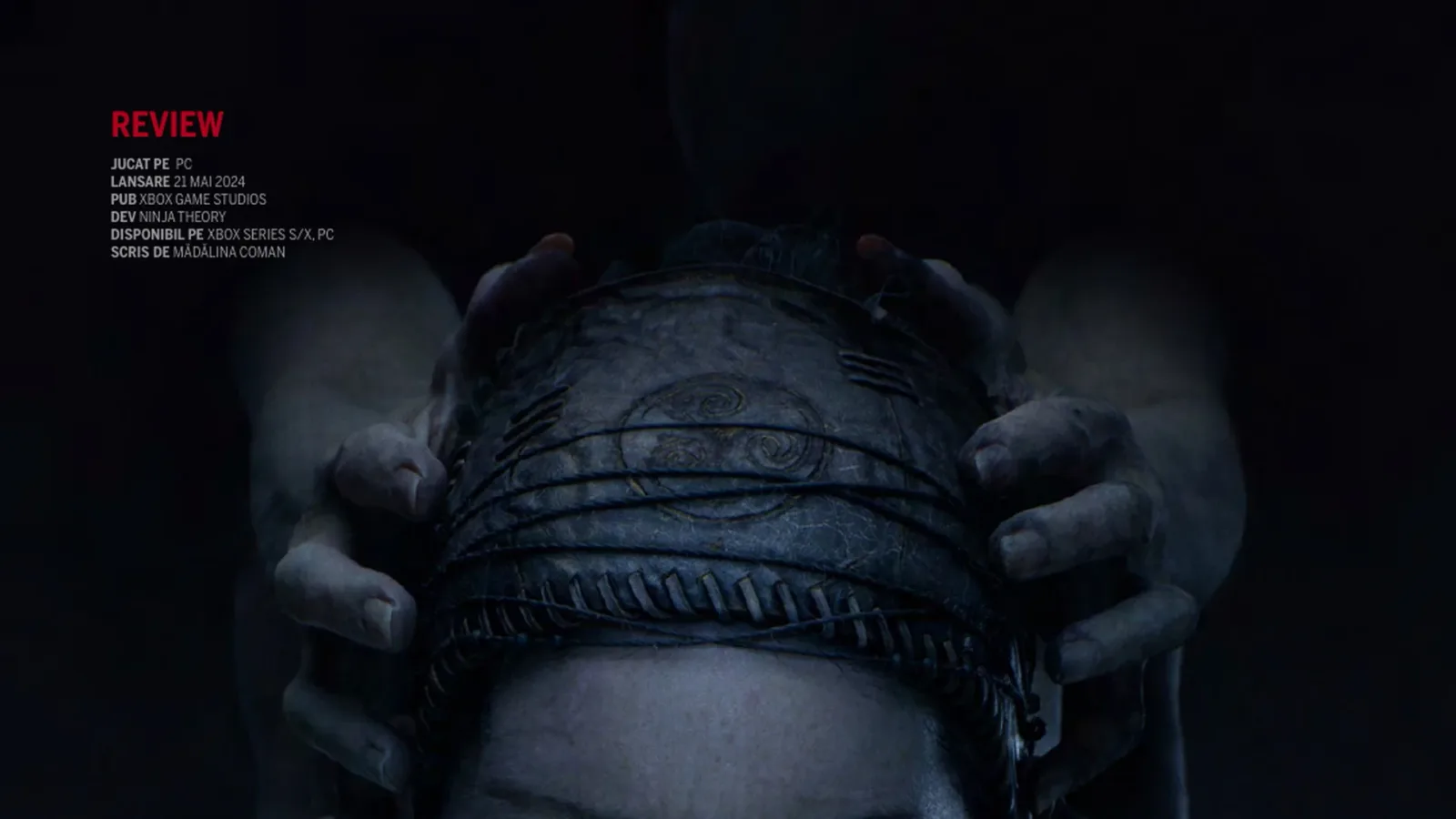
First published in GRIND IV, pages 94–97.
REVIEW BY MĂDĂLINA COMAN
There are experiences that become etched onto your retina and soul in such a way that not even the passage of years can erase the intensity and emotions you went through...
What's more, revisiting those moments only enriches your past experiences with new meanings and perspectives.
When I first saw the Hellblade trailer in August 2014, I thought I was looking at a new hack and slash, very similar to Heavenly Sword, one of Ninja Theory's previous projects. The protagonist seemed like a re-adaptation of a secondary character from the aforementioned game, but in a setting seemingly ripped straight from Vikings.
Something new and something familiar, all at once.
But nothing could have prepared me for what Hellblade: Senua’s Sacrifice (H:SS) offered me.
Senua, the heroine of Hellblade, was vastly different from what I initially expected after the game's announcement trailer. Before my eyes wasn't a fearless warrior, capable of taking on an entire world, but a vulnerable woman, almost defeated by fears and terrible imaginings that only she could perceive. She becomes a victim of a Dark Ages society that wasn't prepared to tolerate and under- stand what she was going through. And yet, with boundless will, she decides to confront her inner demons and the traumas accumulated throughout a tormented existence.
All for the salvation of Dillion's soul, the only person for whom Senua meant more than a sinner overcome by darkness, as her own father considered her.
After defeating several opponents and Norse gods, each testing limits Senua wasn't even aware she would ever surpass, the conclusion is a painful yet liberating realisation.
Death, a terrifying constant in every human's life, must be accepted.
A new land, a new fight. But the painted Celt's journey is far from over. After her clashes with Scandinavian deities, Senua is forced to leave the world she knew and throw herself into the lion's den. For the action in Senua's Saga:
Hellblade 2 (SS:H2) takes place in Iceland, the homeland of the invaders who massacred her people.
If the previous title seemed very well-crafted graphically, the sequel is no less impressive. After seven years of work, Ninja Theory has elevated themselves to a superior level and decided to reproduce locations and landscapes from Iceland down to the smallest detail. By using photogrammetry, a technique that uses images to obtain exact data about objects and terrains, the developers managed to transform 2D information from photographs into three-dimensional information. This is reflected not only in nature scenes but also in the settlements specific to the place and historical period. This creates the most authentic and immersive feeling possible.
Probably my only complaint regarding the new visual complexity is the optimisation. Although the system on which I tested SS:H2 met the recommended specifications (RTX 3070 Ti, Ryzen 7 3800x, 32GB RAM), in cutscenes and combat scenes it felt like the game's performance started to lose stability, so I lowered the details from Medium to Low. It wasn't something that affected my final experience, but if you want to enjoy the highest level of graphical performance, a system as close as possible to current requirements is necessary.
Since I mentioned battles, in SS:H2 you face stronger and faster opponents who are ready to tear you apart without hesitation. The Norsemen and fantastic creatures Senua had to defeat in the first story were indeed slower, but they could also attack two at once. The Viking manifestations are borrowed from the predecessor, and the new enemies, Draugr – these animated corpses armed with swords, axes, and flamethrowers – add a more interesting note to the adventure.
Puzzles are present here too. Some of them adopt the formula from the first title, for familiarity. The others are slightly changed, but none of them present an insurmountable obstacle. Don't worry, a little attention and perceptiveness are enough to get through the challenges! The dark areas in H:SS, which caused many fans headaches while solving puzzles, have been optimised in SS:H2 with more efficient lighting.
For exploration, Druth, the voice that accompanied Senua and narrated stories about the Norse gods and mythology, returns with new tales waiting to be heard.
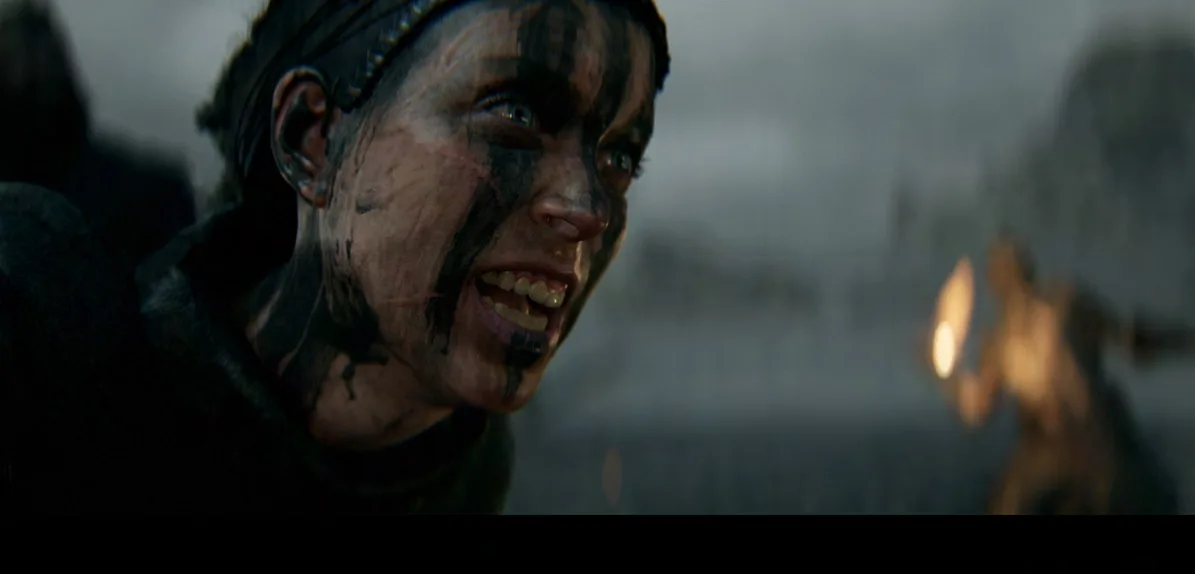
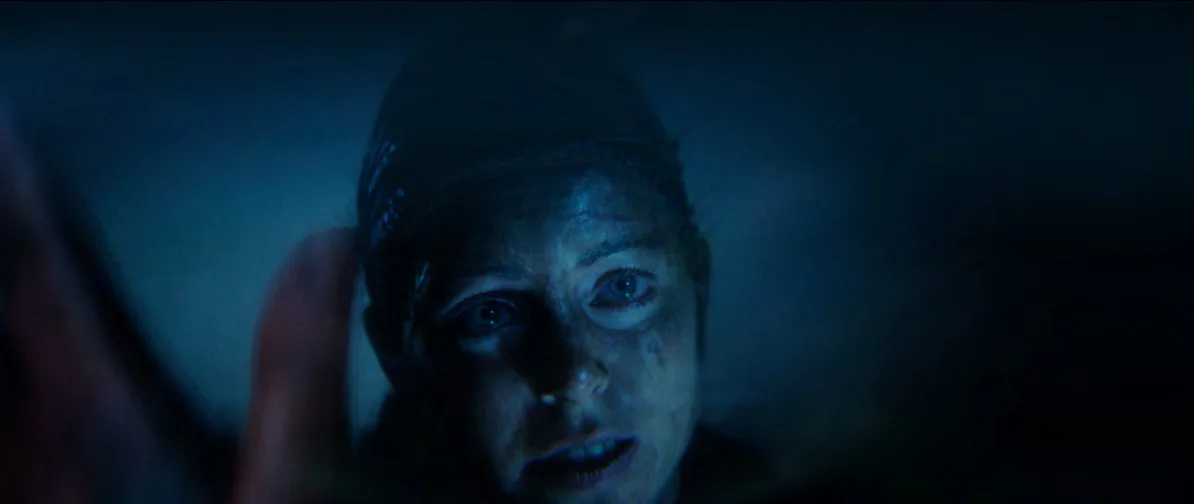
Facial expressions for Senua and the other characters (we have companions!) are much more expressive and very well-defined.
Feelings of doubt are what most often take hold of the main character, given that she can have an influence on those she wants to free from the oppressors' clutches. This is also evident in the tone of the voices that give her no peace. Some of them support her and believe in what she wants to achieve, while others sabotage her, calling her incapable and good for nothing.
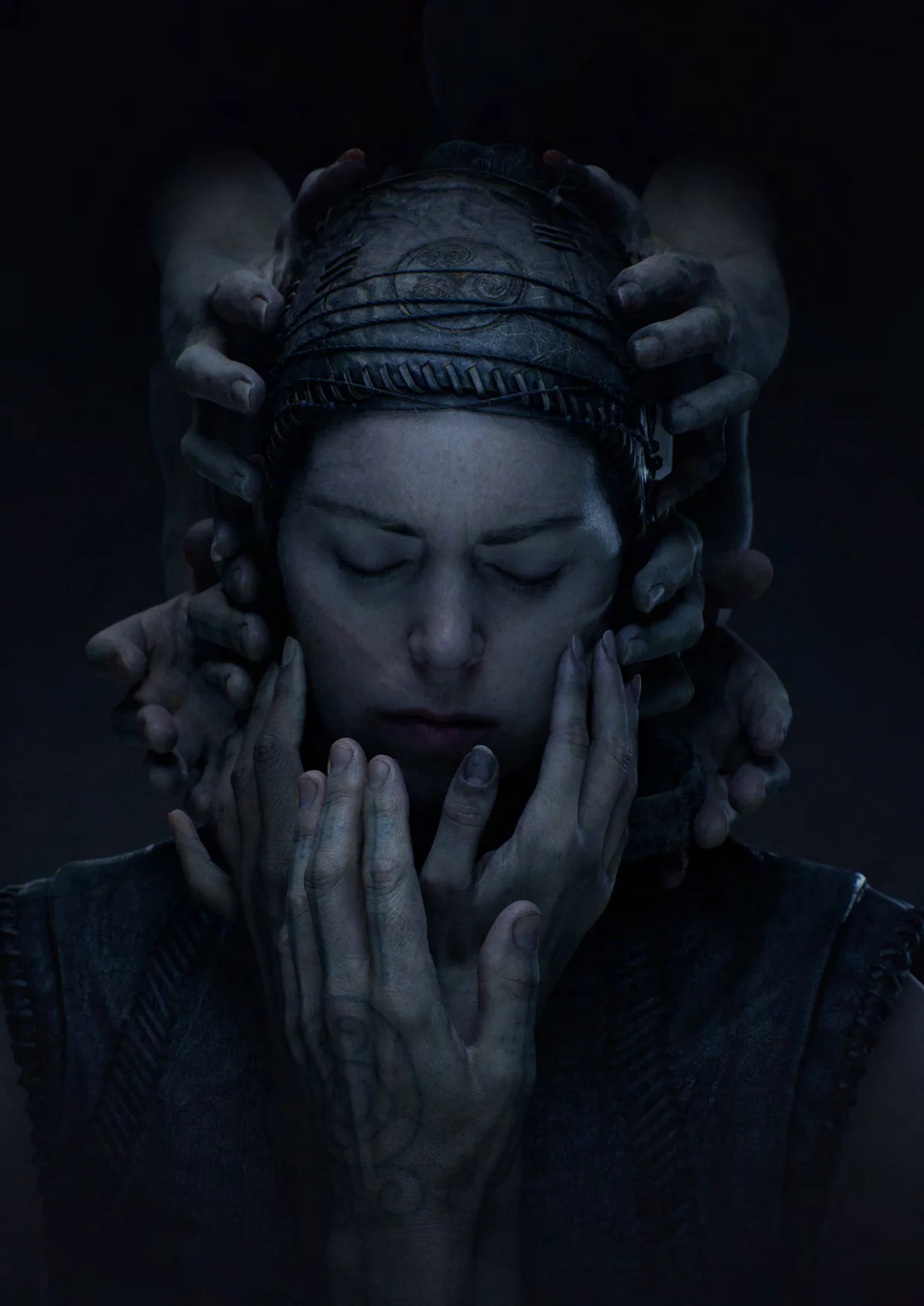
One aspect I particularly liked is how the development team created Senua in reality, with the full costume, makeup, and hairstyle of a Pictish woman. In the first game, the costume, hair, and makeup were modelled in-game. For SS:H2, the costume Senua wears was created from materials as close as possible to what was available at the time, and the overall look was achieved through various distressing techniques. The final result was achieved through 4D scanning, which uses video clips instead of photographs, as is done in 3D scanning.
Sound is also a crucial component in SS:H2: the voices are realistic, and the soundtrack adds an extra touch of immersion. It feels exceptionally good with headphones, everything being recorded with a binaural microphone, designed based on HRTF (head-related transfer function) technology, which is indispensable for 3D audio capture.
Man is wolf to man. Without giving too many narrative details, SS:H2 is a third-person action-adventure and a worthy sequel to a title that was so loved and appreciated. It's a game that deserves to be played through without long breaks, as the entire content doesn't exceed 8-10 hours. But that depends on the difficulty level chosen for combat and how quickly you manage to decipher the puzzles you encounter.
In H:SS, Senua is on a journey of mourning her deceased partner, but also of accepting death as an inevitable fact of earthly life. Whereas in SS:H2, from the perspective of a person who has gone through unimaginable pain, insecurity, fear, and rage, she manages to help and save her fellow humans.
With difficulty, Senua defeats the darkness within, this ravenous predator that awaits any moment of weakness. Left unchecked, it will consume everything in its path, which will affect both her and those around her. Everything depends on the choices she makes from now on.
It's a brutal, visceral, yet realistic lesson about humanity. As long as fear, ignorance, and hatred take hold of a people, they will fall victim to leaders who desire nothing but absolute power and control. This happens while weak nations, unable to defend themselves, will be condemned to ruin by the strong. And the echoes of those who perished through torment are a weight that no one, not even Senua, with her complex perspective on death, can carry for long. For the human psyche is not meant to bear as many blows and horrors as people are capable of inflicting upon others.
This review is dedicated to Flavius Policala, who made me try H:SS, and who also inspired me to write about video games over the years. You will always remain among us!
0 votes
Scroll down here and stay on the page for at least 30 seconds to vote.
Pick a score from 0 to 10 (halves are allowed).