
Super Mario Bros. Wonder (Switch 2) – Review

Nostalgia Trip
2026
— Hey, Mario! Looks like Bowser doesn't fancy staying retired and is up to no good again! Shall we go at it like we did in our youth? Just the two of us? What do you say, mate?
— Sure! It’s-a me, Mario! You can trust me! Let’s-a go!
Four decades of life, for Mario and for me alike! And an age like that had to be celebrated properly! So I did it by playing the newest entry in the Super Mario Bros. series, Wonder, to be precise! Oh yes, and what a wonder of a gift it was, taking my childhood friend Mario out for another spin. And it's no small thing for a “friend” like that to be able to hand you exactly the same fun he delivered more than 25 years ago.
1997
— Bogdan! Come and eat! Now!
(10 minutes later)
— Bogdan! I won't say it again! Leave the games and come to the table!
— But, Mum, I've reached the third world and I've still got lives, I'll lose them and have to start from scratch…
Sadly, I never got to deliver that last line. Mum was a sort of Bowser, who could punish me if I didn't obey. And the greatest sin of those wretched pirated Terminator cartridges was that you couldn't save your progress. Parents didn't understand that, just as they still don't understand today that you can't simply quit an online game whenever you like.
Even so, imagine that, for me, an 11-12-year-old kid, what Nintendo had pulled off almost a decade earlier seemed nothing short of fantastic. Largely because its games, available on the Terminator 2 clone, had taken their place among the essential joys of that stretch of childhood. A feeling I also got when I fed a few tokens into the arcade machines at the market. Except now, instead of kicking a ball about in front of the block of flats, shooting paper spitballs or playing tag, I could have a whale of a time in front of the post-communist console hooked up via SCART to the NEI telly in my living room! Hmmm… the happiness of the ’90s came through SCART. :)
And that famous video socket was the transporter that brought Mario and his brother Luigi into our world. Among the cartridges full of tanks, Robocop, duck shooting, Mortal Kombat, Ninja Turtles and the rest, Super Mario Bros. was by far the most played. It had no action, no high-impact visuals, no complicated button combos, and yet it managed to keep you glued to the controller and stir up your curiosity and appetite for play with every step forward Mario took.
Back then, I was living in the era before my first computer.
2001
— Bogdan! Get off the internet, I can't ring Grandma!
Meanwhile, me: search.yahoo.com / history of Super Mario Bros. / mario.nintendo.com/history
Small and curious, you might say! Hey, but Mario was small and furious too! So I wanted to see where all his power to take on goombas, koopas and bowsers came from!
Well, from the days when he trained with his much hairier brother from another mother, Donkey Kong. In 1981, his birth certificate read Jumpman, and his first love was called Pauline. In 1983, the moustachioed one got the news that he would, after all, have a blood brother, Luigi. Alongside him he would first scrap with some grumpy green turtles in the new arcade game Mario Bros., at which point our boy also received his ID card with his new and final name, Mario. It was inspired by the name of the landlord of the building where Nintendo kept its odds and ends in the US, and whose rent the Japanese company had fallen behind on because of the video game crash of '83-'85. Don't imagine it was a tribute to that real person, just a coincidence that Segal resembled the game's hero in both looks and temperament, repeatedly going after Nintendo employees to recover what he was owed. Give me my money, you scoundrel!!!
Miyamoto, this Highlander left alone after the death of the other two immortals, Iliescu and Chuck Norris, decided, despite all the problems in the games industry, to create something unique for the time. And because nobody was playing video games any more, everyone sitting in front of the telly watching a sort of Asian Survivor, where contestants raced through obstacle courses full of pipes and other bits and bobs, Miyamoto came up with the idea of putting the moustachioed brothers on the course.
In 1985, Mario came of age on home consoles, the NES and Famicom, celebrating with every kid, young lady, truant or bored adult who was fuming that Instagram and Facebook hadn't been invented yet. Everyone grabbed their controllers in their little hands and had a fun sprint through Super Mario Bros. And guess who was the lucky guest at Mario's graduation ball! You got it in one: Princess Peach! That blonde “princess”, dressed in pink and fuming that Bowser, the obnoxious rocker, had kidnapped her along with the “magic” mushrooms over which she had reigned peacefully, very peacefully…
So, over the course of his adventure in the Mushroom Kingdom, Mario crosses eight worlds full of dangers, helped by fungi that boost his powers.
Jokes aside, Super Mario Bros. was a work of art for its time in video games. Miyamoto and his team introduced artistic and gameplay elements that were revolutionary compared with what existed in the 80s. It was the first platformer whose screen wasn't static, the worlds changed theme, there were hidden levels you could discover, and all of the character control, from jumping to interacting with the environment, was impeccably thought out and implemented. It was a game full of novelties at every turn, and as simple as it looked, it grew more complex with every step forward. It was so crammed with surprises that sometimes you could reach areas that weren't meant to exist, whether glitches deliberately left in by Miyamoto's team or bugs they hadn't found until then. It seems Super Mario Bros. was the first program in history to hallucinate, long before AI. Then again, with that many mushrooms around, at least its imaginings were justified.
The Super Mario Bros. version for the Nintendo Entertainment System sold 40,240,000 copies, bundles included. An incredible figure for that system, but thanks to that showing, Mario built a franchise worth over $53 billion from new spin-off titles and over $12 billion more from media. Gaming magazines and others put together proper guides of tricks and strategies for this game. So Peach bet well on her hero and now lives in a golden castle, built by the plumber and his family. Only fame and money change even the most devoted heroes. What will the princess say if she finds out you've dirtied your dungarees for Daisy and Rosalina too?!…
2026
— Bobiță, you've got dishes to wash, laundry to bring in from the balcony and the dog to take out! Put the Switch down!
— I'll do whatever you want, as soon as I've smashed this Bowser Jr.! Come on, Mario, come on, because my wife won't be as gentle with us as your Peach is!
Another era, same feeling. I'm talking about the game, not the bossy attitude of the women in our lives, whether it's mum, wife or mistress.
— But… what are you playing?
— Super Mario Bros. Wonder – Nintendo Switch 2 Edition + Meetup in Bellabel Park.
— What?!
— Mariooo…
— You spent money on that old game?!
— Ahh, yes, it's old, but it feels very new in this version. And guess what? Here at GRIND Magazine, Romania's only gaming magazine, we've got some lovely people at CD Media, who gave us a review key for this game and more! They're a real help to us and I do thank them for it! So the money for your dresses, my princess, is safe…
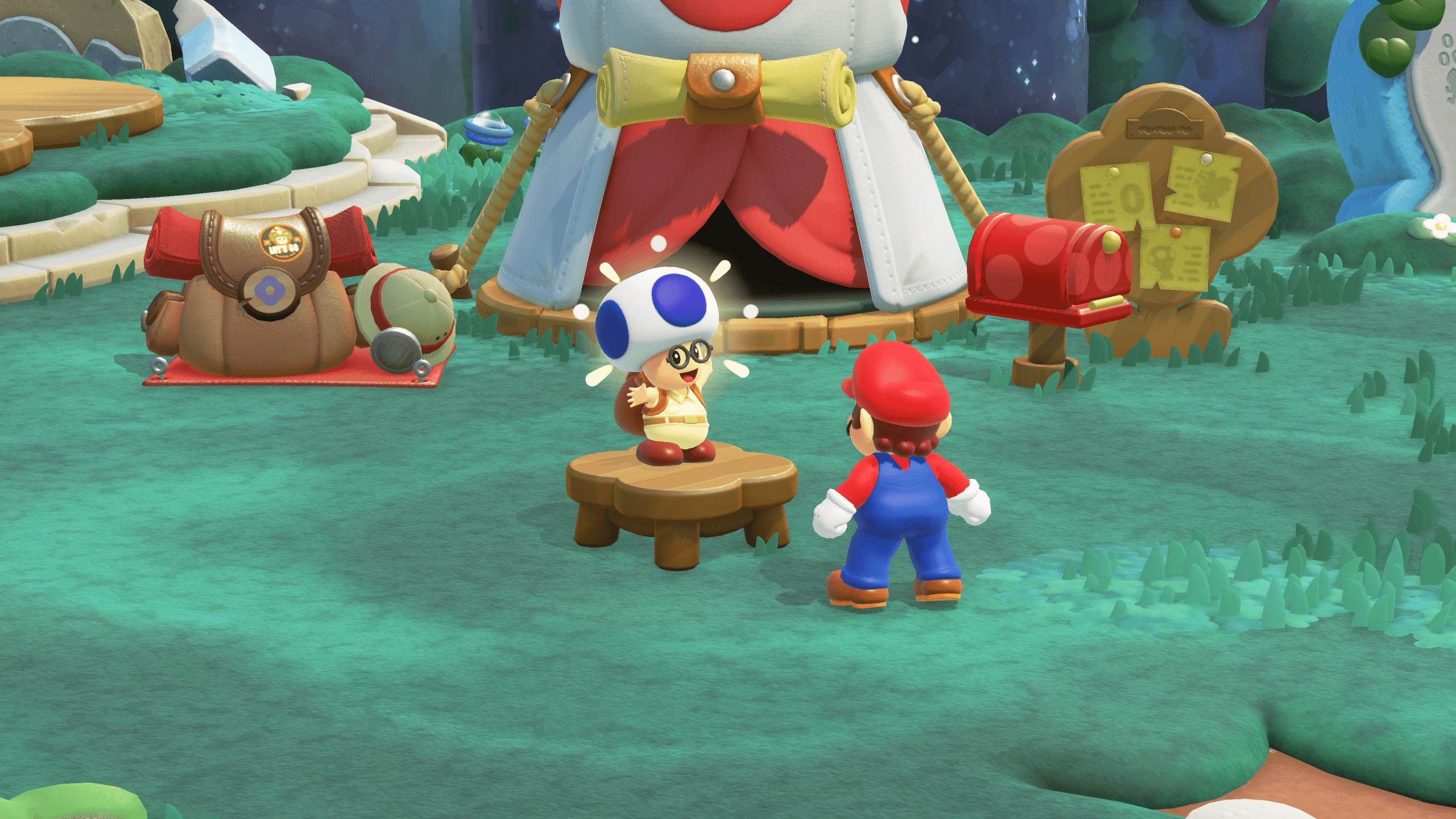
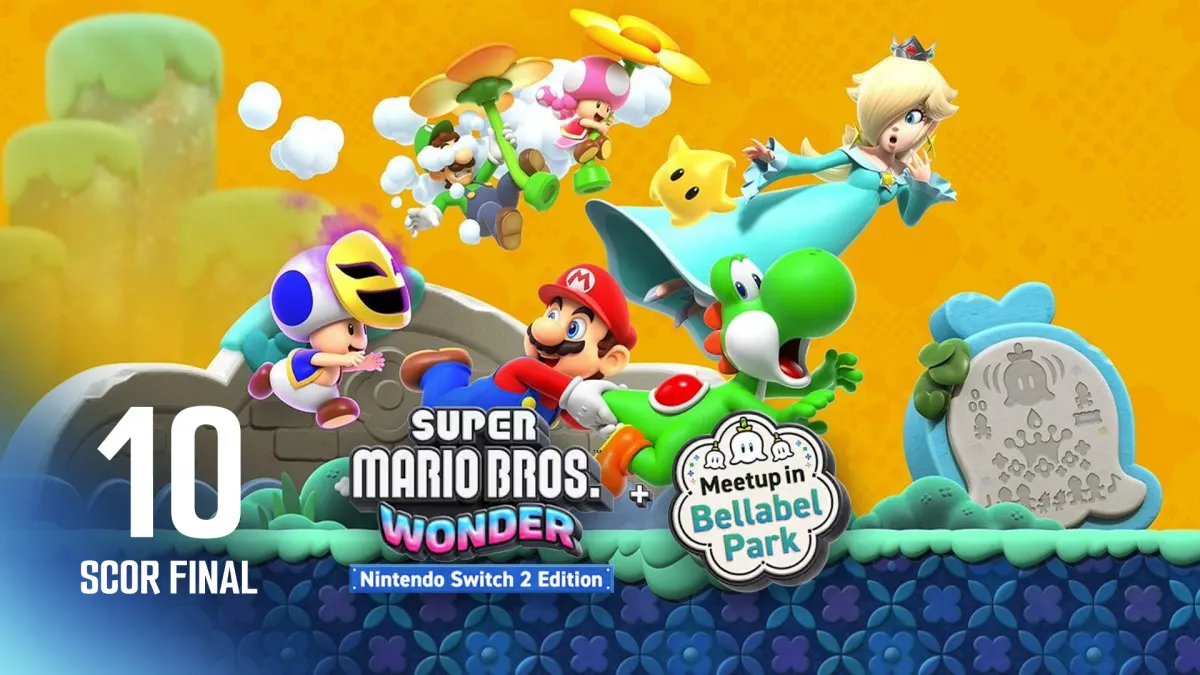
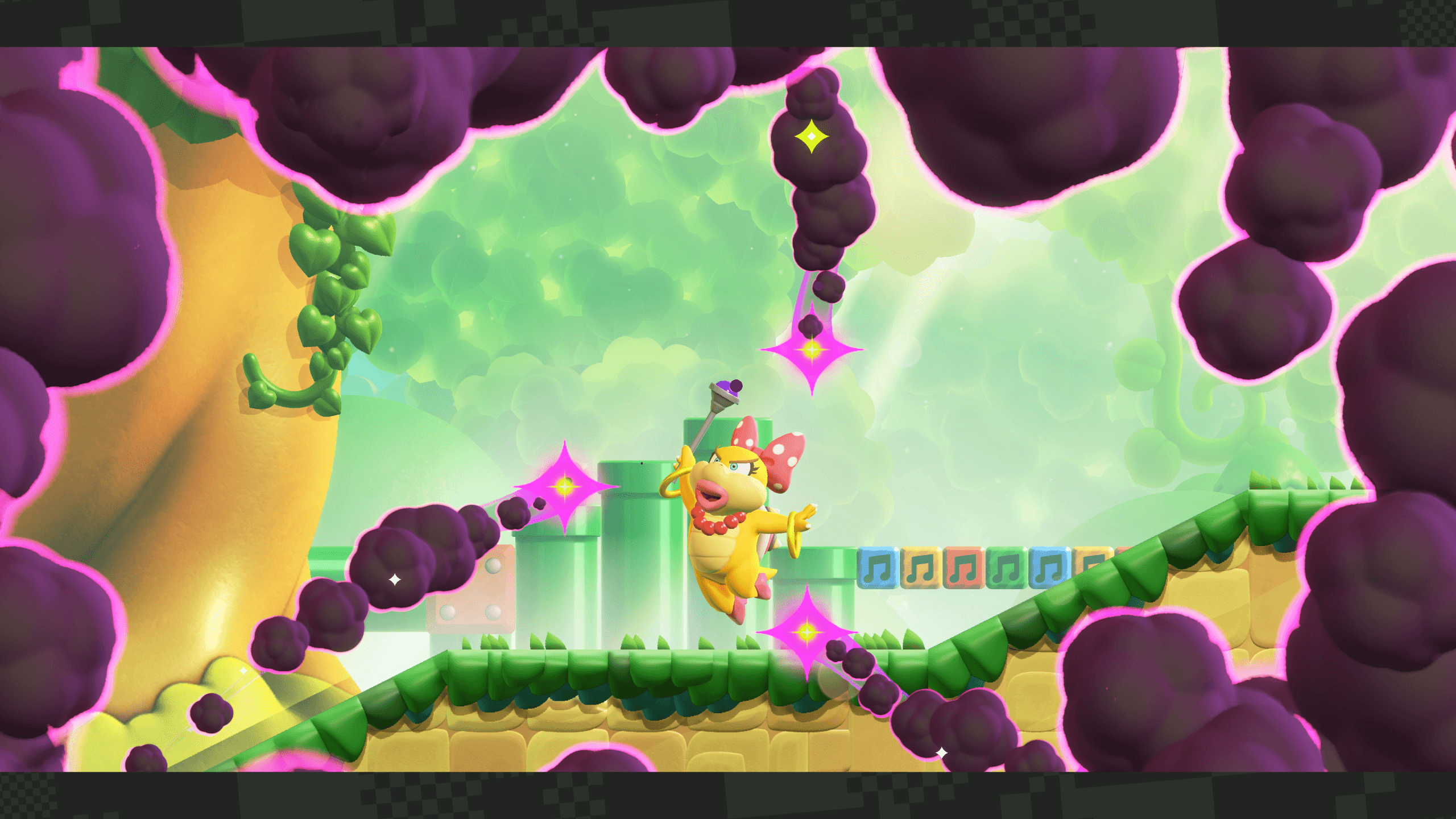
Despite the title, the game is essentially the same Super Mario Bros. as four decades ago. You feel the DNA created by Nintendo, the most conservative gaming company on the planet, right from the start. Don't get me wrong, I mean that in the most positive way possible. The Super Mario Bros. series has succeeded precisely because of its unchanged recipe. And in 2023, when the massive leap to Wonder happened, the push towards modernising the games was genuinely felt. It has the most refined gameplay and the most dynamic graphics of any 2D entry in the series. The Switch 2 version even brings 4K capabilities, plus some new content thanks to the Bellabel Park expansion, extra badges and two new playable characters, including that cutie Rosalina.
Some will say I'm being unfair by comparing it with the original, and that I should be measuring it against the game immediately before it, New Super Mario Bros. U. But guess what: NSMBU, as the Nintendo community affectionately calls it, released in 2012, has a far more traditional style in every respect. In my opinion, the variations between games have been fairly minimal, and with each generation of Super Mario Bros. they have reflected the technological advances of the time. But most have kept the same story and been aimed at the hardcore player, the one Nintendo trained from the very beginning to be more competitive, more strategic and in it for the long haul.
World 1 (difficulty)
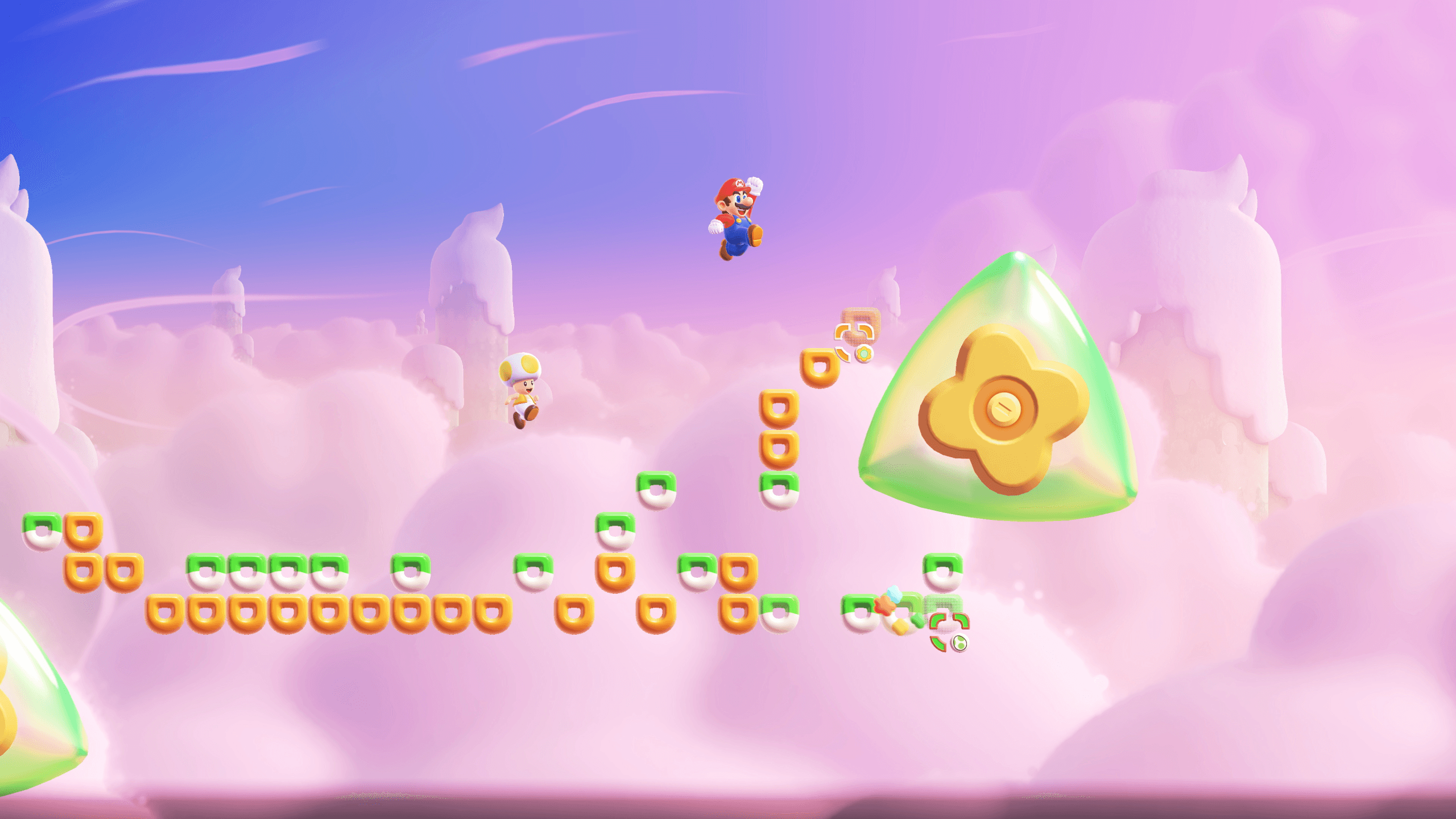
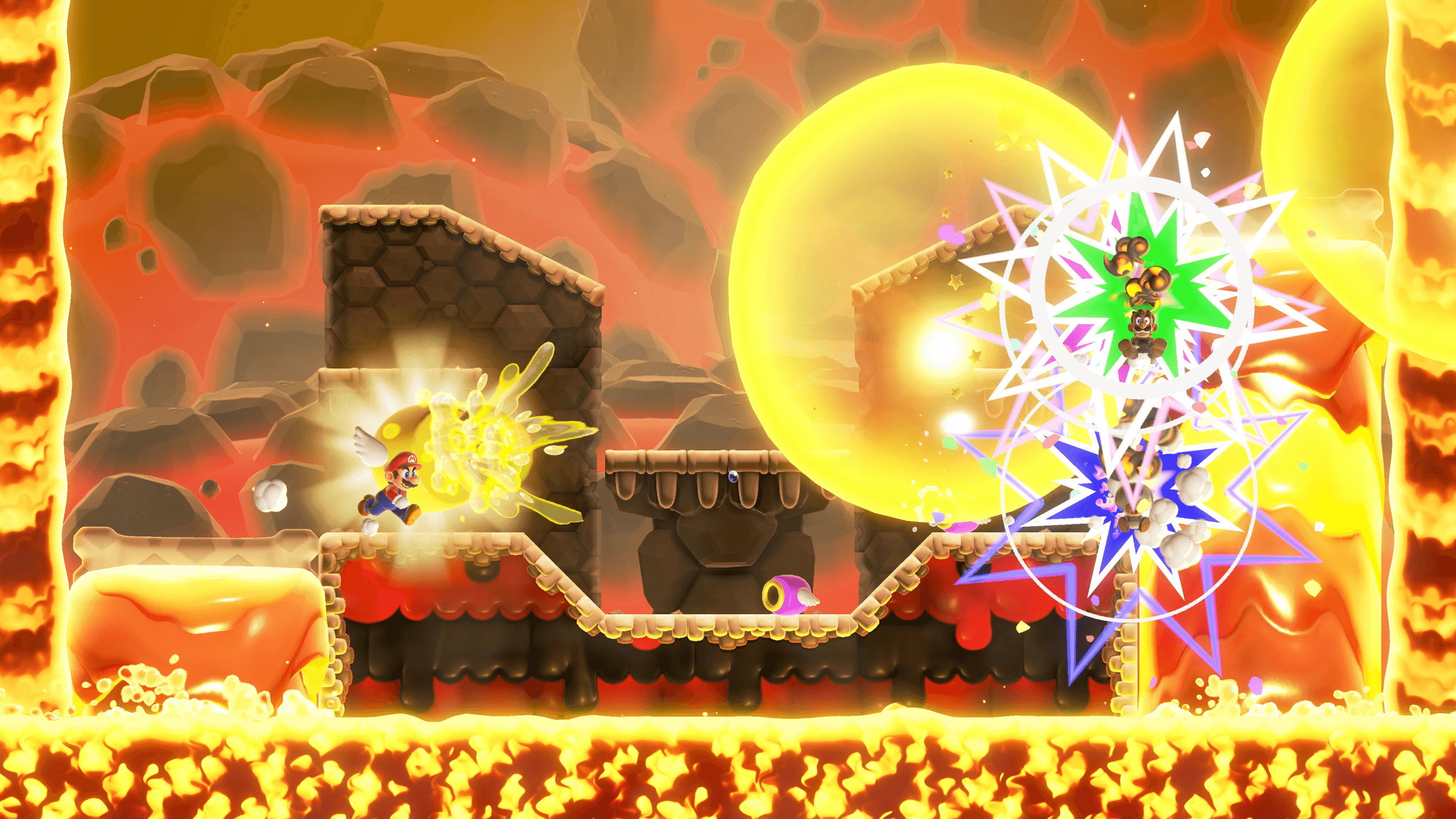
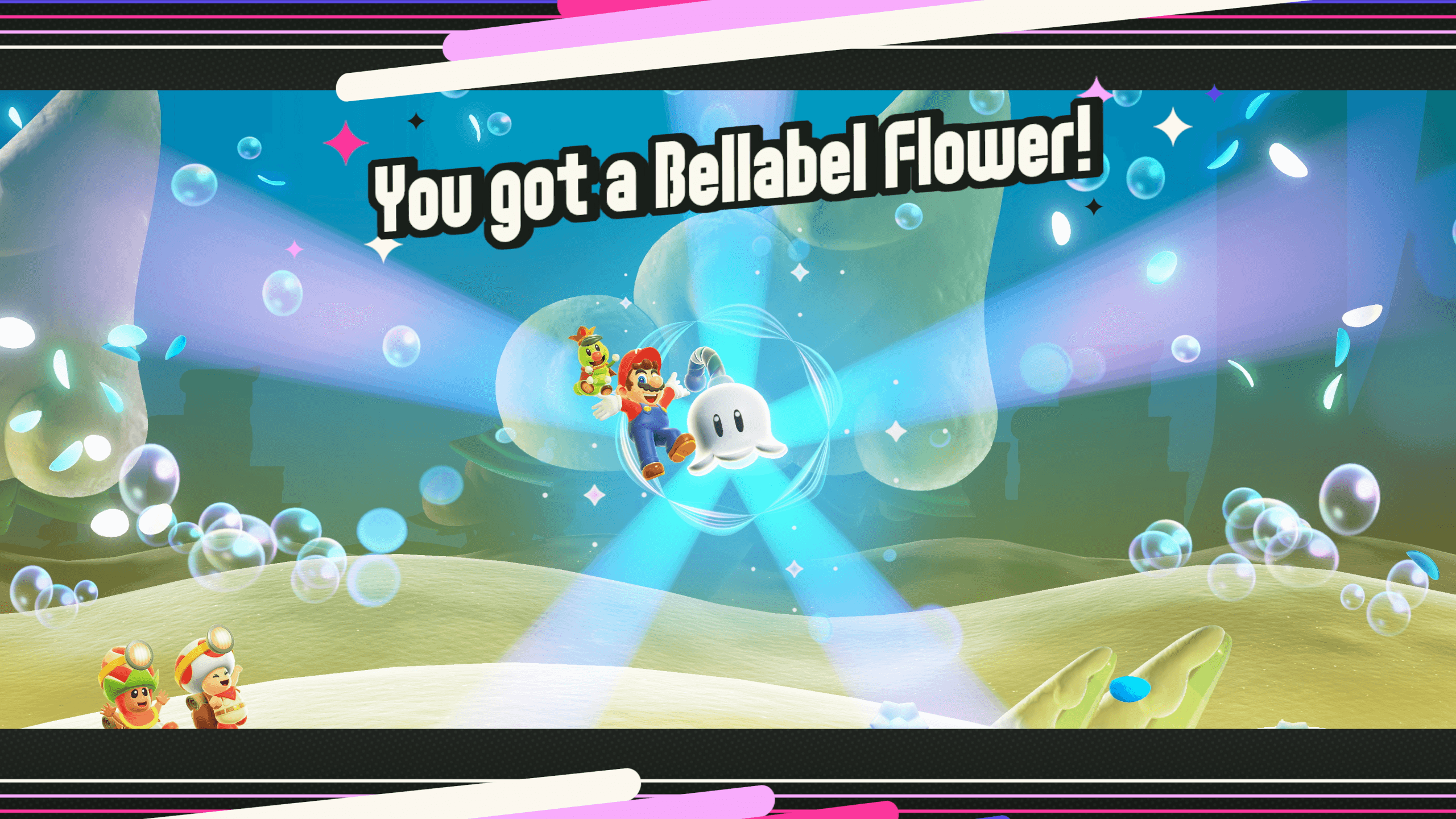
True, the two iterations of SMBW (tsk, see, I can abbreviate too) don't have very long courses, and they may seem too short and too easy for the players mentioned above. But Super Mario Bros. has always been designed for every generation. The original team led by Miyamoto deliberately put a mushroom among the first blocks of bricks and made it bounce off a pipe and head back towards you, so you'd grasp how important it was. We get the same déjà vu at the start of the latest game. Nintendo even bills it on the game's page as “great for beginners”, offering characters like Yoshi and Nabbit, who take no damage, and the Switch 2 version has an Assist mode in which you simply can't die. In fact, the difficulty isn't about avoiding death, because on top of the hundreds of coins you collect, you can happily buy dozens more lives from the shop. Where it gets tough is finding the mysterious Wonder Flowers, so you can gather the number needed to unlock levels. Revealing one of these flowers turns the course into a magical field, everything speeds up, the pipes come to life and the road to the finish gets shorter. It reminded me of discovering the secret worlds in the first game.
World 2 (story)
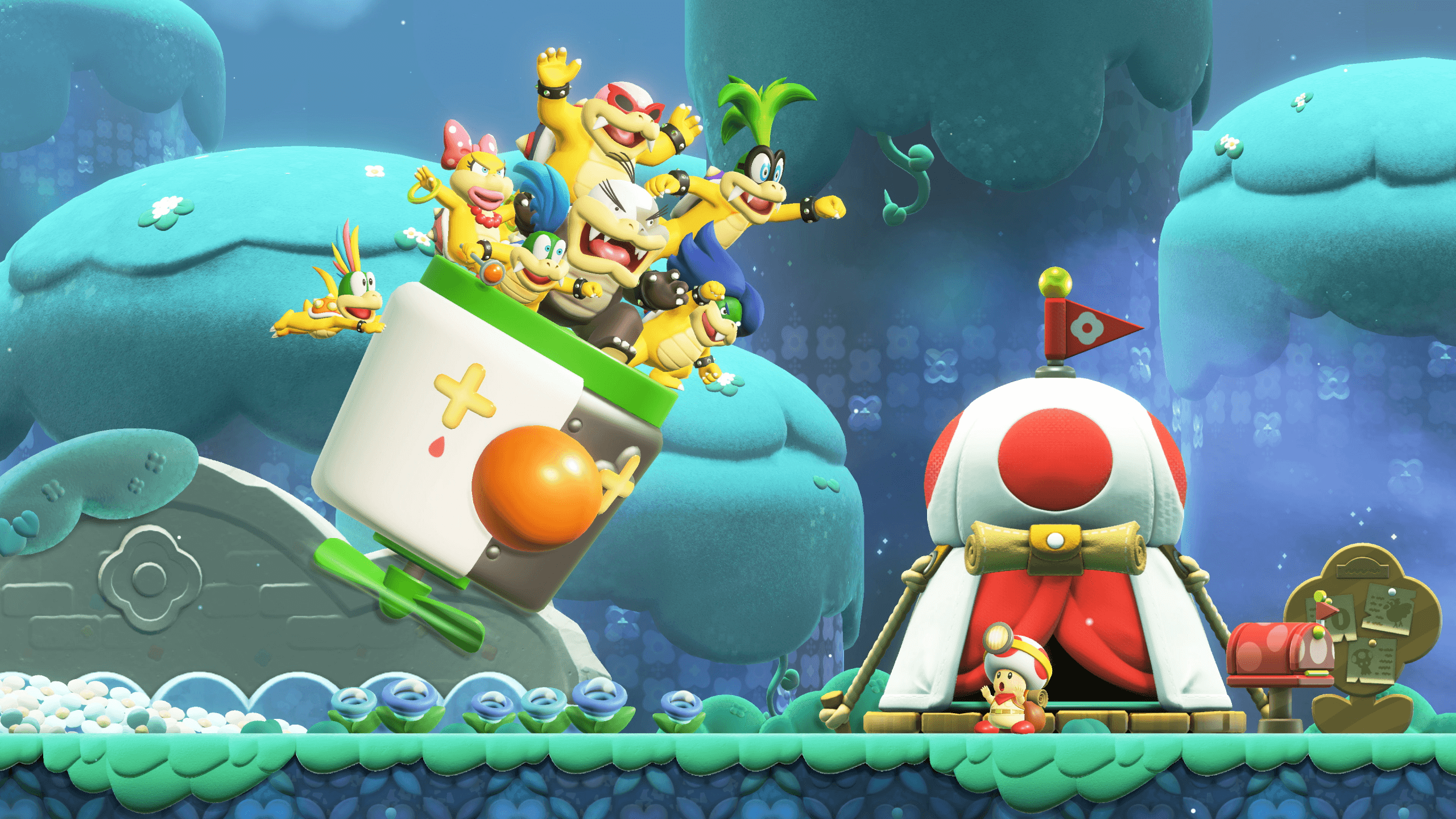
So what's the deal with these magic flowers? Well, Mario and his gang of 13 friends decided to leave the mushrooms alone and go for pansies! Apparently the effect is stronger… And the big honcho is a chap called Prince Florian, on whose turf Bowser has dared to trespass. With Medellín-grade nerve, the turtle turns the prince's castle and all his fortresses into his own strongholds. Mario, annoyed that his friend's business is being wrecked, summons the whole gang to free the six worlds of the Flower Kingdom. Where else is he going to pick lilies of the valley to give to princesses?! The twist Bellabel Park brings to the story is that the Koopalings have stolen the bells from the magic sprout in Lily of the Valley Park, so you'll have to get those back as well.
World 3 (enemies)
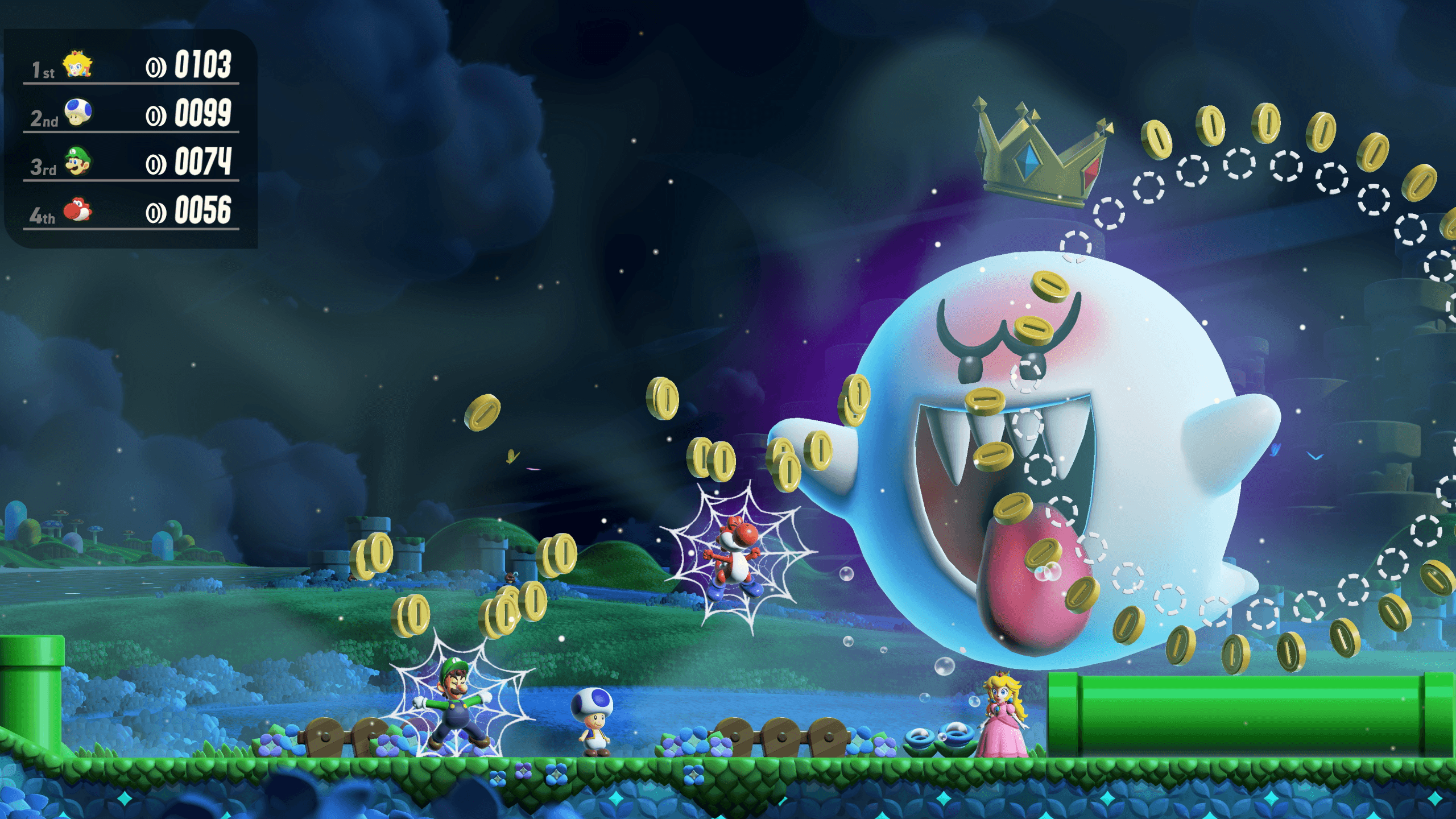
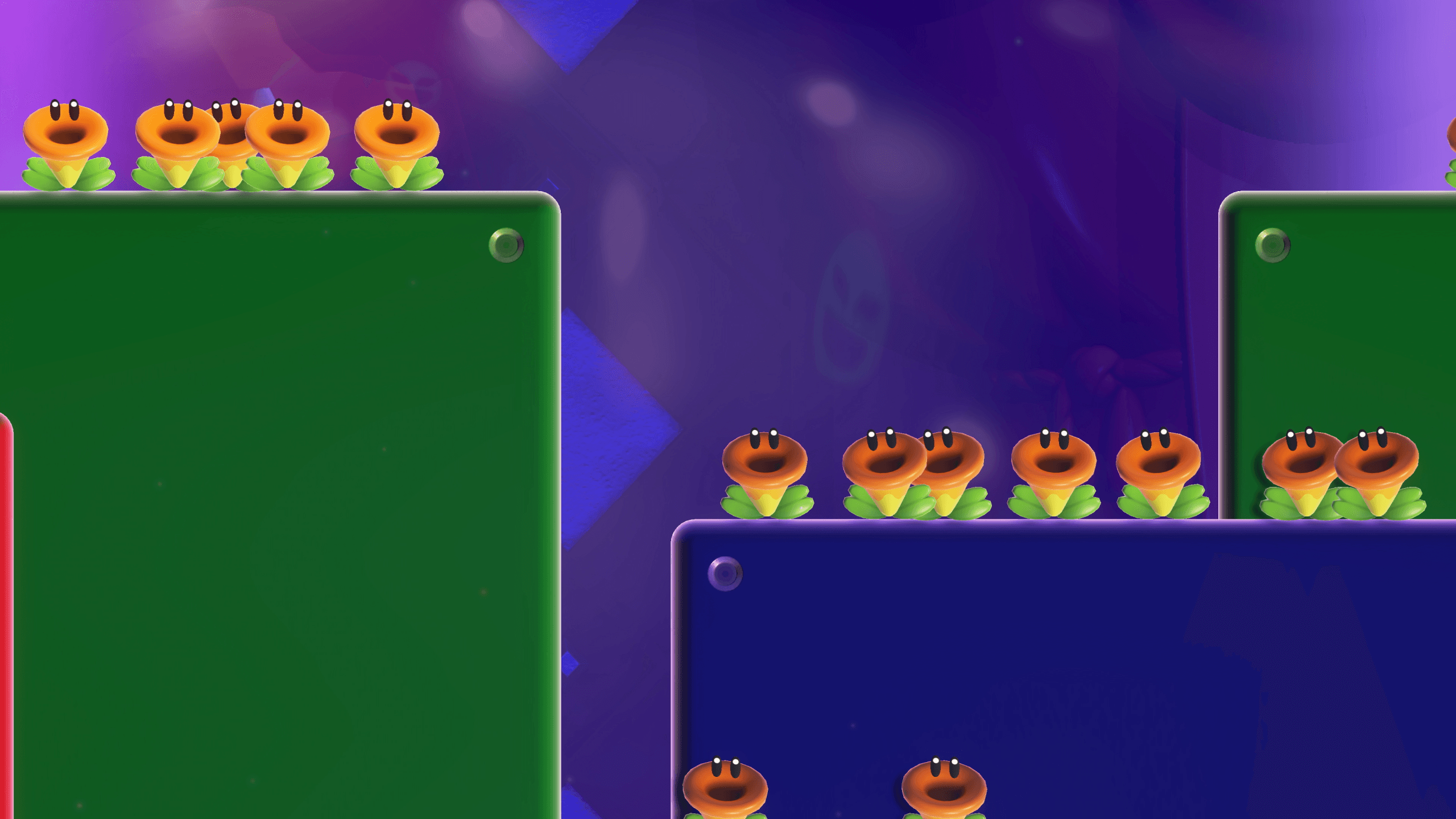
Along the way, Mario runs into old acquaintances from the neighbourhood, such as Goombas, Koopa Troopas, Piranha Plants and Bullet Bills. Our lad knows these lot already, and they haven't been real challenges for ages. But Mario forgets he's not on his princess's turf, and he comes up against cheekier customers. Hoppycats are the most annoying: they jump when you jump. Bulrushes look like little bulls, but they're easy to handle. Maw-Maws are adorable creatures too, but they don't know to cover their mouths when they yawn, and you risk being swallowed. And among the other contenders keen to relieve you of your lives, I spotted the Mumsies, tall mummies you could unwind into toilet paper rolls to sell to the whole town. Naturally, you regularly square up to Bowser Jr. and, later, Bowser senior.
World 4 (powers)
As for aces up the sleeve, or rather, in Mario's case, tools in his plumber's overalls, he gets a few special gadgets in the form of badges or powers picked up along the way. You earn badges by completing certain courses, or you can buy them from Poplin shops. There are 26 of them, a sort of passive perk giving you abilities like higher jumps, special starting powers, dolphin-style swimming, a hat that doubles as a parachute, protection from fatal falls and plenty more.
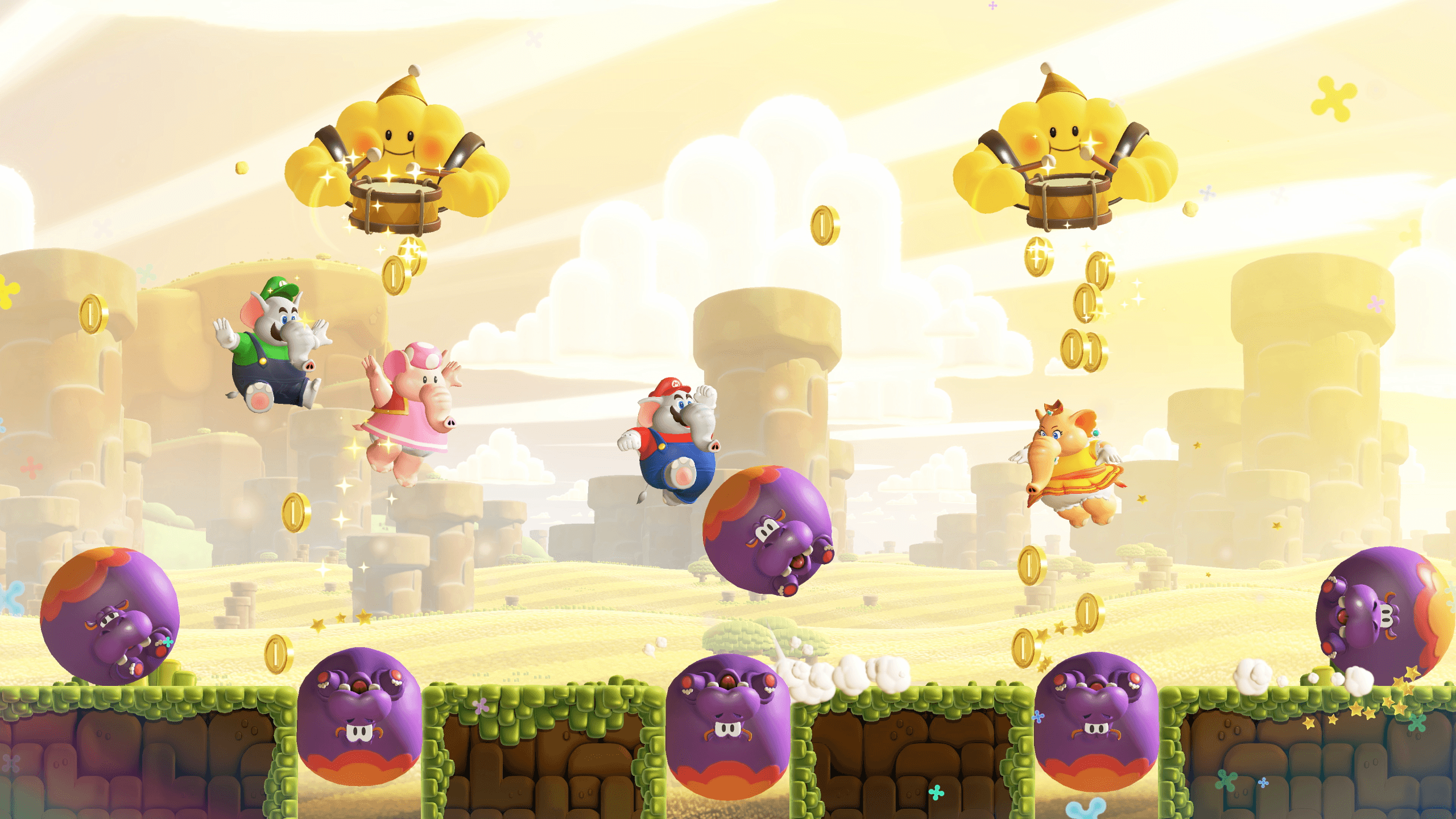
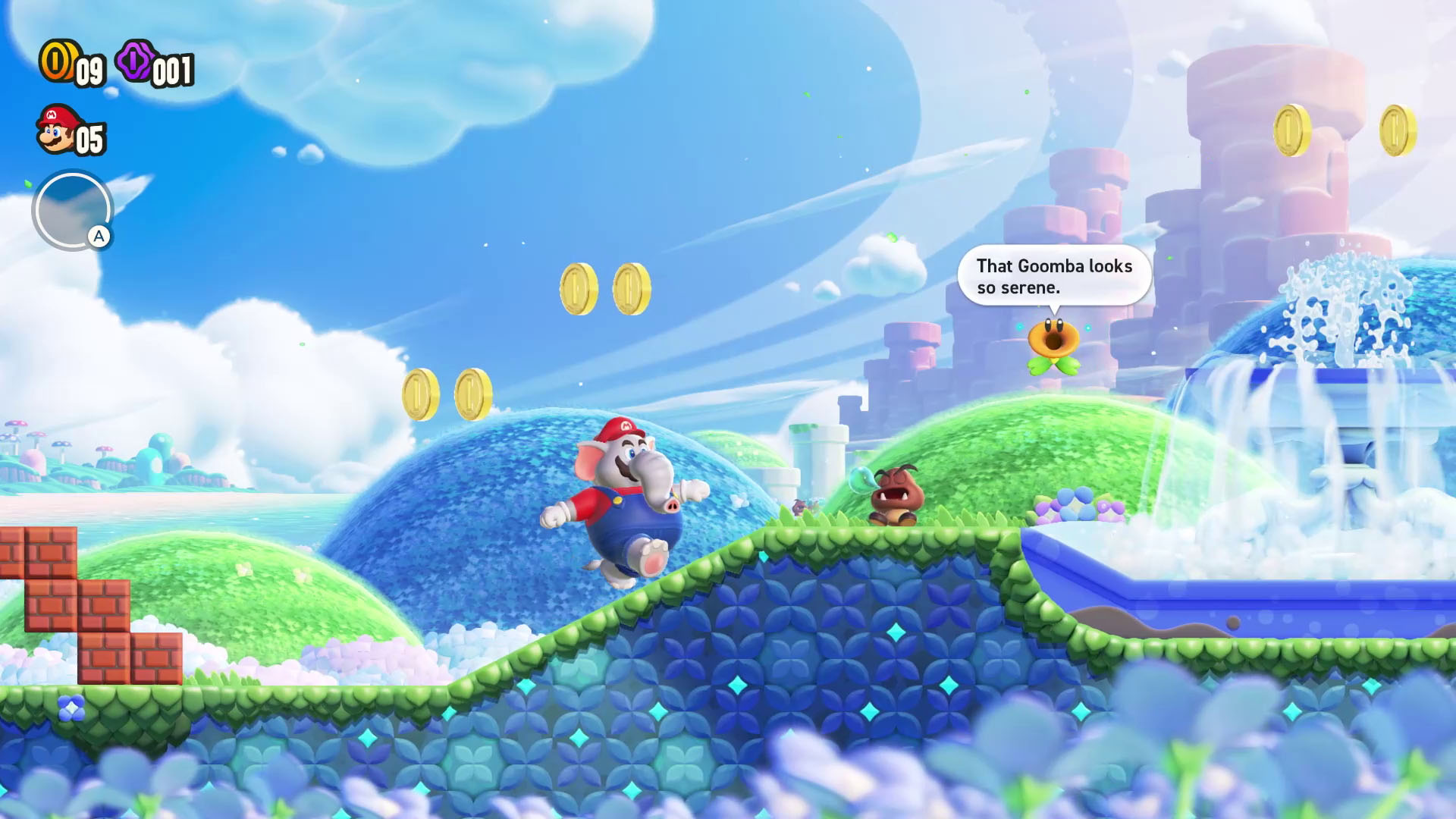
Then, out on the course, besides the usual growing and fire-throwing, you can become an elephant, with a powerful trunk you use to spray around you and make flowers sprout. You can also eat a flower that teaches you to blow soap bubbles so strong they can trap enemies, or that you can bounce on to reach higher ground. The most interesting, to my mind, is the drill form, which lets you burrow into the ground or even the ceiling and pass unhindered under or over any obstacle. The Super Mario Bros. Wonder – Nintendo Switch 2 Edition + Meetup in Bellabel Park version also adds a new power that turns you into a proper little flower of a lad, changing your walk into a skip and letting you attack enemies above you with flowers.
I get the impression Mario knows nothing about plumbing: I've never once seen him use a wrench to adjust a Koopaling's jaw…
World 5 (co-op)
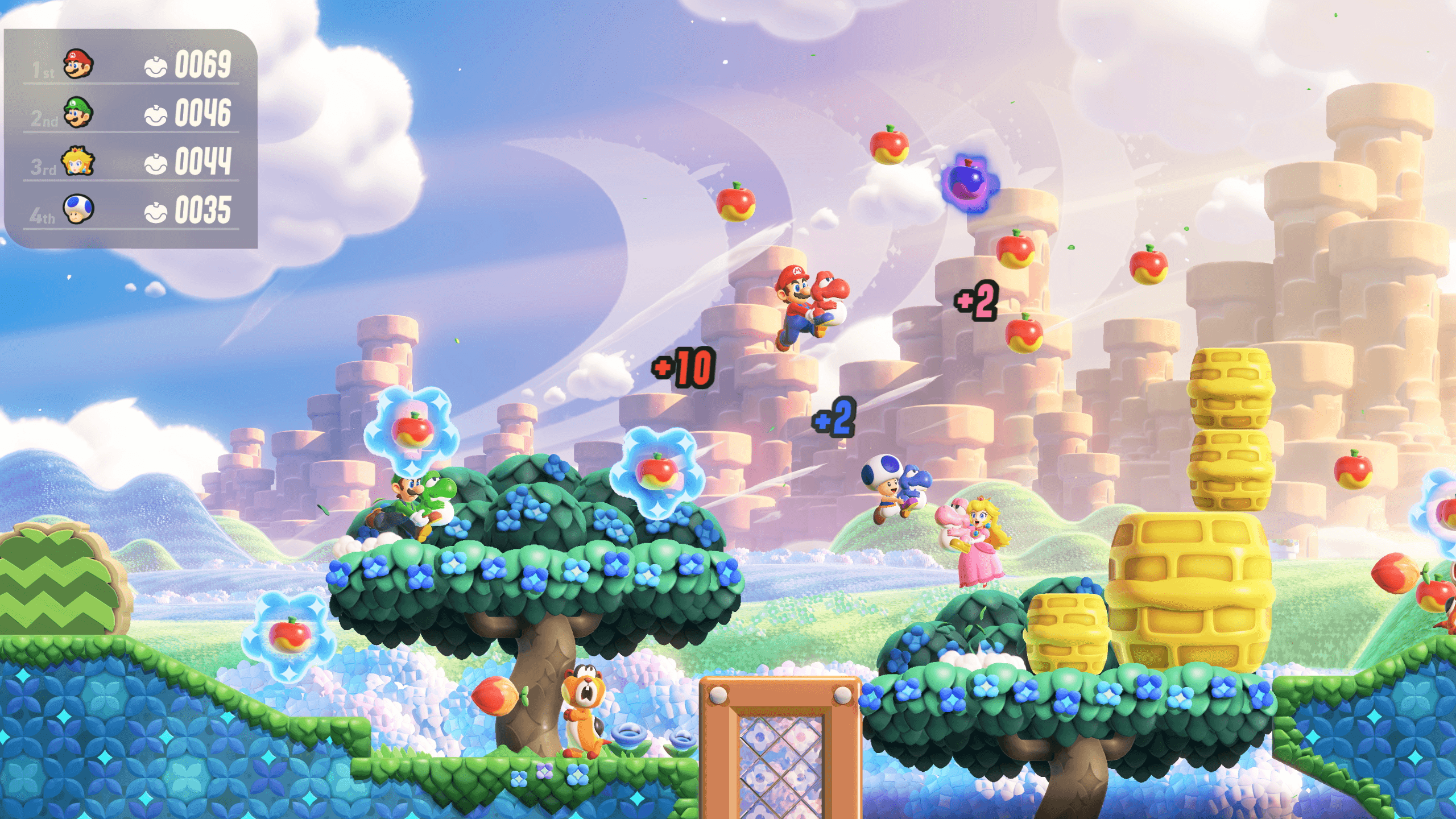
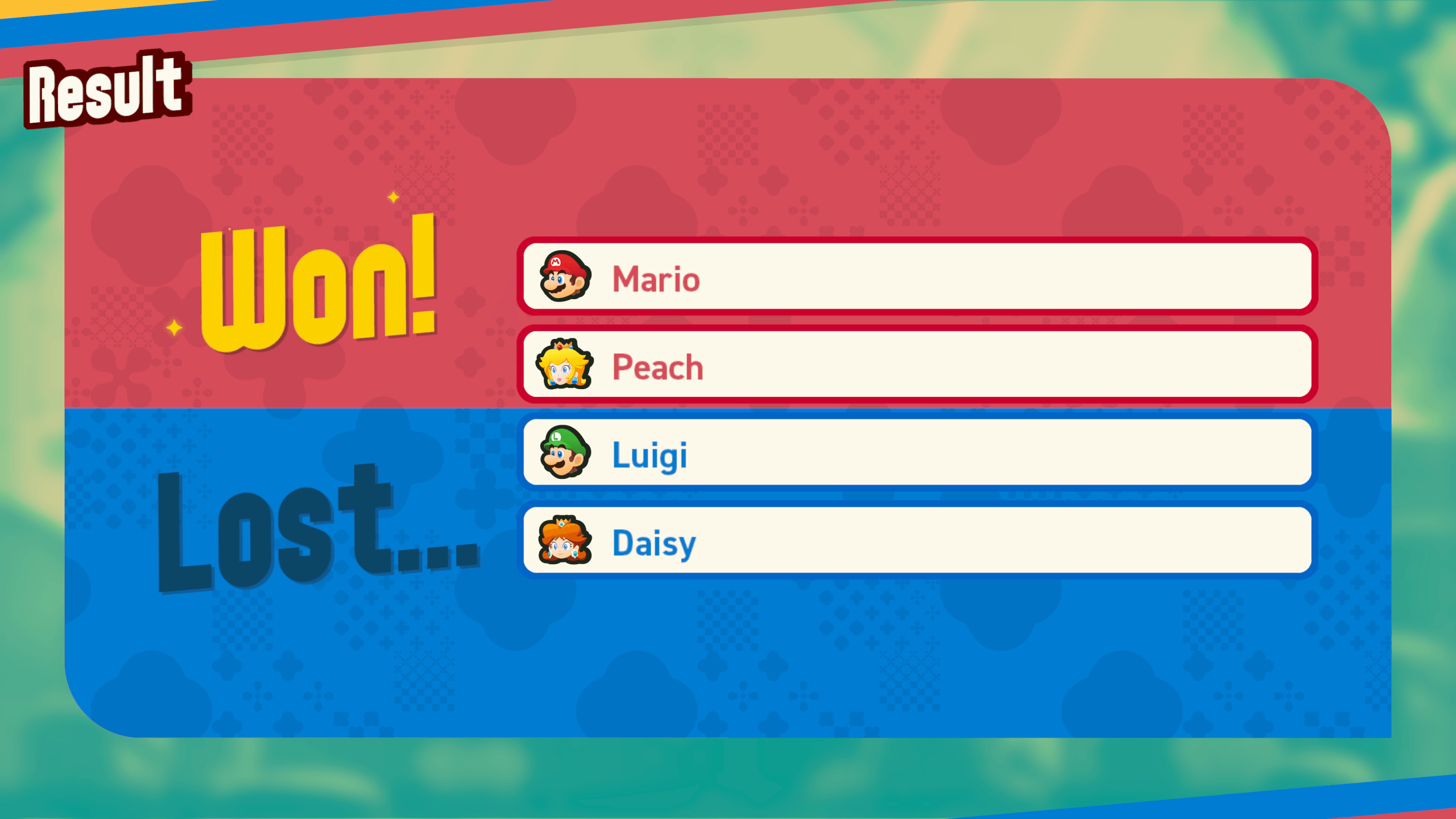
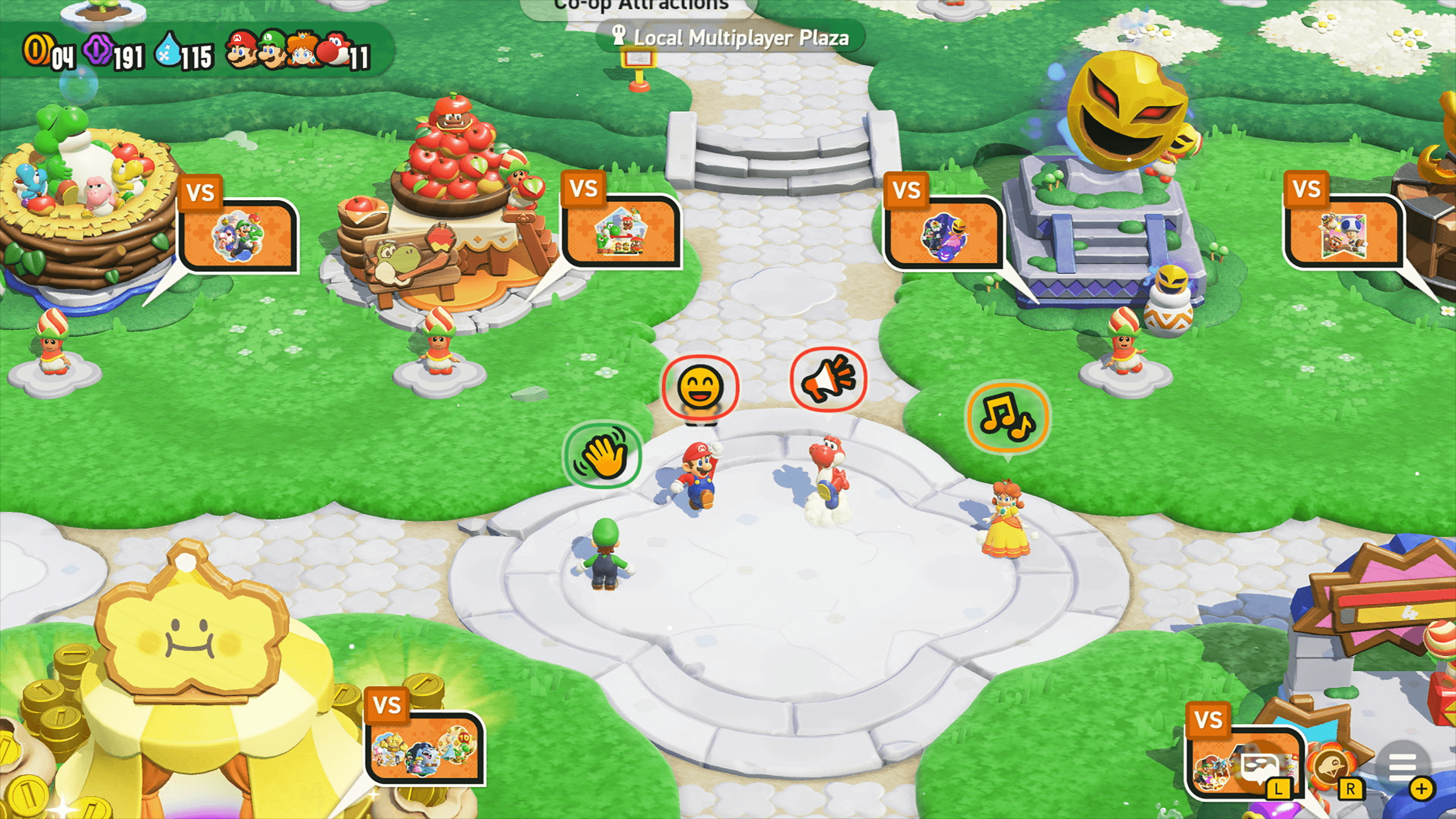
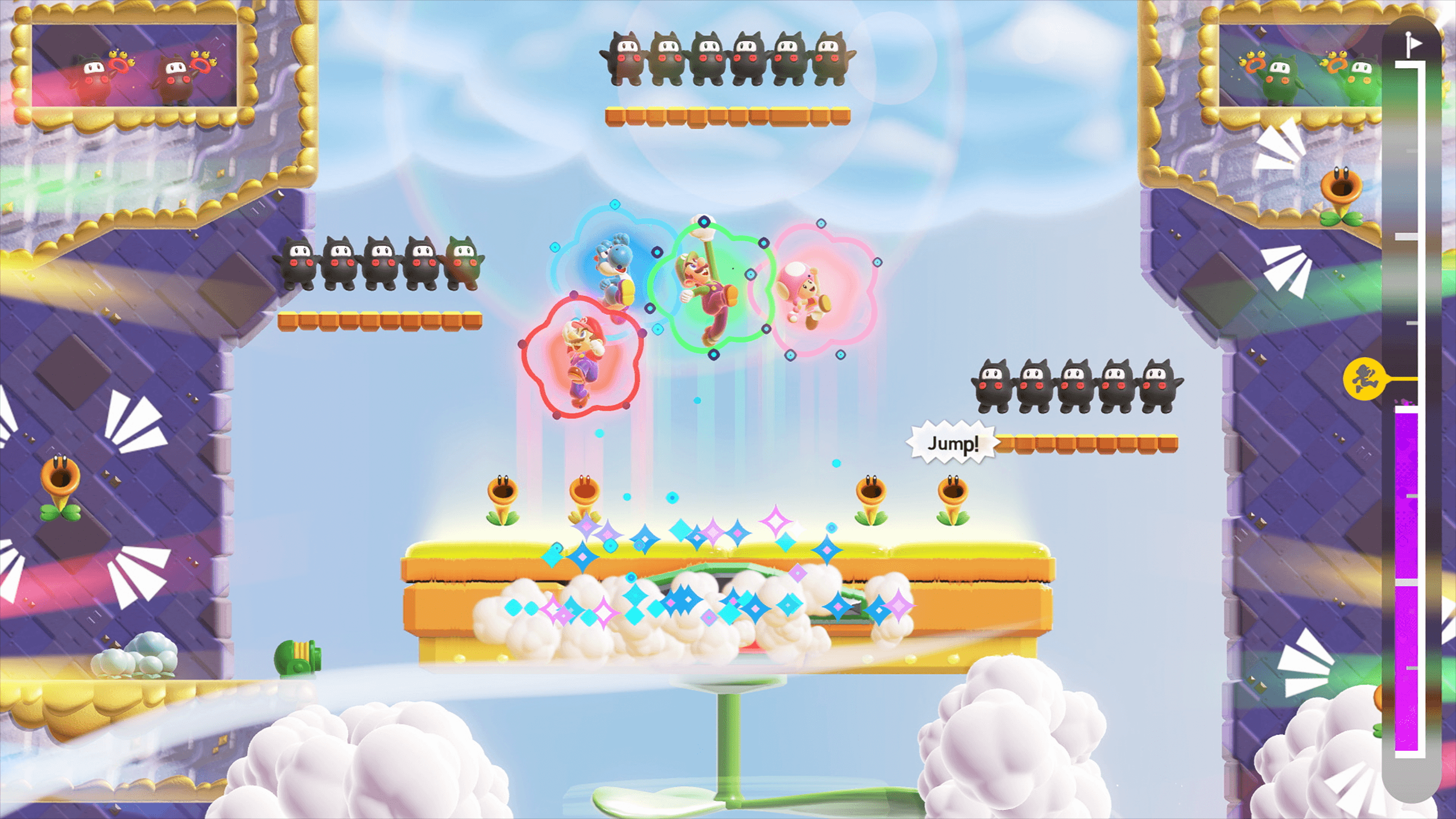
An essential part of the Mario games' DNA is multiplayer, which in this title can be played as local co-op with up to three other friends, or with even more people online. Bellabel Park has two activity zones dedicated solely to these modes. Unfortunately, you can't try them on your own.
Still, this play-together side strikes me as Nintendo's essential trump card. They're the only ones who offer both the games and the console to play them on. And those detachable Joy-Cons are a godsend.
— Wife! Fancy a quickie? Hey, get dressed, look, take this controller and help me get through this level quickly!
With a partner's help, you can carry or be carried, receive power-ups as gifts, or even be revived.
(2028)
— Daddy, will you help me get past Bowser too?
— Of course, my 5-year-old princess! I want to be Mario, what about you?
— Peach, Daddy!
— Alright! Jump in!
The Nintendo Switch and Switch 2 are the consoles closest to the ones I spent my childhood on. Detach the Joy-Cons, prop the console up or hook it to the TV and that's it: you can play with friends and family any time, no headaches, with dozens of titles built for local multiplayer. I bought a Nintendo Switch 2 so my little girl will have something to play, and a way to play it, once she's a bit older. Mario will surely become one of her favourite characters.
Wonder is a good starting point for anyone who wants to step into Mario's fantastic world and see why Nintendo games are so easy to love.
Super Mario Bros. Wonder – Nintendo Switch 2 Edition + Meetup in Bellabel Park simply has to be in the must-have shelf of every Switch 2 owner, alongside the latest Mario Kart, Pokémon or The Legend of Zelda.
Forty years after the first Super Mario Bros., the legend carries on successfully in 2D. It's a fun game with modern visuals, impeccably executed in terms of gameplay and built to suit everyone.
The final score? I wanted to play the contrarian and give it a 9.9, arguing that I only hand out a clean 10 to games that innovate, and here the innovation already arrived in the '80s. Today's game merely updates mechanics and visuals. But you know what?! I'm not a hypocrite like those lecturers who say the top mark is reserved for the professor alone.
Thanks to C.D. Media for the review code and the opportunity to play Super Mario Bros. Wonder – Nintendo Switch 2 Edition + Meetup in Bellabel Park.

Played on: Nintendo Switch 2
Release date: 26 March 2026
Developer: Nintendo EPD
Publisher: CD Media S.E. (Romania), Nintendo (Global)
Plus
- Fun
- Wide variety of multiplayer activities
- Very attractive, modern-looking graphics for a 2D platformer
- 4K resolution on the Switch 2 version
- Atmosphere
Minus
- Mario no longer gets a kiss from the princess at the end, because he rescues the prince instead!
- A title far too long for a rather short game!
0 votes
Scroll down here and stay on the page for at least 30 seconds to vote.
Pick a score from 0 to 10 (halves are allowed).