
Valor Mortis (PC) – Review

NapoleonRunner? Ghost Armée?
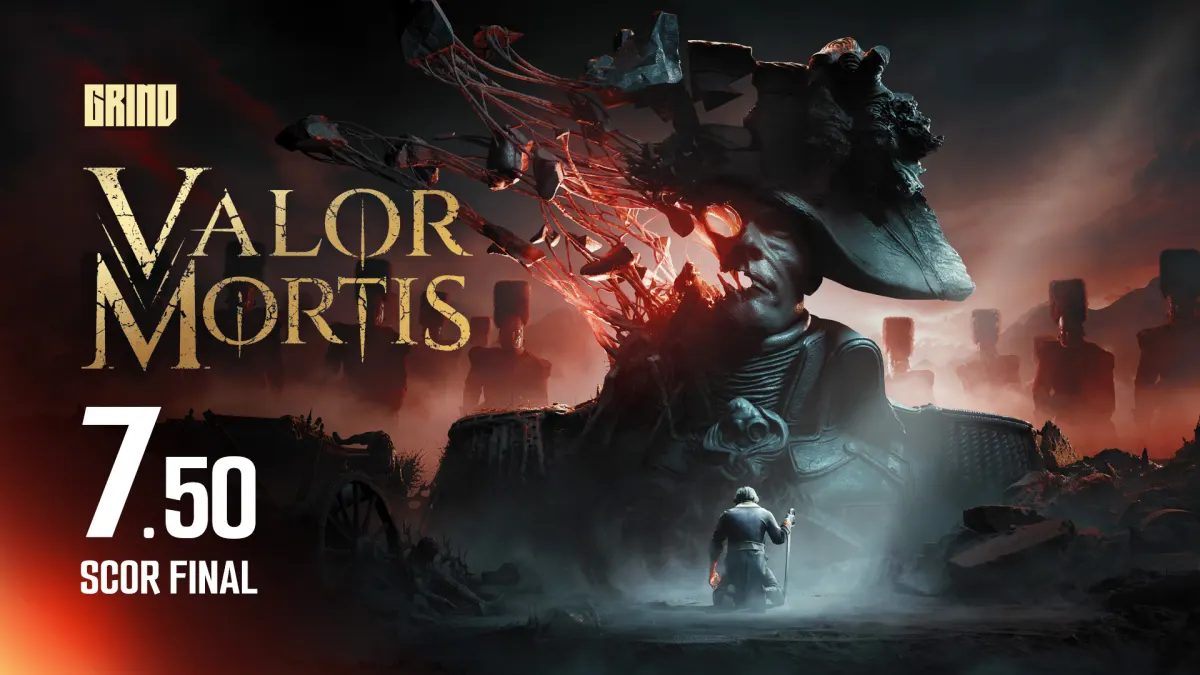
My hype for Valor Mortis died after the beta. Not in the dramatic sense where you delete the game from your wishlist, block the developer on Twitter and swear you'll never buy anything again, but more in the way you look at a game you were waiting for and say "yeah, okay, meh". Still, deep down I really wanted to see the finished game on PC, because the core idea was too interesting to abandon completely: a first-person Soulslike from the people behind Ghostrunner, set in a Napoleonic Europe where war has gradually been replaced by something far worse than angry Frenchmen in cool uniforms. And, to my surprise, I wasn't disappointed. Clearly, things changed between the beta and the final version, and even if not every problem has gone away, the game is more coherent, more confident and closer to the idea that One More Level was probably trying to sell from the start.
That doesn't mean Valor Mortis suddenly becomes the Soulslike revolution. It still wears its influences very openly, and sometimes it feels as though it walked into a shop and tossed a bit of Bloodborne, Sekiro, BioShock, Dishonored and, obviously, Ghostrunner into its basket. But at least it doesn't throw everything into a blender and hope for the best. When it works, the combination really does the job. When it doesn't, you start to see exactly where the pieces were glued together.
Napoleon without the chocolate
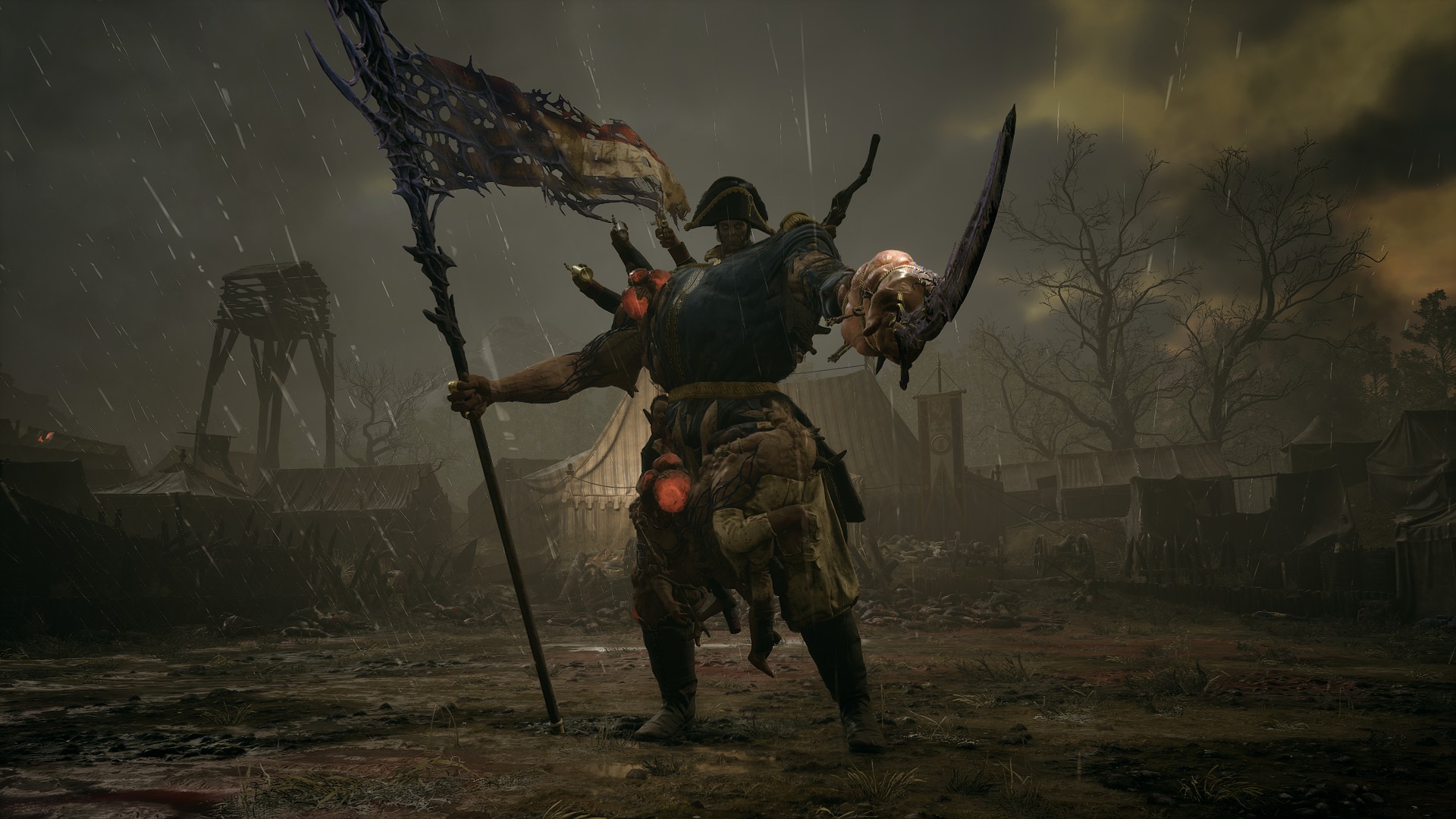
You play as William Dowsett, a British soldier in Napoleon's Grande Armée who starts the game in a rather unpleasant condition, one that's incompatible with life, i.e. dead. Or at least, that's how he should have stayed. William wakes up in a landscape ruined by war and by a supernatural plague that has turned soldiers, civilians and pretty much anyone unlucky enough to be nearby into all manner of monstrosities. In the middle of all this, Napoleon starts speaking directly inside his head, which, honestly, if you wake up in a mass grave and the first voice you hear is the Emperor of France, you're probably not in for a great day.
At first, William is almost completely loyal to Napoleon. He's not the kind of protagonist who climbs out of the grave and instantly says "AKSHUALLY, IMPERIALISM BAD". He genuinely believes in the cause he fought for, and only gradually begins to see what the war meant for the people whose villages and towns the army marched through. This is where Valor Mortis is more interesting than it first seems, because all the body horror and squalor around you isn't just for show. People turned into meat, mutilated soldiers and shattered cities are the visible consequence of that blind loyalty, and the game really does try to build something around fanaticism and the way war changes people before any supernatural plague gets the chance. The problem is that the story doesn't always rise to the level of the setting. The premise is very good, the world is interesting and some side quests carry more weight than you'd expect, but the main thread is sometimes too simple and too predictable for how much the concept promises.
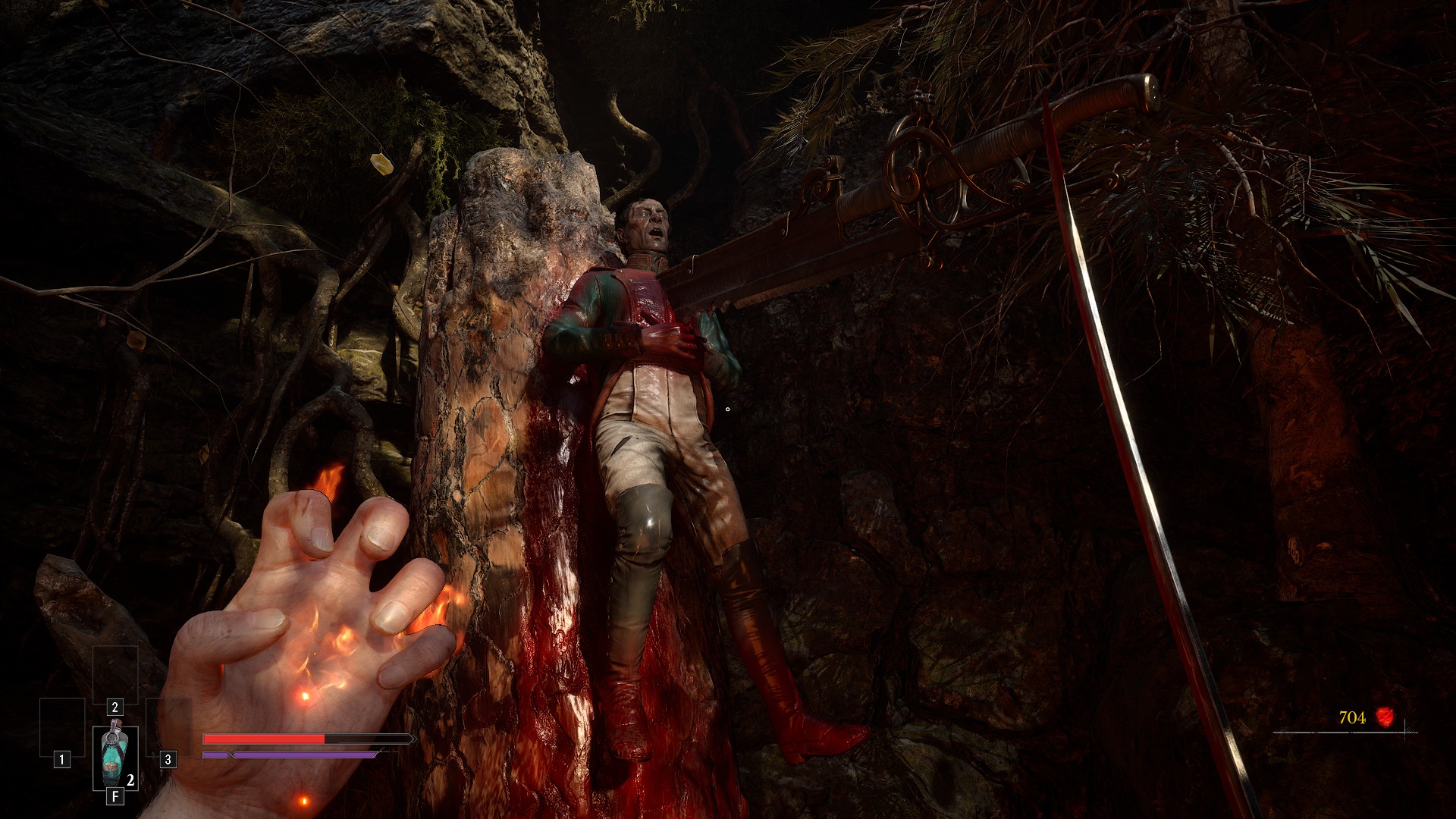
That doesn't make it hard to follow, which can even be a plus in a genre where you sometimes have to read the description of a rusty sock to find out who was king in 1347. Valor Mortis tells its story fairly directly, through dialogue, cutscenes, documents and encounters with NPCs, and William isn't just an empty shell. There's a clear arc in how he sees the war and Napoleon, even if the game doesn't dig as deep as it could have.
A Soulslike or a Ghostrunner?
Although Valor Mortis is pitched as a first-person Soulslike, and technically that's what it is, deep down it still has the soul of Ghostrunner. You feel it in the mobility, in the wall-running, in the rhythm of certain sequences, and in the moments when the game forgets you're supposed to be a dead soldier in Napoleonic Europe and decides it wants to see you running along walls like a cyber-ninja again. That's not necessarily a bad thing. One More Level knows exactly how to do first-person movement, and when parkour is woven naturally into the levels, it genuinely helps exploration and makes the game feel less static than most Soulslikes. The trouble starts when those sequences get too scripted, or when you sense they're there only because "we made Ghostrunner". Sometimes it works brilliantly; other times it feels like two games trying to use the same keyboard.
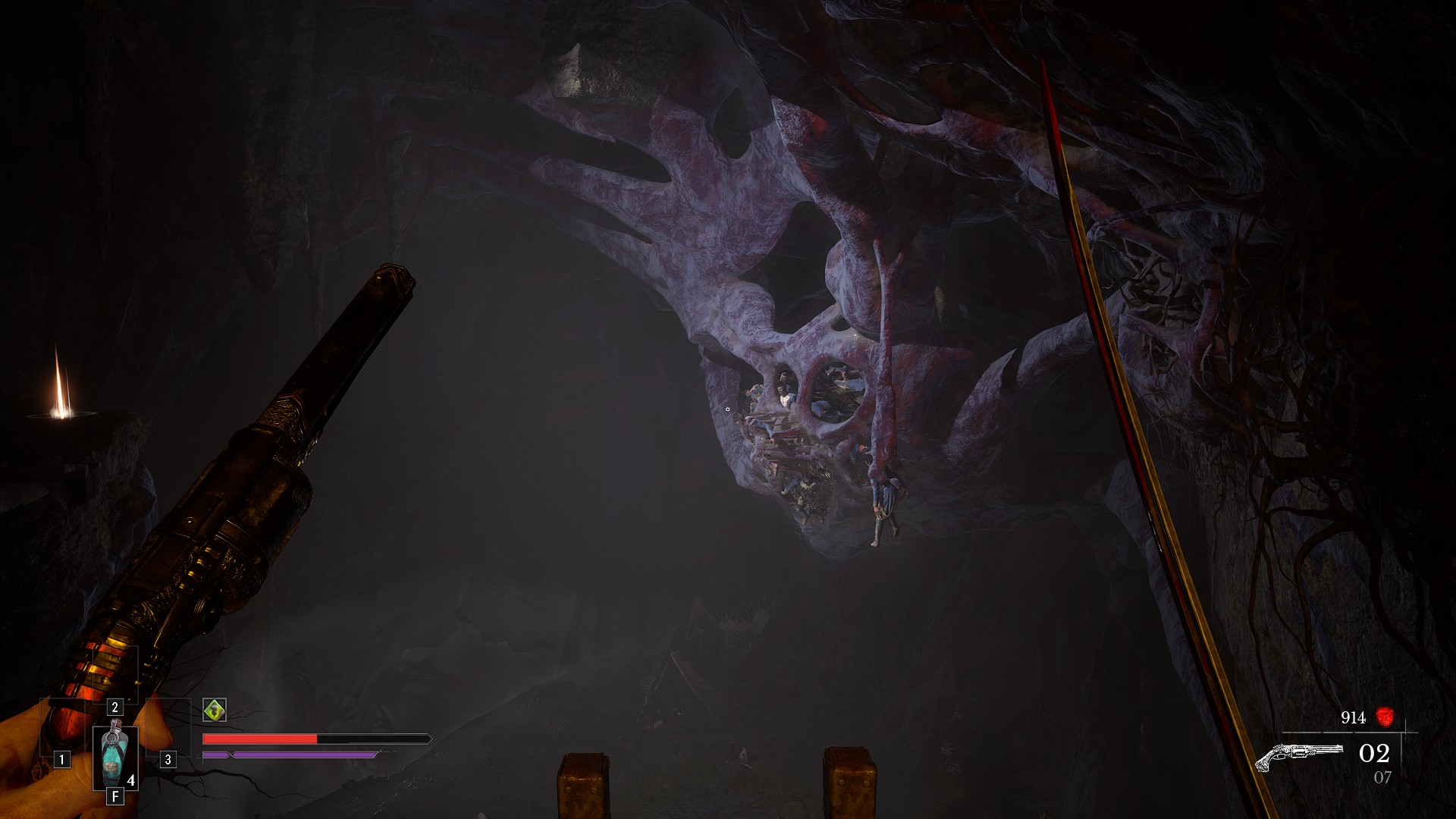
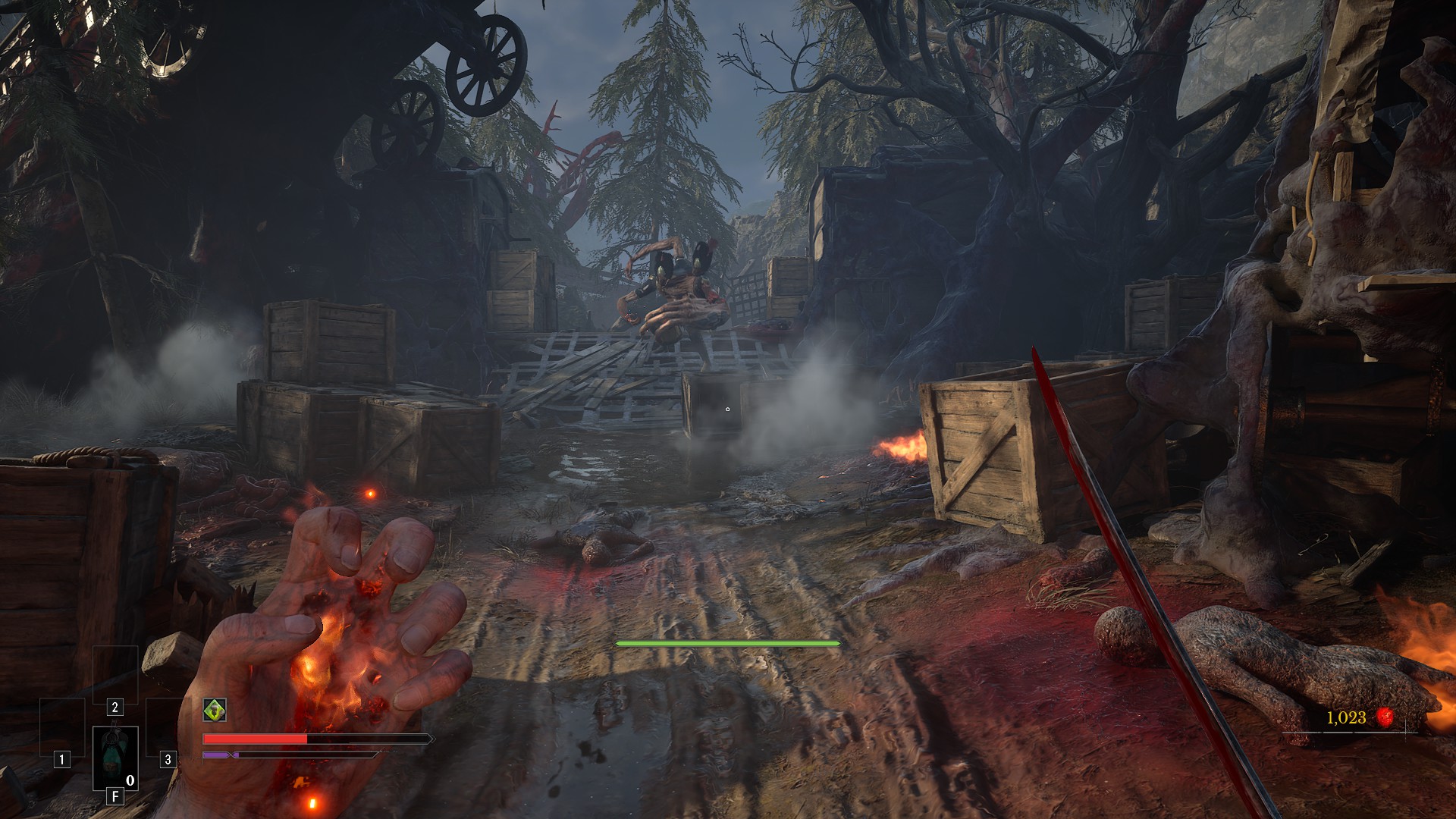
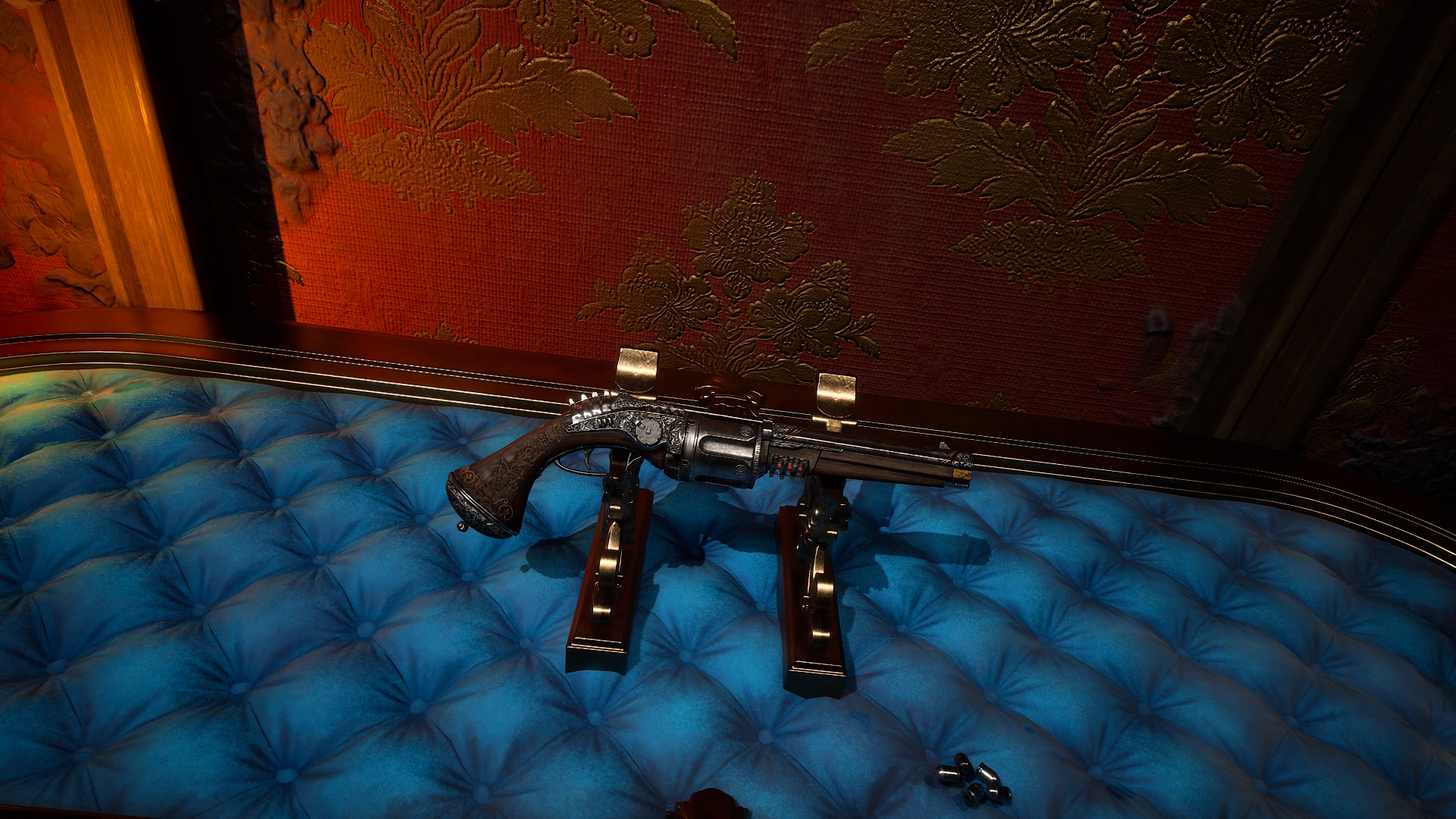
Combat, though, is where the game best earns its keep. You have a sword in your main hand, firearms and Transmutations in the other, and, in theory, enough combinations that you don't play every fight the same way. The sabre is balanced, the rapier leans towards parrying and posture damage, the claymore goes for heavy blows, and firearms help you hit weak points or finish enemies off before you get a whiff of them up close (they smell of onions, I can confirm). Transmutations let you set people on fire, pin them with stasis or use other little supernatural nastiness, and when it all flows into each other, Valor Mortis has a superb rhythm. Parry, riposte, pistol, fire, weak point, execution. It's fast, violent and brutal enough to make you forget for a few seconds that you've just died four times in the same corridor.
Parrying is practically the game's official language. You can block, you can dodge, you can try to behave like a normal human being, but Valor Mortis wants you to learn the timing. Every enemy has its own rhythm, posture has to be broken, and the ripostes are satisfying enough that you'll actively hunt for them. First-person helps a lot here, because the sword doesn't just sweep past your character somewhere on screen, it comes straight at your face. When it works, one-on-one fights are excellent. Once you've got three or four enemies around you, though, the camera starts to remind you why most Soulslikes are third-person.
Which brings me to one of the most dubious decisions on PC: the target lock-on. In a third-person Soulslike it makes sense. In a first-person PC game, where the whole advantage of the mouse is that I can whip my head round 180 degrees as if William had just heard the taxman was coming, lock-on strikes me as close to an atrocity. The moment you lock onto one enemy, BAM! that freedom vanishes and you start staring obsessively at the same bloke while a monster chews on you from the left, another from the right, another from behind and probably one from under the bed. Yes, you can play without lock-on, and that's probably the more natural way to play with a mouse, but the fact that the system exists, and feels built with a traditional Soulslike mindset, sometimes betrays the clash between what the game wants to be and the perspective it chose.
Then there's the question I asked myself several times: is it unforgiving or just buggy? Because sometimes you genuinely can't tell. Some hits look like they should have connected and don't, some hitboxes can be dodgy, and in crowded fights it's hard to tell "I mistimed it" from "the game just decided otherwise". And in a Soulslike, that difference matters enormously. If I die because I parried too early, fine, my fault. If I die because my blade passed through a monster like a hologram and it hit me from a distance I thought was safe, it gets harder to blame William. I went looking, and several reviews have picked up on exactly this problem with hit registration and inconsistent combat, which explains why some moments are hugely satisfying while others have a faint whiff of "maybe the next patch".
France is gorgeous, shame about the invasion
Visually, Valor Mortis is "the game". Not because it'll melt your graphics card just by looking at the grass, but because it has a very clear art direction. The Napoleonic uniforms, the battlefields, the ruined villages, the flooded towns and the piles of corpses are tied together by a body horror that makes the world look familiar and utterly wrong at the same time. Soldiers who no longer look quite human, deformed bodies, creatures that seem to have once been people, and weapons of war turned into part of their anatomy. It's grotesque enough that sometimes your first instinct isn't to attack but to stare for a second and say "brother, ewwww".
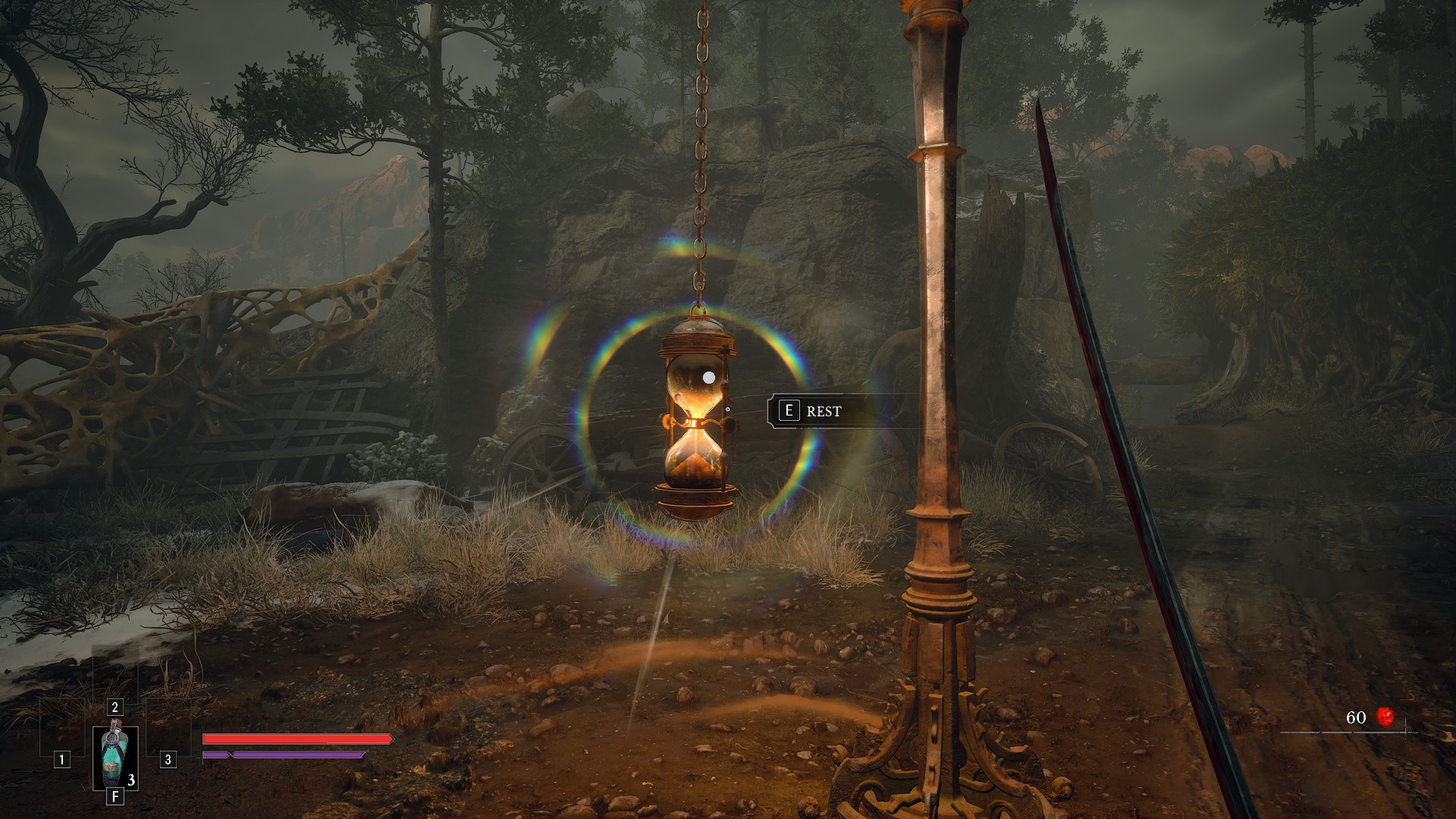
The levels are largely linear, which I don't see as a tragedy. Not every game has to be open world just to give me the freedom to run in the wrong direction for 40 minutes. There are shortcuts, side routes, side quests, minibosses and places you can come back to once you've picked up new abilities, so there's a touch of Metroidvania in the mix too. Lanterns work as bonfires, Catalysts are the resource you lose on death and have to go back for, and Ambers let you tweak your build with passive bonuses. There are also ways to cheese the game, but those are Tudor's secrets and maybe he'll reveal them. The systems are familiar, which is exactly why they can be explained in no time to anyone who's ever touched a Soulslike. At the same time, build variety isn't extraordinary. There are enough options to tailor your style, but this isn't the sort of game where you finish the campaign and say "next time I'll make a necromancer with a hammer and ice magic". You're William. You have swords, firearms, powers and pretty much the same problem with Napoleon whichever Amber you've equipped.
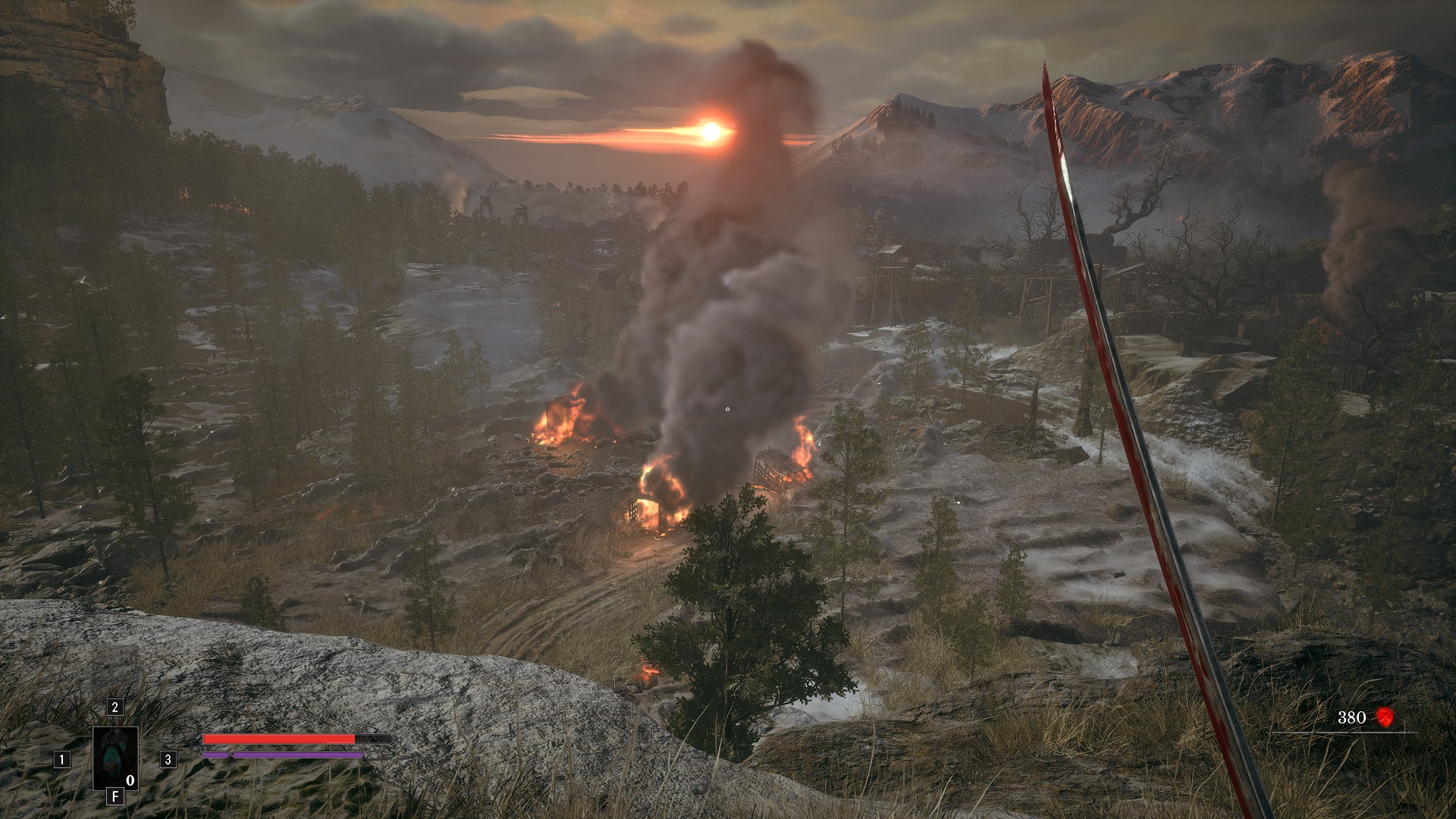
On PC, the experience is also a mix of "looks gorgeous" and "what just happened?". The game can be superb in its wider areas, with very good lighting and vistas in which nineteenth-century Europe looks as if it's been given a DLC by horror's most creative minds, but the technical side isn't entirely free of rough edges. I don't want to turn every glitch into a national tragedy, especially as the final version is clearly in better shape than what I saw in the beta, but there's enough jank to notice, especially in a game where timing and precision matter. When a frame drop or a weird animation turns up in a walking simulator, you shrug and move on. When it turns up as you're trying to parry a blow that can take half your health, you want to throw something else. The desk, computer and all.
The hype died, the game came back to life
I liked Valor Mortis more than I thought I would after the beta and, for me, that's already one of its victories. One More Level took a formula the industry has used almost to exhaustion and moved it into a perspective that genuinely changes how combat feels. It isn't enough simply to stick the camera in the character's head and claim you've reinvented the Soulslike, but here first-person really does add something: duels are closer, parries land with more impact, and the game's grotesque world is literally inches from your face.
At the same time, you can feel the studio wanted to do a lot of things at once. Soulslike, FPS, Ghostrunner, BioShock, a little Dishonored, parkour, Metroidvania, body horror, alternate history, a voice in your head. Sometimes all of that works together very well. Other times each system pulls in a slightly different direction and William is caught in the middle, trying not to die. The story could have done more with its excellent setting, combat needs a bit more precision, and in some of the most frustrating moments you can't tell whether it's deliberate difficulty or simply jank. But the finished game is good. Better than the beta led me to believe. And even if it doesn't turn out to be the first-person Soulslike that changes the rules, it makes a fairly convincing case that the formula works from this perspective too. I'd take a game that tries something a bit odd and stumbles now and then over one that knows exactly how not to put a foot wrong because it never tries anything.
Thanks to One More Level and Lyrical Games for the opportunity to play Valor Mortis.

Played on: PC
Release date: 13 October 2026
Developer: One More Level
Publisher: Lyrical Games, One More Level
Plus
- Very satisfying first-person combat when parrying, weapons and Transmutations work together
- Excellent Napoleonic setting, with body horror and very strong art direction
- Ghostrunner's DNA brings mobility and personality to an already crowded Soulslike formula
Minus
- Hitboxes, lock-on and other small precision problems can turn difficulty into frustration
- The story doesn't always make the most of its very good premise and world
- Parkour and some systems sometimes feel glued on rather than fully integrated
0 votes
Scroll down here and stay on the page for at least 30 seconds to vote.
Pick a score from 0 to 10 (halves are allowed).