
Wrap House Simulator – Review

I stumbled upon a simulation where shawarma becomes management, and chaos is part of the menu…
There’s a precise moment in every Balkan gamer’s life when they realise they’ve spent too much time at a shawarma joint: you start anticipating orders, judging the meat-slicing, and getting annoyed when someone asks for “no onions, but everything else”. Wrap House Simulator seems built precisely from this moment of collective revelation. It’s the kind of game that takes an extremely familiar experience, the neighbourhood fast-food joint, and transforms it into a surprisingly serious simulation, yet relaxed enough to make you laugh when everything spirals out of control.
Released on Steam on 29 May 2025, developed by Broken Lyre Entertainment and published by PlayWay S.A., Wrap House Simulator clearly positions itself in the casual simulation games genre, with an emphasis on cooperation, rhythm, and multitasking. It doesn’t try to reinvent the genre, but it’s not just a gimmick either. Rather, it’s the kind of game that knows exactly what it wants to be: an accessible experience, based on teamwork, constant pressure, and the simple satisfaction of delivering a correct order… on time.
From counter to organised chaos
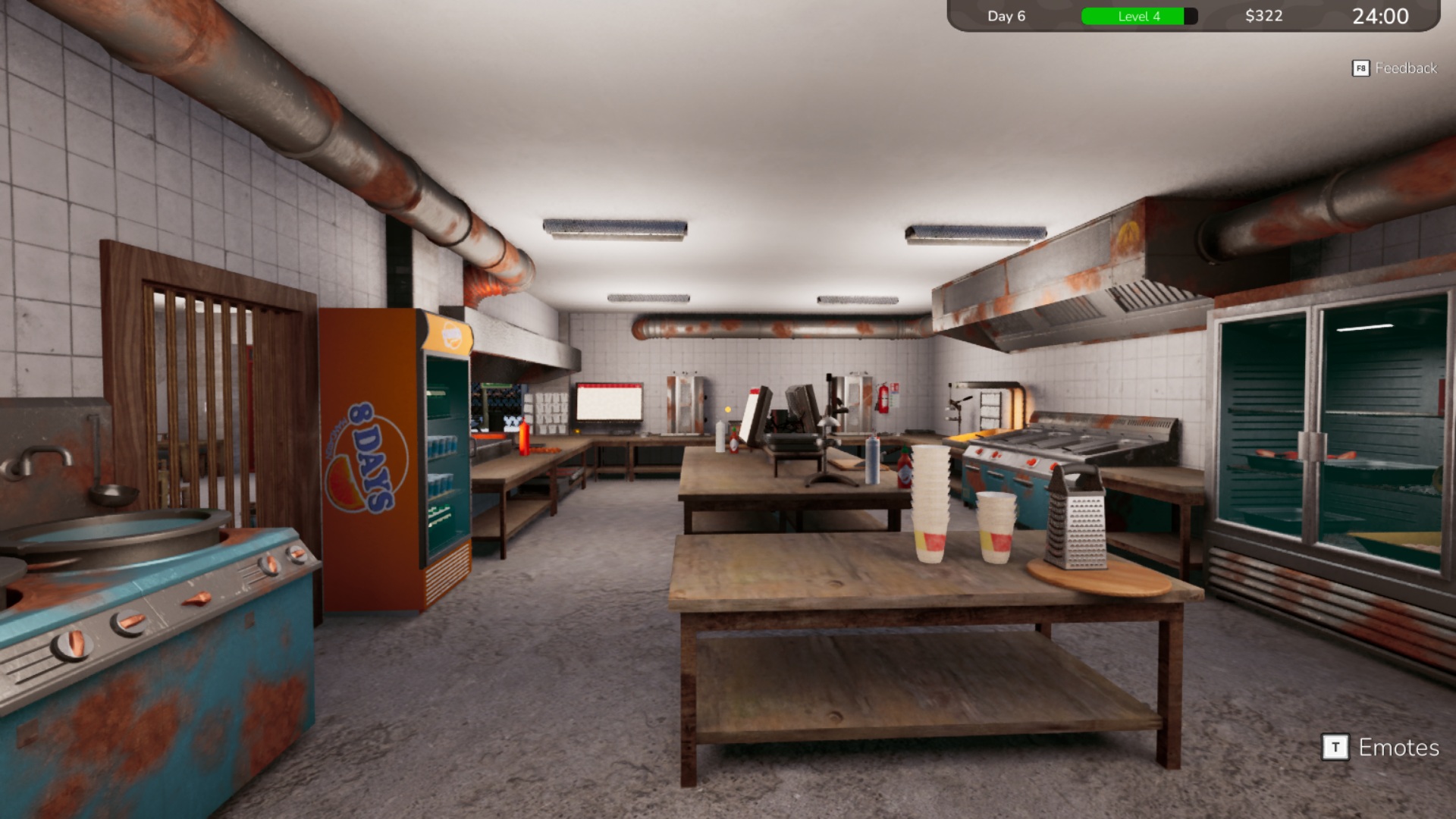
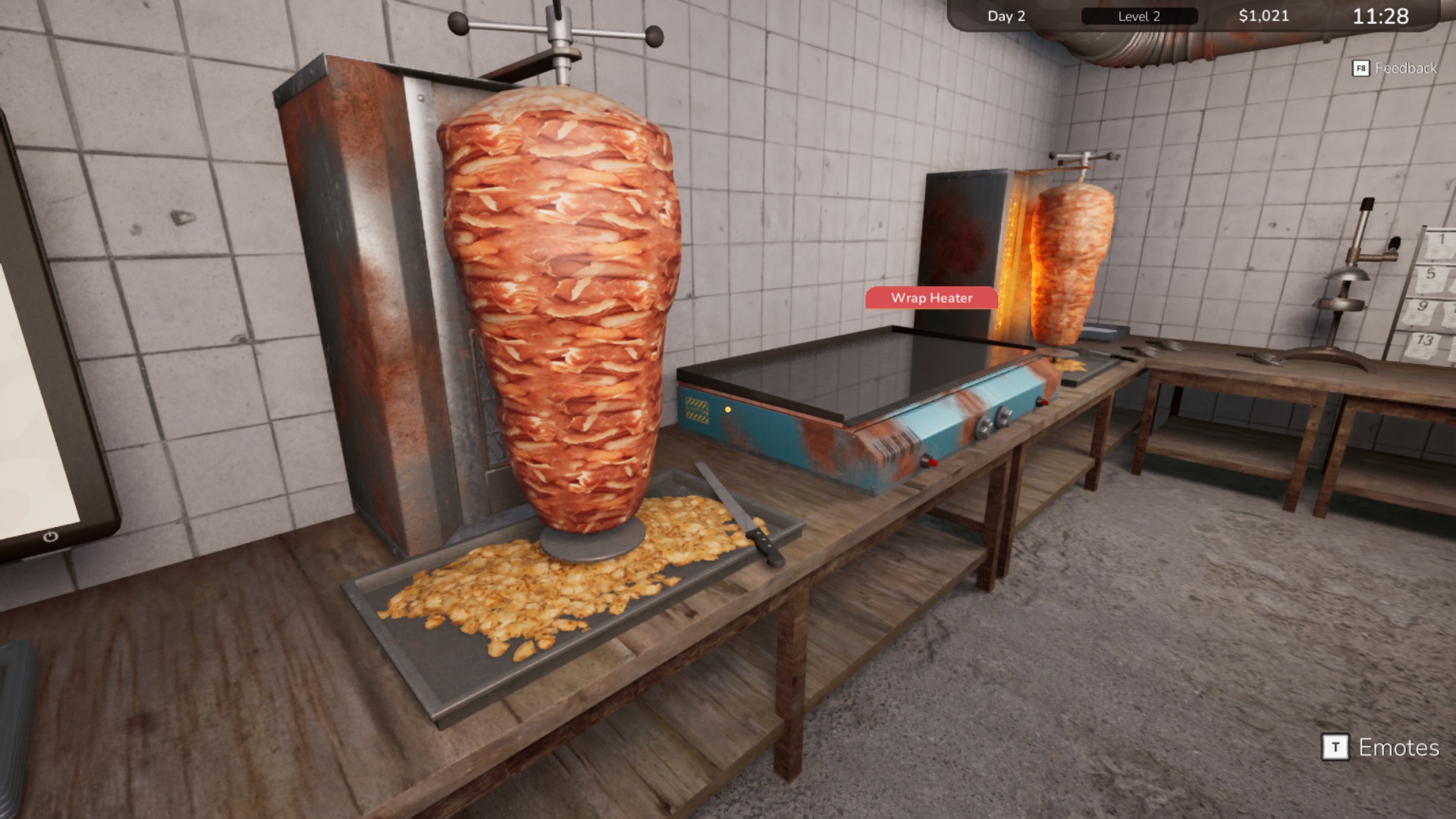
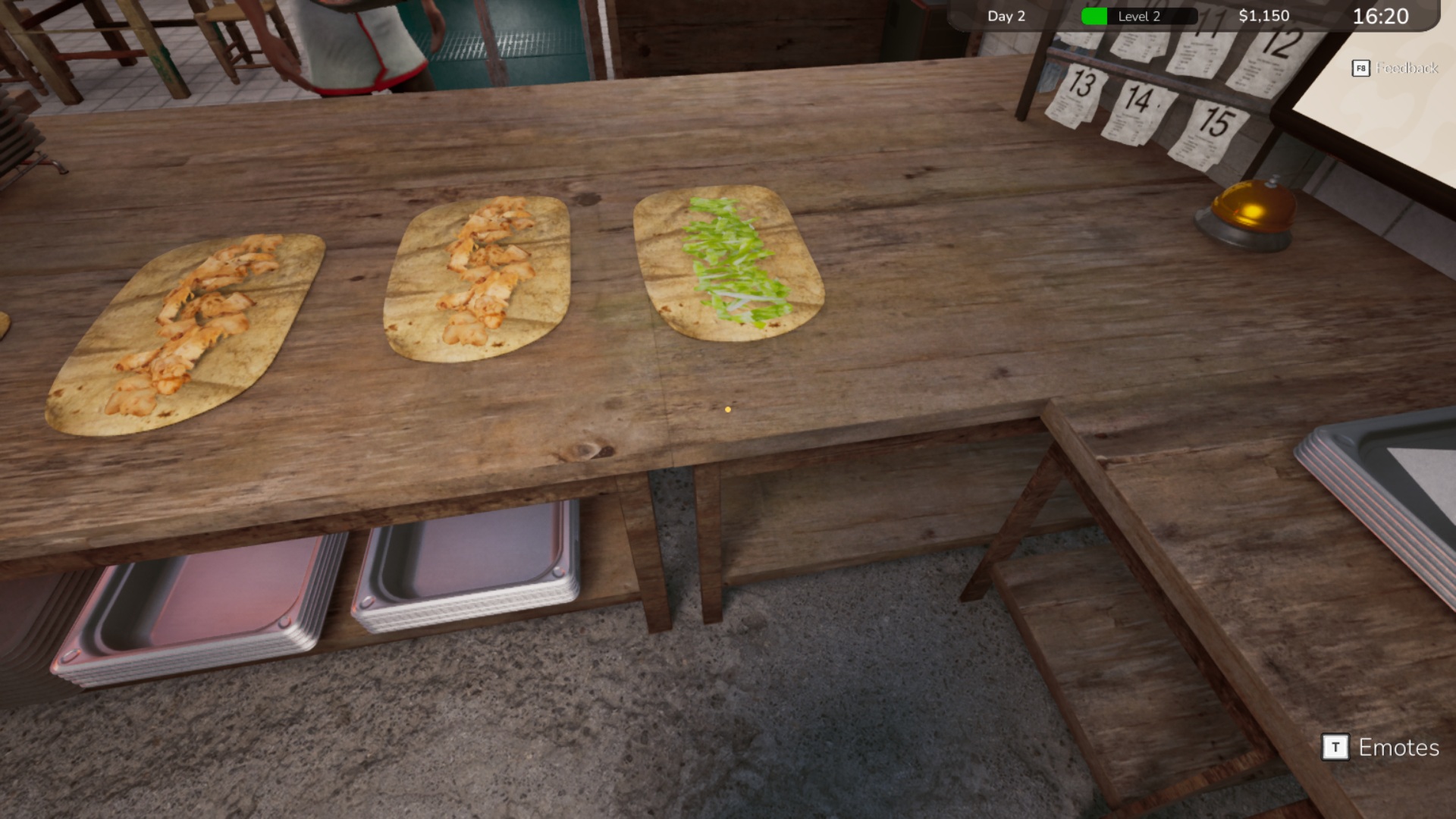
Essentially, Wrap House Simulator puts you in the role of the owner and staff of a small restaurant specialising in wraps. We’re not talking about fine dining or artistic plating, but about fast, efficient food, designed for customers who want to eat quickly and well. The gameplay is built around a very clear loop: prepare ingredients, assemble orders, serve customers, and manage the workflow in an increasingly crowded space.
Everything moves very quickly, and the game shows no mercy if you hesitate too long. The meat must be cooked correctly, vegetables cut on time, sauces applied without hesitation, and the flatbread doesn’t forgive inattention. If you move too slowly, customers become impatient. If you rush too much, you mess up the order. A constant balance between speed and precision is needed, very similar to what you’d see in a real shawarma joint during peak hours.
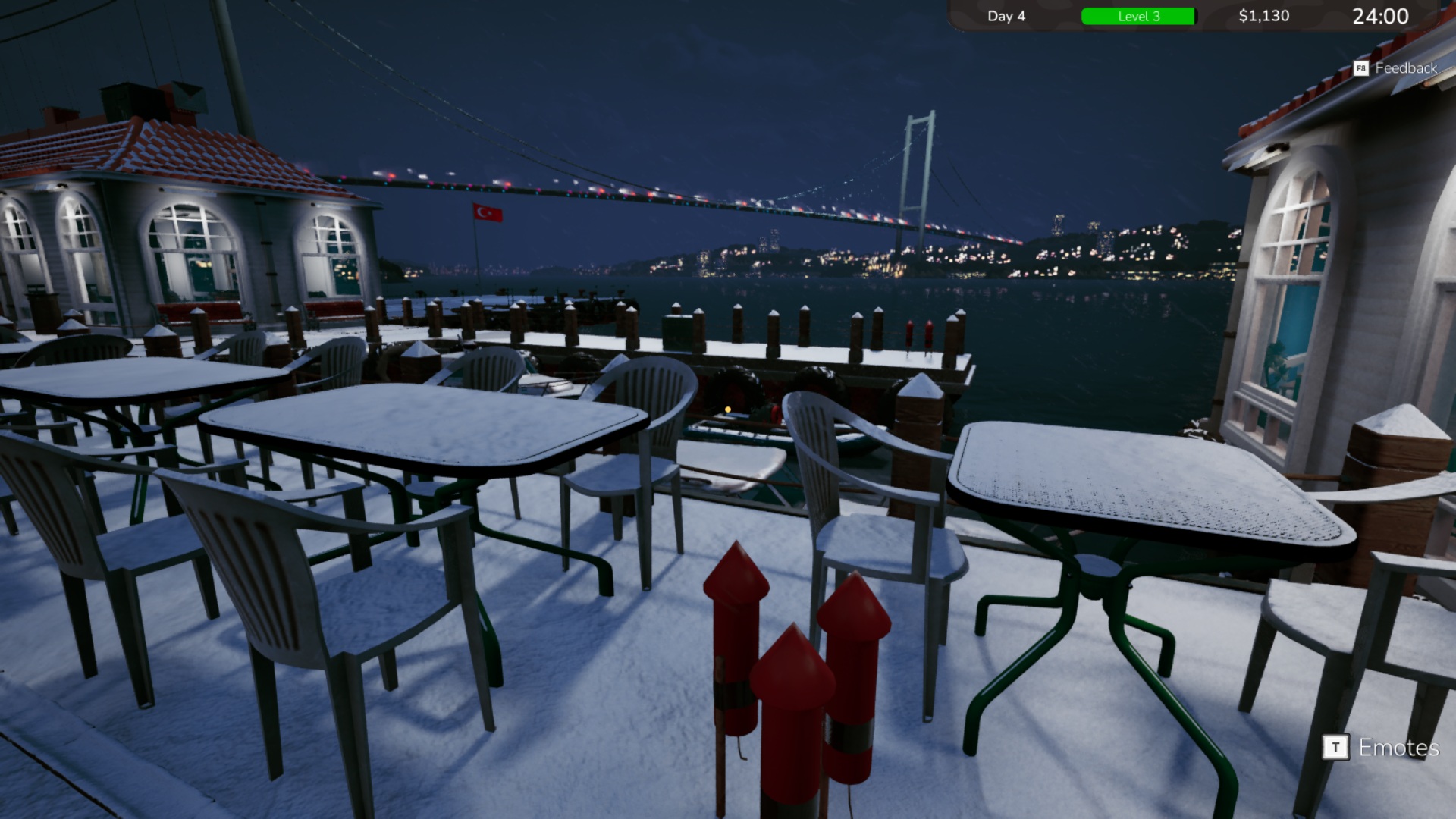
What makes the experience more interesting is that the game doesn’t leave you stuck in a single routine. As you progress, new ingredients appear, more complex recipes, and stricter requirements. The restaurant can be expanded and customised, and equipment can be upgraded to cope with the ever-increasing volume of orders. It’s not a hardcore business simulator, but it doesn’t completely ignore the progression and optimisation aspect either.
Multiplayer: where the real story begins
If playing Wrap House Simulator solo is relaxing and satisfying, its true personality emerges in multiplayer. The game supports co-op for up to six players, and here things quickly transform from “efficient organisation” into “controlled chaos”.
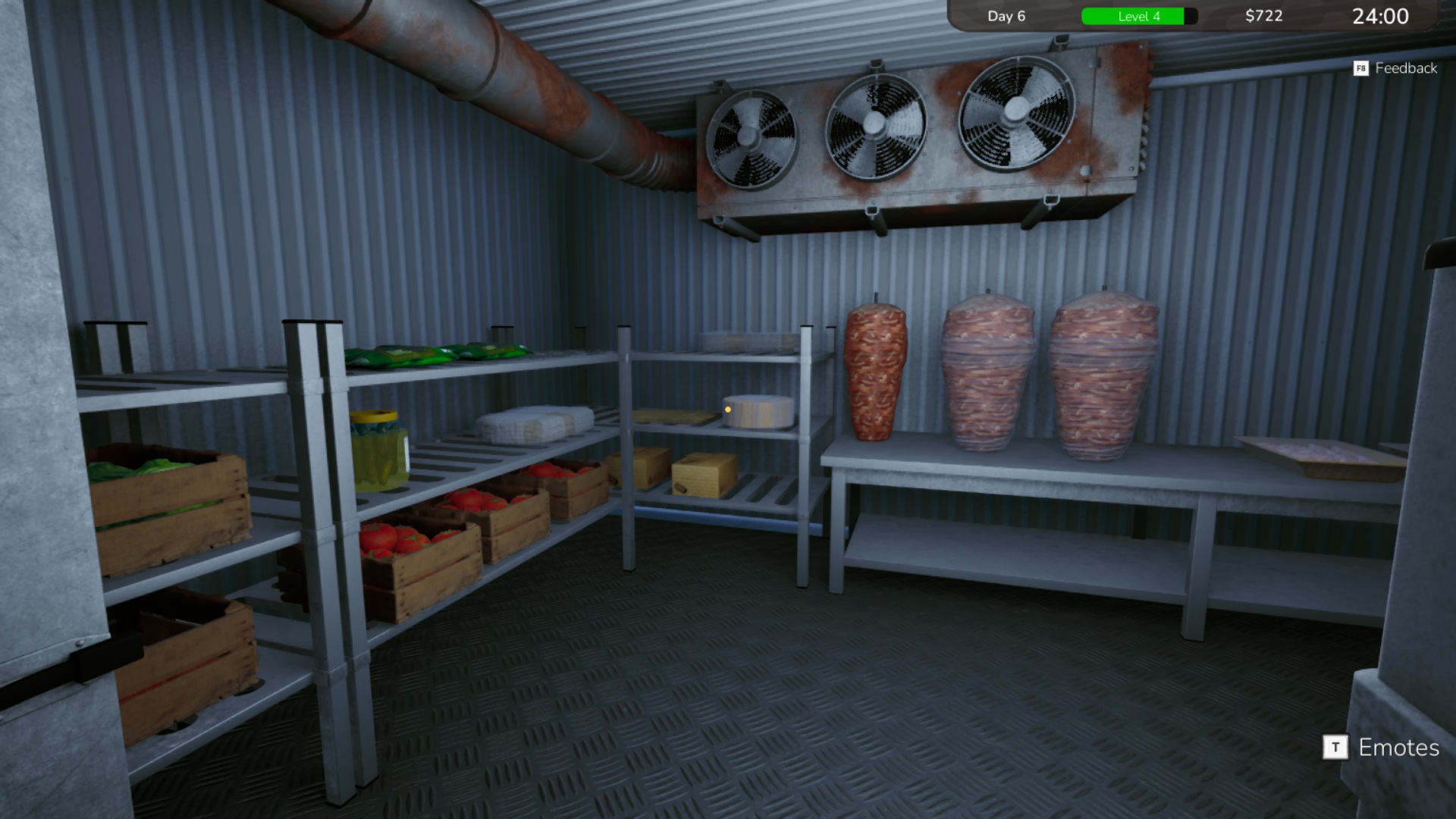
Each player can take on a different task: one cooks the meat, another prepares the vegetables, someone handles assembly, someone else serving. It sounds simple on paper, but in practice, the inevitable Balkan moments arise: “who put the wrong sauce on?”, “why is the meat burnt?” or “who took my order?”. Exactly the kind of arguments that, ironically, make the experience more memorable.
It’s the kind of multiplayer that works very well with friends because it relies on constant communication and accepting that things will go wrong from time to time. There are no dramatic penalties, you don’t lose all progress for one mistake, and the game encourages experimentation and improvisation. In this sense, Wrap House Simulator is closer to a couch co-op evening than a strict simulation.
Why does the culinary theme work?
One of the reasons Wrap House Simulator catches on so well is the choice of theme. The wrap, in all its forms, be it dürüm, shawarma, or kebab, is an extremely familiar product in Eastern Europe and the Balkans. It’s the food after a concert, after a match, after a long night. The game doesn’t assume an explicit cultural identity, but the inspirations are evident and universal.
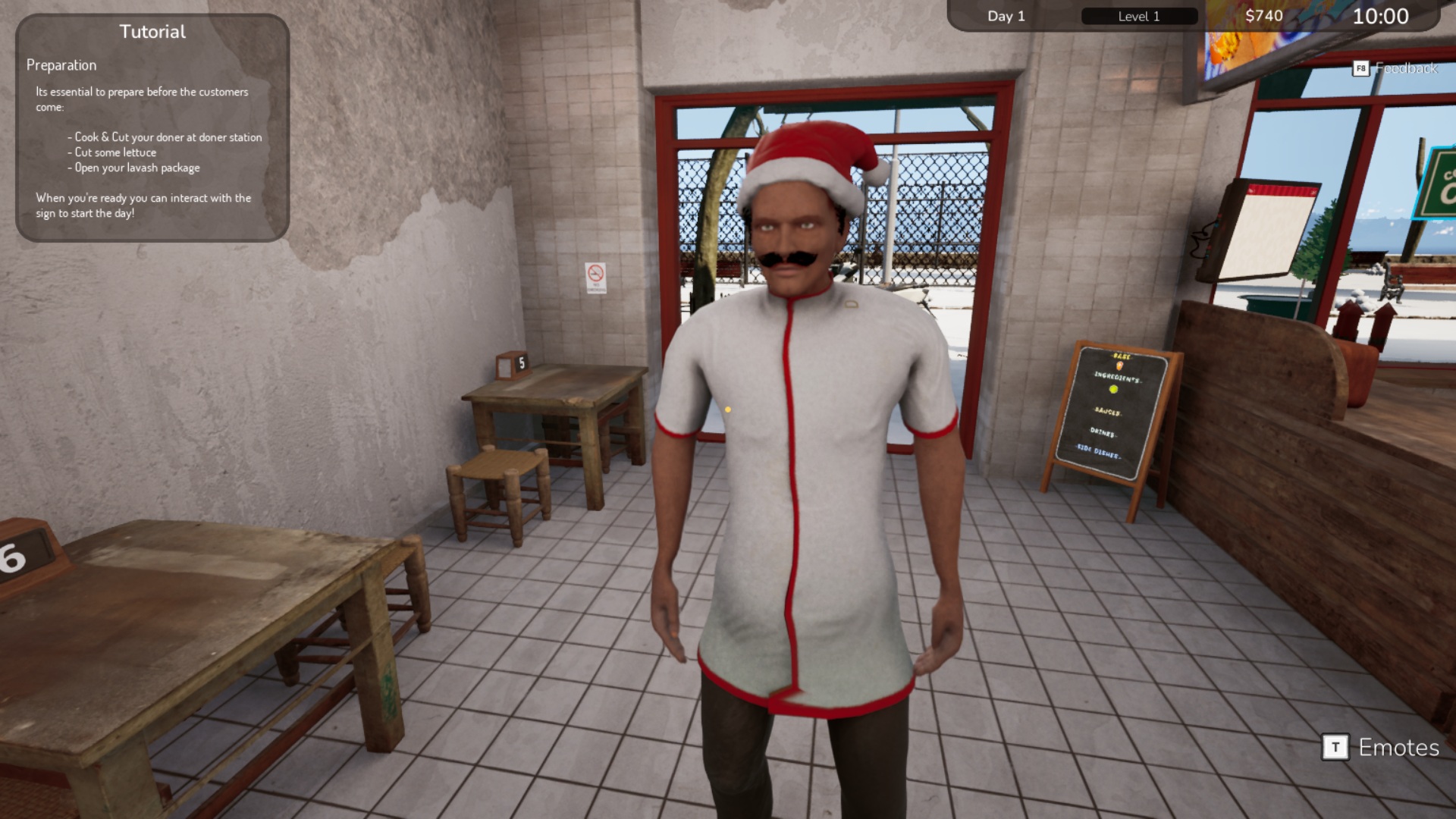
It’s precisely this neutrality that makes it easy to digest (literally and figuratively). It doesn’t delve into regional details, doesn’t try to be authentic down to the last ingredient, but retains enough of the spirit of real fast food to seem credible. The fact that everything is presented in a stylised, slightly cartoonish manner, helps a lot in maintaining a light tone.
How the game was received
At a community level, Wrap House Simulator has had a positive reception on Steam, with a majority of favourable reviews. Players particularly appreciate the cooperative mode, the accessibility of the mechanics, and the fact that the game doesn’t take itself too seriously. Criticisms mainly appear in the area of long-term variety and repetitiveness, but these are common observations for simulation games in this category.
Importantly, the game delivers exactly what it promises. It doesn’t try to be more than it is and doesn’t overestimate its complexity. For short sessions or co-op evenings with friends, it does its job very well.
Conclusion: a simple, well-seasoned game
Wrap House Simulator is not a revolution in the simulation genre, but it doesn’t aim to be. It’s a well-calibrated game, built around a clear idea and executed with enough care to be fun in the medium term. It works excellently in multiplayer, is easy to learn, and offers that kind of small, but constant satisfaction you look for when you want to relax without numbing your brain.

Available on: PC (Steam)
Played on: PC (Steam)
Release date: 29 May 2025
Developer: Broken Lyre Entertainment
Publisher: PlayWay S.A.
Plus
- Simple, yet satisfying gameplay
- Solid co-op, based on real communication
- Clear simulation loop, with visible progress
- Simple and legible visual style.
Minus
- Repetitiveness appears after longer sessions
- Long-term progress could be more varied
0 votes
Scroll down here and stay on the page for at least 30 seconds to vote.
Pick a score from 0 to 10 (halves are allowed).