
Andor: (not) A (typical) Star Wars Story
First published in GRIND III Supliment, pages 4–22.
Scenes like the twin suns setting over Tatooine, Obi-Wan Kenobi's sacrifice, the moment Vader reveals his true identity to Luke and the incredible soundtrack composed by the master John Williams have been burned into my brain forever.
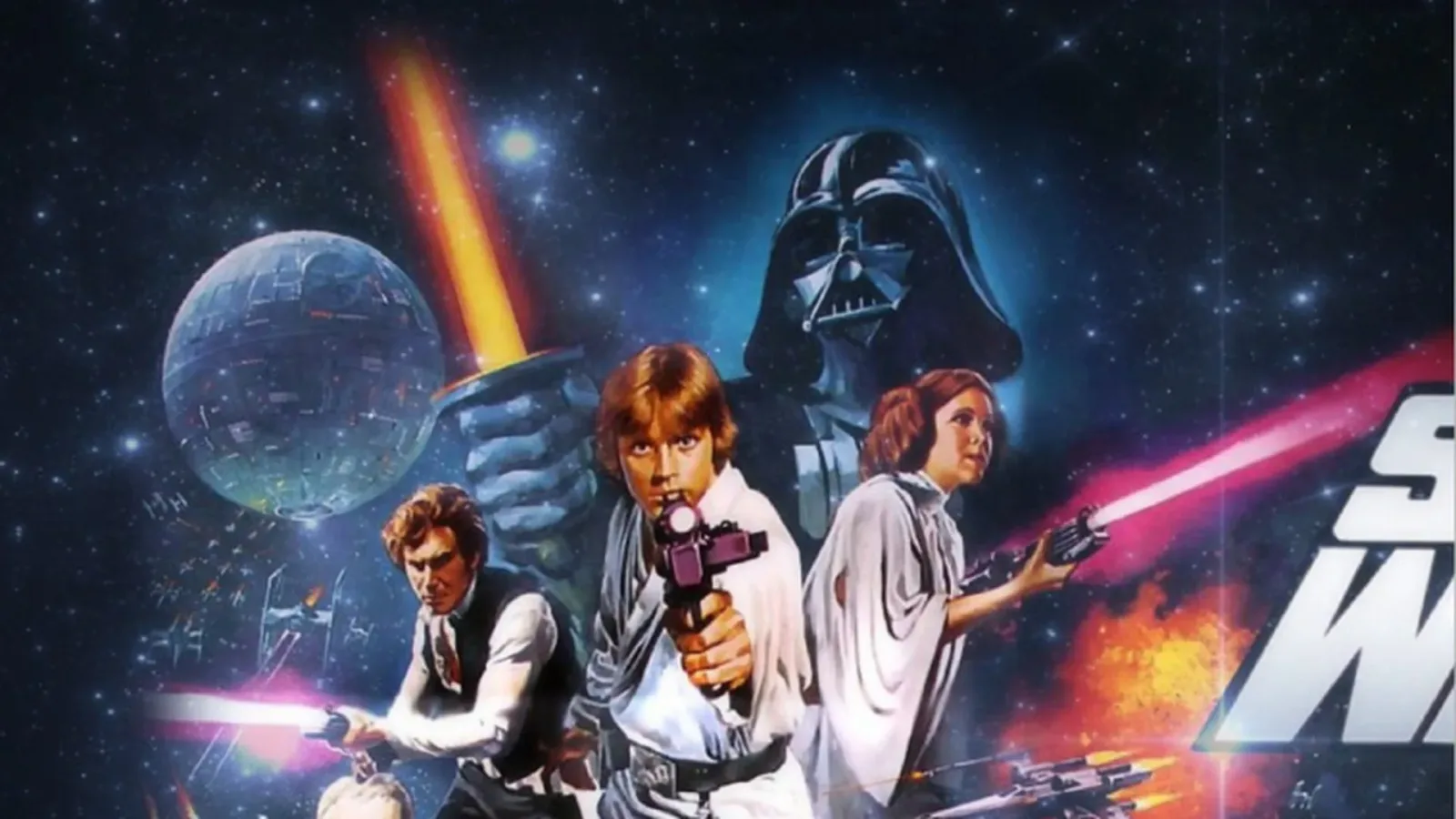
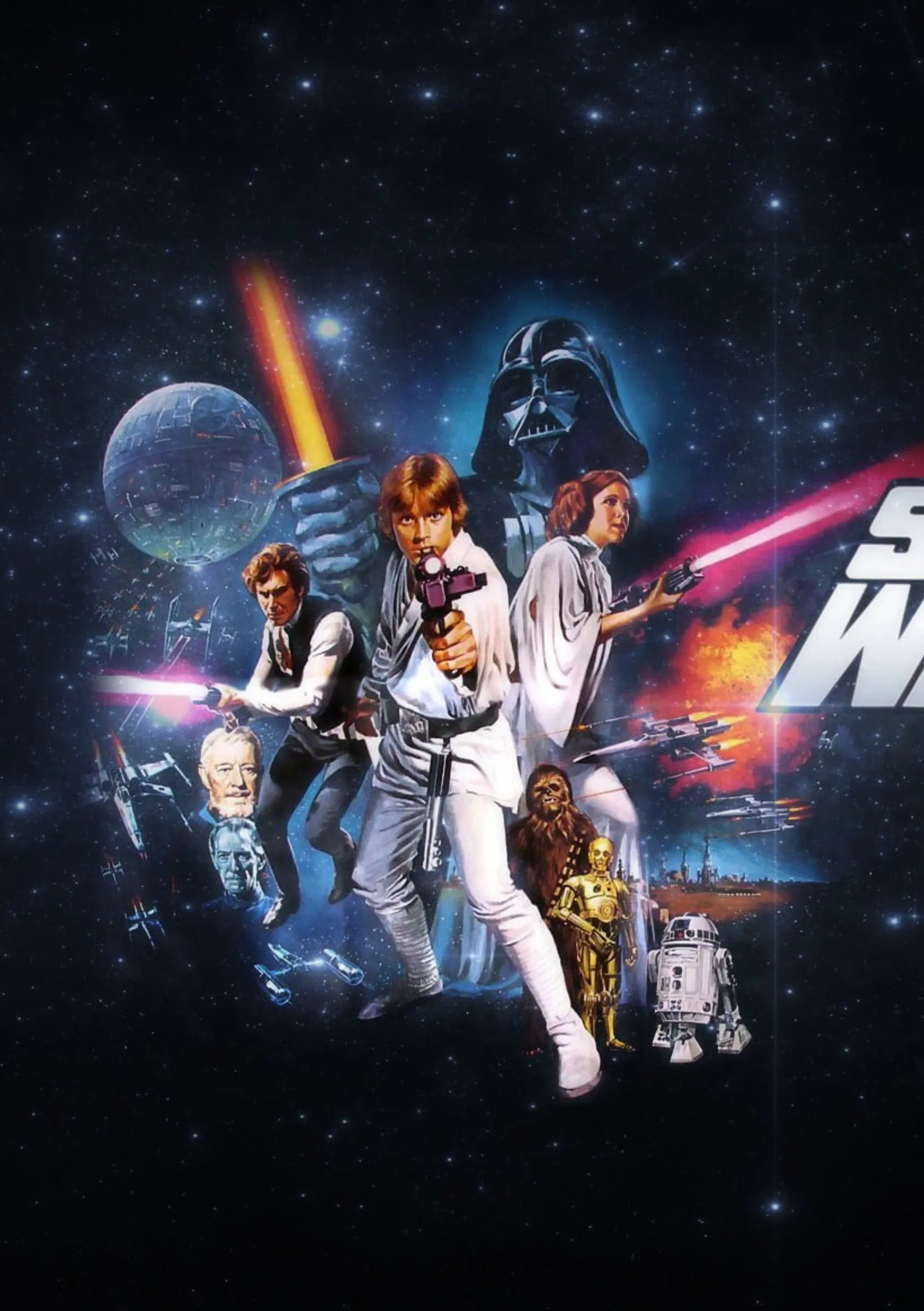
At the risk of boring you and becoming irritating, like a senile grandfather recounting the same – probably distorted – war story to his grandchildren for the hundredth time, I'm going to bring up again the huge influence cinema has had on me ever since I was a kid in primary school. I'm talking about a time when I didn't even know what a computer was or what you did with one. Thinking back to some of my favourite films from childhood, I realise I remember very clearly not just the story, the acting or a few lines, but even the circumstances in which I saw them. Tim Burton's ‘Batman’ and ‘Batman Returns’, for instance, aired on Pro TV on Friday evenings over the winter holidays in the ’90s, with repeats the following mornings, when I'd watch them all over again. I remember my mum sending me off to the nearby shop to do some shopping, to my irritation… and me trying to drag it out for as long as possible in the hope of at least catching the Batmobile chase again. While all I wanted was to see Batman kick arse and solve crimes, my mum was giving me an earful because some cake or other needed some quantity of sugar or other. Robert Zemeckis's ‘Back to the Future’ trilogy got me – with a fair degree of success – to convert a pair of roller skates into a rudimentary skateboard: I basically attached the wheels to a plank and felt as cool as Michael J. Fox playing Marty McFly. But of all of these, the biggest impact on me came from the original ‘STAR WARS’ trilogy, which I had the incredible luck to see in a cinema. I must have been around 9 or 10 years old, which means the whole thing happened somewhere around 1995 or 1996. I still keep every detail of those films fresh in my mind: how my grandfather took me to the cinema in the place where he lived (a slightly bigger commune, blessed with a projector and a screen in the building of the local cultural centre), the dusty carpet in the hall, the folding wooden communist-era seats, the screen yellowed with age, and the gaping mouths and gasps of wonder during the screening. I was fascinated, astonished, hypnotised. My mind soaked up every detail like a sponge: every frame, every character or line, every bit of set dressing and scenery. Scenes like the twin suns setting over Tatooine, Obi-Wan Kenobi's sacrifice, the moment Vader reveals his true identity to Luke and the incredible soundtrack composed by the master John Williams have been burned into my brain forever. Of course, back then I couldn't get my head around the plurality of the themes at play, the complexity of the characters and the motivations behind them, George Lucas's innovative ideas when it came to telling a story, or the revolutionary film technology developed to put that story up on the big screen. On top of the films shown on TV, which I hunted down with fervour through all sorts of weekly listings, came the ones I got on VHS tapes – because I was blessed with a VCR and with acquaintances who procured, through obscure methods, tapes translated by the legendary Irina Margareta Nistor. I can't even remember how many times I watched ‘Jurassic Park’, ‘E.T.’, ‘RoboCop’, ‘Terminator’, ‘Alien’ or ‘Raiders of the Lost Ark’ – the examples could go on for several more pages. All of it revealed itself to me gradually: every stage of growing up helped me discover new layers and brought me happily back to the trilogy every time. The original episodes fascinated me so much that I made my own cardboard figures inspired by the characters, in a post-communist period when such products were missing from the Romanian market. If they existed at all, they were probably far too expensive for a family's income anyway.
CHANGING TIMES
For a long stretch of time, things were quiet. I had the original trilogy to go back to whenever I liked, and I had the excellent video games created by LucasArts that explored and expanded the mythology. Then George Lucas announced a new trilogy that was to tackle the events which led to the creation of the Galactic Empire. The world went mad, and I followed the frenzy with enthusiasm. What came next was a period of hysteria, then one of denial, and in the end a bitter resignation settled in. After that experience, I used every occasion that came along to mock the ‘prequels’. And that happened before George Lucas decided to hang his lightsaber on a nail, selling the rights to Disney for over $5 billion. After several films, series and one extremely disappointing new trilogy, I learned to appreciate Episodes I, II and III more: for all their many failings (overuse of CGI, dodgy casting choices, incomplete or truncated character arcs, the inclusion of downright irritating characters, cringeworthy dialogue and so on), the story elements had a direction, a clear vision, a concise structure. Even from the planning stage they felt like distinct parts of the same whole… something the new trilogy never managed.
I have to admit that over the past decade my hopes of getting a quality STAR WARS media product out of Disney have steadily dwindled. It's true that Jon Favreau's The Mandalorian caught me by surprise, and I watched two seasons of it. But I took it as a compromise version – Disney and Favreau reaching an accommodation for the creative suicide he exposed himself to when he agreed to adapt the cartoon ‘The Lion King’ into a ‘live action’ format that reproduces the original scene for scene, shot for shot and line for line. I reckoned they'd let his leash out a bit and given him more creative freedom on The Mandalorian. Meanwhile, other STAR WARS series were announced and even released – most of them of doubtful quality. When I first heard about ‘Andor’, I said to myself… who cares?! I admit that only a morbid curiosity pushed me to watch the show: I needed one more reason to mock the company, to top up the disgust and contempt for what Disney has become. And after a marathon of 12 episodes back to back, with short breaks to attend to certain needs, I found myself in a state of over-excitement. I was ecstatic, amazed and perplexed all at once. The same feelings from childhood were stirring in me again – the universe George Lucas crafted so masterfully was relevant once more. The weight of the moral dilemmas, the complexity of the themes at play, the credibility and the evolution of the characters, the difficulty of the decisions, all of it haunted me and troubled my conscience for a long while after watching. The STAR WARS universe, although set in a galaxy far, far away and in an unspecified time in the future, had not felt so anchored in reality and so of the moment in a long time. …ANDOR” changed the rules of the game and opened a new era in the history of STAR
WARS.
Curiosity put its blunt molars to work and set me doing some digging on the mind behind the series, and I found Tony Gilroy: a heavyweight writer with screenplays of the calibre of ‘Michael Clayton’ or the Bourne series to his name. He also worked on the screenplay for ‘Rogue One: A Star Wars Story’, which ranks among the handful of projects in Disney's back catalogue that critics haven't used as a mop to scrub the floors with. Gilroy said openly in an interview that the creative environment he worked in on that film was a very restrictive one, which makes me raise an eyebrow and wonder how on earth they gave him total creative freedom. Has the Disney corporation finally understood what sets an original screenplay apart from a mediocre one, or that fans long for quality rather than quantity? I doubt it, but at least we ended up with this gem.
“…ANDOR
has
changed era in history, rules of the STAR game and
has
opened ”
Before I begin this dissection, I want to warn you that this article contains major spoilers. So if you don't want your experience ruined, I advise you to set aside a good few hours to watch the series. I guarantee you right now that you've nothing to lose.
As the title suggests, the series follows Cassian Andor's journey from petty thief, concerned only with his own survival and that of the people close to him, to card-carrying rebel, preoccupied with the fate of the galaxy. Andor ends up fighting for an ideal, for a better tomorrow not just for himself but for everyone oppressed by an absolutist regime. Over the course of his evolution, the character moves from pursuing individual well-being to pursuing a universal good.
After three viewings, I'd split the story into four distinct components: three chapters or acts (arcs, to use a word that better defines the structure of each chapter) and an epilogue. We all know how Cassian Andor's story ends, and how the Empire's fascist regime meets its end. Even if you're not a STAR WARS fan, you've certainly heard or seen cultural references to the fall of the Empire, the rebirth of the Republic and the fates of the main characters in the universe George Lucas created. So the series' stakes aren't about Andor surviving or succeeding in overthrowing the regime – they're about the process of radicalisation that leads him to join the Rebellion.
In the opening of the first act, we find Andor (Diego Luna) searching for his sister through the seedy districts of Morlana One – a planet that hosts the Preox-Morlana corporation and is affiliated with the Empire, but still has its own administration. Here the hero comes into conflict with two abusive guards, whom he is forced to kill. This scene, though briefly sketched, is brilliant: perhaps one of the best introductions for a lead character in the Disney-era STAR WARS pantheon. It all happens at night, with rain pouring down over the steaming district, while Andor looks for his long-lost sister in a sleazy bar. There he runs into two Preox-Morlana guards who are annoyed that he was served before them. When he leaves, the two ambush him in an isolated spot and try to extort him. The hero, hands behind his head, convinces them he's too scared to move and, not wanting any surprises, suggests they take the credits from his jacket pocket themselves. Andor then uses this momentary lowering of their guard to take down one of the guards with a single blow and disarm the other. Now armed, he realises he has accidentally killed one of his attackers and, despite the pleading, is forced to take the second one's life as well. It's a scene of about five minutes that oozes story, and from it we learn so much about the world he lives in, about the hero and about his motivations. Andor is inventive, ingenious, and doesn't lose his cool in extreme situations. He is cunning, but also ruthless. He doesn't shy away from dirty work when the situation demands it and there's no other way out of a bind. For Andor, the ends justify the means: his top priority is to find his sister. What matters is his own survival and that of the people he loves and is close to.
NA ONE “
I absolutely loved his expression the moment he realises the guard is dead: the grimaces, the disgust at the decision he's been forced to make, the inner conflict in those moments when, even though the second guard is begging him to let him live, he calculates that the only way out of this situation with an advantage is to finish the execution. And that's exactly what he does: unpleasant, but efficient. Not with satisfaction, but rather with revulsion. That's the moment I realised what tone Disney's new series would take, the moment that “hooked” me and kept me glued to the screen.
That's when I understood that ANDOR rises above everything else from Mickey Mouse's stable and opens a new era for the STAR WARS universe. In the next scene we are introduced to Ferrix, the planet where Cassian lives with his adoptive mother, Maarva (Fiona Shaw). Ferrix is under Preox-Morlana's control, and its inhabitants make a living dismantling old ships and selling the salvaged parts. We meet the characters in the hero's circle of allies: Brasso, an old friend who agrees to help build an alibi; Bix Caleen, Cassian's ex-girlfriend, who sets up a meeting with an underground buyer for a part, in exchange for a substantial sum of credits he needs to leave the planet; and Timm Karlo, Bix's current boyfriend, who, out of jealousy, alerts the corporate police when an alert goes out to locate Andor. The location looks incredibly... credible: it was physically built from scratch, and the producers relied on CGI only when they had no alternative. I want to highlight the effort the production team put into creating an authentic community and a believable way of life for its members. Small details, like hanging their work gloves out in the open without fear of them being stolen, suggest a tight-knit community – something confirmed later, when they use their own alarm system, clanging metal objects together when the corporate police come looking for Andor. Also in the first act we meet Syril Karn, a young officer in the corporate police force. When he enthusiastically presents his superior with the evidence and leads he has for finding the killer of the two guards, he is ordered to cover the whole thing up, because an imperial review of Preox-Morlana's security is coming. If the incident became known, the entire security operation would suffer in the inspection. Again, I have to stress the brilliance of the creators in building these characters: members of both sides are humanised to the point where we can understand their motivations and empathise with them. Syril is an ambitious officer who doesn't realise how toxic the Empire is. He sees himself as part of a system that brings order and security to the galaxy and, with two subordinates killed, he wants to bring the killer to justice. Of course, we know the Empire is evil and run by a tyrant, but if we ignore the big picture and look at the situation from the character's perspective, we realise he simply wants to do his duty and enforce the law for a local organisation that contributes to the general good. During the first act, Bix contacts the buyer and arranges a meeting for Andor. At the same time, Syril ignores his superior's orders and runs his own investigation, discovering the killer's name, route and location. Together with a sergeant, he organises a team and tries to capture the suspect. I'll once again highlight two ideas that Tony Gilroy and his team executed masterfully (and, at the risk of becoming annoying, I warn you I'll be doing this often in this article). First, there's the decision not to use the eternally generic stormtroopers and to replace them with corporate police forces. In their white armour, soldiers of an eminently diabolical Empire often directly associated with Nazism, stormtroopers have always been plain cannon fodder in the STAR WARS universe. They made us believe our heroes weren't committing an immoral act by killing them. Not even when they blow up the Death Star... a construction operated by 1.7 million soldiers. We shouldn't feel any empathy for them because they're Nazis, right? Well, in ANDOR things are different. The enemies are ordinary people trying to enforce the law and arrest a criminal, which moves the violence done to them into a morally grey area. Second, there's the way suspense is built throughout the series. In many STAR WARS productions (especially from the Disney era), the action consists of hurling waves of soldiers at the heroes who pose no real obstacle or challenge to the protagonists. As they race down the corridors of various ships or space stations, they leave piles of stormtroopers in their wake. There's no pressure, just “running and shooting”. Another glaring example of missing suspense can be seen in Episode IX, “The Rise of Skywalker”: when Rey blows up the transport where “Chewie” was being held prisoner, we get a twist that effectively drains the emotional weight from the whole moment. The film doesn't waste a second and assures us in the very next scene that our furry favourite is still alive. In ANDOR, though, the approach is different. Towards the end of the first chapter, Syril and his 13 men split into teams to capture Andor. Two of them stay with Maarva, a team of four takes care of arresting Bix, another group of four is sent to the place where the protagonist meets the mysterious buyer, and the rest head to the meeting point. We know from the start how many people are in each team, where each team is, and how many people are going into the fight. That leads to a tense brawl in a warehouse where heavy metal parts hang from chains, adding an interesting dynamic to the fight. The method of establishing the number of opponents is used in the other chapters too, putting the heroes in intense scenes.
At the close of the chapter, Andor manages to leave Ferrix with the help of the buyer Luthen Rael (Stellan Skarsgård). I can't move on without pointing out the blatantly anti-capitalist theme of this first act. Cassian Andor is hunted by the corporate police, a symbol of capitalism, who see themselves as the Empire's first line of defence. The relationship between capitalism and fascism is a complicated one and differs from state to state. Although fascists sought to eliminate capitalism's autonomy, they allied themselves with anyone who helped them seize and hold power, upholding the rights of private property and of the very wealthy whenever it benefited them. Throughout history, capitalists have tended to back fascist regimes in exchange for self-administration and independence. But that didn't give them much in the way of guarantees: corporations ended up nationalised as the regime's needs dictated. That is exactly what happens to Preox-Morlana after the fiasco on Ferrix: the corporation loses its independence and falls under the Empire's authority. Can you imagine this series was produced under the Disney umbrella? Hats off, Tony Gilroy, simply hats off!
ALDHANI: Act II
In the first scene of Act II, Luthen tries to recruit Andor to the rebels… without success. The exchange is exceptional: “Cassian: I didn't agree to do anything other than save my own skin”, “Luthen: Wouldn't you rather give everything at once for something real, than carve away useless pieces until there's nothing left?” and “Cassian: It's better to live, eat, sleep, do what I want.” Lured only by the prospect of a large sum of credits, Andor accepts the proposal to join a team on Aldhani to rob an Imperial garrison, and takes a kyber crystal from Luthen as a guarantee. The team leader is Vel, and the other members are Nemik, Skeen, Cinta and Taramyn. Each of them has their own past and their own motivations. What's more, each embodies their own rebellion: one is a stormtrooper deserter sick of watching the Empire's atrocities, another saw his own family killed by Imperial soldiers. They are joined by a lieutenant from the Aldhani garrison, who has his own reasons for helping the mission succeed. Contact with these people plants seeds of doubt in Cassian's mind about his philosophy of life. Exposed to the sad stories behind each member of the team, the seeds of an inner conflict over the doctrine of rebellion begin to take root. In his conversation with Luthen, his refusals to join the cause are categorical and he rebuffs every argument; over the course of Act II he becomes more tempered. Although he isn't yet ready to become a rebel, the message slowly seeps in. Meanwhile, suspected by the others and questioned about why he accepted the mission, Andor gives no concrete answer until very late, feeling rather ashamed to be there only for the credits.
One of my favourite characters in this chapter is Nemik, a man with philosophical ideas about the justness of the rebellion's cause. He is contrasted with Skeen, who, we learn at the end of the act, has a warped idea of what a rebel is when he tries to persuade Andor to split the loot and abandon the others. Cassian is caught between these two ideas, wonderfully captured in a brilliant scene I'll describe briefly. It begins with Nemik walking into frame, carrying a canister. He approaches Cassian, who is resting in front of a fire. Our idealist offers the hero a mug and pours him some dray milk, which he describes, metaphorically, as nourishing but not very tasty. Cassian takes a sip and pulls a face. Both sit around the fire and Nemik takes out an old navigation instrument. “That's an old one!” exclaims Cassian. Nemik replies: “Old and true. And sturdy. One of the best navigation instruments ever built. It can't be jammed or intercepted. If it breaks, you can fix it yourself.” “Hard to learn,” says Cassian. “Yes, but once you master it, you're free,” concludes Nemik. Skeen joins them and cheekily reveals that Nemik is working on a manifesto. Our little philosopher pulls the booklet out of his pocket and, as if weighing them on a scale with his hands, holds it up next to the navigation instrument, comparing the two: “Fresh inspiration. Two seemingly random objects, and yet this one charts a route among the stars, and this one charts a route through political consciousness. Both systems based on truth, both heading for a clear, achievable objective.” At this point the conversation is cut short, and Skeen urges Cassian to finish his milk because a busy day lies ahead. Cassian glances at the mug, then at Nemik, and pours the milk out onto the ground. So many layers of symbolism in such a short scene. First, the navigation instrument stands for freedom, independence, the idea of shared consciousness and unity against oppression – hard to digest and to accept at the expense of the relative, unstable comfort that submission to a totalitarian regime offers. Rebellion means sacrifice and discomfort in pursuit of a better but uncertain future, while
“
Rebellion means sacrifice and discomfort in pursuit of a better but uncertain future, while ignorance and indifference, though shameful, offer you a tangible, real and present benefit… but only an apparent one – because in reality you live in a prison, whichever side of the steel bars you're on. ignorance and indifference, though shameful, offer you a tangible, real and present benefit… but only an apparent one – because in reality you live in a prison, whichever side of the steel bars you're on. The instrument/idea/reawakening of consciousness is “hard to learn”, “but once you master it, you're free”. Second, there is the milk Nemik offers, which symbolises the totality of liberal doctrines. Cassian accepts the mug of milk, but at the end of the conversation pours its contents onto the ground, a sign that, although he is becoming more receptive, he isn't yet ready to adopt Nemik's ideas. The milk is bitter, not very pleasant to the taste, but nourishing – just like the truth he isn't ready to embrace. Third, there is the comparison between the two objects: the instrument and the manifesto. Both point to ideal routes, one on the exoteric plane and the other on the esoteric. Genius, simply genius!
Act II is also the point where the story branches out, introducing new characters and narrative threads that split off from Cassian's story. We are shown Mon Mothma's (Genevieve O’Reilly) journey and the lengths she goes to in order to escape the Empire's ever-tightening, ever more oppressive grip. We learn more about Luthen, who poses as an eccentric antiques dealer with a shop right in the heart of the Empire, on Coruscant. The shop is used to cover his meetings with Mon Mothma, both of them wearing the mask of snobbery. We meet Dedra Meero, an ambitious and competent officer of the Imperial Security Bureau, eager to make her mark and impress her superiors. Syril's story also continues. Removed from his post, he returns to Coruscant and lives with his mother. I have to stress once again the extraordinary way the producers have humanised these characters: they come across as authentic human beings, each with their own problems and duties, involved in believable relationships and with the point where the story II branches out part of specific emotional experiences. Mon is trapped in a facade of a marriage, with a husband she despises for the superficiality with which he treats the problems of people in difficulty, and a daughter who shows her no respect. She is closely watched by the Empire and, to cover the financial gaps created by funding the rebels' actions, she is forced to sacrifice her family. She accuses her husband of a gambling addiction when she knows Imperial intelligence services are listening and, as a last resort, has to betroth her daughter to a gangster's son. Luthen is the one who moves between both worlds and has his own moments of weakness and doubt, despite the stoicism he shows in his dealings with others. The one who keeps him balanced is his assistant Kleya Marki, also devoted to the cause. The able, intuitive Dedra, though she runs into obstacles even inside the institution where she works (the power struggle within a fascist regime being masterfully painted by the producers), manages to rise above the competition, oddly making you admire her inventiveness. I must also mention Syril and his mother, because their relationship is presented in such a unique and realistic way.
(Genevieve O’Reilly) “
is trapped in a facade of a marriage, with a husband she despises for the superficiality with which he treats the problems of people in difficulty, and a daughter who shows her no respect.
ANTI-COLONIALISM
The end of chapter two is given over to the garrison job. Though they do get away with the 80 million credits, just as in real life, every decision has its consequences. Unfortunately, only Cassian, Vel, Skeen and Nemik (in a very bad way) make it out on the transport. The rest of the team meet their end in the firefight. Cassian decides to try to save Nemik, but he dies during surgery. The scene in which Skeen proposes splitting the credits and abandoning the other two is excellent, and so is the exchange that follows: Andor: “So it’s not a rebellion for you?”; Skeen: “Oh, I’m a rebel, it’s just… it’s me against everyone”; Andor: “Where does that leave me?”; Skeen: “Don’t pretend you’ve got a conscience. You’re not here to save anyone but yourself. You’re the same as me. We were born in a hole and all we know is climbing over other people to get out.” Those last words crank the tension of Cassian’s inner conflict up to a new level. You can read the mounting strain on his face, along with the psychological discomfort the man across from him is putting him through. Andor doesn’t even wait to hear the plan out: he draws his weapon and executes him. But in killing Skeen he hasn’t just rid himself of a traitor. The hero also symbolically kills that part of his conscience which would have accepted the offer. Two options were laid out in front of him and he chose. Though he isn’t a rebel yet, Cassian doesn’t want to buy personal gain with dishonour and betrayal. He goes back to the doctor’s building, where he learns that Nemik has died. He tells Vel he’s taking the share of credits he was promised and gives her the kyber crystal to return to Luthen. As he leaves, Vel offers him Nemik’s manifesto… which he accepts, once again showing an openness to the rebels’ propaganda.
The big anti-imperialist, anti-fascist themes that define the series as a whole are pretty obvious. But those themes are held up, the way pillars hold up a roof, by other, smaller ones. If I couldn’t get through the first chapter without underlining its anti-capitalist streak, I can’t close the second without mentioning its anti-colonialist ones. Aldhani is a planet under Imperial occupation. Tens of thousands of the Aldhani were evacuated from the settlements in the valley they consider sacred and moved to big cities, where they work for the Empire. A dam was built on the river where a temple of great importance to the local culture stands – but the Empire shows no respect for that culture or for the natives. Soldiers hang targets on the sacred building for practice and, along with the garrison commander, constantly display xenophobia towards the Aldhani, treating them as inferior people who smell bad. Once every few years a magnificent cosmic phenomenon takes place in the river valley – and it means a great deal to the natives. The Aldhani make a pilgrimage from the lowlands up to the temple. In the past, great numbers of people took part in that pilgrimage… but since the occupation it has shrunk steadily. With the “help” of the oppressors, of course. The tactic the imperialists use to control the population this time round is manipulation. As the commander explains, taverns and shelters serving cheap alcohol have been placed along the route. And so the group of pilgrims was cut from 500 people setting out from the foot of the mountain to fewer than 60. Look at the history of Europe’s colonisation of the New World and you’ll see that using alcohol to gain an edge in negotiations and trade with Native Americans was a common practice. All these immoral tactics the Empire resorts to come down to one thing: cultural genocide. Every one of these actions is meant to destroy Aldhani culture, to snuff out their civilisation.
“ That’s exactly why, the use of the astronomical phenomenon (the meteor shower) to “
get rid of the TIE interceptors and steal that huge sum of credits is so satisfying: the heroes used an Aldhani ceremony of great importance to their culture to beat the Empire. Again, can you imagine this series was made under the Disney corporation’s umbrella? For the second time, hats off, Tony Gilroy!
PRISON BREAK
In the third act we get to see the fallout from the Aldhani attack. The Empire pulls the noose of oppression tighter with new directives restricting the right to cultural gatherings and demonstrations at the slightest hint that they might be used as cover for rebel activity. Even so, you can see the spark of hope catching in the souls of the oppressed. Cassian goes back to Ferrix, now under Imperial control, to persuade his mother to leave for somewhere better, far from Imperial influence. Maarva refuses, saying she is already there, and that she made that place in her mind. The success of the Aldhani attack is the decisive factor in Maarva’s complete dedication: she decides to stay on Ferrix and face the Empire. Maybe you’re expecting Andor to open the manifesto, to find inspiration in Nemik’s words and in his mother’s attitude, to acquire “political consciousness”… but that isn’t how it goes. I know countless mediocre productions have taught us that ordinary people turn into heroes overnight, and that all it takes to make them rational and determined is a few well-placed arguments. But ANDOR isn’t one of those productions. People are stubborn, pig-headed creatures who refuse to see the obvious truth, preferring the easy road to the right one. After taking part in the garrison heist, after all the danger he exposed himself to, after losing most of his team, Cassian wants nothing to do with the rebellion or the war. He wants “to live, to eat, to sleep”, so he heads for a holiday planet. There he hides the credits and the manifesto in a rental unit and tries to lead a relaxed, quiet life… but he’s arrested by the authorities and unjustly sentenced to six years in prison simply for being in the wrong place at the wrong time. And, because Andor isn’t a cardboard character but a multi-dimensional one who shows the qualities and flaws of a real person, he falls into the very sin he accuses the Imperialists of from the start of the series: “They’re so fat and complacent they can’t imagine someone like me could get inside their house”; “They don’t care enough to learn”; “You think they’re listening? You think they care enough to make that effort?” Comfort is the Empire’s weakness, and it’s the same comfort Cassian is after. The moment he manages to live the life he aspired to, lowering his guard, he’s thrown in prison. I learned that Andor’s phrase (to live, to eat, to sleep) is a metaphor for people living their lives locked up — which symbolises that the Empire had already imprisoned him, like everyone else, whichever side of the bars they were on. Freedom, then, means not just the hero’s release from his own chains, but the release of everyone else from theirs, and the collapse of the oppressive system that holds those chains, because otherwise nobody would ever be truly free.
Inside, Andor is assigned to a team and forced to work for the Empire. The brigade is watched over by Kino Loy (Andy Serkis), himself a prisoner, a man interested only in raising productivity and serving out the short stretch of his sentence he has left. Kino is the main obstacle Cassian has to get past in order to organise an escape, but the relationship between the two isn’t the usual kind, the one painted in so many escape movies. Cassian doesn’t have to kill him, physically dominate him or distract him – the obstacle is ideological. The protagonist has to convince him that the only way out of prison is a revolt, an escape, and that the length of his sentence is irrelevant because he’ll be thrown into another prison and the cycle will repeat itself. The regime will never let him out; he’ll meet his end in one of the many forced-labour facilities the Empire runs. Yes, Cassian has to radicalise him. He finds himself in the position of those who were trying to lift the veil
“
From the moment he accepts the circumstances, Kino becomes the spearhead of the prison revolution, leading his comrades to freedom even though he suspects they’re somewhere out at sea, which means it can only end one way for him… because he doesn’t know how to swim. Suddenly he’s the one holding the truth, and he agonises over trying to change people’s minds. Another brilliant idea on the producers’ part is putting the protagonist into uncomfortable, conflict-ridden situations, because there’s no more effective way of radicalising Cassian than making him try to radicalise others. Once converted to the cause, Kino is an unstoppable force. As with the other characters, the show’s makers managed to portray Kino in a multi-layered, believable way, with human touches. I absolutely love the mixture of positive and negative traits he’s made of. As he says when the revolt kicks off: “I’m going to assume I’m already dead.” For me, the message carried by this third act is so powerful that it sends shivers down my spine when I contemplate it. The rebels’ slogan is still ringing in my ears: ONE
WAY OUT.
Along with Andor, every other character and narrative thread evolves too, the story branching out further still. The seeds of revolutionary consciousness bear fruit in the protagonist, who edges ever closer to the mindset of a member of the insurgency: "I'd rather die trying to take them down than die giving them what they want." In Luthen and Mon's case, both keep wearing the political mask in order to play the roles that give them the chance to organise an effective rebellion, each of them sacrificing their entire existence to the cause. The former finds himself forced to send an important ally to certain death in order to keep a source inside the Imperial Security Bureau, while the latter sacrifices her family to cover budget deficits and embezzle funds intended to finance the insurrection – which is what anchors these characters so convincingly in the everyday. Dedra, Syril and those associated with the Empire show signs of competence and determination too, organising an ambush for Andor during Maarva's funeral.
PRISON BREAK
Obviously, I can't carry on without briefly underlining the major themes of chapter three. The whole act was conceived as a metaphor for life lived under a totalitarian regime – a life under constant surveillance, one that inevitably becomes a prison without bars. Wherever you are, you're captive: not merely in a physical prison that restricts your movement through space, but in an ideological and psychological prison whose bars restrict your freedom of thought, your free expression, your cultural expression, your religious belief and your right of association. It is a detention regime imposed on life itself, and you no longer have any control over it, because absolute control belongs to the Empire. Your life, your body and your mind are held captive. Various characters try, in various ways and through supreme sacrifices, to break that cycle and restore democratic norms, to build a future they know they won't enjoy and won't live to see. Kino embraces the idea of organising a revolt even though he knows he won't survive, and Luthen sacrifices everything to build an organised rebellion… simply because that is the true path, because inaction is immoral and dehumanising. And no words express Luthen's sacrifice better than his own speech: "I've exhausted my decency for someone else's future. I've exhausted my life to create a sunrise I know I'll never see. And the ego that started this fight will never have a mirror, an audience or any trace of gratitude. So… what have I sacrificed? EVERYTHING!"
The chapter is also a critique of the forced labour system, found especially in American prisons, where the institutions contract employers for all kinds of work and the wage paid is far below the average. It can also be a nod to the Nazi practice of running forced labour camps, where those incarcerated toiled to the point of exhaustion and were subjected to the worst possible treatment and punishments. And when they were no longer of any use, they were exterminated… practices similar to those the Empire uses in ANDOR. For the third time, I have to express my astonishment at the fact that the series was made under the patronage of the Disney corporation. And for the third time, I take off my proverbial hat to Mr Tony Gilroy, a god among men.
“
I've exhausted my decency for someone else's future.
I've exhausted my life to create a sunrise I know I'll never see. And the ego that started this fight will never have a mirror, an audience or any trace of gratitude.
So… what have I sacrificed? EVERYTHING!. THE INSURRECTION OF
In the epilogue, the Empire carries on with its plan to capture Andor and Luthen during Maarva's funeral. This is the moment where most of the narrative threads converge. Learning of his mother's death, Andor returns to Ferrix to try to save the friends he has left alive. Luthen returns to liquidate the hero, since he is the only one who can identify him. During the ceremony, the residents of Ferrix advance through the city streets in a funeral march, together, gathering near the Imperial barracks. There, the Andor family droid projects an image of Maarva delivering a glorious speech, condemning indifference and calling for action, resistance and struggle. It's a magnificent speech that gives me chills every time I hear it. The revolt erupts. I have to tell you, the insurgency is staged extraordinarily well. It's total chaos: the crowd shoves, soldiers swing their batons and try to hold the lines, the insurgents attack with rudimentary weapons, blasters fire, dust rises into the air and improvised explosive devices are used. Cassian saves Bix from Imperial custody and gets her, along with others close to him, aboard a ship bound for a safe destination. Then he meets Luthen. His last line to him is: "Kill me or take me with you." Andor is now a rebel. After a long journey and an arduous process of transformation, our hero has acquired the political consciousness that others tried to instil in him. That process is cathartic, satisfying and effective because it is so well built. It involves natural, organic, human stages – which is precisely why it is so gratifying and so authentic.
It's been a very long time since we were given a STAR WARS production that stands as a critique of so many interconnected elements, that brims with mature themes and is dressed in layer upon layer of symbolism. I'd set out to talk about far more things to do with this series, but space won't allow it. I meant to analyse the branching structure of the story and the complex system of cause and effect, how every action or decision has real consequences that carry on down the chain, setting off an endless run of events. I wanted to talk about the quality of the dialogue and how it doesn't just feel like a real conversation between two people – it reveals new meanings and new layers on every rewatch. About the real locations where it was shot and how they add to the series' authenticity. The way fan-service is used delighted me: it isn't there to stand in for the story and the characters, but to work as a seasoning you probably won't even notice. Three viewings in, I'd spotted only two easter eggs – and for one of them you need more KOTOR playthroughs under your belt than you had years of primary school. The acting, another thing I'd meant to mention, is every bit the equal of all the other components.
I'm trying to find flaws in this series as well, but I swear it's like splitting hairs. The only thing I could point to is the fact that Andor's initial intention – the one that set the whole thing in motion, finding his sister – gets forgotten and is even ignored over the course of the series. But perhaps that's a narrative thread that will be explored in the second season, whose arrival I await with enthusiasm… something that hasn't happened for a very long time with a media production set in the STAR WARS universe. The series surprised me in so many ways that, I'll be honest with you, after watching it I felt the urge to get my hands on a blaster and join the rebellion. I wanted to stand up to a repressive regime and fight for a future I wouldn't get to taste. I'll leave you at the end with the uplifting words of Nemik's manifesto. For the Republic!!!