
Graphics Card Round-up – 2025 Edition
First published in GRIND V, pages 234–244.

GRAPHIC
WRITTEN
Loyal readers of the LAB501 site probably know that I have a penchant for retrospectives, this being one of my favourite ways of opening certain articles and of getting my thoughts in order for that purpose.
However, I usually tend to get carried away by that wave towards the end of the year, when I look back proudly and see exactly how many articles I've written, or how many products I've tested. As a result, you wouldn't really expect something like this from me at the end of April, when I'm writing this article, which you'll most likely be reading in June. And yet, even though not even 4 months of the year have passed at the time of writing,
CARDS
MONSTER
casting a fleeting eye over the content of these days, we notice that I have published no fewer than 65 articles in 2025 on lab501.ro and next.lab501.ro — in other words, a bit more than one article every two days. Not bad, is it?
Well, out of all these articles, 25 were devoted to graphics cards, these happening to be one of my favourite subjects. What's more, because I put together a new testing methodology for graphics cards, I tested both the new models and the equivalent models from the previous generation, which means that so far I've tested no fewer than 36 graphics cards using the new LAB501 methodology. And even if I'll be away at Computex
D U P
LAB501
when you read this article, and the NVIDIA GeForce RTX 5060 may well have launched by then, this article is dedicated to the launch of the NVIDIA GeForce RTX 5060 Ti, and to what the top of the graphics card table looks like in mid-2025, at least in terms of performance.
I say that because availability and price are still a problem for some models, so we'll only be looking at the technical side in this article. And to do that, we need to understand which graphics cards were launched in 2025, what technologies they bring, what the LAB501 testing methodology is, and what the graphics card hierarchy looks like according to our testing methodology.
NVIDIA BLACKWELL AKA RTX5000
In 1999, Luciano Pavarotti inaugurated the Mandalay Bay Events Center, in his first Las Vegas concert since 1985. Over the years, the Mandalay Bay Events Center was renamed the Michelob Ultra Arena, playing host to numerous concerts, boxing matches, NBA and UFC events. Well, 26 years later, on 6 January 2025, thousands of people queued patiently to get into the arena, some of them waiting more than 2 hours.
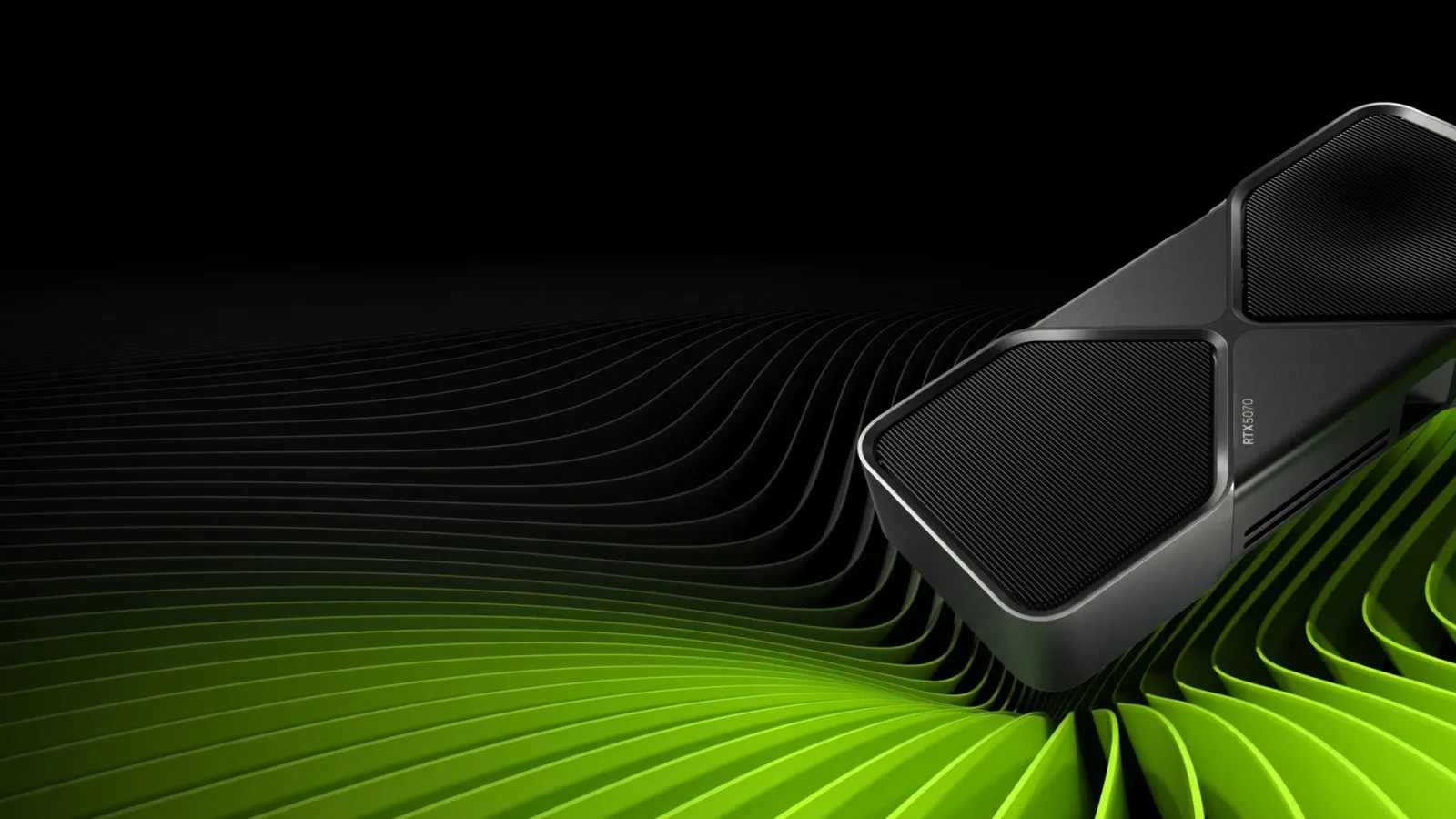
The reason? The most important moment of CES, a keynote that people from across the industry gathered to watch, filling the 12,000-capacity arena to bursting. From journalists in the tech, automotive or general press to other exhibitors, everyone and- A Monster in Las Vegas! On 6 January 2025, NVIDIA pulled the new Blackwell-architecture graphics cards out of the oven.
patiently took their place in the queue, to watch history being written. Because this time, a different kind of rock star was to take the stage, more precisely the most important CEO in the IT industry right now. Of course, Jensen Huang has always been a representative figure for the IT industry, but the way in which the company he runs has developed in recent years, and the way artificial intelligence has slowly but surely found its way onto the computers and phones of billions of people around the world, have turned NVIDIA's CEO into a genuine rock star, known across the globe by people who perhaps have never even bought a graphics card in their lives. Of course, among the thousands of people who attended this event I was one of them, even though it meant I had to prematurely interrupt my favourite activity of the start of every year, namely the excessive consumption of sarmale, cozonaci and other dishes generally associated with New Year's Eve and Christmas.
But even if it meant leaving behind the beef salad and the grilled pork neck and flying to the other side of the world, to a city I couldn't say I'm especially fond of, namely Las Vegas, I can say I had a good reason. Here, the Blackwell architecture was announced for the first time, along with the graphics cards that integrate it.
The Blackwell architecture brings us 5th-generation Tensor cores, with 4,000 AI TOPS of performance and support for FP4 compute, optimised for advanced neural workloads. 4th-generation Ray-Tracing cores, which deliver 360 RT TFLOPS, are purpose-built for complex geometry, including engines for decompressing triangle clusters. The AI management processor allows artificial intelli- gence models and rendering models to run at the same time, thereby improving workflow efficiency. GDDR7 memory, the first time it has appeared on a graphics card, comes in at 30 Gbps, offering double the energy efficiency of previous generations.
The Blackwell architecture brings numerous advantages, among them the increased energy efficiency of the Max-Q design, which optimises power draw and allows savings of up to 50% through technologies such as Power Gating. The improved Shader Execution Reordering (SER) also contributes a twofold performance increase, handling shaders more efficiently in complex workloads, sending each task where it belongs, to Tensor or Shader cores. To accommodate this, the shader (SM) structure has been changed too, moving from 64 FP32 + 64 FP32 / INT32 to 128 FP32 / INT32.
On the new-features front, RTX Neural Rendering marks a revolution in graphics rendering, using artificial intelligence (AI) and Tensor cores to accelerate and improve visual quality. The new Blackwell architecture brings “Neural Shaders”, a new way of programming shaders using AI.
This one introduces neural materials and textures capable of training in real time on the GPU, generating higher-quality images in games. Another important innovation is “RTX Neural Radiance Cache”, a technology for more efficient ray-traced indirect lighting, using neural networks to estimate complex reflections. NVIDIA also presented “RTX Neural Faces”, an AI system for the realistic generation of faces and character animations, including lighting and facial expressions.
On top of that, DLSS (Deep Learning Super Sampling) technology has now reached version 4, which uses transformer models and multi-frame generation for a substantial jump in performance. This new level of image reconstruction allows up to 15 of 16 pixels to be generated using AI, dramatically raising framerates at 4K and above, where the load on the GPU and memory is very high.
NVIDIA also presented “RTX Mega Geometry”, an optimisation of geometric rendering that cuts memory use and improves performance using geometric clusters. At the same time, RTX Hair & Skin offers a new standard in realistic hair and skin rendering, with reduced geometric complexity.
AMD RDNA4 AKA RADEON RX 90X0
AMD launched a new architecture of their own this year, called RDNA4.
It introduces the third generation of ray accelerators, which promise to double performance compared with the previous generation, being purpose-built for complex geometry, doubling ray intersection rates and bringing substantial improvements in BVH compression, as well as path tracing. Memory handling has been improved too, with RDNA 4 using out-of-order memory, which allows shaders to be acted on quickly, regardless of the order in which they were accessed. We also get substantial improvements on the encoding front, with the new dual media engi- ne doubling AV1 capabilities, improvements on the display side (better power optimisation in FreeSync mode, plus Radeon Image Sharpening 2), and higher performance in AI applications, with RDNA 4 bringing almost double the performance per Compute Unit in FP16 calculations.
AMD also launched the 4th generation of FidelityFX Super Resolution this year, more precisely FSR 4. As we know, FSR is an open-source technology dedicated to video upscaling, designed to raise framerates and deliver a gaming experience at the highest standards.
In practice, FSR 4 brings a new AI upscaling algorithm, trained on AMD Instinct graphics cards, which works in tandem with the Frame Gen and AMD Anti Lag technologies.
Of course, at the moment we're not dealing with multi-frame generation, but even so, AMD promises a performance boost 2-3 times greater when we enable FSR 4 than when rendering at native resolution.
According to the manufacturer, FSR 4 should already be in over 30 games at launch, with more than 70 games using the technology by the end of the year. Among the first titles to support FSR 4 are Warhammer 40,000: Space Marine 2, Call of Duty: Black Ops 6, Spider-Man Remastered and Horizon Forbidden West.
LAB501 TESTING METHODOLOGY
When it comes to testing, we've never claimed to be the keepers of absolute truth, and we don't enjoy drawing definitive, all-encompassing conclusions in the shape of a supreme, irrevocable verdict. Rather – at least as far as I'm concerned – we put together a reference system in which we gather a set of results through a precise, painstaking testing process. Then we present you with those results, along with our opinion, on the understanding that everyone will draw their own conclusion from reading our article, according to their own needs and desires.
Well, that reference system is called a testing methodology, and it's a combination of the test platform, the choice of games and settings for testing, the physical measurements of power draw, temperatures and noise levels, and the way all of that information is collected and then presented to you, the readers.
Of course, no methodology is 100% perfect or 100% representative of everyone's needs. Time is often a serious limitation when we're talking about NDA launches, which is why every editor picks the games they consider most representative.
That's why there will always be differences between the results different outlets get. Some sites will use the most popular games, even if those don't have an integrated benchmark.
We, for example, preferred to go exclusively for games that have a built-in benchmark, for maximum repeatability and accuracy.
Last but not least, any small difference in configuration or settings – hardware on one side, in-game settings on the other – can have a significant impact on the results. The new LAB501 test platform storage chapter we opted for a cooled by a Noctua NH-D15 G2 LBC cooler, is made up of a proces- PCI-E 5.0 Samsung 9100 Pro 2TB SSD, and the platform is powered by a sour- sor AMD Ryzen 7 9800X3D, mounted on a on which we installed Windows 11 Pro, with power supply Seasonic Prime TX-1600 X870E AORUS Xtreme AI motherboard all updates to date. Last but not least, Noctua Edition. The system was tested in Top, together with a GSkill memory kit, we activated Resizable BAR technology open air, using an OpenBenchtable BC1 TridentZ 5 Neo RGB 32GB DDR5-6000 BAR for all graphics cards tested on this V2 test bench, connected to CL28, set DDR5 6000 28-36-36-96. On this platform. The processor is an MSI MPG 321URX QD-OLED monitor.
MODELS TESTED
As I was saying, we tested 36 graphics cards using the LAB501 2025 graphics card testing methodology, covering both reference models and partner cards. For this article we chose to present the results from one implementation per model – Founders Edition or reference where we had one, and a partner card where we had no reference. That means 22 graphics cards in total, with two extra columns for overclocked results on the RTX 5060 Ti and RTX 5070 Ti respectively.
For the RTX 5090, RTX 5080, RTX 5070,
RTX 4090, RTX 4080 SUPER, RTX 4080, RTX
4070 SUPER and RTX 4070, we tested NVIDIA's Founders Edition cards, while for the AMD Radeon RX 7900 XTX and RX 7900 XT we tested AMD's reference implementations.
We also tested the RTX 5070 Ti, RX 9070, RX 9070, RTX 4070 Ti SUPER, RTX 4070 Ti, RX 7900 GRE, RTX 4060 Ti and RTX 4060 in GIGABYTE Gaming OC form, the RX 7800 XT and RX 7700 XT in Sapphire form, and the RTX 5060 Ti in an ASUS TUF Gaming version.
We tested performance in 10 games at three 16:9 resolutions (3840×2160, 2560×1440 and 1920×1080) – the ones most widespread among gamers right now. In every game, details were maxed out, as long as that meant identical settings for every card in the test.
The titles we used include Counter-Strike 2, Cyberpunk 2077, Metro Exodus Enhanced, Black Myth: Wukong and F1 24, to name just half of them. If you're curious exactly which games and settings we used, you can consult the dedicated methodology article published on LAB501.
The results section is a simple summary too, thanks to the physical limits inherent in a print publication.
On the site we publish no fewer than 60 graphs per article, something next to impossible in a magazine… unless you'd rather GRIND V was renamed 'Monstru's Graphics Card Almanac'…
So the results for each game, for the synthetic benchmarks, and for the productivity and AI benchmarks can all be found in the articles published on the site. In this article we're publishing the arithmetic mean frame rate
RESULTS
recorded by each card across 10 games and 3 resolutions.
Based on that average we'll pick a top-end card and an entry-level one, then work out the percentage performance gain relative to the reference card. What's more, in the written conclusions we'll compare each newly launched card with the model it replaces.
In other words, lots of percentages, all calculated differently. I know… it's a headache.
The graph of performance relative to the top of the range, the RTX 5090, gives us each tested card's performance relative to the most powerful card – a logical hierarchy, but one that naturally minimises the gaps between entry-level models. Which is why we have a second graph too, showing performance relative to the RTX 4070.
Measured against the cards they replace on our test methodology, the RTX 5090 is 18% faster than the RTX 4090, the RTX 5080 is 15% faster than the RTX 4080, the RTX 5070 Ti is 22% faster than the RTX 4070 Ti, the RTX 5070 is 18% faster than the RTX 4070, and the RTX 5060 Ti brings a generational gain of 18% as well. That means that strictly in terms of the generational uplift, the RTX 5070 Ti wins hands down, with the RTX 5090, RTX 5070 and RTX 5060 Ti level pegging behind it, while the RTX 5080 props up the table. On the other hand, like the RTX 5080, the RTX 5060 Ti fails to beat the model immediately above it from the previous generation. The RTX 5090 has no model above it in the previous generation, the RTX 5070 Ti manages to beat three models above it, and the RTX 5070 beats the model immediately above it, i.e. the RTX 4070 Ti. And yet, with a little easy, safe overclocking, the RTX 5060 Ti beats the RTX 4070, which – with the lowest price in the RTX 5000 series so far – makes it very interesting, maybe even as interesting as the RTX 5070 Ti.
With the AMD cards we get a completely different picture. The RX 9070 XT is around 3% slower than the former flagship, the RX 7900 XTX, yet its launch price is almost half. And the RX 9070 is slightly faster than the RX 7900 XT (about 1%), at a lower price and lower power draw. In other words, a different approach from NVIDIA's – but no less effective.
Finally, AI upscaling has been a hot topic for the past few years, with NVIDIA and their DLSS opening the way to a new way of generating the image on your monitor. To give you an idea of the performance boost DLSS 4 with Multi Frame Generation can bring, we've included a graph testing it in 3DMark DLSS for the newly launched cards. And the behaviour you see in 3DMark carries over to games that support the technology (Cyberpunk 2077, Alan Wake 2), with performance climbing noticeably once DLSS is on, and no obvious hit to image quality.
Of course, as well as the actual in-game performance, we care about power draw, and about how each card behaves thermally and acoustically.
So I have to say up front that the temperatures we recorded aren't representative of the temperatures you'd see in a normal system, inside a case. A poorly ventilated case can produce higher temperatures, while a properly ventilated one can produce significantly lower ones. The point of this test is to establish a card's thermal characteristics relative to the models it competes with. To measure temperature and fan speeds we used GPU-Z and recorded the temperature reached by the GPU cores under load, after running all the tests.
To measure noise levels we used a Voltcraft SL200 decibel meter, mounted on a tripod 85 cm from the test platform, above the CPU cooler. For this test we ran the Noctua NH-D15 G2 in passive mode; because the load is low relative to its maximum capacity, the PSU fan doesn't spin during the test.
The tests were carried out in a room with double-glazed windows, where background noise stayed below 30.9 dB. As with the power draw and temperature tests, bear in mind that these figures apply only to the reference system used in this article.
We measure power draw two ways: a wall meter, which gives us the consumption of the whole system, and the Power Capture Analysis Tool (PCAT), which lets us measure the graphics card on its own. The latter consists of an interposer – a rigid PCI-E riser that goes into the motherboard's PCI-E slot, with the graphics card then mounted into the interposer.
In practice it measures the consumption through the PCI-E slot and passes that value on to the PCAT module itself via a 4-pin cable.
The PCAT module is built on a reinforced PCB, with two 12VHPWR connectors and one PCI-E 8-pin connector on one side and two 12VHPWR connectors and one PCI-E 8-pin connector on the opposite side, a shunt sitting between each pair of facing connectors. From the PSU you connect one 12VHPWR or PCI-E 8-pin cable on the left, while on the right you connect the matching cable that feeds the graphics card. The PCAT module is for articles with 'More, Monstrule!'
MHz, dear readers, I have to be honest with you: I've no idea how this article is going to go down… I say that because what you're reading is my attempt to compress the results of almost four months of testing and 25 published articles – written in a place where I have no space limit of any kind – into a single magazine article… where, obviously, you can't give up dozens of pages to one piece.
As a result, whether the thing is too dense, or too heavy going, is something I genuinely can't judge, because from where I sit I've left out an enormous amount of information – synthetic benchmark results, productivity application results, the lot. I tried to compress it as tightly as I could without dropping important details… Whether I managed it is for you to tell me.
Or better still, for you to tell the folks at GRIND – 'oi, lads, we want more articles from this old boy'. Or: 'oi, lads, lock this lunatic up somewhere and throw away the key, because I'm sick of MHz, tensor cores, nm and percentages.' The fact is that also kitted out with a 4-pin connector, through which it receives data on the PCI-E slot's consumption from the interposer. Using a microcontroller, the PCAT module logs the consumption of the PCI-E slot and of each individual 12VHPWR / PCI-E 8-pin rail, displays them on a monitor mounted on the PCB, and sends all the data to the PC over a microUSB cable.
In the first power graph I plotted each card's wall consumption (all of them on the same test system), while in the second graph I plotted
IN CONCLUSION
at the end of this article, I hope I've helped you form as accurate a picture as possible of where graphics cards stand in the first part of 2025 – at least NVIDIA and AMD cards from the last two generations, from the RTX 4060 upwards.
And on that front, things are fairly clear-cut.
The RTX 5090 is the absolute top of the range, followed by last year's flagship, the RTX 4090. We're talking about the most powerful cards tested in recent years – and also the most expensive and the thirstiest.
The next card that deserves attention, in my view, is the RTX 5070 Ti, which strikes a carefully judged balance between performance, power draw and price.
Right now, in practice, I'd pick the RTX 5070 Ti over the RTX 5080. AMD fans have a strong contender in the RX 9070, which offers an equally elegant solution, similar in approach to the RTX 5070 Ti.
Last but not least, in the entry-level segment the RTX 5060 Ti is a well-balanced card that brings all the Blackwell architecture's new features into a price bracket far more relevant to many gamers in Romania. If the maximum value recorded by PCAT, the average value (over 1000 sampling points across the same test), and the manufacturer's stated TDP.
Power draw is a good indicator of how efficient an architecture is – not in terms of what lands on your next electricity bill, but in terms of compute per watt.
Because some models do stand out on efficiency – the RX 9070, RTX 5070 Ti and RTX 5060 Ti, for instance – and, not at all coincidentally, those same models also shine on the performance-to-price ratio. If you're still running a GTX 1650 / RTX 2060, or a card from the Radeon RX 5000 / 6000 series, then the RTX 5060 Ti is definitely worth considering. And if the price is still too steep for you, then I have to tell you that, by the time you read this, the RTX 5060 and RX 9060 XT have probably already launched.
Of course, beyond my own opinions, the graphs and the test results play an extremely important role too. Because you shouldn't take my word for it – you can go through the graphs published in this article (or on the site) and decide for yourselves which graphics card suits you best. In fact, the whole idea behind our testing methodology rests on exactly that: I test, rigorously and carefully, and you analyse the results. And if my opinion helps too, all the better. If not, no offence taken. Personally, I think everyone is free to do whatever they like with their own money – my job is to make sure they have the right data in front of them when they make that choice.