
Assassin’s Creed: Shadows – Review
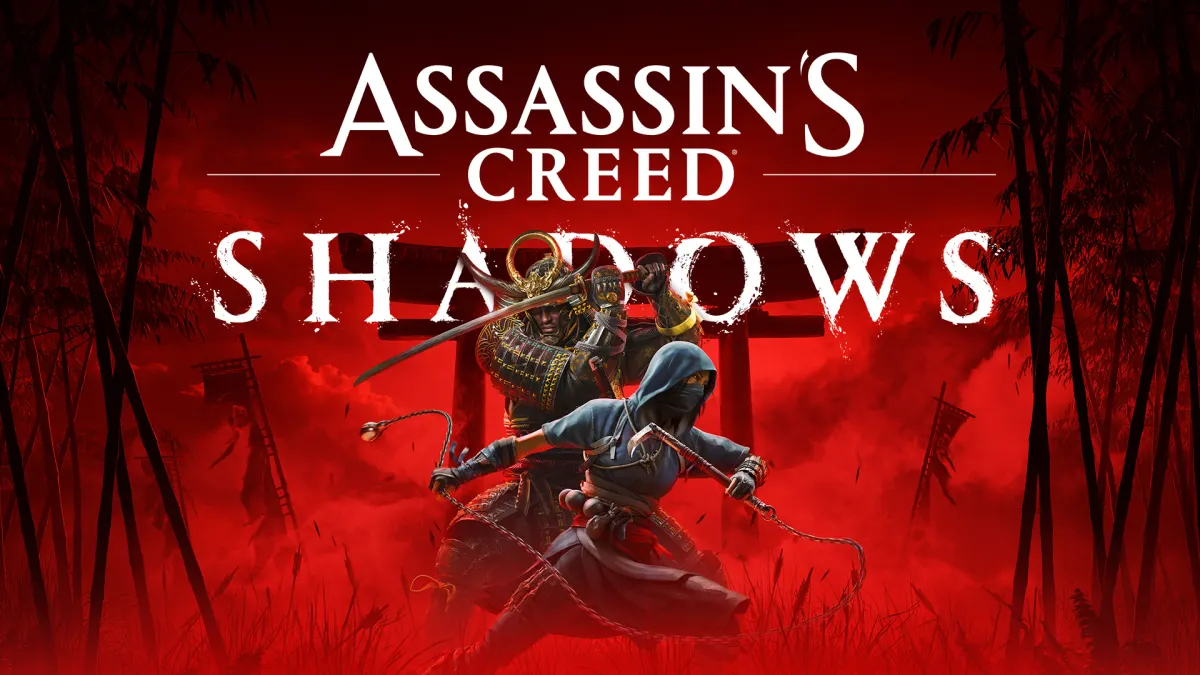
Working in the shadows to serve the light…
I’ve always loved the alternative historical tourism in Assassin’s Creed. Whether I was an assassin in the Holy Land during the Third Crusade, a pirate in the golden age of piracy (which, funnily enough, wasn’t 10-15 years ago, but from the 1650s to the 1730s) or a gangster during the industrial revolution, I’ve had fun stepping into the different roles the famous developer from Saint-Mandé has prepared for us. If we’ve taken on various roles, including a French revolutionary or even a Templar, what’s stopping us from becoming a ninja? Well, from 20 March 2025, nothing stands in our way!
I was quite shocked to live through the launch of an Assassin's Creed title set in Japan. Sucker Punch stole a march on this concept with the release of their famous game Ghost of Tsushima in 2020, in which a former samurai discovers a new way to defend his lands from the invasion of the Golden Horde. Under these circumstances, a question arises on the lips of all players: Is the newest game in the Assassin's Creed franchise the second coming of Jin Sakai? No. What’s even sadder is that Shadows isn't even the only game this March set in the Land of the Rising Sun. You've probably already guessed that the title doesn't live up to the standards set by the developers of the Infamous series. This creation is by no means Ubisoft's great salvation, but it won't completely wreck the company either. It's a game that uses the developer's “patented” formula from Saint-Mandé, inviting us to climb various tall structures to uncover the map. As we’ve accustomed you to by now, dear readers, we'll start with the story.

Between Bushido and the Ghost’s Path
In this case, it's fragmented. We have two protagonists, each with their own goal, working together to achieve a common purpose. Naoe is driven, on one hand, by a burning desire to avenge her clan, decimated by the forces of the great “tyrant,” Oda Nobunaga, and on the other, by a promise made to her father to recover an artefact stolen by members of the Shinbakufu, the equivalent of the Templar Knights or the Order of Ancients from previous games (Origins, Valhalla). Yasuke, in contrast, is driven by nobler goals: finding purpose in life and upholding the values he learned from his daimyo (Japanese feudal lord), the great Tenka-bito and unifier, Oda Nobunaga. Both agree to set aside their grudges to free Japan from the influence of the Onryo group (ghosts – a name derived from the masks the Shinbakufu members wore when the protagonist first encountered them) and other forces with interests contrary to the country's well-being.
Up to this point, I think you'll recognise the story from almost all games in the franchise. The developers tried to differentiate the narrative thread in Shadows from the rest by choosing the historical period: the end of the Sengoku era (from 1579 onwards). The years chosen by the developer have often been represented in various forms, from books and manga to films, TV series, and anime. The period itself is defined by war, chaos, and uncertainty, and in the midst of these events are our two protagonists: Naoe and Yasuke.
I won't deny that I had minor issues with the chosen characters. Yasuke is the first character in the franchise based on a real person, a slave brought to Japan by Christian missionaries, most likely for protection and manual labour. His status at the tyrant's court is shrouded in mystery, as there are few accounts from that period regarding him and his actions. The choice of the black “samurai” as a protagonist raised serious questions for me. I read the rumours and scandals that appeared immediately after the disclosure of this decision, and I worried about the impact this choice would have on the company. I didn't believe Ubisoft would manage to make an accurate representation of the person in question, but to my relief and that of all fans, it seems I was wrong.

Our protagonist is freed from slavery by Oda Nobunaga, who is impressed by his instinct (which is a romantic interpretation compared to the historical truth, which tells us it was more a curiosity about his skin colour). The tyrant sees potential in this lost soul and takes him under his wing to give him purpose. Over time, Yasuke becomes a trusted advisor to the great unifier, and the values he learned from him guide him in the complex relationships of feudal Japanese society. Very often, the black samurai is the tempered voice of the dynamic duo, always seeking a diplomatic solution or one that won't offend. Naoe, on the other hand…

Let's start from the beginning with Naoe. The young woman is a member of the Iga clan, the famous caste of shinobi (or as we know them here in Romania: ninja). There is nothing noble about her or her fellow villagers; they were part of a community of assassins and saboteurs hired by various samurai clans to carry out “black-ops,” undocumented missions involving dishonourable and vile acts such as political assassinations, thefts, kidnappings, and so on. Naoe's story and personality somewhat mirror those of Ezio Auditore da Firenze from the Assassin's Creed 2 trilogy (the second game, Brotherhood, and Revelations). However, the resemblance seems to stop there, as Naoe doesn't appear to mature in the same way the famous Italian did. Although both start from the same point (the desire for family revenge), Ezio manages to grow and evolve, understanding that the death of his enemies will not bring him inner peace, and his true calling is to guide the Brotherhood and uncover long-forgotten truths about the precursor civilisation (Isu for those who have forgotten). Unlike the famous assassin, Naoe is chained by the grudge she holds against the Shinbakufu members. Earlier, I mentioned that Yasuke seems to be the voice of reason, because the options Naoe brings to the table are extreme and violent. For example: hearing about the problems of some monks at a Buddhist temple, she approached the priests to find out more. When told that too many refugees were coming to them and they didn't have enough food for all the displaced, the protagonist can choose between the following two options:
- “Stop accepting refugees!”
- “I will go and kill those who created this situation.”
It doesn't even seem to have crossed the character's mind to offer a donation of food or money to the monks. And this isn't the only example of its kind. I understand that youth and the desire for justice guide the protagonist, but she doesn't have a mentor to temper her, to teach her that there are other ways besides fire, blade, and death, as Ezio did. Therefore, I am disappointed with how Naoe's story was approached.

I won't say the entire story is of inferior quality, because that statement would be false. The game's narrative thread has its good and bad moments, but what bothered me most was the quality of the script. Certain moments that should have emotional weight and a major impact on the story and the player fail to evoke the feelings and reactions the developers would want. Many times, I was surprised to deduce from the music that a certain moment was solemn, because the events that produced it didn't convey that to me. Almost everything is presented in a rush, and because of this, the player doesn't manage to become emotionally invested enough to truly feel the impact of some scenes.
And if you're wondering if the story is predictable, the answer is ambivalent. On the one hand, certain aspects of the plot are completely predictable, while others are completely unexpected (unless you're very attentive to the subtle clues the developers have left us).

Shadows and Sparks
But let's move on. Not everyone plays Assassin's Creed for the epic sagas or historical tourism; most do it for the gameplay that defines the franchise. This is completely different depending on the character you choose. The first few hours will be somewhat linear, with the player unable to choose which of the two protagonists they wish to explore the world with until they finish the introduction (which lasts approximately 8-12 hours, depending on playstyle, although from what I've discussed with other reviewers, some only reached the point where they were allowed to switch characters after 22 hours). Once we've successfully passed this section, the map opens up, and the Shinbakufu members can be approached in any order we desire, along with the side objectives.
Although I'm a proponent of absolute freedom in such games, this can be detrimental to the story in certain cases, as in the present one. Lacking a defined order in which we can discover the identity of the order's members, we are somewhat left to the wind. For example, Naoe and Yasuke have a few missions that make us relive moments from their past. If the samurai's are well-written and executed, the shinobi's are disappointing. The first episode from Naoe's past happens quite quickly, but it serves as a tutorial meant to teach us how to control the character. The section itself wouldn't be a problem if we weren't already four hours into the game and had already mastered the concepts Shadows tries to teach us. Moreover, most of the abilities we had before reliving the past are no longer available, because Naoe wasn't yet a proper shinobi at that time. Many missions can be started simultaneously, but by starting them, we end up with a mishmash of information that makes it difficult to unravel the conspiracy at the heart of the conflict.

But let's return to everyday gameplay. This is divided into two large sections (and two smaller ones):
- Stealth
- Combat
- Exploration
- Base management
The most important for the franchise is the first, namely stealth. The stealth system has been improved for Shadows, and for genre enthusiasts, I recommend playing on expert mode. Light is the newest factor we need to consider, and shadows become the assassin's best friend in Sengoku. In brightly lit areas, protagonists will be easily detected, and on expert difficulty, enemies will be much more aware of their surroundings. Thus, the often-used solution in previous titles of climbing buildings and tall structures to traverse enemy bases is no longer viable, as enemies will easily spot anyone climbing the walls of a castle or barracks.
The improvements don't stop there. For the first time in the franchise's history, we have changing seasons, and these come with different weather phenomena. During spring, we have abundant rains, which we can use to mask the sound of footsteps, and during winter, we must be careful how we approach enemies, as the snow can give us away. Even so, most opponents can be easily assassinated, except for the larger ones, who require both better equipment and obtaining an ability that allows us to defeat them in a single move (or at least try).
As in Valhalla, we can't kill everyone with the hidden blade. Some enemies are stronger than the rest, and we can cause them serious damage by attempting an assassination. Personally, I didn't like the introduction of this mechanism in the previous title, and consequently, I'm not a fan of it in Shadows either. Perhaps I'm old-fashioned, but I believe severing the carotid artery or stabbing the liver should be somewhat fatal, considering that medicine in 1580 was not as advanced as it is today. But putting aside this “minor” detail, I also don't think it's right that Naoe has to invest points to unlock the ability to use smoke bombs. If the protagonist had been a kunoichi (female ninja) from Koga (the great enemies of the Iga clan), I would have understood her ineptitude and the need to unlock/learn this technique. But Naoe is a member of the clan that created and used the smoke bomb for generations!

And since I mentioned it, yes, the title has RPG elements. Equipment with different attributes and levels returns, along with 6 skill branches that we can master. These contain both active proficiencies and passive benefits, and the degree of “supernatural” that we encountered in Layla Hassan's trilogy is no longer present here. So don't expect an ability that allows you to teleport from one enemy to another. Even so, the lack of fantastic elements doesn't make the combat system balanced.
This is based on 3 types of attack: light, heavy, and posture. Posture strikes are the most effective and deal the most damage, and these can be initiated by long-pressing any attack mode (R1 or R2 on PlayStation). Posture attacks will have the best results when the enemy “glows.” When this phenomenon occurs, using a posture attack will initiate a special animation that will cause significant damage. And how can we make the enemy glow? By perfectly parrying enemy blows, dodging at the last moment, or parrying all furious attacks.
The game allows us to equip 2 types of weapons from the 3 in Naoe's arsenal and from the 6 that Yasuke can carry. As I said earlier, the protagonist is a ninja, and she cannot directly confront an army, unlike the mysterious samurai. Naoe can carry a sword, a kusarigama (sickle with chain and weight attached), and a tanto (knife). Although the kusarigama is a famous weapon from the shinobi arsenal, we have no reason to use it or the sword. The small dagger has active and passive abilities that significantly simplify combat, such as the ability to cause multiple consecutive enemy glows or allowing us to perform double assassinations. I was even discussing with ManCave.ro how useful and essential the tanto is as a weapon and tool in Shadows.

If Naoe literally has to use the expression divide et impera (divide and conquer) to deal with enemies, Yasuke is the exact opposite. The samurai can confront the Golden Horde itself without any problem due to the way he was designed. His abilities and equipment are normal for a person in his position, namely an Ōdachi (a longer Japanese sword, the use of which is due to his imposing stature), a bow, a teppo (firearm based on Western rifles), a kanobo (war club), and a naginata (Japanese halberd). In Yasuke's case, we can choose any weapon we want, because his abilities transform him into a veritable whirlwind of death that paints every battlefield with the blood and remains of enemies. Nobunaga's great vassal also has a skill that I believe will be the subject of many memes once the game is released. He can smash through any thin wall or door (even barricaded ones) like the famous Kool-Aid Man (all that's missing is for him to say “OOOOOOOH, YEAAAAAAAAAAAAAAAH” when he does it, but I'm sure the modding community will take care of that immediately). Thus, Yasuke becomes a veritable tank, which prevents him from using more subtle methods.
Perhaps you're wondering how to switch between the two characters, or if you can play exclusively with one of the two protagonists? Well, switching is done from the pause menu, with the press of a button, which will send us to a short loading screen (thanks to SSD technology). Regarding the second question, we don't have absolute freedom in choosing the protagonist. There are missions and activities specific to each protagonist, and these can only be completed by the character to whom they are dedicated. Naoe can find places to meditate with the help of Kuji-Kiri (gestures) activities and paint various animals, while Yasuke can repeat his sword exercises or take part in mounted archery competitions.

I've discussed the two major systems, but I haven't talked at all about the two minor ones. Exploration in Shadows is a bit arduous. No, it's not because the landscapes of Japan don't look good, but because it makes no sense to stray from the usual paths and roads to look for treasures or secrets. Much of the regions we have to traverse are full of wild nature, dark forests, and dangerous mountains, and the famous Skyrim method of going in a straight line not only doesn't work, but will also be very boring. Any secret or location will be marked on the map with a question mark, and most of the time, the only way to reach them is by the path used by most people. Although the environment is beautiful, it feels lifeless and empty. Thus, any urge the player might feel to explore every corner of this digital representation of Japan disappears.
The last element, I believe, will generate the most discussion among fans. Valhalla introduced the concept of base-building, but the village Eivor founded and managed was static, in the sense that each building had its own place. In Shadows, the situation is a bit different. Our base is an acre of land where we can construct different buildings, add various pieces of furniture (garden or interior), build roads, and so on. Equipment can only be upgraded at the blacksmith in the base, and he needs his own workshop (which comes with 3 different levels). The state of the village, along with the number of buildings and upgrades, will define the base level, and this, in turn, will allow us to access certain passive benefits. Also, all our allies gather here for chats. Consequently, this portion of the game somewhat resembles the famous indie title Stardew Valley.

Feudal Japan – an accurate representation?
And yet, is Shadows an accurate representation of the Sengoku period? Yes and no. Yes, because it brilliantly portrays the horrors and uncertainty of those times, which were defined by excessive violence and general chaos. The various warring clans attempting to seize power are almost all present (at least in the prefectures where the game's action takes place). All have their own crest and colours, and these are strictly respected by the game, which dresses each samurai differently depending on their region of origin. As I said earlier, much of Japan at that time was covered in wild nature. Most settlements were impoverished villages, and cities were practically a collection of buildings around an official's manor or a castle.
So, where is the game not an accurate representation? Well, in terms of places of worship. Although these are Shinto and Buddhist (plus a few minimalist churches to avoid attracting the wrath of ordinary citizens), the temples appear to be ancient. Japan has many places of worship that are hundreds of years old (and even one a thousand years old), and these are sacredly maintained by monks and restored when needed. Unlike reality, the temples in the game show significant signs of wear, erosion, and even major damage. The colours used are often faded, which would only happen if the sanctuary were abandoned.

What has changed?
I've talked about many things throughout the review, but I haven't talked at all about what has changed in the game compared to the previous trilogy. Well, both the torch and the bird (hawk, falcon, eagle, raven) that the player could control to scout enemy-controlled areas have disappeared. Thus, exploration has become more difficult, because almost everything has to be done manually with Naoe's ability (eagle vision), and dark areas cannot be traversed efficiently without a light source (which is now static and must be found in the environment). What seems to have replaced the bird is the spy network, which is a reconnaissance system we use to discover objectives and targets. Very often, we will have clues about the location of a person or a treasure, and the only way to find it on the map is by sending agents to provide us with the exact location. The system somewhat resembles that of the Brotherhood in Assassin's Creed II: Brotherhood, where Ezio could manage his subordinates and send them on different missions across Europe. But unlike that system, the one in Shadows has a limited number of recruits, and these can only be used once per season (or “recalled” by paying a fee).
Another addition to the game is the Animus Hub. This is the new interface and launcher from which we will be able to start future titles of the franchise. At the moment, it somewhat resembles the dedicated launcher for Call of Duty (Call of Duty HQ), and this aspect might not be to everyone's liking. I think it's a good idea to have the timeline divided by years denoting the period in which a game takes place. Accessing the current title is done through a superb and aesthetically pleasing transition. When the game is chosen, the character comes to life, the camera moves behind them, and the Animus loading screen appears. The transition happens instantly, and in the future, I'm curious if they will change the details of the Animus loading screen depending on the chosen period.

Nihongo o hanashimasu ka?
There are still some less “sexy” technical issues to discuss, which I consider quite important. The graphics engine used by Ubisoft is their in-house creation, so I expect (like any player, for that matter) the developer to know it perfectly. Unfortunately, it seems that's not the case. While it looks acceptable, I can't say it lives up to my expectations. Sony invested approximately $60 million in the development of the epic Ghost of Tsushima, while Assassin's Creed: Shadows benefited from a budget estimated to be between $250 and $350 million. For that kind of money, and considering they used their own graphics engine, I expected the environment, characters, and facial animations to be superior to Valhalla or Unity (which, by the way, was released 11 years ago and looks much better). There are many moments where the game seems to have been released in 2015 rather than 2025, and at times I could even say that Rise of the Ronin looks better. Where I think it stands out is in the assassination sequences, as each target's death will transform the screen into a veritable black and white work of art, with a splash of crimson.
In terms of acting, we have a few points to make. I had discussions with Silviu from MovieNews.ro about the quality of the actors' performances and in what language Shadows should be experienced. In English, they have a good accent, but the direction leaves something to be desired. Most lines seem to be delivered in a monotonous, mechanical, or even comical way at times (not to mention that some casting choices don't work at all with the characters they portray). In Japanese, however, the direction was far beyond my expectations. The actors put in so much work, and the characters' emotions are conveyed with every line. Consequently, the question arises: How is it correct to play Shadows? In English, Japanese, or in immersion mode? Unfortunately, I don't have an answer to this dilemma, and I believe everyone should experience the game as it sounds best to them. I preferred to play the title in “immersion mode,” which makes characters in Japan speak Japanese, and expat characters speak in their native language. For me and those who will play in “immersion” mode, the presence of subtitles is absolutely necessary. However, with the appearance of subtitles also comes the uncertainty regarding the use of AI to cut development costs…
Until this game, the franchise had a habit of always indicating the translation of a word or phrase in parentheses immediately after a character used a word in another language. In Shadows, the situation is a bit different. Characters will use Japanese expressions and words, but these will often be transcribed and left as they are, without any translation. Thus, a person who does not know the language will not fully understand certain discussions, and some interactions with cultural or historical nuances will completely pass by the player. For example, Naoe has a mission where she has to work with a kunoichi (female ninja) from Koga. Due to the rivalry between the two shinobi (ninja) clans, Naoe refers to the character in question as Koga-hime (Koga princess), and she, in turn, refers to Naoe as Iga-hime (Iga princess). Very important for the story? No. But it wouldn't have been difficult to give us the translation of the terms so that we could also appreciate the sarcasm used by the two characters, right?

Conclusion
I don't think Assassin's Creed: Shadows is a bad game. Nor do I think it will be the title that buries the famous French developer. It's a decent creation, with a story that leaves something to be desired in places, feeling like two different games that have been united, due to the completely opposite way the two protagonists interact with the world. Is this what we wanted from this franchise? Probably not. For those of you who expected a Ghost of Tsushima 2 set in the Sengoku period, I recommend waiting until Ghost of Yotei is released. And for the rest of the players, I honestly tell you that it's the same Ubisoft formula, just dressed differently. The new stealth system raises many questions for me, not because I don't appreciate it, but because it seems like it might be a prototype for what will be used in the Splinter Cell remake. If you haven't played any game in the famous franchise, I think this is a good starting point. And if you're die-hard fans of the series, then I think it might be worth waiting a bit for the developer to fix some bugs (and maybe reintroduce the torch).

Played on: PlayStation 5
Release date: 20 March 2025
Genre: Action, Roleplaying
Publisher: Ubisoft
Developer: Ubisoft

0 votes
Scroll down here and stay on the page for at least 30 seconds to vote.
Pick a score from 0 to 10 (halves are allowed).