
Awaken: Astral Blade – Review
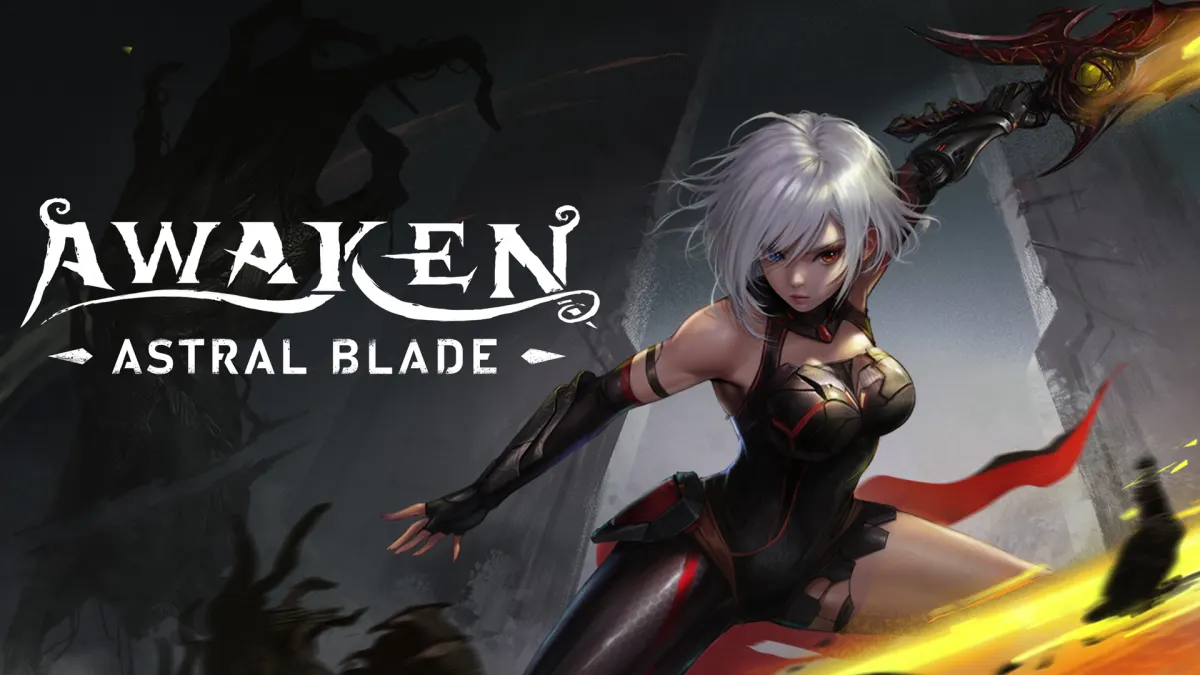
Be good and don't annoy an android
I hope you've been missing a Metroidvania review, because I've just pulled a hot one out of the oven. This time I'm taking you on a journey into the sci-fi world of AWAKEN: Astral Blade. Contrary to expectations, the game didn't win me over because of its protagonist. It was more about the gameplay I saw when the game was first announced. Now I can tell you if it just had potential and failed, or if it's actually any good.
The title is developed by Dark Pigeon Games, a small studio from China. They are also part of the China Hero Project. This is a PlayStation initiative that aims to support talented teams through mentorship in various fields.
I can also guess why these people were accepted into the programme. I've spoken with them throughout this year. And every time I asked them how things were going, they always told me they were optimising and adjusting. I don't want to sound too biased, but I respect that kind of dedication.
The game was later picked up by ESDigital Games, who published it.
Meet Tania. Aka what happens if you combine 2B and Eve

I'm sure you've heard of 2B from NieR: Automata and Eve from Stellar Blade. Our bionic girl, Tania, seems to be an interesting combination of the two, except they haven't sexualised her to the maximum. I'm looking at you, those interested in jiggle physics.
Tania, or CR-104, is one of the Bionics created by Dr Herveus and Orson Research Center as the next step in human evolution. She sees the good doctor as a paternal figure and even addresses him as “Father” most of the time. This manifestation of emotions and attachment is something unique even among the other Bionics.
Her story begins when Dr Herveus sends her to investigate the rainforests of Horace Islands. This location is full of Karpas energy, which transforms the flora and fauna into aggressive mutants. And they want to get to the bottom of it. Obviously, things don't go well, and a series of events kick off the action.
That's about all I can tell you about the narrative direction in Astral Blade. I can't give away any more without revealing key elements and spoiling your experience.
Nor can I say that the story brings originality or anything absolutely unique. It's about humanity's classic game of playing God and its desire to create advanced life forms. But what story would there be to tell if everything went perfectly?
With the exception of a few unique events, Tania isn't that interesting a protagonist. The same goes for the other characters. It could also be due to the English translation and the way the actors played them. They seem to talk an extraordinary amount and beat around the bush, using long sentences and explaining more than necessary. And I simply didn't feel the emotion behind it. More precisely, I didn't feel any emotion from the way they were performed.

It's even stranger that not all of Tania's lines are voiced. Instead, much more insignificant characters have more to say. Or I've encountered situations where other characters speak during cinematic scenes, and her words only appear in the text box. You'd think they'd want to invest more in their main character.
Instead, I'll give them credit for not presenting her as an objectified protagonist, like she's some adult doll. The costumes she can wear are decent. She doesn't move lasciviously. She doesn't have exaggerated proportions. And her reactions during combat aren't filled with moans as if it's mating season. I like it. I like that people have learned to create strong female characters, not just toys for little boys.
I equally appreciate that the side missions don't send you on wild goose chases. You'll find their objectives simply by being curious and exploring. And let me warn you, there's plenty to explore. The developers have managed to create a vast and interconnected world, and the regions are an interesting mix of organic and inorganic.
The game also includes two endings – you can see both in the same session. One is the standard one, which everyone unlocks. The second is the true one, and you'll have to work for it. After all, you're interested in finding out how the story ends, aren't you? Then you'll have to collect a few items, meet some NPCs, and fight some optional bosses. But it's worth it.
At the end of the day, the story and characters are relatively okay. It's nothing memorable. But the world they've created is worth exploring, including the multiple secrets they've hidden in the game.
It's illegal for a Metroidvania to have such well-polished gameplay

The gameplay is by far the defining element of the game. I get the impression they took a look at what worked and what didn't in other Metroidvania games. They asked themselves what could be improved, and then they got to work.
As usual, I played using a DualSense 4 controller. In this case, it also made sense, as the game was created for PlayStation and PC.
The first aspect I'll address is combat. Tania initially has access to a sword, with the possibility of unlocking a scythe and darts later on. Each weapon has three main moves, plus a few tricks. One move is a three-hit sequence and a finishing move. Another is a two-hit sequence and a finisher that launches Tania forward. And the last is a two-hit sequence in the air and a finisher that brings you back to the ground.
The tricks I mentioned relate to how fluidly you can switch between weapons. You receive a visual and audio signal when you finish a combo. And if you press a trigger associated with another weapon, you'll perform a powerful attack and use that weapon. You can continue this cycle indefinitely, as long as you don't get tangled up in the buttons. Or you can just stick to a weapon you like. The choice is yours.
I tried both playstyles, but I have to admit I liked the scythe more. The Enginery Sword is great if you like flexibility when attacking. By that, I mean if you want to weave in blocks or parries among your own hits. Plus, it's a useful weapon if you want to apply negative effects.
On the other hand, the Cardinal Scythe is outstanding when it comes to damage. It moves slower, and you have to pay more attention to opponents' attack patterns. But it's unmatched when it comes to executing your enemies.
Gleaming Darts give you the chance to fight at range. I'd say they're better suited to a conservative style. For example, if you don't like being close to the opponent all the time. But you'll have to remember that you have limited ammo. More precisely, it's limited until you apply some upgrades.

As a side note, each weapon can be upgraded. As I mentioned, the sword will be able to apply negative effects quickly. The scythe will send projectiles that automatically target enemies. And the darts will have more ammo and higher chances of critical hits.
I didn't just like how easy it is to switch between weapons and the multiple ways you can approach combat. I also appreciated the active role weapons play when it comes to platform navigation. For example, let's say you're in the air and you need just a little more to grab the edge of a platform. But you've already used your jumps and dashes. Then you can use scythe attacks between each jump and dash. These will help you cover the distance.
As a bonus, combat was also created to gather more resources. You'll tell me, “Duh. That's why I hit enemies. To collect what drops from them.” The truth is, you can get even more thanks to an active skill. Essentially, it gives you more resources if you hold down the button for the finishing move when an enemy is close to dying. I find this useful for at least two reasons.
First, because you naturally get more resources for upgrades and don't have to grind as much. Second, because it encourages you to use combos and avoid boring fights. The two will become second nature very easily.

Speaking of jumping and dashing, we have a series of options to traverse the game. My favourite, unlocked from the start, is the sprint ability if you hold down the dash button. It saves so much time that you can sprint from the beginning. You also get classic abilities like double jumps, wall climbing, launching yourself into the air, etc. To these are added some more original ones, such as being able to jump greater distances when you unlock the rush ability (essentially, a much faster sprint), or being able to pass through portals or different barriers.
It feels like the developers are trying to tell us, “No time to waste, friend. You have monsters to kill. Take this and run as fast as your lungs will carry you.” Speed is the name of the game, both in combat and when exploring.
Weapon upgrades and these abilities aren't the only things you can buy. You also have a set of Active and Passive skills available. Passive ones increase certain attributes like damage, critical hit chance, etc. Active ones add new abilities to the mix. Things like parrying or counterattacks, slowing enemies when you dodge or parry perfectly, shields, and the list goes on.
The last upgrades on the list are the Items. You already know I like to draw parallels with Hollow Knight, as it's a well-known example. In this case, Items are the equivalent of Charms. I won't go through all 33. But you can generally separate them into offensive, defensive, and resource-gathering ones. My suggestion is to experiment with them as you fight new bosses. For example, I couldn't cut through some of them like butter with just damage. So I oriented my strategy towards an endurance fight, and I equipped defensive Items so they wouldn't mess me up so badly.
Since I keep talking about gathering resources, I want to show you how much these people didn't want us to bother with grinding. Get ready for a little maths. First, remember that you can press that button when an enemy is dying near you? That gives you 50% more Aether – the in-game currency. Second, you have two passive skills that give you a 15% bonus. Third, there are three Items that offer a 160% bonus. And if that wasn't enough, the Christmas event allows you to collect a permanent 30% bonus. If we add them all up, we get a 255% bonus that you can get just by playing and unlocking upgrades. If that's not generous, then I don't know what is.
Not to mention you can buy a costume as DLC that gives you another 10% Aether bonus. As if 255% wasn't enough, right?
To finish with the character details, you'll find Flask Flower Fruits, Corollas, and Rainbow Fruits. The first increases the efficiency of vitality potions. The next increases the number of potions you can carry. You initially start with three and can reach a maximum of seven. And the last simply adds +5 to your HP bar.
The only improvement I can recommend here is to apply sound effects when using potions. Boss fights have a fast pace, and it's hard to tell if you've used a potion. And you might be flattened when you realise you haven't.
I'd say there are approximately five types of enemies per biome. I think that's a suitable number, considering how quickly you'll move through regions and how hack'n'slash the combat is. You won't have time to get bored. You have no idea how many hours I was saying “I absolutely love it” while clearing out mobs.

However, the real spectacle appears when you face the bosses. Each has its own tricks that you need to thwart. Each gives you work and encourages you to learn their patterns. And each checks if you have enough damage or if you should explore more. To be honest, they're also a kind of live tutorial that helps you get used to the moves in your arsenal. By the way, friendly advice: always be prepared for two rounds of slaughter. These bosses absolutely hate giving up.
You'll also get locked in some rooms and forced to fight to escape. If you're familiar with the model used by Devil May Cry games, you'll probably like what happens in Astral Blade too. You get more Aether depending on how fast you move and how many hits you land before being interrupted.
One detail I appreciate about boss fights and those in these rooms is that all your potions and HP are refilled after you win. You don't have to fear having too little health and that the first enemy who breathes on you will kill you.

You'll also encounter chase scenes and platforming puzzles. In case the first part wasn't obvious, you're the one being chased. The most important aspect I want to highlight is how intelligently they've placed checkpoints for both. Again, these people really don't want to waste our time with something we've already done. This translates directly into more time to get through the next sequence. And if the platforming isn't the love of your life, you can skip them directly and teleport to their end for the reward. You're not punished at all. No achievement is blocked or anything.
The second most important thing is how it encourages you to use all your abilities to reach the finish line. It's about the tiny details like using weapons to stay in the air for a long time.
Navigating Horace Islands can get confusing. Fortunately, you have Aether arrows that guide you to the next objective. You get coins and you also know where to go. Can you ask for more?

The answer is, yes. And you will receive it. You can find cats that you send back to a statue. When you've collected five cats, you unlock a radar. More precisely, a cat will start meowing if you enter a room where you still have secrets to find. At eight cats, you can teleport to any checkpoint on the map from anywhere. And at twelve cats, you can reveal all the secrets on the map. It won't be hard to find the cats, but they won't all be in one place, so as not to spoil your fun of exploring.
Speaking of checkpoints, they are marked by lemon balm flowers that bloom when you access them for the first time. Here you can manage everything related to Tania. And later you'll be able to switch between them, before unlocking the fast travel option from the cats. They are sufficiently well-scattered, and you won't have to fear dying and not having one nearby. Plus, Tania always lies down and deactivates when using them. And when she reactivates, she stretches as if she's woken up after a good sleep.
Regarding fast travel, I want to mention that you can see the pins and move freely on the map. I'm actually surprised why more Metroidvania games don't do this. Some of them don't show you the pins at all. And some take you from checkpoint to checkpoint, without being able to move on that screen. Fortunately, that wasn't the case for Astral Blade.
Yes, you heard right. You haven't escaped my mentions of map pins. I'll be short and to the point this time. You have five different types, and you can use each of them unlimitedly.
You can choose between three initial difficulties for the first play session: Story, Normal, and Hardcore. You can choose the one that suits you. Just remember that you'll unlock a new costume if you finish the game on any difficulty, plus another costume if you finish on Hardcore and a new difficulty: Expert. I chose Hardcore directly because I love pain. And pain loves me too.

There are also other costumes you can get by playing. They don't just change how Tania looks, but also how the weapons look. Again, I appreciate that they look decent.
If we put it all together, I wouldn't have anything bad to say about the gameplay even if I wanted to. That's how well they executed it.
A world where organic, synthetic, and magic harmoniously combine

The environments are beautifully constructed to evoke the beauty and danger of Horace Islands. You'll encounter plants and animals that have mutated due to Karpas energy – a type of extraterrestrial energy that influences the area and its inhabitants. You'll also have the chance to visit sci-fi themed indoor areas where soldiers, robots, and mutants will hunt you. Last but not least, you'll meet celestial beings and explore areas full of magic. The bright colours and high contrast complete the image of a world full of hope and peril.
The music adapts according to the region you are in. It combines African drums, mandolins, flute sounds, and choir in the wild regions, and it adopts a synthwave style when you are inside research laboratories, to enhance the futuristic vibe.

One of the audio problems concerns the actors. They sound as if they're exaggerating with accents and emotions. And this happens in the happy situation where they even have lines. I've already mentioned that Tania speaks less than some famous nobodies in the game. And sometimes there's a strange imbalance between reading her lines while another person speaks freely.
There's also the problem of the sound cutting out completely when a boss is introduced or when they have a dialogue sequence. I don't know if it's intentional, but it breaks the immersion. It would have been nice if we at least had some background music.
Final Verdict

AWAKEN: Astral Blade probably has the best-executed gameplay of all the Metroidvania games I've played this year. Combat is responsive, fluid, and satisfying. Boss fights strike the right balance between challenge and reward. The exploration aspect is very well-tuned, and we are given multiple abilities to traverse the game's universe. There's no such thing as unnecessary grinding, and you're provided with enough tools to collect currency just by playing normally. And the game world is wonderfully presented in terms of visual and audio direction.
The only elements that drag the game down are the lack of an interesting story, the strange decisions with the character voices, the extremely forced lines delivered by characters, and the few audio problems.
It gets an 8.5/10 from me. And it could even go up to 9/10 if you don't care much about the story. It's a solid game. It's a solid experience. And I encourage you to pick it up if you appreciate games that put you, the player, first.
You can find it for €17 during Steam Sales. You can get it at the full price of €20. Or you can get it from the PlayStation Store for $25. As far as I'm concerned, any of these prices is more than fair for everything it has to offer. I've already spent 28.5 hours just finishing everything in Hardcore mode. And I'll probably have a blast in Expert mode.
Wish me luck and I'll see you in the next review.

Played on: PC
Release date: 22 October 2024
Developer: Dark Pigeon Games
Publisher: ESDigital Games

0 votes
Scroll down here and stay on the page for at least 30 seconds to vote.
Pick a score from 0 to 10 (halves are allowed).