
Behind the Scenes of Fleet Hunters with Alex Hortopan – Interview

How do you build an indie game almost entirely by yourself?
In an industry where big ideas often clash with huge budgets and entire development teams, the indie scene continues to prove that passion and perseverance can build memorable experiences even from behind a single desk, where many lost nights and an obsession with video games can give birth to the next big hit. This is also the case for our beloved country, Romania.
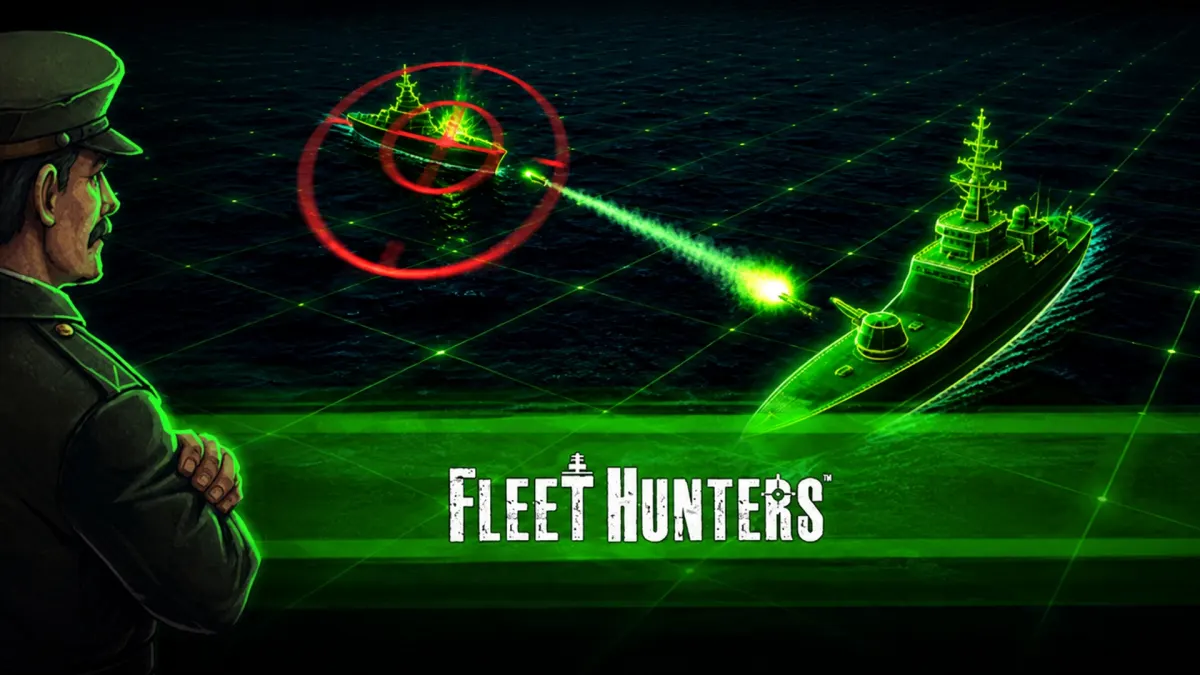
Fleet Hunters, a Romanian indie project that reinvents the classic “Battleship” into a modern, fast-paced, and suspenseful tactical multiplayer, was born precisely in this way. Behind the game is Alex Hortopan, a developer who spent years between web development, interactive experiments, and the constant desire to build his own digital worlds.
In this exclusive interview for GRIND Magazine, we spoke with Alex about his beginnings in game development, the challenges of developing an indie multiplayer game, the harsh lessons of the industry, and the arduous journey from a prototype to a game ready for launch on Steam. So, without further ado, let's see what thoughts Alex shared with us in our discussion:
GRIND INTERVIEW | Alex Hortopan on Fleet Hunters
- How would you describe your journey to “Fleet Hunters”? What drew you to video games and what previous experiences contributed to this project?
I’ve been playing for as long as I can remember, from consoles and floppy disks bought at the market to my home PC and countless nights spent in internet cafés of yesteryear.
I started programming “young”, as they say, and among my first projects was a little game called Kill The Musca, where you had to hit a fly buzzing chaotically on the screen.
Although professionally I chose the path of web development, my passion for games and interactivity never left me.
A few years ago, at one of my jobs, I ended up working closer to the visual and interactive area, and since then I’ve started experimenting and building my own projects in that direction, simply because I enjoy it.
The road is long and arduous, however, because game development, especially as a solo indie developer, is extremely complex and involves many different specialisations.
- What was the moment of inspiration for “Fleet Hunters”? What made you create this game and what other works influenced your vision?
There wasn't necessarily a single moment of inspiration, but rather a combination of factors and a strategy. From 2024 until recently, I experimented with several prototypes, through which I learned many new things.
Initially, I started with a fairly complex concept and invested serious resources into it, but along the way I realised I was going in a direction totally opposite to indie recommendations.
Everywhere you hear the same advice: “start small”. Don't try to make a huge game from the start. In my case, that project would have needed at least two or three years of development, not to mention the artistic side and associated costs.
So I decided to put it on hold and focus, for my first Steam game, on something smaller, faster, and more fun. The goal is not just to launch a game, but to get used to the entire process: publishing on Steam, marketing, feedback, and everything that goes into launching a real product.
Fleet Hunters was born from the desire to reinterpret a classic and transform it into an experience that is as dynamic and satisfying as possible. I wanted it to be faster, livelier, and to eliminate the small frustrations I observed in other similar games.
- How did you approach the design of the game's core mechanics? How did you balance accessibility and depth?
The basic mechanics in Fleet Hunters are already well-defined by the classic games that inspired it. So my main goal was to make it more fun, without radically changing it.
The challenge was to find ways to make the game feel more dynamic and interesting, while maintaining the simplicity and accessibility of the original. I wanted a faster pace and more satisfying moments for the player.
- How has the game evolved from concept to final product? What ideas were abandoned along the way?
The visual side of the game went through several iterations. Initially, I tried a more realistic style, but I quickly realised it didn't fit the atmosphere and feeling I wanted to convey.
So I went in a more stylised direction, which feels more coherent with the game's pace and personality.
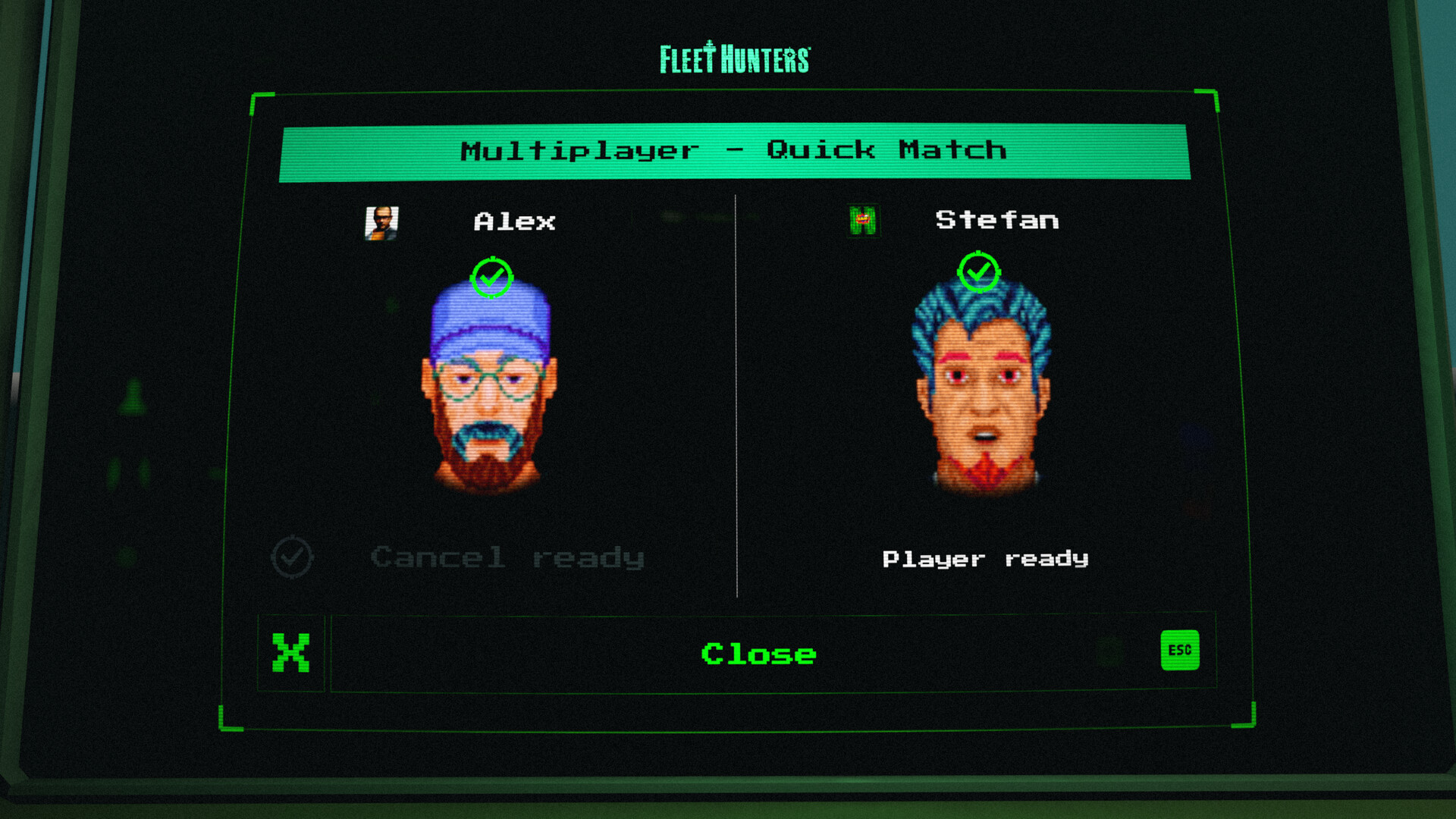
The biggest surprises, however, came from the multiplayer area. I slightly underestimated the level of complexity, especially since Fleet Hunters is my first game to include both local multiplayer and online multiplayer.
I had experimented with multiplayer in a smaller mobile project in the past, but there I had gone for a very simplified version. This time I set out to do things “properly” and take the opportunity to learn how to build a solid multiplayer experience from scratch.
- Tell us about the team around you and the collaborations during development.
I'm a solo indie developer, with a limited budget, so I tried to do as many things as possible on my own.
Obviously, this comes with challenges, because you have to juggle programming, design, art, sound, marketing, and much more. Each of these areas requires time and experience to be done even decently.
However, I also reached points where I had to acknowledge my own limitations. For example, I initially tried to compose the music for the game myself, but after several unsuccessful attempts, I realised it would consume a lot of time for a modest result. So I decided to collaborate with a freelancer specialising in music.
The same happened in the visual area, especially for 2D elements and marketing materials, where I sought external help.
As an indie developer, you quickly learn that you can't do absolutely everything yourself, but you can learn to prioritise and choose where it's worth investing time and where it's more efficient to collaborate.
- How did you approach player progression and replayability in “Fleet Hunters”?
Returning to the main idea, that of making the mechanics more interesting, I introduced a progression system slightly inspired by roguelikes: permadeath.
Basically, each game can be the last for the player's current commander, which adds tension and makes every decision count.
The idea was to give an additional meaning to battles and create a real reason for replayability, without unnecessarily complicating the game's structure.
- What were the biggest technical challenges?
All of them. 🙂 As an indie developer, you constantly run into problems: optimisation, performance, UI/UX, unexpected bugs, and many more. But nothing you can't overcome with enough time and patience.
I constantly test both on my development PC and on two portable consoles, to ensure that the experience remains good on multiple types of devices.
Probably the biggest technical challenge was reaching a flow and pipeline that allowed for rapid iteration for development and testing. It took a while to set up a flexible and fast enough structure, but now I feel I can experiment and adjust things much more efficiently.
- How much did community feedback influence the game's final direction?
I try to gather feedback from wherever I can, because it helps enormously, especially in the refinement phases.
However, I've found that the filtering process is quite complicated. Not all feedback is applicable.
As I said earlier, this practically becomes another specialisation you have to manage as an indie developer: learning when to listen, what to ignore, and how to turn good observations into real improvements for the game.
- What are your long-term plans for “Fleet Hunters”?
Go with the flow. Everything depends on how things evolve and how the game will be received.
Ideally, I would like Fleet Hunters to eventually reach major consoles. It would be a fantastic personal achievement for me.
However, like any indie developer, I have to consider limited time and budget resources. So, for now, the focus is entirely on the initial launch and ensuring the game offers a solid experience from the start.
- Looking back at the entire development process, what important lessons have you learned?
I still sometimes waste time on things that aren't truly important in the long run. I'm trying to work on that and streamline my processes so I can progress faster and more focused on what really matters.
I've also learned that certain areas of game development are simply unrealistic for me, at least at the current level. For example, after many attempts, I realised there's no point in insisting on doing the music myself. It's much more efficient and healthier to collaborate with people who truly master that part.
So, therefore…
For many indie developers, the first game launched is not just a product, but a statement of intent. And Fleet Hunters seems to be exactly that type of project: a test of ambition, patience, and passion for games built with limited resources, but with a clear direction.
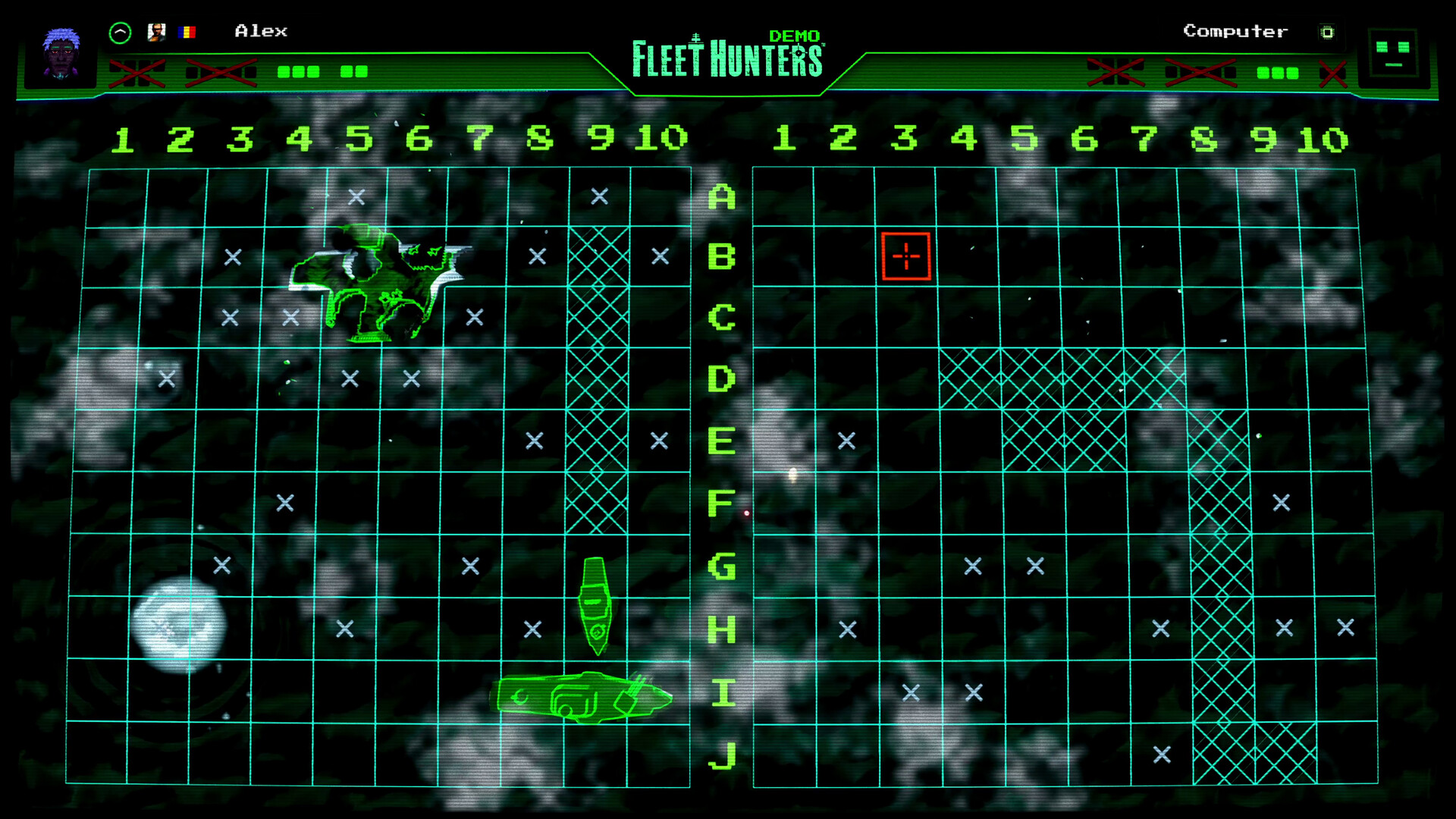
Beyond the tactical battles and fast pace of the gameplay, Alex Hortopan's story speaks about the reality of indie development in Romania and how you can be a programmer, designer, tester, marketer, and sometimes even your own critic.
It remains to be seen where Fleet Hunters will go after launch, but one thing is clear: for Alex, this is just the beginning of a much larger adventure in game development.
