
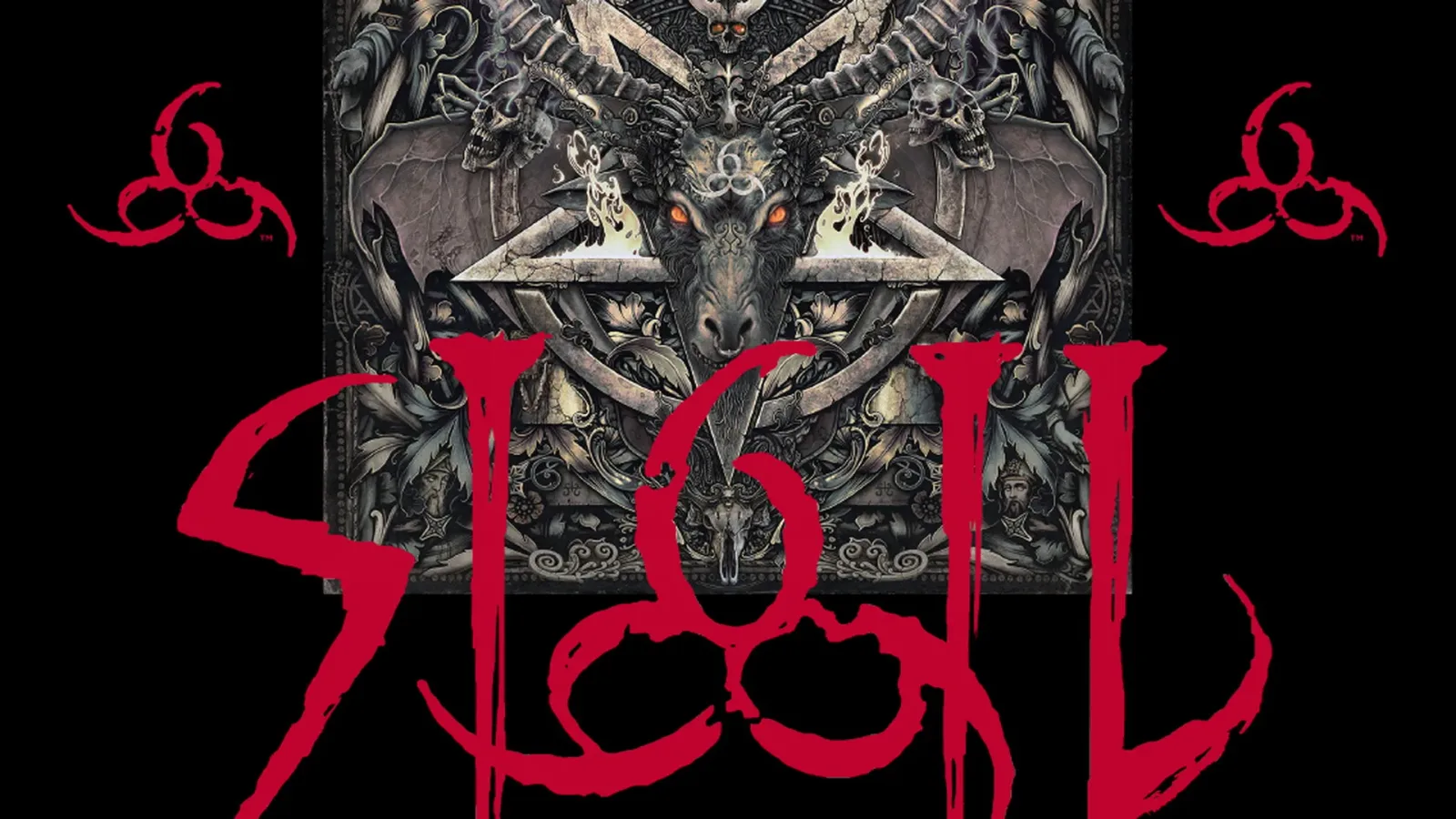
DOOM: Sigil
First published in GRIND Ediția Definitivă, pages 48–51.

THE FIFTH EPISODE OF DOOM,
AFTER “THY FLESH CONSUMED”
In an interview I conducted in August 2020, John Romero made a statement that got me thinking: in single-player games, you're fighting the level designer, while in multiplayer modes, your enemies are the other players. The second part is obvious to anyone who's ever dropped into a match of StarCraft, CS 1.6… but also to those of us stuck in a perpetual purgatory in the Call of Duty universe.
I didn't really understand the fighting-the-level-designer part, though, until I played Sigil: the fifth episode of DOOM, released by John Romero 24 years after “Thy Flesh Consumed” gave enthusiasts of demonic blood fountains migraine-inducing nightmares.
Sigil departs from the classic arena shooter recipe (slaughter everything that moves, find the key, move on to the next level) and puts the emphasis on solving small puzzles that open the way to the next stage of the level. What's more, the maps are deliberately small precisely to encourage repeated attempts and repeated failure.
So you'll often reach a point where you have to take a risky route: drop down into the lava to hunt for a button or an item that opens up your progress, or pull off a precision manoeuvre that will kill you 90% of the time. But Romero's design in Sigil doesn't waste your time – you have weapons and ammo to hand from the very start of the level, and from there on you have to lean on your logic and creativity more than on quick reflexes.
And I know the next comparison is unfair, but Sigil reminded me of the “Tricks and Traps” map from DOOM 2 (made by Sandy Petersen, an avowed critic of Romero). Most of the time, the levels are cramped and claustrophobic. You're permanently hemmed in by narrow platforms that can turn into an invitation back to the start of the level at any moment, and the light-and-dark contrasts in various parts of the map will have you pulling the same faces as DOOM Guy at the bottom of the screen. At the same time, you can feel John Romero's mastery wherever a few characteristic game design principles are applied: secrets, for instance, are always in plain sight, but you have to work out how to get at them; and when you have a window onto the outside of the labyrinth you're in, you can most likely reach that area through a secret door.
So, across Sigil's 9 missions, we get a stark back-and-forth between claustrophobia and open spaces that allow a little more exploration.
The Lovecraftian influences aren't missing either, nor are the medieval design touches that pay subtle homage to id Software's other masterpiece, Quake. All through the levels you'll see grates blocking the player's path (while letting rockets through), walls of demonic fortresses, and paranormal elements reminding us that this architecture was shaped by the hand of the interdimensional Evil One.
The story is as simple as in the first 3 DOOM episodes, and is only revealed as text once you've finished the last level: after the battle with the Spider Mastermind in E4 M8, DOOM Guy is supposed to return to Earth to save his planet from the demonic invasion. But Baphomet has other plans and rigs the demon butcher's return portal. So the marine finds himself shipped off to another dimension of Hell, to prove his mastery of firearms one more time.
Which brings me to the difficulty: if DOOM Guy manages to take on every challenge in Sigil with style, then he'll walk through DOOM 2 like a German soldier through the Third Republic of France. The narrow platforms, the puzzles that speed up (or slow down) your progress and the pantagruelian quantities of lava on the floors will have you replaying each level several times before you work out what you're actually meant to be doing.
At the same time, difficulty isn't a barrier for everyone: in the half hour I spent trying to finish E5 M1 (the first level of Sigil), a YouTuber called Zero Master finished all 9 maps. And that highlights an important detail about who Sigil is for: hardcore players and die-hard fans of the original DOOM, who have undoubtedly spent years on end digging through community-made WADs… and most likely had their own goes at expanding the canonical universe. They're the ones who'll be happiest that Sigil exists at all. I'm not saying a fan of the series can't play episode 5, but I would suggest that the effort needed to finish John Romero's latest challenge is exponentially greater.
And since I've brought up the canonical DOOM universe, I should point out something that ought to give us all hope: the console version (available on PlayStation 4/5, Xbox One/Series S+X and Nintendo Switch) offers free add-ons such as Sigil, TNT: Evilution, The Plutonia Experiment, Syringe, REKKR, Deathless, No End In Sight, DOOM Zero and BTSX.
A year before being acquired by Microsoft, Bethesda decided to spring a pleasant surprise, offering the chance to download map and level packs made by the community.
I bought DOOM for about 5 euros in its launch week and assumed I'd only be getting the first 4 episodes (Knee-Deep in the Dead, The Shores of Hell,
Inferno and Thy Flesh Consumed). Instead I got far more than that, and I'm glad my investment was paid back with extra content, while the people who kept the DOOM project alive down the decades finally had their work officially recognised. Maybe Disney should learn a thing or two from the whole DOOM story and recognise the Star Wars expanded universe. But I wouldn't bank on it; games aren't like films.
Sigil is an experience worth trying for every devotee of the DOOM series: if not for the story, then at least to watch how John Romero has refined and matured his style over the years. The game is free, but it can be bought in various special editions
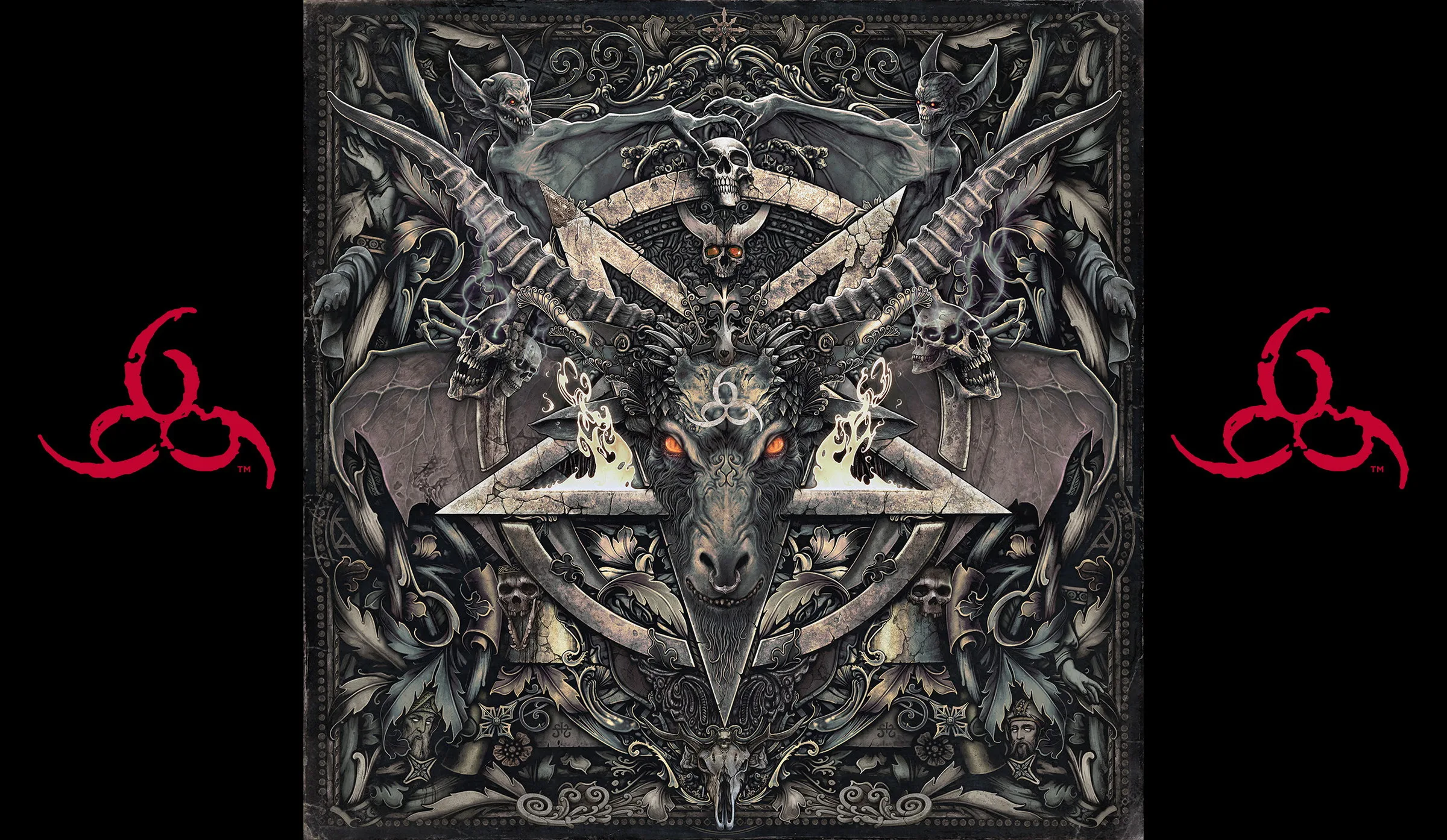
– the most interesting and affordable being the one that costs $6.66 and includes a soundtrack recorded by the iconic guitarist Buckethead… because nothing says DOOM better than thoroughbred heavy metal accompanying the spilling of… blood. Obviously, the free version Bethesda offers on consoles doesn't include Buckethead's music or the other bonuses you can only buy from the Romero Games website.
But beyond the familiar style and the difficulty that was so unusual for me, I'll always remember Sigil because it offers a perfect example of fighting the level designer. There are sections where you feel under attack from the traps, from the concentration of demons and from the way health packs and bullets are hidden away, but also moments when you realise you've been handed a bit of help so you can carry on with the slaughter.
The fourth wall is broken just obviously enough for you to notice John Romero's hand in it, yet subtly enough to keep you caught up in the action on screen.
Looking at Sigil as a whole, I'd say it's more akin to a Dungeons & Dragons session where the gamemaster is sadistic, but patient.
His imagination is rich, but the effort you put in as a player has to match it. And if you don't reckon you're looking at a sigil (heh) of mastery here, then maybe you should head back to Call of Duty: Warzone to find the sniper who goes on about the NXT LVL almanac – due out in summer 2021! When you run into him, tell him the story of Dick Tree and CirclMaster.
0 votes
Scroll down here and stay on the page for at least 30 seconds to vote.
Pick a score from 0 to 10 (halves are allowed).