
Duck Detective: The Secret Salami – Review
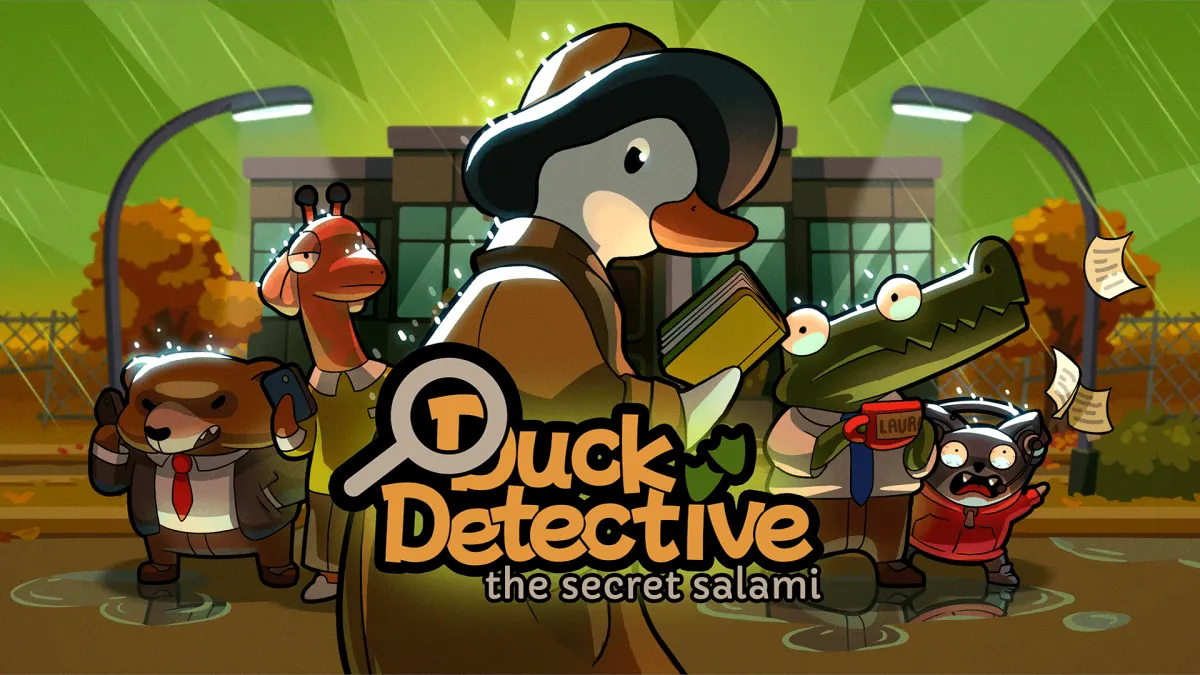
A film noir-style game where you investigate the theft of the Salami Bandit's salami. No, not that Salami.
It seems the cosy genre is slowly but surely winning me over with all these interesting new releases. Not to mention my interest grows every time I hear about a strong emphasis on story and how it's written – that's how I found out about Duck Detective: The Secret Salami. The folks at Happy Broccoli Games published this short and amusing game at the end of May, and it was embraced by audiences. Let's see if all the fuss around it is justified or not.
My Deductions About the Game
In this game, you'll take on the role of Eugene McQuacklin, recently dumped by his girlfriend due to his bread addiction, flat broke, and ready to solve a case received from an anonymous client in the hope of earning some cash doing what he does best: cracking complicated cases. Once he arrives at the crime scene – the BearBus transport company – he discovers a curious case of one employee's lunch being stolen and replaced with salami by… you guessed it… the Salami Bandit. Armed with his duck detective ingenuity and presented with a series of employees, each more suspicious than the last for the most bizarre reasons, McQuacklin must quickly figure out who the culprit is if he wants to make a living.

Our main character has several ways to find clues and piece them together.
First, you can interact with the objects and characters you find.
Second, you can analyse all characters and some objects to find clues related to the case.
Third, you can interrogate suspects about the various objects and characters you encounter to determine what role they play.
You'll be able to access your notebook to draw conclusions once you've completed these steps. But you won't do it in an ordinary way: you have predetermined phrases with missing case-related information that you need to fill in as you find it, bringing you one step closer to the truth. You'll find all the words you need through all these interactions with people and evidence.

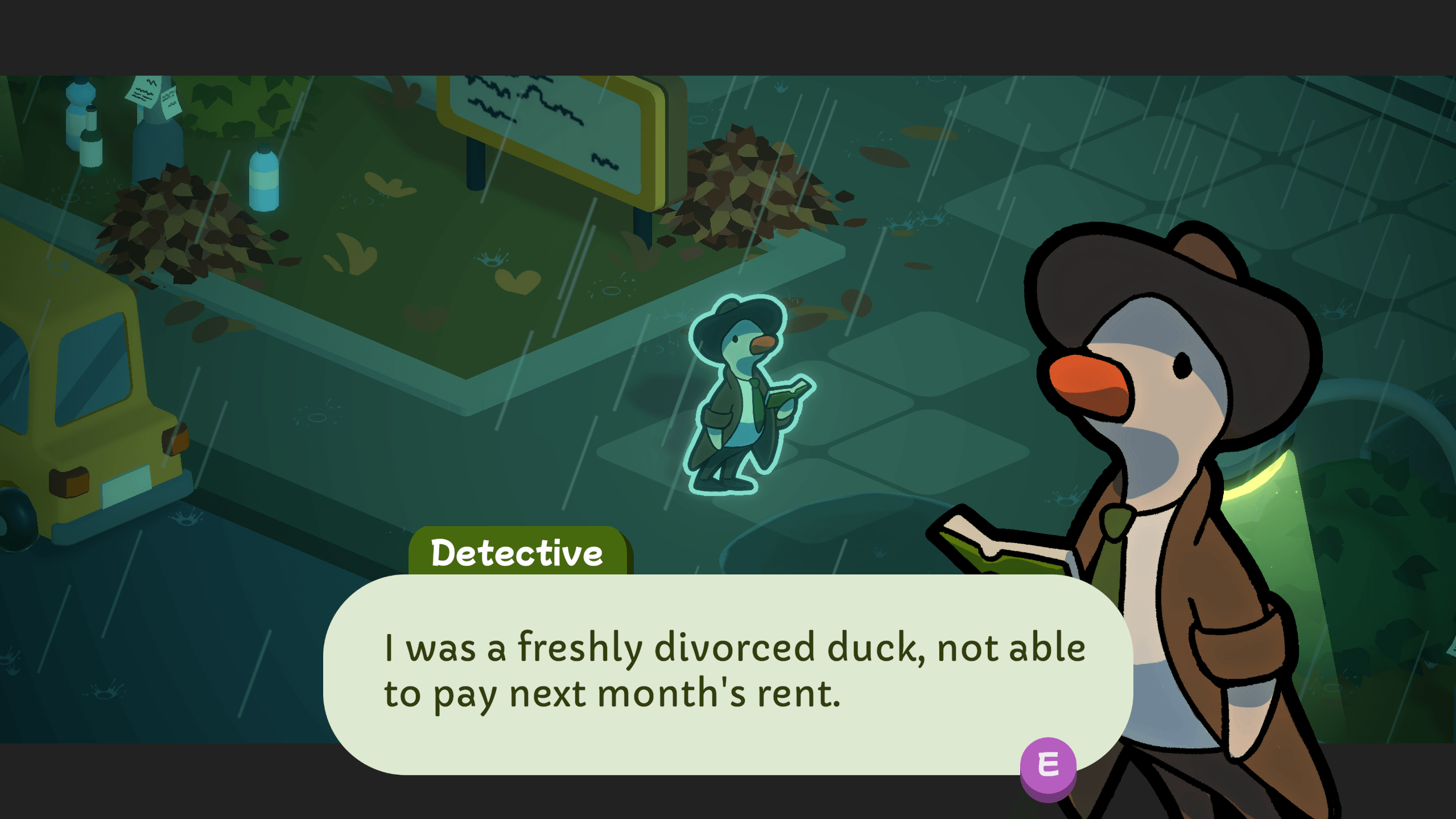
The first thing that stands out about the game is the film noir feeling it projects. This is due to a few very well-placed details. One of these details is Sean Chiplock's exemplary performance as none other than the winged vigilante – his low, gruff voice of a middle-aged man who clearly smokes too much helps you immerse yourself in the story the game tries to deliver. Slightly irritated here and there, sometimes surprised by his own genius, but always assertive, Sean's voice brings the main character to life and makes him both credible and likeable. If his name or voice sounds familiar, it's because you've heard him as Natsuki Subaru in Re:Zero or Han Daewi in God of Highschool, or perhaps as one of the many characters he plays in the Zelda series starting with Breath of the Wild.
But Chiplock's voice isn't the only element that creates the atmosphere of an old detective film. The developers went much further and included sequences where a grey filter is applied to the screen, the background sound is muffled, and… as you guessed, the main character begins an internal monologue, observing and noting everything happening around him.
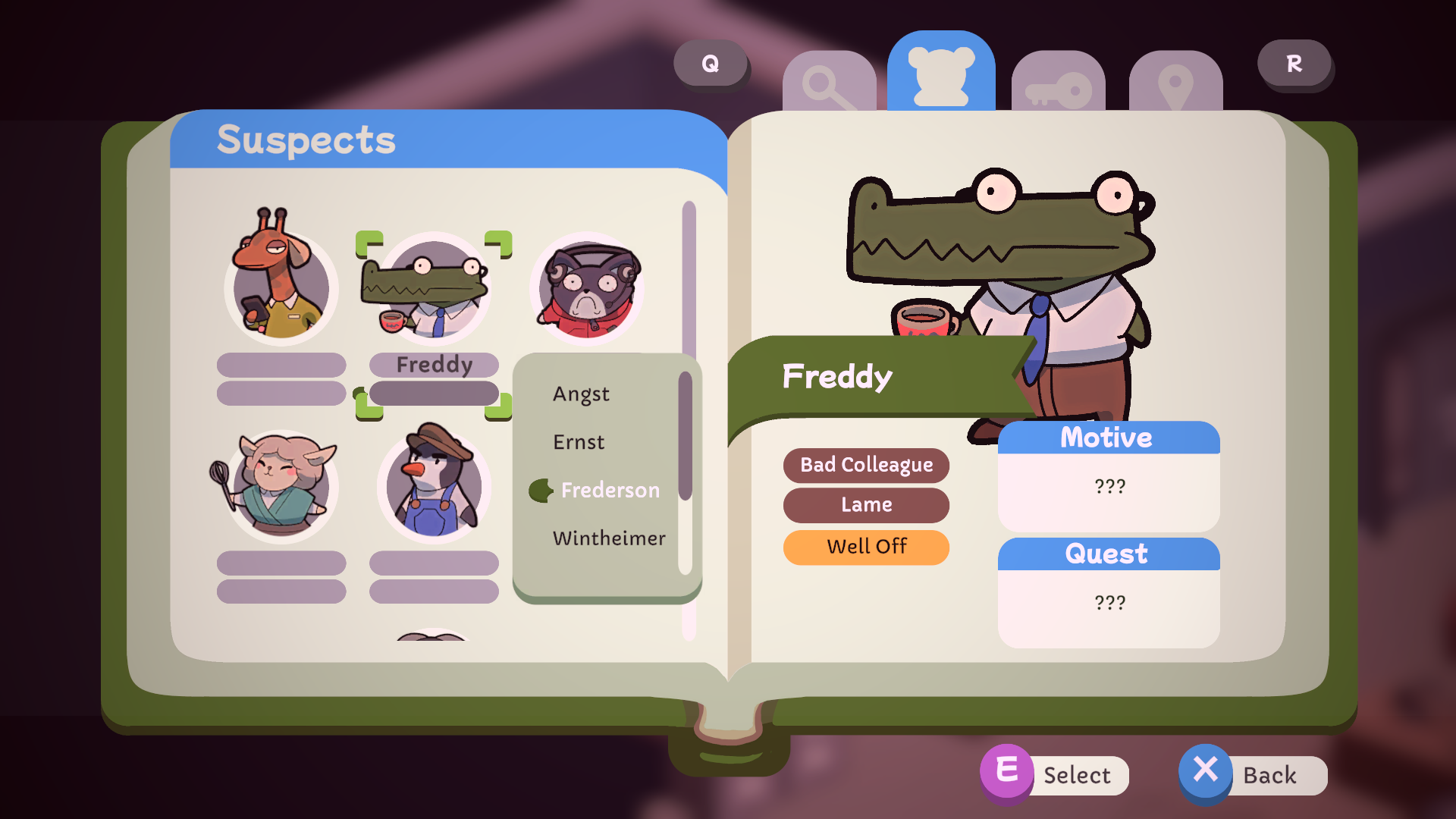
The way the story is written also plays its part, as it keeps you on the edge of your seat, and just when you think you've figured out exactly what happened based on previous deductions… lo and behold, new evidence appears and turns your perspective 180 degrees. Could the receptionist be the one who committed the crime? Maybe Fred from Operations has something to do with all the madness? Or perhaps Laura from Customer Relations is the criminal mastermind behind it. You'll try to guess until the end of the game, or at least until halfway through – I say this because starting from the second half of the game, I pretty much figured out where the story was heading and who the culprit was.
The game makes full use of the notebook to corroborate all information in one place, in addition to the basic exploration mechanics of finding and analysing clues. If you get lost on the path to justice and truth, just open the notebook where you have:
- a section where each character is presented with their full name and photograph;
- a section where all key clues and objects are gathered for analysis;
- a map to help you figure out where you are, even if the game isn't so huge that you'd need one;
- a section where all the word puzzles you've solved are located, in case you need to base your future deductions on them.
Quite surprisingly, the game has two difficulty levels to choose from. The difference lies in the option to ask for hints when you feel lost: in the easier mode, you receive more clues if you press the H key and then investigate details about what you haven't done yet or areas you haven't explored, while in the harder mode, you receive fewer clues and are asked to be more perceptive. I chose the second option, and it didn't seem that difficult. I still appreciate the choice, though, because it doesn't ruin the cosy atmosphere of the game – and you know how much it irritates me when games pretend to be cosy but end up being something else. At the end of the day, the difficulty won't stop you from enjoying the story because you have to concentrate so much on solving the puzzles that you forget the atmosphere the game wants to immerse you in.
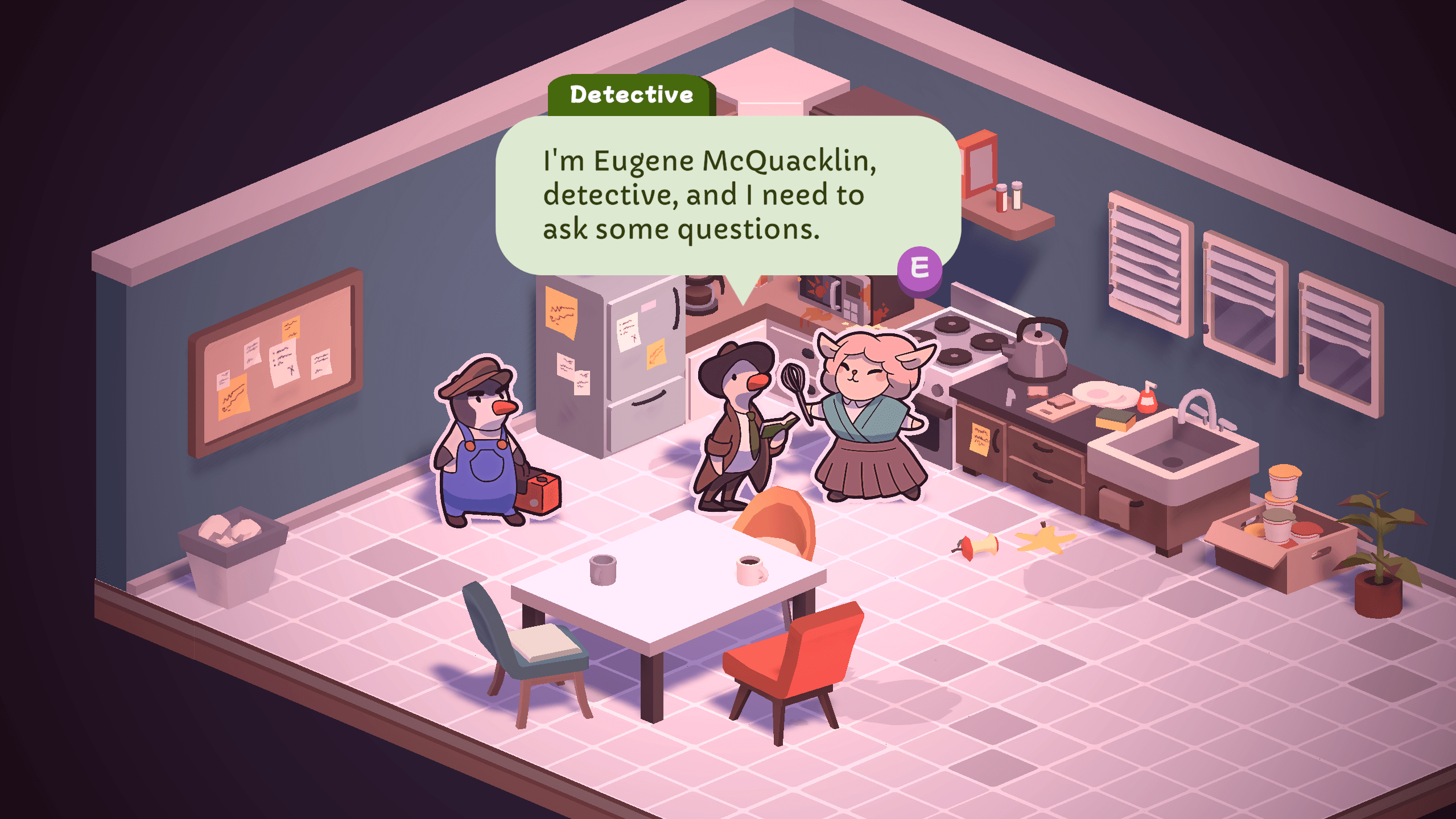
I also like the visual direction they went with for the game, especially due to the fluidity of the design – the use of thick lines, rounded shapes, as well as warm colours & visual filters that make it pleasant to look at and easy on the eyes. It's almost like watching old Cartoon Network cartoons, but the colours are less stringent, and the characters are sticker-shaped. Even the font they used is curved and playful. Not to mention the attention to detail when it comes to the setting – you don't get the feeling that anything is out of place.
I know I mentioned Sean Chiplock's incredible performance, but he wouldn't have succeeded on his own, without the help of the other actors behind the characters. They were able to express a wide range of emotions in a short period of time. And the way they delivered their lines quickly and concisely makes you forget when time passed and why you're already at the end of the game. Add to all this the soothing and relaxing background music that takes you back to the 1940s, and you get a phenomenal game in terms of audio design.
A few additional elements that complete the story are:
- the fact that all achievements are included in an in-game tab, which allows you to easily check your progress if you're like me and want to make sure you've done them all;
- you can choose whether to advance the dialogue manually or have the game do it automatically – I chose the second option and didn't feel the need to intervene to skip lines due to overly slow delivery from the actors;
- the puzzle-solving part is clever, but it still doesn't force you to rack your brains and lose sight of how fun the game is.
Final Verdict
The amusing graphics, the outstanding performances of the actors, the easy-to-understand mechanics, and the charming story the game manages to tell, along with the 2-3 hours of gameplay, make Duck Detective: The Secret Salami an excellent cosy game. The only thing I'm not too thrilled about is the $10 price – I don't feel it justifies the playtime. But hey, it's still cheaper than four of the cheapest Starbucks coffees and will probably cheer you up more.
It gets a solid 7/10 from me, and I highly recommend it, especially if you find it on sale on Steam.

Played on: PC
Release date: 23 May 2024
Developer: Happy Broccoli Games
Publisher: Happy Broccoli Games

0 votes
Scroll down here and stay on the page for at least 30 seconds to vote.
Pick a score from 0 to 10 (halves are allowed).