
Fallout – Review
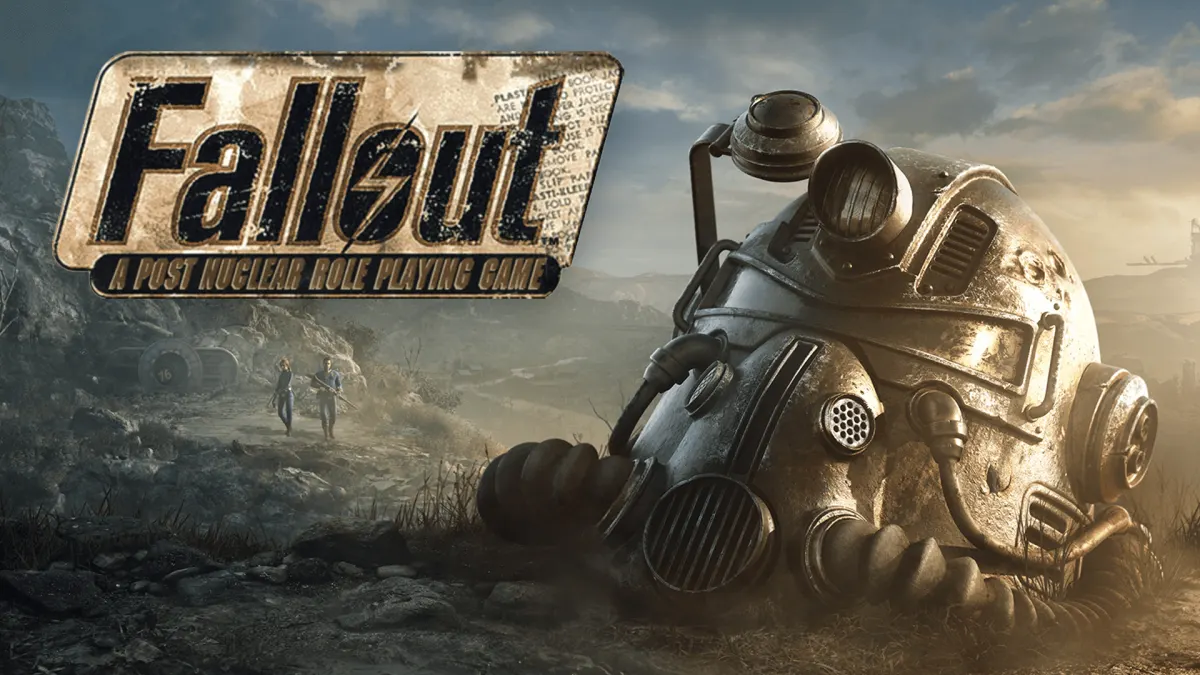
Prepare to radiate with happiness!
My passion for video games emerged with my first PC back in kindergarten, when I got my hands on my first game ever, Skyroads (1993). Although it had rudimentary gameplay, the music and the cosmic view impressed me, something that continued to remain memorable for me.

With my first PC, I continued my adventure in the world of video games with various titles, such as Wolfenstein 3D, Chip’s Challenge, Prince of Persia, and many others. Over time, video games have been a constant companion, which accentuated my passion for the history of wars, be they medieval or modern. From there, I interacted with many titles in this category, including Return to Castle Wolfenstein, Mount & Blade: Warband, Command & Conquer: Red Alert 3, Age of Empires, Company of Heroes 2, Crysis, Sniper Elite V2, and of course, the Fallout game series.
With my first PC, I continued my adventure in the world of video games with various titles, such as Wolfenstein 3D, Chip’s Challenge, Prince of Persia, and many others. Over time, video games have been a constant companion, which accentuated my passion for the history of wars, be they medieval or modern. From there, I interacted with many titles in this category, including Return to Castle Wolfenstein, Mount & Blade: Warband, Command & Conquer: Red Alert 3, Age of Empires, Company of Heroes 2, Crysis, Sniper Elite V2, and of course, the Fallout game series.
Fallout 3 was the first title in the franchise I got to play, without any prior experience with Bethesda’s portfolio. It was a whole string of surprises, from the oppressive post-apocalyptic atmosphere, discussions with NPCs and their individual stories, to exploring a vast land. With enthusiasm sparked by the adventures in Fallout 3, New Vegas, and Fallout 4, I had the pleasure of playing them and thoroughly exploring all their content. This delight guided me to the first game in the series, which differs significantly from the more recent titles, thus giving it a well-deserved chance!

Nothing beats a Nuka-Cola on a rainy morning. Too bad the rain is radioactive!
I’m sure Fallout doesn’t need a very extensive introduction, being a popular series with an entire community behind it. However, Fallout 1 and 2 have fallen into obscurity. They are games not very friendly to today’s audience, who no longer have the patience and dedication necessary for a retro experience.
Fallout: A Post Nuclear Role Playing Game, abbreviated Fallout, is an RPG developed by Interplay Entertainment and the Dragonplay division, later renamed Black Isle Studios. The game was released on 30 September 1997. I admit, I didn’t have high expectations, but curiosity pushed me to go further. Fallout makes sure to reward you from the very first hours of gameplay, with a well-defined goal that you must accomplish. Nothing beats a Nuka-Cola on a rainy morning. Too bad the rain is radioactive! The visual style and chosen soundtrack generated strong emotions and a level of immersion I didn’t expect. After spending some more time in Fallout, I realised that the environmental elements, the post-apocalyptic story, the turn-based gameplay, and the RPG component are perfectly blended, so much so that the title has its own personality. The first step of the game consists of shaping our protagonist. The hero can be created in many different ways, depending on the attributes you choose. You can be a ferocious warrior, with melee weapons, a skilled sniper for assassinations. Or a charismatic diplomat who chooses the path of peace. And these aren’t even 10% of the possibilities we have, so your imagination will be put to the test! I chose to go with the melee combat style, with weapons on both arms, and I tell you I didn’t regret it for a second!


Attributes made me feel special, literally. Fallout uses a character creation system called S.P.E.C.I.A.L., an acronym for Strength – ST, Perception – PE, Endurance – EN, Charisma – CH, Intelligence – IN, Agility – AG, and Luck – LK.
In addition to the main attributes, there are 18 unique skills with values from 0% to 200%. The basic effectiveness of these skills at level 1 is determined by the hero’s primary attributes. Each time you gain a level, you will be awarded skill points that you will use for improvement, equivalent to five points plus twice the character’s intelligence, damn it! I thought we’d escape maths here at least, but it’s important, even in the world of Fallout.
When creating the character, we can choose to tag three of the 18 skills, which will improve twice as fast as the normal rate. Skills can be separated into 3 main categories.
Six combat skills
Eight active skills
First Aid, Doctor, Sneak, Lockpick, Steal, Traps, Science, and Repair.
Four passive skills
Speech, Barter, Gambling, and Outdoorsman.
How developed skills can be depends on the IN attribute. Specifically, a hero with low IN will not be able to increase their Science skill as much as a character with higher IN. Some skills can be improved when we have certain items equipped. For example, equipping Lockpicks can improve the ability to open locks. If we have low IN and leave it that way, conversations will sound like we’re a caveman. In some cases it can be helpful, but all we’ll utter will be like “ughh”, “huh?” and maybe a more articulated “unga bunga”. Don’t think for a second that I forgot about chems! In addition to those mentioned, in our arsenal we also have Chems, which can temporarily improve our character’s abilities.
It is essential to realise that they come with adverse effects, such as addiction and withdrawal symptoms. As you might expect, as skills level up, they will cost more skill points to improve. Did you think we were done? Not a chance! We still have Traits, Perks, and derived statistics. Traits can modify different aspects of gameplay, including skills and derived statistics, most having remarkable effects throughout your journey. When creating the hero, we can select two different traits and perks. Once a trait is chosen, it is impossible to change it, with the exception of the “Mutate!” perk which allows you to replace one trait of your choice, only once. Traits are like a double-edged sword. They offer you an advantage and a disadvantage, depending on the decisions you make. In the case of a trait like Good Natured, you get a +15% bonus to First Aid, Doctor, Speech, and Barter skills, but you also get a -10% disadvantage to combat skills.


I mentioned perks, but what exactly are they? You can acquire them every three levels (four, if we have the Skilled trait), and some have multiple sub-levels, with cumulative benefits. A suitable example might be Animal Friend, which helps us not be attacked by animals if they are not provoked. To use the mentioned perk, we need the Outdoorsman skill at a minimum of 25% and at least 5 IN. These perks are accessible in a wide variety, covering benefits related to combat, stealth, map navigation, skills, dialogue, weapons, and even armour. Among other options, it is possible to obtain perks for which the hero does not initially meet the requirements by using chems before selecting them. Derived statistics are attributes that are directly based on primary data. However, they can be modified independently through perks and traits. A specific case is the derived statistic Carry Weight, which is directly based on ST, but can be aggravated by Small Frame or improved by Strong Back.
After a good few hours of customising our little guy, we’re ready for battle! As I mentioned, the combat mode is turn-based, which means that every action we take will count enormously for the most advantageous outcome, in exchange for a number of Action Points – AP. An action can mean anything, whether it’s a simple step, checking our inventory, or attacking the enemy. The number of AP we can have can be improved by investing points in the main AG attribute, as well as through special equipment, drinks, and chems.
In addition to the aspects presented, there is also a targeting system called Vault-Tec Assisted Targeting System – VATS. This provides support in focusing shots on a certain part of the enemy’s body and, furthermore, provides visual information regarding the probability of success of each hit.


A new beginning, different from how we imagined it for 2077
The action takes place in a post-apocalyptic world, after the end of the Great War, a nuclear conflict triggered on 23 October 2077. Although it lasted less than two hours, it caused mass damage and destruction. Before the aforementioned conflagration, the Resource Wars and the Sino-American War between the United States of America and the People’s Republic of China were what laid the foundation for the nuclear chaos. Let’s delve a bit into the details related to the Pre-War World. What interests us are The Vaults. Created by Vault-Tec, a corporation that obtained federal government contracts for the design and implementation of a network of bunkers, their primary purpose was to “protect” the population of the United States in the event of a nuclear disaster.
It’s the year 2161, 84 years after the Great War, in Southern California, Vault 13, where our protagonist is located. In the absence of a governing institution, the survivors have gravitated towards various factions, each with its own ideology. The most important of these factions are: the Brotherhood of Steel, the Followers of the Apocalypse, and The Unity. I propose we quickly look at some details about these in the lines below.

Brotherhood of Steel
A techno-religious organisation, with chapters operating in the ruins of America. Initially, members of this organisation were recruited as part of a security team responsible for protecting and overseeing the secret government FEV project. Before the outbreak of the Great War, due to ideological conflicts, they launched a rebellion and deserted the army, embarking on an exodus in search of a new location to shelter, ultimately choosing Lost Hills. The fundamental purpose of the Brotherhood is to preserve advanced technology and control its use.
Followers of the Apocalypse
Initially, they existed as a tribe on the outskirts of Dayglow (the former city of San Diego) made up of Vault dwellers from the area. Due to an epidemic that broke out near The Glow, they are forced to migrate to Boneyard.
Subsequently, they evolve into a humanitarian group, with ideals focused on providing services to the helpless, with development in medical assistance and agricultural development. The Followers of the Apocalypse believe that the Great War could have been prevented and strive to remind humanity of the reason for the conflagration and to ensure that such a thing will not happen again in the future.
The Unity
A military and political society created by a single leader, The Master. The main goal is to achieve a perfect race, meant to eliminate the inequalities that generated conflict among humans. For this, The Master used the Forced Evolutionary Virus – FEV on humans to transform them into what we now know as super mutants. The Unity is supported by another faction, the Children of the Cathedral, a religious branch of The Unity, which helps them bring in new recruits for their cause.
Apart from these groups, there are commercial companies, bandit gangs, and mercenary units that we will encounter in America scorched by radiation.
Except for Vault 13, there are many other locations we will explore through the post-nuclear areas of Southern California, such as Vault 15, the great post-nuclear desert, which will take us to the cities of Shady Sands, Junktown, The Hub, The Cathedral, The Glow, Mariposa Military Base, and many others.

A faulty chip, a Vault, and imminent danger walk into a bar
Now that we’ve explored a part of the world of Fallout, let’s move on to our journey, that of The Vault Dweller. It all starts with a faulty water purification chip. Without spare parts or the possibility of other ways to repair the chip, the Vault leader, Overseer Jacoren, gathers all the inhabitants and, by pure chance, you are the one who draws the short straw and is sent to find a replacement chip. The adventure doesn’t start promisingly. With few resources and tools, Jacoren sends you out into the sun, with only a device called a Pip-Boy 2000 and a Vault Suit. The Pip-Boy is a very useful tool, with which you can keep track of maps and locations you wander through. You can see your mission objectives, access your inventory, and other functionalities that I’ll let you discover.
Well, with the little you’ve received, you have to explore a cave full of not-so-pleasant surprises to get out of the Vault. All to discover that the world is a total ruin, resembling a desert. Unfortunately, you will encounter many enemies along the journey, from mutant rats, dangerous thieves, or even giant super mutants. But this doesn’t stop you from your main objective, the water purification chip. Depending on how we explore the areas in the game, we can find the small settlement of Shady Sands, Vault 15, or the Raider Camp. Shady Sands is an important checkpoint, where you will meet allies who will help you in your search for a functional chip for your Vault. Keep in mind that we are also under a time limit of 500 days; if we don’t find the chip, it’s not good! Throughout the adventure, we will encounter many types of people, honest merchants and traders who want to live by bartering, although we will also meet thieves and other dangerous people, such as the criminal underworld of The Hub. We might also meet the paladins of the Brotherhood of Steel in Lost Hills. If we choose to help them, we will have to go to the highly radioactive area called The Glow to complete a mission for them. We can also support the Followers of the Apocalypse, in exchange for their support against The Unity. Another region worth mentioning is Necropolis, an area controlled by The Unity, with super mutants around every corner. This is where the unlucky individuals, affected by radiation, called ghouls, roam. Considered inferior specimens by The Master, if we choose to support them, they, in turn, can help you obtain the chip you’ve been looking for for so long.
It is important to emphasize that the order of region exploration can vary. Keep in mind that it is not mandatory to go through every point of interest. Sometimes, NPCs can give us clues about directions, but the decision on the path we choose is in our hands. With so many rival factions, we can choose to join almost any organization, depending on the ideals you share. That, or you can think strategically to use the groups you encounter, and then betray them at the slightest inconvenience. Ah, the sweet game of power in the radioactive heat of Southern California! One aspect I particularly admired is precisely the result of the journey itself. Regardless of the choices made, the consequences of your actions are described in a final scene, presented in the form of a series of slides.

War, War never changes…
It’s inevitable to think about the future, what the world will look like in 10, 20 years, even up to and beyond 2077. Each of us has a different perspective, with possible similarities to others, and what will happen in the future will be something we now consider sci-fi or improbable. Let’s think specifically about 2077; your mind immediately jumps to Cyberpunk, doesn’t it? It’s possible we’ll reach that level of technology by then, but another scenario would be for us to self-destruct like in Fallout. Or most likely, something will happen that we don't expect right now…

Played on: PC
Release date: 10 October 1997
Developer: Interplay Productions
Publisher: Interplay Productions

0 votes
Scroll down here and stay on the page for at least 30 seconds to vote.
Pick a score from 0 to 10 (halves are allowed).