
Hades
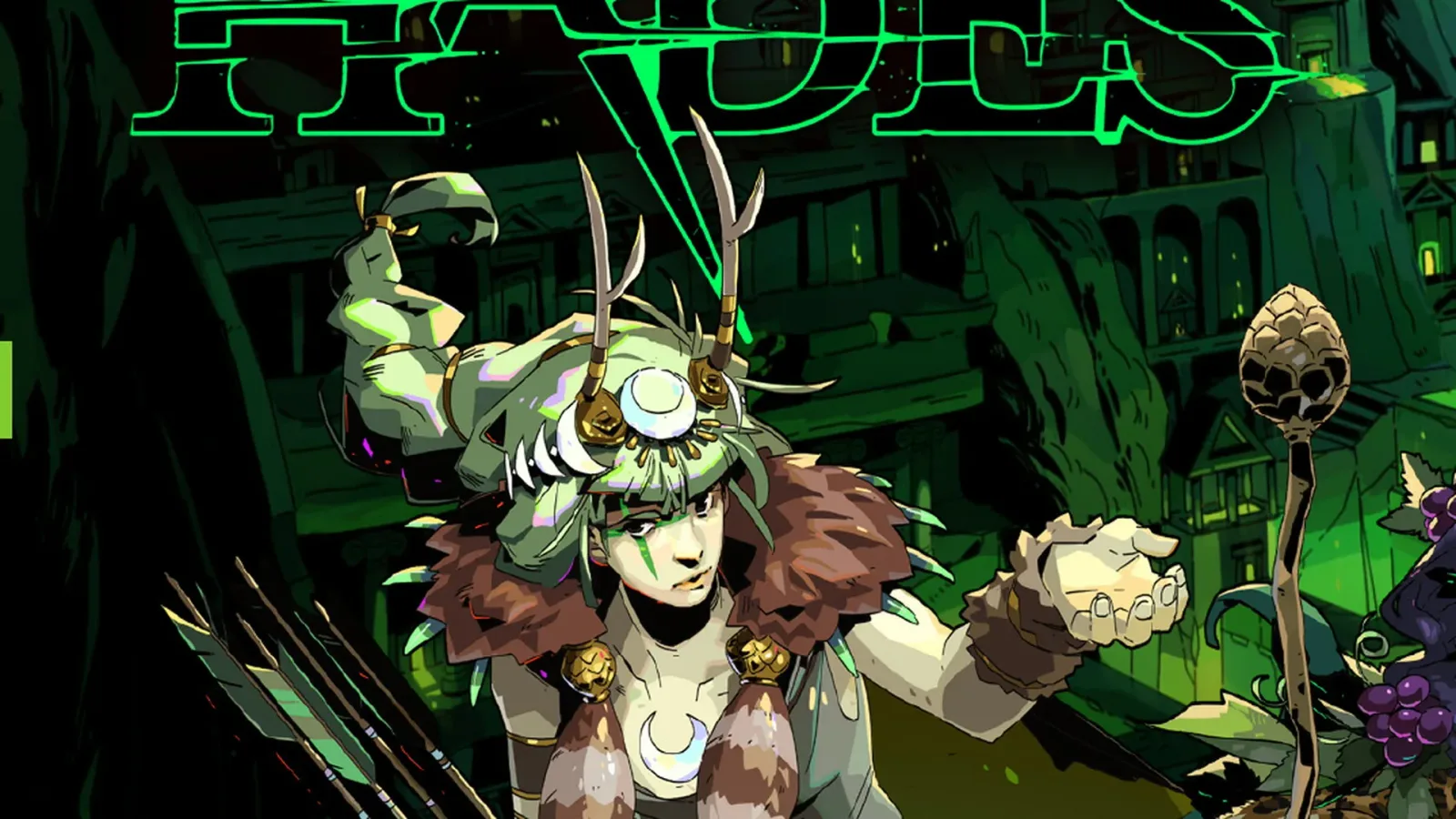
First published in GRIND Ediția Definitivă, pages 24–29.
WHEN THE GRIND BECOMES
DIVINELY GOOD
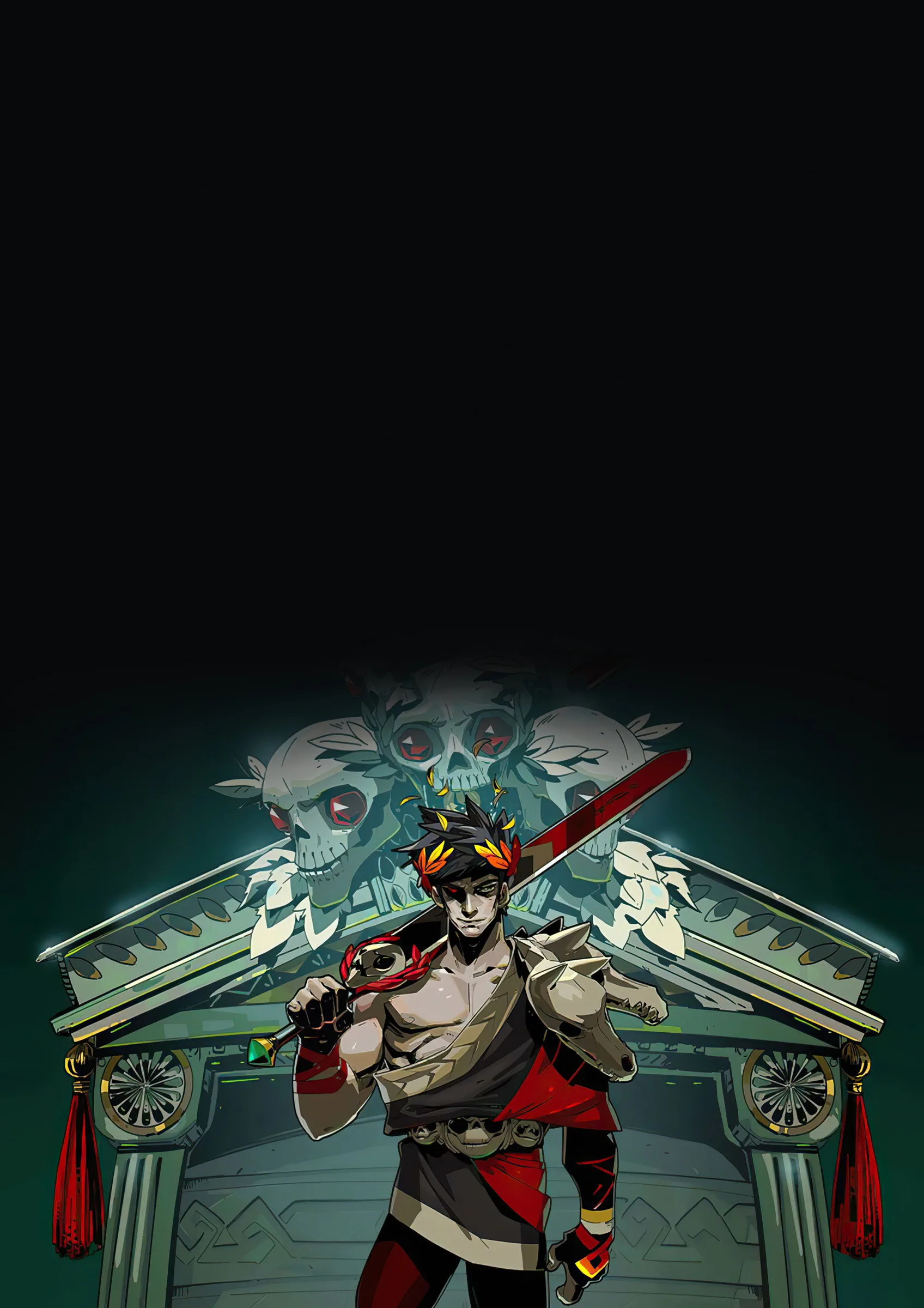
Let's imagine the following scenario: you're a teenager in full physical and spiritual development, and the whole world is at your feet, ready to be transformed by the creative force residing within you. So far, so good. The problem is that you are none other than the Prince of the Underworld, and your father is one of the most feared gods in the Greek pantheon. And not because Hades drew the short straw when the world was divided between him and his two brothers, Zeus and Poseidon, ending up with the realm of the departed. But because, quite simply, you have no chance of finding common ground with him. We can deduce that watching over millions of souls makes you grumpier and less inclined to put up with a spoiled, disobedient offspring.
Zagreus, for he is the one the story is about, takes heart and dares to do exactly what every young person has done at least once in their life: he rebels and leaves home. His intentions don't go unnoticed, and his cousins, uncles and aunts on Mount Olympus contribute, stage by stage, to the prodigal son's escape. But who said it would be so easy to escape from Hell?
Supergiant Games, the creators of Hades, started with a very simple idea: how do you make your product equally interesting for a casual player and for a connoisseur of the genre? The same principle was applied in their other titles, such as Bastion and Transistor, both enormous successes after launch. The difference with Hades is that the game's reaction to the player's actions isn't limited to a single level, but extends to the entire campaign. Pyre must also be mentioned – the first title in the studio's portfolio that opened the door to a true strategy of interactions. In Hades, conversations, as well as topics of discussion, are triggered by the choices you make in the game. There is, however, a limit to the variety of dialogue lines.
It's up to you how willing you are to dig for all the possibilities of the script.
Of course, I got my backside handed to me dozens of times trying to get as far as possible. You could say that if you take on a roguelike, you know it'll be at least a Sisyphean task until you reach the main antagonist. But the further I progressed and the more I talked to the characters, the more I realised I wanted the opposite: not to finish the game. What's remarkable about Hades is that every build choice or interaction with a god has consequences for how the story unfolds. Whether you manage to put Theseus in his place in your first few attempts or can barely get past Meg's rounds of sarcasm and beatings, you'll always have new dialogue lines, reactions and areas waiting to be unlocked by fulfilling certain conditions.
This is where the repetitive, labyrinthine nature of Hades comes in. Every artefact the game offers you can be obtained after clearing an area of enemies, then you're given access to another room, and so on. One of the main goals is to talk to each god in turn. So Nectar becomes more precious than gold is to treasure hunters. And when you're blessed by the presence and gifts of Olympian gods, does one more death or two really matter?
Athena is the first Olympian to meet Zagreus, and she wants to free him from the shadow of his oppressive father.
As you progress, the hero meets all his relatives, in a random order. I quickly picked my favourites: Ares, Poseidon and Artemis leading the pack. With the list already drawn up, all that remained was to hunt down the ones I'd named. When a god decides to show themselves to you, Nectar can be offered as a gift – and in return they give you a keepsake, as a token of appreciation.
I realised that the frequency of visits from my favourites grew in proportion to the Nectar I gave… so my work had only just begun.
And so, from a long string of escapades by a rebellious kid who has trouble communicating with a cantankerous, stubborn father, you end up with an experience worthy of a dating sim with a whiff of family intrigue. What's more, if you overdo the gifts for a few deities, your intentions won't go unnoticed. You find yourself in something like a contest, in which your relatives each want something from you, and your neglect of certain Olympians earns you subtle reproaches or punishments.
But beyond the relationships Zagreus builds step by step, the powers granted by each deity make you stronger, more agile and more resilient. Perhaps the best combination I had over several attempts was Doom or Blade Rifts from Ares, Tidal Dash or Razor Shoals from Poseidon, and Holy Shield or Bronze Skin from Athena.
There's also an entity that rewards your daring royally. But only if you're willing to take a handicap for the next few rooms. The primordial Void, Chaos, offers you the chance to surpass your station right from the first chambers of Tartarus, even though, next to him, you're not much different from a common insect.
After Nectar, Darkness and Chthonic Keys are the currencies you absolutely must collect if you want to improve your abilities.
Of the chthonic deities, Nyx is the only one who offers Zagreus real support. The mirror in his room, though easy to overlook at first glance, is where you spend the resources mentioned above. As for weapons, whether you prefer the Coronacht bow or the Aegis shield, the fights against the final bosses on each floor will reward you with Titan Blood – an item useful for various equipment upgrades.
After all my lives are used up and the last boss fight has wrecked all my plans, I wake up as Zagreus in a pool of blood. Hypnos greets me and consoles me, taking care to rub salt in the wound. Hades looks at me for a long time, with disdain and disappointment, but with the satisfaction that all his traps proved effective. Do I feel frustration? Annoyance? Neither. In fact, I was thinking it was time to give it another go, somehow. I remembered that Thanatos still hadn't shown up to help me in Elysium, and the chances to lure him with some Nectar hadn't been enough. Who knows what kind of relationship awaits me with him?
Conclusion: who needs a carefree life in Heaven, when Hell has never been more interesting?
DURING A PERIOD
OF MY TUMULTUOUS LIFE
APPLES, IT SEEMS
A BIG BREATH OF AIR
FRESH IT WAS
OWED PRECISELY
TO A VISIT NOT
EXACTLY SHORT
TO HELL.
I'd had my eye on Hades for over a year, back when it was still in development. Watching the Noclip YouTube channel, I also came across the documentaries about Supergiant Games: the studio responsible for the work I'll be talking about in this article. Through the independent journalism of Danny O’Dwyer, I had the pleasure of watching the various stages the game went through during production.
I'd already been fond of Supergiant Games since Bastion, so it wasn't hard to make sure I'd buy Hades when it came out. And in September 2020, I set off on the infernal adventure I'm about to tell you about.
About Hades, I could say it offers an all-inclusive package at a great price. What does that mean? It means excellent gameplay, an extremely well-developed story, a top-quality audio-visual experience and dozens of hours of fun. What makes Hades a truly wonderful game is the way it combines all the elements I've just mentioned. At its core, it's a rogue-like in which you control a character from an eagle-eye view.
From the description so far, everything sounds classic and seen a thousand times over on Steam. But Hades stands out thanks to the Sunday best it wears: the story.
The protagonist you control is Zagreus, son of the god Hades. He wants with all his heart to escape from hell, and you can hardly blame him: even from a demigod's perspective, the underworld can become boring and repetitive. This is where the conflict between father and son comes in, with Hades wanting Zagreus to honour his duties to the family and to his damned subjects. The young rebel thus sets off on the adventure of his life (and of other people's deaths). As in traditional Romanian fairy tales, this Harap Alb, ironically dressed in red, finds allies throughout his journey to face challenges to match. Besides characters like Achilles, Hypnos, Nyx and many others, with whom you mostly chat over a little cup of coffee, there are a few names you may have heard of – and they help you a bit more. Zeus, Athena, Ares, Artemis and the rest of the Olympian gang greet you from place to place, offe- ring you magical abilities that completely transform your playstyle.
This is where gameplay and story mesh most visibly. At its core, you have a few ways to attack – but once you acquire abilities from the gods, the possibilities expand faster than a virus we're all already familiar with. Each Olympian god comes with special abilities depending on the power they wield.
You can picture what Zeus or Poseidon might give you, but the others are handled with the same fidelity to the legends.
Artemis, for example, steers your attacks towards your enemies' hearts to give you crit chance. Aphrodite, on the other hand, weakens the creatures' hearts outright, making your attacks more powerful. On top of that, there are also dual abilities that grant you special bonuses based on the combined powers of two deities. The diversity the whole combat system gains is crowned by the six weapons you can swap between at the start of your journey: from the classic sword-bow or sword-spear combo to a legendary mythic machine gun.
There's always a point where gameplay turns repetitive, but the moment of realisation gets put off by the fact that your encounters with the friendly gods are voiced by professional actors, and the personalities of every character made me invest even more in the story and want to hear the dialogue every single time. I can't work out how many lines were recorded for Hades, but I never found two that sounded the same from the same character in two consecutive encounters. Admittedly, I've played for around 50 hours… so the dialogue will definitely repeat itself at some point. But the lines I got always took me by surprise.
Hades's difficulty comes from how you choose your special abilities and how you combine them. Of course, your ability to dodge enemies and land well-placed attacks helps a lot… but at some point the gods' abilities can save your life far more easily. The fact that your health bar doesn't regenerate on its own adds another layer of challenge. So you could see Hades as a game of resource management – health points and special abilities above all. On your journey you'll pass through procedurally generated rooms, defeat monsters, and at the end you'll have to choose between two more rooms. The difference from other roguelikes is that you can't go back and clear out all the rooms.
Your choice is final and you have to press on. For that reason, sometimes you'll have to decide whether you want an extra special ability or would rather have some vital energy.
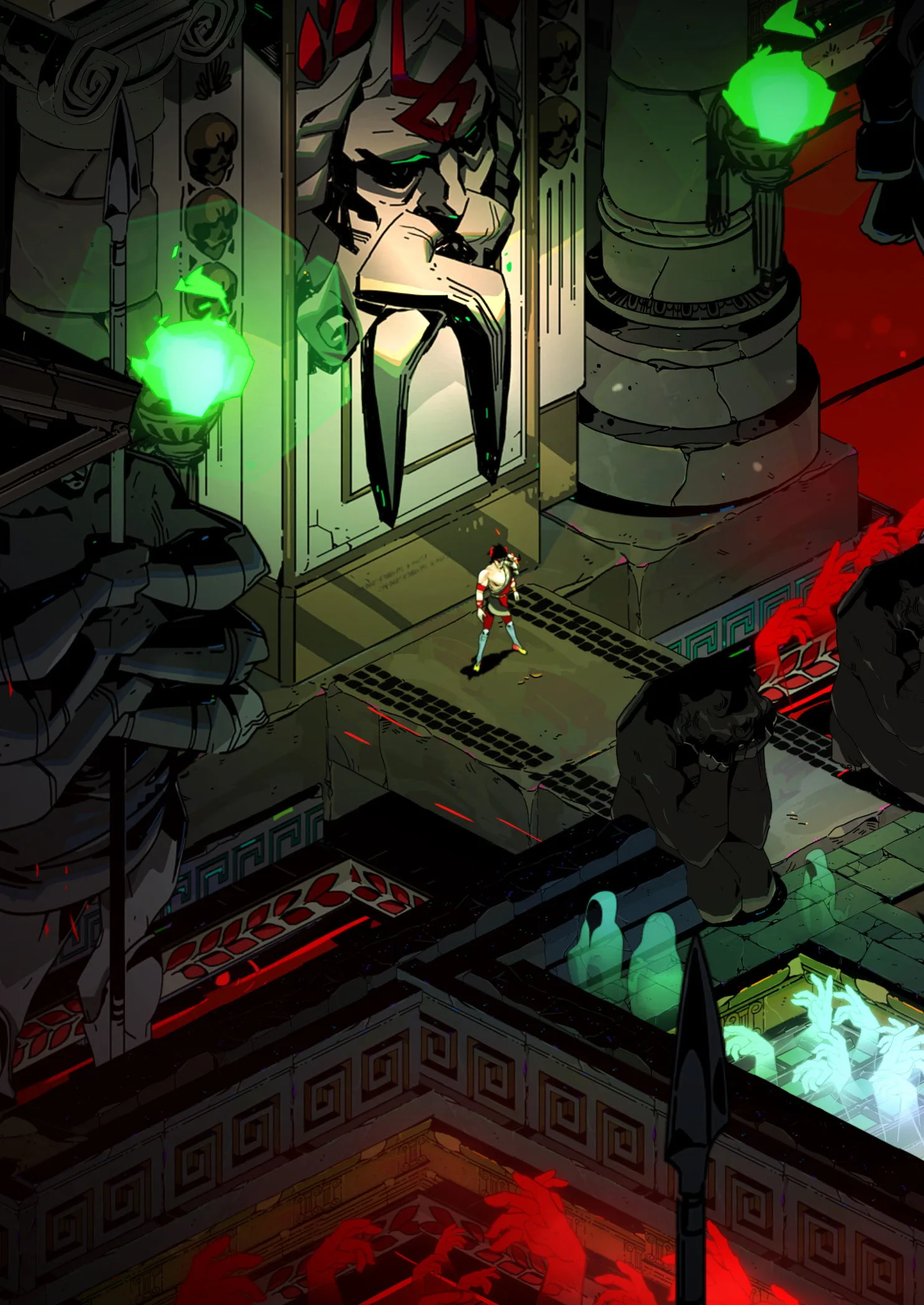
With the adventure comes the inevitable death (unless you're a hardened speedrunner who finds Hades a piece of cake). You're already in hell, so you can't end up any lower than where you started – namely Hades's house. Some of the treasures you've gathered stay with you, to strengthen your character traits, gain new abilities and manage to get even further the next time you try. You can also renovate the house, which you may well be seeing quite often.
The decorations aren't an essential part of the game, but they're proof of the passion that went into making it. Every object and every character has its place in this universe, and all these elements together help to create a complete gaming experience.
For the way it managed to inspire me, Hades has entered the pantheon of games I'll always adore. Even the ghostly chef whom the gods condemned to an eternity of cooking has a multitude of animations for chopping an onion – which means the developers did their job with meticulous care and to perfection. I know I can always come back to Hades and do another run for old times' sake, and Cerberus will always be waiting for me, wagging his tail in the throne room. And yes: you can pet the three-headed dog!
MIHAI DIMACHE
0 votes
Scroll down here and stay on the page for at least 30 seconds to vote.
Pick a score from 0 to 10 (halves are allowed).