
John Romero – Interview

First published in GRIND V, pages 178–183.

SPECIAL J
INTRODUCTION AND QUESTIONS VLAD COSTEA
COMMUNICATION AND GRAPHICS LEO LUȚIA OHN R OMERO
“The true final boss of DOOM II. The spiritual father of Agent BJ Blazkowicz. Ranger’s sworn enemy in Quake. And, last but not least, one of the most passionate fans, historians and collectors of video games.”
VLAD COSTEA
DOOM I + II
SIGIL
SIGIL II
DOOM GUY: LIFE IN FIRST PERSON
JOHN IS WORKING ON A NEW MEGAWAD CALLED HELLION
If a team of well-meaning aliens landed in the middle of our civilisation and, in a friendly tone, asked us to “bring out the rock star of computer games”, then the first person we’d try to get hold of would definitely be John Romero. The true final boss of DOOM II. The spiritual father of Agent BJ Blazkowicz. Ranger’s mortal enemy in Quake. And, last but not least, one of the most passionate fans, historians and collectors of video games.
All of that is common knowledge by now: it’s been laid out across hundreds of interviews you can read or listen to in any number of publications. Except we’re GRIND magazine, and we do everything differently: ever since August 2021 we’ve set out to give readers exactly the kind of content you won’t find anywhere else. So when the chance came to interview John Romero, we decided to treat him like a staff member walking into the podcast who has to answer the question “what have you been playing?”. By the same token, we had to ask him which gems he keeps in his personal collection – knowing the answer would surprise us and help us discover something new.
Obviously, we also had to remember that he’s John Romero and, unlike us, he actually makes games. So we tried to find out more about the projects he’s working on, and how he’d approach an ideal scenario in which he could develop anything at all with an unlimited budget. The answer will surprise you! And if you’re curious to find out the outcome of a clash of cosmic proportions between DOOM Guy and Quake Ranger, you’ll have to read the interview to the end… Our thanks go to John Romero for his kindness and promptness.
We’ll make sure to deliver him a copy of the magazine as well, so he can add it to his personal collection… and we also hope he received, and keeps in a place of honour, the two copies of the original GRIND we sent him in the summer of 2021. After all, we printed only 50 copies and he owns 4% of the print run! And yes, we left the interview in its original English. We could have translated it, but many of the stylistic touches in the answers would have been lost. So we left the text intact, exactly as we received it. Enjoy!
SIGIL II - MAP 4
3 TITLES JOHN ROMERO IS PLAYING RIGHT NOW
BLUE PRINCE
Blue Prince is a strategic exploration game set in a mysterious mansion that reconfigures itself as you plan every step.
BALATRO
Balatro is a card roguelike that fuses poker with surprising mechanics to create unexpectedly satisfying strategies.
GHOST RECON
Ghost Recon Breakpoint is an open-world tactical shooter in which survival behind enemy lines becomes a constant battle for resources, strategy and balance.
Which video games do you enjoy playing these days?
John These days, I’ve been playing a mix of strategy, roguelike, and tactical shooters. I’m currently enjoying Blue Prince, which has a wonderfully mysterious vibe, and Balatro, a creative roguelike deckbuilder that’s incredibly addictive. I’ve also been diving back into Ghost Recon Breakpoint and Wildlands for their open-world tactical gameplay. I just started DOOM: The Dark Ages, which has been an intense and satisfying experience so far.
What games are on your backlog and wish you would get to play soon?
John I really want to carve out the time to finish Baldur’s Gate 3—I’ve loved what I’ve played so far, but I haven’t been able to see it through to the end yet. It’s such a rich experience that deserves full attention. I’m also eager to start Clair Obscur: Expedition 33, which looks like a beautifully crafted game with a lot of style. It’s definitely near the top of my to-play list.
In another interview from 2020, you mentioned that you were very excited about The Legend of Zelda: Breath of the Wild and its attention to details. What did you think about Tears of the Kingdom?
John I actually haven’t had the chance to play Tears of the Kingdom yet, but it’s definitely on my list. I was really impressed by Breath of the Wild. Its world-building and attention to detail were phenomenal, so I’m looking forward to seeing how Tears of the Kingdom builds on that foundation. I’ve heard great things about the new mechanics and the expanded world, so I’m definitely planning to dive in when I get the time.
What are your thoughts on the Nintendo Switch 2? Did you preorder one? Which games do you look forward to playing on it?
John I haven’t picked up a Switch 2 yet, and to be honest, I haven’t been following it too closely—things have been incredibly busy on my end. That said, I definitely plan to get one once the initial rush dies down and the market settles a bit. I’m really looking forward to seeing how developers take advantage of the improved hardware, especially for first-party titles. When I do get one, I’ll be excited to catch up on whatever flagship Nintendo experiences they’ve lined up for the platform.
What about the PlayStation 5 and the Xbox Series? How do you feel about the current generation of consoles?
John The Xbox Series X and PlayStation 5 are both excellent pieces of hardware. They’ve brought some real improvements in performance, load times, and visual fidelity that make console gaming feel more seamless and immersive.
SIGIL II - MAP 3
That said, most of my gaming time is still spent on my desktop PC, which is where I’m most comfortable and where I do the bulk of my playing. But I do have both consoles set up in the living room, and I enjoy using them occasionally, especially when I want to kick back on the couch and experience a big-screen single-player game or something with a controller-first design.
Are there any indie games that caught your attention lately? I remember you said you really enjoyed A Short Hike.
John I truly love A Short Hike—in fact, I was just listening to the soundtrack yesterday. It’s such a beautifully made game, and a perfect example of what makes indie games so special. When you’re in the mood for something cozy, positive, and quietly uplifting, A Short Hike delivers in every way. Beyond that, my Steam library is packed with indie titles I’ve picked up over the years. Lately, Balatro has absolutely devoured my spare time—it’s incredibly addictive and cleverly designed. Before that, Drop7 was my go-to on mobile. It’s amazing how these smaller, often minimalist games can end up being the ones you spend the most time with.
DOOM (2016)
I've really enjoyed listening to your podcast, Apple Time Warp. The interviews with Jordan Mechner and Nasir Gebelli really stand out as incredible gems in the history of video games as an art form. Do you plan to record any more of them? And if so, whom would you like to interview?
John Absolutely. I definitely plan to keep recording interviews with video game legends from what I consider the first age of the medium. It’s been incredibly rewarding to preserve and share their stories, and I’m glad you liked the episodes with Jordan Mechner and Nasir Gebelli. I actually have quite a few more interviews already recorded on video that I still need to convert into audio form so they can be added to the podcast. There’s a real treasure trove of insights and history in those conversations, and I’m looking forward to sharing more of them as time allows.
Did you ever play a video game and feel like it's very similar to something you would create?
John Yes, I’ve definitely played games that felt very much in line with the kind of experiences I like to create, particularly in terms of their tone, pacing, and attitude. Games like Blood, Painkiller, DOOM (2016), and GTA really resonate with me. They have that raw, high-energy feel, a certain intensity and rebelliousness, dark humor, and a commitment to visceral gameplay that I’ve always loved bringing into my own FPS games. There’s a kind of unapologetic boldness in their design that feels very familiar to the way I approach game development.
Is there a video game that you played and wished it was you who made it?
John Every now and then, I’ll play a game and think, ‘I wish I had made this’. Not out of envy, but because the design is so elegant, so tight, that it resonates with how I think about games. Balatro is a great example. It’s the kind of game I feel I might have created myself, if only my head had been in that particular design space at the time. It’s brilliant in its simplicity and depth.
BLOOD: FRESH SUPPLY
Another one that stands out is Super Mario 64. Back in the day, we had the tech with Quake that could have supported a similar kind of 3D platformer experience. If we had shifted design direction, we could’ve made something in that same spirit—open, playful, and exploratory—rather than going in the darker, shooter-heavy direction with Quake. It’s fascinating to think about those creative crossroads.
Is there any trend in the video game industry that you wish would disappear as soon as possible?
John One trend I really wish would disappear is the kind of game design that feels like its sole purpose is to monetise the player. When I spend money on a game, I want to feel like I want to pay because I value the experience—not like I HAVE to pay just to keep progressing or enjoying the game. That kind of pressure undermines the entire relationship between the player and the game. I don’t mind if a game includes microtransactions, NFTs, loot crates, or any other modern monetisation mechanic—as long as it’s clear that the game was made primarily to deliver a great experience. When the design feels like it exists only to extract money, rather than to create joy, wonder, or challenge, it becomes offensive.
Conversely, do you wish any trend or stylistic element from the 1990s or early 2000s would make a comeback?
John Absolutely. In fact, I’m actively incorporating some of those elements into the new FPS I’ve been working on. I can’t say too much just yet, but I will say that I’m drawing inspiration from that era in a very intentional way.
CHRONO TRIGGER
In many interviews, you mentioned creating your own video card or sound card drivers. Back in the day, it was all about optimising the software to run smoothly on the hardware that people had at home. Now it seems like optimisation is an afterthought, as developers prefer to ask the consumer to purchase more powerful hardware. Why do you think this trend exists and what do you think about it?
John Actually, on AA and AAA game projects, optimisation is very much a daily concern—often handled by dedicated programmers who specialise in performance. As new models, sound effects, animations, and other assets are added during development, they can cause slowdowns or inefficiencies across various systems, regardless of the engine being used. Optimisation experts work in parallel with the rest of the team to continuously profile and refine performance, ensuring that issues are addressed incrementally rather than stacking up as tech debt towards the end of the project.
So while it might seem from the outside that optimisation is an afterthought, the reality—especially at the higher levels of game development—is that it’s a constant, ongoing process. It has to be, because modern games are incredibly complex, and leaving performance issues to the final stretch would be catastrophic for schedules and player experience alike.
Sigil I and II are absolute bangers which push the limits of the DOOM engine. The soundtrack is also amazing! Do you plan to release more of these?
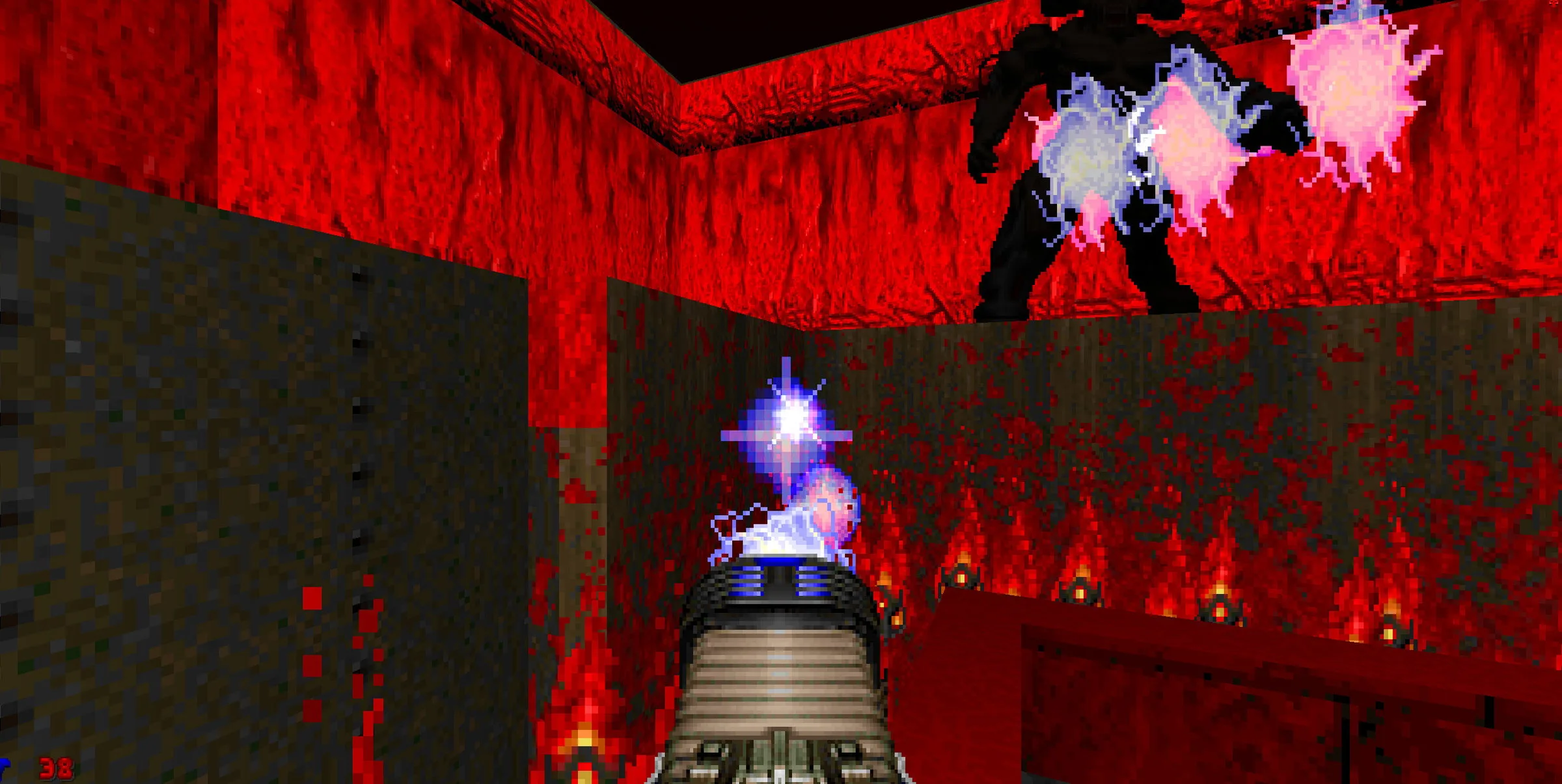
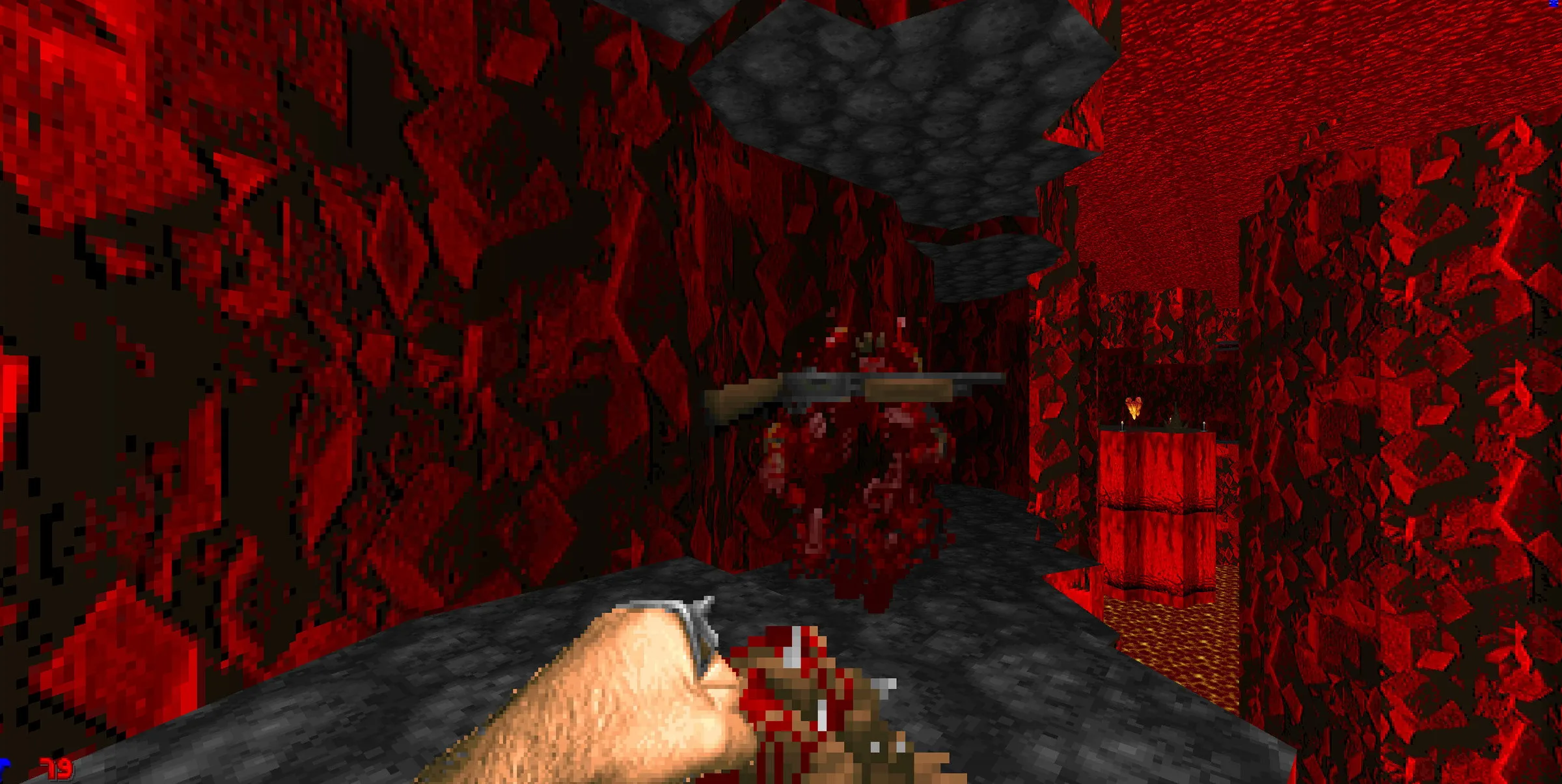
John Thank you, I’m really glad you enjoyed Sigil and Sigil II! Yes, I’m currently working on a full 32-level megawad for DOOM II called HELLION. It’s a passion project that I’m building in my spare time, so there’s no official release date yet. Creating 32 levels is a huge undertaking, especially when I’m aiming for each one to feel challenging, unique and memorable. But I’m really excited about how it’s shaping up, and I think fans of classic DOOM II will have a blast with it once it’s ready.
If you had unlimited time and budget, what kind of game would you make and whom would you recruit in your team?
John If I had unlimited time and budget, I’d love to make a game with my wife and kids—assuming they were available and up for it. That would be a dream project for me. As for the kind of game we’d create, I honestly couldn’t say in advance. The style or genre of a game is something magical that usually reveals itself in the moment, right as you’re about to start building it. It would definitely be something inspired by the kinds of games we all love playing together, but whether that’s an RPG, a platformer, a shooter, or something completely unexpected—that would all depend on where the creative spark takes us.
What are 3 of the games you would take with you on a stranded island or a post-apocalyptic nuclear bunker?
John Assuming there’s no internet access and I’m limited to offline games, I’d go with a mix of creativity, narrative, and tactical depth. Minecraft would be an easy
DOOMED: DEMONS OF THE NETHER
DOOM: THE DARK AGES
first pick. It’s endlessly replayable, allows for creativity and exploration, and you can lose yourself in it for hours, even without mods or online play. Chrono Trigger is one of my all-time favourites—it’s a masterclass in storytelling, pacing, and character design, and it holds up beautifully no matter how many times you play it. And lastly, I’d bring Ghost Recon Breakpoint. It offers a huge open world, a solid tactical shooter experience, and enough procedural content to keep things interesting for the long haul.
Which video games from your collection are dearest to your heart and are the first ones you would try to save in the event of a house fire?
John I would absolutely save my collection of First Age games—those early titles from the late ’70s to the mid-’80s for the Apple II. They’re stored the same old-school way they were sold: floppy disks tucked inside cardboard folders, all carefully kept in a Ziploc baggie. These games aren’t just nostalgic—they’re foundational. They represent the beginning of the video game industry as we know it. They were created with limited tools but boundless creativity, and they laid the groundwork for everything that followed. That collection holds a deep personal and historical value.
What do you think about DOOM 2016, Eternal and The Dark Ages? Did you play any of them?
John I was absolutely thrilled with how DOOM (2016) turned out. It really captured the essence, attitude, and visceral intensity of the original DOOM, while updating it in smart ways for modern audiences. The pacing, the combat loop, and the sheer aggression of it all felt right at home with the spirit of the classic games.
DOOM Eternal and The Dark Ages are both fantastic as well, and I appreciate how each one evolves the design in its own direction. Eternal introduced a more complex, almost puzzle-like approach to combat that challenged players to think on their feet, while The Dark Ages shifts things again—putting the Slayer in new types of danger and giving players fresh ways to approach those situations. I had a great time playing all of them, and it’s exciting to see the series continue to reinvent itself while honouring its roots.
Who would win in a fight between the Doomguy and the Quake Ranger?
John I think they’d start off ready to tear each other apart—two unstoppable forces colliding. But then, somewhere in the middle of the chaos, they’d realise they’re not so different. They’re cut from the same cloth: lone warriors facing impossible odds, blasting their way through hellish dimensions. They’d figure out they’re on the same side, maybe even connected in some strange, cosmic way. So instead of finishing the fight, they’d team up, go full co-op, and unleash total destruction on whatever unlucky universe stood in their way. That would be a hell of a team.
›› JOHN ROMERO
To win the game, you must kill me, John Romero