
Live A Live
First published in GRIND V, pages 142–149.
Live A Live: A different kind of experience
Over roughly 45 hours, I rediscovered a spirit long lost to RPGs: the urge to experiment beyond the genre's limits and conventions.
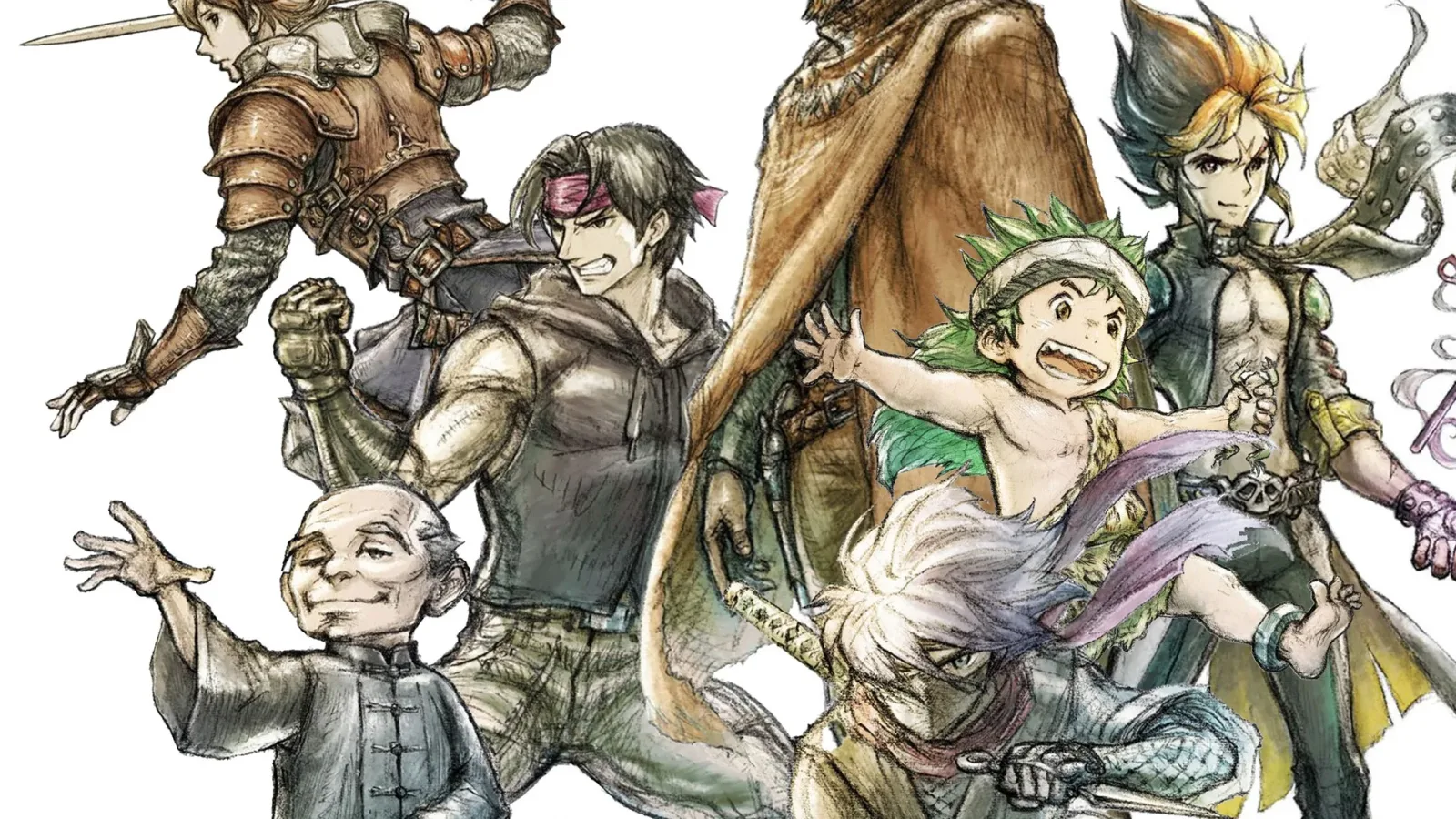
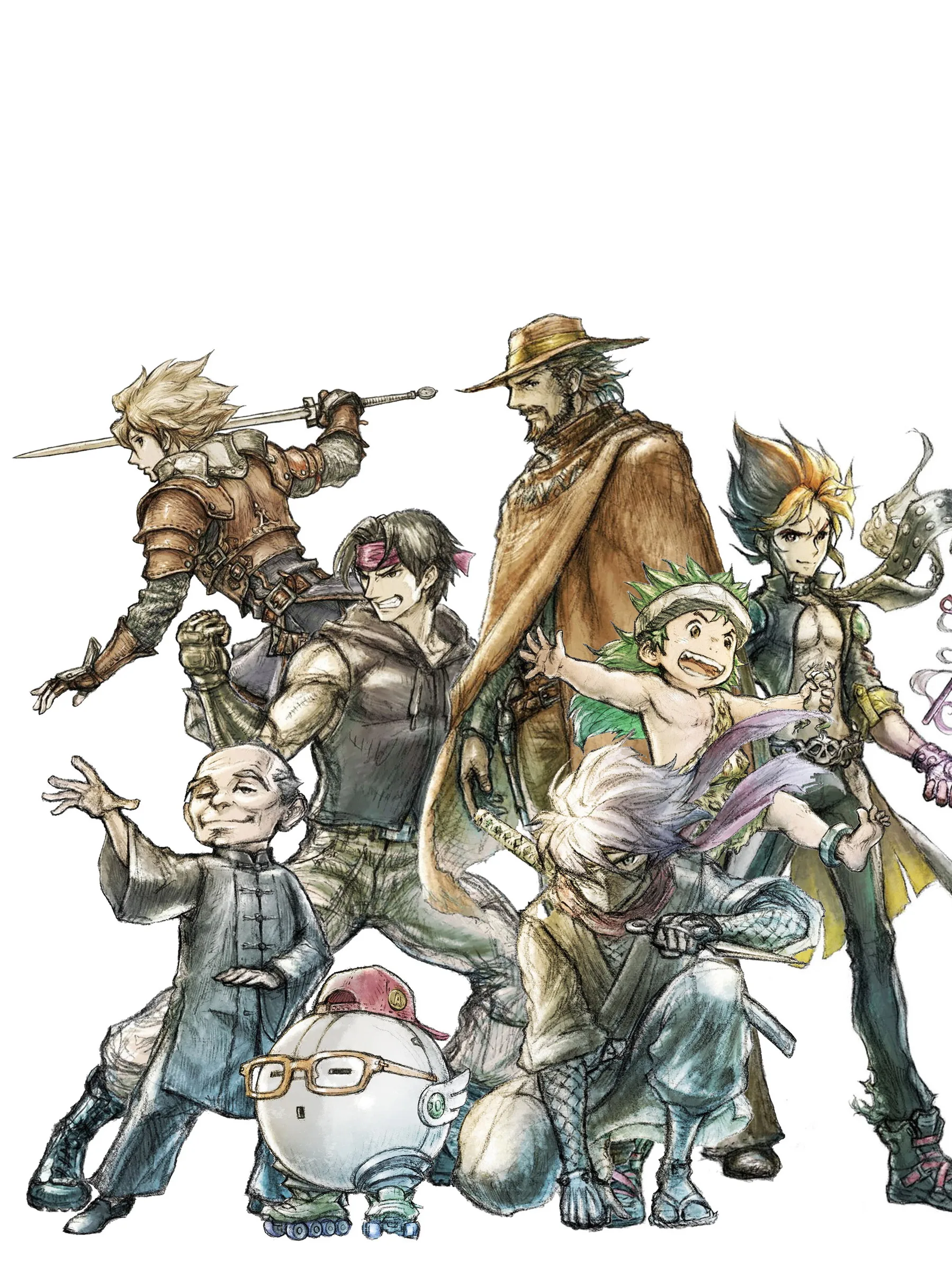
Live A Live really is a different kind of experience: a Japanese RPG with 7 protagonists, each with their own story set at a different point in history, all of which end up intersecting in a most unexpected way in the final act. Every chapter plays differently, layering tower defence, stealth, exploration and even a Street Fighter II-style menu for picking your opponents on top of the core mechanics. This is exactly what happens when you take the most creative people in a studio and let them work on something offbeat that pushes at the boundaries of the conventional. Better still, each chapter had its own manga artists and storytellers attached — pooling visual and narrative influences from series such as Kenji, Basara and Devilman, along with films like 2001: A Space Odyssey, Alien and the spaghetti westerns.
It sounds like an oddity, because that is exactly what it is… but for me it was precisely the kind of oddity that kept my eyes glued to the screen for several days on end and stopped me playing anything else until I had watched the end credits, knowing I had secured the happiest possible outcome for the fate of the universe. Because yes, the game has multiple endings: the easiest of them puts you in the antagonist's shoes to destroy the world, while the most painstaking route gives you the satisfaction of having saved everything good and beautiful in the universe.
Live A Live originally came out on the Super Famicom in 1994. For SquareSoft — a team standing at the start of an absolutely legendary half-decade — the game was little more than a passing distraction between Final Fantasy VI (the benchmark against which every 2D JRPG is measured) and Chrono Trigger (the masterpiece born of a collaboration between the creators of Final Fantasy, Dragon Quest and Dragon Ball).
The tragedy that kept Live A Live from getting all the laurels it deserves was the call made by Square's marketing division, which decided the game could stay a domestic-market exclusive. The 270,000 copies sold in Japan (in a country that bought some 17 million Super Famicom systems in total) were not a convincing enough argument for Takashi Tokita's directorial debut to be translated into English. So Japanese RPG fans in the West missed yet another chance to discover something genuinely new. Live A Live does, however, hold the considerable distinction of having inspired the concept behind Octopath Traveler — the game that introduced the HD-2D art style, which I praised in the strongest terms in GRIND II. In Octopath, 8 travellers from different corners of the same kingdom meet during their personal adventures and then set off together on a mission to stamp out an eternal, cosmic-scale evil. In Live A Live, we get 7 heroes from different moments in human history, facing the same reincarnated antagonist… and at the end of the game the protagonists are teleported to a medieval kingdom (the bridge between prehistory and the distant future) to join forces in a decisive showdown for the fate of the universe.
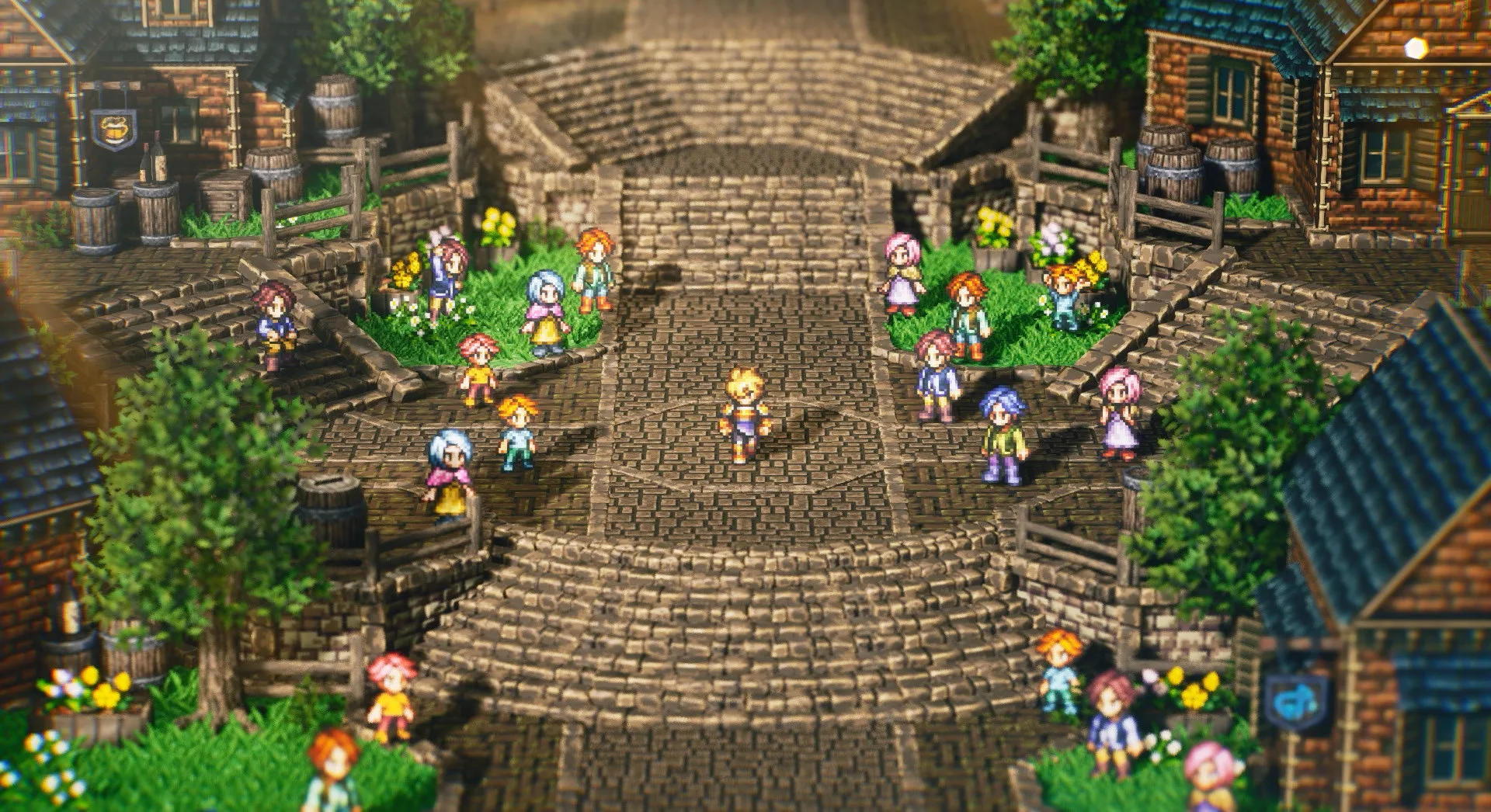
It seems Square, sharing an umbrella with its former rivals at Enix since 2003, is starting to wake up to the transformative potential of HD-2D: a style that marries pixelated characters with spectacular three-dimensional backdrops in perfect harmony. And now the Japanese studio is digging through its archives to revive a few of the intellectual properties it had left mothballed.
The first title remastered off the back of Octopath Traveler's success is the spiritual daddy himself: Live A Live… and one collateral "victim" of the effort to bring the magic of 1990s RPGs back into the spotlight is the original Dragon Quest trilogy. There is talk of a similar cosmetic treatment for Chrono Trigger as well, but details are thin on the ground and there is no point getting excited before an official announcement. Still, it is remarkable how the boomerang of justice came back around in 2022 to give players the world over the chance to discover a true gem, forgotten by time and buried by the lack of nerve in the 1994 management team.
Today Live A Live can be played on Nintendo Switch, PlayStation 4/5 and PC. The original previously turned up in emulated form on the Nintendo Wii U and 3DS — but only in Japanese, and without any of the same improvements to graphics, music and storytelling.
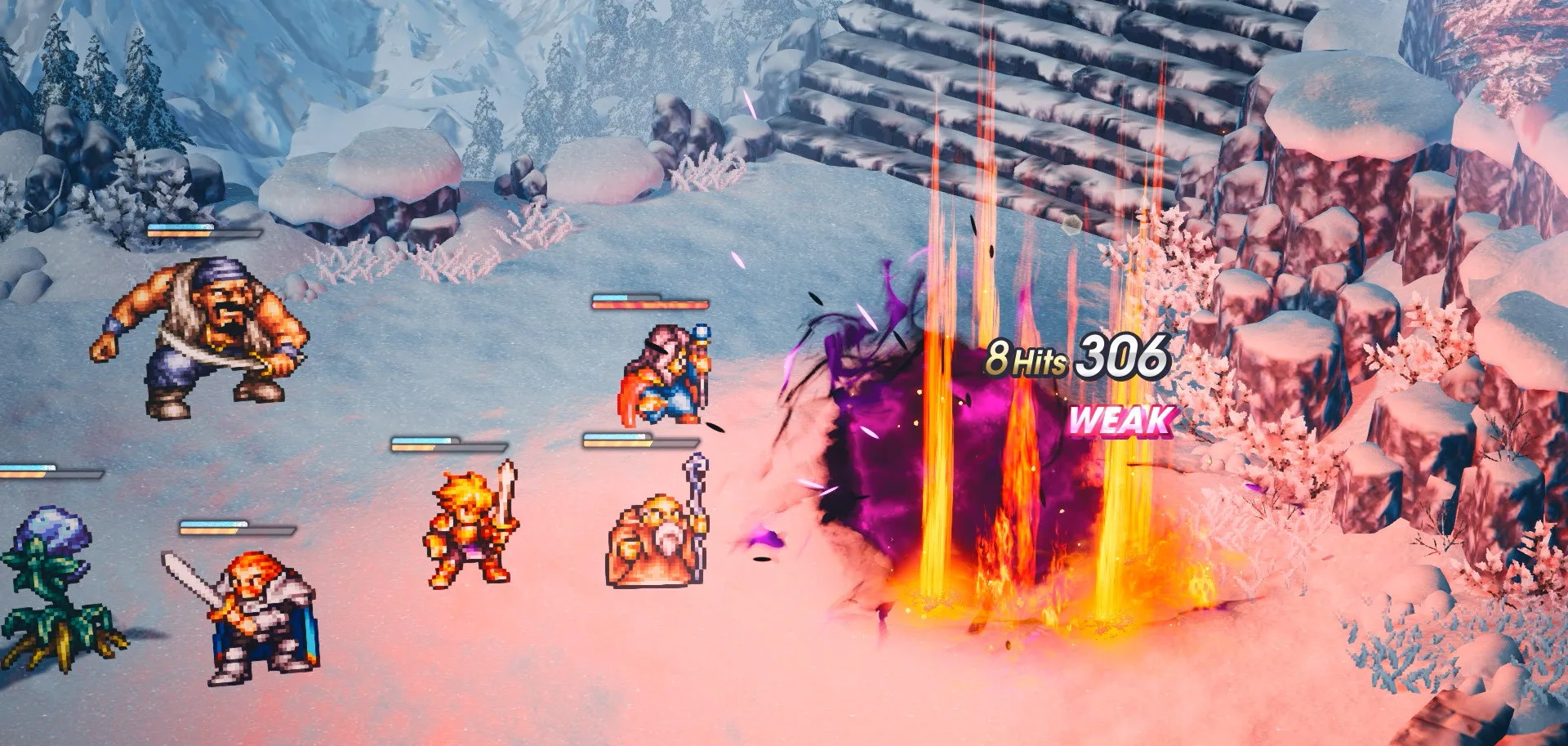
At its core, Live A Live is a tactical RPG in which combatants trade turn-based attacks. Characters can move around the map in eight different directions, and every strike or spell only covers a certain area. Think of the Heroes of Might and Magic series, where you have to move your units across the battlefield before they can bring their arsenal to bear. Only here the enemy has an action bar that fills up as you move or attack — so the combat dynamic isn't necessarily about taking alternating turns, since some slower foes will give you time to close in and launch 2-3 offensive moves before they hit back. That is why the most effective approach is to find the enemy's weaknesses and exploit them before you take a painful reply. The difficulty isn't too steep across the 7 core stories: everything is balanced so you can get through each character's adventure without needing to grasp the advanced mechanics all that well… but in the final act you will be punished for every mistake, and forced to complete a good chunk of the side quests on the map before you square up to the lord of darkness.
The sudden jump in difficulty will feel unfair at first. But once you've grown attached to the characters and understood the nature of the antagonist, you'll be itching for the chance to deliver the coup de grâce… or to defeat the ultimate evil without killing it — the choice is yours!
What I loved enormously, though, is the way you tackle each of the 7 individual stories so differently. There is simply no way to settle into a routine, and grinding is entirely optional. I had a whale of a time following Pogo's primal instincts and clubbing dinosaurs in prehistory, I tried to be fair while training the apprentices in Imperial China alongside Master Shifu, I sneaked around to cut down on collateral damage during Oboromaru's infiltration mission in Japan's Edo period, I saved an entire Wild West town from a bandit invasion with Sundown Kid, I beat the strongest fighters in the world with Masaru Takahara, I used Akira Tadokoro's paranormal powers to pilot a giant robot (mech), and I solved a murder mystery aboard the spaceship Cogito Ergo Sum with Cube.
And once the 7 missions are done, the eighth unlocks, set in the Middle Ages. The events there open a portal in time that sucks in the other heroes so they can unite for a decisive battle! Live A Live is full of pleasant surprises and never gives you a chance to get bored.
In the next section I'll briefly describe the events of each chapter. If you're planning to play Live A Live, then so you can enjoy the story and the action to the full, I suggest you stop reading here and come back later.
But if this article is the only encounter you'll ever have with the game, then I'll do my best to give you the most gripping description possible. What's more, these seven chapters can be played in any order. It is even recommended that you start with one of the easier chapters, which have fewer and more accessible battles. I've chosen to present the events in chronological order, because that way they make more sense. I will, however, take care to note the difficulty level of each part as well. Prehistory: The First A young caveman discovers his manhood when he saves a damsel from a rival tribe, just before she is to be sacrificed on the altar of the dinosaur god Odo. Pogo, caught by the other males of the tribe while hiding the beautiful Beru in the communal cave, is exiled and must fall back on his primal instincts to win what his heart and his carnal urges demand. Protagonist Pogo Final enemy Odo Difficulty Medium
Imperial China: The Successor
Shifu the warrior, realising he's no longer at the peak of his fighting powers, sets out into the world in search of a successor. He finds three talented youngsters whom he trains hard, but two of them are killed in a surprise attack by a rival clan. To take his revenge, Shifu leaves with the surviving apprentice to challenge and overthrow the political authority in the territory. Protagonist: Shifu. Final Boss: Ou Di Wan Lee. Difficulty: Easy to medium.
Twilight of Edo Japan
In the wake of some political intrigue in 17th-century Japan, a young shinobi is sent to rescue a prisoner from Lord O de Lou's castle. So Oboromaru has to scale walls, slip through gardens and living quarters, hide in lofts and dodge the traps set by the O de clan. Oboromaru has a code of honour you can ignore, but which makes the whole mission interesting — he counts every person he kills. Protagonist: Oboromaru. Final Boss: O de Lou. Difficulty: Hard.
The Wild West: The Wanderer
The Sundown Kid, a notorious gunslinger wanted for deeds of dubious morality, discovers his heroic side when he arrives in a small town threatened by an invasion from the bandit gang The Crazy Bunch. “The Kid” has a single night to set traps that limit the outlaws' access to the town. The more of these traps get set, the easier the final battle will be. Protagonist: The Sundown Kid. Final Boss: O. Dio. Difficulty: Easy to difficult.
Present Day: The Strongest
Masaru is a fighter who trains hard and aspires to become the best martial artist in the world. On his quest he travels the globe to face champions of every known style (from wrestling to sumo). During fights, Masaru has the ability to learn the attacks his opponent uses. That way he goes into the following battles with a larger number of manoeuvres able to exploit the enemy's weaknesses. Protagonist: Masaru T. Final Boss: Odie O’Bright. Difficulty: Medium to difficult.
The Near Future: The Outsider
Akira is an orphan with paranormal powers who can read the thoughts of those around him. Out for revenge against the biker gang that killed his father, he uncovers a plot in which the government uses villains to bring human sacrifices to the god Odeo. With the help of a gigantic robot he manages to control with the power of his mind, he ends up pulling off a genuine coup d'état. Protagonist: Akira T. Final Boss: Odeo. Difficulty: Medium.
The Distant Future: The Mechanical Heart
Cube is a robot built aboard the ship Cogito Ergo Sum, who gains consciousness in the middle of a sabotage attempt that leaves several crew members dead. Unlike the other protagonists in Live A Live, Cube is a mere passive observer of the events unfolding on the Cogito Ergo Sum. In a plot that mixes elements of 2001: A Space Odyssey and Alien, the little robot discovers its humanity. Protagonist: Cube. Final Boss:
OD-10
Difficulty: Easy
The Odious Surprise from the Middle Ages
Once you've finished the seven initial stories, Live A Live unlocks the eighth one for you. And this tale centres on Oersted: a sort of Toma Alimoș among the knights of his land. He is at once the bravest of warriors and the most worthy. He has all the physical and moral qualities of a hero, and those around him notice his perfection and are willing to follow him to the ends of the earth.
We meet Oersted during a tournament organised by the king of the land, the prize for which is the hand of the wonderful Princess Alethea. In the final, his opponent is Streibough: a skilled wizard, but one who can't stand up to Oersted's sword blows. So the most wonderful man in the kingdom ends up eligible to take the king's daughter as his wife — and, once his father-in-law dies, to take the throne. Everything goes like a fairy tale until the wedding night, when a demon sent by the Lord of Darkness snatches the princess away… despite the heroic efforts of her future husband. A sort of Ghosts 'n Goblins, Square Soft-style!
You see, this Lord of Darkness is a spirit that appears cyclically and has to be put down by the kingdom's heroes to establish a temporary peace. And this kidnapping is the first act confirming the return of the evil forces, its purpose being to let the king know that his days are numbered and that nobody is safe. Devastated by the turn of events, Oersted decides to set off on a journey of initiation in which he first recruits the two warriors responsible for stamping out the Lord of Darkness's previous appearance. And then he leads the newly formed team into a confrontation of cosmic proportions, to restore harmony to the kingdom and get Princess Alethea back.
Sound boring, syrupy and clichéd so far? Well, wait for the twist: Streibough the wizard, Oersted's opponent in the tournament, joins the team too. For the simple reason that he's the second bravest in the kingdom and will surely be a help. He's also the one who plays an important part in convincing Uranus and Hasshe, warriors who are already getting on in years but know all the tricks the Lord of Darkness gets up to, to return to the battlefield one last time.
But since reckonings made at home never square with the reality waiting in the dark, our heroes end up facing only underlings of supreme evil incarnate… and as for the princess, she's in another castle. Nor does the wizard with the silver medal for bravery have all the qualities you'd have expected, because he gets stuck in the castle. And Oersted? He has to go back to his father-in-law the king's palace to deliver the most painful news: Alethea couldn't be saved, and the warriors of light faced a mere puppet left behind as the castle's guardian.
Disappointed by what he hears, the sovereign sends Oersted off to rest — the plan being to take counsel after a restorative sleep and carry on with the rescue mission. Only Oersted doesn't get to keep his head on the pillow for long: he wakes in the middle of the night when he hears a noise, and great is his astonishment when he finds the Lord of Darkness sitting on the royal throne. Is it just a bad dream? A painful reality, in which good and evil are embodied by the same person? A scenario in which the most malevolent entity in the land has managed to eliminate the king? Oersted doesn't have much time to think, and out comes his sword from its scabbard for another confrontation.
The fight with the Lord of Darkness ought to be something of epic proportions: a life-or-death scrap in which every combatant unleashes his entire arsenal of abilities, with the stronger will the only thing making the difference. But great is Oersted's astonishment when a single sword blow fells the dragon. He doesn't understand what's happened until a servant walks into the room and remarks that the king has been killed… and the assassin is none other than the bravest knight himself, the man in whom the whole kingdom had placed its hopes.
Oersted was fooled by a sorcerous illusion… or maybe he suffered an episode of schizophrenia brought on by his own obsession with killing everything that is evil and ugly in the world? It makes no difference: the king is dead… and news of this unfortunate, ill-timed event spreads through the whole kingdom at once. The same townsfolk who once reckoned Oersted the equal of Perseus, Achilles and Hercules now condemn him for assassinating the monarch. Oh, what a disappointment! But in their simple minds it all makes sense: a strapping lad in the prime of his strength, with no equal in the whole land, found himself a weakened king and had no patience left to take his place. Maybe it was easier for him to murder his future father-in-law than to save the princess and wait a few more years until he inherited the throne. Or, worse: maybe he struck a pact with the Devil and is about to bring terror and suffering inside the walls of the city.
The exile scene is monumental: because you, the player who was previously given the hero treatment through Oersted, end up discovering the hostility of every NPC around you. The same craftsmen in the castle courtyard who once praised your bravery now revile you and drive you away. The children, who used to voice their admiration and their wish to grow up to be just like you, will make you feel guilty and disappointed in yourself. You'll wonder whether you didn't do something wrong somewhere in the sequence of choices and dialogues, ending up with the most dramatic version of the scenario. But no: this is how the story of Oersted, the exiled knight, is meant to unfold. The only character who stands by you to the very last moment, convinced of Oersted's purity of soul, is the wizard Uranus. He's the one who believes the brave knight is innocent and acted in good faith. He's also the one who helps Oersted escape so he can head for the Lord of Darkness's castle for a final confrontation.
The twists don't stop there. Having reached the end of his journey to reclaim his honour, Oersted discovers that his rival and partner Streibough is still alive. So is Princess Alethea, who was nowhere to be found on the first expedition. What's actually going on? It seems Oersted was blind and conceited beyond measure: Streibough and Alethea had been secretly in love, and the lady had always hoped that the wizard beaten in the tournament final would be the man she married. So even in the happiest scenario, where he saves Alethea and brings her back to the kingdom to prove his innocence, Oersted won't have his future wife's love, and will have to live out the rest of his days knowing that the woman beside him would rather be carried off by demons than attend the wedding.
What's more, Streibough shows his true face: the seemingly polite, well-meaning wizard loathes the hero and acts out of pure jealousy. He can't bear the idea that someone so brave and so loved exists, someone with all the physical and moral qualities that make him feel inferior by comparison. And how dare anyone meddle in his romance with Princess Alethea? Why, because some ignorant king willed it that way? So Streibough takes fate into his own hands: he studies the art of black magic, brings in demons to save his beloved from a wedding devoid of feeling, and tricks Oersted into killing the monarch. That way he can live out his love with Alethea while Oersted suffers exactly the kind of public humiliation through which heroes lose their aura and reputation for good. For all his efforts, Oersted is brought to his knees by Streibough's sabotage. Whatever he does, he can't bring back the king he killed — and the people of the city won't believe him if he tells them the truth of what really happened. Princess Alethea, the reason he faced and beat every knight in the kingdom, the woman who then also became the pretext for an entire epic, will never love him. What's the point of trying to rebuild his reputation? Why keep fighting for noble feelings like love and honour, when the reward he got took the shape of betrayal and suffering?
So Oersted beats Streibough in battle once again, this time killing him. He tries to convince Princess Alethea that they can still make an honourable life together… but the lady would rather kill herself than stand beside the knight. Left with no means of escape, Alethea stabs herself with a dagger — probably hoping she'll be with Streibough in the afterlife. How Shakespearian! Now Oersted gets his Anakin Skywalker moment… a decade before Lucasfilm released Revenge of the Sith. Except the young Jedi knight had reasons to look back and try to put right the wrong he'd done. Oersted has no one left: it's proven in the end that he is the consummate warrior, but that fact means there's a mountain of corpses behind him. He always believed he was serving good and justice, he fought against what he took to be the malevolent element, and he brought only suffering and death. Everyone who stood by him has departed for the next world. Those he loved betrayed him and came to a tragic end. But he, Oersted, is still the supreme fighter. The greatest, the strongest, and the only survivor.
Odious Endings
Remember the names of the seven antagonists you faced in the first part of the game, where the stories are fragmented? In prehistory, Pogo faces Odo; in Imperial China, Shifu's disciple fights Ou Di Wan Lee; in Edo-period Japan, Oboromaru has to cross katanas with O de Lou, and so on. Different periods of history, the same odious devil. But this cyclicality can be broken if all the fighters for good are teleported through time to join forces against the evil element. So on the battlefield at the crossroads of time (the Middle Ages), the future of the whole universe is about to be decided. And the outcome is in your hands: depending on the character you pick from the chapter-start menu, you can save the world or wipe out everything noble. The easiest way to see the end credits is to pick Oersted again and set off with him on an adventure through time. The dark warrior will possess, one after another, all the creatures the heroes face in the 7 eras of the game's first part (the beasts Ono, Ou Di Wan Lee, O de Lou, O. Dio and the rest of the odious lot)… only this time evil will triumph and bring about the end of the world. It's the exact opposite of the experience in the first part of the game, and you get the chance to see what happens when every last defender of good is killed. Obviously, the shortest and easiest ending belongs to the knight of darkness. But if you want to do everything by the book, then brace yourself for another 15 hours of adventure or so! The minute you pick anyone other than Oersted, you're thrown into a familiar yet altered medieval landscape: the map is the same as in the eighth story, but everything around you is different.
Your goal is to put together a team of 4 and head for the castle to face the new lord of darkness. To enjoy the full experience, though, the ideal is to recruit all 7 of the magnificent ones and complete their side quests. The final battle is far harder than every challenge thrown at you. Consumed by pride, the hero agrees to become the new Lord of Darkness himself! After all, why wouldn't he? If he goes back to the kingdom of Lucrece, he'll be treated as a villain who betrayed his cause anyway. If he's confronted, he'll kill whoever stands in his way anyway. People have no way of understanding. Why not become eternal and use his powers to bring chaos, pain and corruption to every key moment in history? That's how Lord Odio, the devil incarnate, is born! …in your path so far. Which is why the ideal is to explore everything the map offers, to minimise the amount of grinding.
Each hero gets a small themed labyrinth, depending on the abilities that define them. At the end of the challenge, the character comes away with the most powerful weapon in the game. So for the sake of what you've invested in Live A Live, and the satisfaction of beating Oersted in style, I recommend these hidden levels — you'll find plenty of guides online. My favourite level is the one where little Cube has to solve riddle-based puzzles. But I also absolutely loved Akira's dungeon, which you stumble on by accident when you use teleportation to escape ordinary battles on the map. This challenge, called the Dungeon of Heart, also features the ghosts of characters from the medieval kingdom of Lucrece. It's a bittersweet visit, presenting the eternal regrets of lost souls, every one of them cut down by Oersted's actions. Somehow this episode makes you even keener to head for the dark castle and show the new lord of darkness who the supreme warrior is.
On that note, I want to praise the quality of the writing again, and the way you can discover little details that round out the characters. Nothing is placed at random, and anything might reveal extra information about the story. The explorable world isn't necessarily vast and packed with passing distractions. It's rather compact and full of small details relevant to how events unfold, even if it gives you the impression you could get lost.
Before you face Oersted (now transformed into Lord Odio), I recommend getting every character to level 15 to unlock their most powerful abilities. Personally, I went past level 20 just because I loved the atmosphere of the medieval kingdom so much and wanted to explore everything it had to offer. The final battle with Odio comes in two parts: in the first, you have to face an oversized face with eyes, a mouth and an indestructible horn; in the second, the horn turns into a beast with angel wings called Pure Odio. If you're not properly prepared when it comes to items and spells, the lord of darkness will send you back to the main menu to load your most recent save.
To be honest, my first attempt at finishing the story failed miserably. I fought a battle that ran over an hour and revolved around the same cycle: I'd attack, take a devastating counter-attack, restore my characters' health points, and Odio had healing spells of his own. I got caught in a Sisyphean round dance I wasn't strong enough to break… and in the end I let the lord of darkness kill me just so I could load a save file and prepare properly.
But on the second attempt, after recruiting every hero, taking them past level 20 and equipping the most powerful weapon from the end of their personal labyrinth, I scattered the fists of justice more convincingly than Steven Seagal in a film showing on Pro TV after midnight. Lord Odio didn't stand a chance; I simply overwhelmed him with a run of strategic attacks: I'd come to know the characters' abilities far better by then, and knew exactly what to use for maximum impact.
The four magnificent ones I picked to take part in the final slaughter were Pogo (packing the most devastating physical attacks), Akira (the most efficient wizard), Oboromaru (the fighter who can learn his enemies' attacks) and Cube (the little one who fires overwhelming laser beams). And the payoff lived up to expectations. Once you bid Lord Odio farewell, you'll see the knight Oersted freed from his former form. Resigned, he asks the heroes to kill him and put an end to all the misfortune and suffering. Choose to execute him and you get the disappointing ending, in which the heroes find themselves bewildered by the morality of their choice, with no idea how they'll ever get home… back to the realms they were teleported from.
If, on the other hand, you spare Oersted's life, another combat sequence awaits, in which the heroes face every incarnation of Odio, from the dinosaur all the way to the AI. This run of battles is far simpler, but it gives you the satisfaction of closing a significant chapter in each hero's life. In the sequence that follows, each of the four protagonists in your party addresses a few words of wisdom to Oersted… who is in the middle of an existential crisis. The demons inside the warrior have been exorcised and the mood lightens. The heroes encourage Oersted to learn to love, to trust other people and to try to settle conflicts by means other than violence. But the former lord of darkness warns the knights that hatred lives in every human heart and that the temptation of revenge is eternal. Only after this chain of events does Pogo get to return to prehistory, Lei/Yun/Hong go back to the China of their birth, Oboromaru take up his samurai duties again at the height of the Edo period, Sundown ride once more through the arid deserts of the Wild West, Masaru return to his training in the weights room, Akira be reunited with his friends from the future, and Cube carry on delivering coffees to explorers of cosmic space.
I want to stress again that we're dealing with a game from September 1994 that, for almost three decades, was never officially released outside Japan. The complexity of the events, the variety of gameplay mechanics, the fragmented yet ultimately interconnected way it tells its characters' stories, the unique atmosphere and the nerve to push past JRPG convention all make it an underrated masterpiece.
I know the article I've written is long, and I'm not sure how many of you would have had the curiosity and the patience to explore such an old-fashioned adventure at leisure. So I decided to give away every relevant detail, in the hope that you'll be curious enough to see the whole story through. It's an experience you'll find in few modern releases, written and staged by genuine artists. And I guarantee that once you get past any prejudice about the graphics and the storytelling style, you'll be treated to something fresh and hard to categorise. Art in its most honest form. A life worth living..50
FINAL SCORE
Live A Live is an experience you'll find in few modern releases, written and staged by genuine artists. And I guarantee that once you get past any prejudice about the graphics and the storytelling style, you'll be treated to something fresh and hard to categorise. Art in its most honest form. A life worth living.
0 votes
Scroll down here and stay on the page for at least 30 seconds to vote.
Pick a score from 0 to 10 (halves are allowed).