
Let's Talk a Little About Rogum: A Cat Match Puzzle – Interview

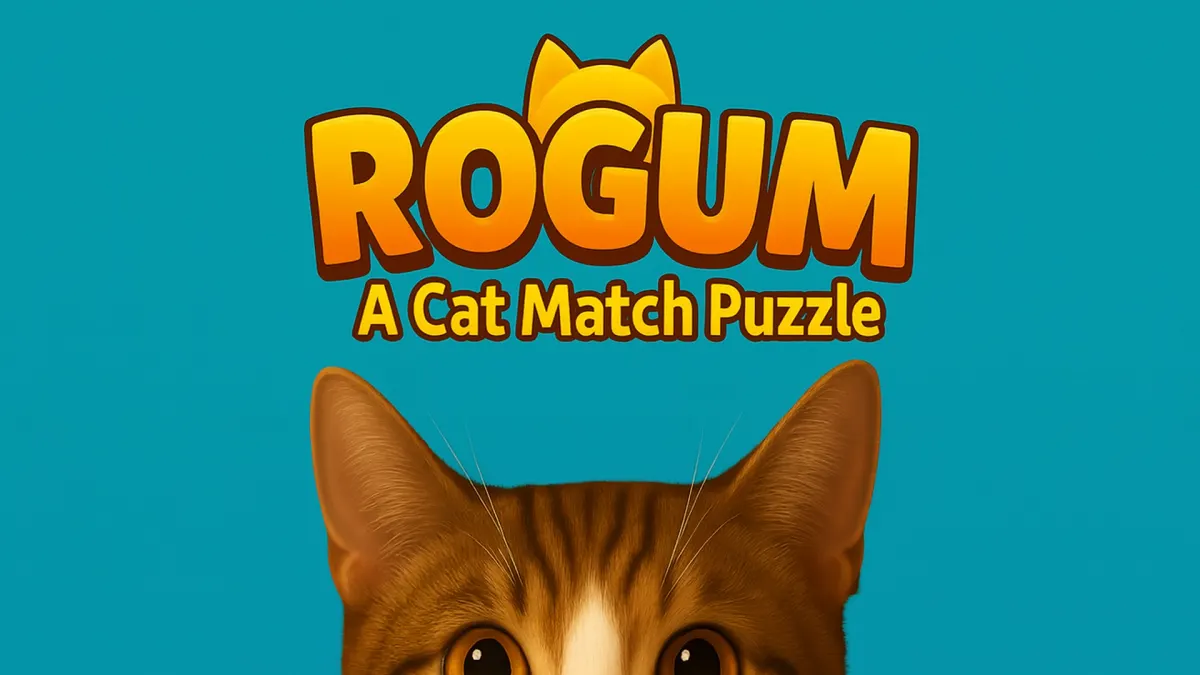
What do you do when your passion for games becomes a personal story?
In an industry dominated by AAA titles and commercial headlines, sometimes the most powerful magic is made with the heart. Rogum: A Cat Match Puzzle, the game created by the independent Romanian developer who publishes under the alias DevGamesRo, isn't just a puzzle-adventure with cats and captivating levels. It's the result of a real story of survival, hope, and resilience.

When I spoke with the developers behind the project, I discovered that every detail, from the "match blocks" mechanic to the emotional depth of the story, bears the imprint of a much deeper motivation than "just creating a new game." So, let's see what DevGamesRo told us about their newly released game.

>>>
1/ What inspired you to combine a match-puzzle game with the rising water mechanic?
The idea came from the desire to add tension and dynamism to a very familiar genre: the match-puzzle. Usually, such games are relaxing, but I wanted to give players a sense of urgency and real-time strategy. The rising water mechanic does exactly that: it forces you to think quickly, prioritise your moves, and stay constantly engaged. Everyday life, with its fast pace, demands focus and speed, and the game trains precisely these abilities: memory and mental agility. Basically, it's a fun "brain exerciser."
2/ How did the story of Petra the cat (who survived an accident) influence the direction of the game?
Petra's story had a major impact on the game's direction. I've always liked games that also have a story, because they draw you into their world and engage you emotionally, and here, the inspiration came directly from real life. Petra is my cat, whom I found on the side of a busy road, more dead than alive. She managed to survive and make a full recovery, and now she's my little daily miracle. This story of survival and hope became the core of the game: each level symbolises the struggle to surface. I wanted players to feel the same motivation and emotion, to fight, to save, to be driven by a greater purpose.
3/ What was the most difficult challenge in balancing the puzzle elements with the time pressure and rising water? How did you test and adjust this balance?
The most difficult challenge was finding that sweet spot between fun and stress. If the water rises too fast, the game becomes frustrating; if it's too slow, the tension disappears. I spent a lot of time testing the speed and players' reactions (various friends and acquaintances) in different scenarios: I observed when they gave up, when they became more focused, when they felt satisfied. Based on these reactions, I progressively adjusted the levels and the water mechanic.
4/ With 50 hand-crafted levels, how did you design the progression so that players feel challenged without frustration? Did you use internal tests or metrics?
Each of the 50 levels was hand-crafted precisely to maintain that delicate balance between challenge and satisfaction. I wanted the progression to feel natural and for players to gradually discover new mechanics without being overwhelmed too early. The first levels are more permissive, focused on exploration and rhythm, and as you advance, the water rises faster, more complex combinations appear, and enemies change the game's dynamic. I used both internal testing and feedback from real players to identify moments of frustration or monotony. Based on these reactions, I adjusted the difficulty step by step. It was a learning exercise for me as a developer. Whether I truly managed to hit "the sweet spot" I will only know after launch, when the game reaches a larger player base.
5/ You mentioned that some static images (menus, loading screen, etc.) are AI-generated. What led you to this choice and how do you maintain visual consistency with the manually created elements?
I'm a solo developer and I don't have artistic skills, nor collaborations with artists, and my budget currently didn't allow for hiring someone for the graphics area. The game is built from free or purchased assets from various specialised websites. I chose to use AI for certain static images, such as menus or the loading screen, because it helped me quickly obtain images that were congruent with the rest of the game's graphics. Not everything is perfect, but I believe the AI tool offered me flexibility and visual consistency without compromising the overall style of the game.
6/ How do you approach in-game economy (coins, power-ups, skins) to avoid the impression of pay-to-win? What is your monetisation philosophy for a casual puzzle game?
The game doesn't have classic monetisation mechanics; it will have a purchase price, and whoever buys it will be able to play it in full without additional costs. In-game coins are earned exclusively through gameplay and can be used to purchase skins or power-ups. There's no way to buy coins, so the pay-to-win mechanic cannot be abused. Furthermore, the prices in the game's shop are not very low, so the decision to spend virtual coins or use power-ups becomes strategic. The player must rely primarily on skill and use power-ups only in truly difficult moments, which maintains the balance and challenge of the puzzle.
7/ Do you want players to connect emotionally with Rogum (the cat)? How much narrative do you intend to reveal and how do you integrate it into gameplay?
Yes, I would like players to connect emotionally with the main character. The story of the accident is presented in the very first level, so the goal of the game becomes saving the cat, placing responsibility on the player in this adventure. The skins in the shop also contribute to this connection, allowing players to choose how the cat looks. Along the way, messages appear on the screen, either spoken by the character or by enemies, adding narrative layers and context. Whoever is persistent enough to reach the end will also discover how the story concludes. "Rogum" is not the cat's name, but comes from Latin and means "funeral pyre," symbolising the purgatory in which the main character finds themselves in the struggle for survival — which offers a deeper dimension to the story and gameplay.
8/ What were the biggest technical difficulties encountered in making the game run smoothly, especially with water animations and dynamic transitions?
In the case of Rogum: A Cat Match Puzzle, the match-2 mechanic was quite difficult to implement. Additionally, having already released a mobile version on the Google Play Store, adapting the game to PC was a more clearly structured process, although challenges did exist. I'm sure there are still aspects to improve, but each test and adjustment helped me make the game as smooth as possible. By using the profiling options in Unreal Engine 5 (stat fps and stat unit), I ensured that the FPS did not drop below 60 throughout the game, thus guaranteeing the fluidity of the animations.
9/ Since the game is still "Coming Soon" on Steam, how do you plan to build a community and collect feedback before launch?
I have social media pages and actively post in relevant groups to draw attention to the game and connect with potential players. I try as much as possible to incorporate the feedback received. Perseverance and constant posting on platforms, I believe, are key to increasing visibility and collecting valuable feedback before launch. Actions like this interview also help generate awareness and community building. Additionally, I contact content creators and, if they are interested, they can promote my game to their communities, thus increasing reach and player engagement. Participating in Steam platform events, such as Steam Fest, helps a lot: I'm actually proud that the game was accepted for the Steam Animal Fest event, which will take place between 10 and 17 November 2025.
10/ What are your plans after launch? Will you add new levels, seasonal events, DLCs? How do you decide which updates deserve priority?
This is my first game launched on PC, and I view it more as a learning experience, which I embrace as such. I would, of course, be happy for it to be a success, but for me, at the moment, the most important thing is to go through this experience and learn as much as possible from it. I haven't thought too far ahead regarding future updates; if the game is successful, I might create seasonal content, new levels, or special events. Apart from marketing promotion and participation in Steam discounts and events, I don't have concrete plans, but I will make decisions regarding updates based on community feedback and how the game is received.
11/ After developing Rogum, what are the most important lessons learned? What advice would you offer other indie developers working on puzzle or casual games?
After developing Rogum, the most important lessons I learned are especially about perseverance and patience. My advice to other indie developers working on puzzle or casual games would be not to give up, no matter how difficult it seems to bring their dream to fruition. Consistency and sustained effort matter enormously. It's hard to be a solo developer and work on your passion after hours or on weekends, but the satisfaction of seeing the finished game and the fruit of your labour is unparalleled. There are many free online resources for development and learning; it just requires perseverance. They shouldn't put too much pressure on themselves to succeed; no one succeeds on the first try. It's important to treat everything as a learning and development experience.
Another piece of advice would be to build a community as quickly as possible, and to make sure the assets for promoting the game and the Steam page look as good as possible – that's worth investing in. Also, be open to feedback received, especially from players, because it can be extremely valuable in adjusting and improving the game.
<<<
The interview with DevGamesRo showed us that Rogum: A Cat Match Puzzle is not just a collection of levels, colours, and gameplay mechanics, but a meaningful journey: from the real trauma of a cat to a dream world where the player becomes the hero trying to save the innocent creature. Beyond matches and rising water, the game conveys a universal message: that hope, will, and love can transform suffering into art. And, finally, it invites you not to be just a simple player, but part of a story.

All that remains is for me to invite you, finally, to purchase this game that bears the developer's truly unique style, and for those who want to test it before being convinced, DevGamesRo has also made a demo available for this title, which you can try for free.

What are you waiting for? CAT ON, guys!