
Metaphor: ReFantazio – Review
Once Upon a Time...
ATLUS is, without a doubt, one of Japan's most renowned video game publishers, and P-Studio is currently their most famous developer. To my shame, I only discovered these two giants very late, with the popularisation of the Persona franchise on Sony consoles, even though they already had a vast reputation thanks to their rich portfolio of titles released on the NES. I must admit that until recently I wasn't attracted to the genre these industry giants specialise in, namely JRPGs, but even so, I consider the joy all the greater, as I can now discover all the experiences and stories in this niche genre of interactive entertainment software.
Like many players, I had fallen into a rut due to the inconsistent quality of recent titles in my favourite genres. Long gone were the days when I felt that enthusiasm, that burning desire to sit in front of the computer to see the continuation of an epic story, like the one in Warcraft 3. And the typical restlessness of the 90s-00s gamer, who would insert a CD into the computer with trembling hands, disappeared without a trace with technological advancements and the prevalence of the digital distribution model, not to mention that in our little corner of Europe, we had a culture of warez. To counteract this boredom, and to ensure my hobby didn't leave a bitter taste, I decided to broaden my horizons and try creations from styles that were foreign to me.

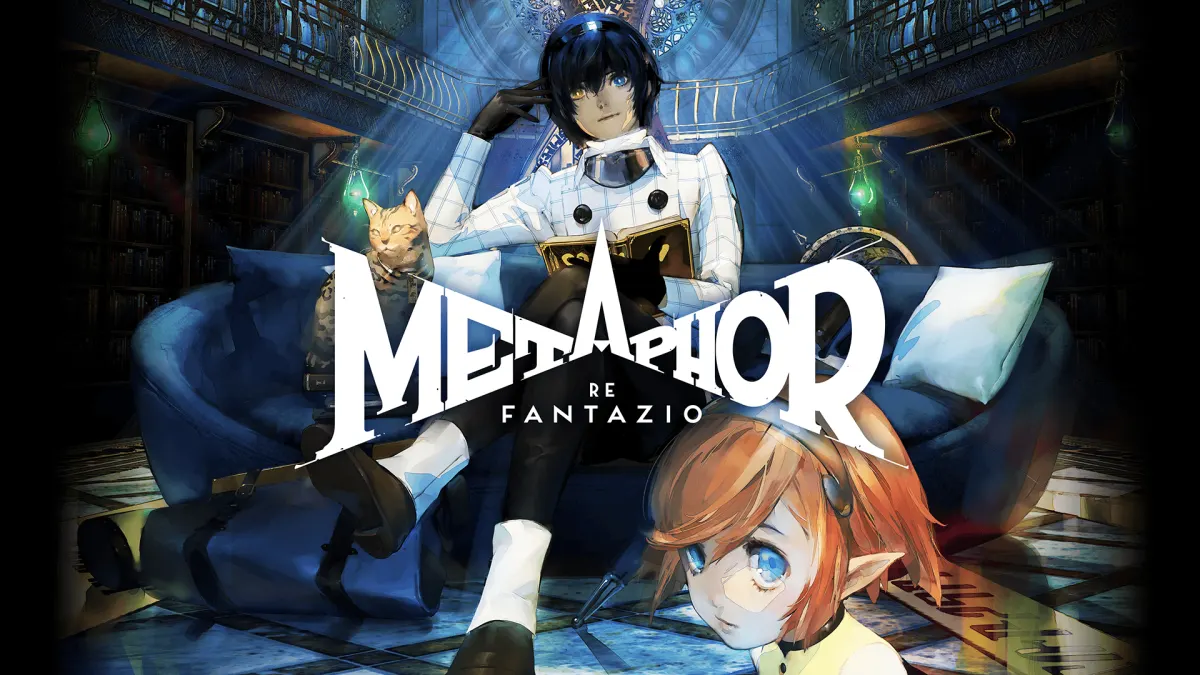
I'll admit I was hesitant about this new creation. It's the first game in a completely new series, created by part of the P-Studio team who operated under the aegis of a recently founded developer: Studio Zero (a small observation I have: the Japanese have an interesting way of naming their companies). Fans and followers of ATLUS praised the new title even before it was released, and the expectations the industry and critics had were high. This is due to the quality standard we've become accustomed to thanks to recent Persona games, such as Persona 5 or Persona 3 Reload. Well, after spending countless hours with Strohl, Hulkenberg, Heismay, and the rest of the interesting characters, I can confirm that Metaphor: ReFantazio is an incredible game. Like previous creations, the game uses the same typical Persona formula, and the only difference between Metaphor and the emblematic franchise is the location. Persona takes place in different high schools in modern Japan, while this creation takes place in a European location with elements typical of the High Fantasy literary genre. The elimination of certain "socialisation" elements and mechanisms somewhat simplifies the experience and makes it more accessible to those unfamiliar with the Persona style or JRPGs in general.
Before I delight you with the review, I'd like to make a few small clarifications and recommendations for all future players of this masterpiece. For a truly memorable experience, I recommend using a controller. While this may seem logical for console players, this recommendation might seem inconceivable to PC purists (or those who prefer to enjoy their collection via the Steam Deck). Metaphor was clearly designed to be experienced with a controller, and the experience becomes all the more interactive thanks to the rumble system, which makes it vibrate at key moments. Without this peripheral, you cannot fully immerse yourself in the world and surprises that Studio Zero has prepared.
I also confess that I'm not a big fan of the aesthetic style used. Although I grew up with renowned series like Dragon Ball Z, Naruto, Nana, Death Note, and Fullmetal Alchemist, I wasn't the type of person to consume all anime. Of the recent ones, only Attack on Titan and One-Punch Man are the ones that piqued my interest, and most modern ones fail to evoke the magic and emotions often associated with these creations from the Land of the Rising Sun. However, Metaphor: ReFantazio brilliantly manages to tell an epic story in a memorable aesthetic style right from the introductory video.

A Song of Ice and Fire
As I mentioned above, the setting for the story is High Fantasy, and the action itself takes place in a magical medieval kingdom of unprecedented diversity, where social castes are dictated by tribal affiliation. The story begins with the assassination of the monarch and a plot worthy of Constantin Negruzzi's pen, with betrayals and conspiracies to seize absolute control over the kingdom of Euchronia. The sudden and violent death of the ruler creates chaos and instability in society, and the lack of an heir leaves big questions about who will wear the crown. However, the former monarch, with the help of his magic, prepared a complex system of "democratic elections" to determine who would take his place. Thus begins a complex political campaign, even more so than our recent elections, where every citizen has the right to take the reins of the kingdom, but the chosen one will be the candidate most appreciated by the subjects. Unlike what happened on 24 November 2024, the vote for the future king of Euchronia is magical, the complex system of the deceased monarch reading the minds and souls of all subjects throughout the elections to determine who will ascend to the throne.

The main character, named Will, is a member of the Elda tribe, the most detested tribe in the land, and he embarks on this epic adventure (and magical elections) to save the king's secret heir, who was cursed many years ago and is currently in a coma.
I warn you that the game's introductory section lasts approximately 5-8 hours, and it also has a demo that you can try on any platform Metaphor was released on. Over the course of the 60-110 hours the entire story takes, we will encounter all 10 tribes, along with the classes and castes that form this complex society.
The Catcher in the Rye
Characters advance in the classic RPG genre, with points gained after each level to be invested in different attributes. The resemblance to P-Studio's renowned franchise comes from the Archetypes, which are manifestations of a character's personality, like Makoto Yuki's or Ren Amamiya's Personas. Each Archetype has its own attributes, talents, benefits, and powers, and each denotes a specific class from knight to priest or merchant.

The socialisation system from Persona returns, but here it plays a role both in progressing through the story and in obtaining new classes. The different characters we meet will influence the game's narrative, and gaining their trust and respect will result in unlocking different classes or their specialisations. My recommendation is to save often in each chapter, because even the smallest choice can have a devastating effect later, even more so than Edward Lorenz's butterfly effect.

The Chronicles of Narnia
Although most players are tired of the "open-world" genre, often found in current titles and taken to extremes by franchises like Ubisoft's Assassin's Creed, I personally confess that I love the freedom this genre offers. Exploring a vast world, a huge map, countless dungeons, and a dynamic world influenced by a day-night cycle that must always be considered are just a few of the delights that Studio Zero has prepared for players. Fans of more hardcore games, like Diablo, know the joys of creating the perfect "build," where all attributes have been meticulously analysed and modified to create the perfect optimisation for individual playstyle (or min-maxing, as it's also known). Whether we're talking about equipment, attributes, or Archetypes, I'm sure any player has the opportunity to create their own "build" and way to enjoy Metaphor.
The introduction (or tutorial) I mentioned earlier only covers the basic elements of the title, and the player must discover for themselves how to optimise their schedule to enjoy as many things in the game as possible. Each action takes a few hours, so we have to decide whether we want to spend the morning with a character, helping them on a side quest, or if we want to enter a dungeon and "waste" the whole day going through it. Half of the game's charm comes from the memorable soundtrack composed by the legendary Shoji Meguro, who composed most of the songs in the Persona and Shin Megami Tensei franchises. Unlike the other franchises, Meguro-san drew inspiration from choirs and religious music instead of the light jazz or R&B that defined the other series.

The Art of War
I briefly mentioned battles when I introduced Archetypes, and now I want to discuss them in a bit more detail with you. I confess that I'm not a huge fan of turn-based battles (or turn-based, as they are normally called), and the first game that truly helped me overcome my aversion to this type of mechanic was Septerra Core: Legacy of the Creator, developed by Valkyrie Studios, distributed by Monolith Productions and received from issue 57 of Level magazine in June 2002 (thanks Mitza for the brilliant review). Somehow the two games are superficially similar, both Septerra and Metaphor having complex stories and an anime-based aesthetic style. But let's return to Studio Zero's creation. Battles are divided into two types:
- Active
- Turn-based

The active combat aspect comes from the ability to attack enemies in the dungeon. If you attack an enemy enough times in the world, when you enter the actual battle with them, you will have an advantage. This advantage materialises by granting an extra turn or stunning the opponent at the start of combat. Advantages can also be obtained in the middle of battle, which takes place in turns and relies on a "complex" elemental system. The best analogy would be with a more complex variation of the famous childhood game rock, paper, scissors (namely rock, paper, scissors, lizard, Spock), because each element has a matrix of resistances and vulnerabilities, and using a move to which the enemy is vulnerable will result in extending the player's turns. Of course, things get a bit more complicated with the introduction of Archetypes, as some enemies have a natural resistance to certain classes, and the presence of others can enrage them to the point where they "see red," triggering certain passives that make the battle much more difficult.
For those for whom the above seems too complicated, Studio Zero offers the "Auto-Battler" option, which activates a kind of autopilot for the game that makes all necessary decisions during combat. This mechanism practically turns the player into a spectator, but the system can be stopped at any time to intervene directly in battle when it makes "bad" decisions. Thus, to correct major mistakes, battles can be "rewound" to the turn where the inappropriate decision originated.
The easy automation system works perfectly against common enemies, but it can't handle bosses. The real test of fire takes place in these battles, where the player must develop complex strategies and be prepared to face all the challenges that follow. Area-of-effect attacks often force the player to change tactics from an offensive one to a defensive one based on healing spells and blessings to counteract harmful effects.

Although the battles can be intense, the game itself is very relaxing. I enjoyed Metaphor from the comfort of my sofa, my bed, and even from metro seats with the help of a Steam Deck. For an optimal mobile gaming experience, I had to tweak the graphics settings to stabilise the frames. This type of title works wonderfully on portable systems like PSP, PS Vita, Nintendo DS, or even Nintendo Switch, and the developer and publisher fulfilled the dream of many fans when they released versions for different types of portable consoles. If you're worried about losing the thread of the story if you play in small sessions during downtime, or on the metro, I assure you that's not the case. The story is well-structured and you can enjoy it both in small sessions and over several hours. Metaphor has a high degree of complexity and can be replayed easily, thanks to the different challenges it presents and the different ways you can experiment with Archetypes. There's even GRIND in this title, and it reminded me of the hours spent in World of Warcraft Classic for the Ursa group in Felwood (as an aside: greetings to the members of the GRIND Guild).
Obviously, a game like Metaphor: ReFantazio is long. Going through the story, without any secondary objectives or extra exploration, will take approximately 60 hours, and those who want to see absolutely everything that Studio Zero's creation offers will spend at least 100 hours in the fantastic world of Euchronia.

Maus
One last aspect I feel I need to discuss is the game's aesthetic. Everything is rendered in a timeless art style, and the anime-inspired graphics will still be appreciated ten years from now. The chosen style doesn't require high processing power, and as such, the game can be enjoyed even on computers considered "mid-range" or even work machines. It seems the graphics engine used is based on the GFD engine, an engine with its limits that has also been used in previous titles. The differences between the current version of the engine and the one used in previous games are not clear, but this is not a detriment to the visual identity of Metaphor: ReFantazio. The in-game menus are memorable but "annoying to create" according to a recent interview given by the game's director, Katsura Hashino, to The Verge. As such, I don't think we should expect Persona 6 in the near future.
The Hunger Games
To top it all off, Metaphor: ReFantazio is one of the best games of 2024, and as proof, it was nominated in several categories at this year's The Game Awards, including the highly coveted Game of the Year category. Unfortunately, it didn't win this distinction, but the developers went home with trophies for the following categories:
- Best RPG;
- Best Story;
- Best Art Direction.
Studio Zero's creation is a masterpiece in every respect, and this review came late due to the immense number of hours required to complete it (sorry, Leo…). Considering the number of hours versus the game's price, it's worth it, especially now during the holidays when it's also discounted. Although many praise it as a solid 10/10 game, I consider it more of a 9, but my opinion is a result of my aversion to the turn-based combat system.
The review license was provided by C.D. Media S.E., whom we thank for this opportunity!
I leave you with this review and hope to see you well in the coming year!

Played on: PC
Release date: 11 October 2024
Developer: Studio Zero, ATLUS
Publisher: SEGA, ATLUS, CD MEDIA S.E. (Romania)

Edited by Tudor-Codrin Enea
0 votes
Scroll down here and stay on the page for at least 30 seconds to vote.
Pick a score from 0 to 10 (halves are allowed).