
Near Mage
First published in GRIND V, pages 158–165.

(LEFTCLICKGHINEA.RO)
Seek the good, while there’s still time...
Six years have passed since Stuck In Attic released the extraordinary Gibbous – A Cthulhu Adventure, and that coincides with an anniversary of the Leftclickghinea.ro page, because the game in question was the first I reviewed on this blog, thus marking its arrival online. That is why I have a soft spot for the people who took the Necronomicon lightly, in a game full of humour and satirical, homegrown Romanianisms, which I remember so fondly that it was obvious I had to ask for its sequel, Near Mage, to review. Which I received promptly – many thanks! I have to tell you right from the start that, once I finished Near Mage, I had a moment of untimely cogitation, in which doubts tried to sweep me into their whirlpool and toss me, helpless, towards observations that had their place, but perhaps not here, not now. So I shook off every doubt caused by my professional experience and my tendency to be exhaustive in my observations and criticism, resolutely taking a lighter, more holiday approach, more “live and let live”, more “and let nobody leave upset”, in the way I set about writing this review. I think we live in times when we don’t know how bad tomorrow will be, so I would rather look for whatever makes the moment smile at me than for cold, objective analysis. So I will speak well of Near Mage, of the good I found in it, and I advise you to seek the same good, while there’s still time.
Ilinca “Illy” Vraja
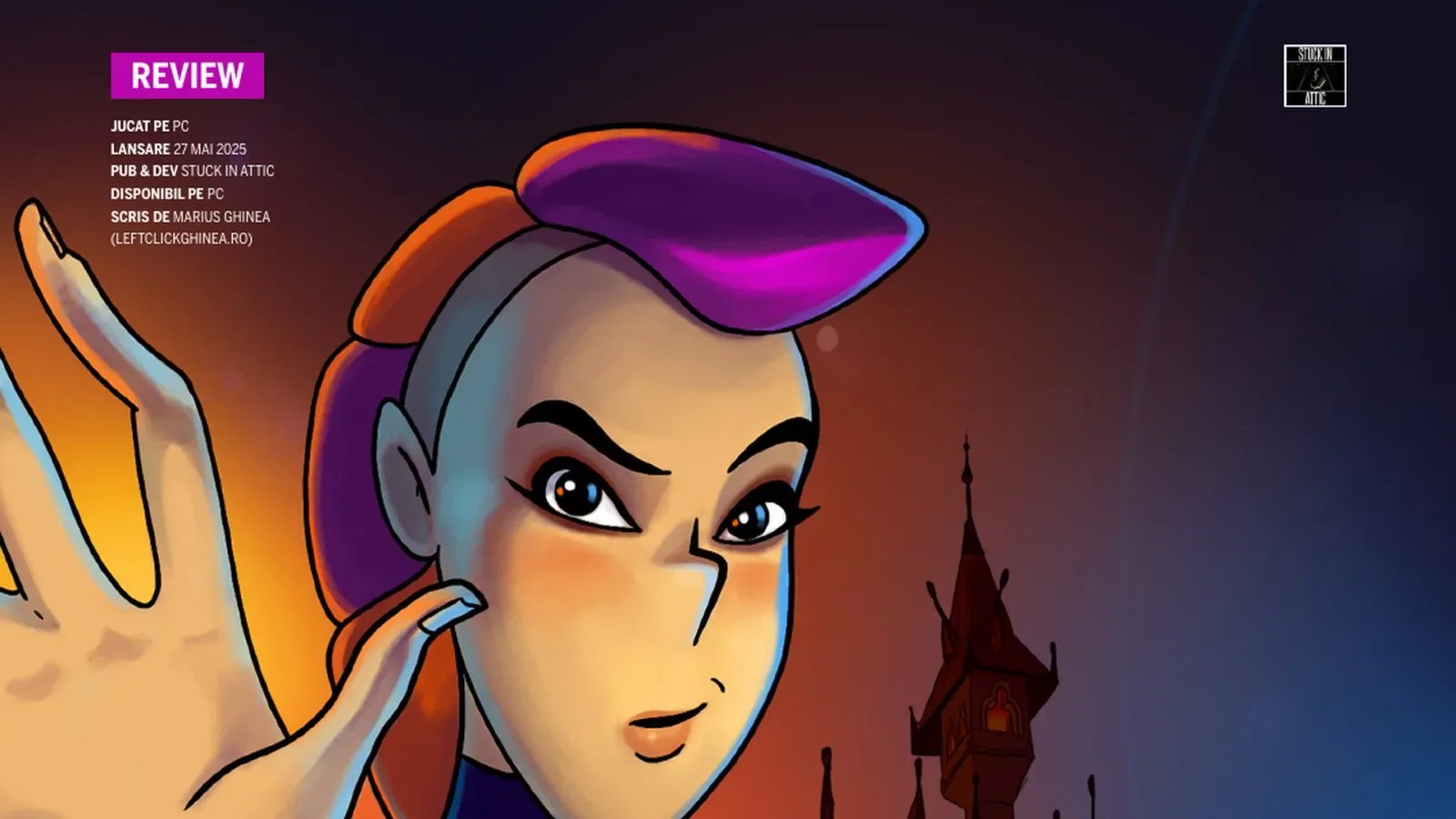
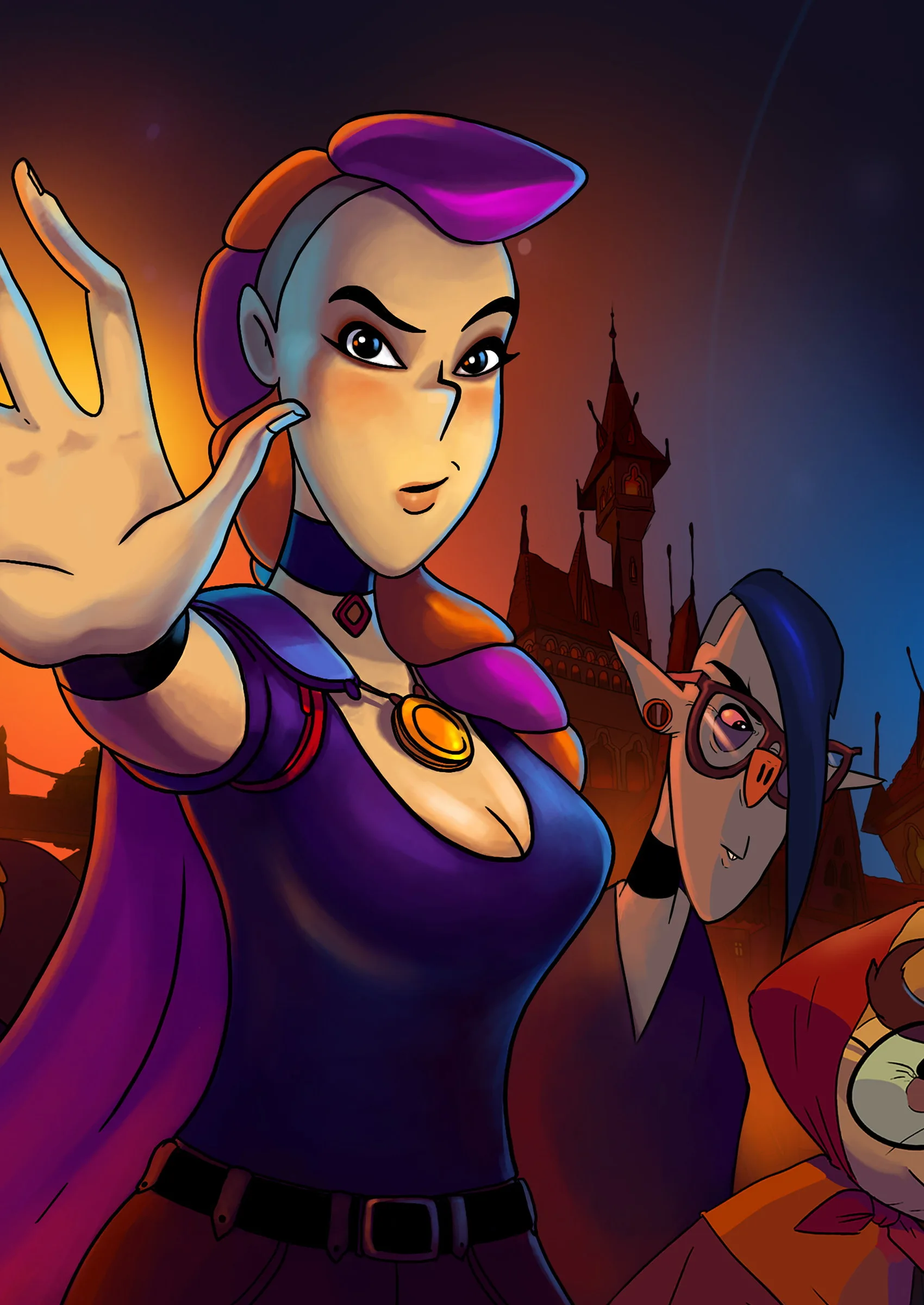
At the start of the game we find Ilinca Vraja and her two parents in the United States. Her mother is from Romania, specifically Transylvania, which means Ilinca has relatives in Sighișoara, who send her a letter calling her back to the country for the summer holidays. Ilinca, at the end of high school, is undecided about her choices for the future, so she seizes the chance to drop off the radar of parents who were pressing her with assorted exhortations and demands to be responsible, along the lines of “what are you doing with your life, Ilinca?”. So, after a brief confrontation on the maternal and paternal fronts, Miss Illy (somebody clearly likes Italian espresso…) steps off the train in Sighișoara, full of hope in the golden light of the Transylvanian sun reflected off the walls of the old town.
From there she eventually reaches the house of her aunt Domnica, the one who had called her back, to the ancestral place where the adventure properly begins. Her aunt, who turns out to have magical powers, urges her to take the summer courses at the Transylvanian Institute of Magic (someone avoided MIT on purpose), which Illy accepts with rebellious grace. Yes, if you imagine that the funny Lovecraftian universe inaugurated by Gibbous has been infiltrated by elements from other famous franchises, with wizards, non-wizards, magical schools and conflicts between all these epic, social and magical entities, then you are right. And if that worries you, let me reassure you that this is not a rip-off but a sidestep that still treads in the territory of satire, only this time less biting and more affectionate.
Time to clarify something. Near Mage differs significantly from Gibbous in having very few puzzle elements (just one significant one, that is), being an almost exclusively story-driven point-and-click adventure. In practice it is a film you get through by selecting the dialogue option you want, and where choices matter more emotionally or morally, relative to whoever is playing. I don’t think there is a game over caused by a choice; there are no wrong paths, only your own, and the game offers a certain variety in that respect, which I appreciated.
Something, though, is a little apart in Near Mage compared with the adventure genre, and different from Gibbous. It is the magic... Ilinca’s mother is from Romania, specifically Transylvania, which means the young woman has relatives in Sighișoara, who send her a letter calling her back to the country for the summer holidays.
Near-spells...
At the Transylvanian Institute of Magic, admission takes place over the summer, starting with learning some “near-spells”. These belong to 6 classic categories (water, air, earth, fire, soul, blood), and each near-spell means attending a corresponding course, held only once for each element. Once you pass certain milestones in the story, you are told the next course is available, you go to the Aula Magna, take the course – which has a vague puzzle character – and you have learned the near-spell. A spell in the full sense and power of the word is then obtained by combining three near-spells – so combinations of 6 taken 3 at a time, which makes a total of 20 spells available after you successfully get through the 6 near-spell courses.
OK, all this sounds serious and may give the impression that spells are something important, the way they are in RPGs. In reality, spells are more of an excellent visual and emotional gimmick, which plays a part in the flow of the story and in the heroine’s ad-hoc moral alignment. What’s more, you can cast spells only at precise moments in the story, not anywhere, not any time, so everything is rigorously scripted. But given that this is where the game’s name, “Near Mage”, comes from, along with the justification for attending the summer courses at the Transylvanian Institute of Magic, plus a few funny and unexpected moments, you could say the magic is welcome and brings a breath of fresh air to the adventure genre, all the more so as I can’t remember any other title in the genre offering anything like it.
Diversity
Here is a word that has become a target of scorn for some – the sort annoyed that others know how to use what they themselves fall short of – but a word that describes this game in the most pleasant way. The characters, even if not necessarily extraordinarily original and well drawn, have two dimensions (sic!) in which they excel – the drawing and the voices. The artwork of the people who worked on Near Mage blossoms not only in the backgrounds but also in the look and animation of the characters, whether main ones or ones with no part in the plot. I appreciated the expressiveness and imagination that bring them to life, as well as the attention to the details that make the difference and bring, you guessed it – diversity. In fact, one of my core La îndrumarea mătușii sale, Ilinca urmează cursurile de vară ale Institutului Transilvan de Magie unde începe cu învățarea unor „aproape-vrăji”. activities in this game was to sit on one screen and keep watching the passers-by who appear in frame. They are numerous, of many kinds, races or species, and dressed in incredibly rich and varied detail. There is an immense amount of work in drawing characters like these, and I took great pleasure in simply sitting and admiring their procession through the game’s screens, being quite amazed whenever I noticed a repeat, full of admiration for the creativity of the people at Stuck In Attic.
And the voices, well, the voices are stellar. Also full of expressiveness and diversity, they won me over with their believable ring and the way the tone fits the situation and the character. The voice actors are very talented, and some are genuinely surprising – all the more so as at one point I said to myself, amazed: “hold on, doesnʼt this one have too much punctuation?!…”. It is a pleasure to talk to everyone in the game; even insignificant characters in the crowd can have funny lines and a distinctive tone when they answer you.
I Resonate
I confess that by the time I was already well past the halfway point of the game, I was somewhat thrown. It doesn’t have the clever, sharp, humour-packed dialogue of Stuck In Attic’s first title, nor its original and masterfully drawn characters. Gibbous was alive and original, full of surprises and inspired finds. On top of that, it had significantly better background music – that is, exceptional.
By comparison, the story of Near Mage “is lukewarm and cute, put together from agreeable clichés picked up from other cute titles – whether book, film or game – but with nothing that catches up with the zany story of Gibbous. Anyway… All the same, I snapped out of the bewilderment I told you about fairly quickly and set about understanding the nature and specifi- Diversity also finds its place in Near Mage in that no corners were cut on the kinds of fantastic beings that populate it. In fact, at one point you get access to a bestiary of creatures from the game’s world and, believe me, reading it, which took quite a while, gave me great joy, as I came across a The voices of the characters in Near Mage are full of expressiveness and diversity. The actors are very talented. It is a pleasure to talk to everyone in the game. satirical take on those who populate the worlds “Beyond”, as we find them in our folk tales. Here, in these “Gameofables”, I discovered a modernised register of the old artistic visions of those whose “life isn’t even life”. Gibbous: A Cthulhu Adventure is the first 4 game developed by Stuck In Attic, released on Steam in 2019. It has over 2000 “Very Positive” reviews and is well worth trying! cului of this game, because I felt there was something there and that I had to analyse the reasons why I like it, even if not the way it happened with Gibbous – A Cthulhu Adventure.
I've realised that, if I start with myself, I've been more or less chronically depressed for some 30 years, heavily aggravated over time by all the filth that has happened and made many of our lives harder and the future horribly foggy – and the corrupto-fascist madness that has gripped the World for the past few years only muddies things further. Not to mention AI. Which is why, in the state I'm in, I welcome a gentle game now and then, one without excessive conflict, even politically correct in a peace-making sort of way, where you have a single important and really nasty antagonist, and everyone else is part of a diversity, good and bad, each with their own motives, but someone you can come to an understanding with in the end.
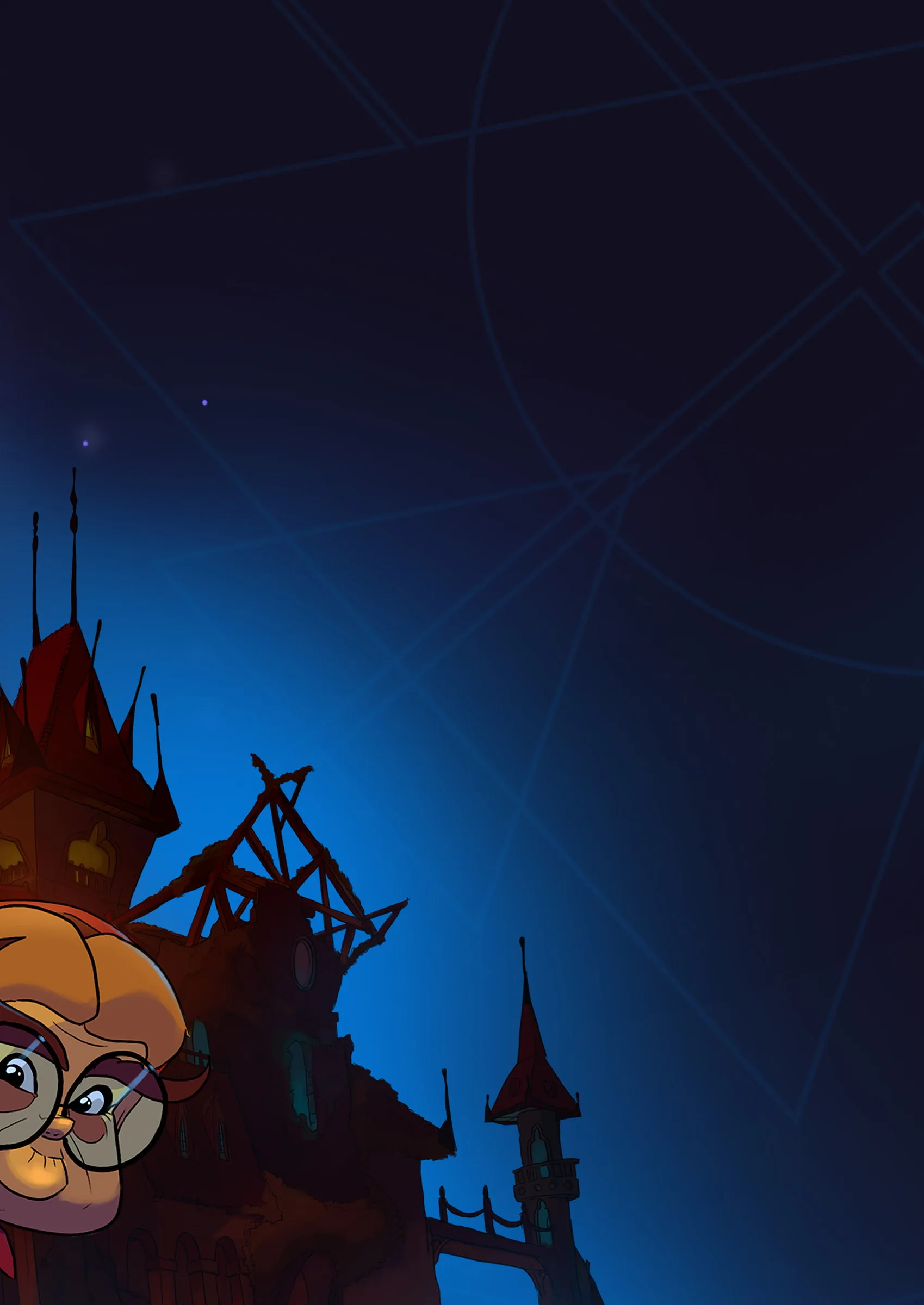
Essentially, Stuck In Attic's magical Transylvania is a relaxing utopia where all you have to do is kick the baddie up the arse to get a good place to live, learn and work, exactly the kind I'd want for myself. I resonate with this naive vision, brushed by the wing of wishful thinking, all the more so because it comes bundled with diversity wrapped in good understanding. I really liked that there is an excellent visual setting for this vision: luminous, provincial Sighișoara, in balance and intimate relation with the little magical town that houses the Transylvanian Institute of Magic, called Rakus. The latter, since it hosts a multitude of magical beings, some of whom can't stand sunlight, lies in perpetual twilight. And I liked that: reddish and calm like a summer evening, where, between the green of the leaves and the blaze of the sunset, you can have so many visions of a better world. Rakus cheered me as a promise of a future in which I no longer feel so hounded and estranged from everything around me, even if I were surrounded by water spirits, werewolves, pricolici, dragons, vampires, witches, phantoms or chimeras. A quiet place, but one where you don't get bored and where you can believe in a life truly worth living.
Yup, it may well be that Near Mage is simply a “comfort game”, just as there are “comfort movies”, “comfort books” and “comfort food” – that is, an anchor you drop from the imaginary so you can stop, if only for a few minutes, somewhere where, against all logic and reality, you feel genuinely good, genuinely alive, enlivened by something, never mind what. For me, Near Mage is a very good “comfort game”.
›› MARIUS GHINEA (LEFTCLICKGHINEA.RO)
It may well be that Near Mage is simply a “comfort game” – that is, an anchor you drop from the imaginary so you can stop, if only for a few minutes, somewhere where, against all logic and reality, you feel genuinely good, genuinely alive, enlivened by something, never mind what. For me, it's a very good “comfort game”.
YOU ABSOLUTELY MUST
TRY GIBBOUS TOO:
A CTHULHU ADVENTURE,
ANOTHER TITLE DEVELOPED
BY STUCK IN ATTIC
“The story begins in our times, somewhere, in an American town next to another American town, on the East Coast, at the edge of the ocean. A Detective is looking for a mysterious book, the Necronomicon, and so ends up at a library in the town ‘next to another American town, on the East Coast…’. There he comes across the Librarian, and things get complicated when the Librarian's cat finds a human voice and starts talking…” Review on Leftclickghinea.ro
THE CORNER
I recommend that anyone who hasn't already play Max Payne 1 & 2 and Half-Life 2.
MORPHI'S COLLECTION They say a picture is worth a million games...
ARTICLES
166 MORPHI'S COLLECTION - "A GAMER WHO DOESN'T SEEK GAMES, BUT PRESERVES MEMORIES"
0 votes
Scroll down here and stay on the page for at least 30 seconds to vote.
Pick a score from 0 to 10 (halves are allowed).