
Pacific Drive – Review
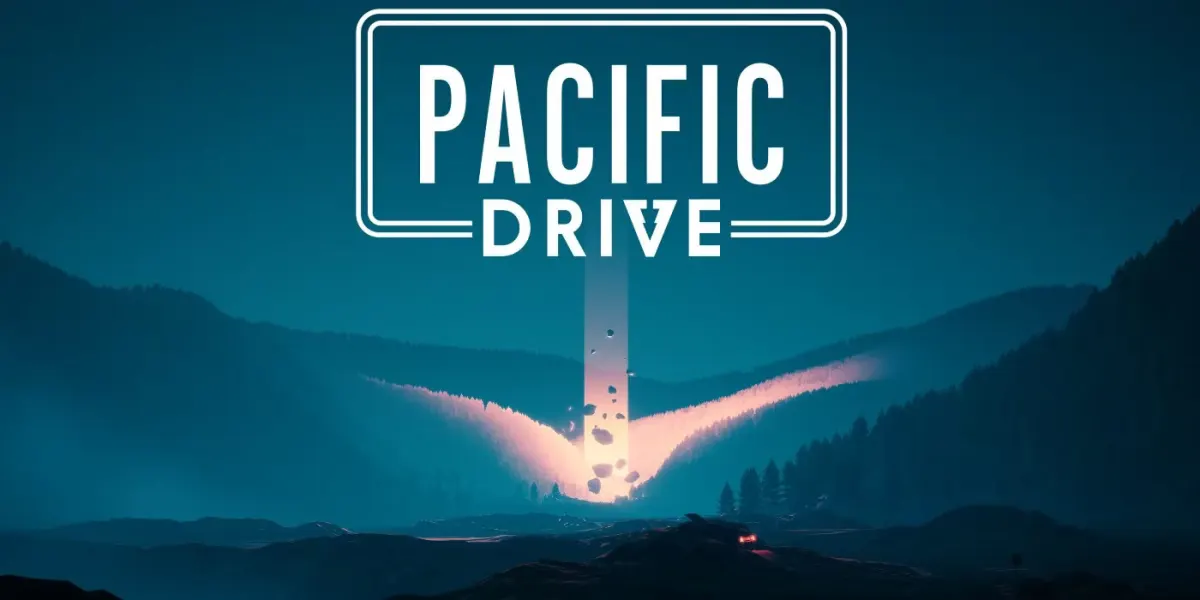
You might have to hang behind Dead eyes on the highway
To start with, Pacific Drive is a strange game. I’m telling you this to temper expectations a bit, although I’m going to praise it quite a lot in the following lines. Quick clarification – I’m tired of how many survival/roguelike games there are… and it’s not one of my favourite genres. The gameplay seems very repetitive in all of them; there’s a lot of grind and you repeat the same thing continuously. I liked The Long Dark because it had a bit of a story attached, but even that became tiresome.
As for games that combine various survival/roguelike mechanics with cars, again, I’ve tried My Summer Car, Jalopy, and even Car Mechanic Simulator – almost all of them get boring after a while. And although Pacific Drive follows the same recipe, after more than 30 hours played, I still keep coming back to it. And each run is different from the last, and I still have something to do and something to unlock. There’s something different about this game, something that makes it more special than all the clones before it. Perhaps it’s finally the perfection of the recipe, although the game is far from perfect. So, let’s clarify what Pacific Drive is and why I keep returning to a title that insists on tormenting and torturing me every time I start it up.

Ghost on the road
It’s a cold one
What a white one
My heart it froze
It’s a cold one
Thinking of home
Pacific Drive is the first game from Ironwood Studios, an indie studio based in Seattle, which has been in development since 2019. It launched on 22 February 2024 for PC via Steam and Epic Games Store, and for PlayStation 5. I don’t know yet if they plan an Xbox release, but given that the developers were also supported by PlayStation, I have my doubts. Maybe after a year or two, we’ll see.
It’s a first-person driving survival game with roguelike elements, and your car is your only companion and, in my opinion, the true main character of the game.
As I said above, I tend to get bored of survival games extremely quickly. I don’t really have anyone to play multiplayer ones with, and single-player ones often lack the element that keeps me glued to the screen – the story. Fortunately, the story in Pacific Drive, while not overflowing with originality or an abundance of details, serving more as a skeleton and introduction to the game, is at least presented in a unique way through various radio communications, and the actors who bring the characters to life did an excellent job. The premise is simple – you’re some kind of driver, and during a delivery, you’re mysteriously drawn into the Olympic Exclusion Zone: a perimeter of several tens of kilometres that was closed by the government after laboratory experiments generated a natural catastrophe and led to anomalies. For these reasons, a wall several tens of metres high surrounds the entire area. If that sounds familiar, yes: exactly like Stalker/Chernobyl, exactly that kind of anomalies, exactly that kind of Zone. Except, instead of a plain/Ukraine, the Olympic Exclusion Zone is located in the north-western Pacific Ocean area, on US territory… so we have dense, dark forests, forest roads, urban agglomerations and petrol stations/diners, landscapes of striking beauty, lots of rain. Think Twin Peaks. It’s already starting to become an interesting mix: Twin Peaks and Stalker.

Once you arrive in the Zone, the transport van that brought you is completely disintegrated, and pieces of it float everywhere in the air around you. In a short time, a huge storm begins, and there’s also radiation. Here, I have to appreciate the developers’ effort to recreate that exact feeling you get when you step out of the house during a storm… the rain lashes everything it touches, the wind scatters it, the sound is just right, the trees bend, the grass too – the visual/auditory sensation is very well rendered. It becomes apparent that you are in a very strange place and need shelter. Fortunately, after a few minutes of walking, you find an abandoned car. Almost intact, minus a wing and a headlight. And a wheel, but that’s okay, you’ll find another nearby. A miserable estate car, the kind of old American station wagon, as long as a day of fasting and with fake wood on the exterior, on the wings and doors. A wreck, but a wreck that starts. So you get in and, with great difficulty, manage to reach shelter in a former auto service station, which practically becomes your new home and base, the place where you know you are safe, where most of the action in Pacific Drive actually takes place. Because here you will gather resources, craft new parts for the car and various upgrades, repair the car, do research to unlock new upgrades, listen to music, paint the car, refuel it, charge the batteries, and plan your route further, in an attempt to escape the Zone.
Only you don’t know how to do all this yet, and Pacific Drive doesn’t really hold your hand. Most likely, your first forays into the Zone will be the most painful. Because Pacific Drive doesn’t take it easy on you, with tutorials for every mechanic, or with a more approachable difficulty curve. No, it takes you and throws you into the Zone and wishes you luck, maybe you’ll manage to return, but you can be sure you’ll come back with some lessons learned. Every time. In fact, this pain is an integral part of the experience, just like in Dark Souls. Another source of inspiration for Pacific Drive, and another game/genre of game that I’m not necessarily a fan of. Like pain and suffering for the sake of suffering. Eh, in Pacific Drive it’s still a bit more achievable. If you’re lucky.

Sulphur and smoke
Glows through the snow
It smells like money
On your way to the garage, you receive radio communications from two former employees of the research complex (ARDA) who are trapped in the Zone, communications that serve both for the story and as a minimal form of guidance. Besides them, the service station belongs to Ophelia (Oppy) – another central character to the story. The three send you to conduct various experiments in the Zone, trying to unravel the mystery of what happened when the complex appeared and, at the same time, to help you escape. All were masterfully performed by the actors, so well that it reminded me of Firewatch – another game where the voice acting built the story and was perfectly delivered.
Alright, now you have a car with all 4 wheels, one headlight, and some missing wings. You’re sent into the Zone for resources to build structures you need back at the garage. Well, this is where the fun begins. Why? Because most of the anomalies in the Zone are trying to kill you. You’ll be irradiated, spat on with acid, electrocuted, literally blown up, involved in explosions, and lightning, dragged by things that kidnap you and your car, attacked by things that stick to the car and electrocute it, overwhelmed by things that stick to the car and explode with acid, surrounded by things that stick to the car and explode, melted by f***ing MOVING LAVA, provoked by things that will try to cut the car in half, dripped on by entire clouds of radiation, surprised by things that accelerate your car (but leave you without control in those moments, so be careful which direction you’re facing when you use that anomaly, because you might accelerate full speed into a tree – happened to me), irritated by things that puncture your tyres, exasperated by things that rip parts directly off your car, why not, preoccupied by things that kill your battery or things that activate certain permanent quirks – the horn honks when you close the boot – or the doors close when the wipers start – or the wipers move slowly if the radio isn’t on.
And in all this chaos, especially at the beginning, you’re in a wreck whose doors/wings disintegrate if you fart too hard next to them, the headlights break easier than grandma’s crockery, the tyres too, you run out of petrol relatively quickly, you’re not really used to the interface yet, which isn’t very friendly – by the way, I played with a controller and felt it made my life much easier compared to the piles of buttons on the keyboard. It also felt more intuitive (although even here it’s a bit dizzying – you have different actions, for example, if you hold the button down vs if you press it once, it takes a while to get used to). Also, it’s easier to steer using a controller. Beyond the lack of an intuitive interface, the controls are also a bit janky – I have the impression, however, that it’s also a bit intentional, to add to that Dark Souls factor.
Eh, the Zone doesn’t care that you’re not used to the interface/controls yet. The Zone knows that if you’ve activated the portal to return to the garage, it’s time for it to collapse, even if you don’t realise it yet and you’re miles away from the portal. And while every trace of stability crumbles around you, it’s literally raining radiation, all the anomalies are activating everywhere, the air itself is trying to kill you… and you’re struggling to get into the car, you forget to put it in gear, you activate the wipers instead of the headlights, you hit the headlights too (but it’s okay, because they just broke and it’s completely dark), you rev the engine in neutral, you finally put it in gear, you start, you’re somewhere off the road and you’re trying to get back on it, but you can’t see anything… so you hit all the trees in a row, the panels fall, the wheels are long broken, you no longer have a door, you somehow manage with great difficulty to reach the portal and… somehow, you’ve arrived, with 3% health and 90% of the car destroyed, but you’re at the garage. Not with enough resources, because you don’t even know what and how to collect at first, but you’ve arrived.
Was it fun? Not really, I don’t know if I’d call that fun, maybe only in the sense that a heart attack might seem fun. Torturous? Yes. Intense? Oh, absolutely, a joy to also slam the boot door on your head and have THAT also take damage on top of 5.0k radiation, why not. But it’s so satisfying when you arrive alive. I never felt, however, that I truly conquered the Zone or that it became less dangerous, just that I had more or less luck. Relaxing? It has its moments, especially when you’re in the garage repairing and listening to the radio. Or when you catch a calmer junction, driving leisurely past forests, stopping to pick up a few things, listening to the radio with an excellent soundtrack, catching a sunset or sunrise and the light has those orange hues. After which the storm comes and you’re off again.
So, at least at first, you’ll go through some nerves and frustrations and curse the interface a bit. And despite all that, I still come back, I double-click again, I start the routine again. I make sure the car is repaired, see what upgrades are available, what resources I have, what I need, what anomalies I still need to scan, how long the tools I use to gather those resources will last, if I have spare resources, what better things I can put on the car to make it more resistant, etc.

You might have to hang behind
These lies
On the highway
The Zone is divided into 3 – The Outer Zone, The Mid Zone, and The Deep Zone. To move between them, you have to pass through what are called Junctions; these are the actual levels and they change with each incursion. The roads remain the same, but human settlements (whether petrol stations, houses, or former scientific laboratories and research areas) change their position with each outing. Also, these junctions can often be affected by extreme weather phenomena that cause even more instability. When you see extreme conditions, be prepared: because the term “Extreme” is not at all exaggerated. I barely escaped a Mid Zone junction with extreme instability; it had a permanent storm right in the middle of the map, where all the energy anchors I needed to activate the portal that allowed me to safely reach the garage were located. Literally every 2 metres there was an anomaly trying to kill me, the car was almost uncontrollable inside the storm due to the wind, there was extreme radiation everywhere, it was raining cats and dogs, complete chaos. And I wasn’t at the beginning anymore, I had already modified the car quite a bit, I had lead-covered doors, off-road tyres, insulated headlights, an additional tank, I barely got it back to the garage.
Speaking of car customisation – there are a lot of possibilities to unlock, both mechanical and cosmetic. If you want to have something out of Ghostbusters, or even cooler, you can do it. You can change everything from the engine, doors, bonnet, boot, wheels, tyres, additional racks on the sides and on the back seat, external tanks, external boot, rainwater-to-power converter, solar panels or even shields that protect you from different elements in the zone, different abilities. You can have a simple petrol engine, the most basic one you start with, or you can have a monster with Turbo, or full electric or hybrid.
Want an electric car you can charge in the zone using different power generators, from one that collects rainwater and transforms it, to a turbine that generates power by capturing wind, or one that captures lightning – or solar panels, for those rare moments when you’re driving and it’s light and not stormy? You can build it and forget about petrol. You can have armoured wings and doors, or active bars with integrated suspensions that don’t care about any frontal impact. You can build pretty much anything you can think of and make the car seem indestructible – it won’t be, but it will certainly become easier to navigate the Zone.
As for the Zone, it’s of rare beauty. As beautiful as Stalker was, so is Pacific Drive. Each of the 3 sections of the Zone has its own biome, with different types of anomalies, resources, environment, fauna, colour palette… and it’s a pleasure to explore them. As you might suspect, the deeper you go into the Zone, the more dangerous it becomes and the more extreme the anomalies get.
And back to the routine. You go out, explore, pass through a few Junctions… and either complete some mission objective, or simply collect all the resources you come across, as long as you have time. Because if there’s a storm, it’s not advisable to go out in the car. Resources are divided into two – either raw materials (plasma, rubber, iron, steel, lead, various anomaly materials) and Energy – which comes stored in the form of globes called Anchors. Anchors contain 3 types of energy – stable, unstable, and corrupt. With the help of the Fabrication Station, we will unlock about 200 upgrades – both for tools, and for the car and the auto service. Each of them requires certain materials as raw material – plus Energy. Anchors practically stabilise the regions of the Zone you traverse – once you’ve taken them, you must prepare to escape, either to the next junction or back to the garage, to safety, because the Zone will become more unpredictable and a storm similar to those in Battle Royales may appear – with a shrinking circle. And if you stay outside, you are practically eaten by radiation.
At first, you won’t survive a run longer than two junctions. After that, you start putting a few things on the car, some more resistant parts, maybe a bit armoured, maybe with a bit of lead on them. Perhaps some decent headlights that don’t break instantly. Perhaps some tyres that help you get through mud faster and climb a hill. And you’ll survive 3 junctions. And 4. And 5.
And it’s okay – even if you die, and it will surely happen, you lose your loot, although this option can be deactivated in the settings. Important to note: the game has many settings that make it more accessible – I preferred to keep the experience as close as possible to the developers’ intention and left the difficulty somewhat higher. You will be returned to the garage, where the Friendly Dumpster will always be useful with some extra resources – including car components, so it’s not the end of the world. It’s important to know that you cannot save during a route: once you’ve left, you must return to the garage to save, otherwise you lose your loot. Another roguelike element I’m not crazy about, but it somehow makes sense in the context of the game. And the sessions aren’t extremely long, I’d say between 45 minutes and 1 hour 30 for the longer story missions.

Rivers for spines
Between the dry pines
Over bones unbecoming
I want to talk a bit about the true characters of the game – the Car and the Zone. Because Pacific Drive isn’t necessarily about you; you’re just an element accidentally thrown into that world. The game is partly about the Zone and its secrets, which you uncover throughout the missions, about its beauty and the respect you come to give it, somehow ending up living in symbiosis. You’re always afraid of the Zone and what it can do to you, even when it seems quiet.
Like when you grab that anchor and, OF COURSE, an anomaly activates that throws you up right next to the passenger door, which you have to open to put the anchor into the ARC device that consumes them from the passenger seat. And, of course, you open the door and are catapulted several metres up, drop the anchor, fall and take damage, and chase after the anchor and do EXACTLY THE SAME THING the next 3 times in a row, like in a Laurel and Hardy comedy sketch, until you get the brilliant idea to F***ING MOVE THE CAR FROM THERE somewhere where you’re not catapulted 5 metres into the air. OH, ZONE.
And this is also where the abandoned petrol stations come in, in that style of small American town petrol station built in the 50s-60s… a bit of art deco, a bit of Fallout. And the forests with those tall, superb trees that Lynch also fell in love with, with hills and ravines and tunnels and rain and wind and darkness, wherever you are, wherever you look, there’s something beautiful and tense. How everything turns yellow around you when you’re in a radiation field, fog, bridges, rivers, tunnels.
But I said the game isn’t even about that, not necessarily. Pacific Drive captivated me because it perfectly captures the relationship of dependence between man and machine, as only a petrolhead understands it. The essence is right there.
Because in this game, you’re not driving a shiny supercar with hundreds of horsepower, but a wreck you’d buy twelfth-hand for 300 dollars when you’re 20, because you can’t afford more. It doesn’t sound exactly appealing, but believe me when I tell you that it’s with these kinds of cars that you form stronger emotional bonds than with any Ferrari you could dream of. Let me explain. When you have a wreck, even a trip to the shops can become an adventure. Something breaks, something happens, you meet someone who gets you out of a mess, you have a story to tell. With cars like this, you go off-road and create the most beautiful memories. Plus, again, the developers have fully succeeded in giving it personality, with different abilities and the Quirks system that the car acquires in the zone – you change the radio station, the left door opens – you start the engine, it honks – you close the right door, the left one opens – quirks that can then be remedied using the equipment in the garage.
From this point of view, the car in Pacific Drive has become one of my favourite automobiles in any video game, because it gave me a lot of close-call experiences and many memories of moments from which I barely escaped. The developers knew how to perfectly convey this, and the adventures you go through make you develop a strong emotional relationship with that car – after all, it’s the only thing keeping you alive. To do that, you also have to keep it alive – you depend on each other, and it’s your only companion in a Zone that tries to kill both of you at every turn.
In fact, the Car is itself a kind of anomaly – because in the Zone, any material object completely loses its physical properties. The fact that the Car remained intact – among the last objects to do so, a relic of the past – is somehow permitted by the Zone. This symbiosis between player – Car – Zone appears, which keeps calling me back to the game – that Car whose parts have been replaced countless times, which brought me back to the garage after going through radiation storms, electrocutions, explosions, fire, flying through the air, overturning on rocks, literally any terrible torture you could imagine, all to keep me alive.
That’s why I don’t get bored spending another hour in the garage repairing it. And I don’t get bored going out and destroying it again just to gather enough materials and energy to put a shield on it, another tank, a bigger battery, a cooler paint job, but also a rally steering wheel. And going out again and tormenting it again and torturing it again and repairing it again. And I still can’t get enough.

You might have to hang behind
These lives on the highway
Pacific Drive is a really strange game. It has a lot of things that, in theory, should have bothered me. The gameplay is repetitive – basically a loop: go out – collect – return – upgrade – go out again. It’s not the best optimised game in the universe. The UI is complex and unintuitive. The controls are weird and janky. It draws inspiration from completely different universes and glues those inspirations together with spit and somehow makes them work. Like that, held together with wire, just like the repairs you make to your car.
Stalker, Twin Peaks, Ghostbusters, Firewatch, Dark Souls, Car Mechanic Simulator, even a bit of Stephen King’s Christine. All these things shouldn’t go together, but still… they do. They go together really well. On top of that, we add the music; I haven’t encountered such a cool radio in a game since GTA. Every chosen track fits perfectly with that atmosphere, with all the anomalies and radiation. Starting with A Shell in The Pit – Ghost on The Road, specially created by the audio director for the game – straight to YouTube to listen.
The entire playlist of licensed songs is phenomenal and sounds great, and the soundtrack specially composed for the game, with ambient melodies, perfectly complements the game’s atmosphere.
The atmosphere… out of everything in Pacific Drive, that’s what brings me back every time. The atmosphere there. The effort put in by these people is admirable, and they did this best. The Pacific Northwest atmosphere, with those huge and beautiful trees, roads through forests, hills, rain beating on the windshield, the sounds you hear, the super successful graphics. That situation when the game is much more than the sum of its parts and magic happens. I don’t know how, but they pulled it off. I don’t know why, but I don’t get bored. Until Kingdom Come Deliverance 2 comes out, Pacific Drive is my Game of the Year 2024. Seriously, if nothing else notable comes out this year, I’m fine. I have something to play.
It’s been many years since I was so pleasantly surprised by a game. Because, although it combines familiar genres and concepts, Pacific Drive manages to be something fresh – something original and something that really hasn’t been done before – not in this formula. In a suffocated industry, it’s a breath of fresh air that we needed. From a new studio, after 5 years of work, you can see the passion for their inspirations and the passion they had to realise their vision.
Oh, and no microtransactions, no DLCs… you buy the game for 25 euros and that’s it. No live service and whatever other rubbish. They even added some cosmetics through patches, completely free of course. And they also had a demo. In 2024, yes, that’s how I realised I wanted to buy it, I tried the demo before launch and was convinced I liked it.
If you only play for relaxation, or to unwind, you probably won’t like it. It’s not that kind of game. It’s the exact opposite, it sometimes becomes tiring. Intense. It punishes you. Pacific Drive is S&M as a video game. And now that I’ve finished the review, I’m going back to do some more runs through the Deep Zone. It seems I like it when it punishes me, that’s why I keep coming back. But I’m ready now, I have an armoured car, insulated doors, armoured headlights, Turbo and a lot of petrol. And a shield that protects me from radiation. And an extra battery. A whole new life. I’m not saying the Zone won’t kill me anymore, just that it will kill me slower. And it will be worth it every time.


Played on: PC (Steam)
Release date: 22 February 2024
Developer: Ironwood Studios
Publisher: Kepler Interactive

0 votes
Scroll down here and stay on the page for at least 30 seconds to vote.
Pick a score from 0 to 10 (halves are allowed).