
Ravenswatch – Review
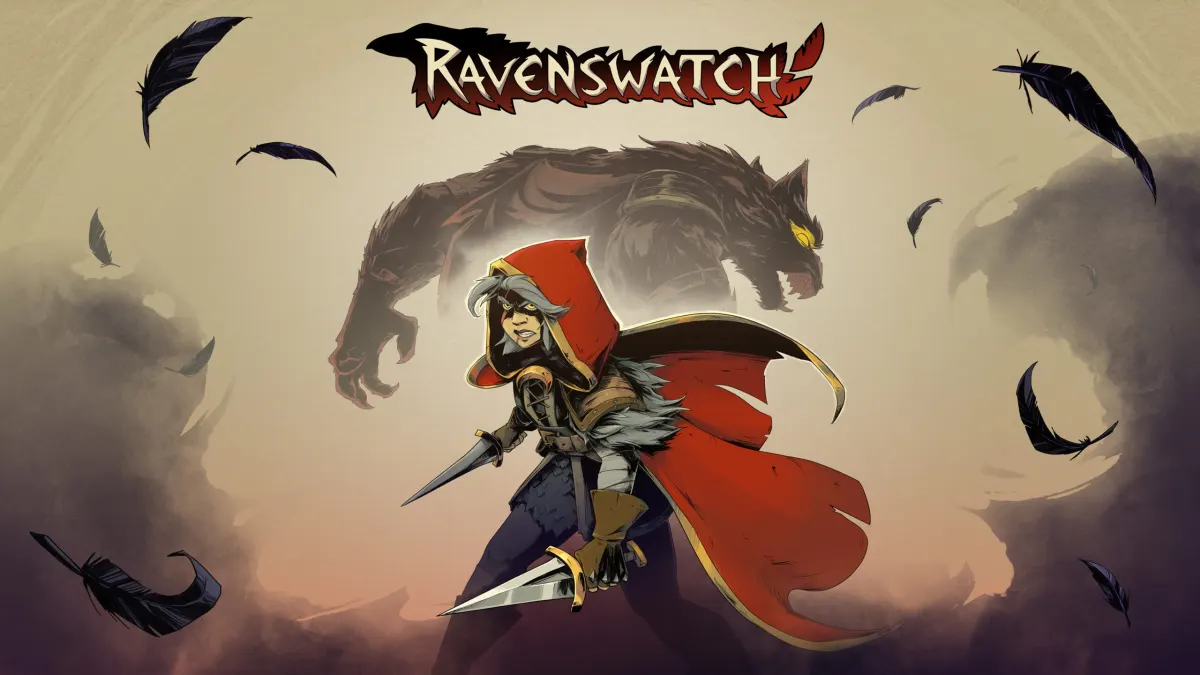
Fairytale characters and a roguelike that takes a dark turn
I have to mention that I struggled to stay away from this game until its release. The folks at Dead Good PR were kind enough to give us a review copy back in June. But you know my quirks: the game doesn't get a review until it's fully released. Fortunately, the official release came on 26 September. And since then, I've put in about 119 hours to get everything there is to get in the game.
Ravenswatch isn't Passtech's first rodeo with an action roguelike. They're the developers behind Curse of the Dead Gods, released in 2021. I didn't touch that one. But even so, I'm going to give you all the details you need for Ravenswatch. And then you can decide if it tickles your fancy or not.
Hold on, hold on. Is there a story and a narrative thread?
I dove into the game expecting a very gameplay-focused experience. It made sense, as one of the promoted aspects is the co-op roguelike element. Then I played the first run, levelled up with the first character, and the developers hit me with a story segment. And not just any story, but the voice behind my character started narrating.
And that's not the only surprise. Each character's story is presented in a way specific to them. For example, we have Beowulf and his adventures recounted in ballad verse. We have the mermaid Melusine, and her story is sung to us. Or the vampire Carmilla, her past narrated in the form of letters addressed to her long-lost lover.

The more you level each of them up, the more you'll learn about their troubled past and how events were altered to fit the Ravenswatch universe. And if you reach Rank 9 with a character and complete a game run on Darkness difficulty, you'll unlock the Epilogue for each. The latter offers a conclusion and allows them to make peace with their new story.
Right, right. I've been rambling about characters. What's the deal with them? In Ravenswatch, you play as one of the nine available heroes. Even if it's not mentioned in the game, we can arbitrarily divide them into two factions:
– Imaginary characters, which include:
- Scarlet, who is none other than Little Red Riding Hood. Well… a Little Red Riding Hood cursed to become a werewolf at night.
- The Pied Piper, a musician from the eponymous fairytale who can control rats.
- The Ice Queen, Hans Christian Andersen's famous protagonist. Don't shake her hand if you want to keep your m-
- Aladdin, the well-known thief from One Thousand and One Nights.
- Geppetto, Pinocchio's dad. Only this time he can create an army of wooden puppets.
- Carmilla, one of the first representations of vampires in literature. She was created by the Irish writer Sheridan Le Fanu in 1872.
Legendary heroes:
- Beowulf, the Germanic warrior.
- Melusine, a water spirit in many European folklore tales. In this game, she appears as a mermaid.
- Sun Wukong, none other than the Monkey King himself, the Stone Monkey, Equal to Heaven… You get the idea.

What brings them together in the land of Reverie? They are inhabitants of this fictional kingdom who have fallen prey to Nightmares. Some have lost their powers because of this. Some have been cursed. Some are driven by the desire to save their own kingdom. What is certain? That each has been traumatised in one way or another by the invasion of Nightmares. That's why they joined Ravenswatch, the organisation tasked with putting an end to the situation.
Your group will venture through three regions to defeat the Master Nightmare that corrupted them. I'll tell you more about these regions later. For now, I'll mention that other fairytale characters will also come to your aid.
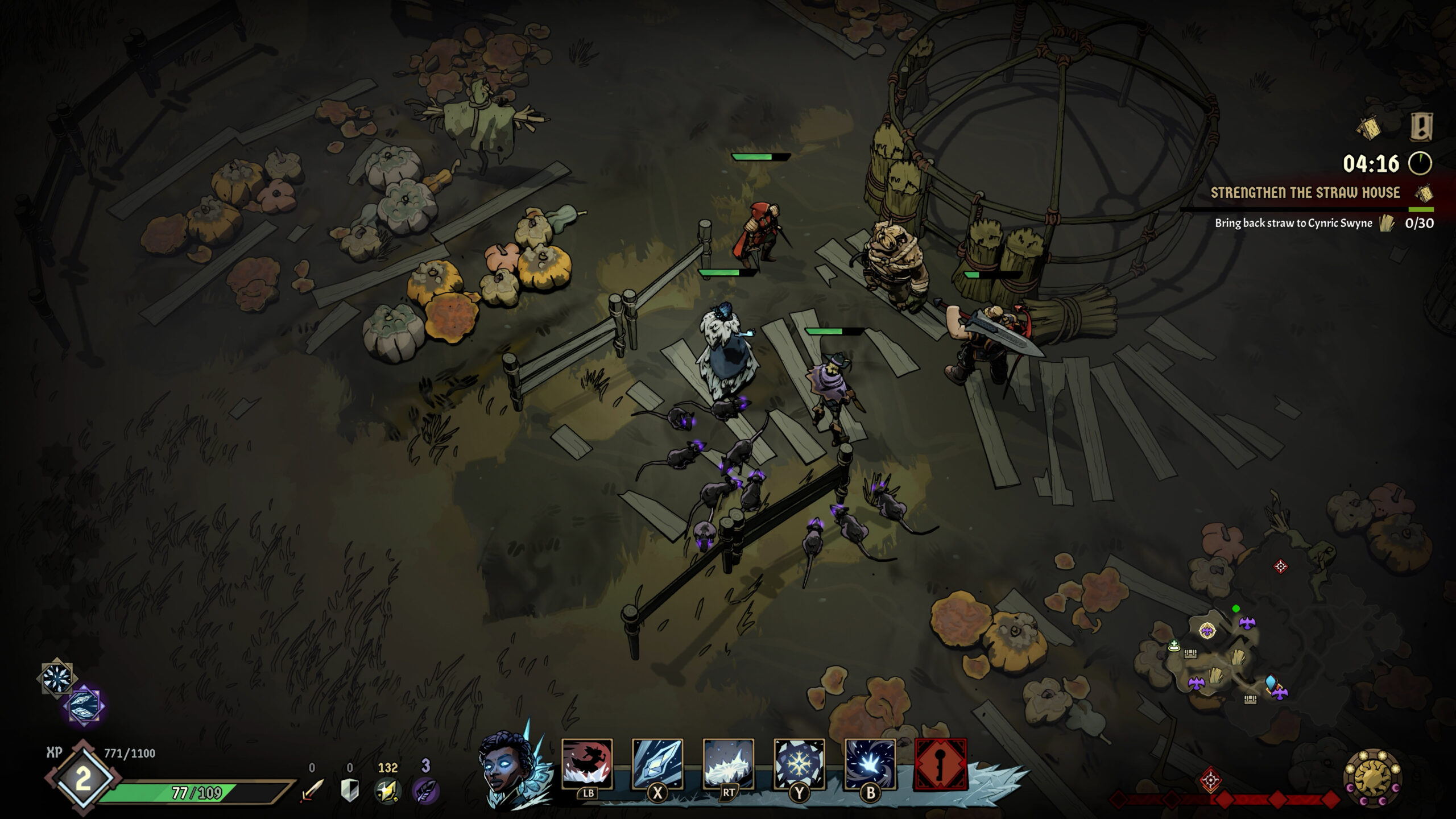
In the first region, you'll meet one of the three little pigs. He'll ask you to gather enough materials to fortify his house before it's invaded. Once you do that, you'll have to defend the house from attack to be rewarded. Succeed and you'll receive a legendary item. Fail and the pig will end up as kebab meat.
In the second region, you'll meet Sinbad the Sailor. He and his crew met a cyclops and stayed for dinner. Well… they are dinner. The cyclops will continue to eat them one by one while fighting you. Kill him quickly and Sinbad will be a good boy to you. Otherwise, you can forget Sinbad was ever around.
In the third region, you'll encounter Morgan Le Fay, the sorceress from the legend of King Arthur. She's desperate to find someone to kill the now-possessed king to save the kingdom. Save the kingdom, and the damsel in distress will take care of you. Don't save it and… congratulations. You're officially a monster who let an entire kingdom burn to the ground.
I want to commend the people at Passtech for introducing interactions between group members. You can frequently hear them making fun of each other, encouraging each other, and even flirting. The only problem is that they only have two or three such conversations. They become repetitive quickly after you've heard them a few times.
Overall, the narrative part is much more developed than I expected. And we can expect new heroes to appear in the near future.
Is this what Hades would look like if it were co-op?

Let's move on to the meatier part: the gameplay. You can choose to embark on an adventure on your own to free Reverie from the forces of evil. Or you can join up with four other players to help you. What's the benefit of choosing one option over the other? Well, there are a few things to consider:
- Enemy damage and HP differ depending on the number of party members. The more of you there are, the harder they'll hit. And the harder it will be to take them down. Plus, the difficulty doesn't change if someone leaves the team. For example, let's say there are already four of you. And one decides to leave. The difficulty doesn't adjust for three players. I'd say it's more or less an oversight on the developers' part. And an easy way to solve the problem would be to adjust the difficulty when the team reaches another region.
- Resurrection works differently. You have Raven Feathers at your disposal that can bring you back to life. These are limited and decrease in quantity depending on the difficulty you're playing on. If you play solo, they're your only salvation. If you play with a group, they can revive you without using Raven Feathers. This means you can save them for critical situations where they can't reach you to get you back on your feet. But beware: the more often you die, the shorter the time you can be revived becomes. So you know… don't die or something.
- Character synergies. You don't get much teamwork when you're on your own. But if you decide to hit the road with other people, then you can choose ability upgrades that go well with their heroes. For example, the Pied Piper has an area effect that makes enemies vulnerable. But you can choose an upgrade that freezes them, which helps the Ice Queen explode them.
- Reconnaissance. If you play with a team, you can afford to send a scout to see the surrounding objectives and which ones are worth visiting. Obviously, this aspect falls away when you're on your own.
- Coordination is vital. I encourage you to gather on Discord and communicate live with the rest of the team. I tried playing without alongside people and it's terrible. Their ping system feels rudimentary and you can only signal a point on the map. That's it. I hope they'll work on it for the sake of people who want to play in a team, but without live chat.

The way game sessions unfold will be familiar to roguelike enthusiasts. You spawn in base. You have to discover objectives on the map. Get rid of the enemies guarding them. Use the goodies they were guarding to become stronger. Kick the big bad monster's arse at the end of the chapter. And all this while being timed. You'll be automatically transported to the final battle of each chapter when time runs out.
I've already talked about the side missions offered by the fairytale characters, and how you receive legendary items as a reward for them.
In addition to these, you'll find Wishing Wells where you can buy items that give you permanent bonuses. Healing Fountains where you recover all health points and get +10 Vitality. Vision Towers that give you XP and reveal other points of interest on the map. Dream Crystals that you can smash to get in-game coins. Chests that give you magical items. Nightmare Tumours that throw you into battles with three stages – if you win, the boss at the end of the stage will have 20% less HP. Grimoires that make you fight a large group of enemies – if you defeat them in time, you get a permanent bonus for one of your attributes. Optional bosses that you can punch if you find the access key to them on the map – if you are victorious, you can choose from three cursed magical items. And last but not least, the Altar of Heroes where you can revive allies who have truly died, buy another Raven Feather per chapter, or buy XP.

All objectives are coloured differently on the map, depending on difficulty. Green ones are the easiest, followed by yellow and red. Obviously, the higher the difficulty, the greater the reward.
Does it sound like there are too many objectives and too much running around? You're kind of right. Fortunately, the developers have included teleportation points on the map. You can find them near points of interest, so comrades can access rewards and join the group. They are also randomly distributed along the roads. There are enough of them so you don't feel like you're playing a walking simulator. My only problem with the teleportation points is that it's not explained how to use them. You have to figure it out yourself.
The game quickly teaches you that you should prioritise fights within objectives, not to pick on all the lost enemies along the way. It will come quite naturally, as you can't waste unnecessary time. In what order should you approach the points of interest? I won't spoil the surprise and I'll let you figure it out yourself.
If we're talking about characters and playstyles, "flexibility" is the keyword. But you'll have to work a bit to get it. Why do I say that? Because not all heroes are created equal from the start. For example, you have characters like Wukong who already have a pretty solid aggressive kit at the beginning. But you'll also find ones like Geppetto, who feel extremely weak at first. But as I said, things will change. You unlock new talents as heroes level up, with 9 being the final rank. This makes already powerful characters even more powerful. But it also gives mediocre characters a chance to become playable.

I mentioned flexibility because you're not restricted to equipping your hero in a certain way. Rather, what you do is dictated by the talents you receive. I mentioned Wukong and his aggressive style. But that's not the only way you can play him. You can just as well focus on making him a master of defence. Or there are characters like Melusine, who focuses on healing and support at the start. But you can just as well equip her to deal massive damage.
You can choose a new talent each time you reach a new level within a game session. They vary in rarity from Common, to Rare, Epic, and Legendary. And they modify how abilities work. You can also upgrade them at a vendor for a fee.
What abilities do they upgrade exactly? Each character has a set of five abilities and an ultimate. The first has a more functional aspect. For example, Aladdin can make wishes that restore allies' HP, give them an attack boost, or throw items and money at them. Wukong can switch between an offensive stance – doubling damage dealt and taken – and a defensive one – dealing less damage but having lifesteal. And the list goes on.
The second is the main attack. It differs in attack range between melee, medium range, and long range for each character. And even this can be modified by the talents you can choose.
The third is called Power and hits enemies the hardest.
The fourth is called Special and essentially complements the playstyle of the character you control.
And the fifth and final one is Defence. The name is simple to understand – it protects you. For most characters, it comes in the form of a dodge. But there are also heroes like Beowulf who raise their shield to negate enemy blows. Or Geppetto, who applies a shield to himself and his wooden puppets.

There's also the Dash option. But you can't use it infinitely like in games such as Hades. It also has a timer. You'll see an arrow next to the HP bar that fills up when you can use the Dash again. An improvement could be to add a sound effect as well.
You'll continue to collect talents for your abilities up to level 10. After that, you'll only receive more vitality points.
And here's the interesting part. Don't like the talents you've received? The items you've obtained from objectives? Or the bonuses you've received for attributes? Then you can try your luck and reroll another set of choices. You have three such chances initially, and the possibility of finding more as rewards.
And if you have a lot of questions about how your abilities work, but you don't have enough time to check them during game rounds, you have a dedicated page where you can consult them, as well as what ability upgrades you've unlocked. Plus a separate page with all the items you can collect. This should help you plan your rounds and how you want to approach them.

What would a roguelike be without a shady vendor, right? In Ravenswatch's case, it's the Sandman, who will greet you inside the base. He'll offer you access to a lot of tools in exchange for Dream Shards – the in-game currency. You can increase the rarity of effects and, implicitly, how potent they are. Buy items of different rarities. Copy the ones you already have. Get attack, defensive, or health bonuses. Or even reroll the entire set of talents if you don't like them. Just be careful that you can only buy six such options, not all of them.
A clever aspect is also the fact that you can test your abilities before starting a game session. You can do this in the area where the Sandman is located. You'll also notice a sandstorm effect surrounding the space. This is important, because if you step outside the area, the timer will start until you fight that area's Master Nightmare.
Enemies are mostly balanced, with very few exceptions. And you can always tell if you're under-levelled based on the colour of the objective where they are. What's even cooler is the way they've used the day-night cycle to modify them. For example, you have infected boars that explode during the day. Treants that summon spiders when defeated at night. Or gargoyles that are stone during the day – if you smash them in time, you'll get coins. It's a creative way to keep the fights fresh.

I won't complain about the variety of enemies either. The developers had the entire universe of fairytales at their disposal after all, and they knew how to use it.
What bothered me when it comes to combat is related to the giant boars. They have the ability to throw a hook at you. And sometimes it will hit you even if you're out of the area or completely off target.
You can go wild with four difficulty modes:
- Adventure – the basic and easier one;
- Twilight – you unlock it after winning a round on Adventure mode. You'll encounter infected enemies, who are stronger than the standard variants. And Master Nightmares will be more powerful.
- Darkness – you get less healing after defeating monsters. And Master Nightmares will be even harder to kill.
- Nightmare – for all you masochistic friends. Every enemy becomes as dangerous as a bear that's consumed some substances.
If you play in a certain way, you'll have the opportunity to unlock certain costumes for heroes. Each character can choose a Quest as their first talent. And if you meet the requirements, you'll unlock a costume. If you reach the third chapter of the story, you'll unlock another. And if you finish a game run on Darkness mode, you'll get another. Last but not least, you can unlock secret costumes if you meet some hidden requirements. I advise you to look for guides on Steam or ask people on Discord if you want to find out what these requirements are.
And that's not all about changing the way you play. The game also includes a Challenges system. This means you can modify different aspects to make your life easier or harder. There are now five such challenges and they are actually fun. You can also get an achievement if you complete them all on Darkness mode. My friendly advice is to be careful with Adrenaline and Untouchable. It took me a long time to beat them, and they're not very fun for casual players. Don't say I didn't warn you.

And depending on how sadistic or traumatised you've been by the game, you can modify the bonuses and restrictions during runs using Custom Mode.
I have to mention that I was disconnected quite frequently when I tried to find other people to play with. The problem didn't persist much when I played with an already established group on Discord, but it didn't disappear completely. I don't think you want something like that in a game that wants to highlight the co-op aspect.
There are also no penalties for people who voluntarily disconnect. And this can become problematic extremely quickly, as people can leave the group whenever they feel like it. It will simply leave the remaining members to play on a difficulty that is not adjusted for them.
The interface makes it difficult to track how much XP you need for the next rank. Yes, you have access to a progress bar on each character's page. But you can only see the specific numbers and how much experience you need at the end of a session. They just need to add this detail to the heroes' page.
The gameplay is generally fun and optimised. They could eventually work on the UI for the controller, as it feels clunkier compared to the mouse and keyboard. It's harder to reach the pages you need using a controller. However, the in-game experience is much better. Who knows? Maybe I should just use a mix of the two. But not everyone has a controller when playing on PC.
Fluid and sombre design. Music that reminds you of The Witcher 3
The people at Passtech succeeded in capturing a dark and morbid world dominated by nightmares. It's a world painted in multiple shades of grey. And it's our heroes' job to restore its colour. Even if they do indeed bring a splash of colour, they don't feel out of place thanks to a balance of contrast and colours. Their models and those of the enemies aren't very detailed. But I expected this from a game that relies on watercolour-like colours. It doesn't mean that details are completely missing. Rather, they are kept to a minimum, so you can tell who's who.
You can change the way heroes look with the different costumes I mentioned. These can be unlocked or purchased. But I don't think many of them look good. Maybe one, or at most two, per character look decent. I even decided to wear certain costumes that were easier to unlock because they looked better.

A minor, but important, detail is that each hero has a unique design for their ability bar. Sometimes it's not noticeable, but I appreciate the attention to detail. They even went so far as to add two different styles for Wukong, depending on the stance he has activated.
As I mentioned earlier, we're not lacking in enemy variety either. Each chapter has its own unique inhabitants who want to do you in. Each point of interest is guarded by different factions, as if each ruled a certain territory.
And the aspect that blew me away is the music. The medieval and Witcher-style tones fit the game world perfectly. It also helps to create a unique identity for each region. Dark Hills are bathed in violin sounds. Storm Island has an oriental atmosphere thanks to mandolins and tambourines. And Avalon combines a little of both, adding flute and drums. It's one of those games I could play for hours on end because of the music.
There are no problems with the voice actors behind the characters either. But yes, their lines start to repeat too frequently. I hope they'll add more interactions as the game grows. I feel like the actors have much more to offer than what we have so far.
Final Verdict

Ravenswatch is an optimised and polished co-op roguelike. I would have complained if this wasn't the case after a year and a half of Early Access development. It maximises the potential of stories and legends in creating its own universe and levels. The addition of story parts narrated, read, or sung by each character is an aspect I loved.
Combat is fluid, flexible, and invites you to find the style that suits each hero. The only problem is that some characters have much better abilities from the start, and others have to work to catch up. We have a variety of monsters and they don't need much adjustment. The maps are easy to navigate. It's fun and satisfying to clear each objective. Boss fights are on a knife-edge. And you can customise your own adventure and make it more difficult or easier.
Last but not least, the art and music bring Reverie to life.
There are few aspects that need improvement. The first and most important should be connection issues, as the game was built specifically for co-op. For the same reason, they should adjust the difficulty when other players leave the session, as well as ways to penalise those who abandon groups frequently and without good reason. Other than that, it needs a few more Quality of Life adjustments and to add more interactions between characters.
I forgot to mention that one of the side missions offered by the three little pigs is significantly more difficult for no reason. This happens because that house is attacked from all directions, while the other two have fewer directions from which enemies can come. Just ask people what they think about the straw house and you'll understand what I'm talking about here.
From me, the game gets a solid 9/10. And I can tell you that my hands were itching to play every time I sat down to write this review. That's how good it is in terms of replayability. Probably also the reason I have 119 hours in the game.
The PC price is justified, considering the experience it offers. Normally you can buy it for €25. And so far it has been reduced to €20 for every relevant Steam Sale. Again, both prices are worth it. It just depends on how impatient you are.
They've announced a roadmap with many more heroes, enemies, and other types of content planned for the near future. They also launched cross-platform at the end of November. So even more reasons to play with friends on Xbox and PlayStation. Happy hacking and hanging Nightmares!

Played on: PC
Release date: 6 April 2023 (PC) and 28 November 2024 (Consoles)
Developer: Passtech Games
Publisher: Nacon

0 votes
Scroll down here and stay on the page for at least 30 seconds to vote.
Pick a score from 0 to 10 (halves are allowed).