
Silent Hill: The Short Message – Review
In my restless dreams, I see that game.
Every person has their own emotional baggage. Scars, sorrows, fears that hold us back and that we must face sooner or later. The longer we spend with them, the harder it becomes to resolve them and to develop healthy, normal relationships with those around us. But what happens when our own demons take shape and cross the threshold from our psyche into reality?
This is the central theme of the Silent Hill series, starting with the second game. Together with Resident Evil, these two legendary series redefined the horror genre of the '90s. Both were initially released on the first PlayStation and impressed and shocked us with the degree of realism they managed to achieve through the rendering specific to those times. Both Silent Hill and Resident Evil laid the foundations of the current genre and influenced many titles that have been released to date.

In the first Silent Hill game, the protagonist is Harry Mason, a father searching for his daughter in the eponymous town and ending up confronting a sinister cult and infernal creatures to save her. The technical aspect that amazed both critics and players was the size of the town and the fact that it could be traversed without the need for a classic loading screen. The team behind the game found an ingenious solution to the limited rendering memory of the first PlayStation and masked the distant technical aspects with a dense fog. This meteorological phenomenon became synonymous with the series and a meme in itself, and today many think of Silent Hill when they see dense fog similar to that in the game.
The second game in the series departed from its occult origins, and this time we meet James Sunderland, a man who comes to an abandoned town to look for his wife. The protagonist does this because he received a recently dated letter from her, saying she was waiting for him in Silent Hill, even though she had died 3 years prior. The town becomes James' purgatory, and he must confront his traumas, shortcomings, and suppressed memories in the place where they come to life, and we as players can choose between the redemption of his sins and the regaining of a clear conscience, or pushing him into the dark abyss of his mind.
From Harry in 2001 to the unnamed protagonist in P.T. in 2014, each game tackled different stories, but which nevertheless resembled Harry's. Each hero carried emotional baggage resulting from a dark past, and through a complex series of actions we take in each game, we could help or condemn them. To give an example of this series of actions for a single game: in Silent Hill 3, Heather must kill fewer than 100 enemies, suffer as little trauma as possible, and say nothing during confession (even though it would seem logical to tell the parishioner she forgives him) to get the standard ending.
In 2014, Silent Hill continued in the form of P.T. (Playable Teaser) – a demo for Hideo Kojima's project, in partnership with Norman Reedus and renowned horror director Guillermo del Toro. The game offered a first-person perspective and the story sparked much interest and many nightmares, due to the atmosphere, the situations presented, and the "ghost" Lisa who hunted the player trapped in a time loop. The project did not materialise, due to the deteriorating relationship between Kojima-san and Konami (the franchise owners), and many fans lost the last shred of hope they had for a remake or a new Silent Hill game. However, on 31 January 2024, 10 years after the release of P.T., Konami invited us to return to the dark world of Silent Hill.

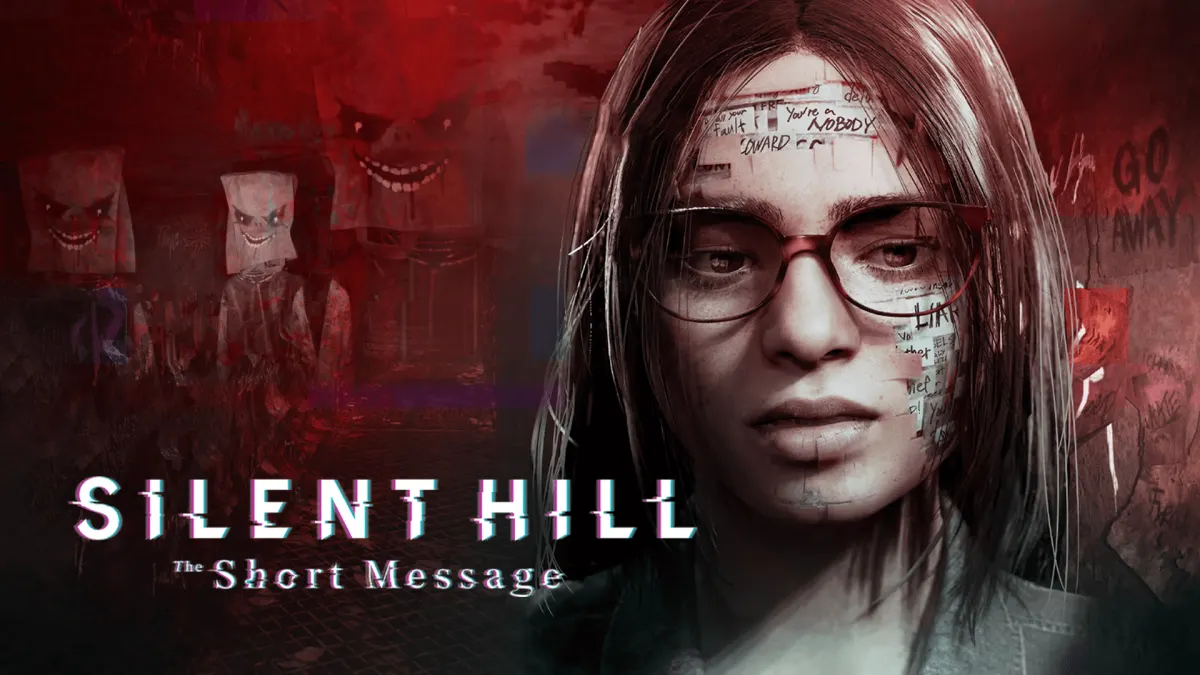
Silent Hill: The Short Message is a first-person title in which the player takes on the role of Anita, an approximately 18-year-old girl from Germany, who is looking for her friend in an abandoned place with a sinister reputation. In the block in Kettenstadt, she will confront visions from her past and the result of her actions while searching for Maya. Given that the game is approximately 2-3 hours long, I will broadly discuss the story and the themes it addresses. The story in Silent Hill: The Short Message has potential for a good game, and the novelty that attracted me and many others is the fact that the action no longer takes place in the small town in the United States of America, but in Germany. The story does its best to address current themes such as mental health, social media platforms and their impact on young people who have grown up immersed in the digital environment, the phenomenon of self-harm, and the difficulties faced by girls in this modern society.
The premise is as follows: after receiving a message on her phone, Anita goes to the Villa (the local name for a block of flats in Kettenstadt) to look for Maya, her graffiti artist friend. Throughout the story, Anita goes through different states and experiences, from the current present shrouded in depression and self-mutilation to childhood traumas caused by her relationship with her parents. With each step Anita takes closer to Maya and the source of the trauma from which everything originated, she sinks deeper into her own purgatory, hoping for redemption and acceptance of her shortcomings and imperfections.


The game is divided into 3 chapters, and the story is circular. At the end of each chapter, Anita jumps off the building, ending her suffering, but wakes up in the same room in the block. The first chapter addresses themes of depression, anxiety caused by social media platforms, self-harm, and the constant need for validation from the digital environment by young people, validation that creates addiction. This lack of validation, or in some cases criticism, leads to a decrease in self-esteem and the definition of the person by reference to their digital persona, and Anita has no other way to relate to reality than through the prism of the digital and her Twitter account. Anita struggles with her shortcomings by constantly comparing herself to Maya, whom she considers talented and fulfilled as a person due to the large number of followers she has on the social media platform.
The second chapter addresses the theme of bullying, both in its classic and digital forms, along with the problem of jealousy between friends and separation anxiety. If in the first chapter Anita constantly fights with her own image, in the second chapter she must confront her past and the role she played in Maya's life. The third chapter addresses the Freudian theory of childhood traumas that define us as adults. I will not give too many details about this in order not to spoil the surprises prepared by Konami.

The big problem with the game is that the story starts several narrative threads and tries to address current themes, but fails to do so adequately. Depression is mentioned more as a literary device, used to inform us that the main character suffers from this illness and is no longer taking her medication, and self-harm is shown only once, without specifying the cause for Anita's destructive practice. Each theme addressed, each narrative thread is superficially explored, and the presentation of the message regarding phone numbers for people seeking support is not an adequate way to discuss the problem. If in previous games the developers chose one or at most two themes to focus on, through which we got to know the main character both directly (through the different story scenes in the game) and indirectly (through actions, environmental details, and relationships with other characters in the game), in The Short Message, the developers chose to tell and repeat everything to us, instead of showing us and letting us draw our own conclusions. If I were to replay it, the story would not have another meaning through the surprise in the last chapter; the information I have at the moment does not shed new light on the story.


In terms of atmosphere and appearance, the game's developers managed to create a dark location that evokes claustrophobia. The atmosphere in the first chapter is perfect because the building is dilapidated but seems inhabited by homeless people or used as a gathering place by gangs of unruly youths. The darkness is oppressive, and Anita cannot see more than a few metres ahead without the help of her phone's flashlight. From the second chapter onwards, however, the atmosphere is no longer as oppressive, and this is due to the multiple light sources that appear and the sterile colours used. The last chapter completely lost its horror atmosphere due to a strong contrast between the colours used. To get through the third chapter, I had to make my room dark and sit very close to the TV. These uninspired choices make the game lose its charm, and in combination with the mechanisms chosen by the developers, it becomes frustrating.
I am not simplifying anything when I characterise the game as a walking simulator. This is the central mechanism of the game: walking from point A to point B, occasionally avoiding some mysterious apparitions that hunt us. Anita walks from one of Maya's studios to another and looks at her graffiti while recalling the various interactions she had with Maya. These memories are presented to us through footage with actors and not through scenes rendered in the game's engine. After each memory, we have to find a journal, a document, or the next graffiti and respond to Maya's messages, and each time the main character has to face reality, she is transported to purgatory, where she must find escape from the rusty labyrinth, while being hunted by an apparition that combines Western paganism with Eastern symbolism. I fully understand that these sections of the dark world are meant to evoke Daedalus' Labyrinth, and the escape to represent Izanagi's flight from Yomi, but the way it was planned shows that it does not follow a certain logic. After the 5th death, it is no longer fun or scary, just frustrating. The phone is used both as a light source and for communication, as well as a radar for locating the entity, thus replacing the radio from older Silent Hill titles.
Speaking of sound design, Konami chose to use the full power of the PS5 to bring the world of Silent Hill: The Short Message to life. Whether we have a pair of headphones, a Soundbar, or even a Home Cinema system connected, the console will make the optimal settings to create volumetric sound that helps us locate the source of all noises in the game. To create suspense, the PS5 controller will emit interference sounds the closer the mysterious apparition gets to us.


Since I mentioned this apparition, the design was conceived by Masahiro Ito, the artist who also created Red Pyramid Thing (known by fans as Pyramid Head). The style of the apparition is apparent in the creature's appearance, which seems more like a person trapped in a torture mechanism than a monster. Cherry blossoms are a recurring motif in the game, from Maya's art to the apparition's design, and these seem to be a reference to a future project, most likely Silent Hill f – the game that will take place in 1960s Japan. The references to the witch of the Far East, the joint reconstruction efforts with the Land of the Rising Sun in Germany, and the decay that Maya mentions are all indications of a future project that will probably retroactively link to Silent Hill: The Short Message.
In conclusion, Silent Hill: The Short Message is a short experience, lasting a few hours, that fails to live up to the expectations created by other titles in the series. The game attempts to address heavy themes, but does so superficially and fails to complete the narrative threads it presents. As a first modern project in the Silent Hill series, the game is a disappointment for fans of the series and a creation that can be ignored by those who wish to enter this foggy purgatory.

Played on: PS5
Release date: 31 January 2024
Developer: Konami Digital Entertainment, Inc.
Publisher: Konami

0 votes
Scroll down here and stay on the page for at least 30 seconds to vote.
Pick a score from 0 to 10 (halves are allowed).