
Synergy – Review

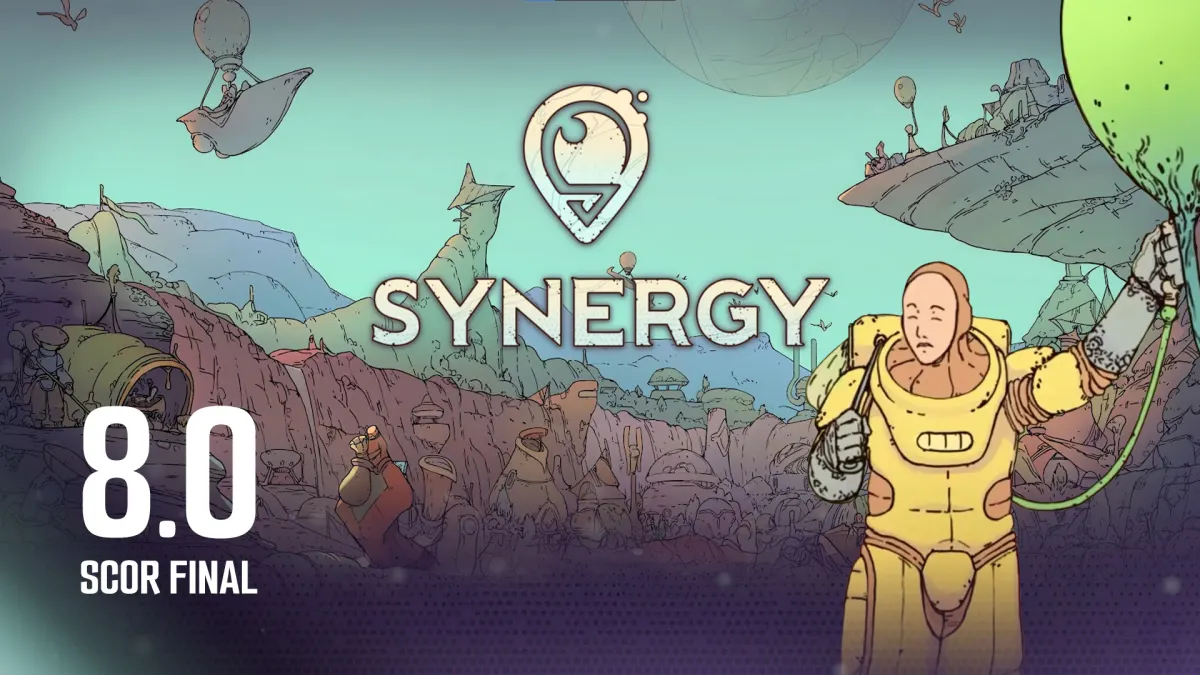
A sci-fi city builder that brings back the magic of classic strategy games, with an art style inspired by Mœbius – between nostalgia and innovation!
Like all nostalgics, many of us chase those beautiful childhood feelings. Well, some of my most pleasant childhood memories take me back in time, when I was with my folks, eyes glued to the screen of our home Pentium. I can still visualise my parents playing the city builders, TTSs, and RTSs of the time. City builders like those made by Impression Games, published by Sierra.
That's how, sometime around 1998, my parents got hold of a copy of Caesar III. An iconic game that took the Caesar series/trilogy to another standard: improved graphics, higher-fidelity sounds, a system with increased complexity, modern resolutions (at least for the time), and a soundtrack that remains imprinted in your memory to this day.
I devoured Impression's entire catalogue: from Caesar III, Pharaoh, Cleopatra, Zeus, Poseidon, all the way to Emperor, which, unfortunately, was their last title in the series.
Now, you might be wondering what's got into me and why I started with this intro that sounds like a retro review... Well, I started this way because Synergy reminded me of those titles.
These days, finding a new strategy game is a rarity, and, in itself, anyone who develops such games knows it's a niche. And that's something to be commended.
It's very clear to me that the people working on the game (Leikir Studio) do so out of passion and love for this genre, just like me, probably out of nostalgia and who knows what other crazy reasons.
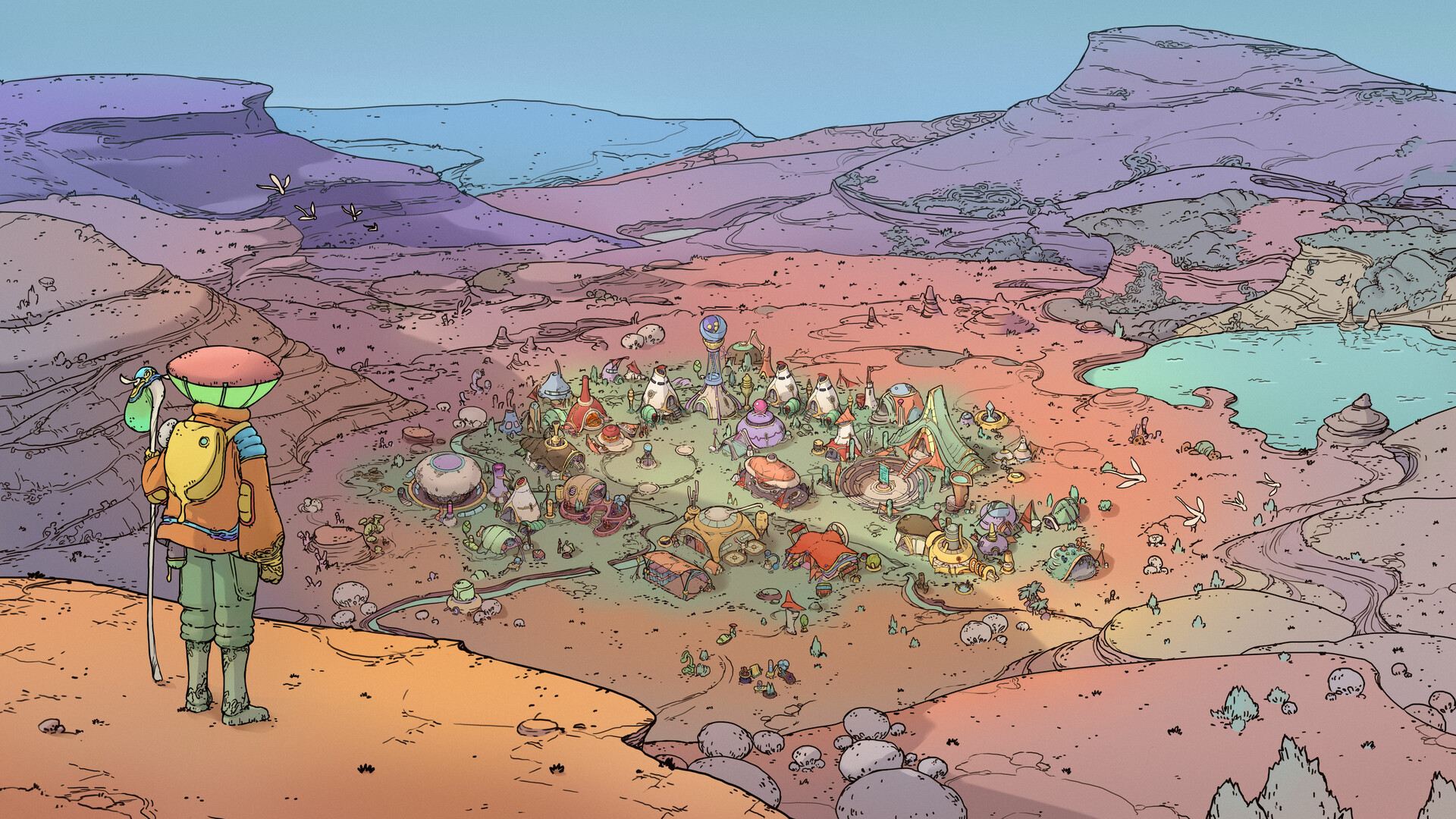
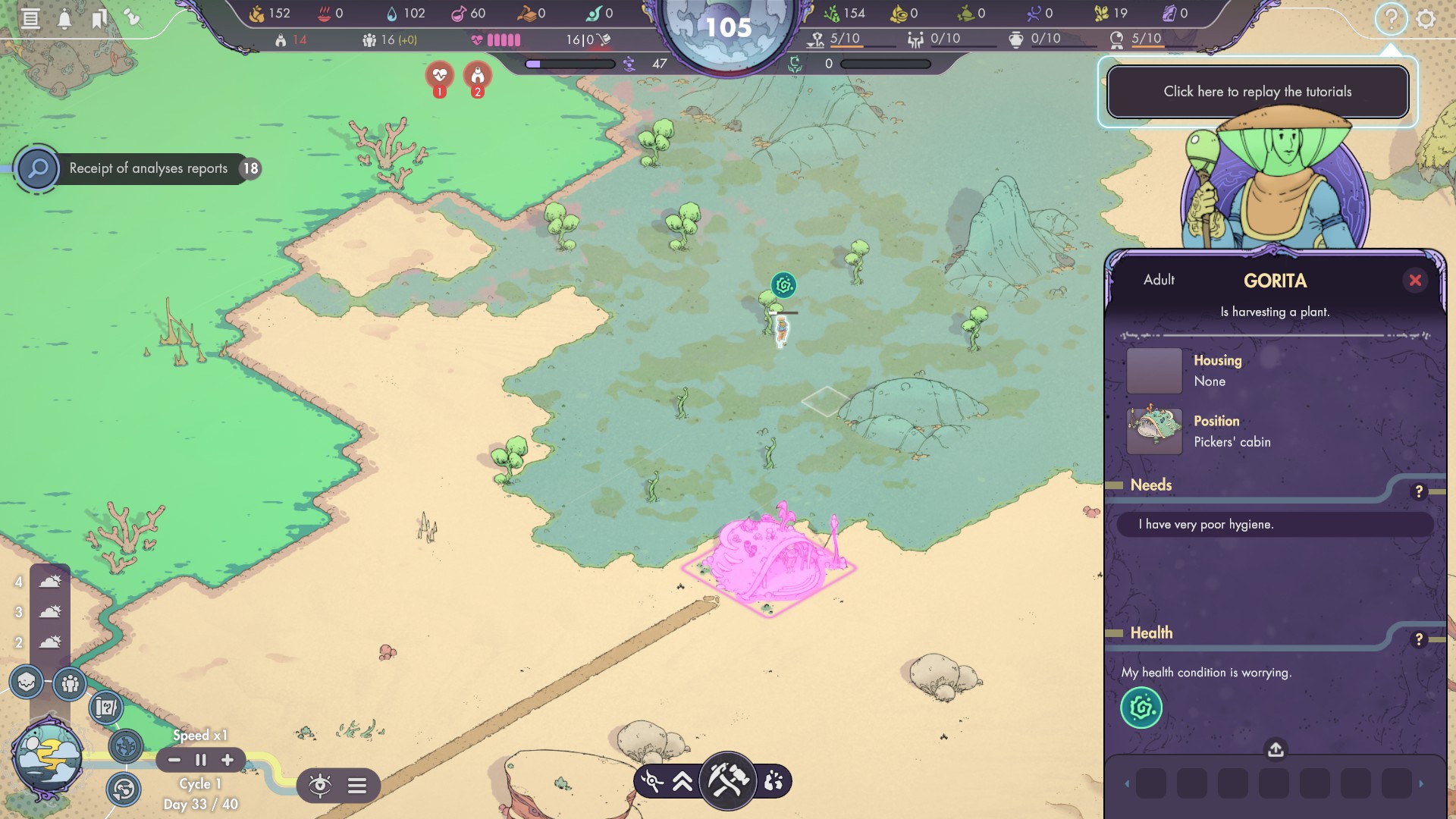
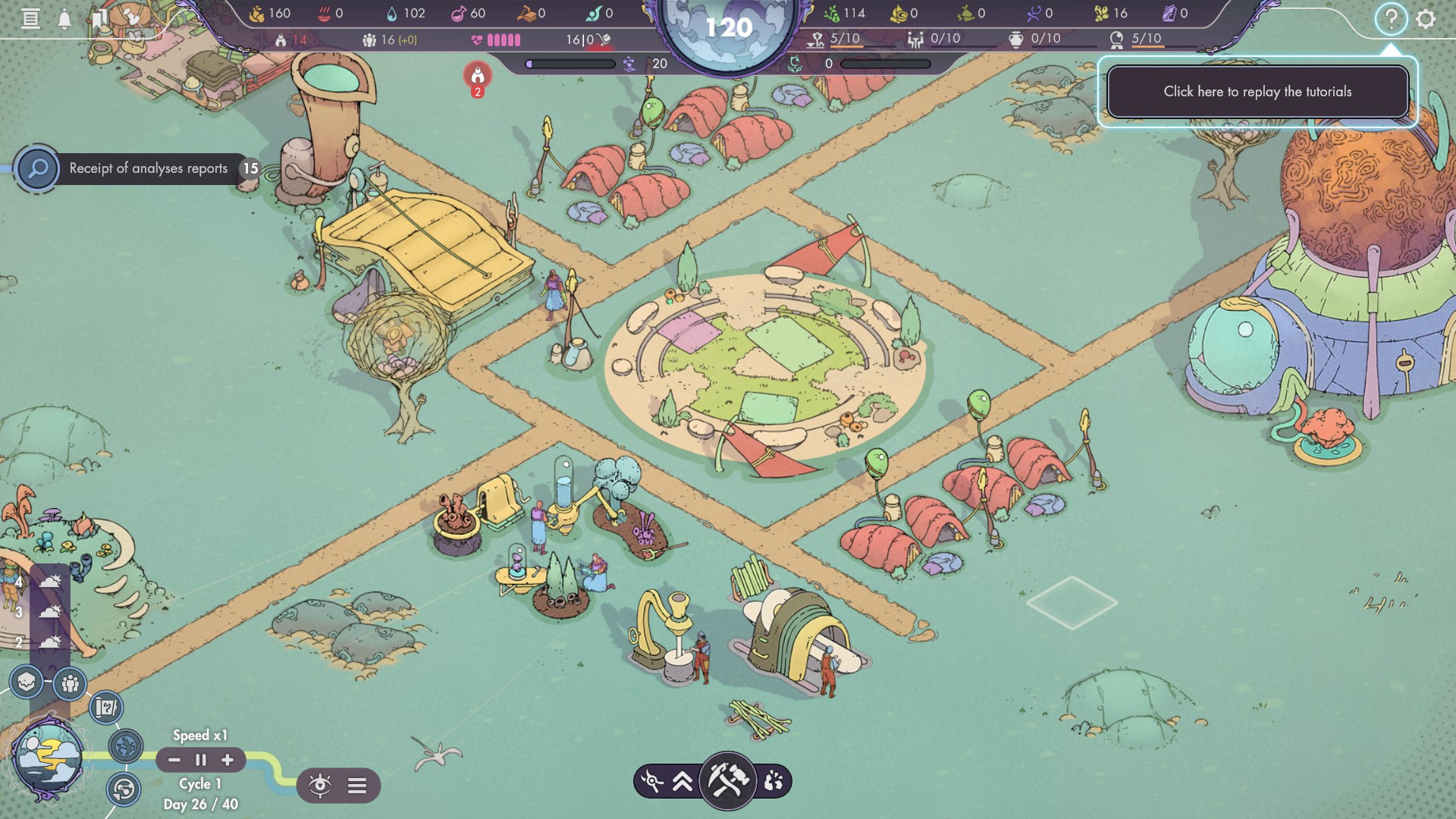
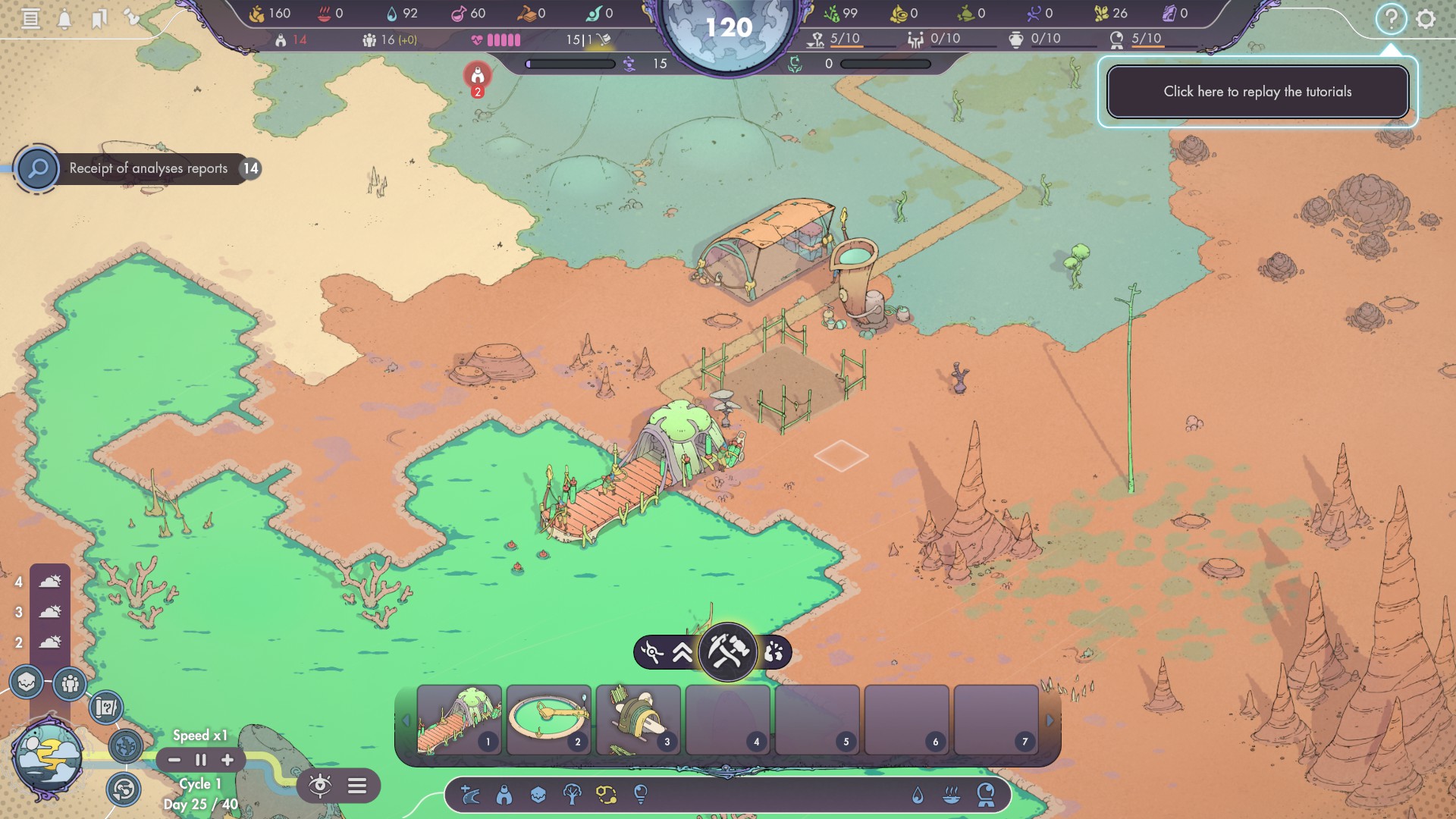
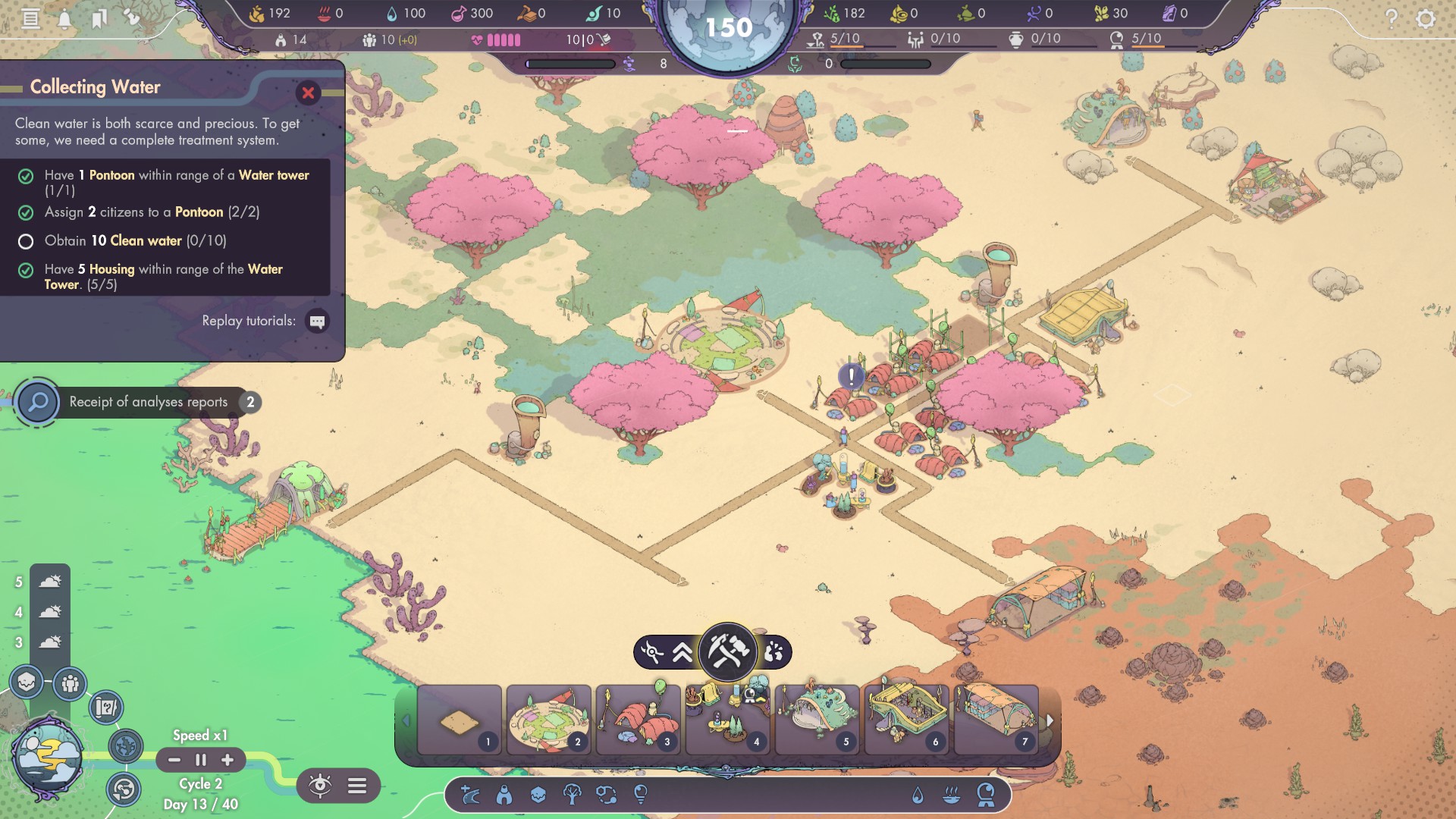
And yet, when you embark on such a project, you have to realise that there's an unwritten rule in the gaming industry. Basically, this rule says that any new game released on the market must come with something unique, something new, or at least something that makes it stand out from other titles in the same genre. Well, Synergy, from the very first minutes, hits you with a unique art style, combining vivid, almost psychedelic forms and colour palettes.
My first impression was that the art style resembled miniature drawings, those drawings you'd find in older French storybooks, like those featuring Antoine de Saint-Exupéry's The Little Prince. If you were lucky enough to find the originals in old bookshops, I think you know what I'm talking about.
Out of curiosity, I looked up some information about the artistic style used, as I'm generally curious about design techniques. It seems the game is inspired by the style of Jean Giraud, known as Moebius. I recommend you all look up his artwork too.
Returning to the game: the world presented is extraterrestrial in nature. Basically, where you start, you're tasked with taking care of a humanoid colony, with characters belonging to another civilisation, trying to survive on a desert planet. It reminds me a bit of the Fremen from Dune. Now, I don't know if that was also the source of inspiration for the game's creators, but, given the theme, it could be possible.
It's hard for me to describe whether the game offers you a civilisation in a sci-fi universe, in a distant future, where technology is very advanced, or if it simply presents a variant of medieval technology, but "alien" in a literal sense.
Although this civilisation becomes technologically advanced as you research, the main focus is on technologies in harmony with the nature of the unpopulated planet. That is, you don't get cars or who-knows-what spaceships — it's clear that the emphasis is on ecology.
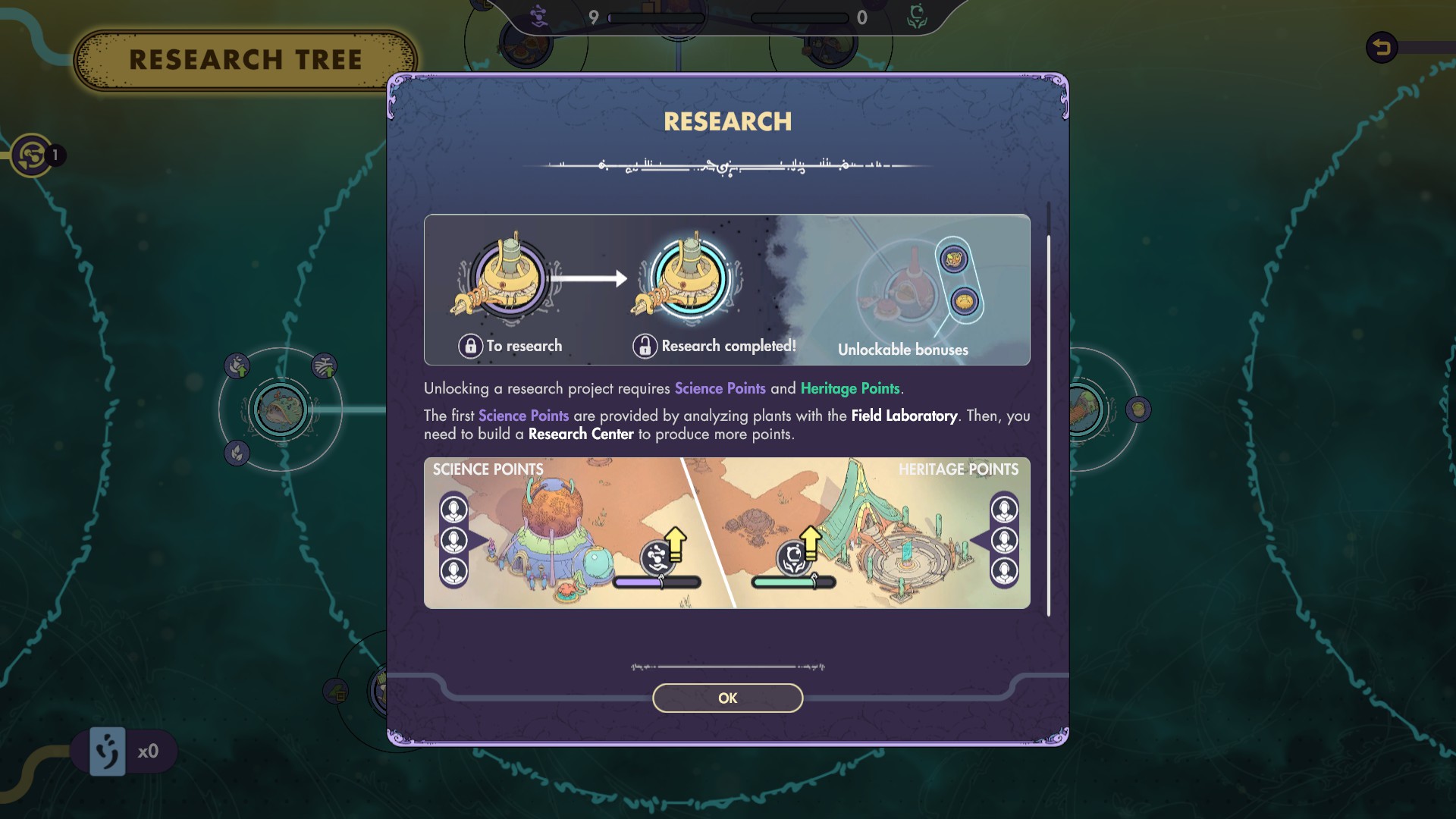
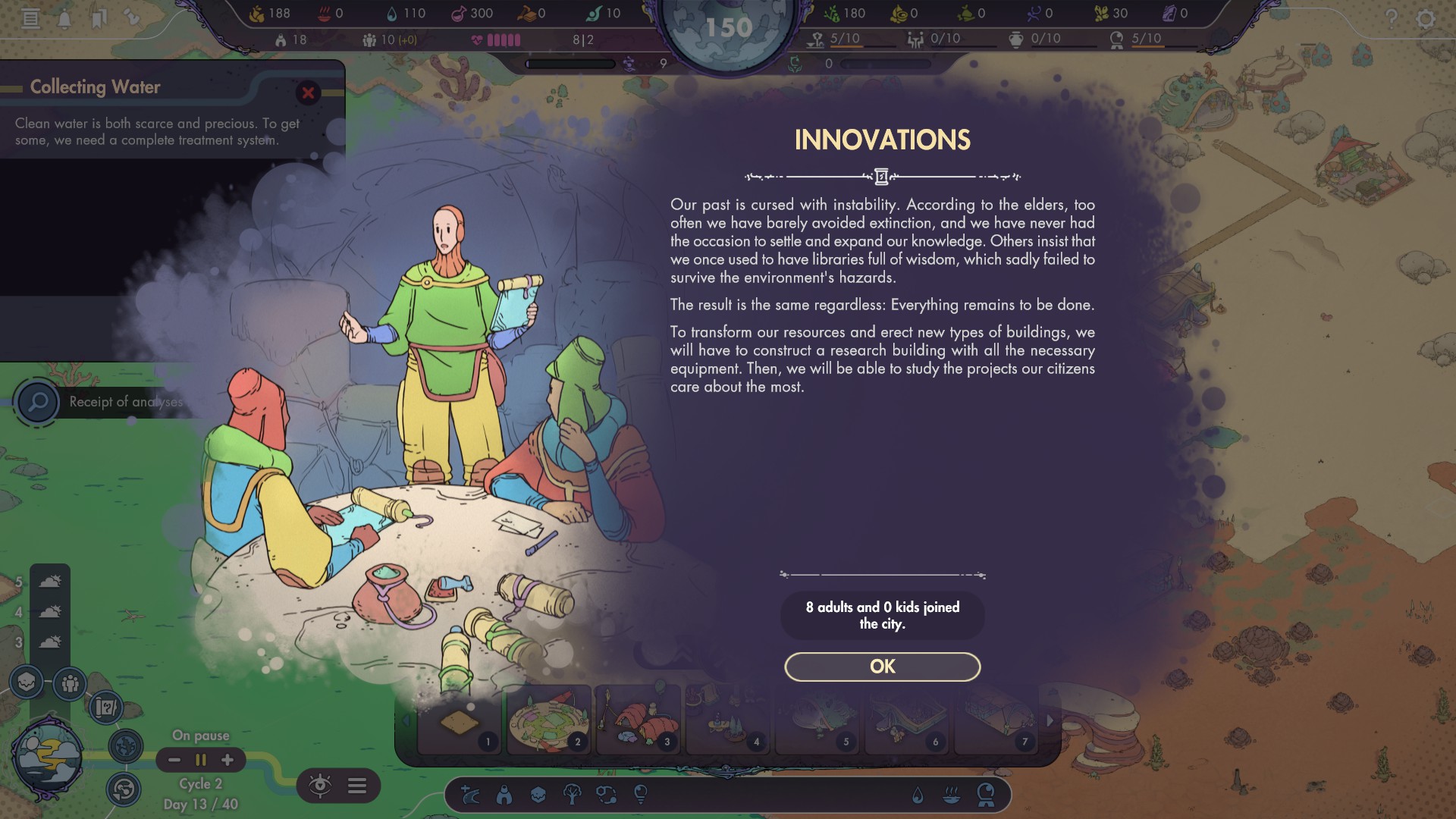
Game aesthetics aside, we have four game modes: the first is a very complex tutorial. I recommend you don't skip it, as the game presents quite complex mechanics. There are new mechanics for this genre that didn't exist in Caesar III, Pharaoh, etc.
I also recommend the tutorial because the building design can be confusing at first — most don't resemble standard Earth buildings from classic city builders, so it takes a while to familiarise yourself with them.
We have two story modes and a sandbox, where you can choose whether you want to play it more chill (Harmony Mode) or more simulator (Balance Mode), depending on your mood or the type of player you are.
Personally, I prefer to finish the tutorials and then start a sandbox, so I can familiarise myself with the game. I prefer to leave the campaigns for last, so I can enjoy them more easily. Sometimes it gets frustrating when the game nags you to build a certain structure to progress in the mission.
As I write this review, I can say that I've played a good few hours, enough to draw some conclusions — both good, and, shall we say... less good.
What I would have liked to see implemented in the game
– The RipOut system should also be automated, as it can be confusing and you forget to click on resources. Normally, in old games, resources were collected by specialised buildings. I only understood after a few sessions that RipOut gives you the ability to collect resources without a specific building, but it doesn't seem to connect well with the rest of the game – it feels like an extra action just to have a new option in the menu.
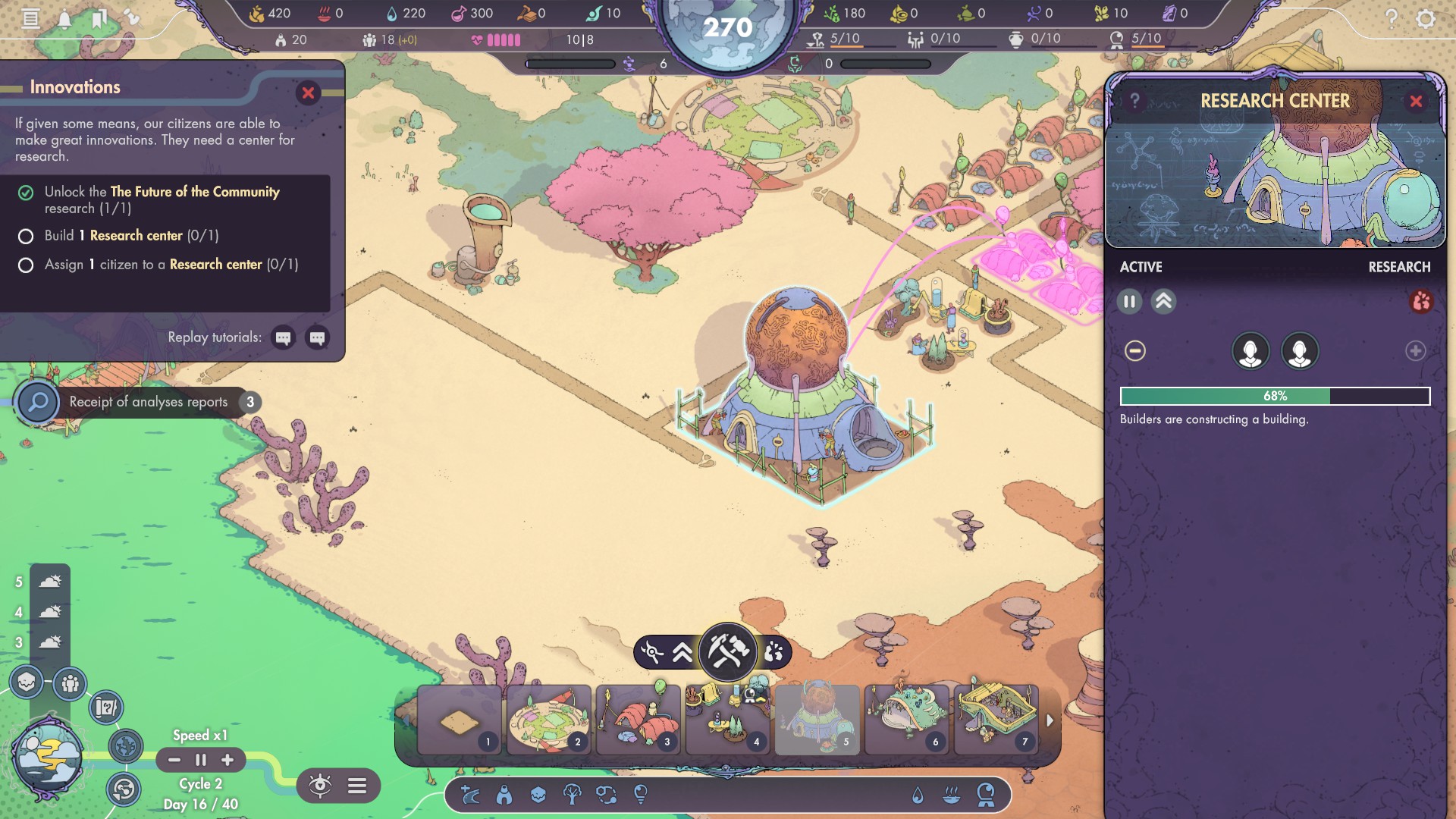
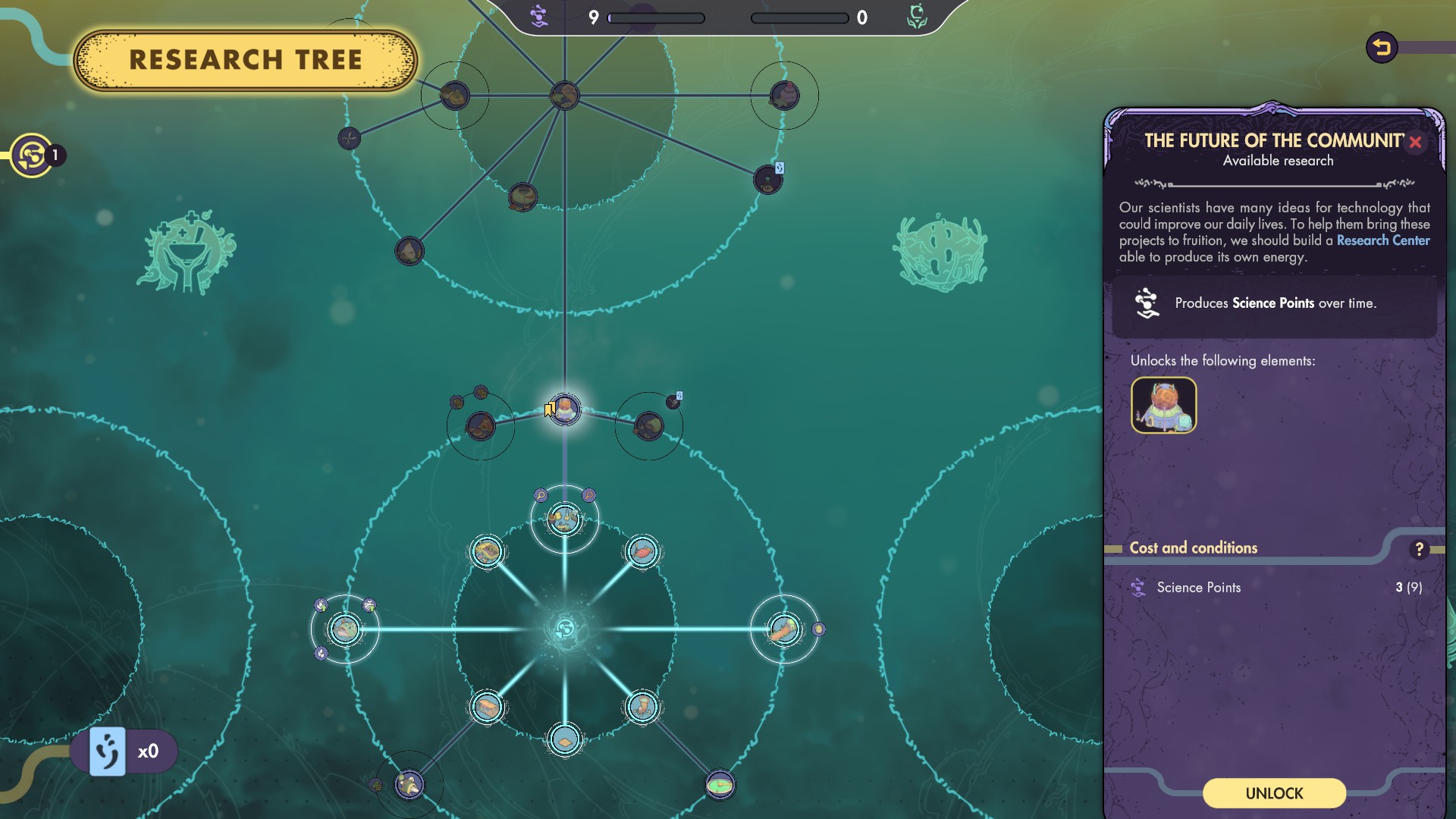
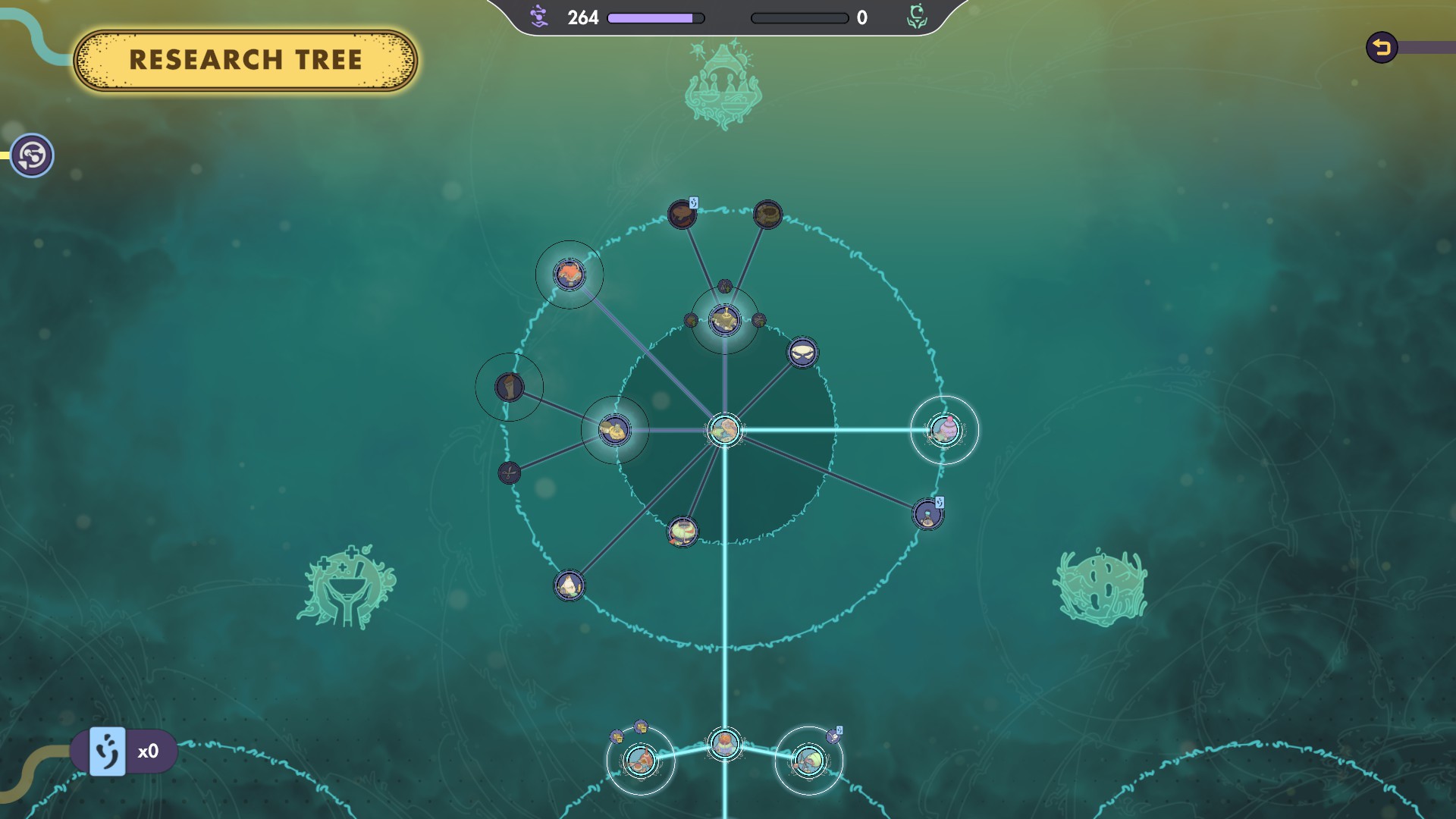
– A slightly simpler system. There are many types of resources, which, in turn, can be transformed into other elements through the research system, which, yes, offers greater complexity, but can sometimes become overwhelming.
– A more complex ambient sound system. Unfortunately, some audio elements are missing that could be complemented by ambient music. But in their absence, immersion is broken — sounds of animals, elements of nature, building sounds, perhaps a breeze, etc.
– I would have liked a UI alert system for when you forget to allocate workers to buildings. You might find yourself not understanding why something isn't working, only to discover that you hadn't actually assigned workers there.
What I liked about the game
– The new artefact system, which can give you a chance to receive technological research, either through artefacts found near your settlement (collected with RipOut), or through the expedition exploration system, which offers you tablets, but also carries a risk — you can lose people and resources, but also gain something very valuable.
– The new prioritisation system is very welcome. Not infrequently, in old games, you'd get stuck with an unfinished building because workers couldn't complete it due to other buildings in the queue. This tool certainly streamlines the queue system and saves you from frustration.
– I'm very pleased with the included soundtrack. It's very well mixed — you can effectively leave it running in the background even in other games.
– I appreciated the in-game artwork, in the menus and the details of the characters, the UI elements, those that appear when you click on a building, a plant, etc.
– I appreciate when a game has a high degree of replayability, due to the sandbox mode. A good sandbox mode, but one that I hope will receive updates after version 1.0 to fix what I mentioned above and make the game more immersive.
It's a pleasure to watch the little people on screen doing their own thing, like busy ants. The animations are beautiful. It's interesting how, practically, you're painting a canvas when you place a building, and you're contributing to a small hidden people game. In theory, with a screenshot, you could make a poster — the assets are high-fidelity. It would have been great if the game also came in a Big Box version, like in the good old days — who knows what artwork with holographic and embossed elements it would have had... we can only dream.
Conclusion
In conclusion, I want to tell you that Synergy is a solid 7. Whether you're nostalgic for classic city builders, or perhaps you're simply looking for a relaxing alternative to the fast pace of shooters, this title might be exactly what you need. Ideal for a quiet gaming session on a weekend or a rainy afternoon, Synergy has that something that draws you in and makes you forget about the rest of the world and all of life's problems. It's worth giving it a chance!
Currently, Synergy is available on Steam, Epic Games Store and on GOG.com, where it's also DRM-free — it even has an offer with a 30% discount. Enjoy!

Played on: PC
Release date: 16 April 2025
Developer: Leikir Studio
Publisher: Goblinz Publishing, H2 Interactive Co., Ltd.
Plus
- New artefact system
- New prioritisation system
- Excellent soundtrack
- Appreciated in-game artwork and UI details
- High replayability due to sandbox mode
Minus
- RipOut system should be automated
- Overly complex resource system
- Lack of complex ambient sounds
- Missing UI alerts for unassigned workers
0 votes
Scroll down here and stay on the page for at least 30 seconds to vote.
Pick a score from 0 to 10 (halves are allowed).