
Tainted Grail: The Fall of Avalon – Review

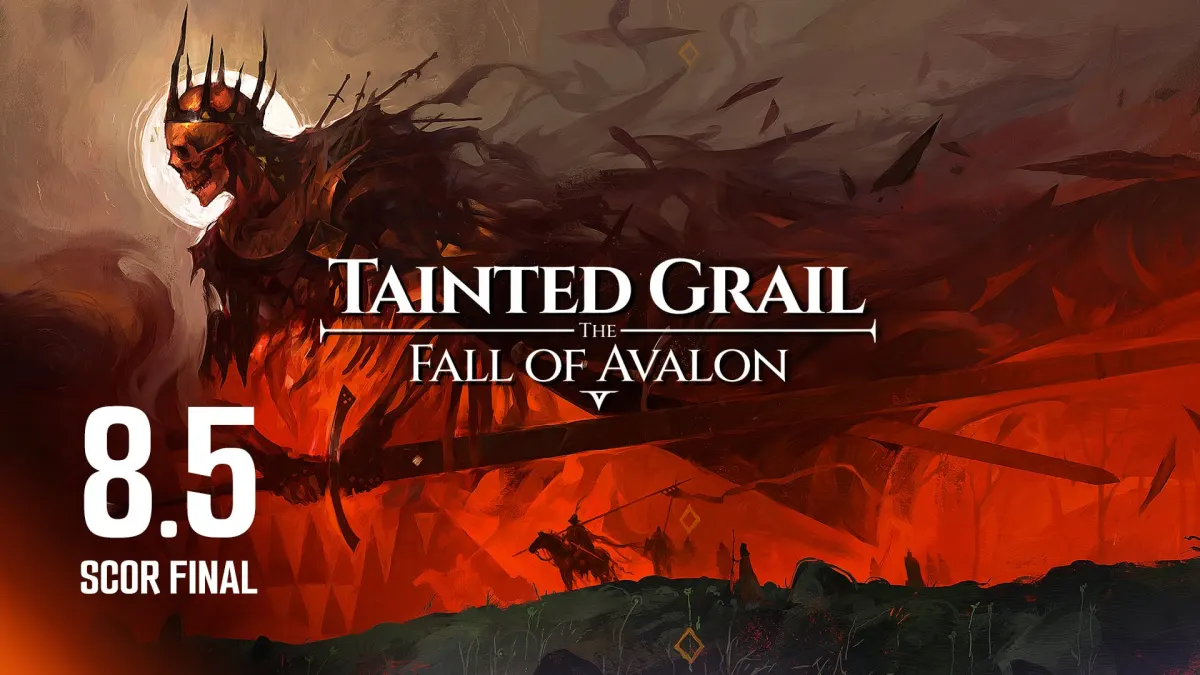
Tainted Grail: The Fall of Avalon is living proof that passion and artistic direction can compensate for the lack of an AAA budget
Tainted Grail: The Fall of Avalon is the newest digital incarnation of the dark fantasy universe originally conceived by Awaken Realms, a universe that stood out for its sombre atmosphere and an original, profound reinterpretation of Arthurian myths. Initially released as a board game, Fall of Avalon quickly established itself as a complex and narratively deep cooperative game, where survival and exploration of an Avalon infested by the Wyrdness were shaped by the difficult moral choices made by players. With a highly personalised approach and a branching narrative, the game laid the thematic and visual foundation of this unique universe.
The success of the board game was followed by Tainted Grail: Conquest, a roguelike RPG digital adaptation that retained the dark atmosphere and dangerous universe of Avalon, while offering a deep and replayable strategic experience. With a deck-building combat system and procedurally generated levels, Conquest attracted players eager for intense strategic challenges and narrative stories that unfolded differently with each attempt.
Thus, Tainted Grail: The Fall of Avalon continues this ambitious tradition, expanding the original universe into a complex open-world RPG that combines absolute freedom of exploration with a deep and mature story. This new digital adaptation promises to offer the most extensive and intense experience in the Avalon universe, retaining the defining elements of the series: difficult decisions, oppressive atmosphere, and a courageous reinterpretation of classic legends.
An Avalon on the brink of collapse
The title brings a bold and profoundly dark reinterpretation of Arthurian myths. The game quickly abandons the classic ideals of chivalry and honour, presenting an Avalon in agony, a world ravaged by despair and contaminated by a strange and chaotic force called Wyrdness, which distorts the very fabric of reality. Nature has been altered to the grotesque, villages lie abandoned, and people are gradually transformed into monsters – both physically and spiritually.
The death of King Arthur created a power vacuum, plunging the entire social order into a spiral of chaos. The expedition of the twelve heroes, which should have restored balance, ended in deep mystery, amplifying the atmosphere of despair. In the absence of real hope, the people of Avalon began to desperately cling to false beliefs, obscure cults, and corrupted relics, trying to make sense of a world that seems to reject logic and reason.
The game begins with you as an anonymous prisoner, freed from a forgotten dungeon. You have no predetermined destiny, but are forced to forge your own path through decisions that can profoundly influence the fate of the island. Every choice you make matters: loyalties, betrayals, and ignored truths will shape your experience and the world you inhabit. There are no simply defined "good" or "bad" endings, only a continuous moral negotiation, compromises, and harsh realities.
In your journey through Avalon, you will encounter complex characters, and dialogues with them become a fascinating experience. One of the most remarkable aspects of the game is represented by NPCs, who benefit from numerous lines of conversation and profound, well-defined writing. Thus, discussions become a real pleasure, contributing enormously to the immersion in the game's fascinating world. Each character encountered in Avalon has their own story, well-outlined motives, and complex personalities, transforming seemingly mundane interactions into memorable moments that deepen the feeling that you are in a living universe, full of mystery and intrigue.
The atmosphere remains the game's strong point. Every corner of Avalon breathes deep despair, and the oppressive presence of the Wyrdness constantly influences the environment and the player's perception of reality. The places visited seem alive, but infected, charged with a sinister energy: trees that seem to murmur in the dark, ancient temples impregnated with strange forces, and villages whose inhabitants worship relics that slowly destroy them, convinced that this way they will find salvation.
The world of the game is filtered through an almost Lovecraftian lens, where familiar names like Arthur, Lancelot, or the Grail are distorted to the point where they become symbols of despair and corruption. Lancelot, once a noble hero, is now a fallen knight, and the Grail, once sacred, has become a weapon of destruction. It is no longer about saving an idealised Avalon, but about the desperate attempt to decide if such a world is still worth saving.
In essence, Tainted Grail: The Fall of Avalon is not just about exploring an interesting world; it is about directly experiencing a powerful, haunting, and memorable narrative universe, where every discovery hides the traces of a deeper tragedy. It is a game of ruins and shattered hopes, of cynical and oppressive stories that will remain in your memory long after your adventure ends.
To understand how radical the reinterpretation proposed by the developers is, it is worth comparing how the game undermines the key symbols of the classic Arthurian myth.
The classic Arthurian myth and its reinterpretation in this title offer two radically opposed perspectives on the same mythological universe. In traditional legend, Arthur is the ideal king, a symbol of justice and unity, destined to save and govern Britain in peace and honour. In contrast, in Tainted Grail, Arthur becomes a dark and transcendent figure, elevated to the rank of a corrupted deity who dominates the world and pushes it towards chaos, thus becoming the source of decay and despair, the complete opposite of the original messianic saviour.
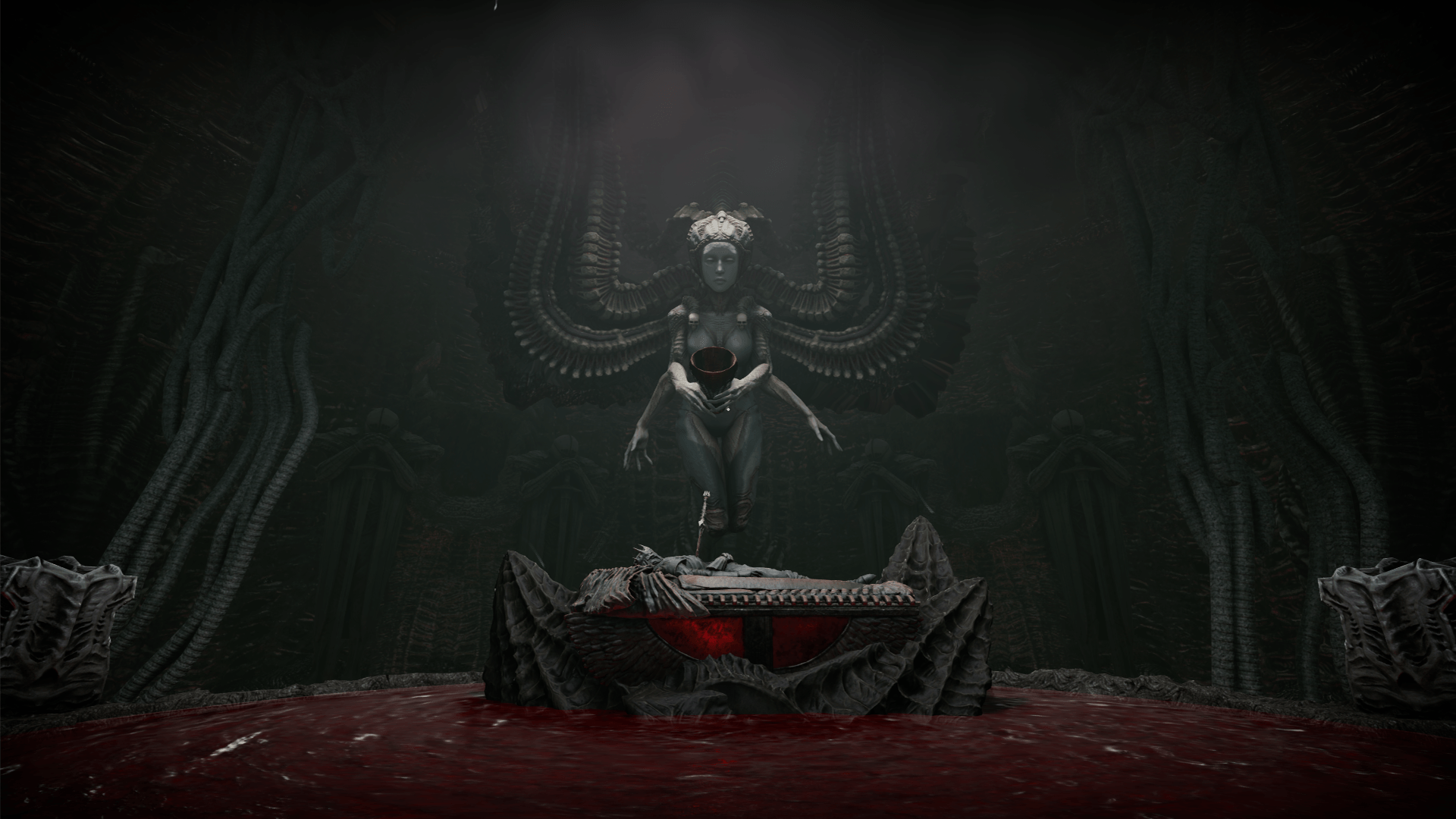
Camelot, in the classic version, represents the ideal of chivalry and order, the centre of a civilised and prosperous world. In the developer's reinterpretation, Camelot is reduced to forgotten ruins, divided and devastated by a dark magic called Wyrdness. Communities no longer exist in harmony, but are isolated and full of fear, illustrating a world lost in darkness and despair.
The Knights of the Round Table, symbols of courage, justice, and honour in the classic myth, become tragic figures, corrupted and profoundly altered by the Wyrdness. Their nobility and heroism are replaced by fanaticism, madness, and despair. There are no longer real knights or heroes, only degraded shadows of a glorious lost legacy.
Merlin, the wise and protective magician from the original myth, who uses magic for the common good and to guide King Arthur, is replaced by a degenerate, dangerous, and dark mystical power. Magic here becomes a corrupting and dangerous force that degrades reality and leads to madness and marginalisation.
The Holy Grail, initially a symbol of spiritual salvation, enlightenment, and perfection in classic legend, becomes in the game either a forgotten object or a relic devoid of real power, symbolising the absence of high and spiritual purpose. The search for the artefact is no longer about salvation, but about mere survival in a condemned and chaotic world.
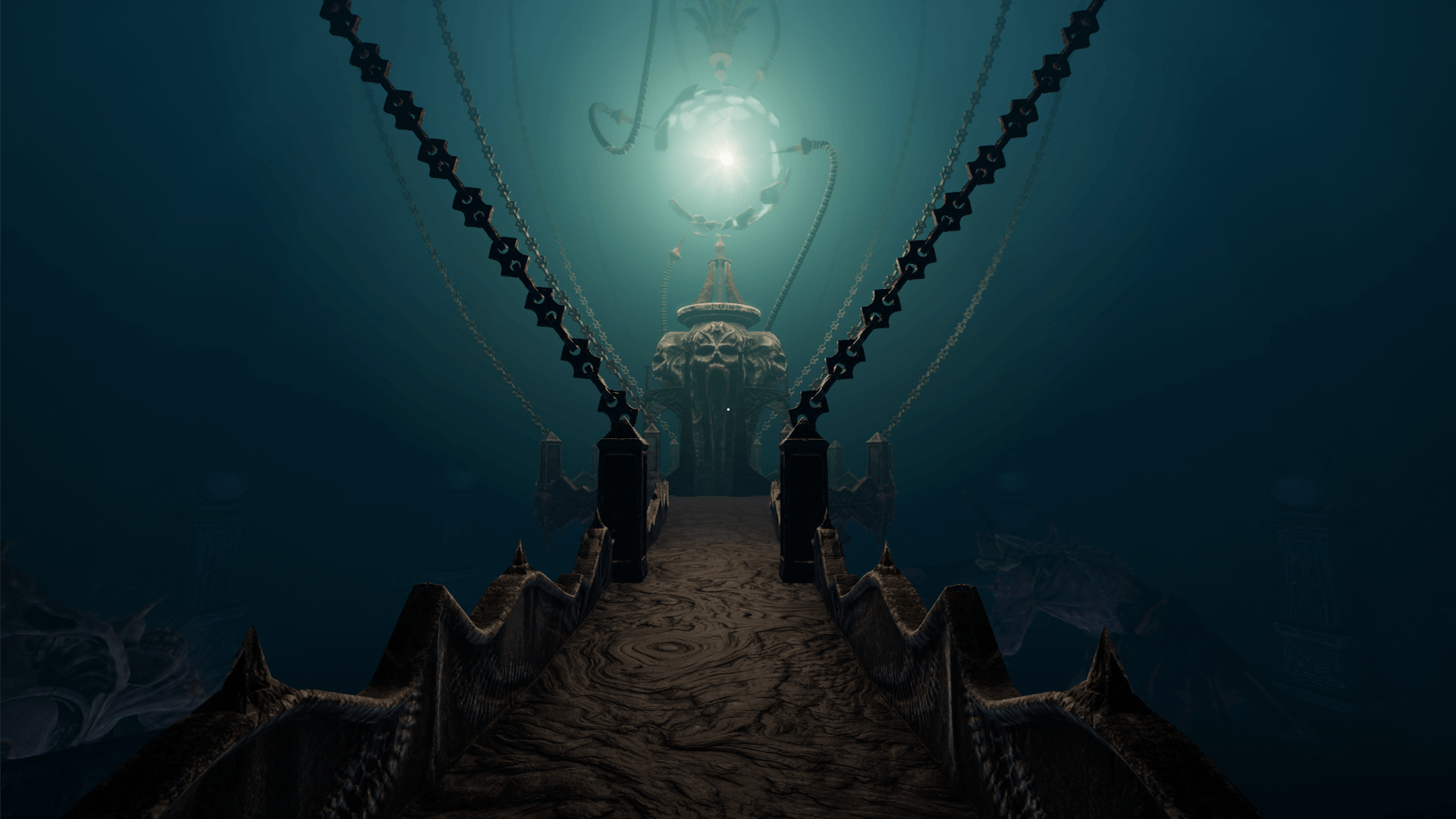
The tragic love between Lancelot and Guinevere, which in classic myth humanises the legend and highlights the eternal conflict between duty and passion, disappears completely in Tainted Grail. The game eliminates almost any trace of romance, relationships being transactional, dominated by manipulation and fear, thus eliminating any trace of humanity and romantic empathy.
Finally, the classic story proposes an eternal cycle, the hope that Arthur will return and restore order. The world created by the developer completely rejects this hope, proposing instead a profound fatalism and a universe where there is no return, only the acceptance of inevitable decay.
Thus, Tainted Grail not only reinterprets the Arthurian myth, but radically deconstructs it, transforming the legend of an ideal world into a grim and nihilistic nightmare, completely undermining the myth of the saviour and the land of heroic knights.
The Aesthetics of Melancholy and Chaos
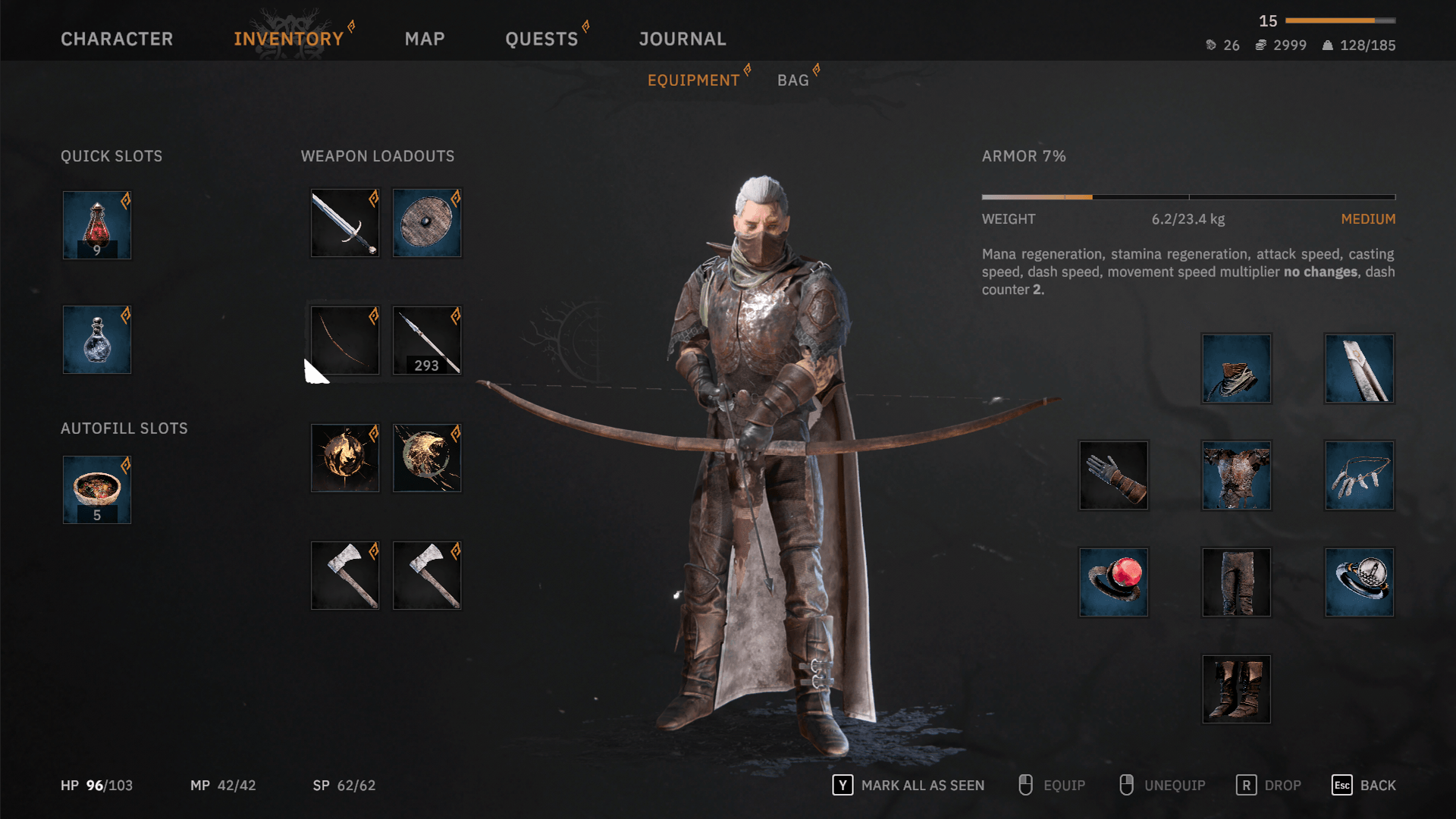
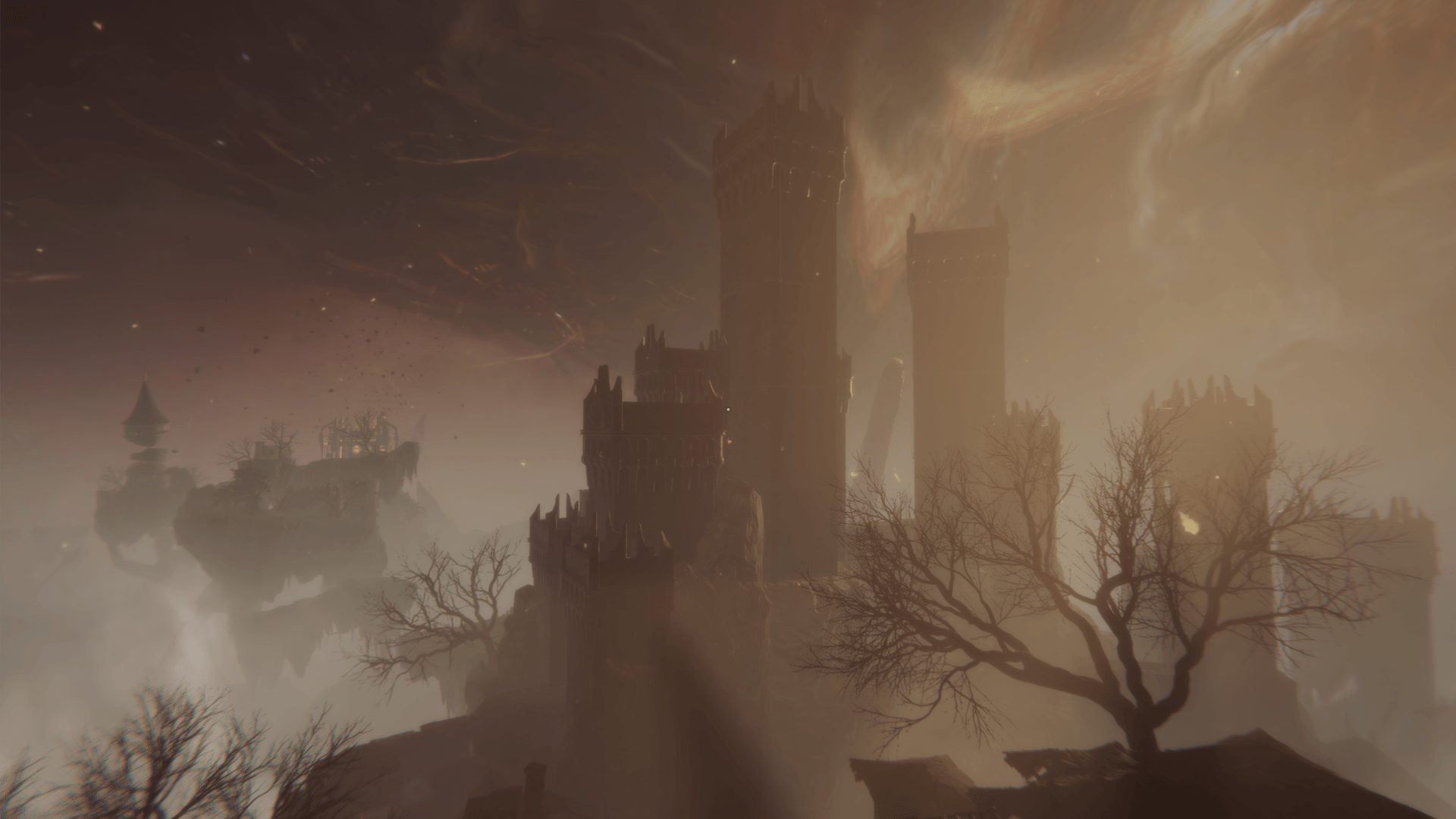
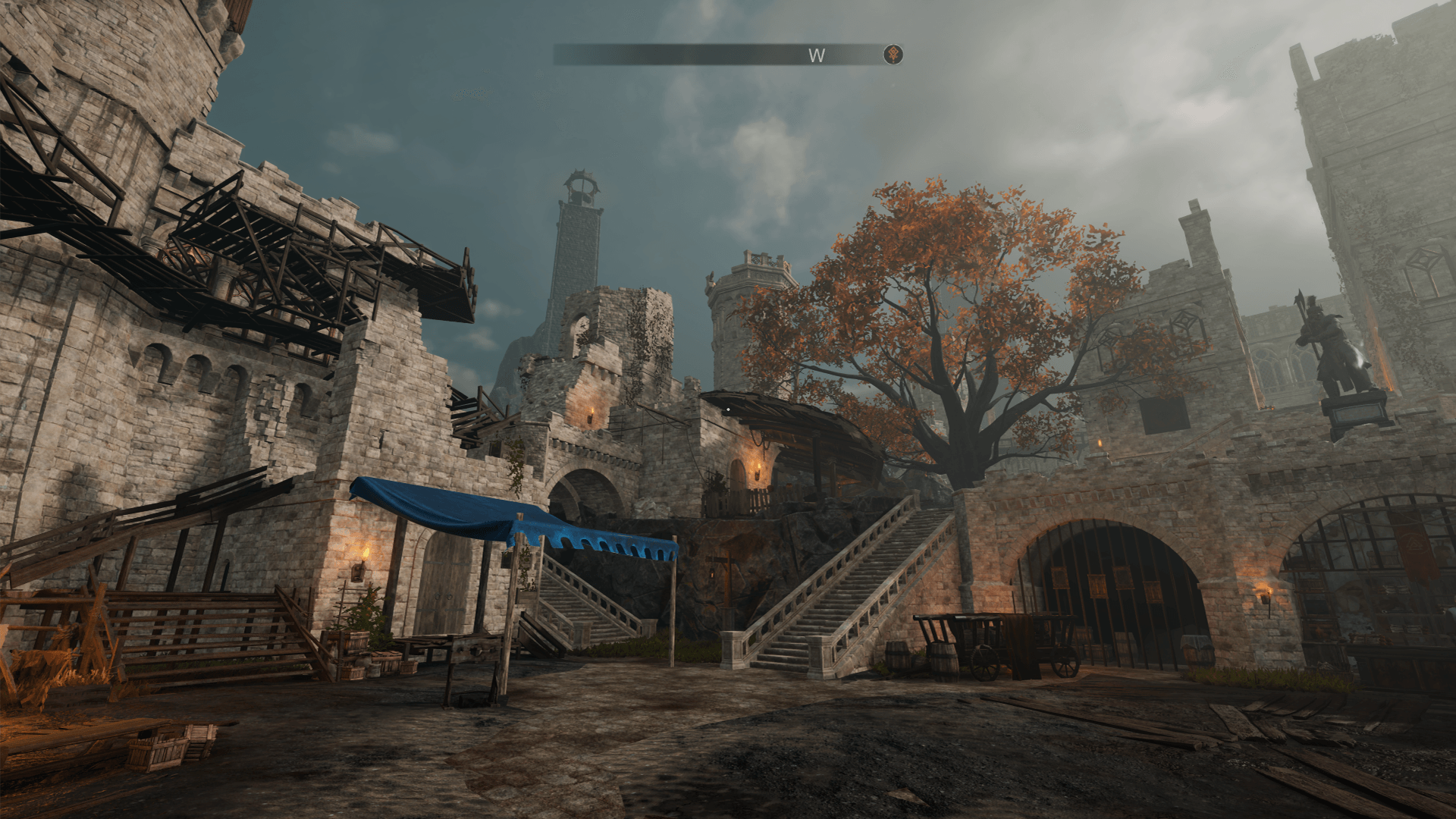
The game doesn't compete with AAA titles in terms of cutting-edge technology; there's no ray tracing, real-time reflections, or hyper-realistic character faces. Instead, it fully compensates with an extremely coherent and atmospheric artistic direction. The Avalon imagined by Questline Games is a land steeped in an oppressive visual melancholy. Dominated by earthy, rusty, greenish, and grey tones, the landscape evokes an eternal autumn, a perpetual sunset that perfectly reflects the narrative's themes of decay and despair. Here there is no scorching sun or dreamlike landscapes, only swamps, silent forests, forgotten ruins, and villages on the brink of extinction.
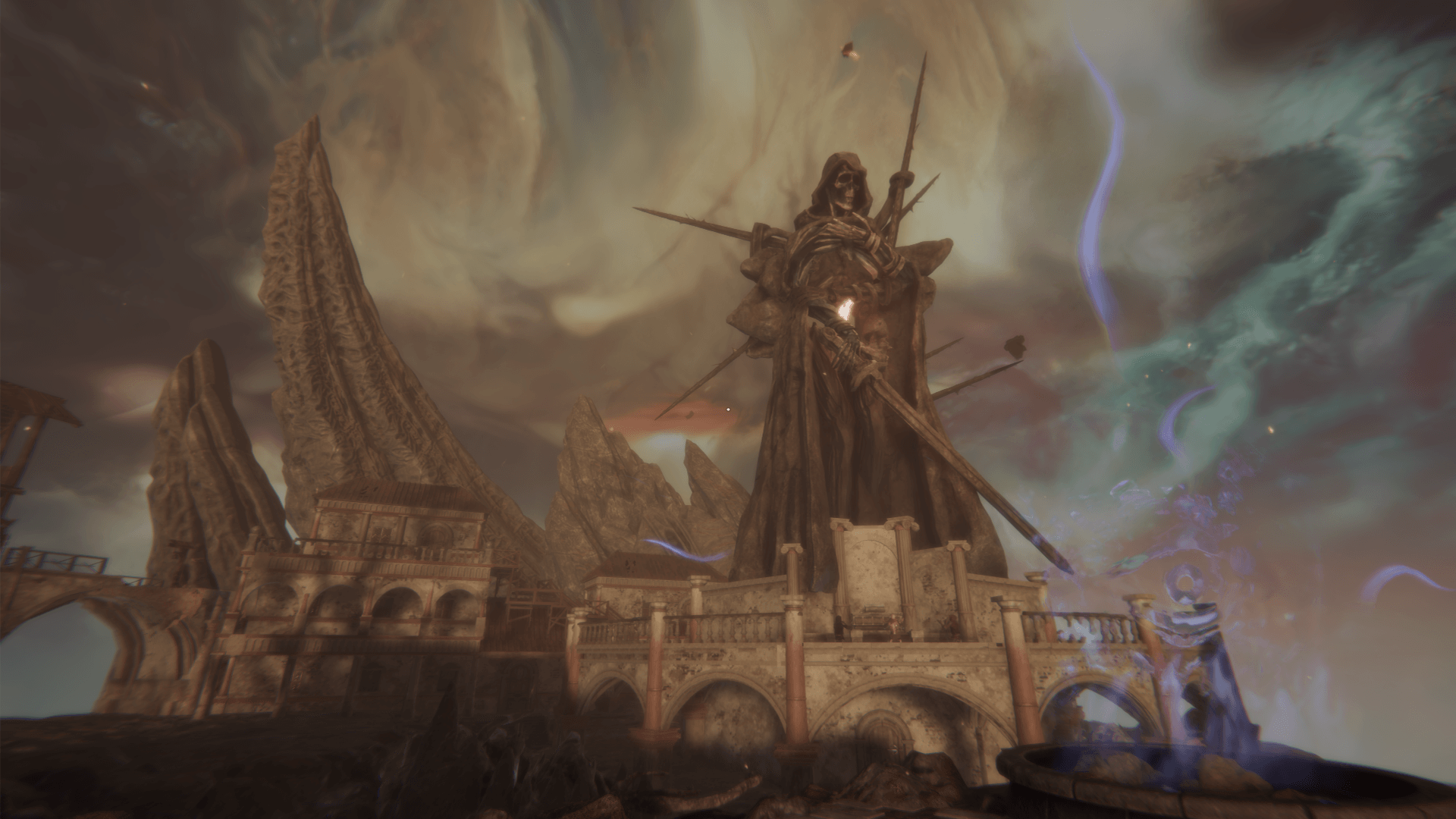
The overall aesthetic is reminiscent of the atmosphere in The Witcher 1, with that dirty medieval air where magic is more of a disease than a blessing. Each region of the island has a distinct visual identity, but all share a dark stylistic coherence: Gothic architecture, pagan symbols, organic morphology. The ruins of temples are not impressive in size, but in their symbolic weight. They seem to weigh on the player's soul, like memories too old to be understood, but too powerful to be forgotten.
One of the most fascinating visual aspects is the representation of the Wyrdness, the corrupting force that alters reality. In affected areas, the world transforms subtly but unsettlingly: contours become fluid, the colour palette shifts to toxic violet, and shadows take on a life of their own. It's as if reality itself is bending under the weight of a latent nightmare. This type of environmental horror, inspired more by Stalker and Control than by classic jump-scare horror, works perfectly in the context of a game that relies on constant unease, not momentary shocks.
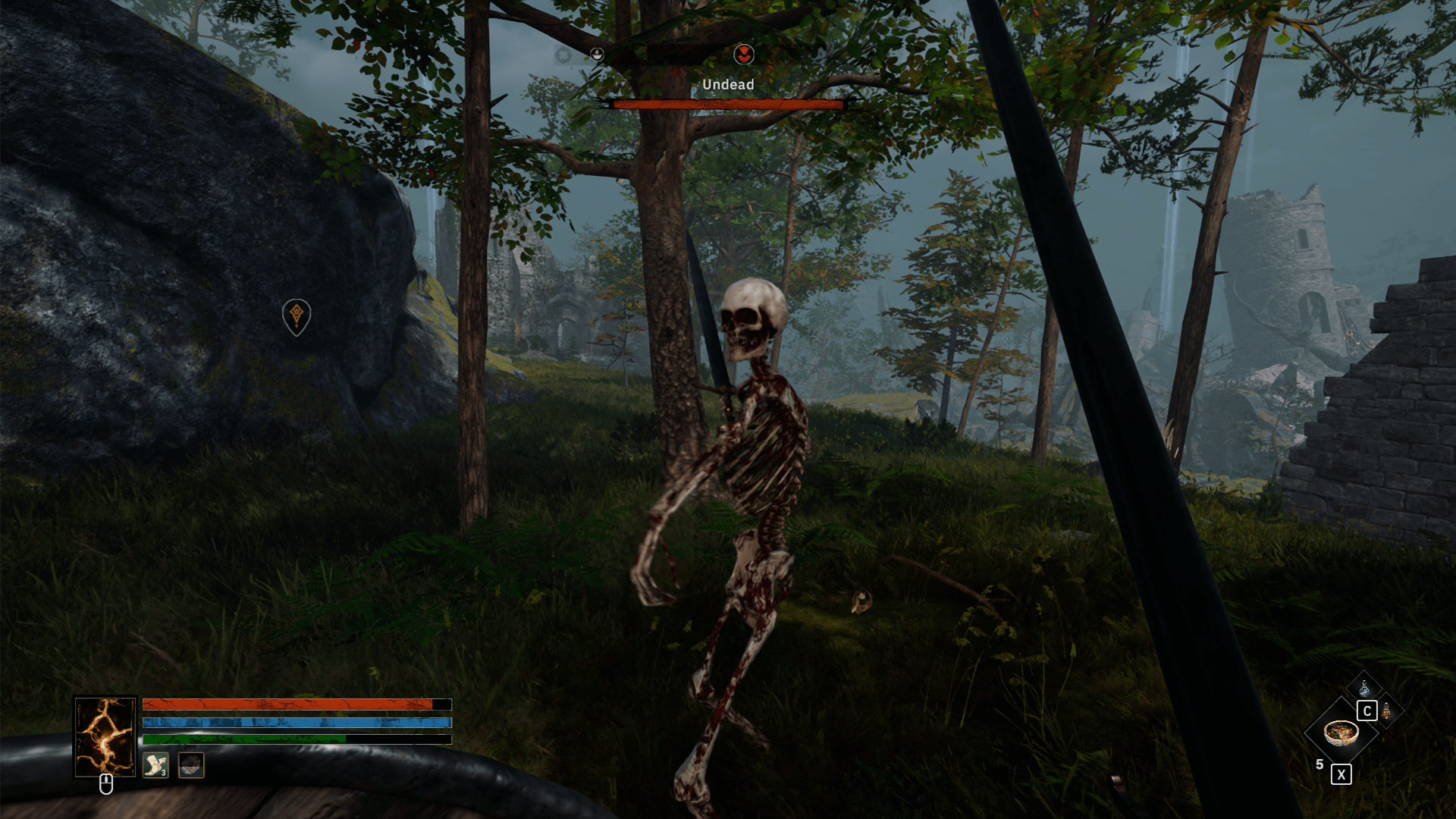
Character models are decent, without being overly complex. Facial expressions are acceptable, and equipment fits the world perfectly: heavy armour, dirty rags, ritual robes worn by cult followers. Where the game truly excels is in the design of creatures corrupted by the Wyrdness – contorted humanoid abominations, diseased animals, life forms twisted to the grotesque. These manage to be deeply disturbing without sliding into caricature or appearing artificial.
Sound is an essential pillar in building the atmosphere. The soundtrack, composed by Andrzej Janicki, known for The Medium and Layers of Fear, combines slow ambient themes, distorted choirs, and ritualistic percussion. The music acts almost subconsciously, always in the background, like an elegy for a world that doesn't want to die, but no longer knows how to live. In the forests, tense strings and the rustling of dry leaves are heard; in forgotten temples, the echoes of extinguished choirs resonate, and each space has its own distinct, subtle but unmistakable sonic identity.
Sound effects are also carefully crafted. Forests are not just visual backdrops, but living soundscapes: footsteps on wet earth, trees creaking in the wind, unexpected rustles suggesting invisible presences. In areas corrupted by the Wyrdness, voices become source-less whispers, like a conversation held deep within the mind. Dialogues are fully voice-acted, with actors who understand the oppressive tone of a world where no one seems happy, and the voices reflect this truth well.
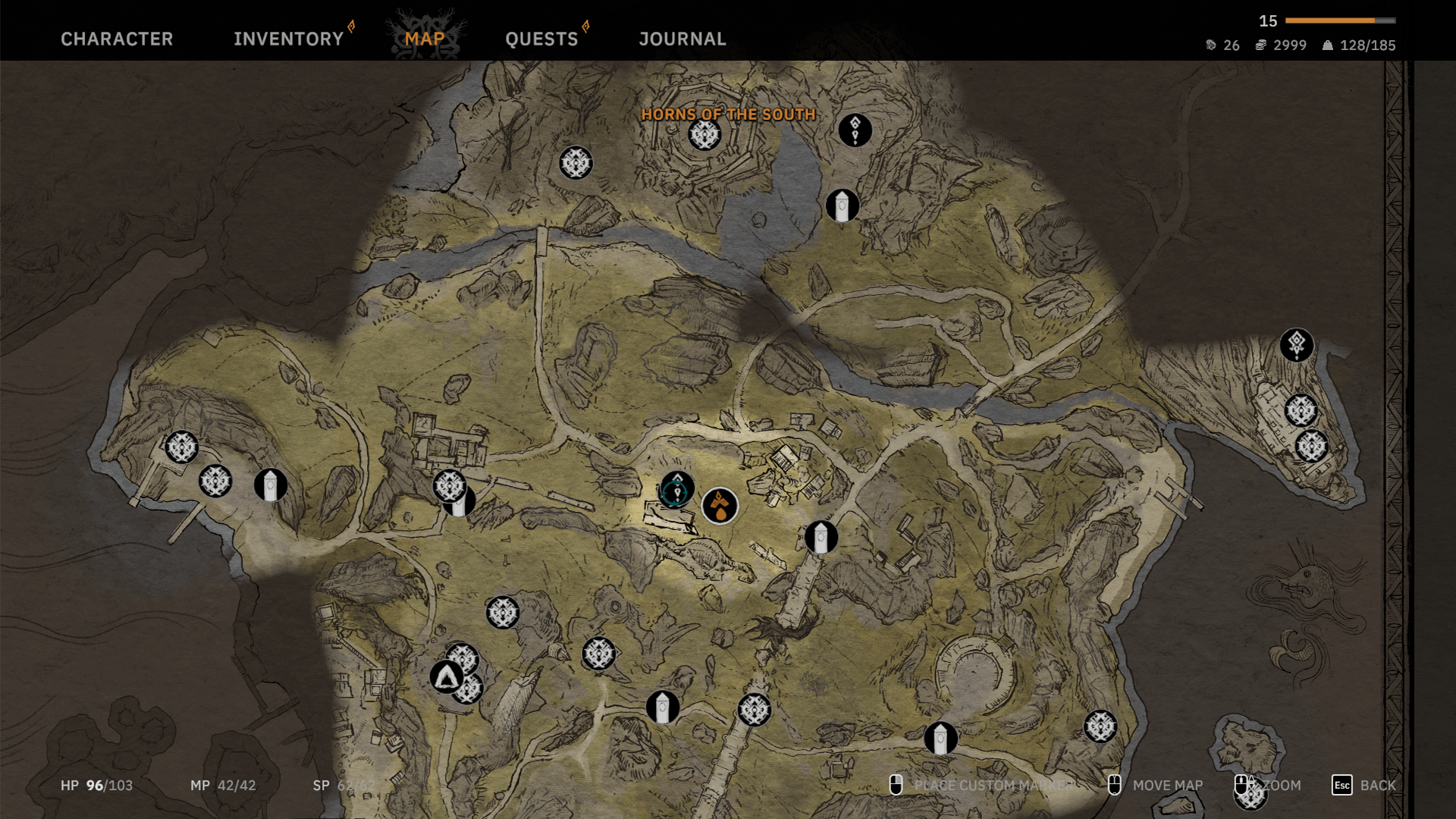
Compared to Skyrim, Tainted Grail shares the first-person perspective and open-world exploration, but the tonality is much darker, and the visual palette, though more restricted, is used with much more artistic intent. At the same time, influences from Hellblade: Senua's Sacrifice are visible in the way ambient sound is used to induce psychological tension, even if everything here is on a smaller, more subtle, but no less effective scale.
Questline's creation is not a visual spectacle in the classic sense, but it is a profound and memorable aesthetic experience. It's the kind of game where every sound, chromatic nuance, and design element contributes to building a world that seems to be falling apart before your eyes. If you appreciate melancholic artistic direction, careful environmental design, and a soundtrack that stays in your soul like a memory from a bad dream, Avalon will haunt you long after you've closed the game.
Survival, Decisions, and Calculated Risk
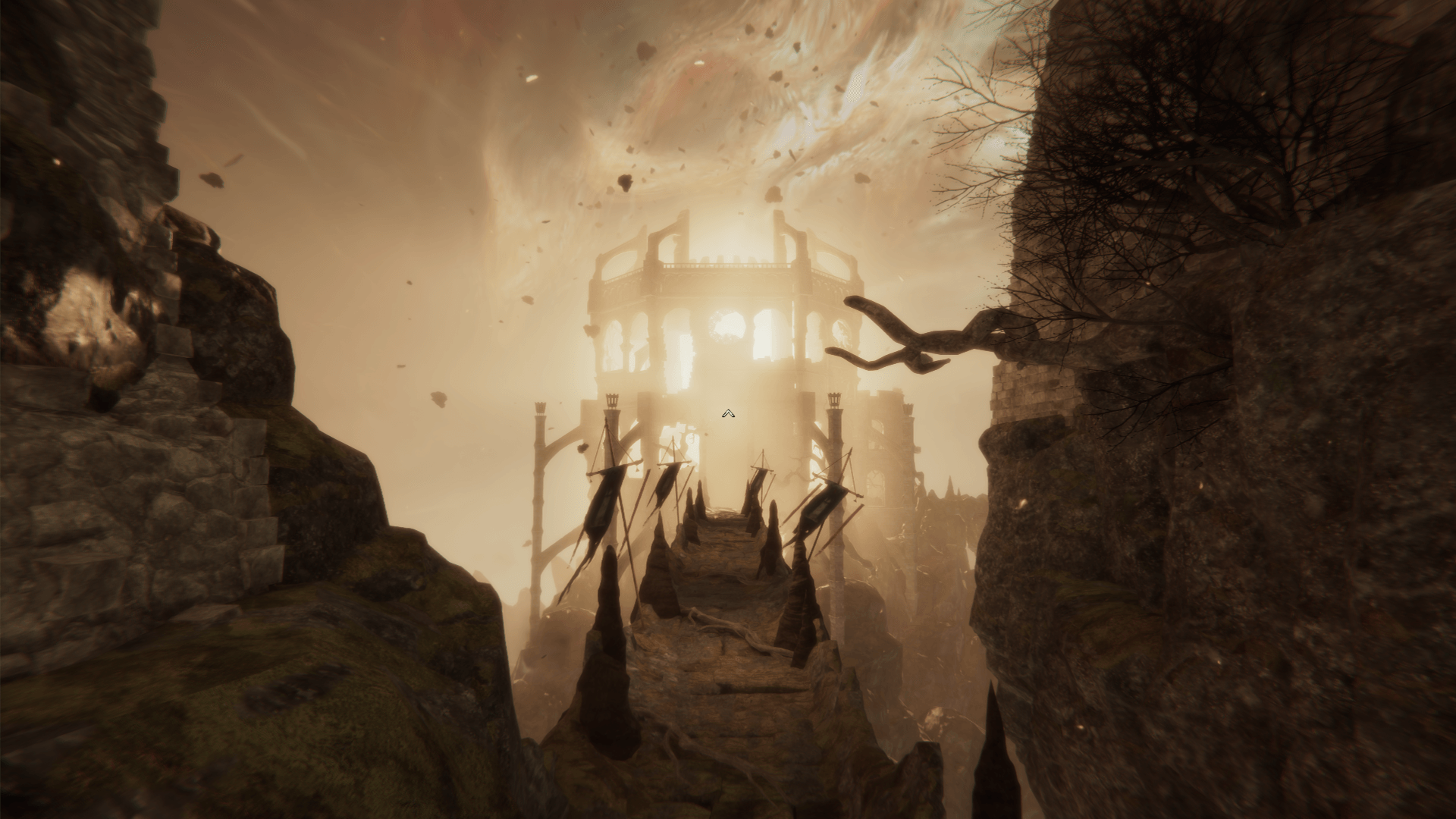
At first glance, Tainted Grail: The Fall of Avalon seems like a dark variant of Skyrim – a first-person RPG with real-time combat, an open world, and classic progression systems. However, beyond the obvious influences, the game gradually builds its own identity, one that prioritises the oppressive atmosphere, constant danger, and the weight of every decision.
Exploration isn't virtual tourism, but a form of testing limits. The world is open, but intentionally fragmented into regions densely populated by threats. Each area can become a lethal trap if you're not prepared, and discovering ruins, crypts, caverns, and temples offers not just loot or mystery, but also real risks. Areas affected by the Wyrdness add an extra layer of tension: space becomes unstable, orientation is distorted, and a sense of alienation is constant. You don't have a complete map, inventory is constrained by weight, and resources are scarce. All these elements transform each incursion into a decision that must be weighed carefully.
Combat is direct and brutal. The combat system relies on light and heavy attacks, blocks, parries, magic, and alchemical consumables. It's not about elegance or style, but efficiency. Positioning, patience, and calculation are more important than impulse. If you're surrounded by multiple enemies, you don't have many options other than to flee or die. Each conflict feels like a risky choice, not an easily assumed challenge. Instead of being a reward, victory is a relief, and most often, a survival that comes with certain costs.
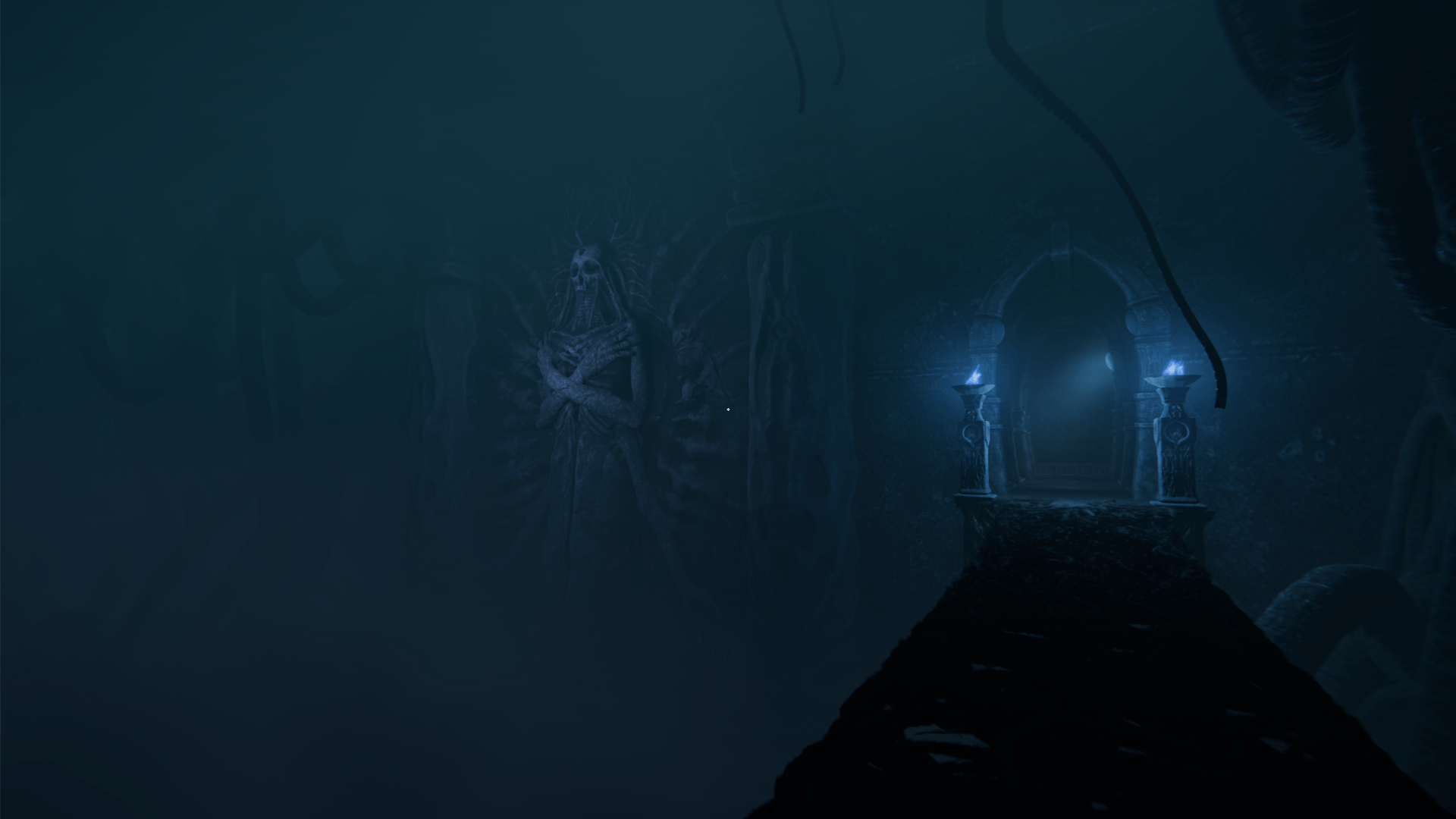
The crafting system reinforces the general theme of survival. You won't find useless items or excessive equipment. Alchemy is essential: you can prepare healing potions, toxins, antidotes, or substances that temporarily alter perception and performance. Food plays an important role in regeneration, and forging allows for the maintenance or improvement of weapons and armour. Loot isn't generous, but it has narrative weight: a bizarre amulet, a ring that triggers an epic thread, a piece of equipment with unique effects. The economy is unforgiving. Trade is limited, gold is scarce, and sometimes bartering is worth more than money. Everything supports the idea that you are a survivor, not a glorious hero.
Character progression is simple and efficient. Each level brings points to distribute into attributes such as strength, dexterity, or intelligence, and passive abilities can completely redefine your playstyle. You can become a fighter who strikes lethally from the shadows, a Wyrdness-resistant tank, a master of magical control. However, using magic comes with risks: it consumes rare resources and exposes you to the destructive influence of the Wyrdness. It's a system that rewards calculated risks and penalises abuse, true to the game's grim tone.
Quests avoid the classic binary structure. There are no good or correct answers, only options that force you to live with the choices you've made. You can negotiate, lie, kill, sabotage, or manipulate, and the effects are not cosmetic. Some decisions can lead to the destruction of a village, the overthrow of a local hierarchy, or the transformation of an ally into a formidable enemy. It's rarely clear which option is "correct," and the lack of an artificial moral system enhances realism. You're not told if you were "good" or "bad." The world reacts and changes based on what you chose, not how you chose.
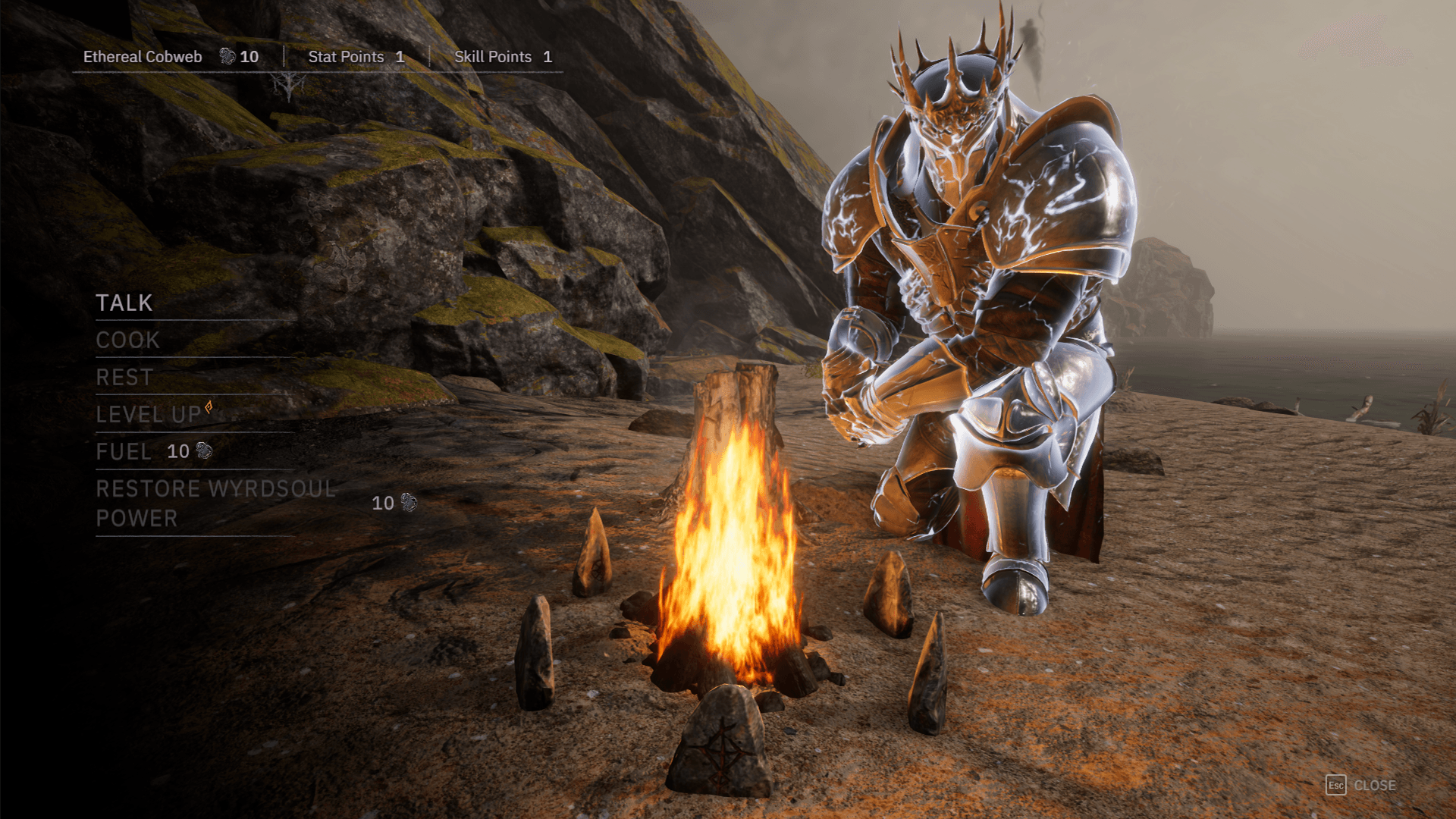
The factions you encounter in Avalon don't follow a clear morality. There are no "good guys" or "bad guys" in the classic sense. Each group has its own goals, sometimes noble in theory, but always tainted by compromises, fanaticism, or despair. Choosing a side becomes a personal decision, but also one with mechanical consequences. Some offer you access to resources or abilities, but demand loyalty and involvement. Everything contributes to the feeling that you are playing a role in a living world, where values are relative and survival rarely means moral purity.
The title is not an RPG that makes you feel invincible. It is a narrative survival experience in a world that offers no safety, easy rewards, or certainties. Exploration demands caution. Combat demands moderation. Choices demand accountability. It is a game with classic roots and a mature approach, which refuses to tell you what to do, but forces you to live with what you have done.
An Arthurian Nightmare with an Indie Soul: An Experience Worth Living
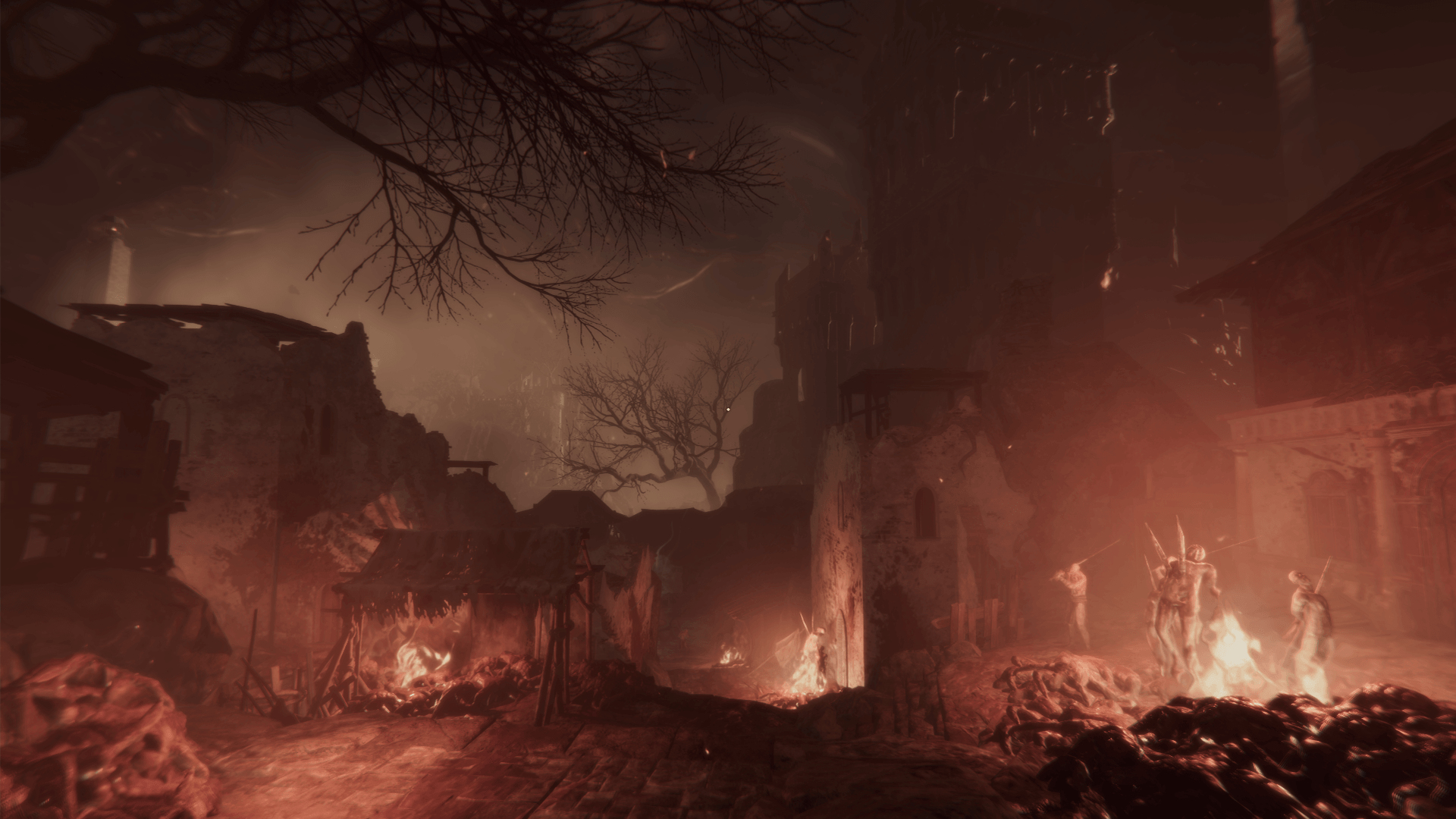
Tainted Grail: The Fall of Avalon is living proof that passion and artistic direction can compensate for the lack of an AAA budget. It's not a perfect game; some mechanics might feel clunky, and the absence of cutting-edge technologies is noticeable in certain sequences, but it is a title that succeeds in creating a profound, unsettling, and memorable experience. The oppressive atmosphere, the radical reinterpretation of Arthurian myth, and the real weight of choices transform it into an RPG worth exploring by anyone looking for something different, more mature, and more visceral.
I gave it a score of 8.5 not because it directly competes with the industry's top titles, but because it is a game that knows its identity and expresses it with a coherence rarely found. It is a creation with soul, vision, and its own voice, and for that, it deserves to be played, supported, and rewarded.
Thanks to PR Outreach for the review code and the opportunity to play Tainted Grail: The Fall of Avalon before its release date.

Played on: PC
Release date: 23 May 2025
Developer: Questline
Publisher: Awaken Realms
0 votes
Scroll down here and stay on the page for at least 30 seconds to vote.
Pick a score from 0 to 10 (halves are allowed).