
Cold Fear – Review

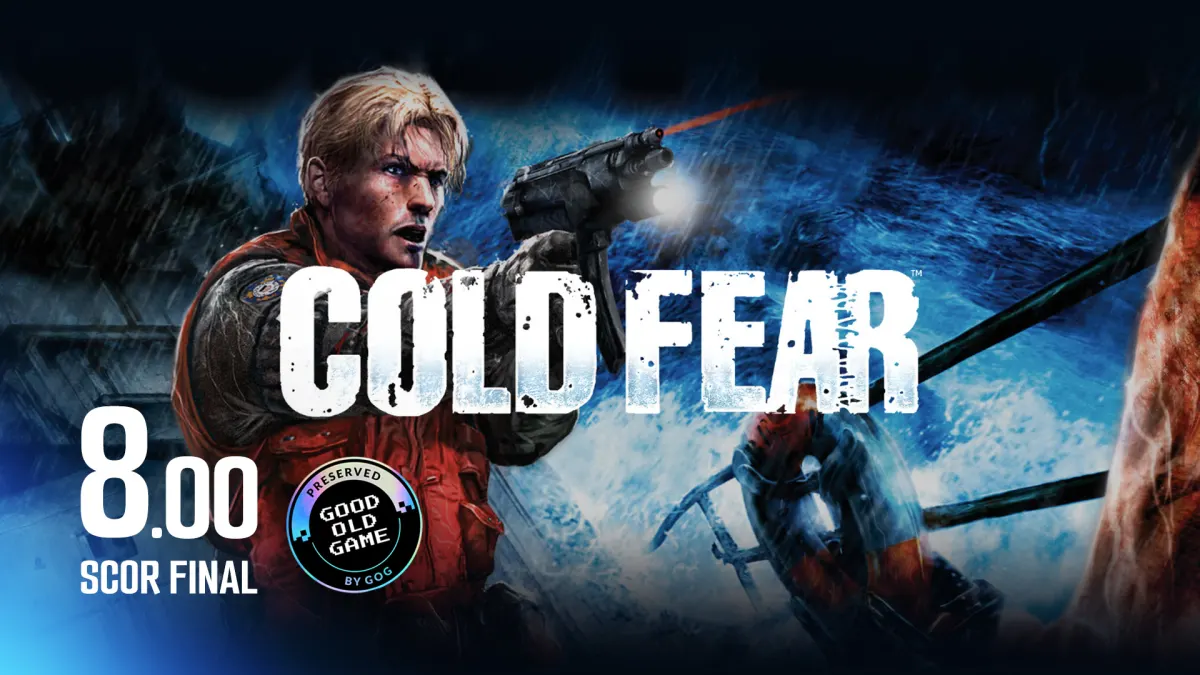
The weather outside is frightful…
I know most players fondly remember 2004 and 2007, but I think 2005 was an extraordinary year too. Yes, I won't deny that 2004 was legendary, with releases like Grand Theft Auto: San Andreas, Half-Life 2, Metal Gear Solid 3: Snake Eater, Prince of Persia: Warrior Within or World of Warcraft, nor that 2007 didn't give us classics we still play today, such as God of War II, Call of Duty 4: Modern Warfare, Super Mario Galaxy, Assassin’s Creed, Mass Effect, Uncharted, BioShock, Portal or The Witcher (blimey, what a long list).
But no one can say that 2005 wasn't a fantastic year. Devil May Cry 3: Dante’s Awakening, Need for Speed: Most Wanted, Prince of Persia: The Two Thrones, God of War, Guitar Hero and Shadow of the Colossus are just a few of the titles that kept us busy back then. However, among these huge releases, a few excellent games slipped through almost unnoticed by the general public, overshadowed by the colossal impact of the aforementioned titles.
The game everyone fondly remembers from 2005 is a third-person survival horror shooter that revolutionised the industry with its new camera angle: the famous over-the-shoulder, initially used when “aiming” at enemies. This angle quickly became an industry standard and is still used today in most modern games. However, it wasn't the only perspective present, as the title alternated between fixed angles and moments where the camera closely followed the player. The shooting system introduced here profoundly influenced game design in the years that followed, and the enemies became memorable not only for their parasitic nature, but especially for their cultural impact, permanently changing the perception of “reanimated” creatures. I think you've already guessed which game I'm talking about, so let's say its name together at the end of the countdown: THREE, TWO, ONE… What do you mean Resident Evil 4?
Even more than 20 years after its release, Cold Fear doesn't seem to escape the shadow of Capcom's famous game, the title that reinvented the horror genre and brought more action to this niche. I think it's a great shame, because the project developed by Darkworks had huge potential, but had the misfortune to be released exactly between Devil May Cry 3: Dante’s Awakening and the second coming of Leon S. Kennedy. For this reason, it's easy to understand why Cold Fear hasn't remained in the collective memory. That doesn't mean, however, that it should be completely forgotten. The title is one of the latest additions to the GOG Preservation Program, and this second chance at life, along with the current retro wave, creates the perfect conditions for Ubisoft's first horror game to be tried by as many players as possible. If I've piqued your curiosity, let's start with the story!
In the shadow of the great LEON
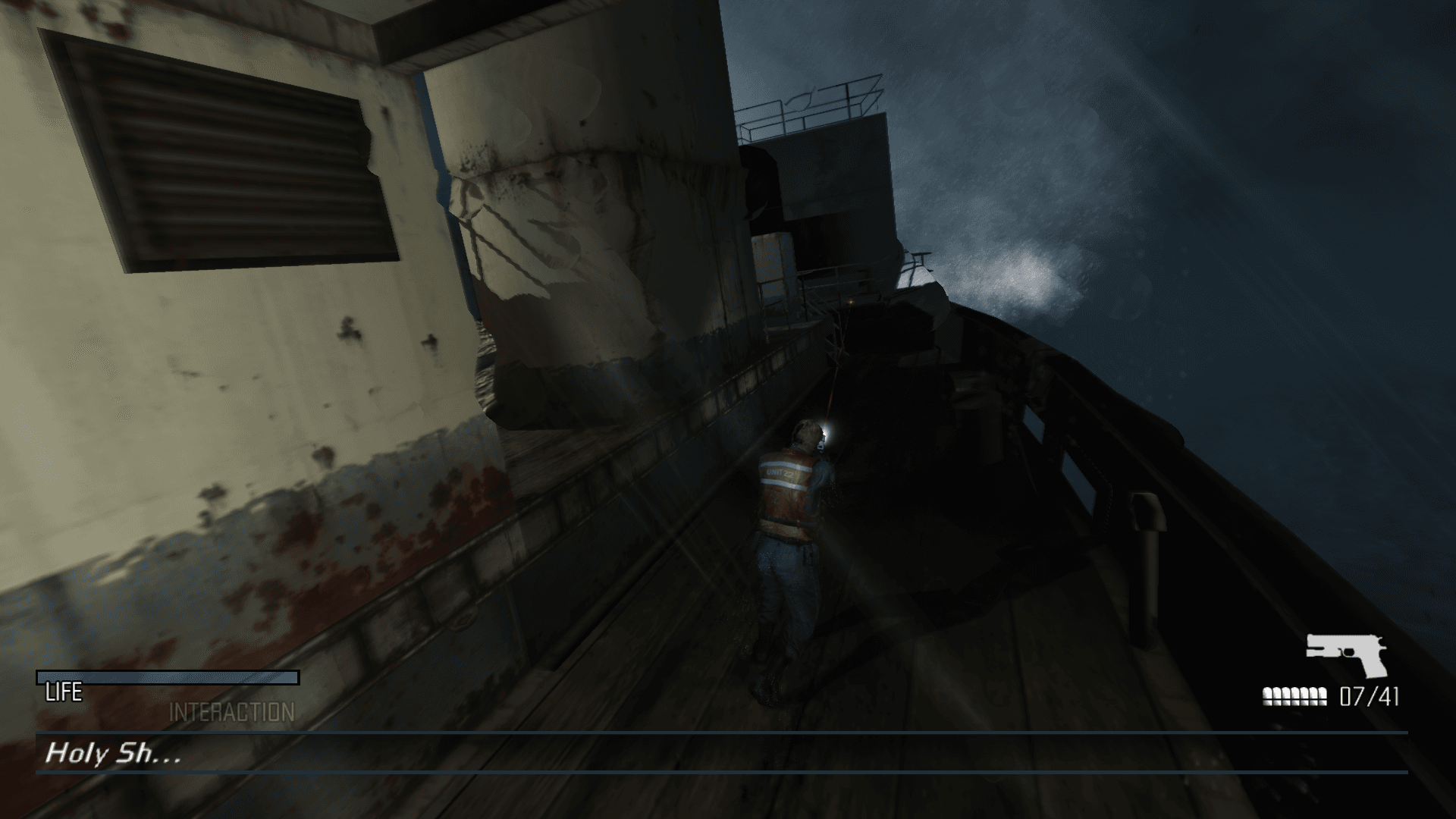
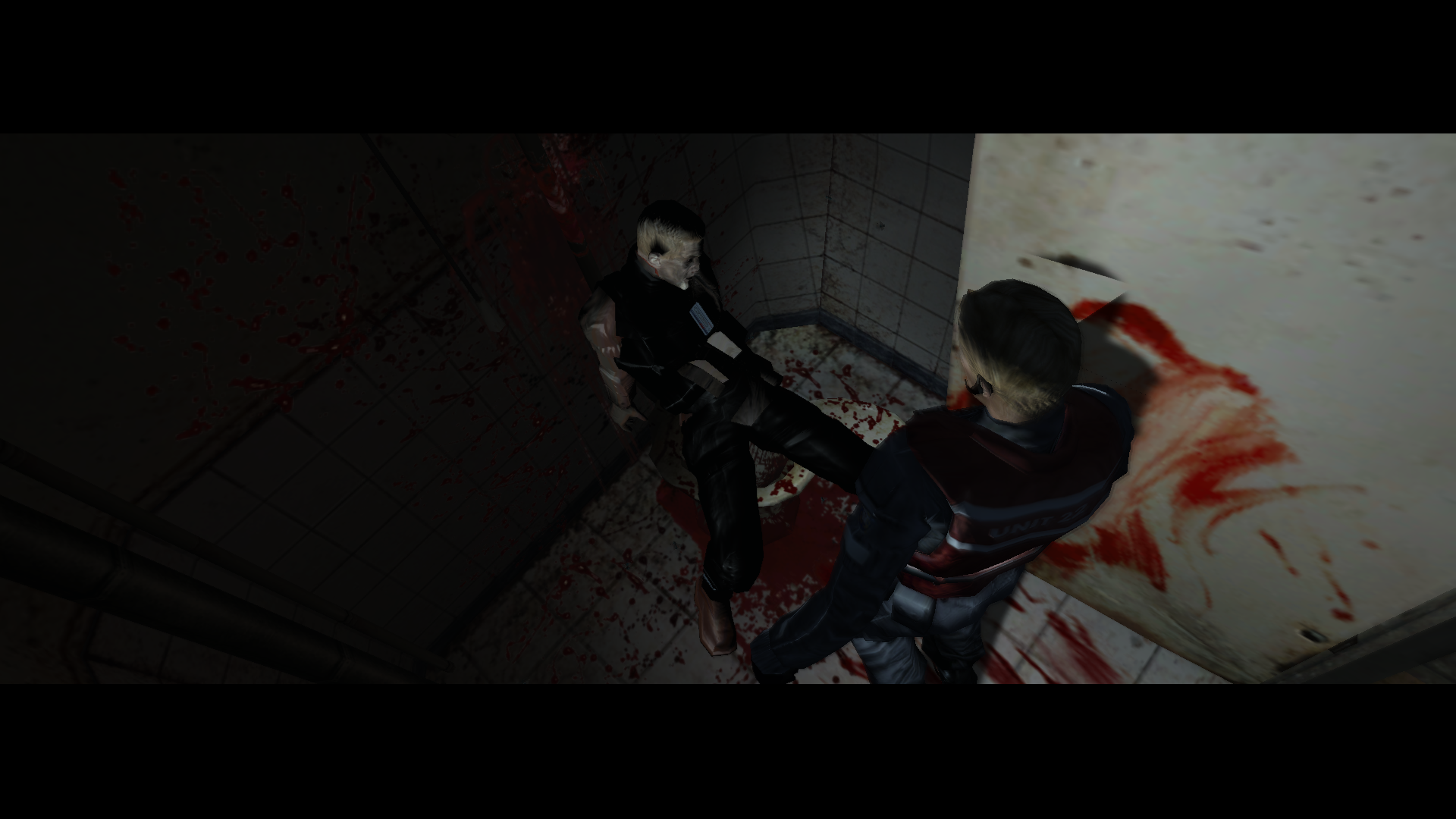
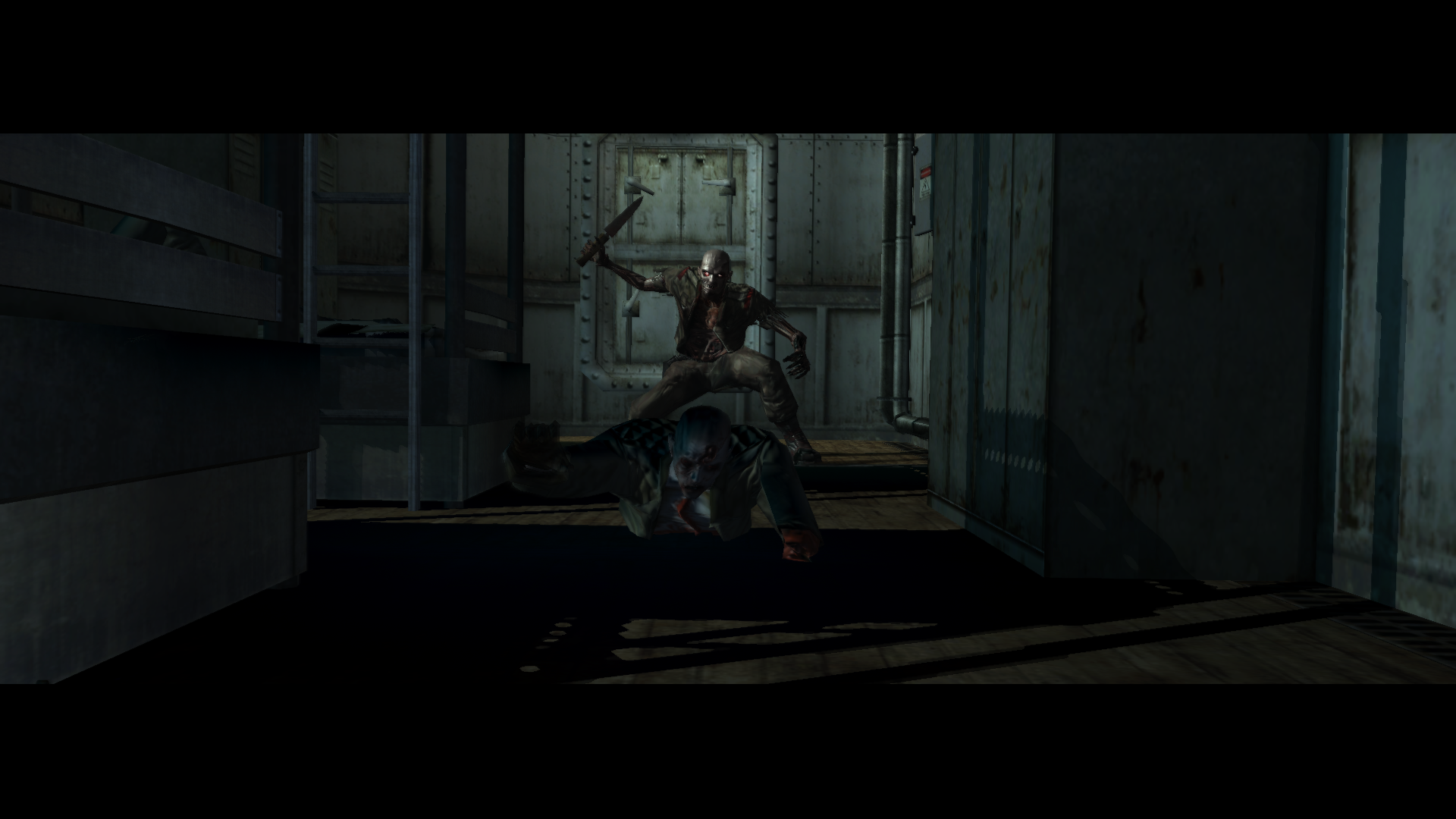
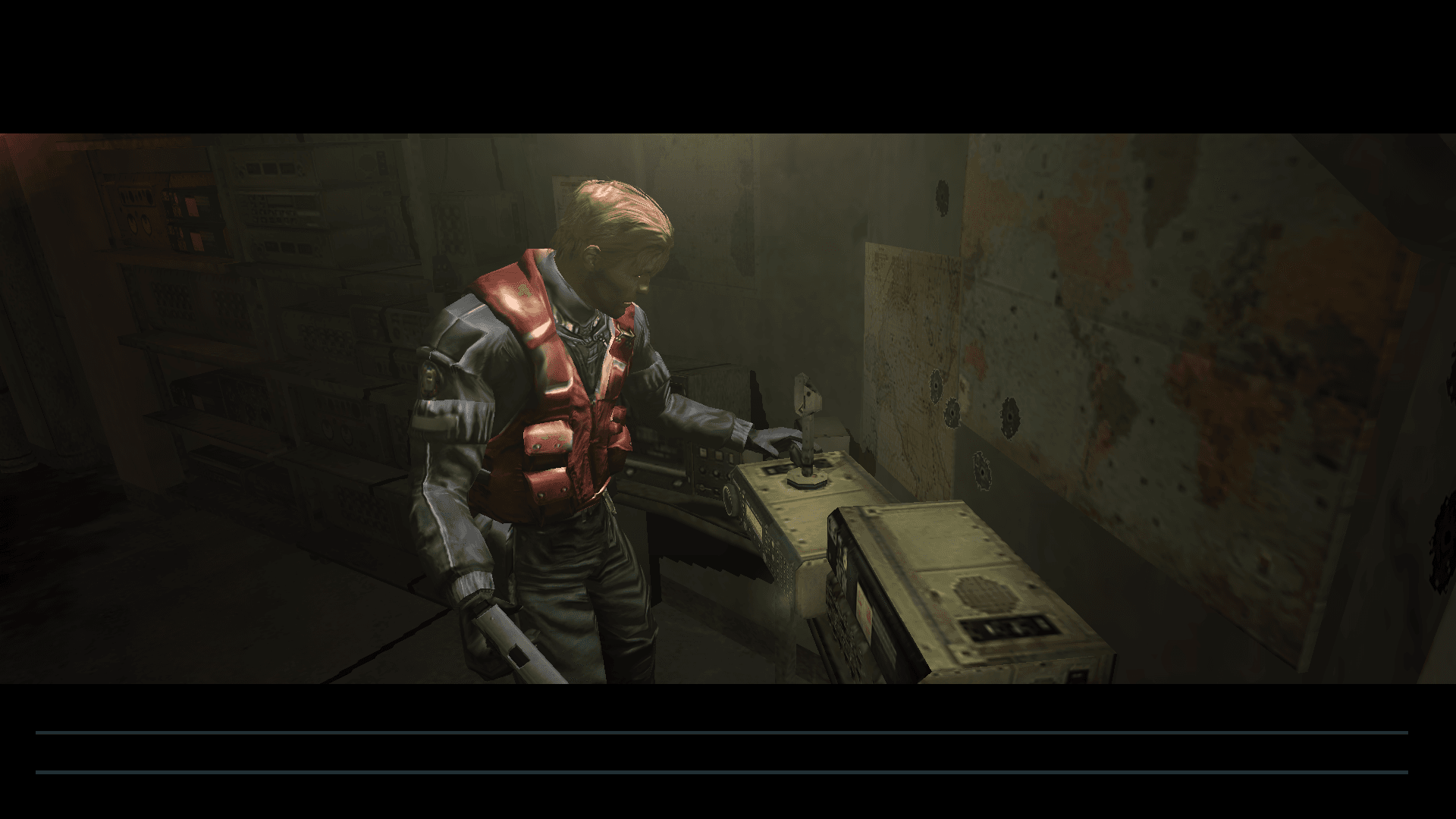
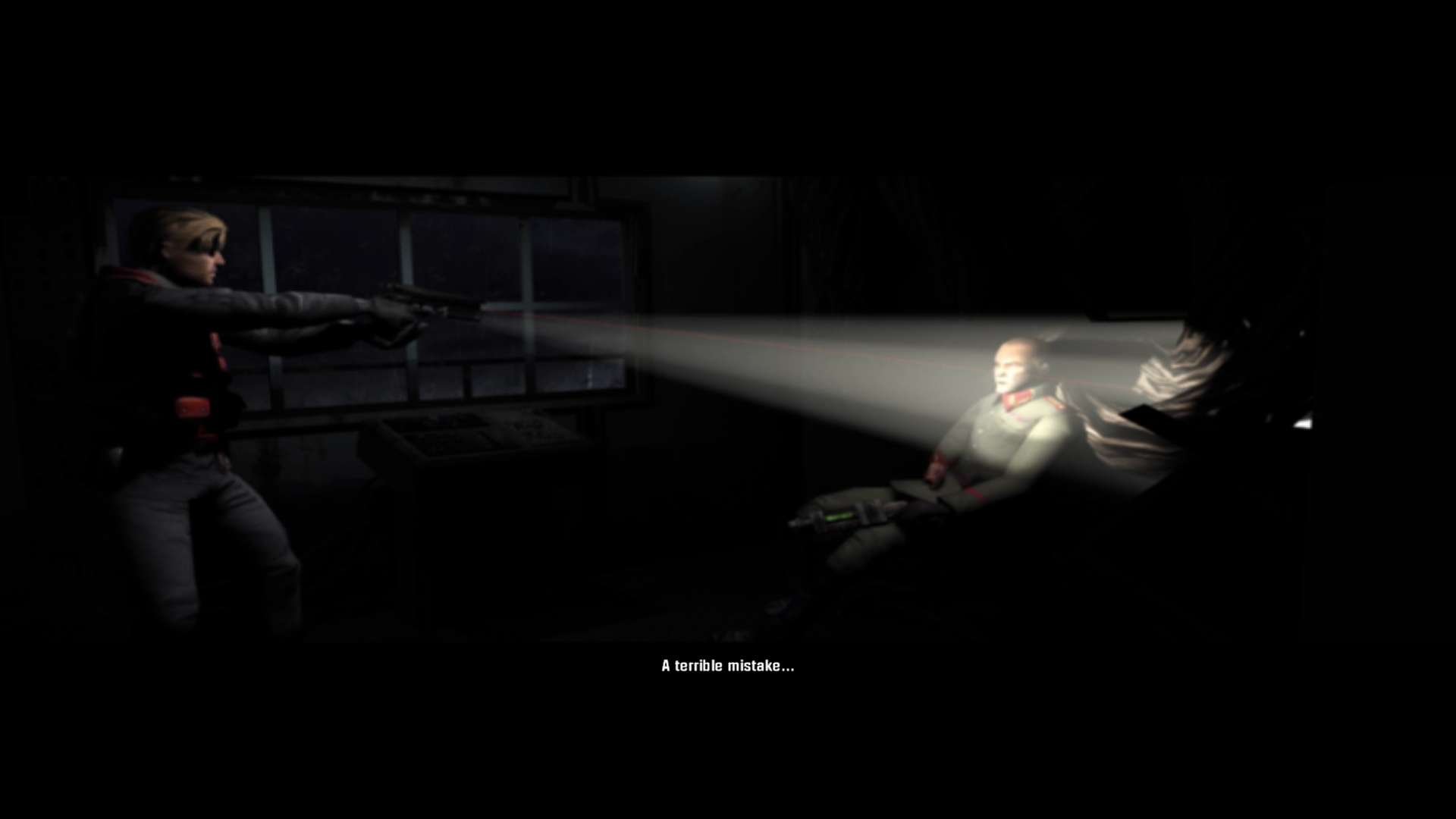
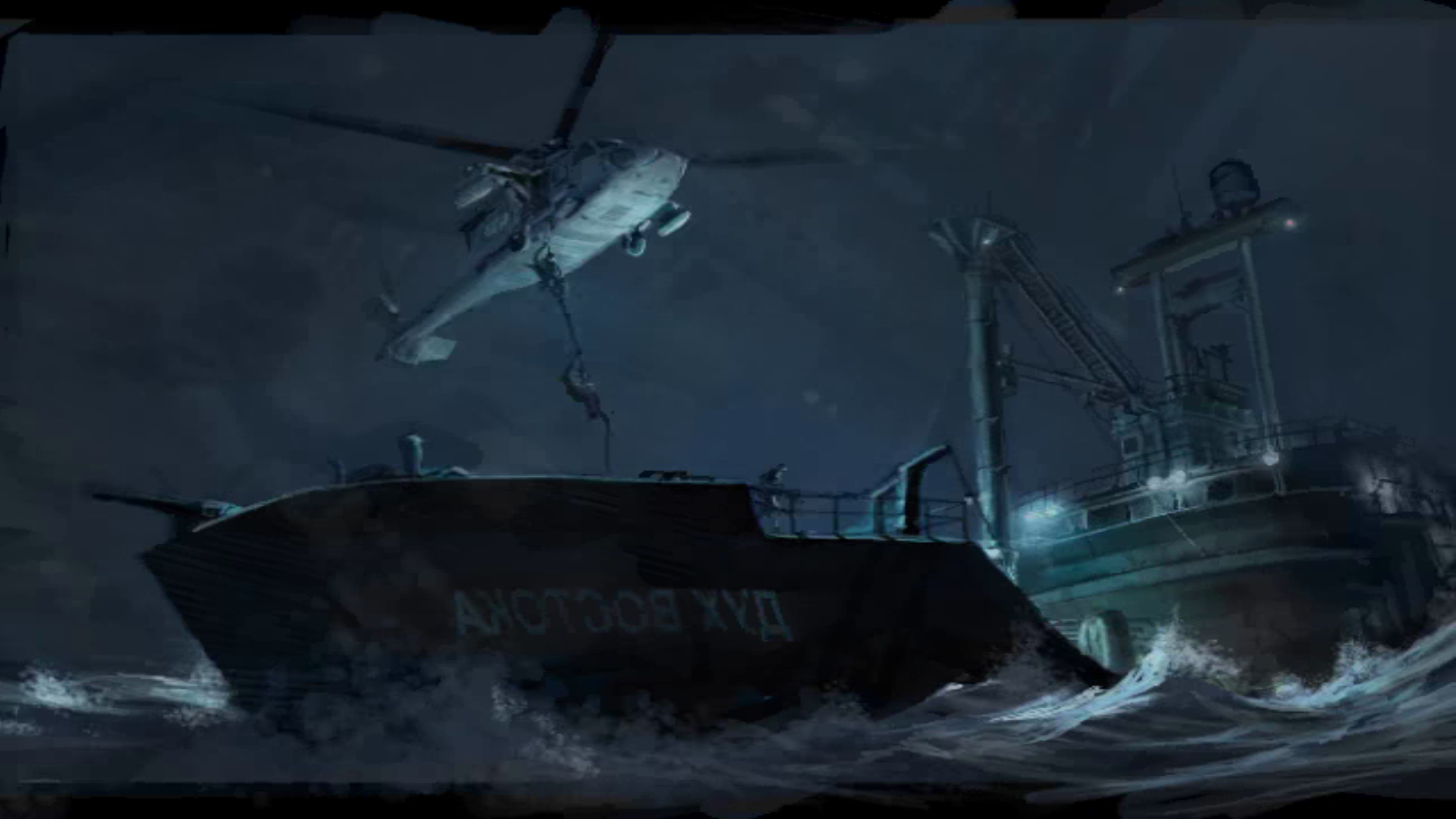
The story in Cold Fear is relatively simple: protagonist Tom Hansen, a US Coast Guard agent, is sent to investigate an SOS signal from a Russian ship caught in a violent storm in the Bering Strait. Once on board, the hero discovers a scene straight out of a horror film: corpses scattered everywhere, general chaos and a hostile crew who seem to have completely lost touch with reality. It's not long before a sinister conspiracy comes to light, and Tom witnesses the infection of crew members with a mysterious parasite that transforms them into monstrous creatures, whether alive or dead. Thus, an apparently mundane mission quickly turns into a knife-edge adventure, in which the protagonist must face zombies, mutants and the obscure plans of Russian scientists, all while struggling to keep his balance on a ship at the mercy of the waves.
Many of the journalists who played Cold Fear in 2005 considered the title a cheap copy of the famous Resident Evil 4, due to the numerous parallels that can be drawn between the two games. Both protagonists behave more like action movie heroes, fighting parasites, zombies and “strangers” (Spaniards in Leon's case and Russians in Tom's case), and the final confrontation pits them against an antagonist who voluntarily infects himself and undergoes grotesque mutations. Moreover, both narrowly escape explosions that would make Michael Bay envious. Sounds similar? Yes. But it's largely a coincidence. The two games were developed during the same period, and Resident Evil 4 initially had a completely different presentation, with a different visual style and a different type of main enemy (a ghostly stalker). Even if it didn't score points for story originality, Cold Fear remains a pleasant and familiar experience, like a B-grade action movie.
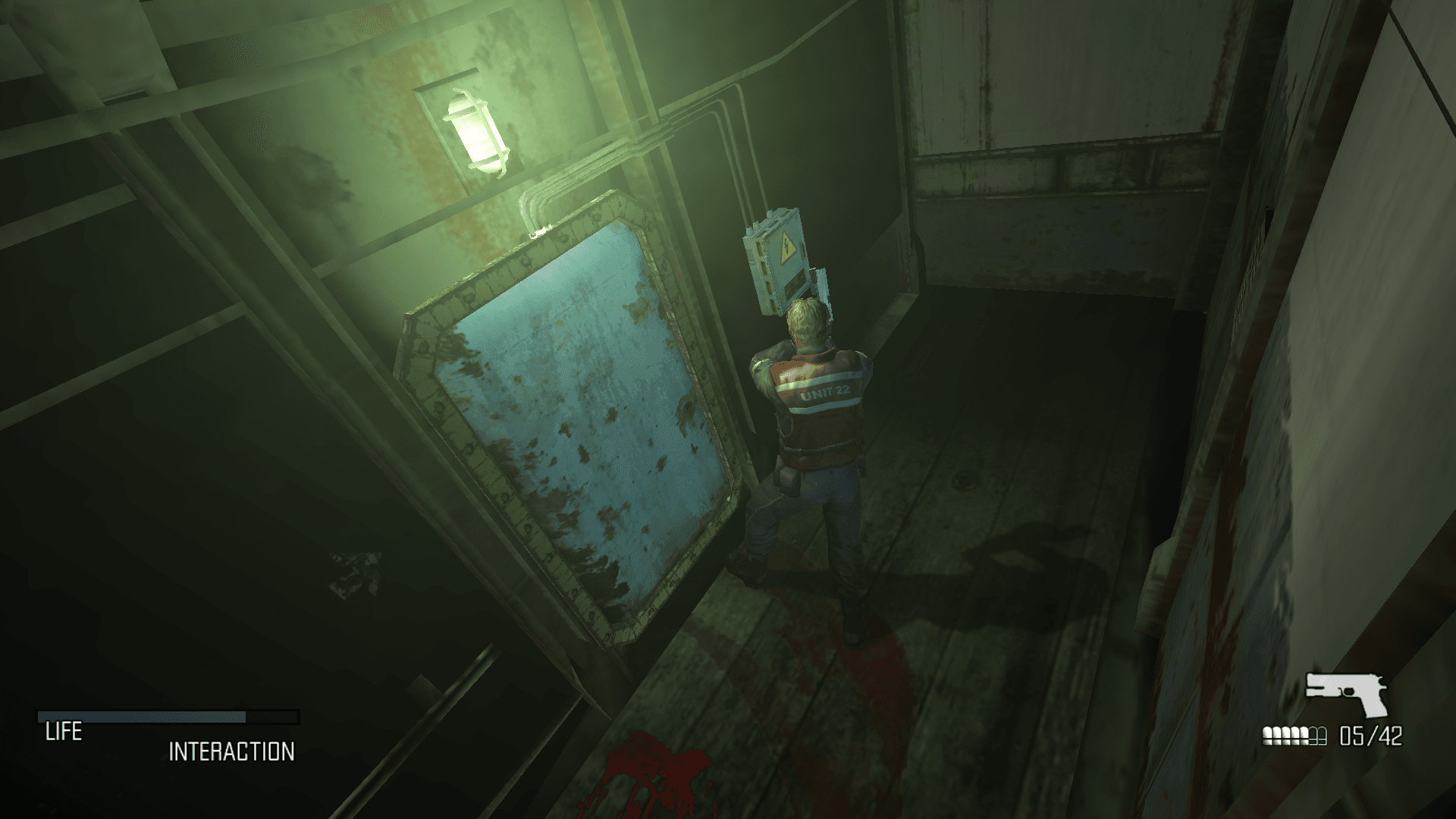
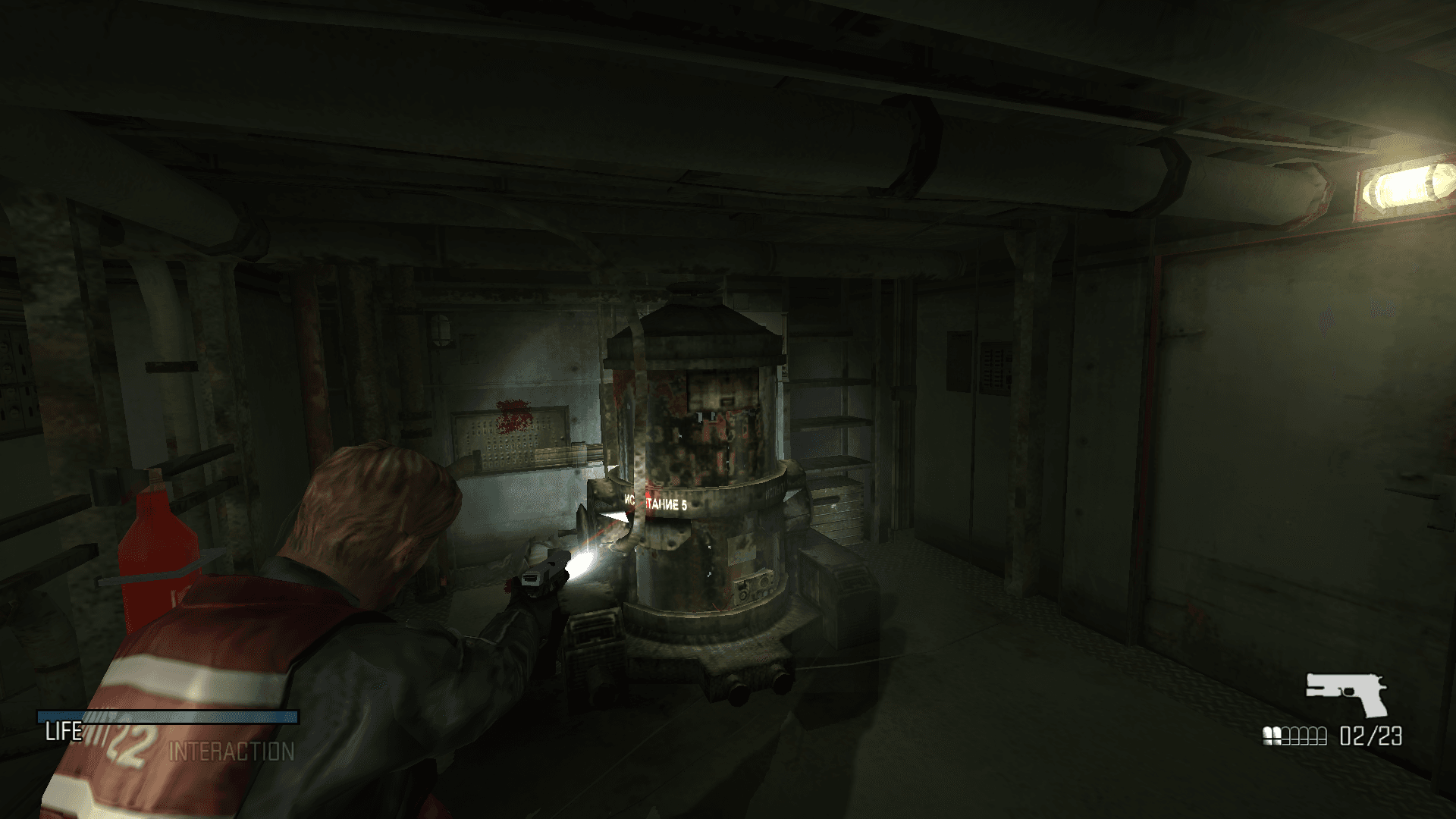
Technically, the title developed by Darkworks was, at the time of its release, clearly superior to Resident Evil 4. The player could use an over-the-shoulder camera to aim at enemies, and the novelty that clearly differentiated it from Capcom's famous game was the ability to move the character while aiming. Thus, battles were no longer simple marathons where the player ran from one corner of the room to another to shoot “at leisure”, but became confrontations in the true sense of the word. This system allowed players to adapt on the fly to critical situations and approach each battle in a much more tactical way.
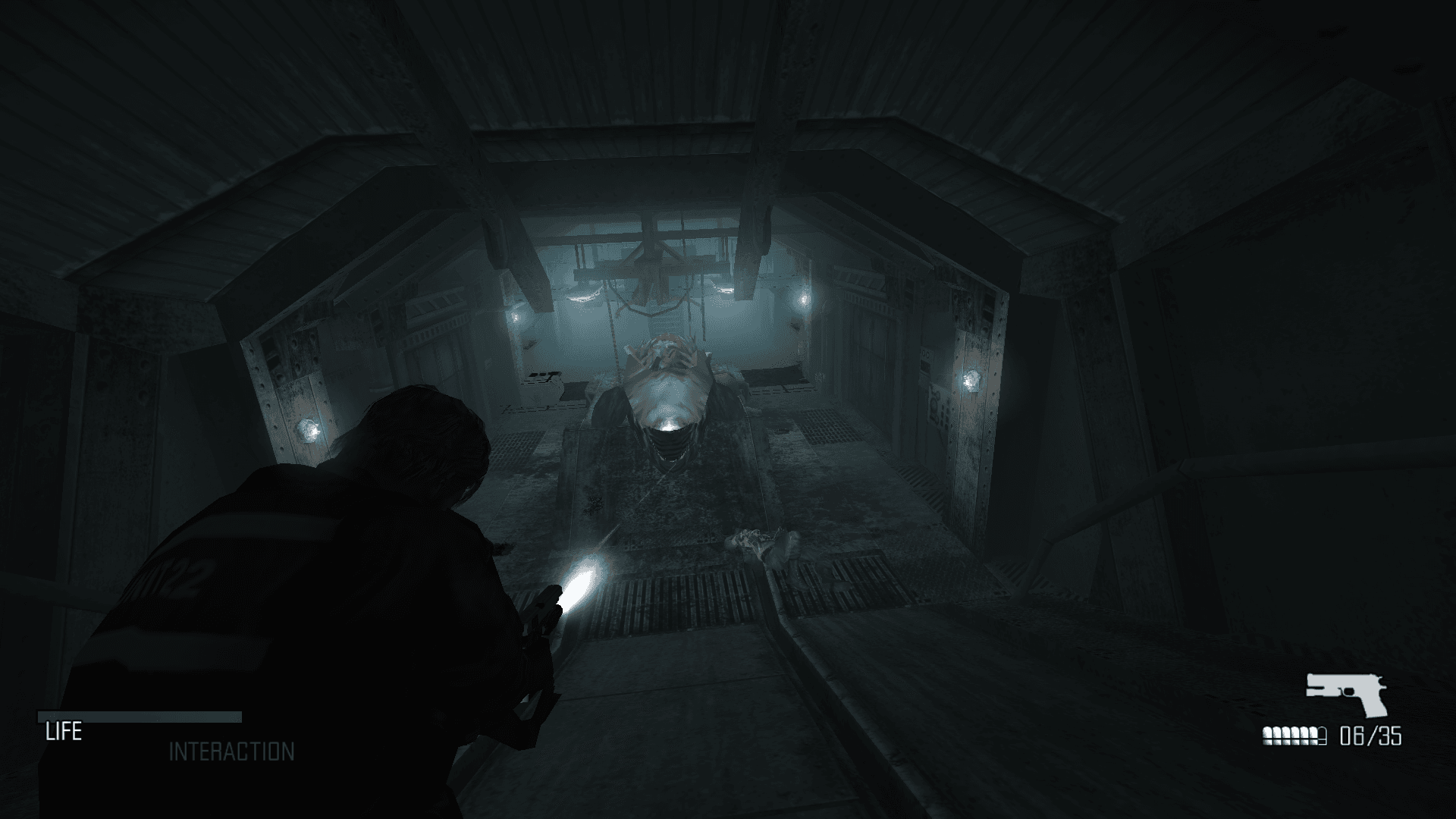
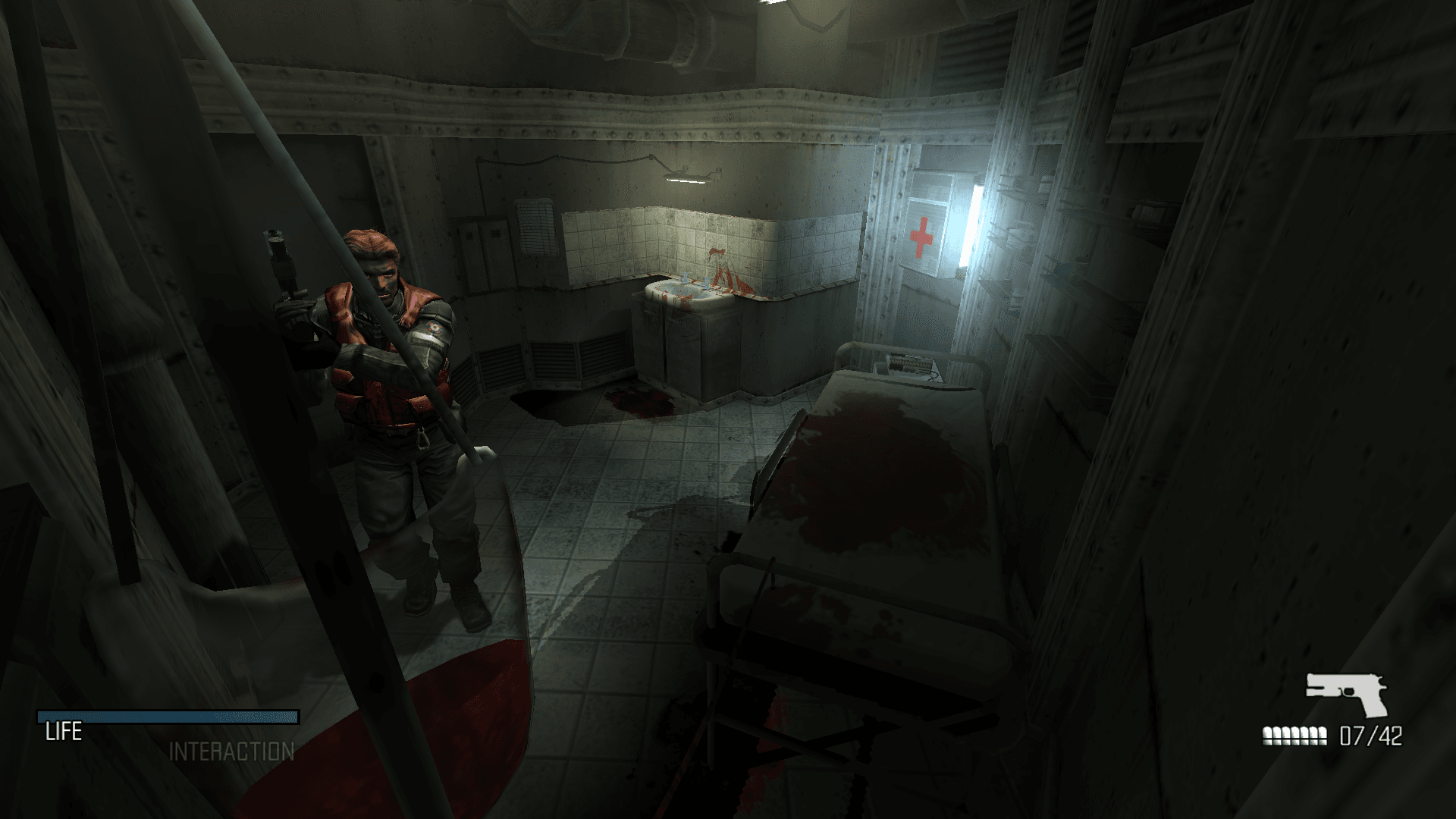
Even though it was released in a legendary year, the game isn't exactly perfect. There's no inventory management system, which is why healing items are used automatically the moment they're collected, and ammo is picked up instantly and cannot exceed a maximum value for each weapon. These less-than-inspired design decisions give the impression that the title was conceived more as an arcade game than a survival horror, even if the atmosphere and cinematography clearly indicate a horror orientation.
Retro Fever
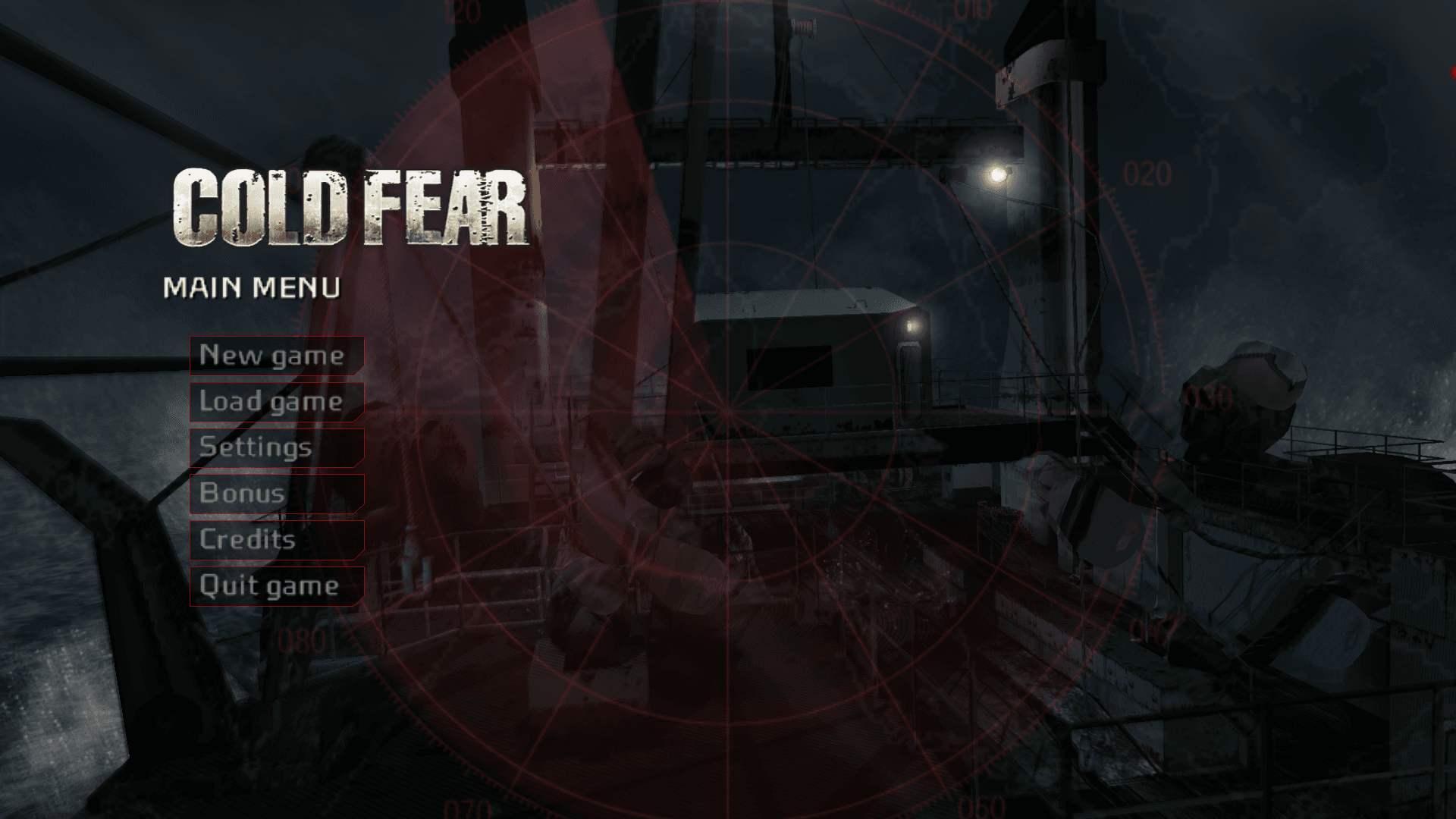
The effort to bring Cold Fear back to the market was considerable, especially due to the legal thicket behind the title. Even more impressive is the work done to make it not only compatible with modern systems, but also adapted to current sensibilities. In addition to native support for 16:9 format, the technical team added compatibility with HD, Full HD and 4K resolutions, support for high refresh rate monitors, as well as for a wide range of modern controllers (DualSense, Xbox Series, Nintendo Switch 2 Pro), but also retro ones (Xbox, Xbox 360, DualShock). Furthermore, for the first time in its history, Cold Fear can be played in seven different languages: English, German, French, Italian, Spanish, Russian and Polish!
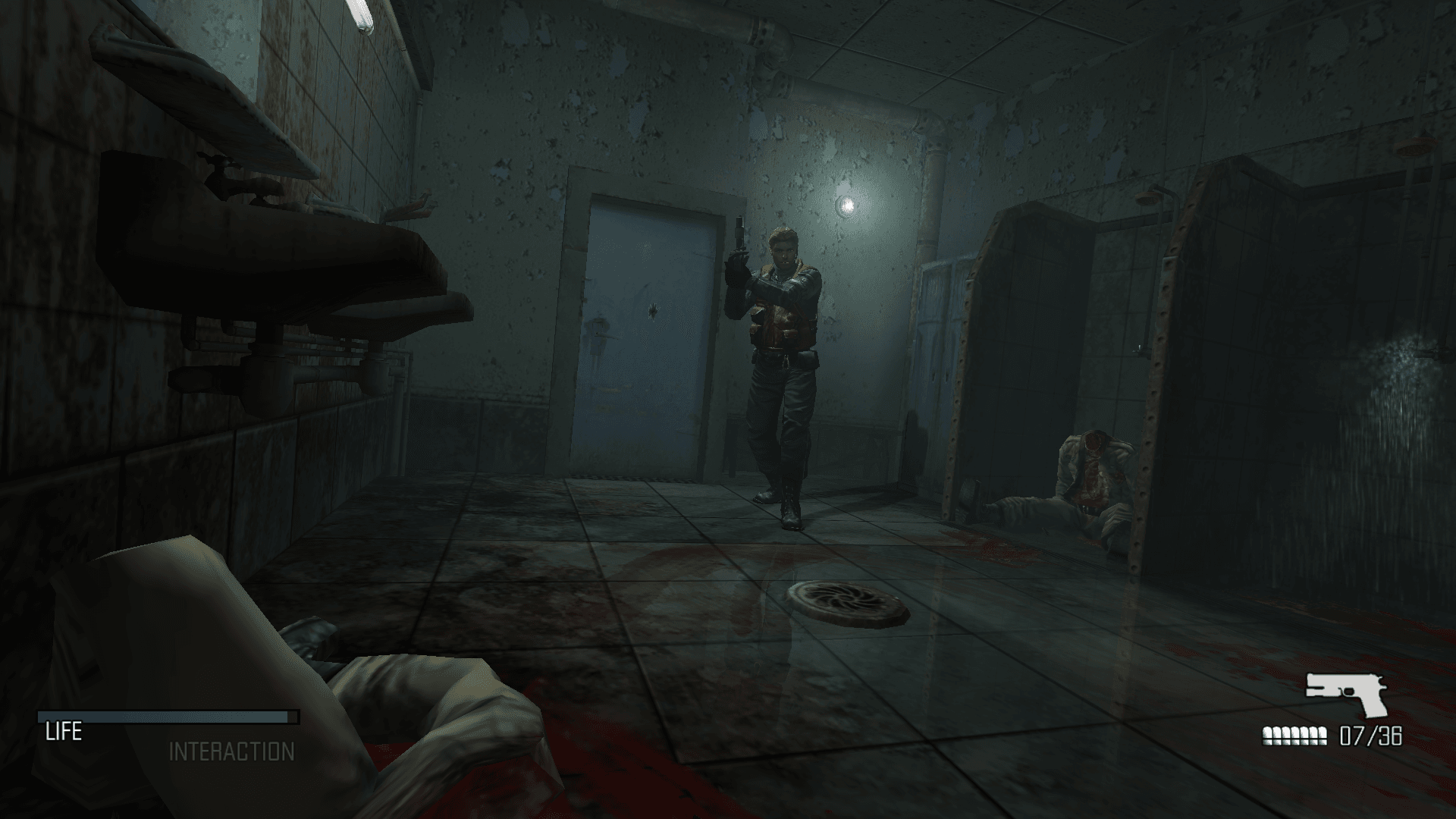
Unlike other official “remasters”, which amount to implementing a 16:9 mode with upscaling that most often ends up destroying the original textures, the engineers at GOG have worked real magic to preserve the atmosphere and charm of the 2005 title. The darkness remains oppressive, the enemies are as grotesque as they were 20 years ago, and the rooms that had minimal textures back then now look exactly as I “imagined” them when I first explored them. And, I honestly tell you, I had absolutely no problem running the game on my laptop equipped with an NVIDIA GeForce RTX 4060 graphics card.
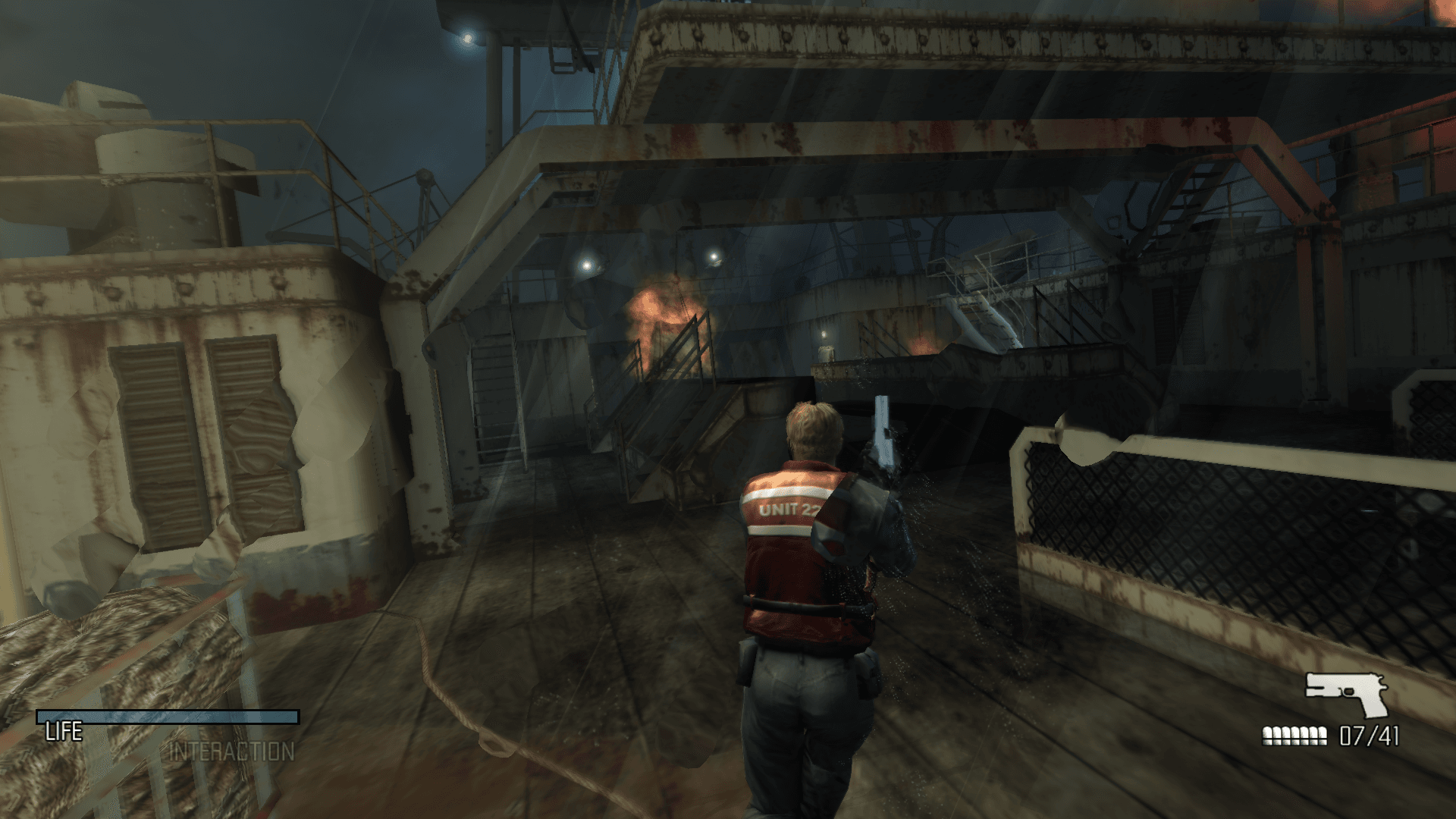
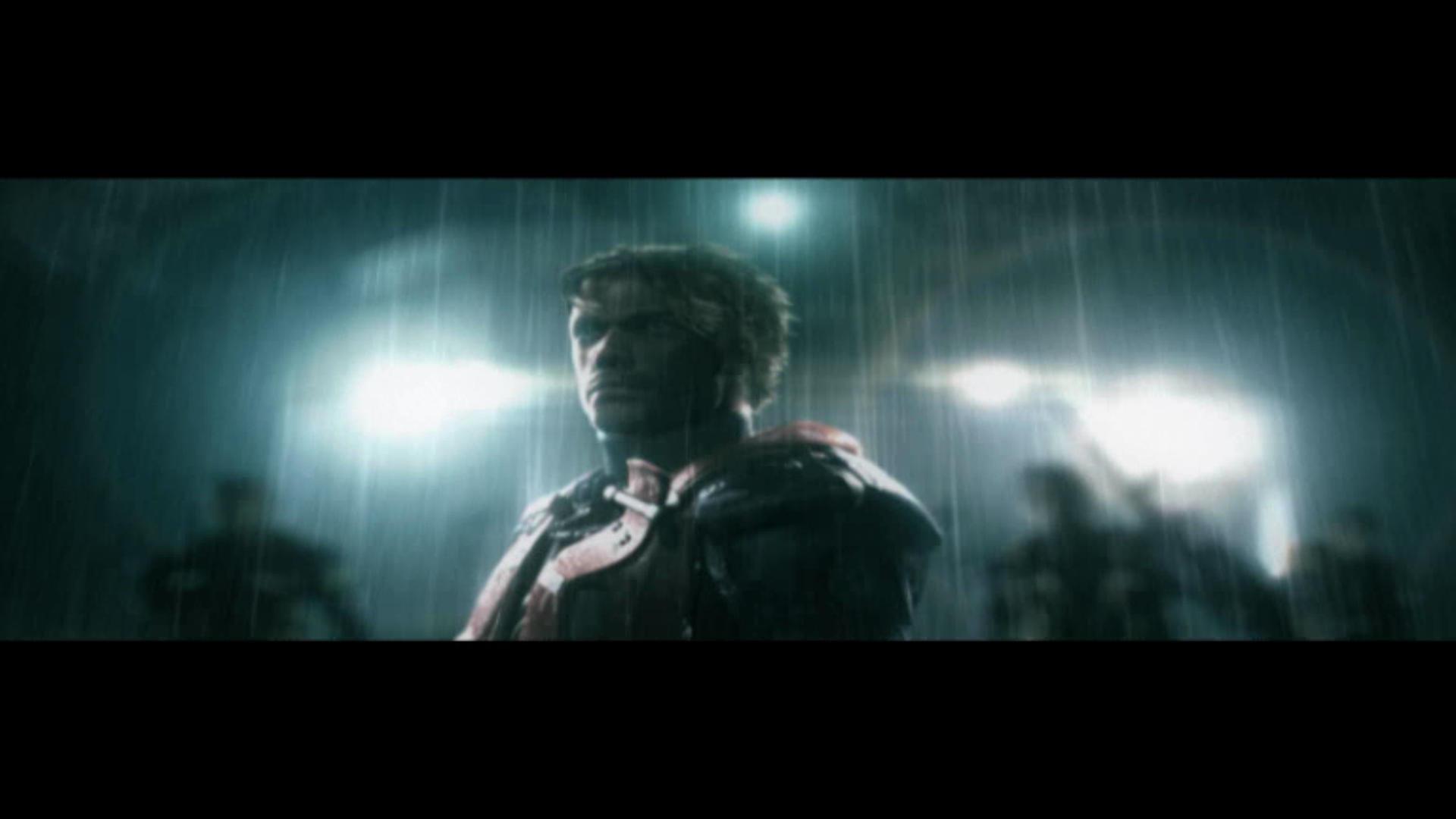
Cold Fear is a solid recommendation for all survival horror fans who didn't get to experience this title at its release. Even if, in 2005, it wasn't fully appreciated for its ambitions and technical solutions, its inclusion in the GOG Preservation Program represents a well-deserved second chance for Darkworks' game. It's also an excellent opportunity for curious players to discover a true hidden gem of the genre, brought back to life with respect for the original material and adapted to modern requirements.
Thanks to GOG.com for the review code and the opportunity to play Cold Fear!

Available on: PC (Steam and GOG), originally on PlayStation 2 and Xbox
Played on: PC (GOG)
Release date: 2005
Developer: Darkworks, GOG
Publisher: Ubisoft (2005), GOG/Atari (2025)
Plus
- Oppressive horror atmosphere
- Tactical combat
- Modern optimisations
Minus
- No inventory management
- The story
0 votes
Scroll down here and stay on the page for at least 30 seconds to vote.
Pick a score from 0 to 10 (halves are allowed).