
Final Fantasy Collection (GOG) – Review

The GOG Preservation Program goes beyond simple compatibility!
For several years, the video game industry has entered a strange phase where games from the past exist everywhere, but can be accessed in their true forms less and less often. Almost every important title is “brought back”, “remade”, “reinterpreted” or “optimised” until it resembles what you imagined the game to be at the time more than the original product. Meanwhile, the authentic version slowly disappears, not because it’s no longer wanted, but because it’s no longer supported. This is where the idea of preservation comes in. Not nostalgia, not retro marketing, nor the convenience of re-releasing the same games with every hardware generation – I don't want to name names, but Skyrim and GTA V just fell out of my pocket, not to mention The Last of Us. Preservation means being able to open an old game and understand why it looked, sounded, and functioned exactly as it did! To see the technical limitations, the pacing, the design, and even the frustrations that were part of the experience. But for it to work immediately after installation.
We've discussed GOG's role in this context before in GRIND, when we talked about how the platform tries to keep games functional, not just available. The GOG Preservation Program goes beyond simple compatibility; the idea isn't to adapt the past to the present, but to bring the present close enough to the past so that games can exist intact. And if there's one series that needs this, it's Final Fantasy. Because Final Fantasy isn't just a long-running franchise, but one that has evolved radically from one decade to the next. Each generation has almost completely changed the series' language, which means that without access to the original versions, you can no longer understand the evolution of the JRPG genre, only its modern result.
That's why the appearance on GOG of Final Fantasy III (3D Remake), Final Fantasy IV (3D Remake), Final Fantasy VIII Remastered and Final Fantasy IX isn't just a re-release. It's, rather, a reconstruction of a historical timeline with four different moments from the series' identity, placed in an environment where they can be played without reinterpretation, without an emulator, and without external digital interventions or divine forces.
Why Final Fantasy?
Few series in video game history have managed to remain relevant for decades without repeating the same formula. Final Fantasy has never functioned as a classic franchise, where each title refines the mechanics of the previous one. On the contrary, it has evolved through deliberate ruptures. Each generation has changed the tone, the rules, and even player expectations, to the point where two consecutive titles can seem to belong to different eras of the medium. For this reason, Final Fantasy cannot be viewed as a coherent series in the traditional sense, but as a succession of interpretations of the RPG idea. Sometimes it has meant classic exploration-based adventure, other times character drama, other times technological experiment or cinematic spectacle. The series' identity lies not in a common mechanic or universe, but in the freedom to constantly change how the story and systems communicate with the player. That's why there's a good chance that if you ask five gamers what their favourite Final Fantasy is, each might give you a different answer with solid 7s for why X and not Y or Z.
The problem arises when these stages become inaccessible. Without their functional versions, games remain merely cultural benchmarks mentioned, not lived experiences. And in the case of Final Fantasy, the experience matters more than the final result. The slower pace, the rigid interface, the way emotions were presented, or resource economy were not imperfections, but the technological expression of the moment. They define how the genre was understood then. Modern remakes offer contemporary interpretations and resolve access barriers, but at the same time translate the design or concept into a current language. Games become more fluid, more spectacular, and easier to navigate, but they lose the context that explained why they worked that way. In the absence of original or near-original versions, the series seems to have always been modern, when in fact each stage represented a change.
This is where the relevance of preservation comes in. Not as nostalgic recovery but as the preservation of something from that moment. Access to these versions allows not only for the stories to be experienced, but also for the observation of how the player was guided, limited, and emotionally involved through different systems. Final Fantasy thus becomes not just a collection of titles, but a chronology of the transformation of the Japanese RPG. The selection of the four games released on GOG illustrates precisely this transition. They are not just four popular episodes, but four distinct ways of building the experience with a structure based on mechanics, character drama, technological experiment, and a conscious return to tradition. Together, they tell not only the story of the series but also that of the medium in which the series grew, and us, the gamers.
Final Fantasy III (3D Remake)
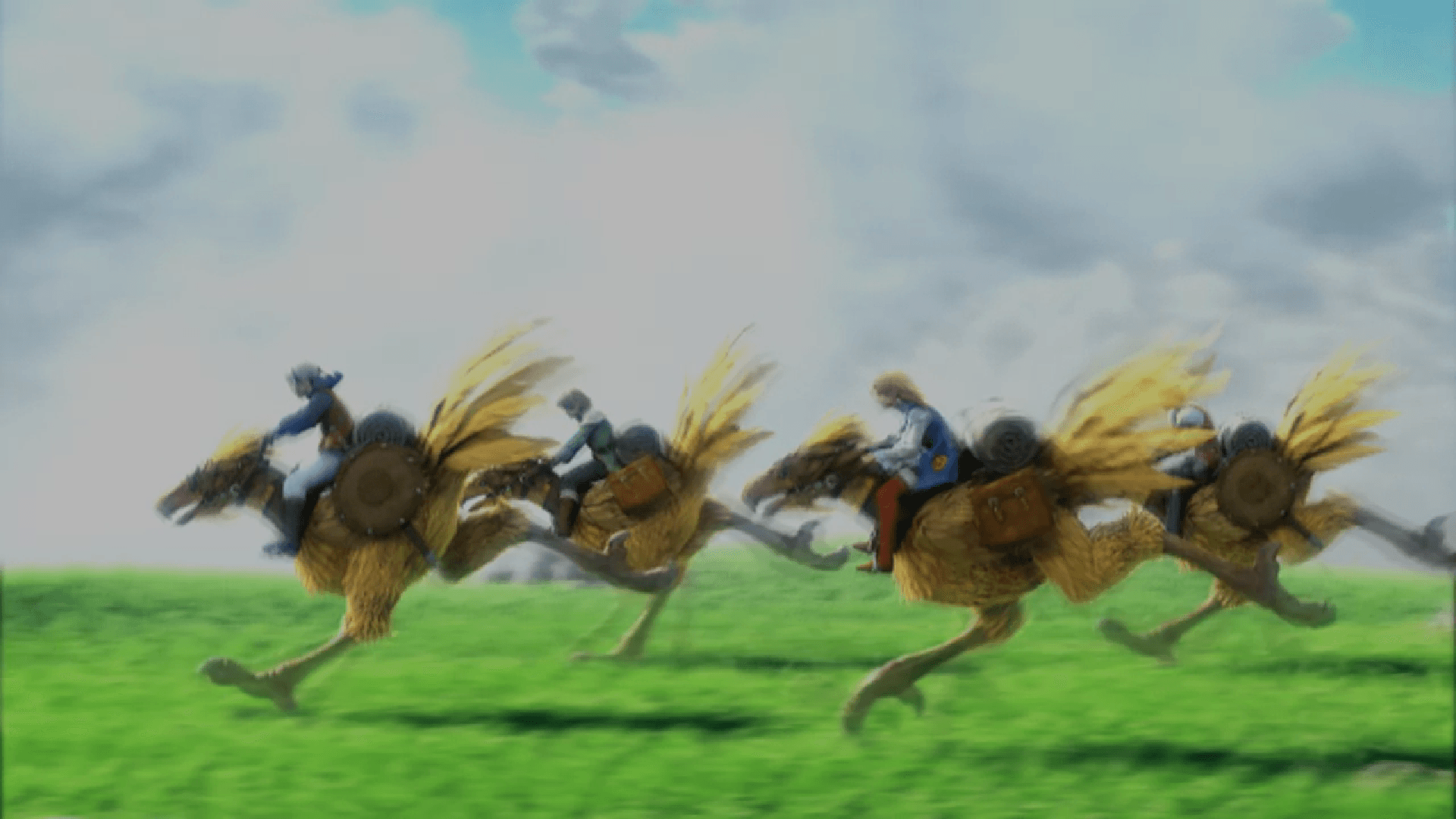
While many games in the series are remembered for characters or narrative moments, Final Fantasy III is remembered for the rules it established. It's not the most dramatic, nor the most cinematic, nor the most widely recognised by the general public, but it is one of the most important. Practically, this is where the idea that a character's identity is not fixed, but built through the system, first appears.
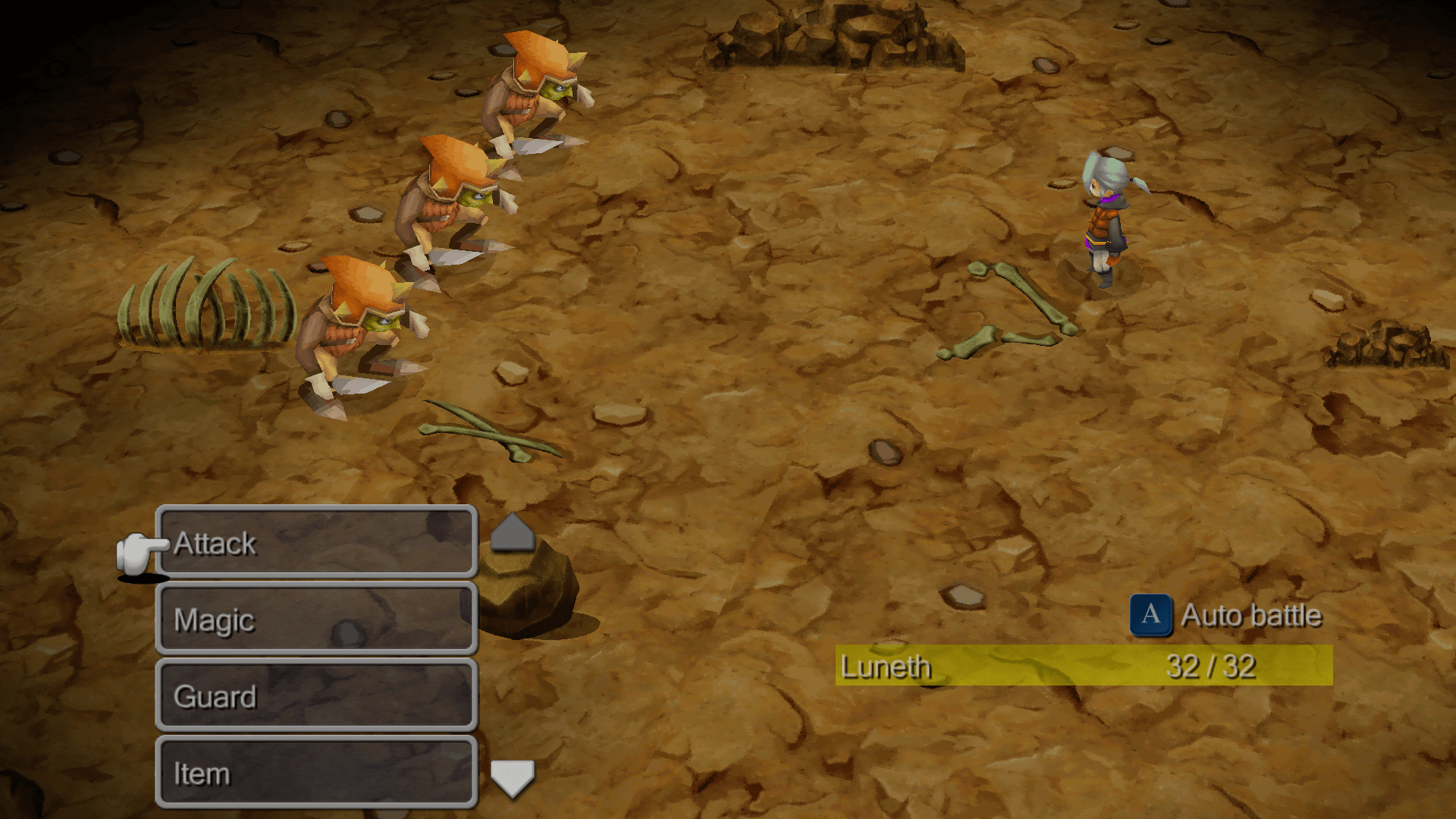
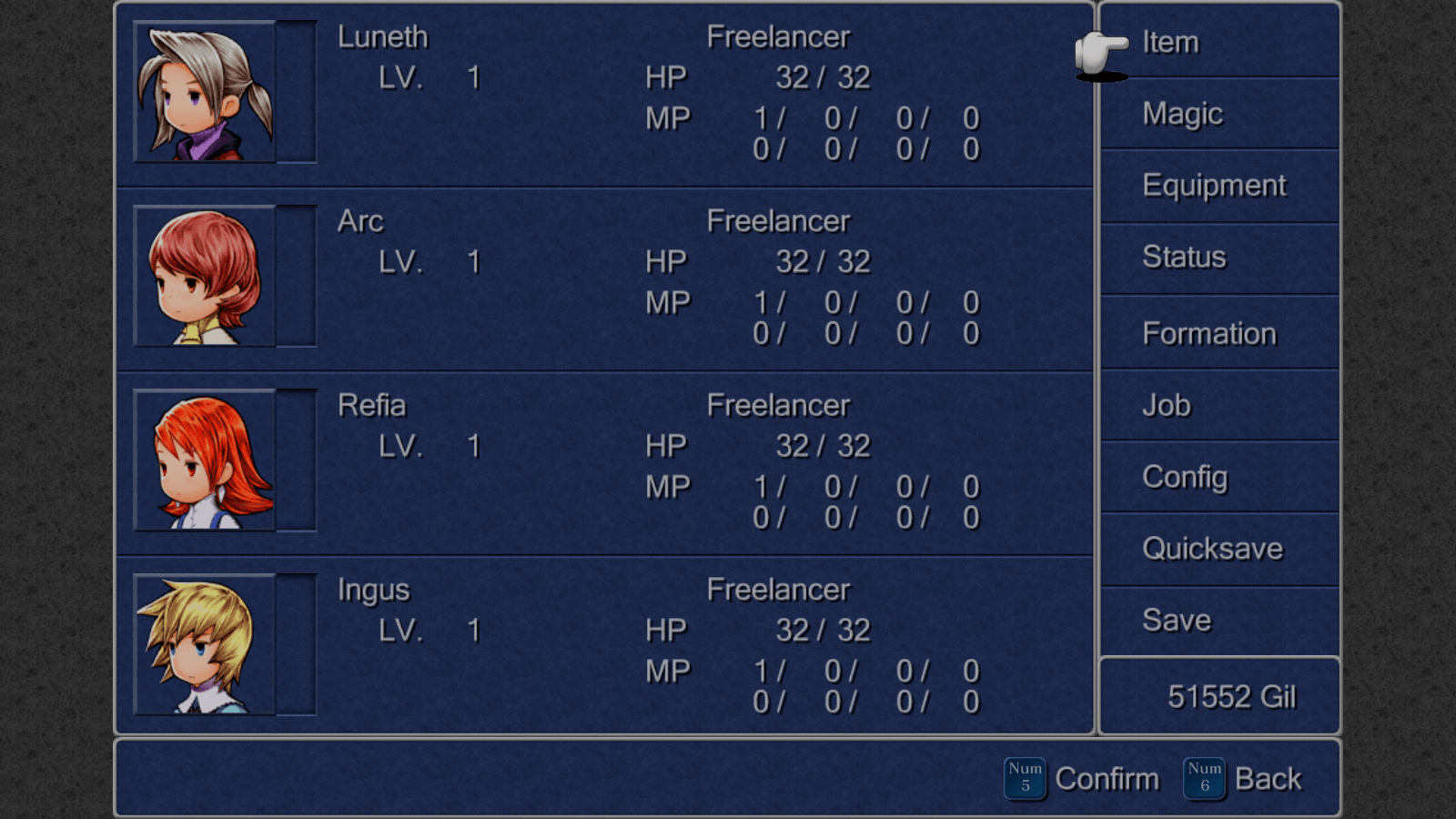
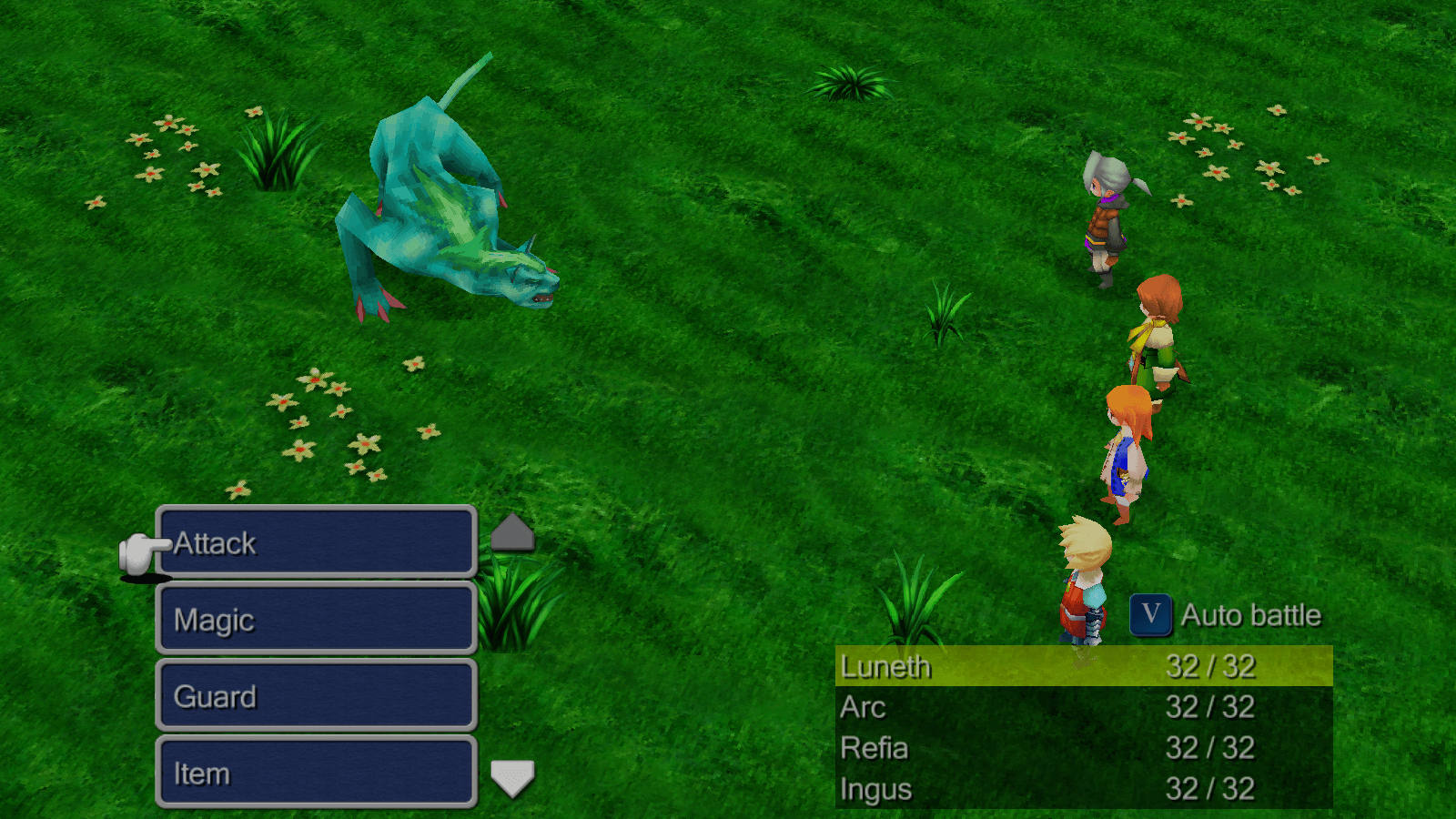
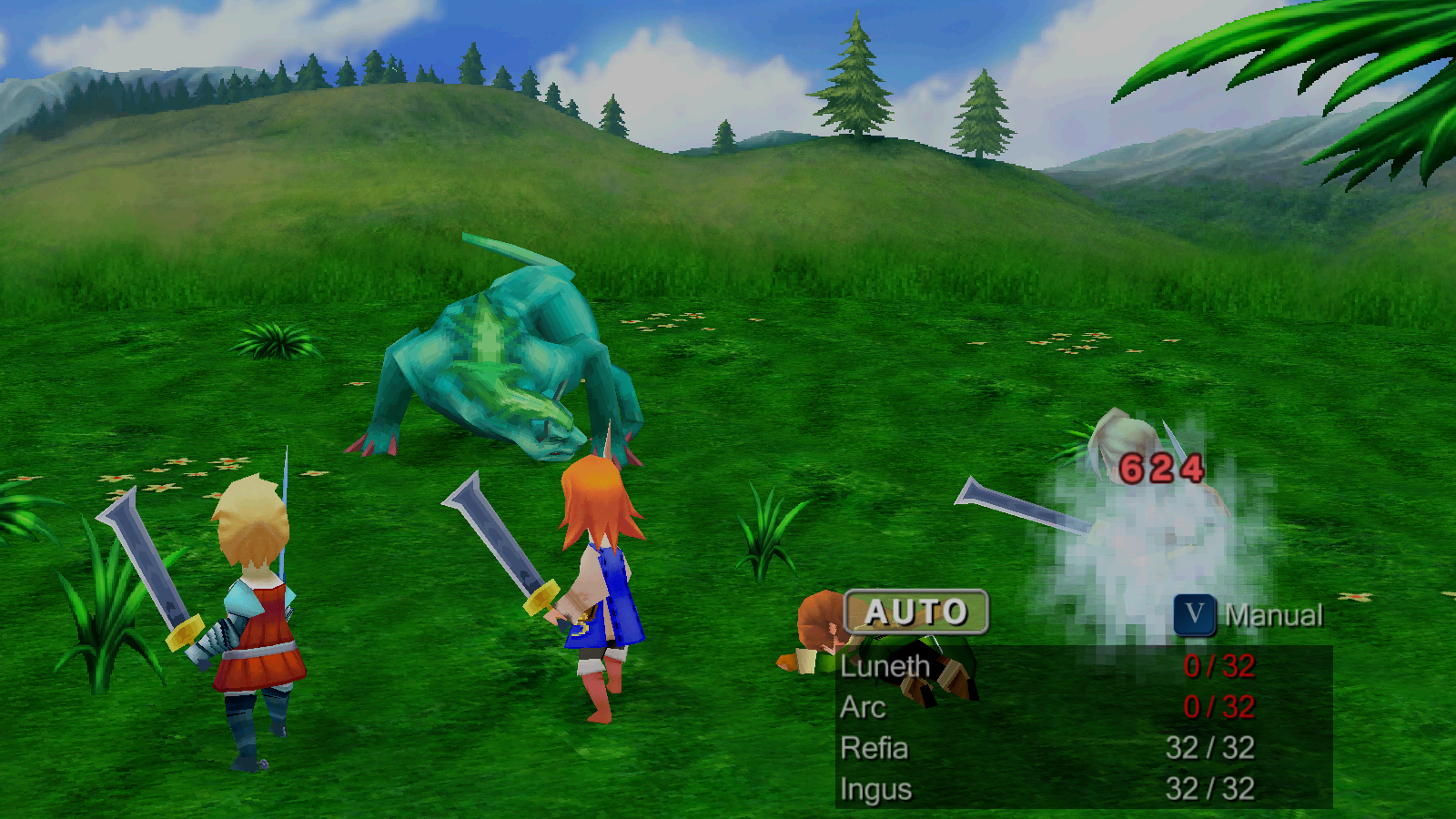
The story is simple, even by the standards of the time, where four young people chosen by crystals embark on an adventure to restore the world's balance. There are no elaborate personal conflicts or developed relationships in the foreground. The characters are more roles than individuals, and that's precisely what allows the game to focus on mechanics. Instead of defining heroes by personality, as we see later, it defines them by what they can do. The job system is the central element and the reason why the game remains relevant today. For the first time, the player can freely change classes and build their own team according to the situation, not the story. You don't choose a warrior because it's written that way, but because you need them in a certain dungeon or against a certain boss. The game doesn't push you forward just through narrative progression, but through understanding the systems.
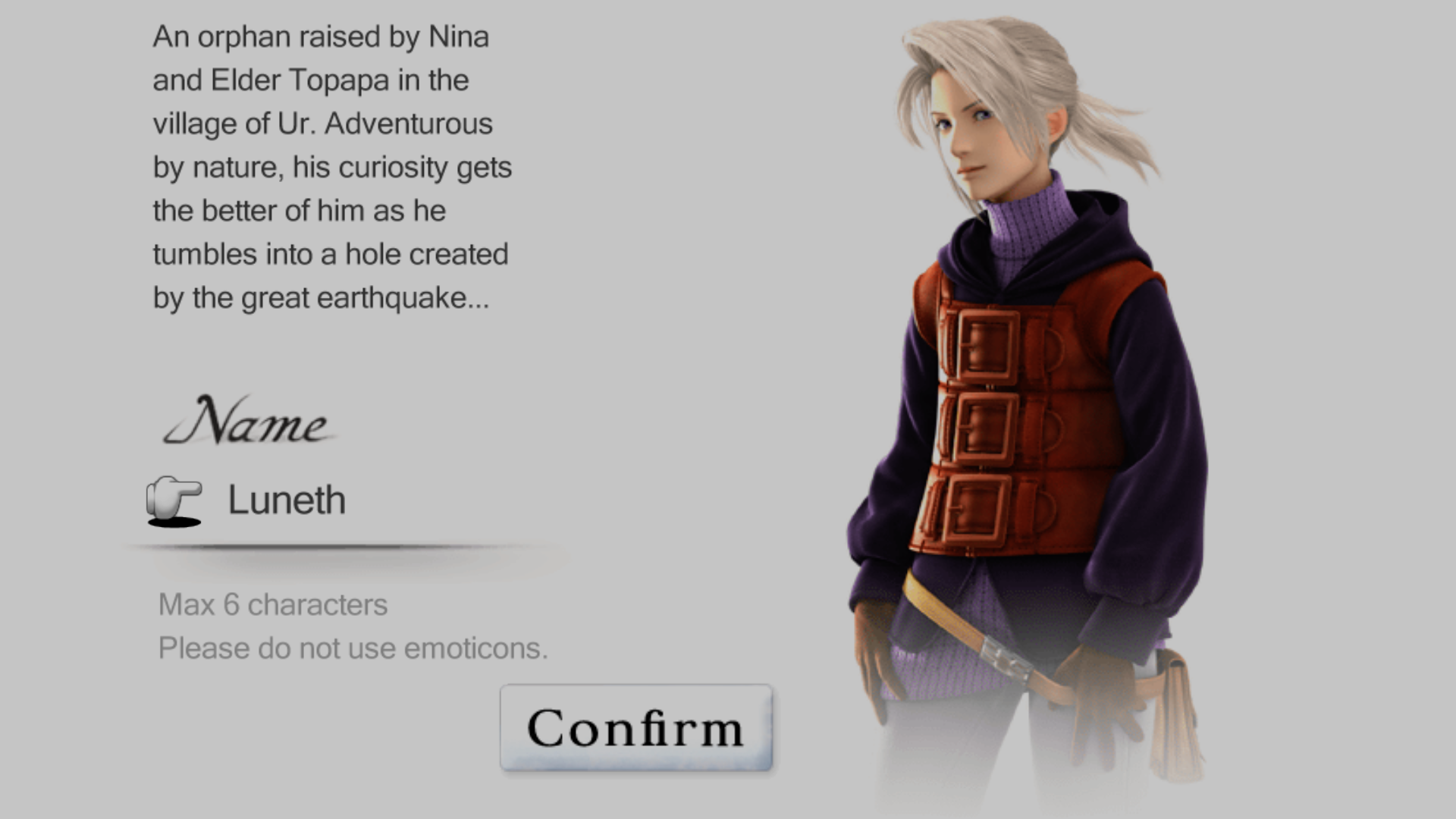
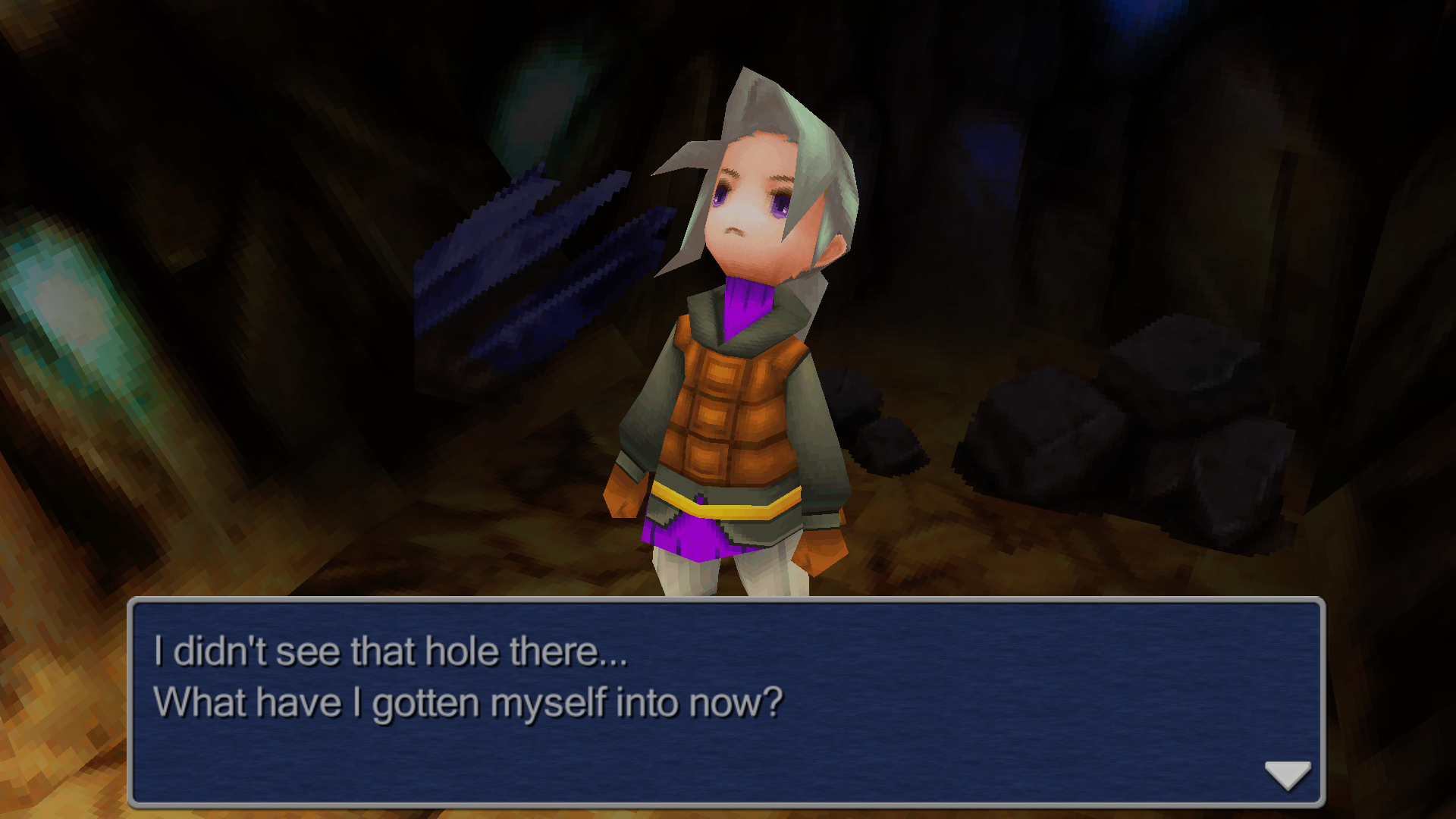
The 3D remake version changes the presentation, but doesn't alter the essence. The models and scenes are more expressive, and the characters receive more clearly defined personalities, but the structure remains rigid in a good way, meaning you still have to adapt to the game, not the other way around. The pace, requirements, and limitations are the same, and that makes it different from modern reinterpretations of the series. This is where the GOG version becomes relevant. Not because it adds content, but because it removes the technical barrier. Final Fantasy III existed for a long time as a title difficult to access in its complete form, either through incomplete ports or improvised solutions. Now it runs natively on current systems without external interventions, preserving the exact structure that defines the game.
Viewed today, it might seem sparse or even unfair at times. But that's precisely what makes it an important title; it's the point where Final Fantasy wasn't yet the story of characters, but of systems. An RPG where progress doesn't come from level or equipment, but from how you understand the rules and use them to your advantage.
Final Fantasy IV (3D Remake)
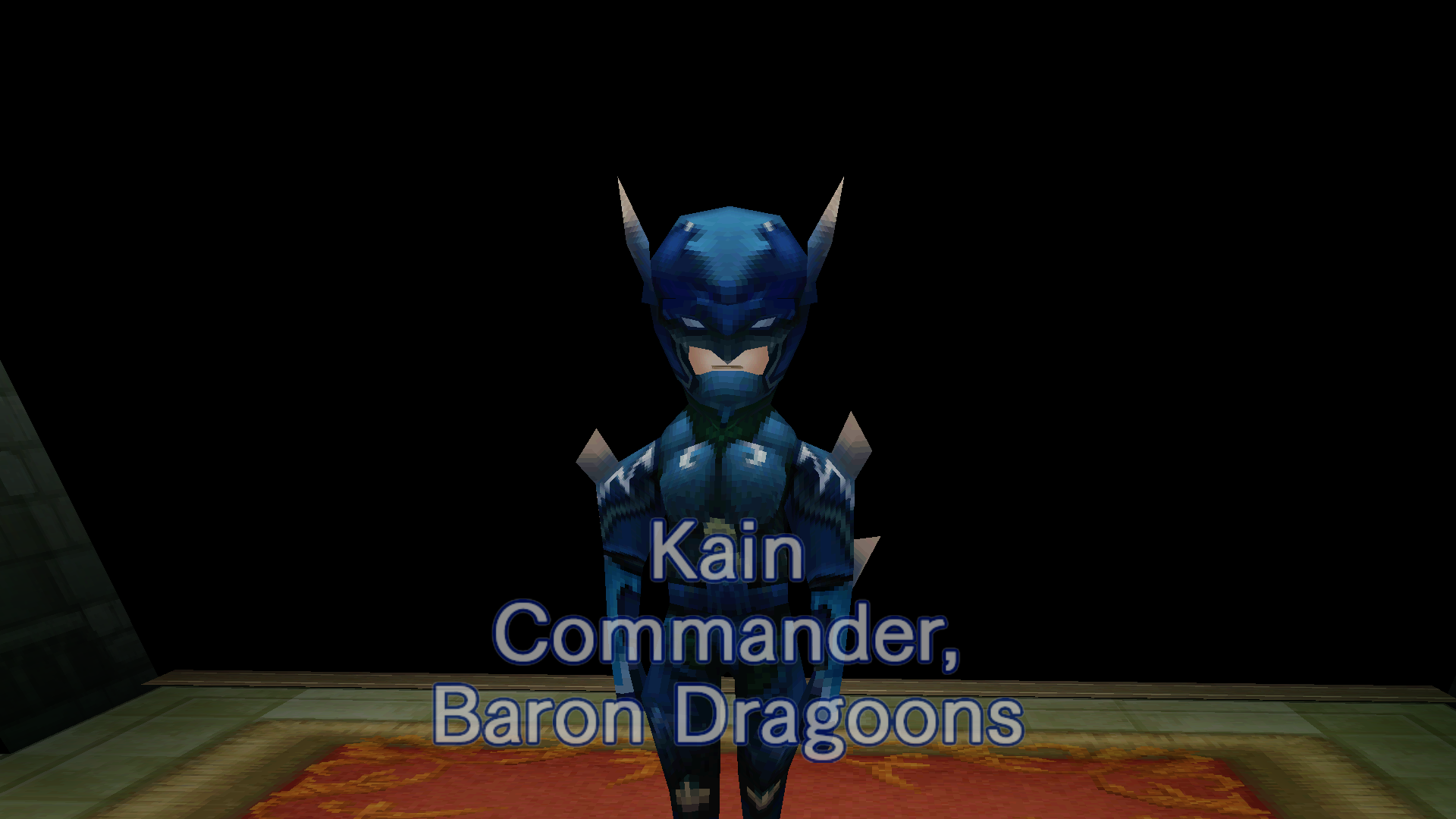
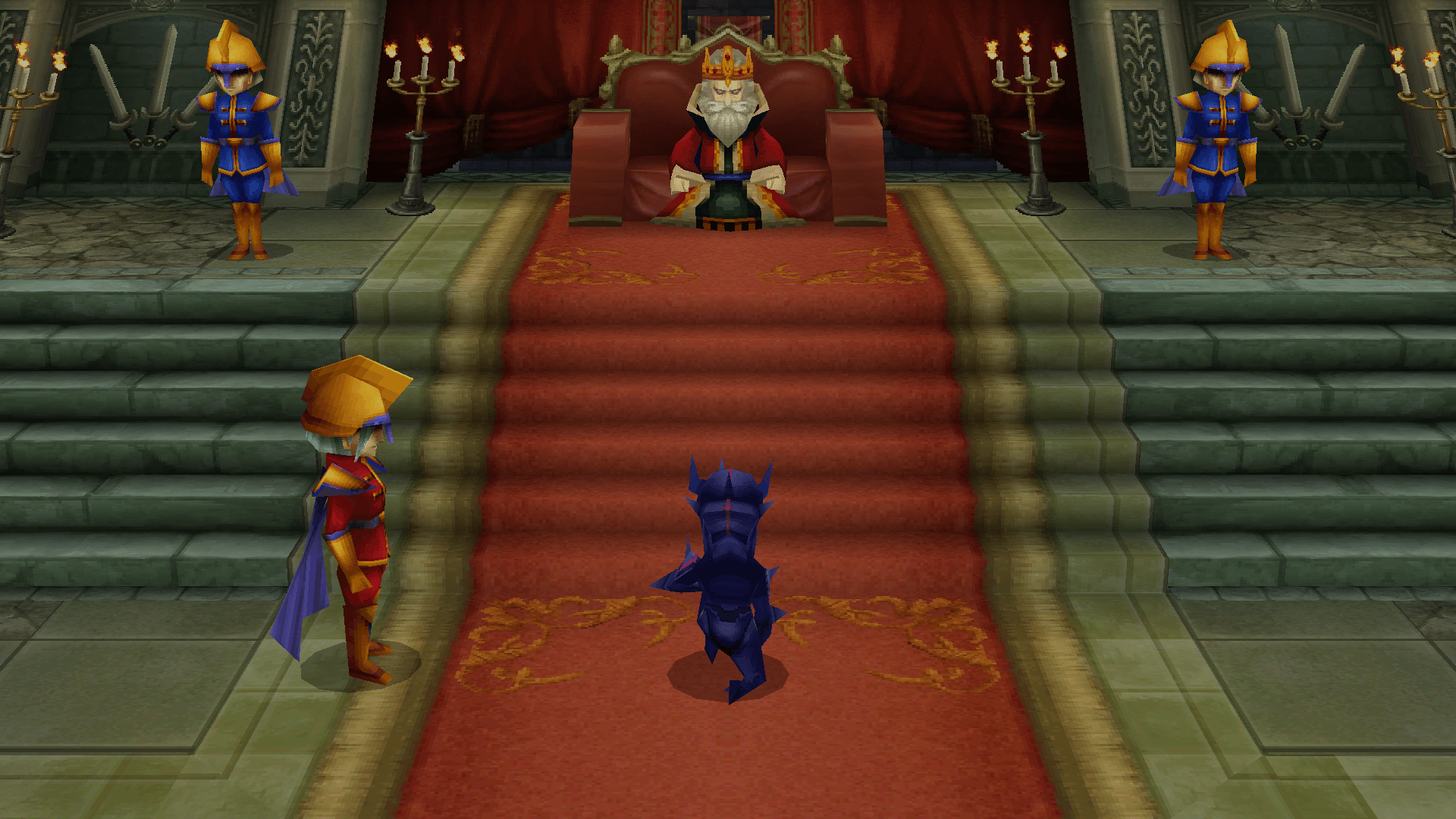
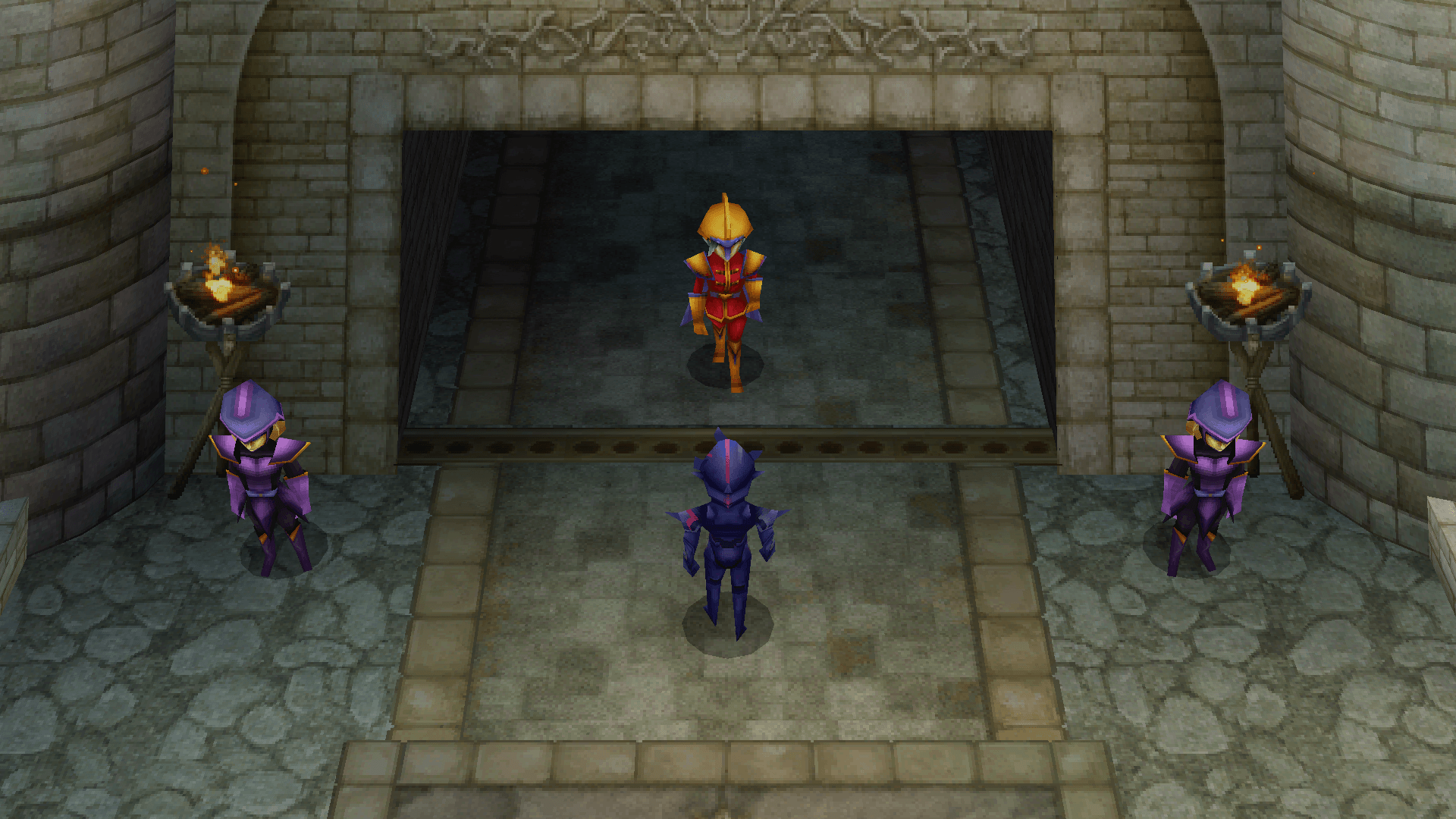
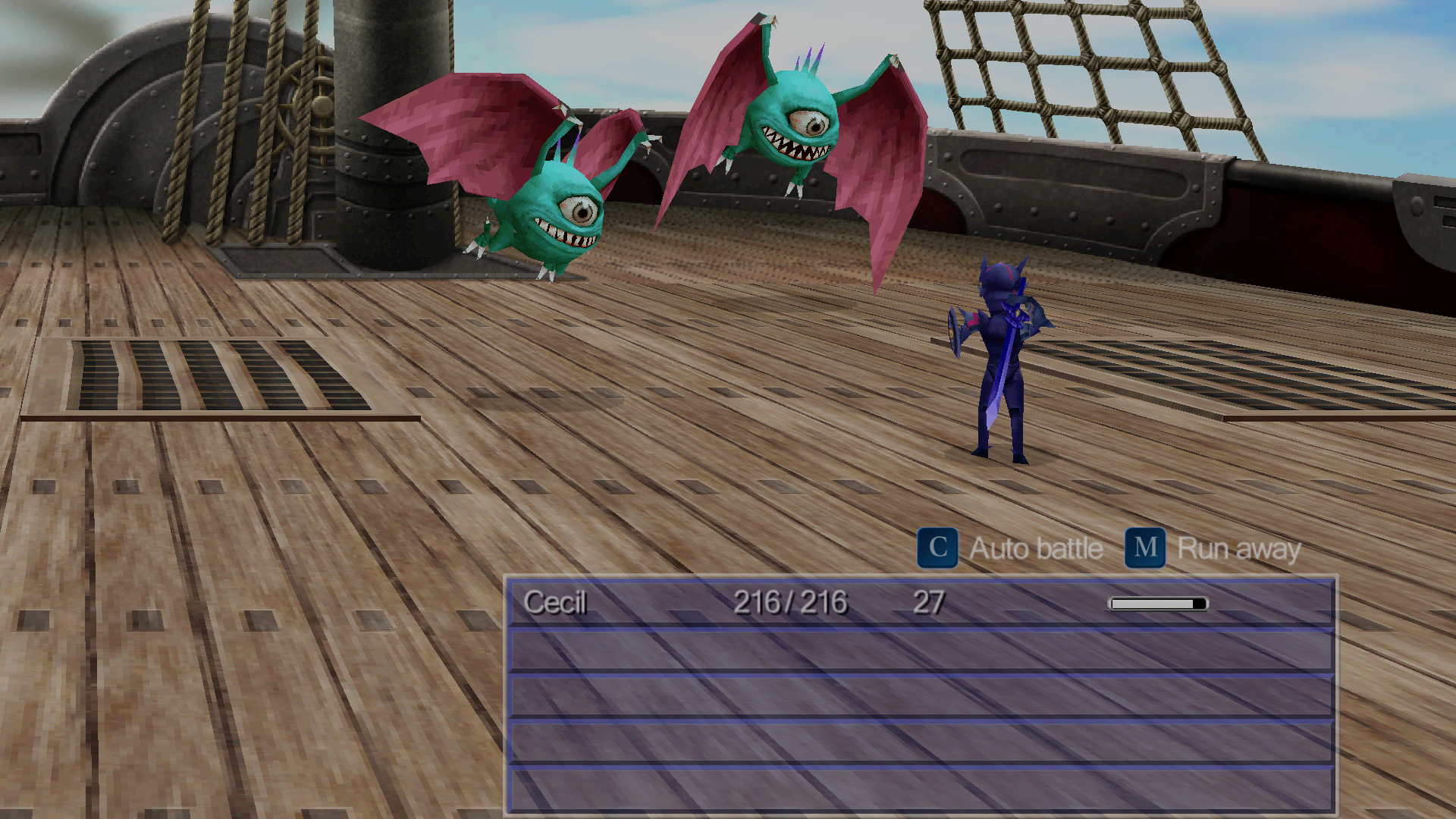
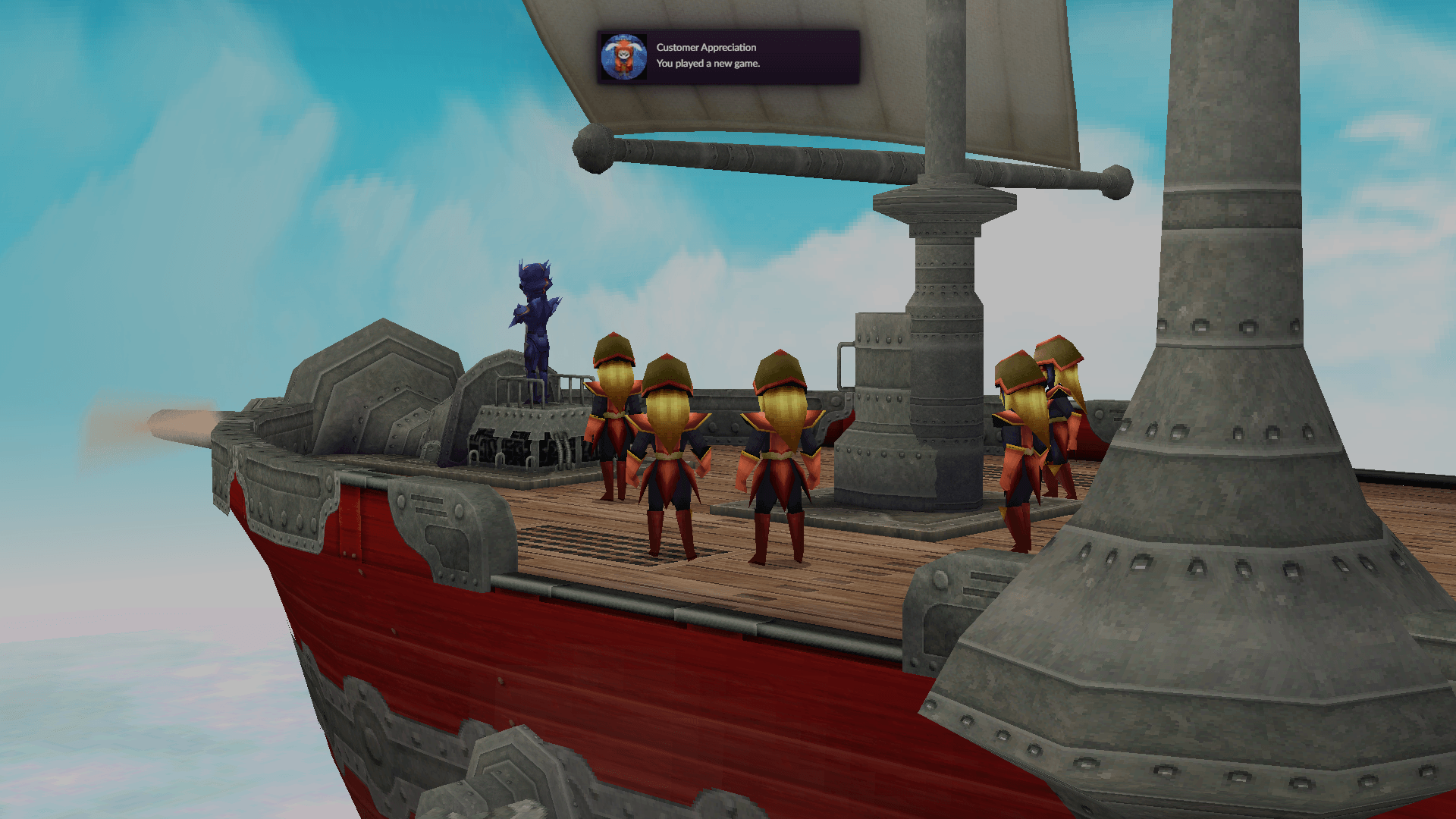
If Final Fantasy III was a game about the freedom of mechanics, Final Fantasy IV is the moment the series decided that systems alone were no longer enough. For the first time, the game no longer starts from the idea of a player-built team, but from a story that exists independently of them. Characters are no longer interchangeable roles, but individuals who already have identity, motivations, and conflicts. Cecil is not an avatar chosen by crystals, but a knight who questions his own actions. His change from Dark Knight to Paladin is not just a level evolution, but a narrative arc integrated into the gameplay. Systems no longer define characters; characters define systems. Each team member has specific abilities and cannot be rewritten to the player's preference, and it is precisely this limitation that creates a different relationship with the group. This is also where Active Time Battle appears, probably the most important mechanical change in the classic series. Battles are no longer strictly turn-based, but have a rhythm. You have to react, not just choose options. You no longer quietly plan every move, but improvise. It is the first step towards the modern dynamic of the Japanese RPG, where tension comes from pressure, not calculations.
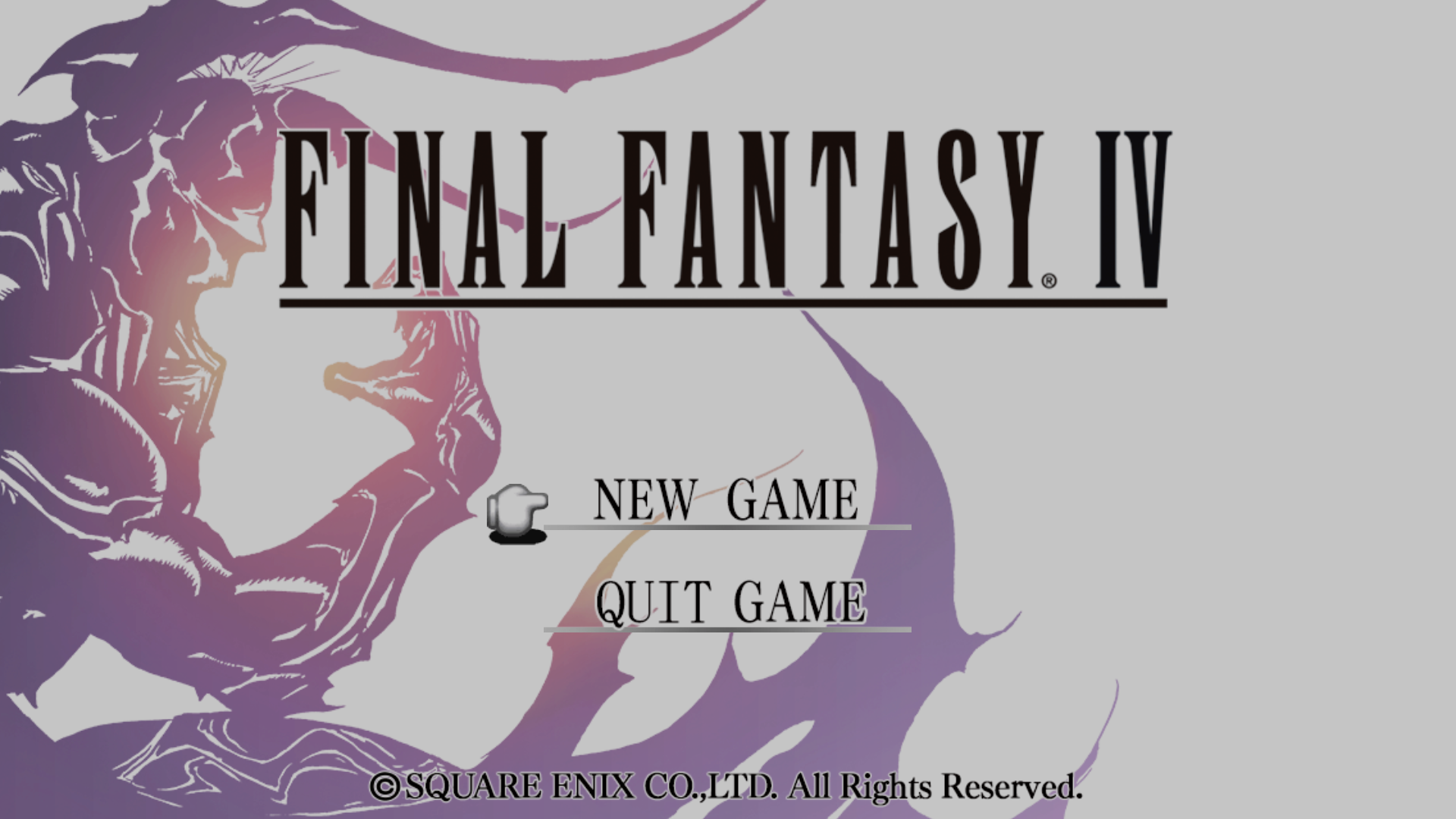
The 3D remake accentuates precisely the aspect for which the game was designed: its dramatic flair. Expressions, shots, and dialogues transform what was merely suggested on the SNES into an explicit scene. It doesn't change the structure, but it makes the original intention visible. Final Fantasy IV wasn't conceived as a sophisticated system, but as a story told through mechanics. The GOG version preserves precisely this balance. It doesn't try to modernise the pace or difficulty, nor to simplify the team's constraints. Characters remain fixed, progression remains guided, and battles retain their initial tension. The game runs on current hardware, but not according to current rules.
Viewed after Final Fantasy III, the contrast becomes evident. There, you built a team to solve problems. Here, you learn to work with a team that already exists and which you cannot fully control. The series moves from the freedom of systems to the responsibility of the story, and for the first time, the stakes are no longer just victory, but what happens to the people after it.
Final Fantasy VIII Remastered
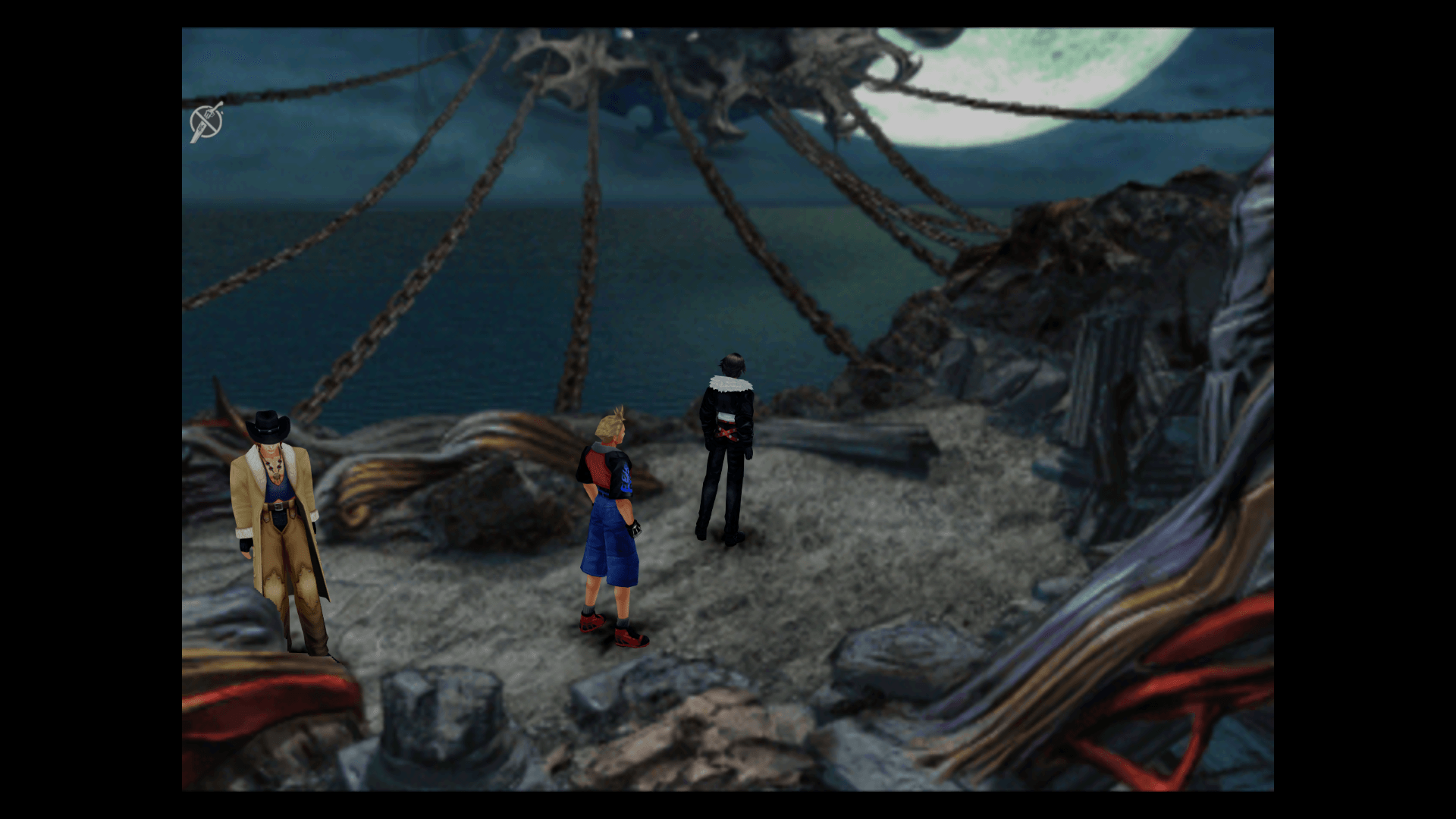
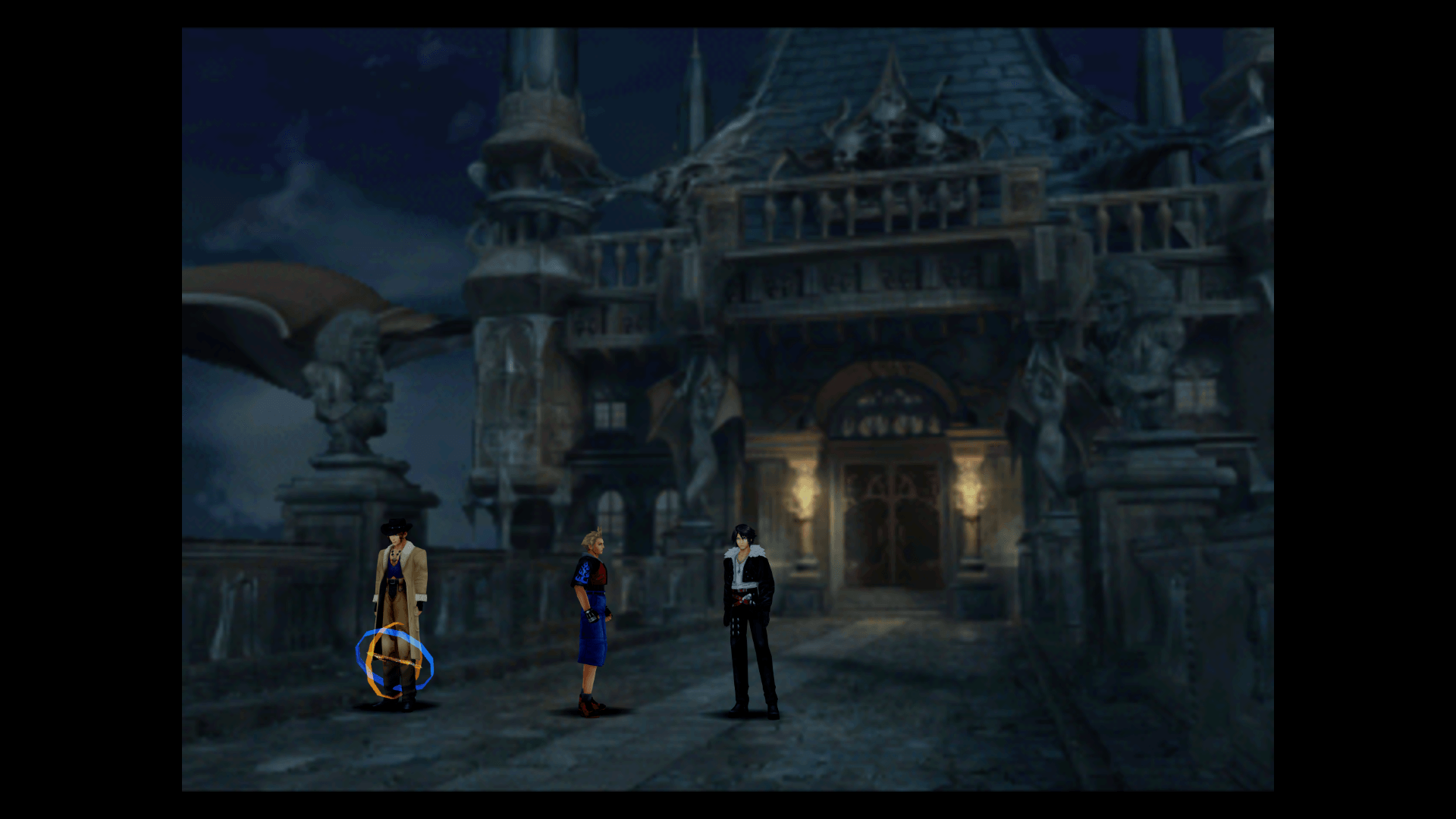
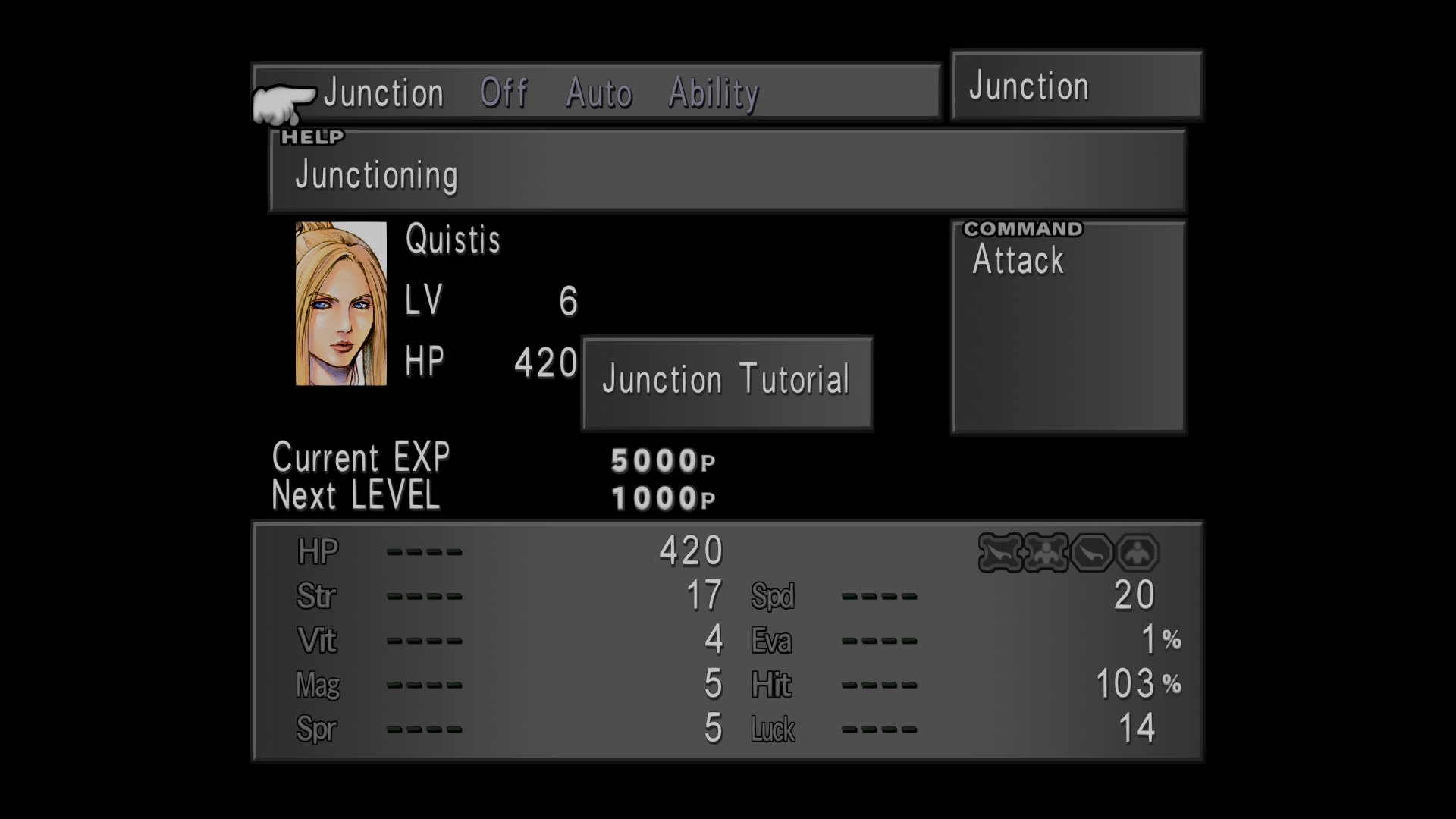
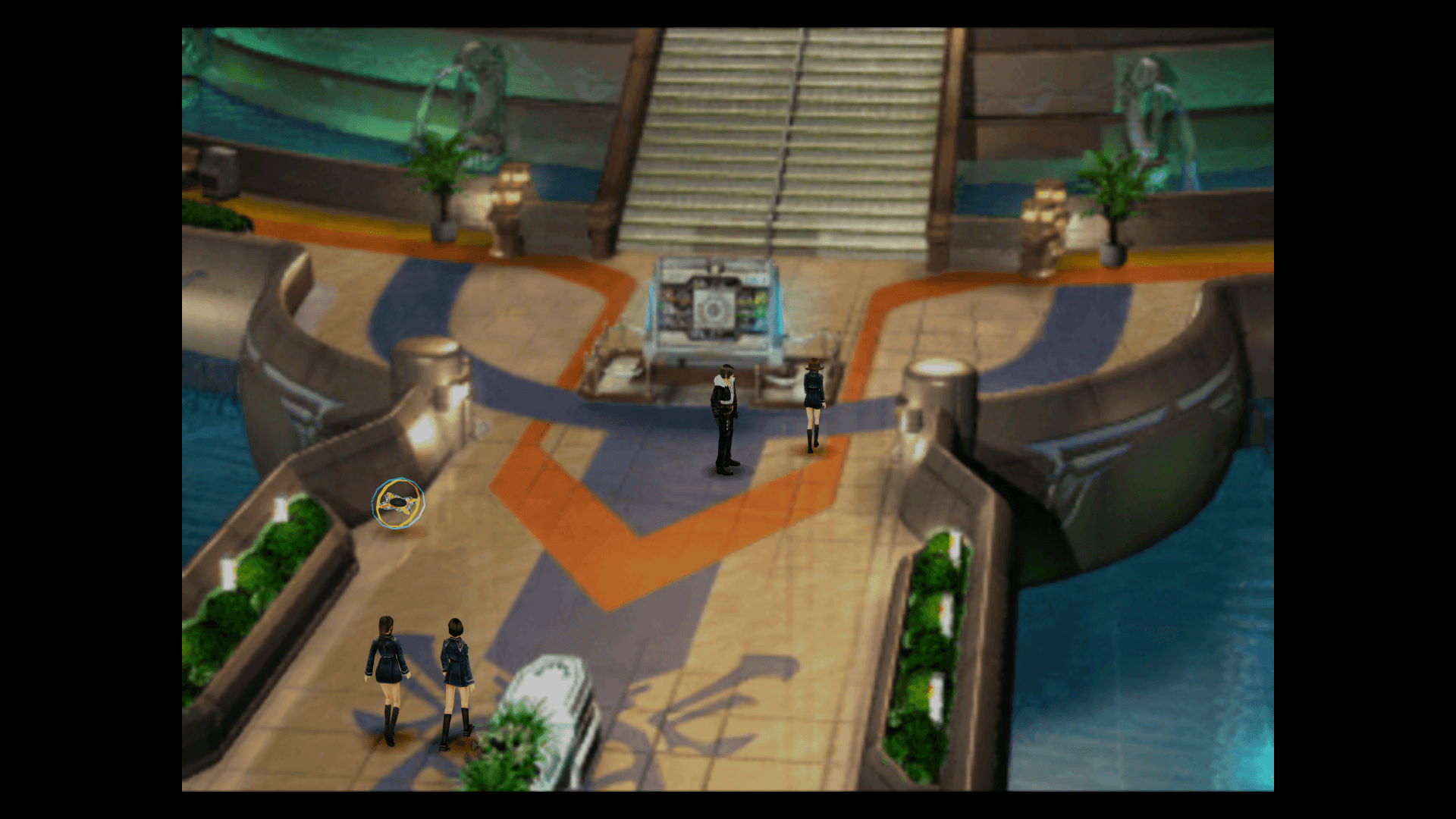
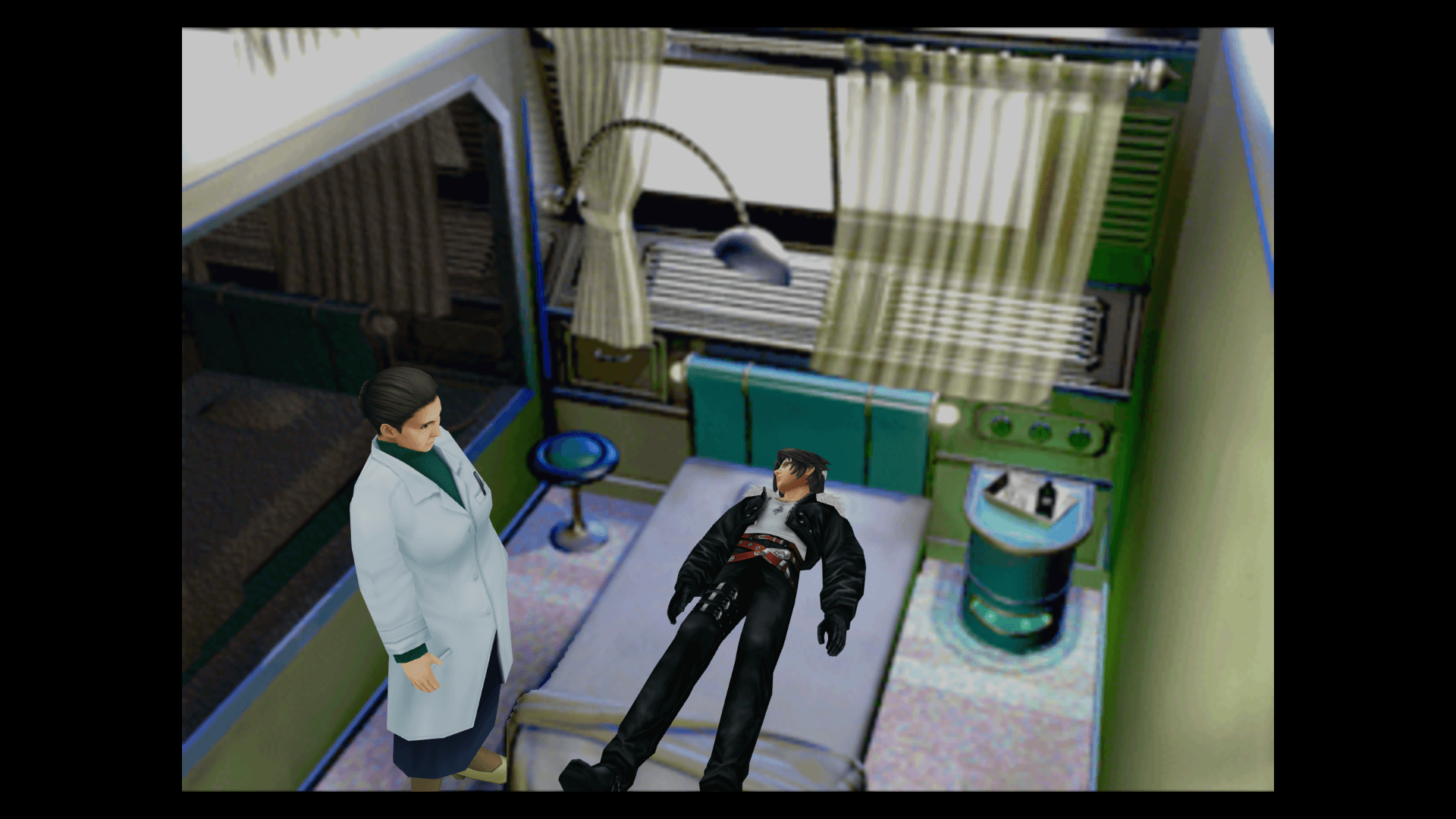
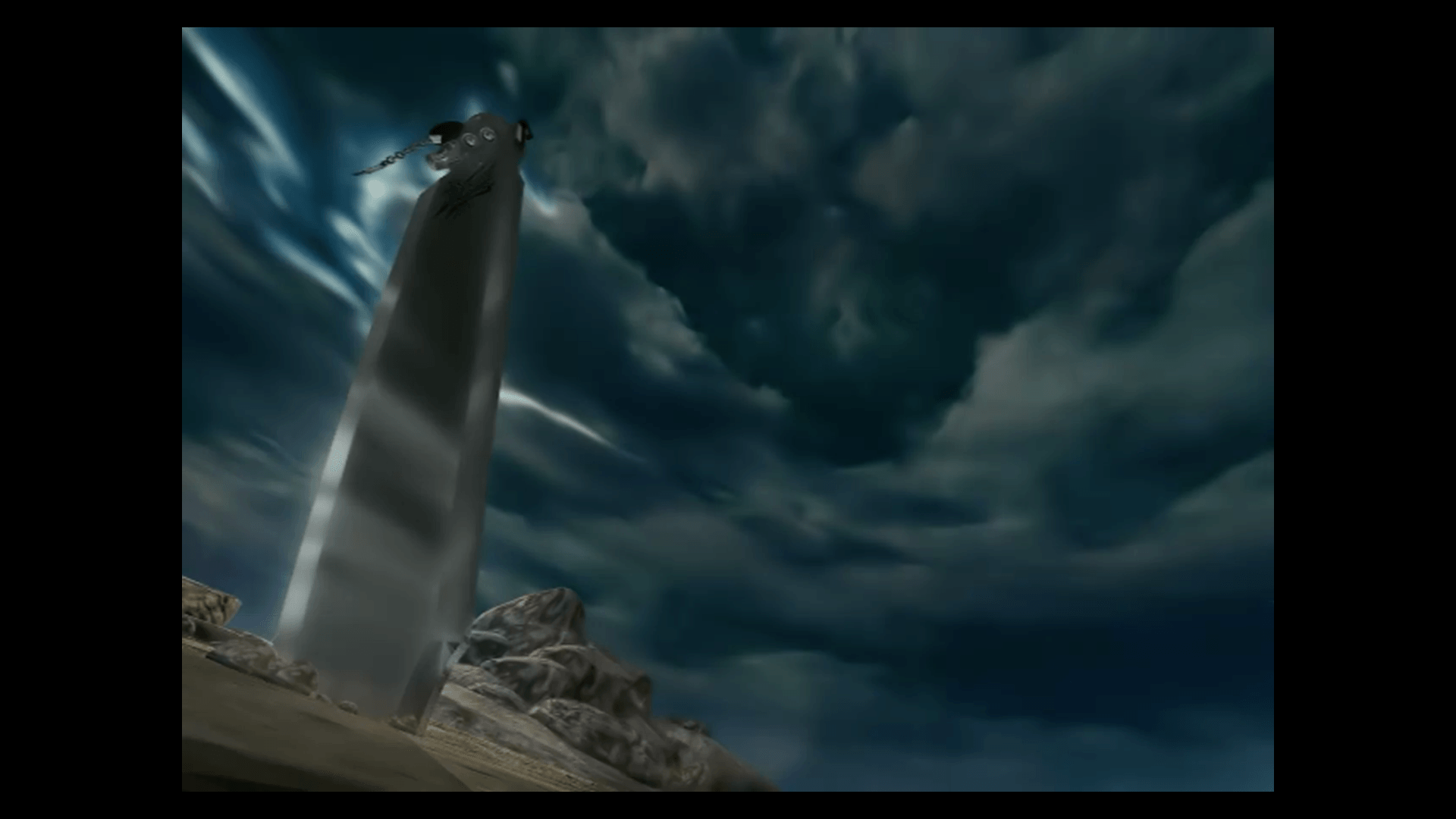
After the success of the narrative formula introduced in Final Fantasy IV and subsequently refined, the series reached a point where it no longer had to prove it could tell a story. It was clear it could, and the public accepted it. Final Fantasy VIII appeared precisely at a time when it could afford to take risks, and it did so by changing almost every convention of the traditional RPG. At first glance, it seems familiar: a science-fantasy world, well-defined characters, a global conflict. But progression no longer works by ordinary rules. Level is no longer the main objective, equipment almost disappears, and power comes from the “Junction” system, a mechanism that forces you to think of resources as mathematical variables. You don't get stronger by fighting more, but by better understanding how the game works.
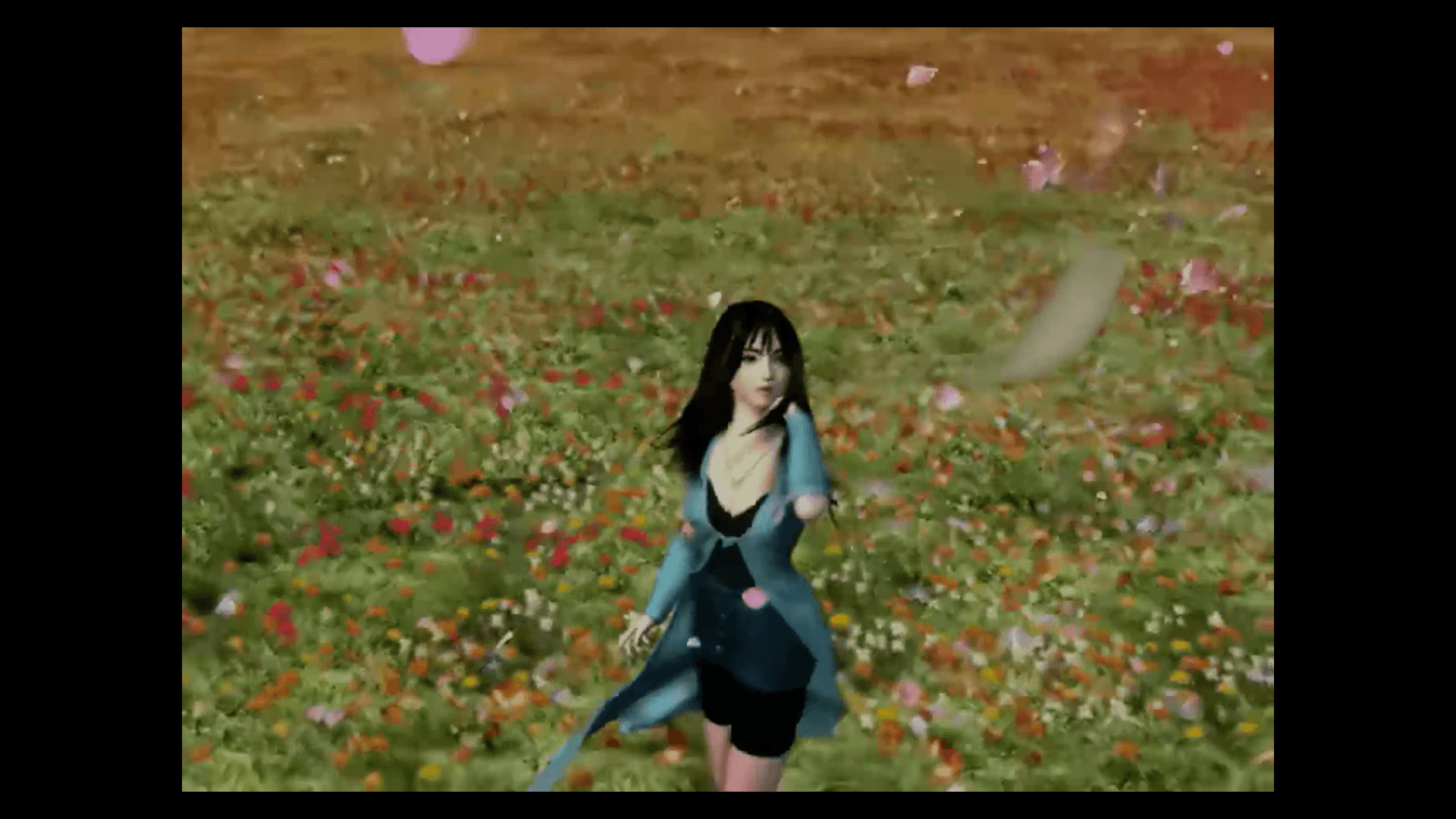
It's one of the few RPGs where classic grinding can actually put you at a disadvantage. Enemies level up with you, and progress becomes a matter of optimisation. Essentially, the game reverses the usual relationship between player and system, where you don't just learn mechanics to advance, but you have to question them. Instead of letting you repeat safe strategies, it forces you to constantly rethink how power works. The story goes in the same direction. It's more intimate and abstract than in previous titles, and the relationship between Squall and Rinoa dominates the experience. The global conflict exists, but it becomes a backdrop for the theme of memory and identity. It's no longer about saving the world as an objective, but about how the characters understand the world they live in.
I want to say in this case too that the Remastered version doesn't rewrite these ideas, it just makes them more legible. Character models are updated, the interface is adapted, and there are quality-of-life options, but the structure remains intact. The “Junction” system isn't simplified, progression isn't recalibrated, and the pacing remains deliberately unusual by modern standards. This is where the GOG version matters. Final Fantasy VIII has always been a game dependent on compatibility and unstable ports, and accessing it often involved technical compromises. Now it runs directly, without external configurations, which allows the experiment to exist in its complete form. It's not a reinterpretation or a partial restoration, but the playable version as it was conceived, just without the technical obstacles of its era.
Viewed in the context of the series, VIII is that necessary rupture. After Final Fantasy learned to tell stories and create attachment, it tried to change how the player understands progression. Not all ideas are comfortable, but that's precisely what makes it important; it shows that the series doesn't just evolve by perfecting formulas, but by putting them to the test through all sorts of risks.
Final Fantasy IX
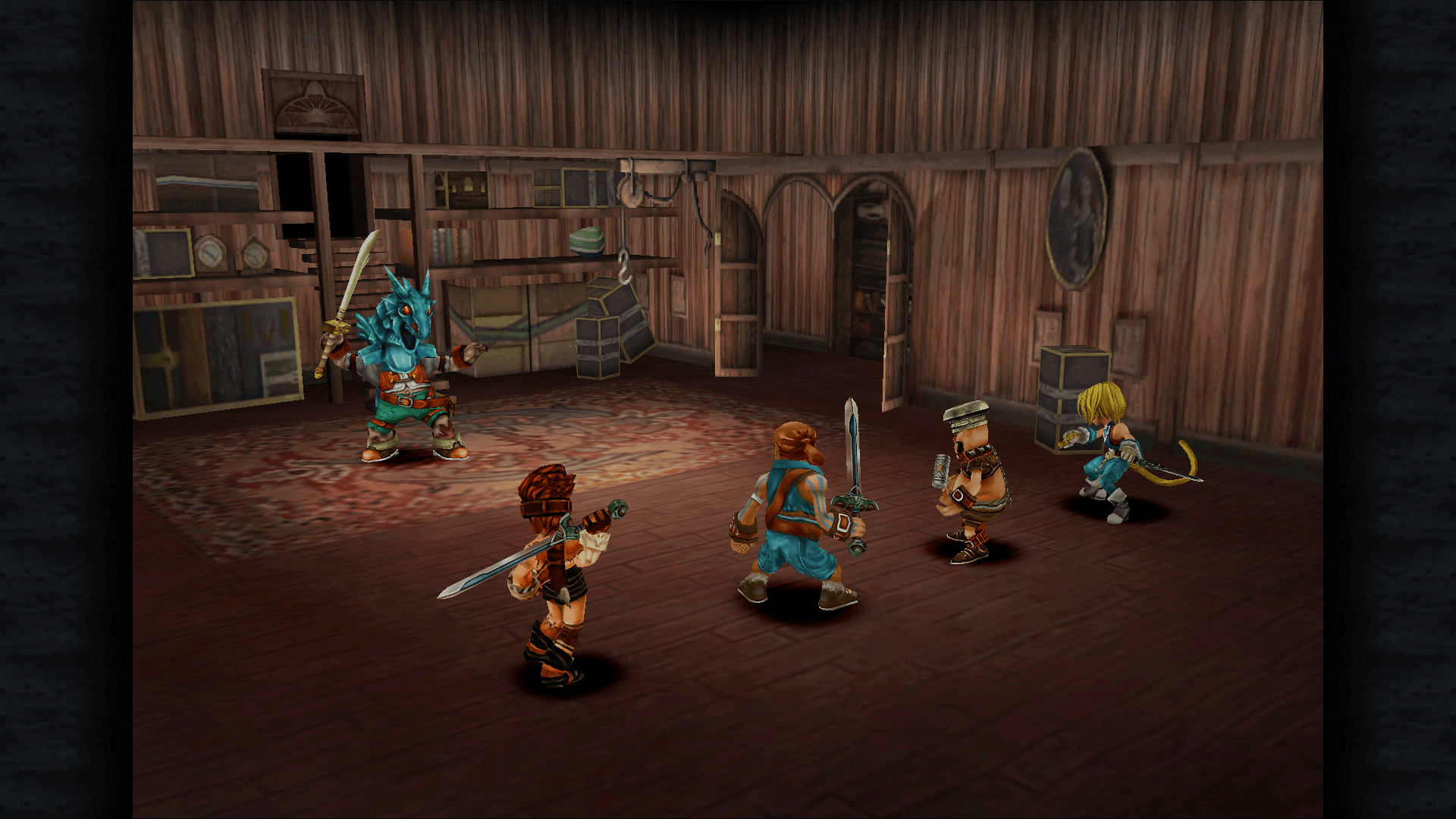
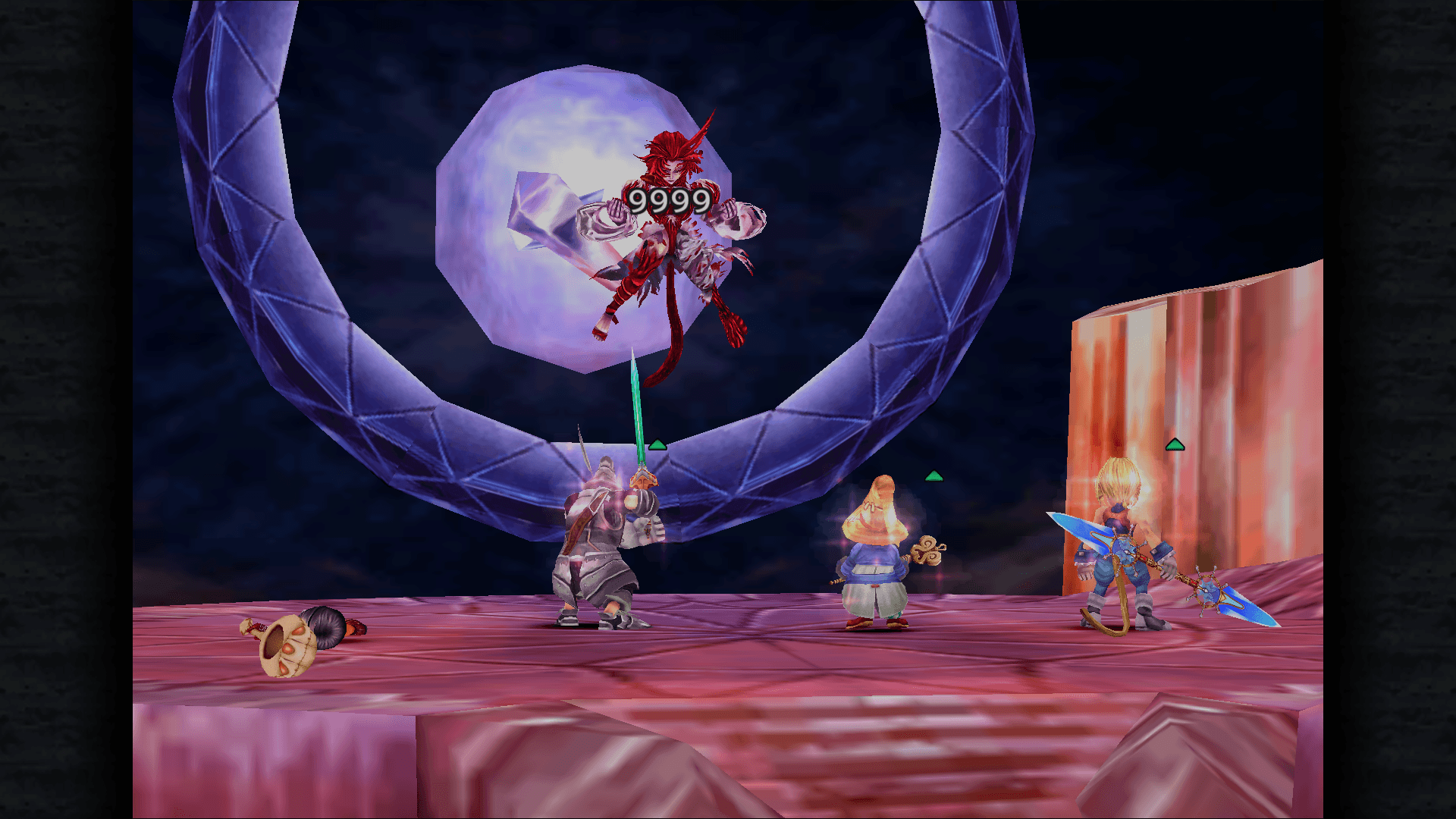
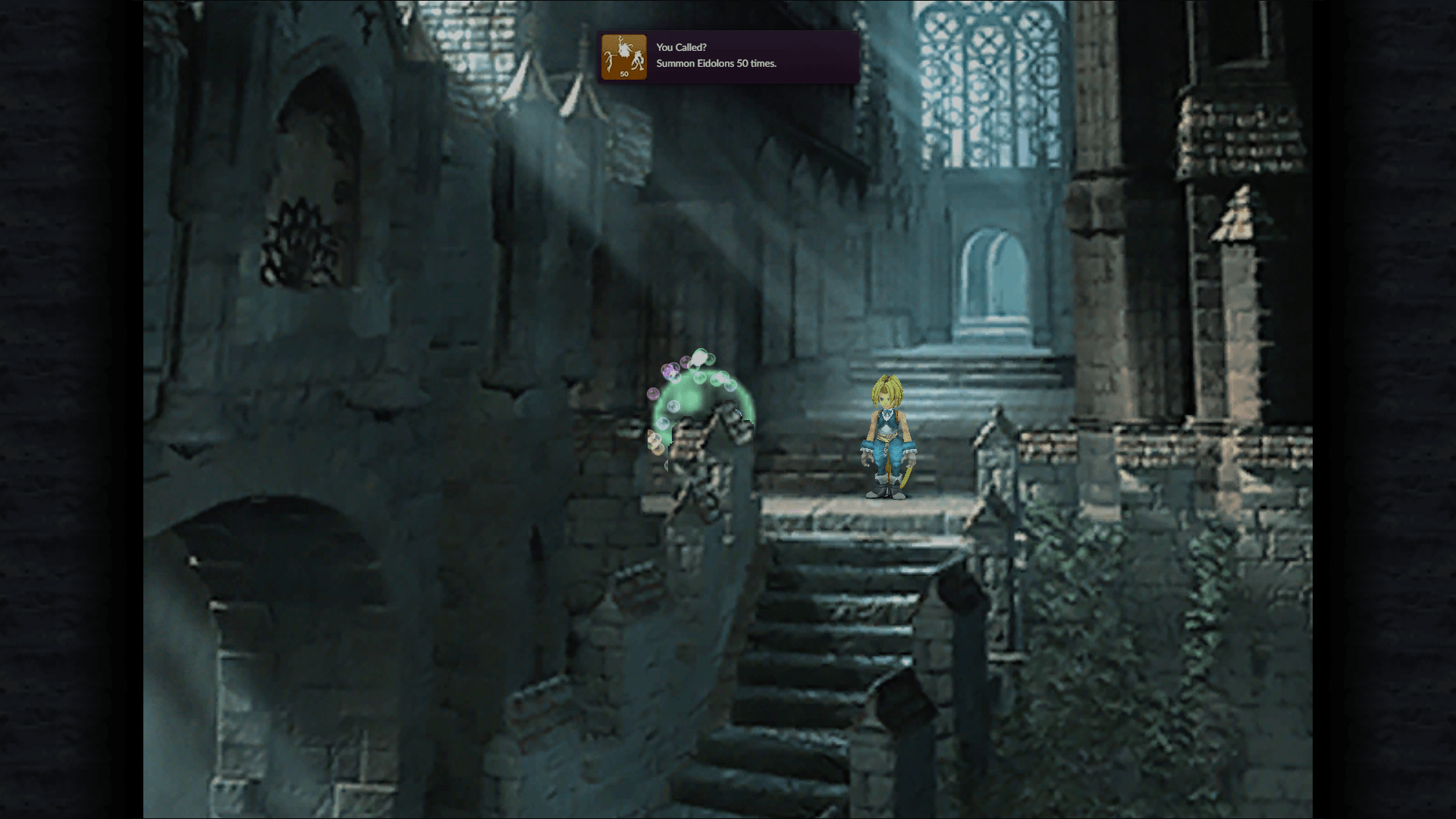
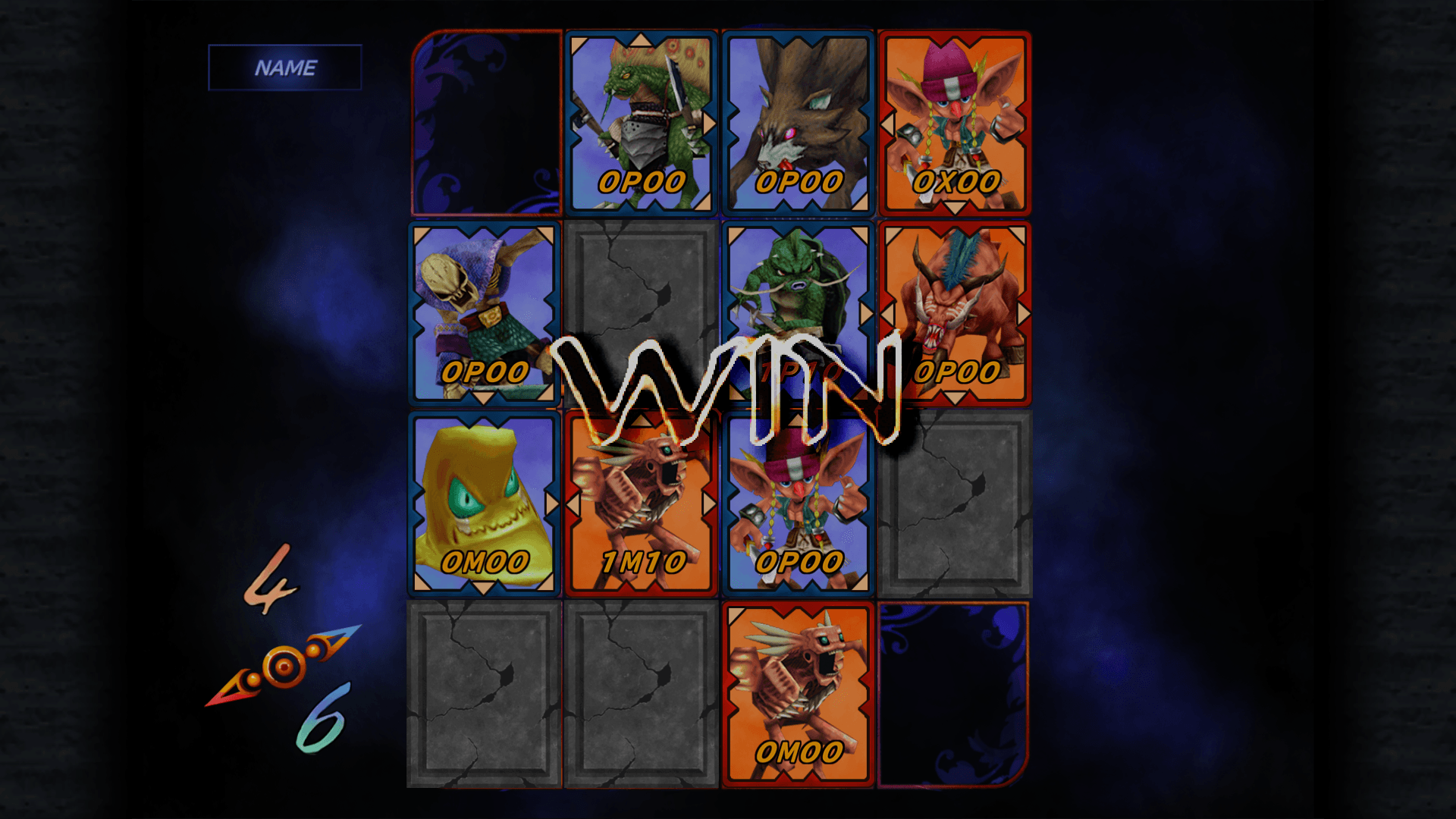
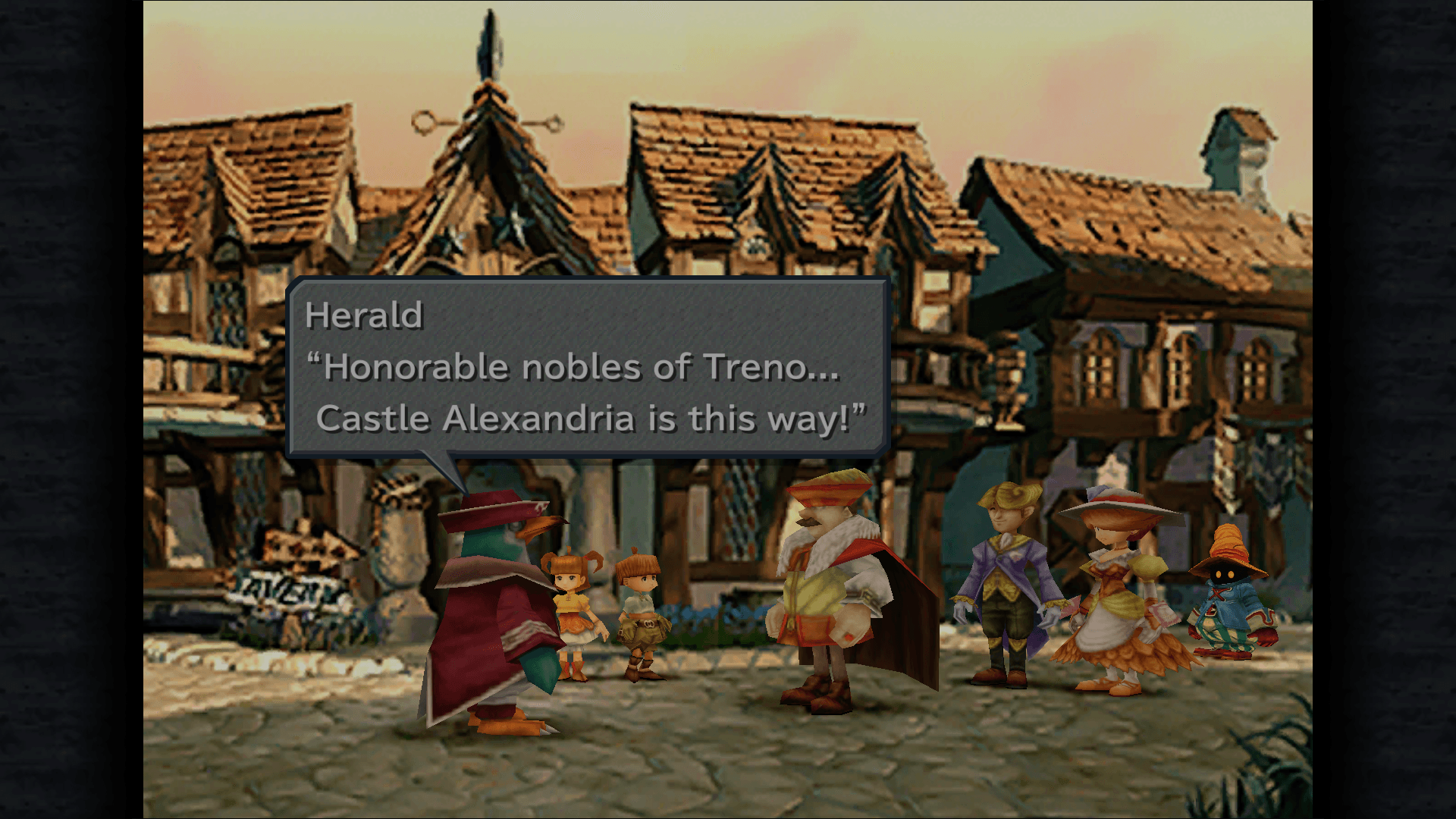
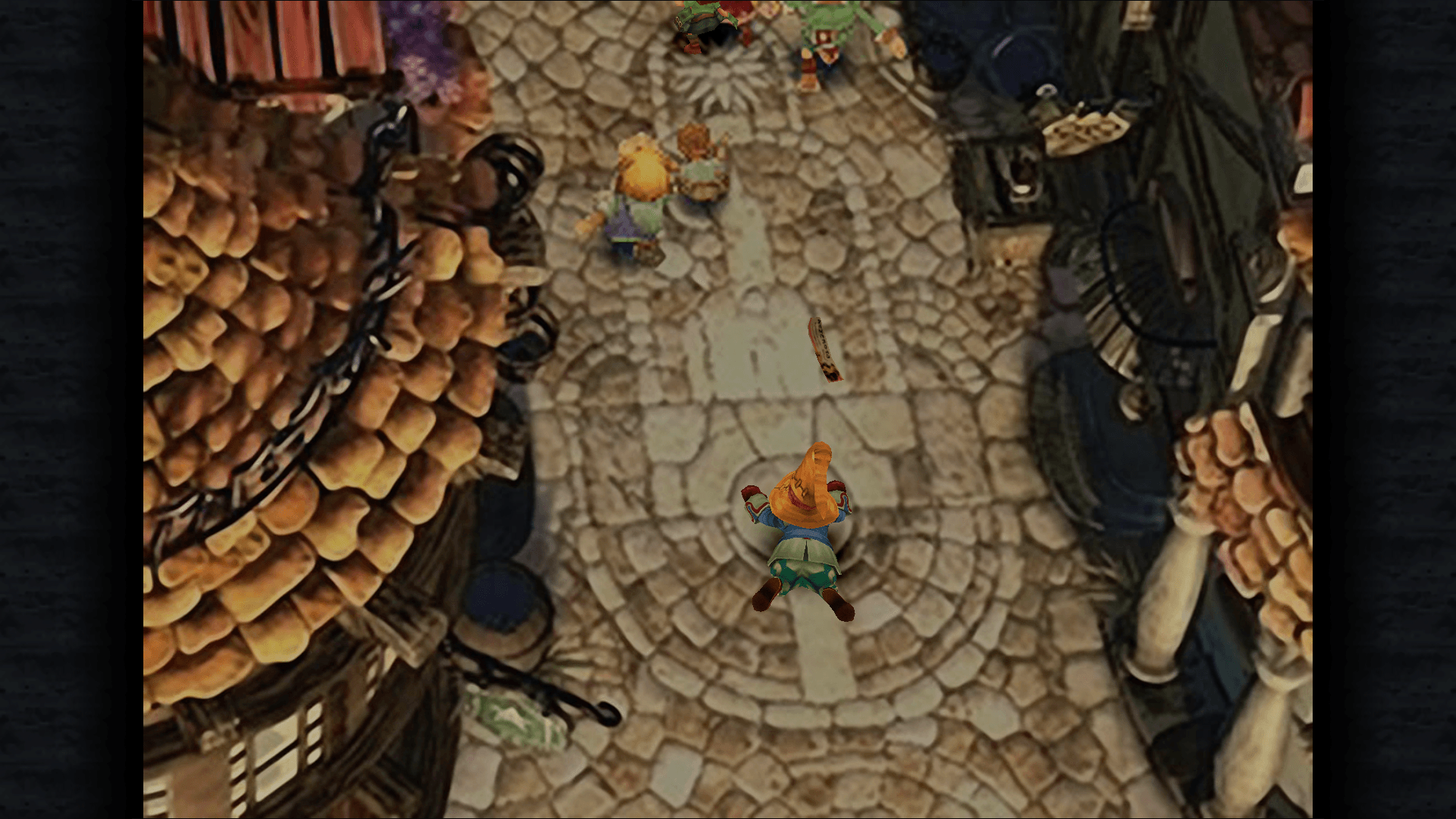
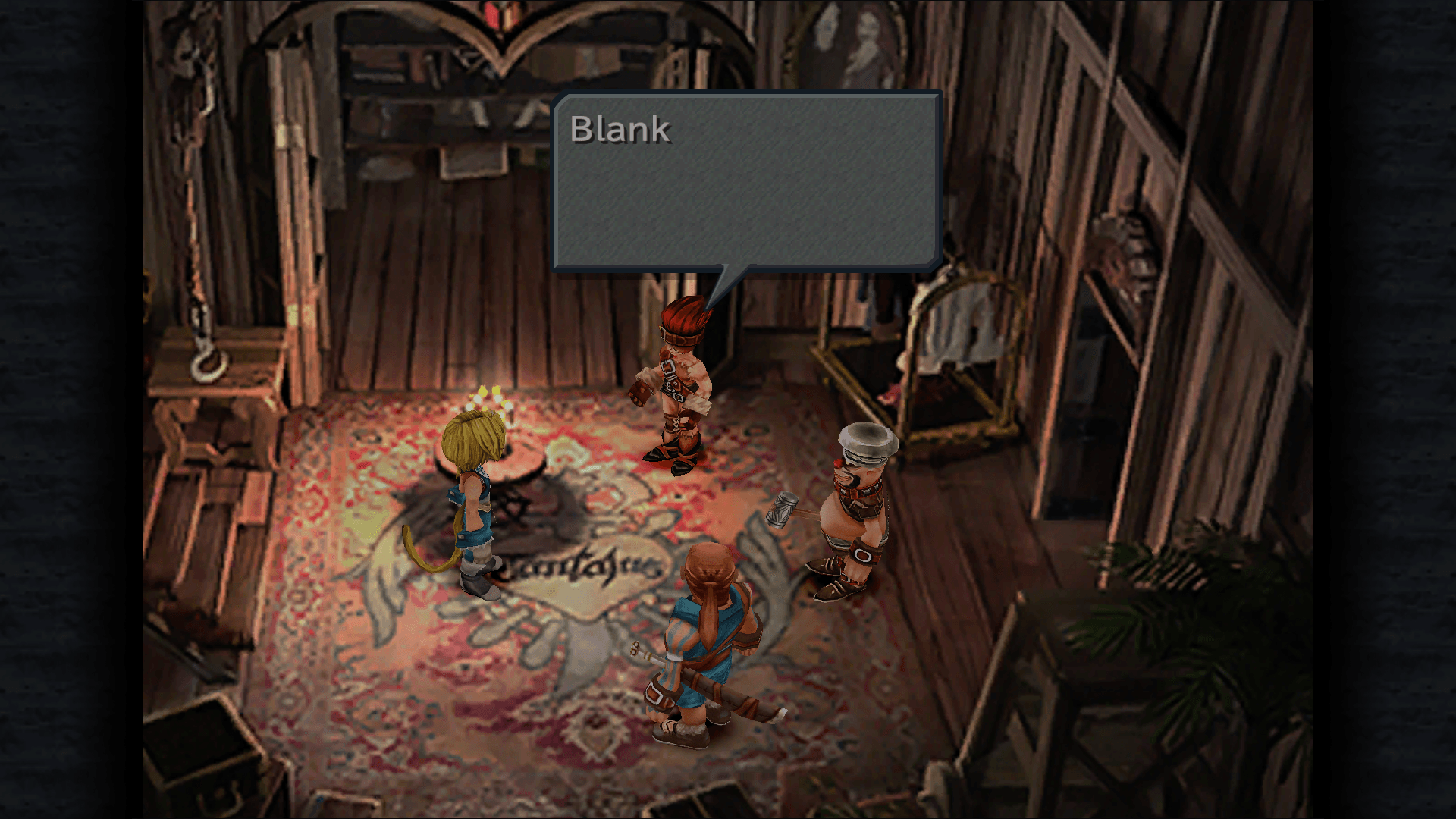
After the radical changes and colder tone of previous titles, Final Fantasy IX initially seems like a step backward. A medieval world, stylised characters, classic magic, kingdoms, and adventure. But it's not a return to the past due to a lack of ideas, but an intentional one. The game doesn't try to revert to what the series was, but to show what remained relevant from all its stages up to this point, IX. The structure recalls the franchise's beginnings with a varied group, a long journey, and the gradual discovery of the world. The difference lies in how the characters are written. They are no longer simple archetypes or exclusively dramatic conflicts. Each team member questions their identity, but in a calmer and more introspective way. Zidane, Vivi, or Steiner are not built for spectacle but for what is called a “slow-burn”.
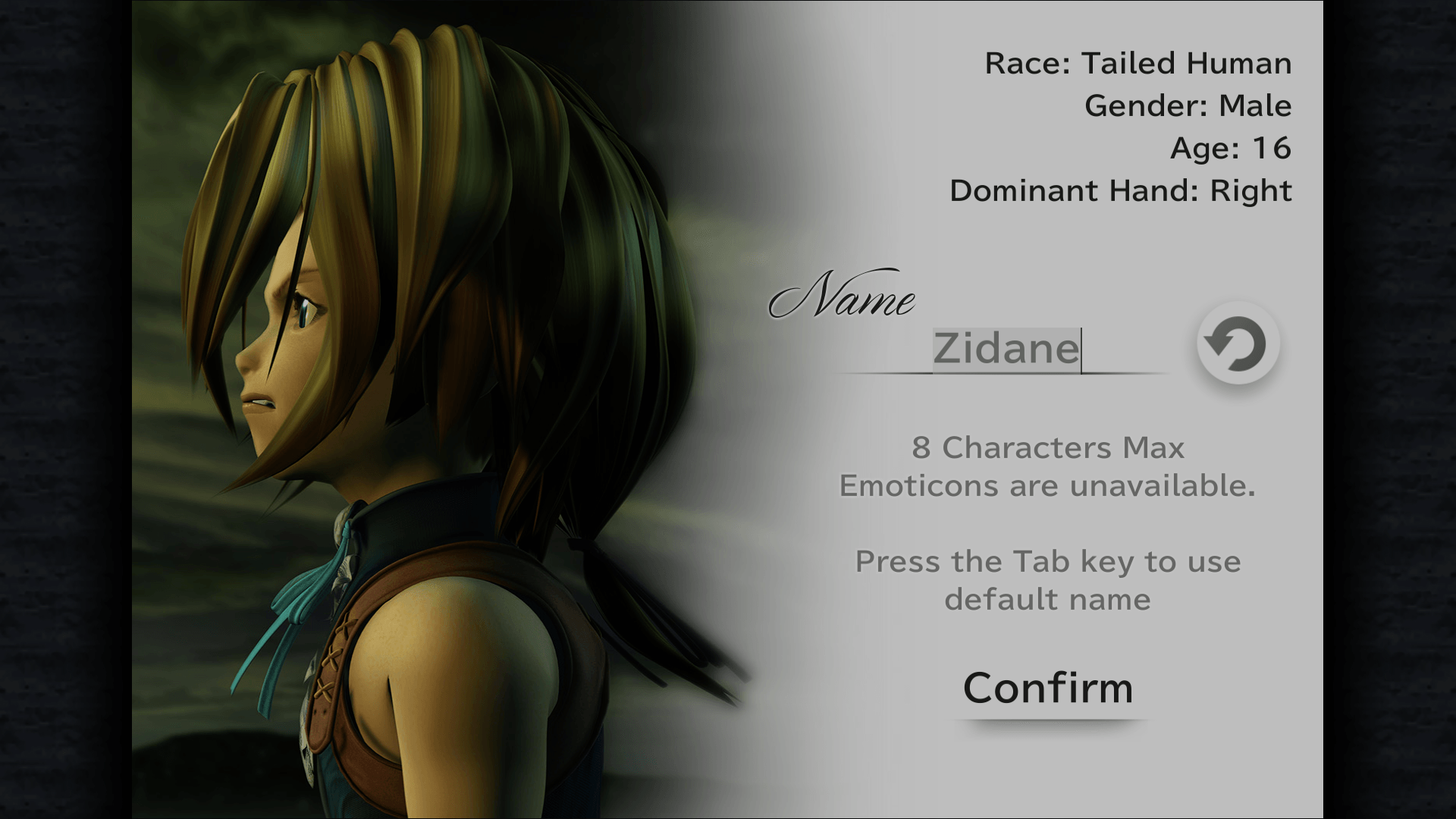
And the systems reflect the same philosophy. Abilities are learned from equipment, which encourages exploration and experimentation without turning progression into a constant optimisation problem. Battles have a moderate pace, and mechanics don't require quick reactions or complex calculations. After the mathematical experiment in VIII, the game seeks balance: enough strategy to matter, enough simplicity not to dominate the experience. Here, the GOG version becomes important for a different reason than with the other titles. Final Fantasy IX was long dependent on different versions and configurations to run stably on PC, and consistent access to it was fragmented. The version now available runs directly and maintains the original pace, without aggressive adjustments or design reinterpretations. It doesn't try to speed up the game for modern standards, but simply makes it accessible.
As before in the context of the series, IX is not a narrative conclusion, but a conceptual one. After Final Fantasy experimented with systems, characters, and structure, it returns to the idea of adventure but with maturity and a great deal of experience. It no longer tries to prove anything but to synthesise everything it has learned. Final Fantasy IX is the thesis after the three previously mentioned titles and a professional self-study course with Final Fantasy VII (which is always talked about).
GOG x Games: The Story Continues
The GOG Preservation Program doesn't transform these games into new experiences; it preserves them in the form in which they contributed to the evolution of the gaming medium. And the four Final Fantasy titles aren't chosen for popularity, but for the differences between them. Together, they don't just tell the story of a series, but show how the way RPGs were conceived has changed over time, from systems, to characters, to experimentation, and then to the sum of all possibilities.
Accessible today without workarounds, patches, mods, or other modifications, they are no longer just historical benchmarks that can be lost in the sea of games, but experiences that can be understood directly, played directly, and all exactly as they were conceived decades ago.
Thanks to GOG.com for the review codes!


Available on: PC (GOG)
Played on: PC
Release date: 29 January 2026
Developer: Square Enix.
Publisher: Square Enix, GOG.
0 votes
Scroll down here and stay on the page for at least 30 seconds to vote.
Pick a score from 0 to 10 (halves are allowed).