
DOOM: Syringe
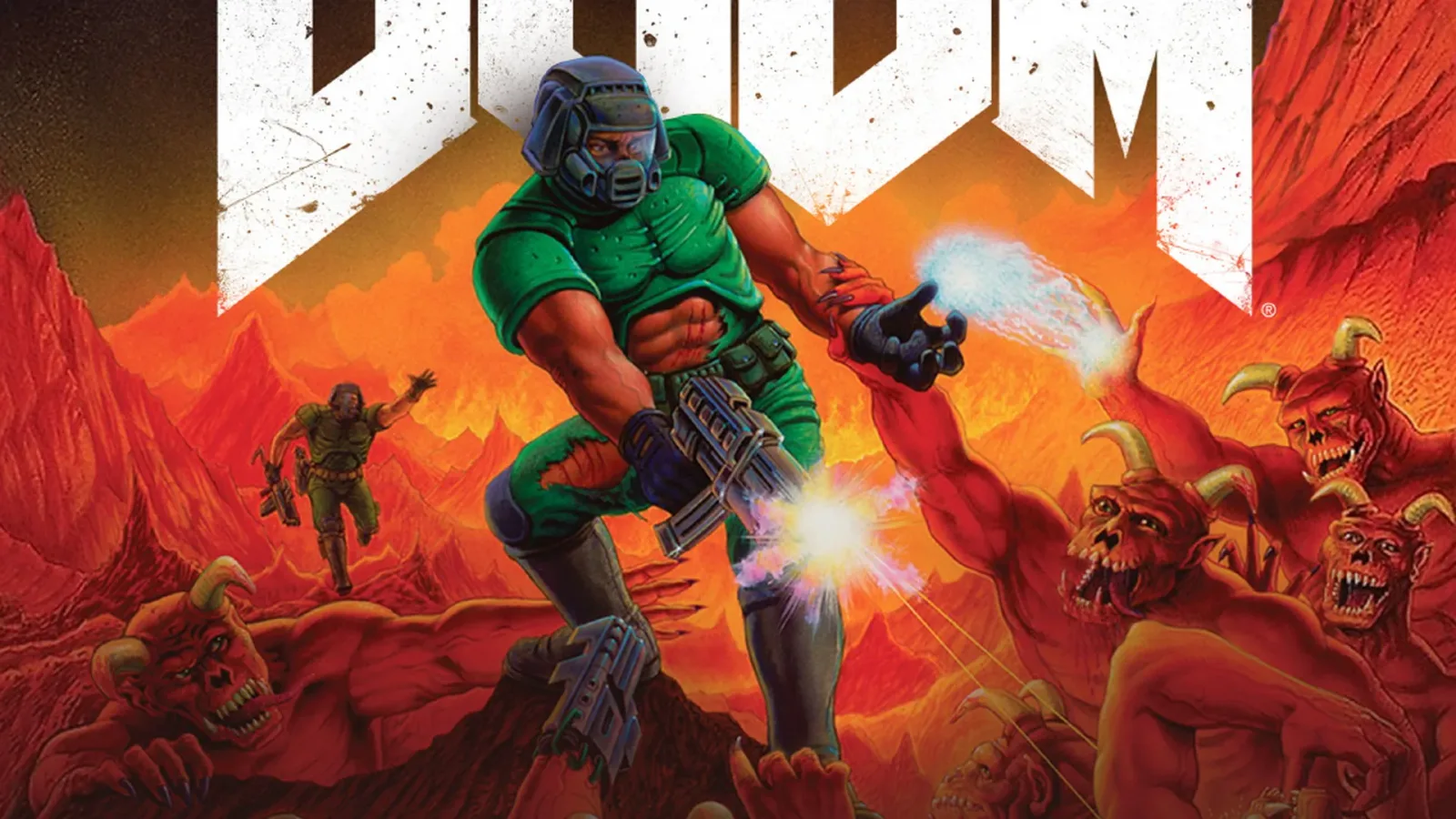
First published in GRIND II, pages 42–46.
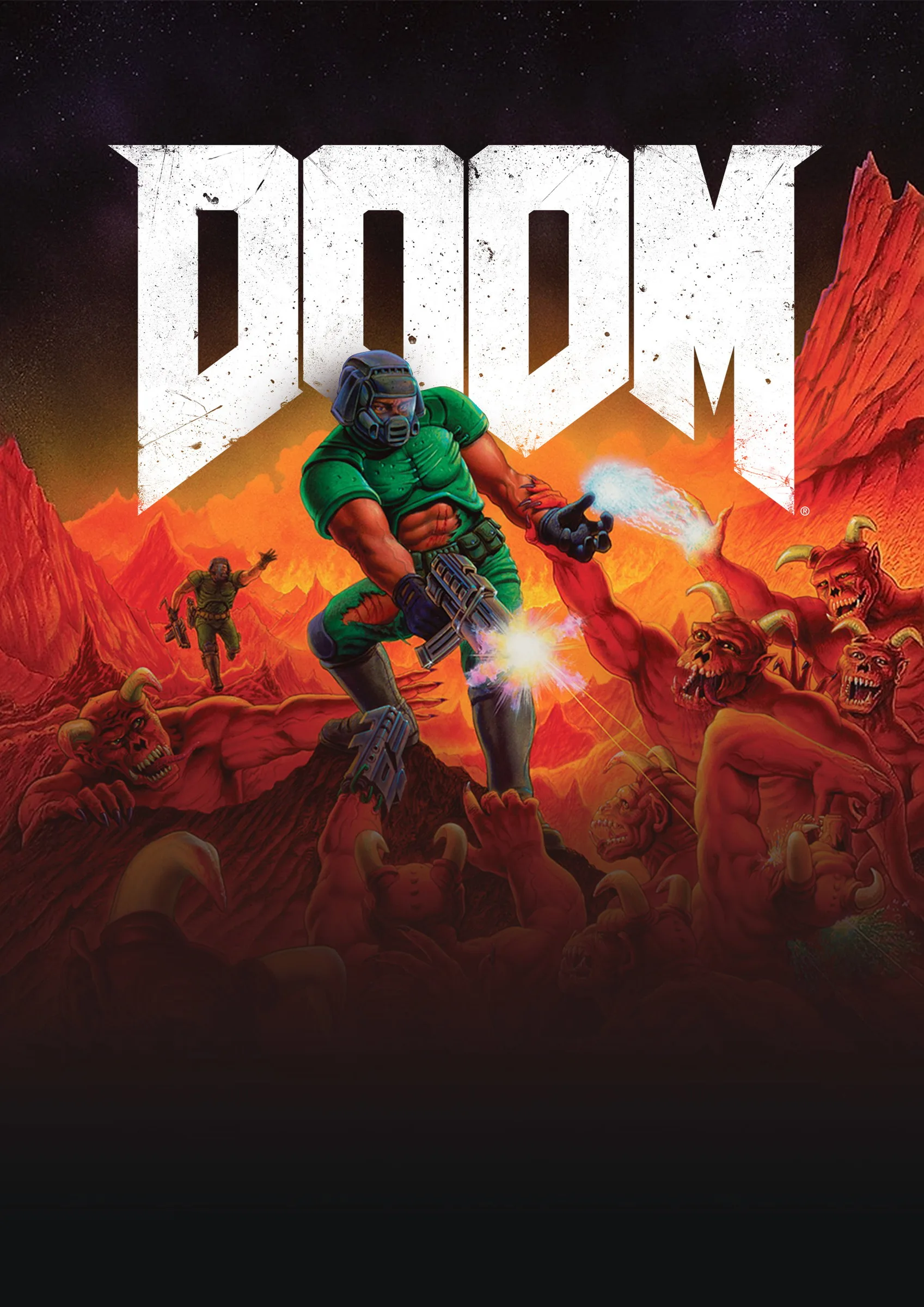
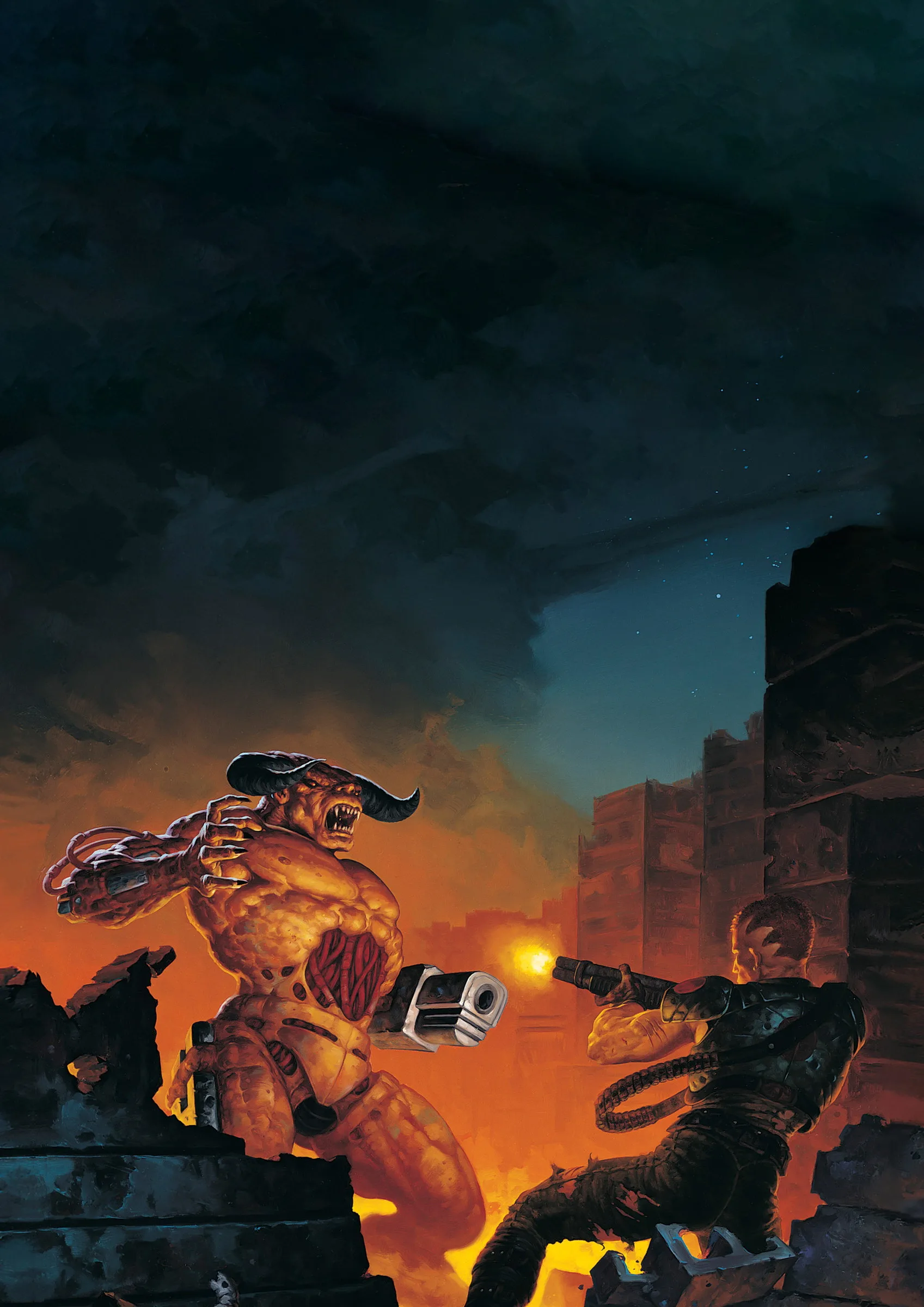
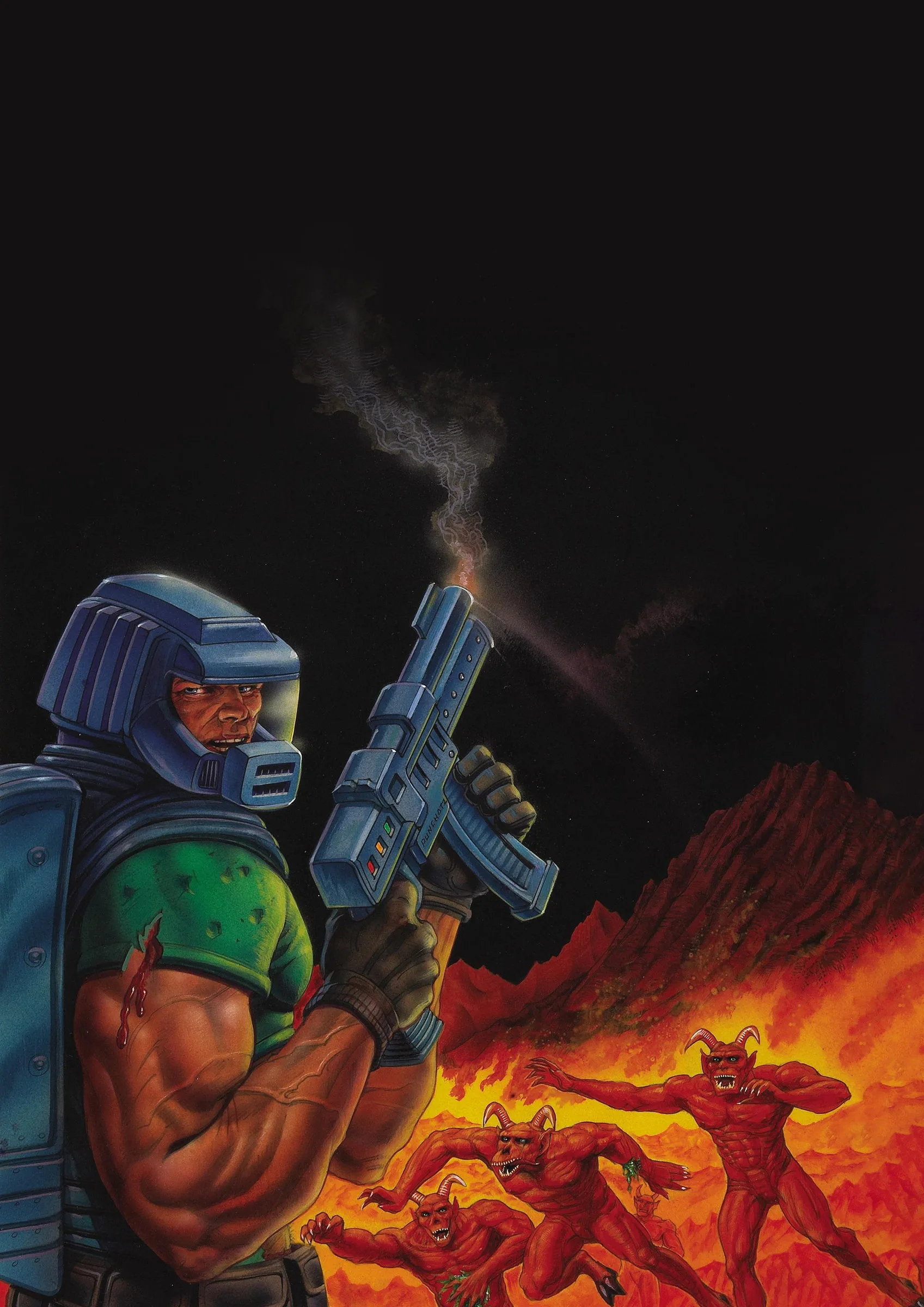
BUT WHY ARE WE STILL TALKING ABOUT DOOM MODS AND MAPS IN 2022, GOING ON 2023?
Syringe is an anomaly – an entire game built on the skeleton of classic DOOM II, trying to tell a modern story with rudimentary 1994 mechanics. It came out in December 2019, just before Christmas, and a year later it took the top prize at the 27th Cacowards.
We're talking about the work of DOOM WAD veterans, who by now have at least 10 years' experience making maps and mods derived from the daddy of FPS games. Among the team behind Syringe is Xaser Acheron, bending Carmack's code and Romero and Petersen's design since 2003 – contributions that earned him the tag “DOOM community’s truest polymath”. Even the least experienced of the collaborators (Richard Frei, aka Tarnsman) started out in 2012 and has turned in near-annual contributions to projects catalogued in the Doomworld archive.
But why are we still talking about DOOM mods and maps in 2022 going into 2023? Because there's still a community of programmers and designers pushing the limits of id Software's work. DOOM is like Latin: the skeleton underpinning everything we now label “modern”, and the wellspring for hundreds (even thousands) of other projects. It's the yardstick we measure both pre-1993 releases and everything since against. It's also part of the vocabulary of educated people, who spot the shared elements and trace them back to their roots.
Plenty of current FPS games use techniques John Carmack patented (dynamic lighting, smooth movement through a pseudo-3D environment that holds only the slices of map in front of the player in volatile memory), along with design elements popularised by John Romero and Sandy Petersen. And the fact that the entire first-person shooter genre was dubbed “DOOM clone” for more than half a decade tells you everything you need to know about the quality of the work.
At the same time, few games reproduce that same frenetic, fluid action, the kind that makes you feel powerful enough to decimate the demons of Hell, fast enough to dodge bullets and rockets, yet still so vulnerable and adrift that a single lapse can cost you. John Carmack's controversial decision to publish DOOM's source code online under a GPL licence (which permits free use, modification and distribution) guaranteed the game eternal relevance. His colleagues at id Software suspected him of sabotaging the company's profits and helping the competition – but in reality, Carmack left the game in the community's hands. Think of another 30-year-old title that's still getting mods and maps. Then browse the abandonware sites and see how much potential was squandered by studios that never worked out what to do with their own work.
SYRINGE
Now that we've established why DOOM is still relevant, it's time to talk about Syringe. Every year, dozens of modified versions of the source code are released. And Bethesda picks the best of them for the “Add-Ons” section of DOOM on consoles. Yes, you read that right: someone at the company that ruined the Fallout and The Elder Scrolls series is browsing the DOOM community's most significant efforts so it can periodically update the version of the game it sells for $4.99 on PC (via Steam), Xbox One/Series, PlayStation 4/5 and Nintendo Switch. Syringe officially joined the collection in April 2021, and with that the 7 new maps telling its story became popular beyond the Doomworld forums too. As the series' narrative tradition demands, the action takes place in Hell, on Earth (in Brazil, of all places) and on the Moon – though towards the end, elements creep in that tilt your relationship with time and space a little, until you're wondering whether you've been teleported into another dimension.
The graphics are the same ones we met in 1994 with DOOM II. What stands out is the level design, which experiments with new ways of progressively expanding the map, and with platforming far more frequent than in the original. You'll often watch the map “grow” as you hit various switches, some in plain sight, some hidden. The technique of reshaping the environment is surely inspired by DOOM 64, which sometimes tells you a whole story about a level through the changes that unfold along the way.
What's more, every level has two significant sections: the fight and the exploration. With the first maps, it's fairly obvious the designers meant to hand you tough battles up front, only for you to then wander among demon corpses wondering what on earth to do next. The atmosphere, set by music sourced from Canadian composer Psychedelic Eyeball, is rather introspective. Where the original game hands you a soundtrack that invites you to slaughter, Syringe steps up with a spread of ambient music that makes you feel anxious instead. Flurries of piano lull you the way a gentle autumn rain does, before the synths come in, harmonising in keys that breed confusion and dread.
The feeling is appropriate, though, because Syringe is a much harder game than the original DOOM. The demon count multiplies on every level, and the end-of-map bosses (Cyberdemon, Spider Mastermind) become routine. And even if the fighting feels simple and you cut down wave after wave of imps, cacodemons and arch-viles, you've still got precision platforming to deal with, plus stretches where you have to cross wide sheets of lava or radioactive material (bearing in mind that you'll find suits by Leo Lutia, If you want a retro cover for your PlayStation 4/5 game collection, write to me at: @Leolutia.design Lutialeonard@gmail.com Leolutia#6927 for protection, but they are limited). In other words: if the demons don't finish you off, the scenery stands a decent chance of doing the job for them. The sixth map (titled Acheron’s Needle), for instance, has you scaling a mountain-like structure by “jumping” from one platform to the next.
Now, jumping in DOOM means running in exactly the right direction and stopping at exactly the right moment – with the constant risk of coming up short or sliding off. To get through those sequences I had to save every 10 seconds and reload after every failure… which wasn't much fun, but I appreciated the challenge precisely because it pushes the technical limits of grandpa
DOOM.
The ending, though, is what really got me thinking, and made me realise how much you can say with so little. At the end of the demonic genocide mission, our protagonist is faced with the chance to choose his own destiny: he can head back into certain sections of the game to revisit rooms full of blood and corpses, or he can press the “REST” button. Obviously, the choice is an illusion… because however much you'd like to reflect on the slaughter, however much you admire the scenery, you have to come back to the same terminal with its single button.
The moment you press “REST”, map number 7 kicks in. It's called “…” and greets you with the message “Good morning, reality!”. Within a minute you realise you're stuck in a pen. No doors, no buttons to press, and nothing around you but a landscape of mountains and green grass. The electronic piano is relaxing at first, but the longer you spend spinning on the spot and burning through your ammo in desperation, the heavier the atmosphere gets under dramatic synth swells. In those moments you'll wonder whether you've landed in prison for the crimes you committed in the previous levels.
Or maybe DOOM Guy decided to retreat into the middle of nature, far from the horrors that marked his existence. After all, he pressed a button that said “REST”. But what if he made a mistake after all those successive teleports and will never get home? Or maybe the protagonist died and his soul fetched up in a paradise (the opposite of the Hell he ravaged), but one he can't escape because of the evil he's capable of? Could it be purgatory? The one certainty is the terminal in the middle of the pen, transmitting a message made up of a single word: FIN. Like it or not, your adventure ends here, and there's no happy or sad ending in relation to the outside world. You're left alone, and you're the judge of your own actions.
What I liked about Syringe is that it pushes the limits of what you can do with a game that's almost 30 years old. It introduces elements that far exceed the technical limitations of the DOOM engine (and here I mean the intense platforming that demands precision) precisely in order to raise the level of the challenge. And the atmosphere is a world away from the heavy metal-soaked slaughter I associate with id Software's work.
DOOM mods aren't just about updated graphics, CD-quality soundtracks and swapping out sprites for monsters and characters. They're a way of telling a new story with tools that are already established. Sometimes fear can be expressed through nothing more than the alternation of light and dark, turning the familiar into a potential danger. Adrenaline can be triggered simply by placing the BFG properly in a room full of demons. And stories don't need text, cutscenes or dialogue – situations, settings and scripted events are more than enough.
If you're after a two-hour adventure that blends the conventional with a different vision of what a DOOM game can be, then I'd recommend giving Syringe a go. My only advice is to save often, so you keep your arsenal of weapons throughout the whole interdimensional and interplanetary mission. You're going to need a lot of rockets. Vlad Costea
0 votes
Scroll down here and stay on the page for at least 30 seconds to vote.
Pick a score from 0 to 10 (halves are allowed).