
Final Fantasy X-2
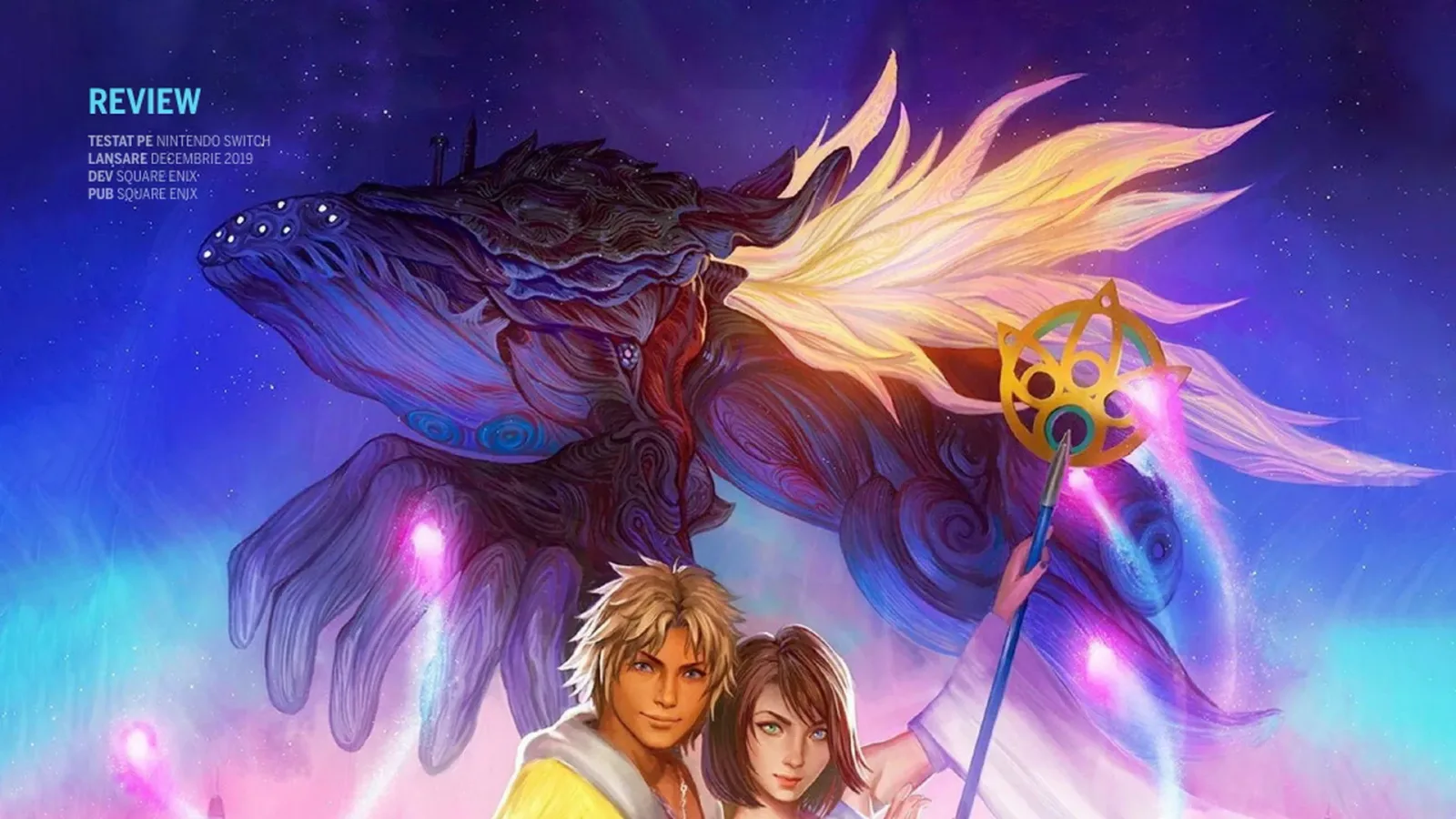
First published in GRIND II, pages 56–61.
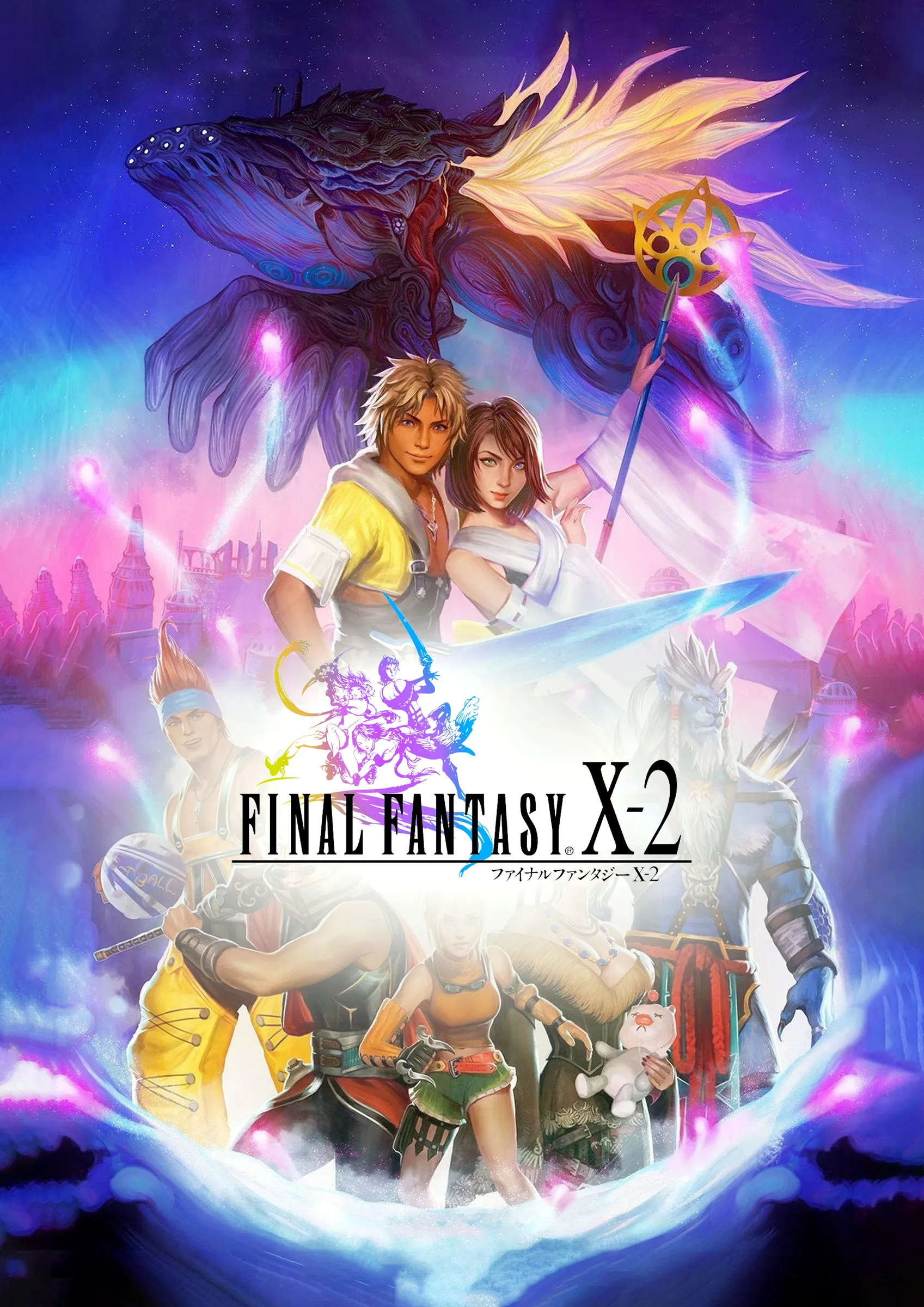
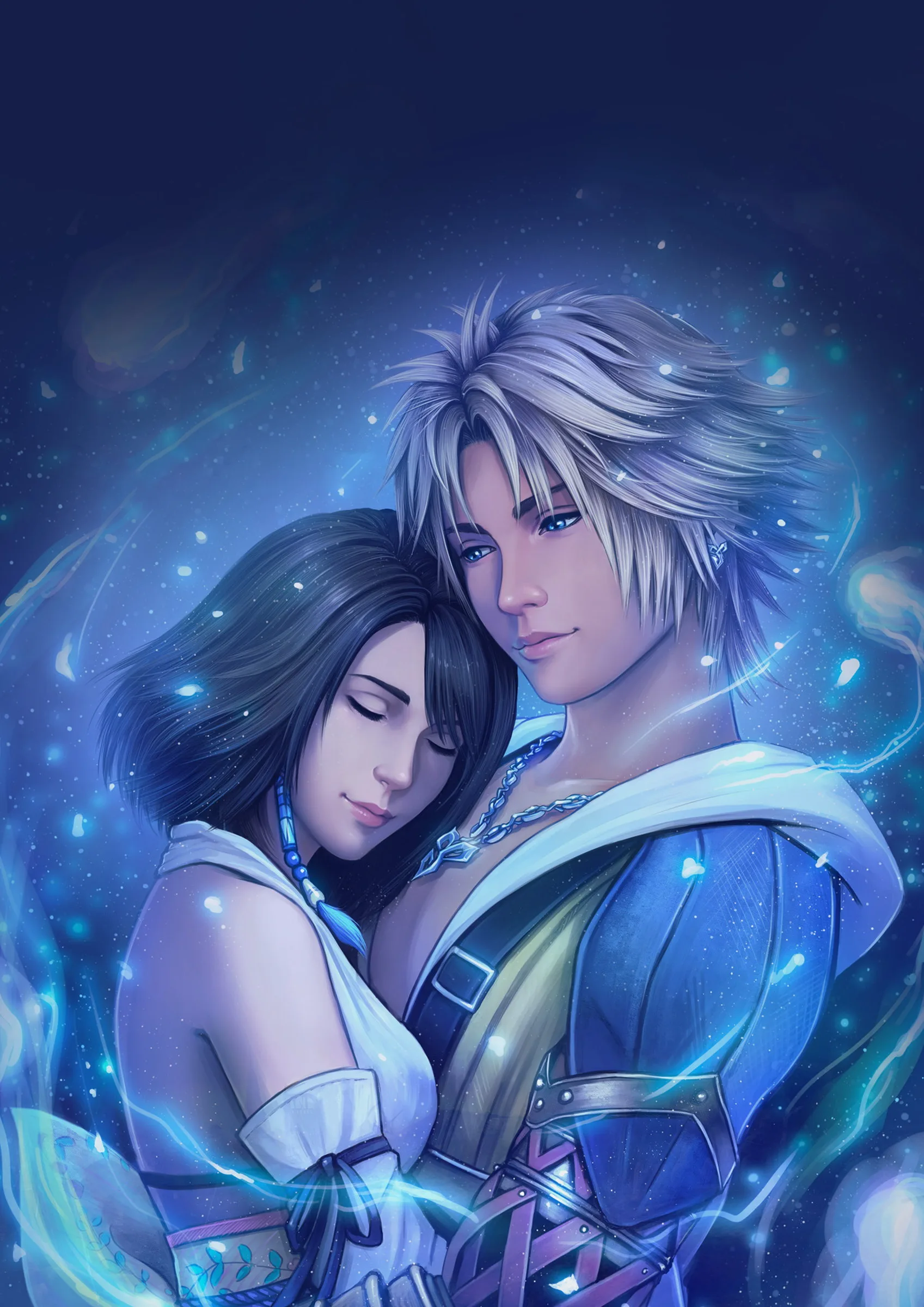
I felt let down by X-2 and abandoned it after the first 3 hours...
I loved Final Fantasy X to bits, with all its minor flaws. I loved the story, I got more attached to the characters than I probably should have, and I spent entire evenings thinking about the tragic fate of the protagonists. If I hadn't discovered Final Fantasy X at the beginning of 2021, I wouldn't have gone on to play Final Fantasy VII. And if I hadn't started Final Fantasy VII, I wouldn't have stumbled upon the story of Dick Tree on YouTube: the allegory that motivated me to start writing articles for what would become the first GRIND magazine.
There are games and stories that restore our faith in ourselves and our hope in the outside world. And when I finished Final Fantasy X, I was enthusiastic about starting a new chapter.
We're talking about a game released in 2003 on PlayStation 2, less than 2 years after the original. It largely relies on recycling the graphics, the map and the textures from X to tell a story in the same places, but with a different premise. This time we run into the early days of the Square Enix alliance and the first signs of production budgets being trimmed.
But austerity isn't the reason I ended up detesting Final Fantasy X-2. Recycled as they are, the graphics look much better than in other RPGs from 2003. And the gameplay is far more engaging than in X; I'd say it brings a series of improvements and refinements to the battles.
No, the reason I detest X-2 is different – the game hit me like a derailed freight train carrying logs that roll over me in the rhythmic succession typical of Rube
Goldberg machines... BECAUSE OF THE STORY.
The sombre atmosphere of the original, fuelled by fear and uncertainty, is now replaced by exuberant optimism, expressed through J-Pop songs and humour somewhere between Totally Spies (the spy cartoon from Fox Kids, inspired by Charlie's Angels) and Team Rocket from Pokémon. Everything that was once solemn and mystical has now become profane. Even the characters' formal robes have been swapped for short shorts and animated sequences that remind me of the days when I watched Sailor Moon on TVR 1. Spirituality has been replaced by fashion, politics and cheap humour.
Obviously, I felt let down by X-2 and abandoned it after the first 3 hours. Then I started on VII (original and remake) and kept coming back to X-2 to give it extra chances.
Each time, I resigned myself and put it off for a few more months. I hoped that time would wash away some of my rigid memories of the original and help me enjoy the sequel precisely because I'd see it as a self- standing experience that shouldn't be compared with the first game.
The female trio isn't to blame, and neither is the celebratory mood after the sea monster Sin has been killed. What made me try to forget X-2 existed is more to do with the presentation and the situational comedy that dominates the scenes in the first part of the game.
The feeling is familiar: I had it in December 2017, while that Odysseus enjoyed once he got home to Penelope and regained his place on the throne.
Nobody bothers to imagine a Harap Alb having a mid-life crisis, retreating to the mountains after his wife tells him off for not putting the toilet seat down and forgetting to take the rubbish out. Stories end at a certain peak and avoid the banalities of everyday life precisely to help us find examples of and moral strength that motivate us in our own daily battles.
What I'm really trying to say is that the guys at Square (who merged with Enix a few months before releasing X-2) took on a difficult mission. First, for the first time they chose to continue a story originally conceived I was watching “Star Wars: The Last Jedi” in to have a clear ending. Second, the cinema.
the direction they took Above all, characters dear to me is rather bold: a female trio underwent transformations unworthy of in the lead roles, a world the image that made them famous. In the mystified by the previous religion Star Wars universe, we have Luke Skywalker, who behaves as if he had access to the script and allows himself to mock the clueless people around him. Later, the Jedi knight uses supernatural powers that defy every convention established before. Princess Leia also has an arsenal of powers that would have put even the members of the Jedi Council to shame. And Poe Dameron is so capable that he takes on an entire fleet single-handedly while cracking childish jokes in the face of General Hux's serious threats. These are just 3 of the moments that made me realise one of my favourite series had been given a healthy dose of post-modernism.
Over time, though, I realised something important: it's difficult to portray a world that has just eradicated danger and is in the middle of rebirth. Most of the time, stories end once a balance has been restored, which involves a series of obstacles.
The most interesting part is the journey itself, not the existential problems that come after the ending. Nobody stops to think about the marital rows of and in the middle of reconstruction, a political conflict between young progressives and old conservatives, a sense of nostalgia for what was good and was lost from the difficult times that have ended, and a general state of chaos in which the priorities of civilisation are no longer so obvious.
A good part of the story in Final Fantasy X-2 presents an ideological clash between two factions trying to recruit Yuna – the hero who broke the cycle of death and brought about a period when worrying about the safety of tomorrow is no longer a concern.
On one side, we have the Youth League: a group that promotes a universal, secular utopia as a way of life. They're the ones who realise that the old religion subjugated the entire world and brought darkness, so they want to build a new beginning for Spira based on technology and ideas of equal opportunity.
On the other side, we have New Yevon: sympathisers of the Yevon religion, who want to keep the good parts of going to church and create a hybrid world where spirituality has a place of honour alongside technological progress.
The premise of progressivism versus conservatism is far too close to the reality we live in today.
And perhaps for the same reason I couldn't enjoy the story as much: instead of detaching me from reality, it reminds me of some everyday problems that have no obvious universal solution and that I'd rather not think about while playing. It's much easier for me to detest the murderous monster Sin and the Yevon religion that perpetuates it than to face the dilemmas of a civilisation experiencing prosperity and expansion for the first time.
But more than the politicisation of a magical universe, what infuriates me is how Yuna has changed. In Final Fantasy X, she's the archetype of the heroine who would sacrifice her own life for the common good. Now that two years have passed and she hasn't had to die on the altar of the Yevon religion, she's in the middle of finding herself. Clearly, she has no interest in the politics around her and refuses any leadership role in either faction. But instead of trying to live a normal life, she turns into a J-Pop singer who spends most of her time search- ing for spheres that store pieces of Spira's history.
It all sounds wonderful so far, but the team she sets off with, and especially the enemies she has to deal with, are so shallow that Sam, Alex and Clover from the Totally Spies cartoon show more intelligence and depth in solving problems. Without this bizarre humour, I'd have enjoyed the story more.
Square Enix took on a difficult task when they decided to make a sequel to one of the best stories in RPG history (and probably the last one in the Final Fantasy series that truly deserves to be discovered by future generations).
Sure, my criticism softens a little when I remember I'm dealing with a 19-year-old girl and her friends. A young lady who embodies the stereotype of the priest's daughter who went to university in a big city and discovered freedom. But then again, this kind of story simply isn't for me. I find it hard to identify with the characters, I have a lower tolerance for the situational comedy on show… and yet I find a strange fascination in the game's world.
If Final Fantasy X is linear and lets you follow the action in a predetermined sequence, then
X-2 hands you a ship from the very first moment and lets you choose the order in which you approach the story's elements. Sure, there are cinematic sequences that play out at certain key points in the progression, taking into account how many missions you've finished.
But just like Yuna and the citizens of Spira, you have the freedom to be disappointed by events in an order of your own choosing.
Once again, determinism is replaced by chaos – which in this case isn't necessarily a bad thing, though I wanted to emphasise one of the deeper metaphors that help us understand the idea of freedom.
Don't get me wrong: in day-to-day life I prefer the chaos and uncertainty that come with freedom; I'll always rather set my own limits of responsibility and carry the risk than be led by someone else who claims to know better than I do what I want and what I need.
But in games, I'd rather have a compact, clear story that doesn't let me get too lost.
Then again, the more I think about it, Final Fantasy X and X-2 are exact opposites that complete each other. Night and day, chaos and order, captivity and freedom, the masculine and the feminine, yin and yang. In the article I wrote for the first GRIND magazine, I mentioned that protagonists Tidus and Yuna are like the Sun and the Moon: celestial bodies with different properties and roles, which cross paths very rarely but mark every moment they're together with something memorable and spectacular. And if
Square Enix really do have that high level of depth, then they designed a sequel that deliberately contrasts the events of the first game to give us a bigger picture that delights us precisely because it defies our expectations.
But no, I think I'm going too far now. Out of the love and respect I have for X, I've ended up hunting for arguments to justify the state X-2 is in. Maybe I'm just trying to justify the time spent grinding alongside Yuna and her friends Rikku and Paine.
Because the game has two possible endings, and the one that genuinely fills your soul with joy and gives the story a satisfying outcome requires 100% completion. And for that 100% you have to talk to absolutely every NPC until you've exhausted all their dialogue lines, complete every side mission until everyone is happy, and lose extra hours to grinding. Honestly, I preferred to get the common ending and watch the other one on YouTube. But the scene moved me to tears and left me ashamed of the cheap way I'd chosen to get it.
Final Fantasy X-2 marks a transition in the series' history. It's the first game published under the Square Enix banner, and the first Final Fantasy that two of the people who made magic from 1987 to 2001 no longer worked on: series creator Hironobu Sakaguchi (who had previously served as director, executive director and/or scenario writer) and composer Nobuo Uematsu. For these two legends of Japanese RPGs, X was the last major project carried out at Square studio.
But if the story falls below the standard set before it and marks the start of a run of disappointments, the music manages an eclectic and genuinely accomplished combination. From the J-pop mentioned above through to disco-funk, the first part of the game reflects a relaxed, carefree attitude. Tracks like “We’re the Gullwings” and “Joost Leave it Tae Us!” project dynamism, youth and a sense of freedom. There's also an obvious contrast between Rikku's theme (a playful, bouncy piece) and Yuna's (a piano composition that conveys nostalgia, mystery and uncertainty). The second half of the action, though, is marked by rather more melancholy, in “Seal of the Wind”, “Reunion” and the orchestral version of “1000 Words”.
These moments make me realise that there were far grander ambitions behind the game – because the way the music evolves gave me the impression of a wish to transcend towards something universal and eternal. Maybe Nobuo Uematsu's absence isn't felt all that keenly, but if Sakaguchi had been involved in directing, he'd surely have done a better job.
But is it really worth gritting our teeth and letting ourselves be disappointed for a good few dozen hours just for a few moments of pure joy? Is there really something noble behind the sacrifice?
Can we find beauty in something superficial and seemingly meaningless? Do all our torments find their justification when you know a happy ending is waiting? These are just some of the questions that have no obvious universal answer – it falls to each of us to identify the motivations we channel our effort into.
But if the subject of this string of questions is Final Fantasy X-2, then my answer is NO.
You can finish the game's main story in 30 hours. Then the sad ending plays out on screen. To hit the 100% that unlocks the good ending, you need another 20 hours of grinding and tough battles. My advice is to save yourself the time and watch the story sequences on YouTube. In the evolution of our species, there are exceptional individuals who put in Herculean efforts so that we don't have to do it all over again. And with Final Fantasy X-2, it's fine to take a little advantage of other people's work.
Vlad Costea
0 votes
Scroll down here and stay on the page for at least 30 seconds to vote.
Pick a score from 0 to 10 (halves are allowed).