
Final Fantasy IX
First published in GRIND II, pages 8–25.
EPILOGUE
existentialist My uncle Mircea Costea was taken by cancer in April 2022, shortly after he turned 65. In the months that followed, I found refuge in Octopath Traveler and Final Fantasy IX. Whenever I had a free moment, I kept my mind busy with a gaming session, to keep at bay the depressing thoughts about the transience of my own existence.
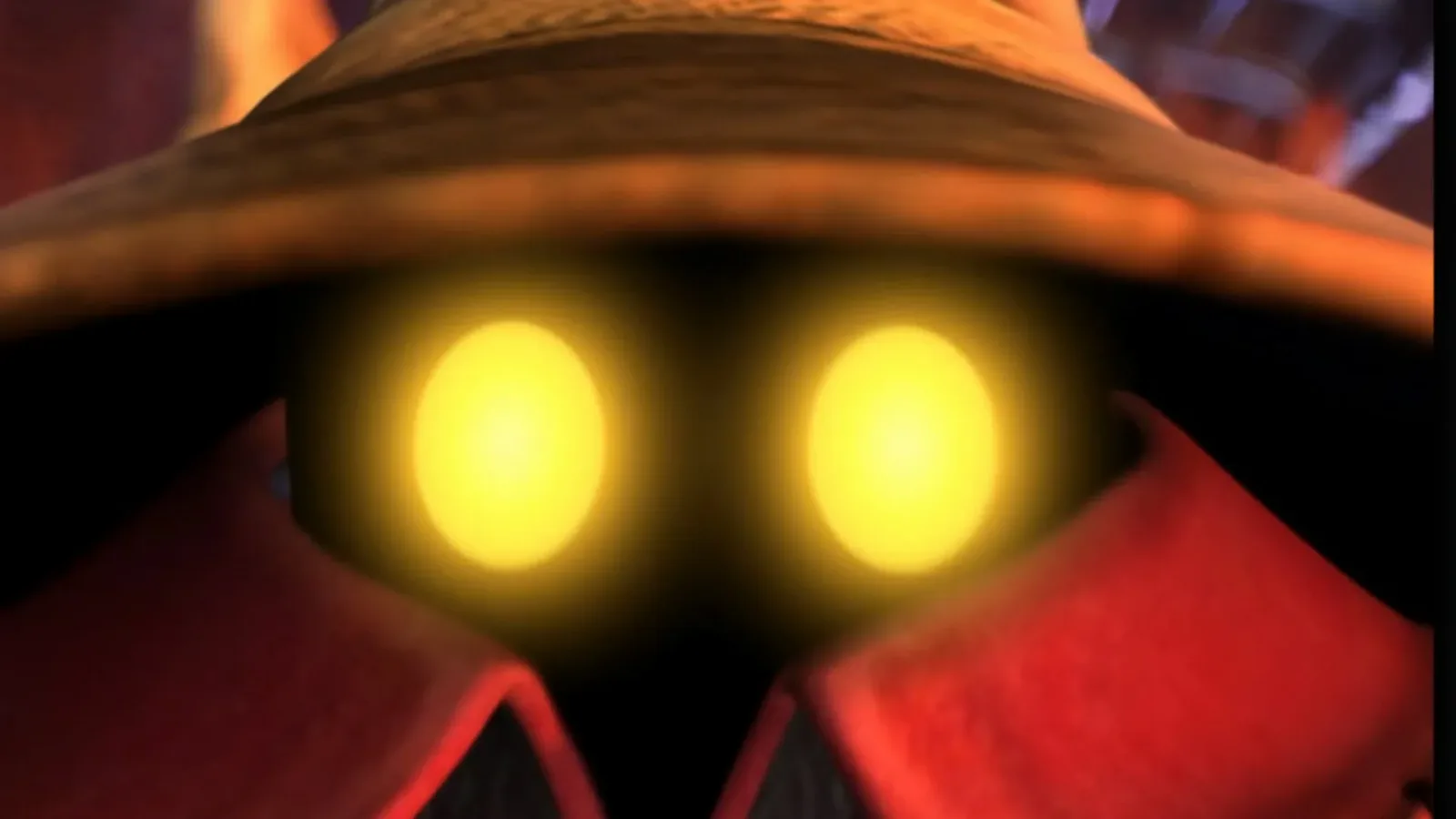
But one element of Final Fantasy IX helped me breathe a sigh of relief: the story of the mages. After about 10 hours of play, a little village is introduced, populated entirely by creatures brought to life in the manner of Pinocchio. Their carved bodies gain consciousness and discover life, and the nature around them, as it actually is – with no Geppetto on hand to explain anything.
This civilisation of mages doesn't know its own origins, doesn't know what it was created for, and is still testing its own limits. As a result, the lifespan of its own species is a mystery – those among them who still move cannot understand why some of them have suddenly stopped. And yet, instead of mourning their seemingly inevitable mortality, the mages find things to keep them busy: some take up farming, others the art of trade, while a few choose to study nature and the phenomena around them. Even with no one around to assign them a purpose, the mages choose to find meaning in their existence.
And if a civilisation starting from scratch to define its own purpose can still progress towards a fulfilled life without wallowing in self-pity… what excuse do we have, we who already know who we are and what we want? FINAL
FANTASY
Although the central theme of the song is melancholy over a lost love, the message invites us to hold on to nostalgia. Because, in the form it takes, Final Fantasy IX is a farewell letter to a kind of game that, by 2000, had already been and gone.
Japanese RPGs needed a fresh breath of air, something to push them towards new territories. Medieval landscapes and magic merging with a primitive industrialisation were no longer attractive enough for an audience keener to consume futuristic stories with robots, mega-corporations of dubious morality and dilemmas that piqued the interest of anyone looking towards the sunset of the second millennium.
It's no coincidence at all that Final Fantasy VII and VIII sold better – those two games reflect far more accurately the culture of a civilisation watching films like “The Matrix” and stepping into a new, ultra-technologised cycle. What
FINAL
FANTASY
“Melodies of Life” tells us is that love for someone or something, even if it is lost in the present, will carry on existing for as long as we keep the memory of it alive.
The last stanza captures the message of the whole game exactly: “If Ishould leave this lonely world behind, your voice will still remember our melody. Now, Iknow we’ll carry on. Melodies of life come circle around and deep in our hearts… as long as we remember”.
Final Fantasy IX is a game made with love and out of love. True enough, technically it marks the peak of a style considered out of date in the year 2000.
In practice, everything good about the first five games in the series was gathered up to leave behind a sublime, dignified swan song. And at the end, we're left in the company of a farewell letter that tells us, “Don't forget me! I'll carry on existing in your mind and in your soul.”
Although Terra lays claim to a certain technological and civilisational superiority, it is a bland, insipid place.
Its inhabitants are worthy of their NPC roles, and their morality is entirely without nuance: if they hold the technological advantage, then they are more than entitled to conquer other places.
By comparison, Gaia is a vibrant world full of personality. The majestic cities raised in Alexandria and Burmecia, the lagoons populated by Chocobo ostriches on the Forgotten Continent, the village of mages in the heart of the Outer Continent… well, all these places have interesting stories to tell, and they rewarded my exploration with details that pulled me even deeper into the game's world.
Final Fantasy IX also includes a series of cinematic sequences through which we learn important details about the characters and the plot. Here we can pick up small gestures from the protagonists, explosions, rubble, magic and other special effects that wouldn't have had the same impact if they had been rendered in the game's graphics engine. 植松 伸夫 But then again, it's Nobuo Uematsu's music that stirs feeling and marks the gravity of every second in the game. The music carries the medieval spirit of the age (“The Place I’ll Return To Someday”), makes us understand each character's role (Zidane has an uplifting, hopeful tune, Vivi is defined by a bouncy, mysterious piece that hands us precious information about the nature of his existence, while Queen Brahne and Kuja give off malevolent vibrations every time they walk on stage), imprints nostalgia for certain places on us (the tune from Dali village is forever burned into my memory) and offers us hope in the protagonists' darkest moments.
The icing on the cake is the way the song “Melodies of Life” evolves: at first, Princess Garnet hums a rough, incomplete version. It's what the character remembers from a distant childhood, and what gives her hope in moments of crisis. But over the course of the journey, she manages to identify the melody's origin and ends up completing its structure. The lyrics, as translated and performed by Emiko Shiratori, are genuinely gut-wrenching for anyone going through the story.
Let And We Our Melodies To For “ Melodies Alone met, weave them who'll paths traces we for ring of by they hear laughed, of Life picking a out the while did the loud love cross, Love's echoes we up I've till held the you been though lost of pieces left they on stories searching fast, refrain. inside unfold. I that cannot of and never remain. my through […] then say lonely ”told? we just Life the 23 said heart. why, dark, goodbye,
FINAL
FANTASY
Graphics and sound. Final Fantasy IX's graphics are picturesque and cinematic. The style slightly anticipates the arrival of X on PlayStation 2, which makes even fuller use of the ability to lock the camera at an angle that shows off the spectacular landscapes.
Admittedly, the version of FF IX I played is remastered and boasts improved textures. Still, the style holds together and never once disappointed me.
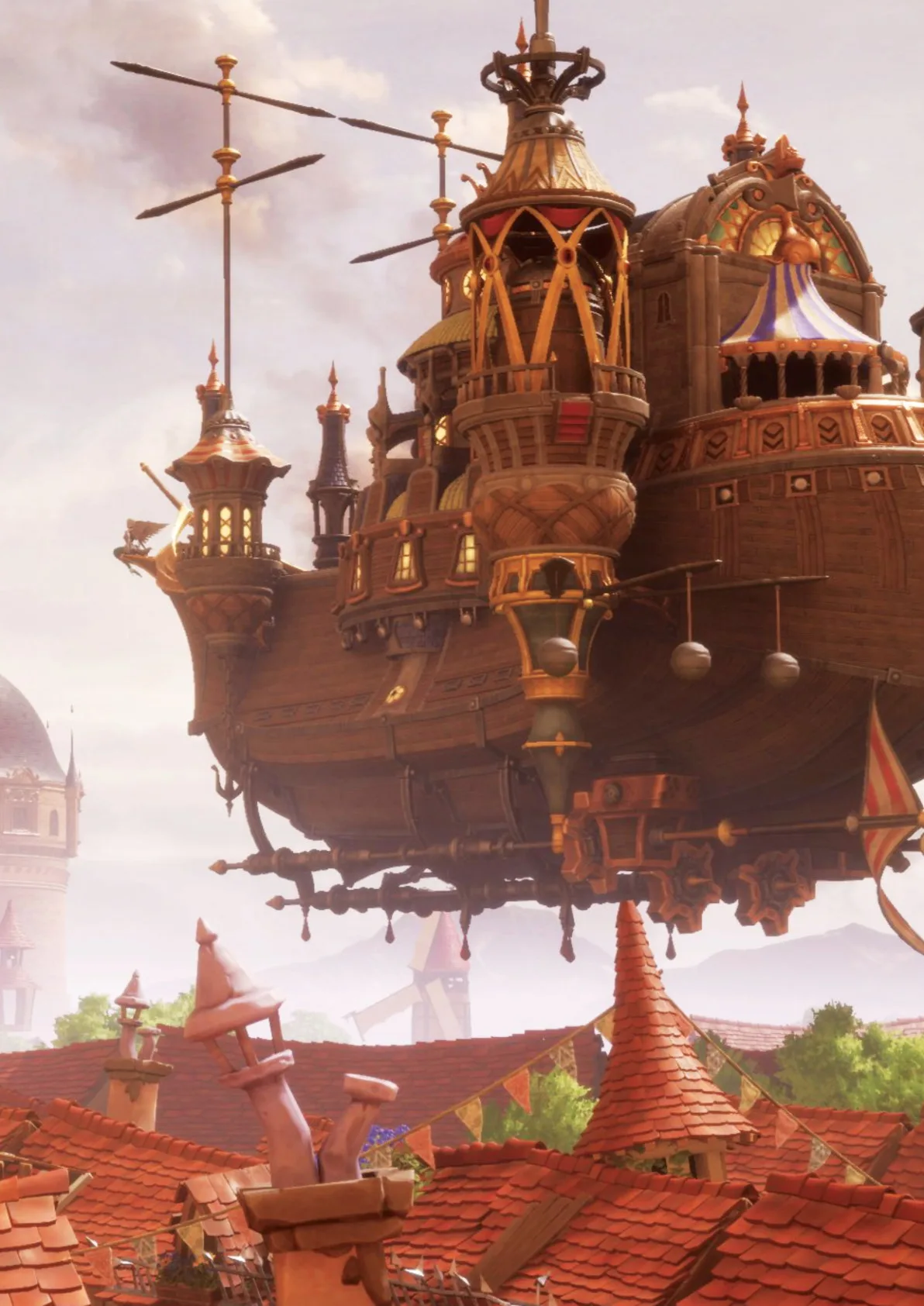
Obviously, we can't talk about millions of polygons animating every gesture on the characters' faces. This is a game from the year 2000, released on the original PlayStation. But the shortcomings in the detail are made up for by the style. The medieval look with its small steampunk influences is immersive and infectious.
The character animations are expressive and sometimes comic in a good way. And the landscapes of the various explorable worlds left me open-mouthed, even though they were clearly drawn rather than modelled.
One more thing worth mentioning is the contrast between the two parallel planets, Gaia and Terra.
If Gaia offers a natural world very similar to our own – rich vegetation, landforms, oceans separating the continents, biodiversity – then Terra is the exact opposite.
The parallel planet, which I explored in the last quarter of the game, is rather uniform and mystical. You can clearly see a chromatic contrast between the two worlds, and a difference in
FINAL
the way the native characters are portrayed.
FANTASY
Me, though – I'm a bit of a masochist, and I like a challenge.
For that same reason, I lost a few extra hours losing battles and stockpiling resources to buy my characters better equipment. I could have approached the game like any sane person in 2022, with access to hundreds of games and only limited time to discover them. But I tried to imagine that I had stepped through a time portal into the year 2000, that I'd only been on this Earth for 8 years, and yet somehow read English well enough to follow the plot and the dialogue. I cheated at certain points when the battles were frustratingly hard and I had to reload my save 3-4 times – but I tried to get the challenge Square set 22 years ago, in all its splendour. Over those 50 hours of play, maybe 5 were spent grinding. Not because I had to, but because I wanted to buy or unlock certain items, like the Excalibur sword for Steiner. And when I did, I cranked up the battle speed to maximise my efficiency. I certainly wouldn't have done that if the battles had played out faster – like in Final Fantasy VII, for instance. But given the option, I took advantage of a modern feature handed to me by some programmers who surely are
FINAL
aware of the criticisms levelled at the game.
FANTASY
Another criticism I want to raise here is more about how Square Enix chooses to treat its treasures.
When I was asked to name the characters, I noticed something odd: the menu told me I could only use letters and numbers, but not emojis. Why would that note even be there, given that the Nintendo Switch keyboard (like those on PC, Xbox or PlayStation) doesn't contain emojis?
That's how I realised I was looking at a port of the mobile version.
This detail about the game's porting is very relevant when it comes to optimisation. Because the lads at Square Enix made no effort at all to make the game take advantage of the console's improved hardware.
Quite the opposite: whenever the battle environment changed, I saw the screen stay black for several seconds… as if I were waiting for my device, equipped with a 60-100 MB/s ROM reading system, to spin the disc until the sector storing the relevant information was identified. Again, Square Enix showed precious little consideration for how they sell a game from 2000 on current-gen platforms.
But back to the grind: in principle, there's absolutely no need to spend extra time tearing dragon heads apart to get through the main story. If you play the remastered version on Steam and consoles (Switch, PlayStation 4/5, Xbox One/Series), you even get a mode that gives you 9999 damage on every attack. That way you'll never need to grind, and you can get through the story without any hassle.
FINAL
FANTASY
Fewer means of transport means more battles. And this is the chapter where Final Fantasy IX doesn't excel quite as strongly as its PlayStation 1 predecessors.
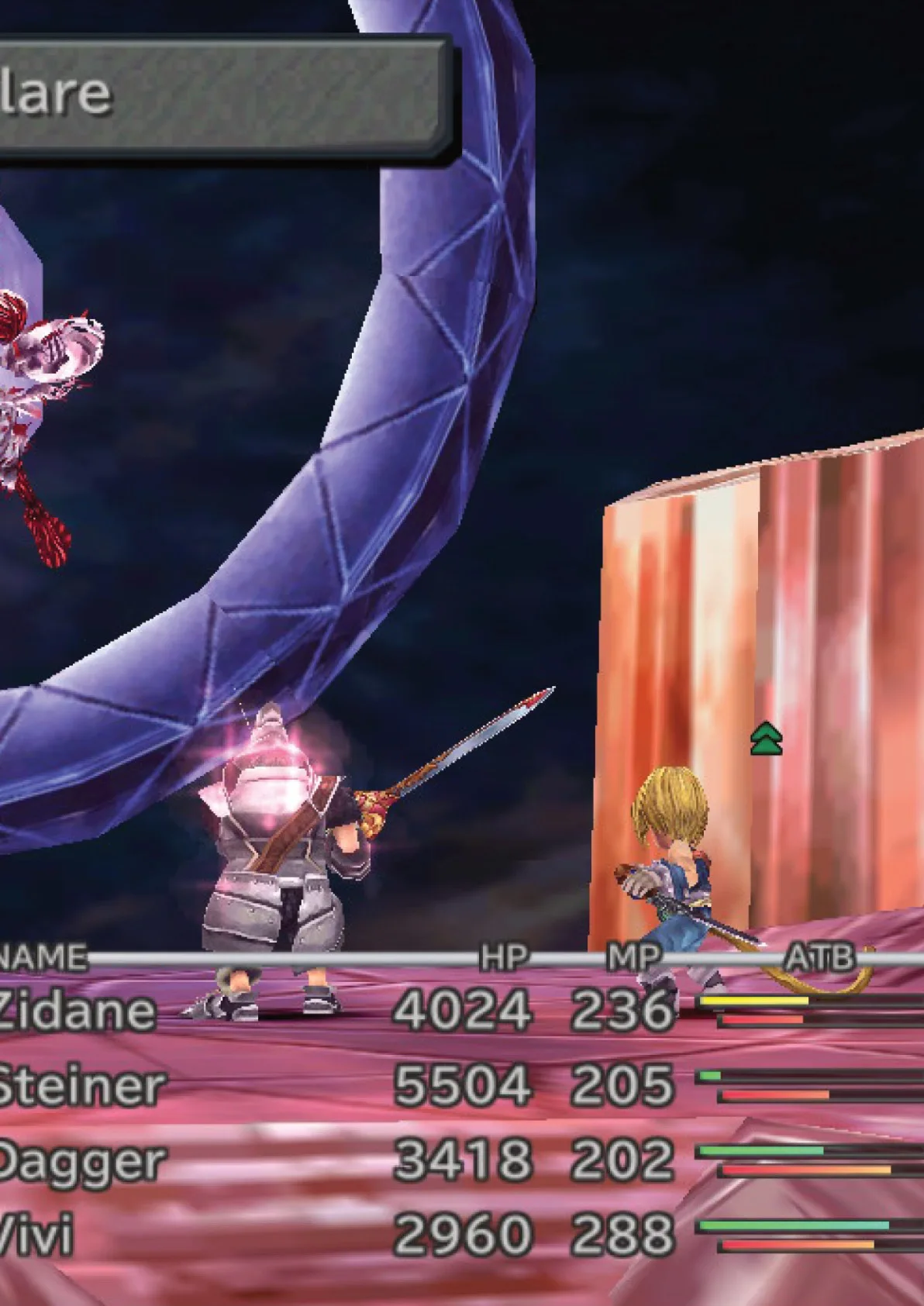
On the one hand, you could argue that we're getting a return to the series' origins and a deliberate simplification of the combat system. But the number of abilities, spells and combinations is far more “of a piece” and simpler than in VII or VIII. The real black mark, though, comes at the level of battle speed. At least at the start of the game, when the characters are slow, I wasted good seconds in every battle watching the characters' ATB (Active Time Battle) bar fail to fill to a level that would allow an attack to be launched or a potion to be measured out. Fortunately, the version I played includes an extra function that triples the speed of the action. Still, anyone playing Final Fantasy IX on PlayStation 1 will get tedious battles for the better part of the adventure. The only times I felt the need to give up the acceleration were when I fought bosses that demand careful rationing of effort. For the rest, I could take random encounters on full auto.
FINAL
FANTASY
JRP
Grind Over approximately 50 hours of play, Final Fantasy IX doesn't stray too far from the series' established formula.
Battles are powered by an initiative bar that fills according to the characters' movement speed and is spent after each action.
Travelling from one city to another is done via a map represented to scale
FINAL
FANTASY
(overworld), which can later be explored in flight aboard a ship.
Unlike Final Fantasy VII and VIII, the concept of the submarine – and, respectively, of space exploration – is missing.
The universe is reduced to a main map that can only be traversed on the surface. Movement is on foot, via a boat that connects the continents, and, towards the end of the game, by a ship that makes fast travel over long distances possible and can penetrate the parallel dimension.
Alternatively, there's also the possibility of discovering friendly ostriches called Chocobos: they have the ability to move faster in order to uncover certain secrets on the map.
Without giving away too many details that might spoil your enjoyment of discovering the story in Final Fantasy IX, I can tell you that beyond the medieval world lies a parallel dimension that hosts other civilisations.
Our heroes live on the planet Gaia, but end up fighting invaders from the interdimensional planet Terra.
The two celestial bodies aren't separated by light-years, but by interdimensional portals.
IX
And between Gaia and Terra there's a relationship of cohabitation: the souls of those who die on Gaia end up being assimilated by other beings on Terra.
At a certain critical point of death and destruction, the boundaries between the two worlds can end up disappearing to make room for a full-scale invasion.
And our heroes, led by Zidane, end up confronting cosmic forces and guardians of space who believe everything is predestined to happen in a certain cycle dictated by them.
Just as in Final Fantasy X (which you can read about in the first GRIND magazine), we're dealing with a conflict between tradition and individualism.
FINAL
FANTASY
The notion of the antagonist is always shifting over the course of the story.
Some characters who initially appear hostile towards the team made up of Zidane, Vivi and Garnet become friendly by virtue of moral dilemmas that bring them back to first principles.
Essentially, the game's message is that no one is beyond redemption, and the evil caused in the world is most often caused by a dangerous informational asymmetry: what certain powerful and influential people believe they know about those below them isn't necessarily the reality. I could draw a lesson here from the film “Metropolis”, directed by Fritz Lang – where Zidane becomes the heart that unites the brain with the hands. But I don't want to introduce connotations about class struggle or other popular ideologies from the first half of the 20th century: here it's strictly about the connection between the 16 in positions of leadership and the unruly rebels whose lives are nonetheless influenced by decisions taken a little higher up.
FINAL
FANTASY
explore his sensitive side, conquering the beautiful warrior Beatrix in the second half of the game. It must be said, though, that his romantic progress couldn't have happened if he hadn't had battles to polish his behaviour and turn him into a true knight.
The other 4 characters who join the team over the course of the action are, in order of appearance: – Freya (dragon knight from the kingdom neighbouring Alexandria, called Burmecia); – Quina (a professional gourmand, who absorbs enemies' abilities when eating them); – Eiko (white mage/summoner just like Princess Garnet, but more effective at healing spells);
– Amarant (monk/ninja able to throw weapons from his inventory to dramatically reduce enemies' hit points).
These last four play key roles in certain regions of the map and become a precious source of help at certain moments.
For the better part of the action, they're optional characters you don't have to include in the main four-member party. But towards the end, Final Fantasy IX forces you to form 4 teams of 2 members each. And if you disliked the character Quina 15 so much that you never used them in battle, then you'll face increased difficulty in one of the confrontations.
FINAL
FANTASY
Like Vivi and Zidane, Princess Garnet discovers along the way why she is so gifted in the art of magic and becomes able to bring to life mythical creatures from parallel dimensions to help her in battle. In short, the role she plays in the party is white mage/summoner.
Steiner is the leader of the elite guards at the palace in Alexandria and the man responsible for Princess Garnet's safety. Intellectually and morally, he is extremely limited: for 14 him, truth is absolute and dictated by the authority that put him in his post. At least in the first half of the game, Steiner shows rigidity and a lack of FINAL humour. He's of a piece and often
FANTASY
confuses legality with morality. And when Princess Garnet lets herself be kidnapped during the play orchestrated by Zidane and his gang of thieves, the knight in shining armour shows his devotion by chasing after the damsel. Initially, his intention is to convince Garnet to return to the royal palace, where she plays the role of sole heir to the throne. But as events get more complicated, he becomes disillusioned and narrows the scope of his loyalty.
At no point in the game does Steiner become completely free of the weight of his own armour. And unlike Vivi, Zidane and Garnet, he neither seeks nor finds his origins elsewhere in the world. He does, however, manage to
At the end of this chapter Another important detail about introductory, we meet Zidane is that he has a tail. Although this the other 3 protagonists: anatomical detail doesn't make him self-conscious and Zidane, Princess Garnet and doesn't seem to affect his interactions Steiner. with others, it is still an element For the better part of the important in the story's arc.
game, Zidane plays the role of In the second half of the game, main character. He leads the team in battles, makes
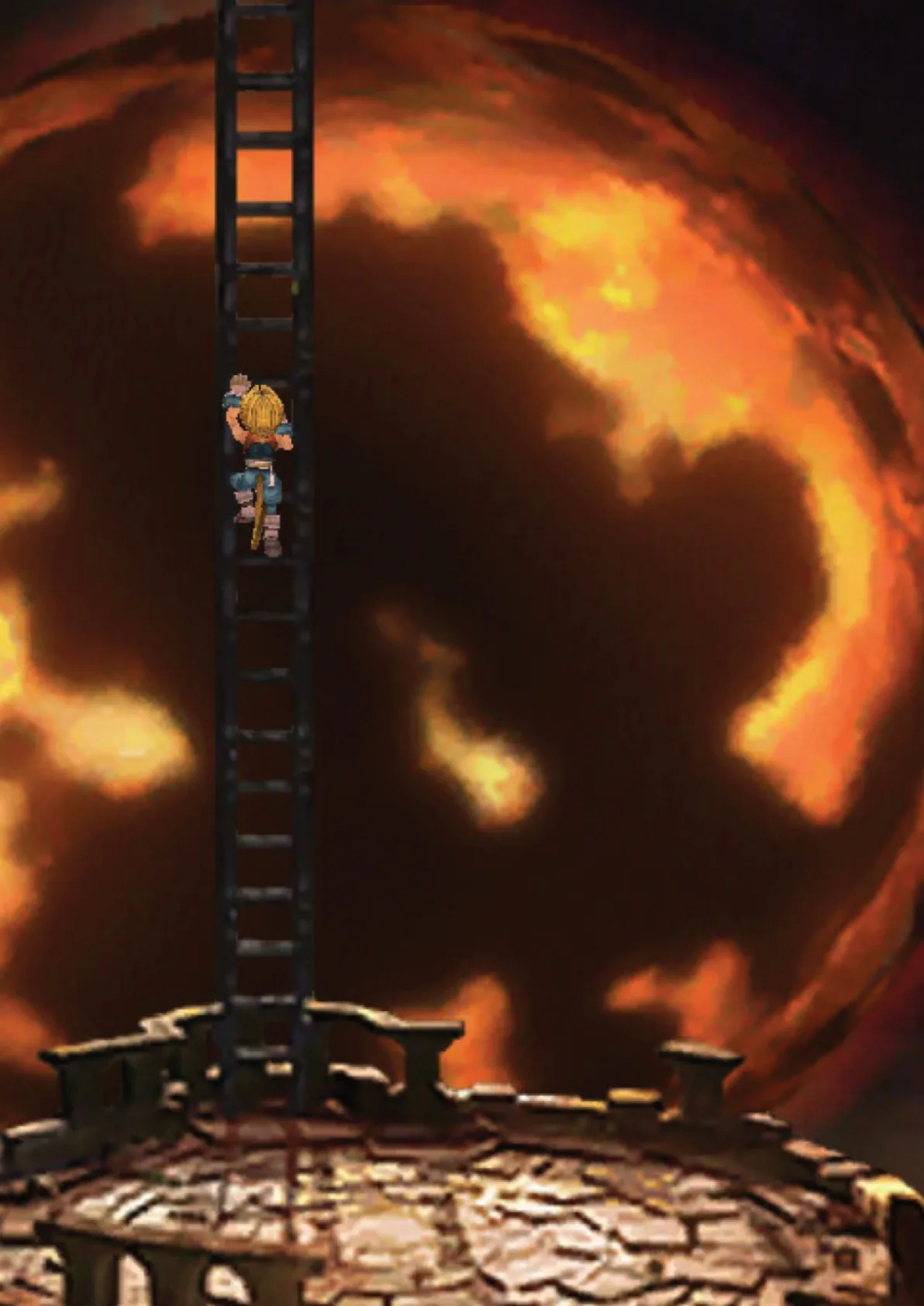
Zidane will also discover his origins in a world far important decisions for far removed from the one he lived in the story's progression and represents a source of life.
inspiration for others. On (Instagram) andreyphan artist
Throughout the game, all the characters who come into contact with Zidane come to understand the world around them a little better… and the paradox is that Zidane isn't some grey-bearded sage, but a childish, skirt-chasing rogue (the only character capable of stealing items from enemies) who matures along the way.
Princess Garnet is the exact opposite of a princess from medieval tales.
She lets Zidane's band of thieves kidnap her precisely because she's bored with life inside the royal palace and wants an adventure. Throughout the game, she chooses to change her name to “Dagger”, performs the Ecaterina Teodoroiu manoeuvre on her own hair, and tries to learn from Zidane how to behave like an ordinary person. Garnet isn't flighty, though: although Zidane courts her throughout the game, the lady of royal blood keeps her guard up and adjusts her expectations according to her origins.
FINAL
FANTASY
action and characters In the first few minutes, Final Fantasy IX invites us to explore the events in the kingdom of Alexandria through Vivi: a clumsy and slightly naive dark mage. On his way to the play marking the city's anniversary celebrations, he interacts with various people and gives us a brief immersion in the medieval world that surrounds more than half of the game.
What's interesting about Vivi is that he doesn't know his origins. He has vague memories of a grandfather he grew up with, who has since passed away.
However, the images from the past shown to us imply that the mage was adopted. For Vivi, the adventure is a way to discover his origins… and later to distinguish his own identity from the rest of the mages who look strikingly like him.
FINAL
FANTASY
& a brief history. As I mentioned in the article about VII, cyberpunk influences are evident throughout the entire plot. But IX chooses to return to the medieval landscapes that delighted fans of the series from 1987 to 1997. Steampunk elements appear too, though, with a primitive industrialisation based mainly on means of transport (ships, cable cars, factories).
Interestingly, Final Fantasy VIII and IX were in production simultaneously. The first aimed to be a full-blown blockbuster, taking elements from VII (still the best-selling game in the series to date) and pushing them to the next level. The other is more of a farewell note, written with great sensitivity, to the origins of Final Fantasy.
And that note includes references to earlier games and should fill with joy the hearts of anyone who played any of the first 5 titles. In other words, a healthy dose of nostalgia before the retro movement was even fashionable.
In terms of sales, Final Fantasy IX didn't shine as brightly as its predecessors – partly because a good chunk of the advertising budget went on promoting its contemporary, VIII. But if we look at Metacritic, we'll notice that IX has a score of 94/100 and ranks 74th among the best video games of all time. By comparison, VIII has “only” 90/100, and VII is rated 92/100.
Scores may not be relevant in reflecting quality, but they do tell us something about the opinion of the editors who have published articles from 2000 until today. Although it sold the fewest units, Final Fantasy IX manages to be remembered with greater enthusiasm by those who bought it and gave it the chance to tell its story. Art by - @MemoriaProject (twitter)
FANTASY
Context: Final Fantasy IX was released in July 2000 on the original PlayStation.
Closely following the recipe begun with the seventh title in the series, the game spans 4 CDs and makes full use of the Sony console's ability to render polygons and pre-rendered cinematic sequences.
If the first Final Fantasy game (released in 1987 on the NES) was Square's last attempt at commercial success before declaring bankruptcy, the ninth game sees the light of day in a world that would buy millions of copies of anything bearing the mark of creator Hironobu Sakaguchi, visual artist Yoshitaka Amano and composer Nobuo Uematsu.
But Final Fantasy IX has a special story because it deliberately chooses to return to its origins. Starting with the sixth game, the trend had been to depict an ultra-technological, futuristic world coexisting with magic.
FINAL
FANTASY
I don't think I'll be forgetting the evening of 1 July
2022.
After 50 hours of adventure, in which I influenced the course of a war between medieval kingdoms, slew mythical dragons, and taught a lesson about life even to the cosmic guardians of space and time, the moment finally came to put down my Switch and wipe away with the back of my hand a few tears whose existence I'm not at all ashamed of. Once again, Nobuo Uematsu's music and a few masterfully written text boxes managed to hurl a dozen onions, mid-slice, in my direction. And if I weren't blaming the onions, I'd probably admit that once again I managed the feat of recognising myself in the game's characters more than was strictly necessary.
What's more, Final Fantasy IX also emphasises the idea of a collective memory that stores the lessons of all civilisations. Our lives are important and sacred precisely because they make immeasurable contributions to the progress of the species. Our actions influence others, and our experiences become genuine sources of information for those who observe us. Therefore, any attempt to diminish the significance of each individual is an illusion.
As long as there's someone to remember us and our actions, we become part of a universal memory that sums up the lessons of the entire species.
I'm aware that the lines above look like a
VLAD
COSTEA
word salad of philosophical ideas. As if a lazy student had taken a few concepts discovered in the works of Voltaire and Locke (heh, FF VI) and adapted them in a simplified manner to the context of fantasy tales.
But at their core, that's what the Final Fantasy games are: a way to learn philosophy without necessarily having to read books. Amid battles and journeys that help you grow attached to the characters, you're served little pieces of wisdom… which, in tandem with the music, make you reflect on your own views of the world and often wring a dozen tears out of you.
But Final Fantasy IX has a few particularities that deserve to be developed in separate sections.
So, in the rest of the article I'll give some important details about the game.
I hope that by the end of my plea you'll be curious enough to try playing this masterpiece from the heyday of the Japanese studio Square (before it merged with rivals Enix and turned into the evil corporation that, ironically, it portrayed so well in Final Fantasy VII).
FINAL
FANTASY
FINAL
FANTASY
0 votes
Scroll down here and stay on the page for at least 30 seconds to vote.
Pick a score from 0 to 10 (halves are allowed).