
Hyrule Warriors: Age of Imprisonment – Review

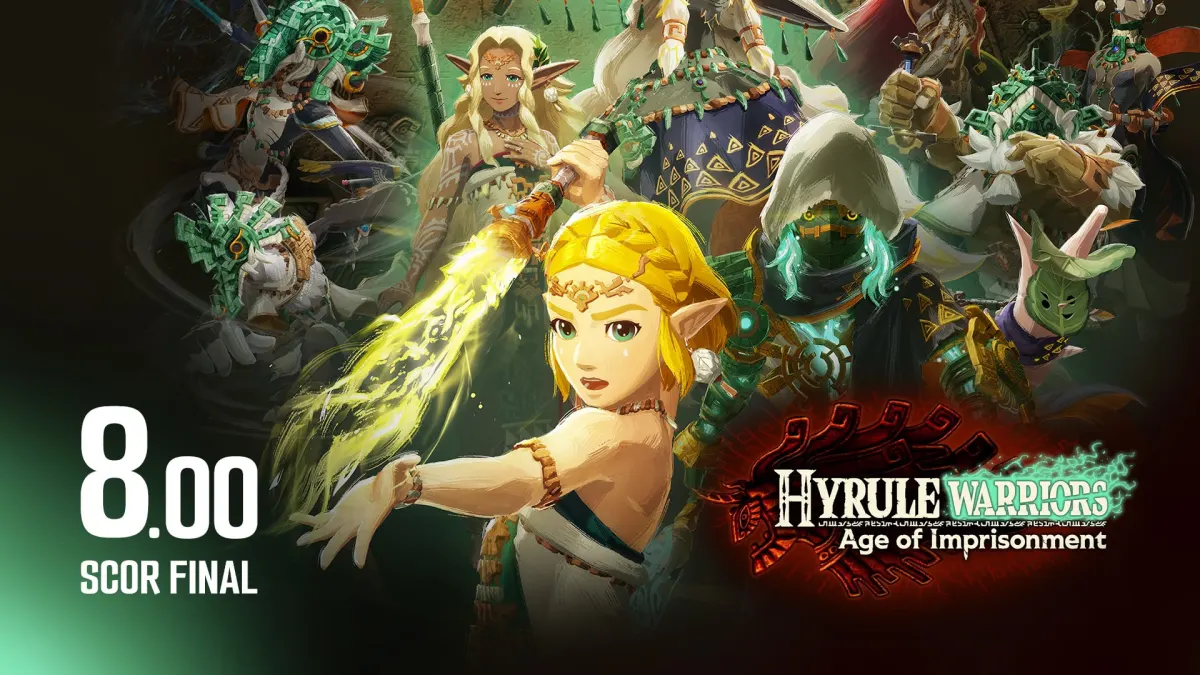
Once upon a time in Hyrule…
I bet you didn't expect that, did you? Here at GRIND, we have a division of franchises, and everyone knows that The Legend of Zelda is fellow writer Vlad Costea's favourite series. But, surprise! This time, a Zelda game review landed on my (virtual) desk!

I confess that I'm also a fan of the series, and not just the main adventures, but also the Musou-style spin-offs that Koei Tecmo has been perfecting for years. Persona 5 Strikers? Played it. Hyrule Warriors: Age of Calamity? 100% completed. Dynasty Warriors 9? We don't talk about that abomination. Therefore, it's not such a big surprise that this new “spin-off” landed in my lap. If you're expecting something grandiose, with a complex story that reaches the level of Breath of the Wild or Tears of the Kingdom… I have bad news, but, so as not to start on the wrong foot, I want to mention that the developer remains a true master of action, and the Musou genre (practically invented with Dynasty Warriors 2 in 2000) has been constantly refined to its current, incredibly fun form. As usual, let's start with the story!
In the distant past…
Okay, for those who haven't finished Breath of the Wild and/or Tears of the Kingdom yet, a small warning: a SPOILER is coming. If you don't want me to spoil the story for you, I suggest you skip this paragraph. Hyrule Warriors: Age of Imprisonment starts exactly after the tutorial in Tears, at the moment Link and Princess Zelda are separated, caused by the return of the evil Ganondorf. As we know from the main series, Zelda is “thrown” into the distant past, to the period of the kingdom's founding, where she meets its first rulers: Rauru and Sonia. Alongside them, the princess learns what it means to be a leader, discovers the secrets of Zonai technology, and perfects her own powers. But her moment of respite is extremely short because the era she arrives in is precisely the one preceding the Imprisoning War! A dark chapter in Hyrule's history, only briefly mentioned in BotW and TotK, but never explicitly shown. For the first time since A Link to the Past and Ocarina of Time, we see with our own eyes Ganondorf's transformation into the “Demon” we face at the end of Tears.
Like many fans, I went into this adventure convinced that I would witness an epic story, worthy of the main series' standards, as Echoes of Wisdom was. Nintendo insisted in marketing materials that, unlike Age of Calamity, the events of Age of Imprisonment are 100% canon and an integral part of Hyrule's “history.” And after the narrative quality of the previous game and Persona 5 Strikers, I had high expectations. I wanted to see Ganondorf in all his evil splendour and witness all the atrocities he committed. The reality, however, was slightly below expectations. If you hoped, like me and most fans, to see the Demon King for more than 15 minutes and have a memorable confrontation… you will be disappointed. The great antagonist appears extremely rarely, being present in only four missions out of the entire game, a little over 10% of the content.

Because the events take place in the distant past, I thought the developer would have artistic freedom to clarify certain elements of the lore. Unfortunately, I hoped in vain. The narrative thread is closer to the style of the Dynasty Warriors series than the spin-offs mentioned earlier. Having a fixed ending, namely Ganondorf's imprisonment in the tunnels beneath Hyrule Castle, the team didn't have much room for manoeuvre. Whatever happened, the story had to reach the same point. The only real surprise, and a truly successful one, is the secondary story of the two new characters: the mysterious Robot and the tiny Calamo. I can't go into details without spoilers, but I can honestly say that their adventure is one of the best elements of the title.
The story is presented through video sequences at the beginning and end of the main missions, but the interactions between characters are not captivating enough to keep you glued to the screen. Many times I found my mind wandering due to the monotony of the scenario and a direction lacking energy. Fortunately, the game's final moments dramatically raise the bar: these are sequences worthy of the best anime, with spectacular fights and scenes that really put you on the edge of your seat. Apart from the last two levels, however, almost every time a cutscene appeared, all I wanted to do was skip it and get back to the real fun: chopping up Bokoblins, Lizalfos, Hinoxes, and Lynels.
Do NOT pursue Ganondorf!
Since I mentioned that burning desire to smash everything in my path, it's time to talk about combat. As I said in the introduction, Koei Tecmo are the true masters of action games and the Musou formula, and in Age of Imprisonment, it feels like they've reached the most refined version of their recipe. Few games can recreate the sense of power fantasy you get when you wipe the floor with an entire army using a single character, but the current title does it brilliantly. Slaughtering a Lynel remains just as satisfying in the early hours as it does at the end of the campaign, the only real difference being how insane the arsenal becomes as you progress.

As you unlock all the Zonai abilities and devices, each confrontation transforms into a puzzle that demands quick reactions and ingenious solutions. Got a Moblin throwing explosive barrels? Use the “electric” fan, Rauru's Ultrahand, or Zelda's temporal powers and send the projectile right back! Is the Lynel holding its shield up and blocking everything? Then switch to Ziggs-style bombs from League of Legends or activate one of the abilities that pierce defence!
Each character has their own fighting style, special abilities, dedicated level, distinct weapons, and synchronised attacks executed together with other heroes. Thus, each style becomes unique and finds its utility on the battlefield… but balance is not exactly the game's strong suit. To paraphrase Orwell: All characters are equal, but some are more equal than others.
Unfortunately, not all characters play in the same league. Some are simply OP; otherwise, I can't explain how some have complete kits, with a response for every situation, while others can barely block a dash or a jump. Rauru, the Zonai king, is the best example: you unlock him early, and he instantly becomes a monster in combat. He has a solution for everything, grows in power at an insane rate, and towards the end, it didn't even matter which teammate I chose… Rauru was doing all the damage anyway. Zelda is the second solid option, with an almost complete kit, but she doesn't tear through enemies like the ancient sovereign. So, even though the game offers you 19 characters, in practice you'll probably only use a quarter of them, because the rest would require hours of farming resources to become truly viable in niche situations!

Like any Musou game, Age of Imprisonment has a “small” problem: the level design is very basic. The main missions take place in enclosed spaces that only give the impression of a semi-open world, and the objectives repeat endlessly: capture the point, eliminate the three stronger enemies, defeat the boss. From time to time, the formula is broken by aerial sections, which are a kind of bullet hell where you pilot a plane and shoot down aircraft or monsters. Surprisingly, these moments are used intelligently and even made me crave a new Star Fox. If it was a disguised market test, we'll find out. If not, then I suggest the big N revive this franchise!
The side missions, unfortunately, are not at all impressive. The map from which we launch each battle is constantly filled with optional objectives, but most are just small-scale fights, taking place on fragments of the main mission areas. The rest are “challenges” like resource checks, where you have to hand over materials to unlock abilities or passives for different characters. Functional? Yes. Repetitive and unimaginative? Also yes…
Since Tears of the Kingdom was a revolutionary title, Age of Imprisonment tries to respect its legacy as much as possible. We have the same three maps: the Sky Islands, Hyrule, and the Depths. In addition to the famous locations and familiar characters, the developer has also integrated Zonai devices, plus the ability to fuse materials obtained from enemies with your weapons to create devastating attacks. It doesn't reach the level of freedom and complexity of Tears, but it is a surprisingly solid Musou adaptation that manages to capture the essence of the original game.

Unfortunately, we've come to the elephant in the room: graphics and performance. Although Age of Imprisonment looks better than Pokémon Legends: Z-A, technically the latter is more solid. Yes, the aesthetics respect the visuals of Breath of the Wild and Tears of the Kingdom, and the iconic characters (Zelda, Mineru, Rauru, Ganondorf, Sonia) and familiar locations look exactly as they should. The problem arises when we look at the technical side: the game doesn't run in 4K, doesn't have 4K textures, and the shadows immediately betray the engine's limitations. The 60fps, which should be standard on Switch 2 for a first-party title, are not at all stable. Most of the time it hovers around 50fps, which is acceptable, but it drops brutally to 30fps in cutscenes, which completely breaks the rhythm.

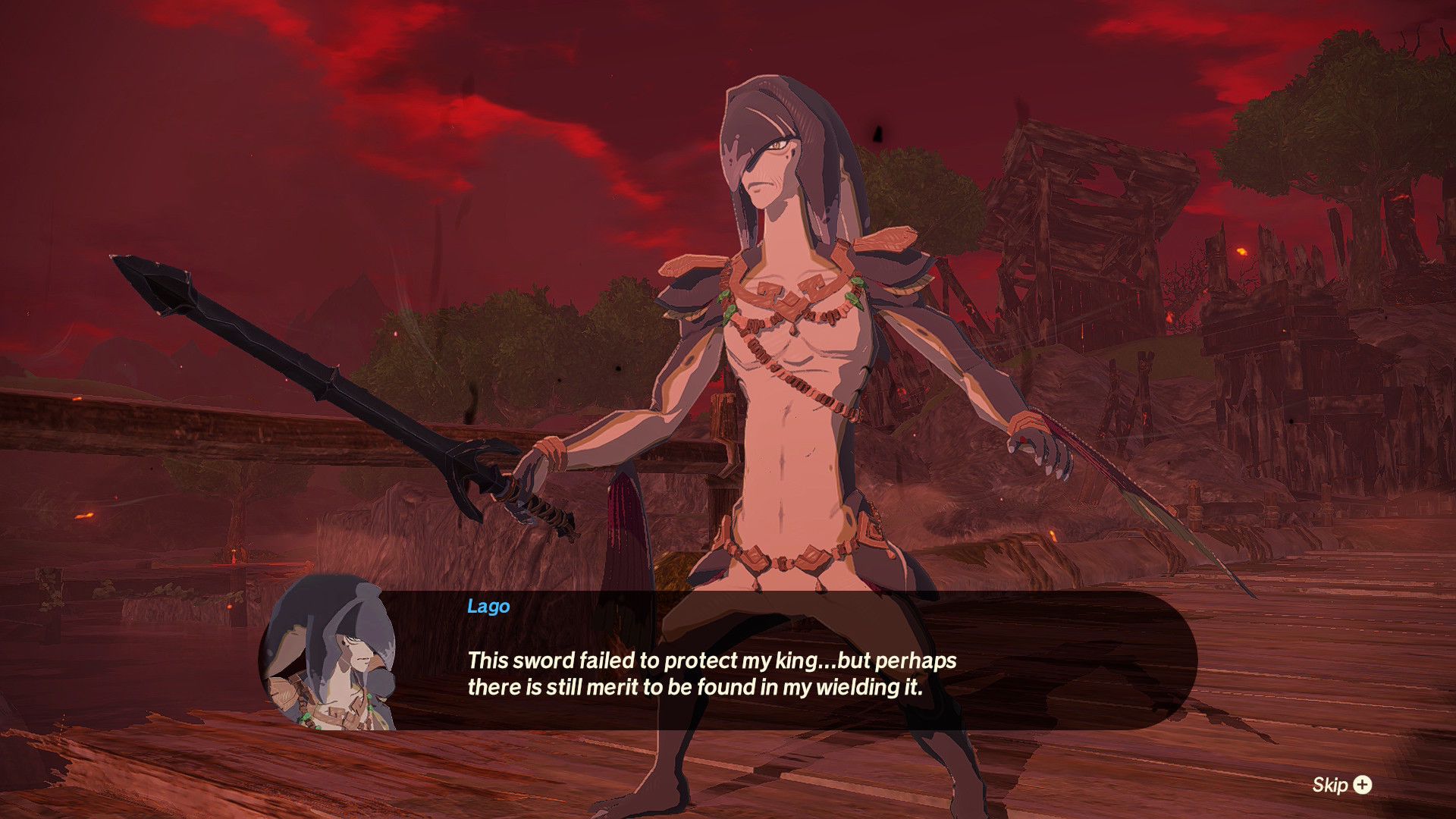
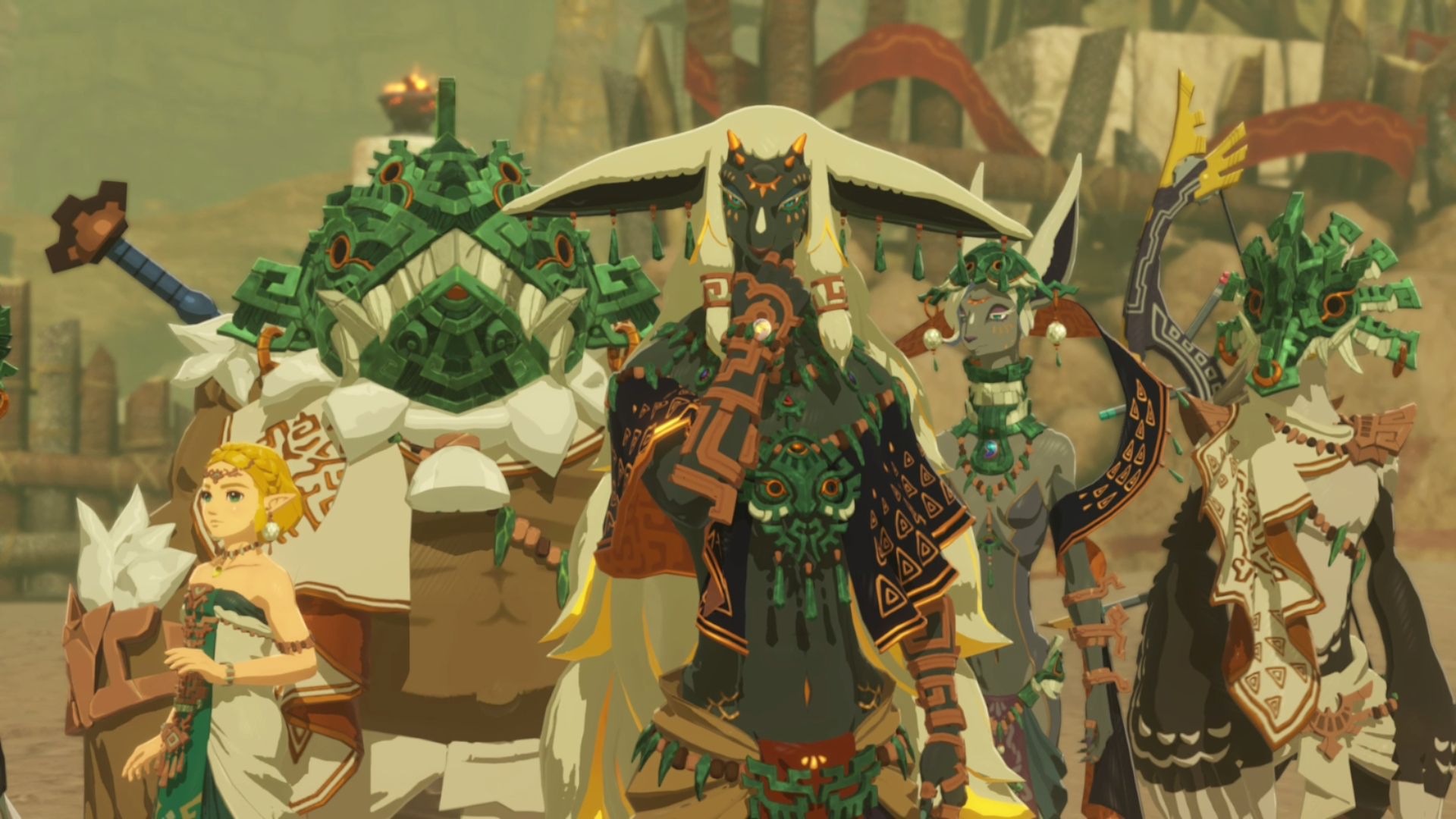
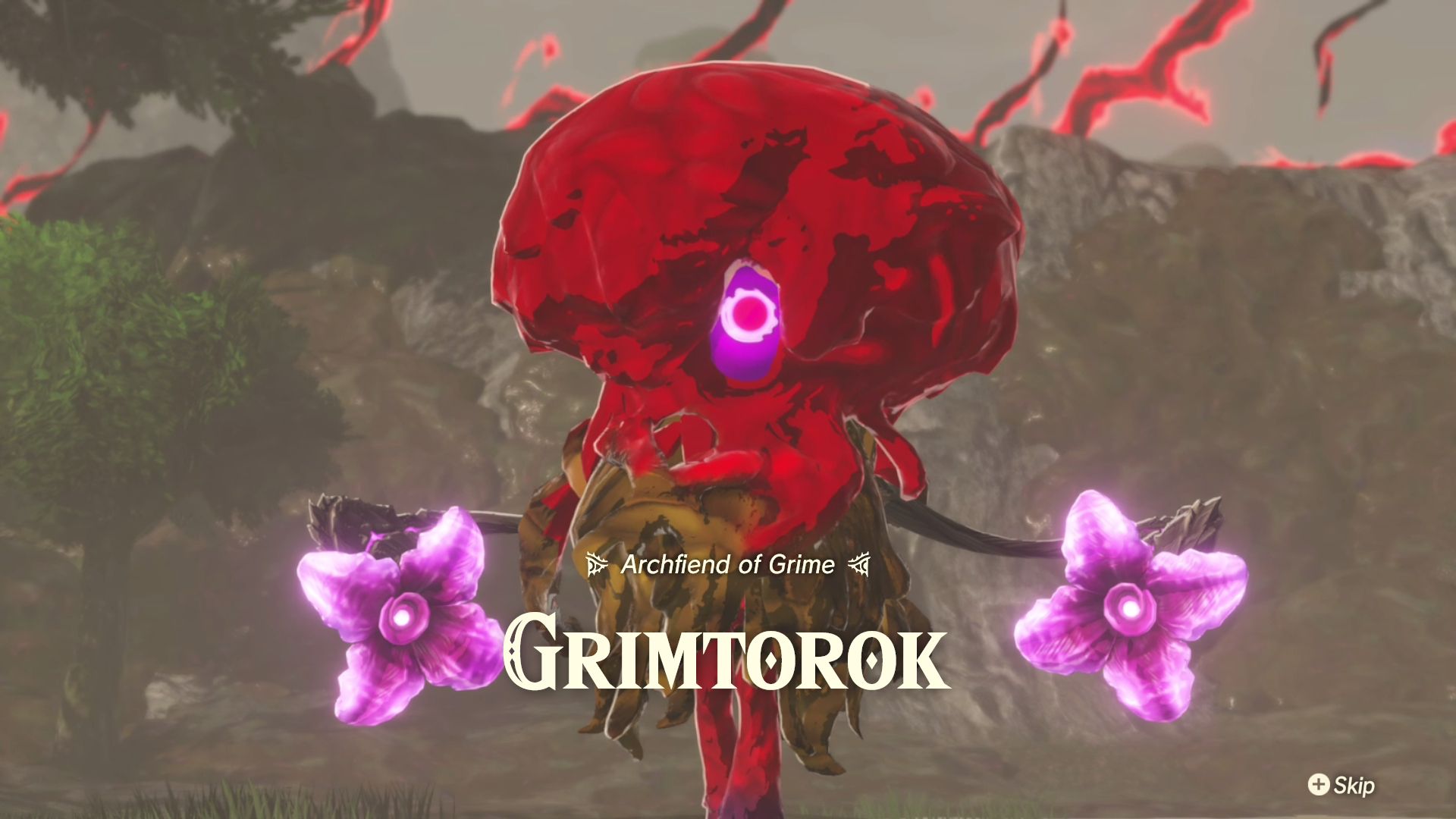
Despite the technical issues that don't meet my expectations and a story that leaves a little to be desired, Hyrule Warriors: Age of Imprisonment remains, nonetheless, a decent game in The Legend of Zelda universe. And if I judge it strictly as a Musou, then we're talking about one of the best Koei Tecmo has delivered in recent years.
Thanks to CD Media S.E. for the review code and the opportunity to play Hyrule Warriors: Age of Imprisonment.
The physical game can be ordered from Jocurinoi.ro and Gamesfunattic.ro

Available on: Nintendo Switch and Nintendo Switch 2
Played on: Nintendo Switch 2
Release date: 6 November 2025
Developer: Koei Tecmo
Publisher: Nintendo
Plus
- Fun combat
- Memorable flying sequences
- The ending!
Minus
- Few reasons to play more than 5 characters
- 30fps in cutscenes
- Weak story
0 votes
Scroll down here and stay on the page for at least 30 seconds to vote.
Pick a score from 0 to 10 (halves are allowed).