
Lost, But Not Forgotten: Rafael Dolfe on Lost in the Open – Interview

When the king throws away his crown and groceries get more expensive, you know a truly unique RPG awaits.
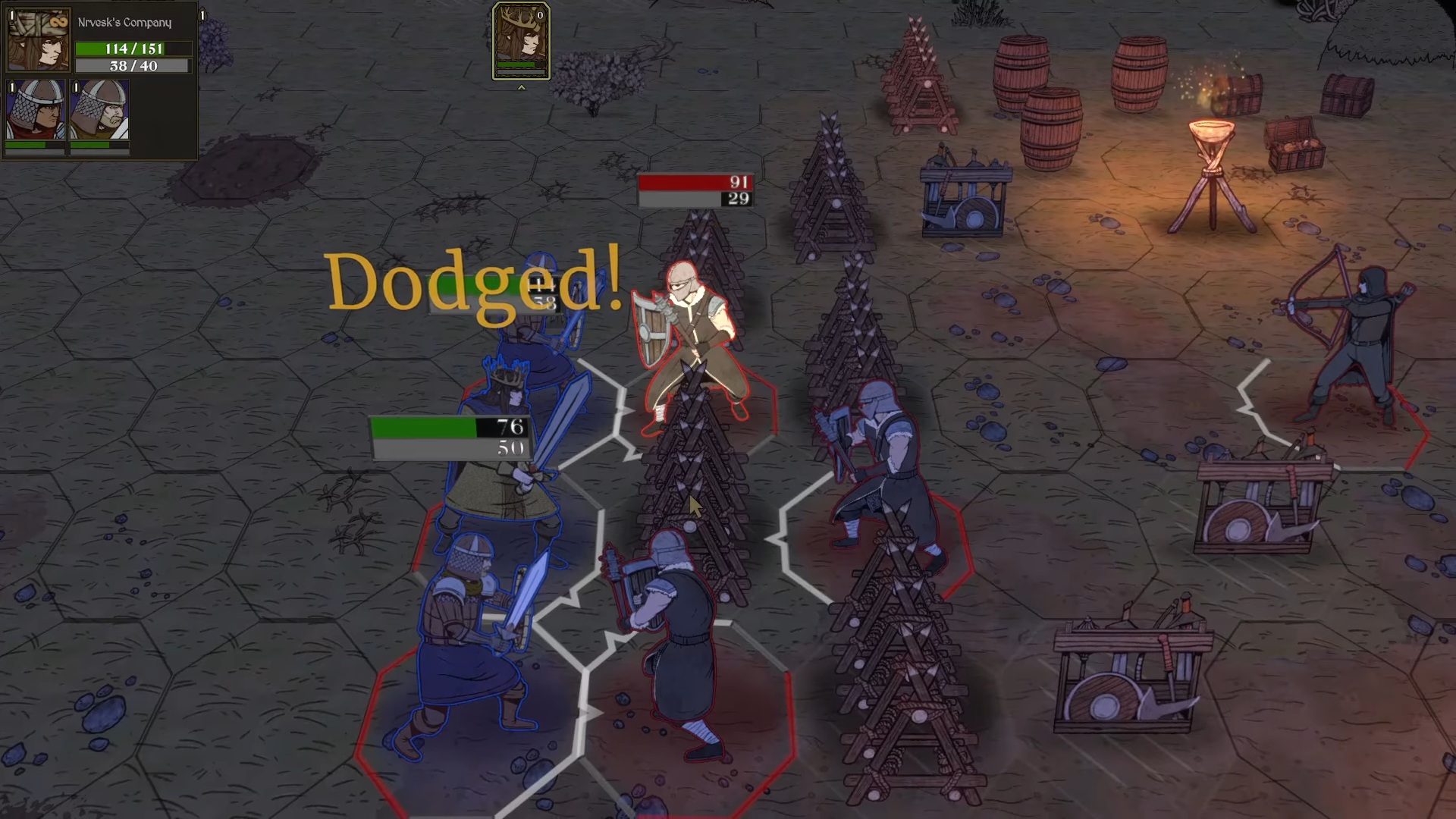
Few indie games have managed to capture the attention of the tactical community as quickly as Lost in the Open. The title is developed by Black Voyage Games and published by WhisperGames, and on 26 September 2025 it officially entered Early Access on Steam, where players can already try the first complete act. The game combines roguelike elements with a turn-based tactical system, set in a dark medieval universe where survival depends on the player's decisions and how they manage inevitable losses.
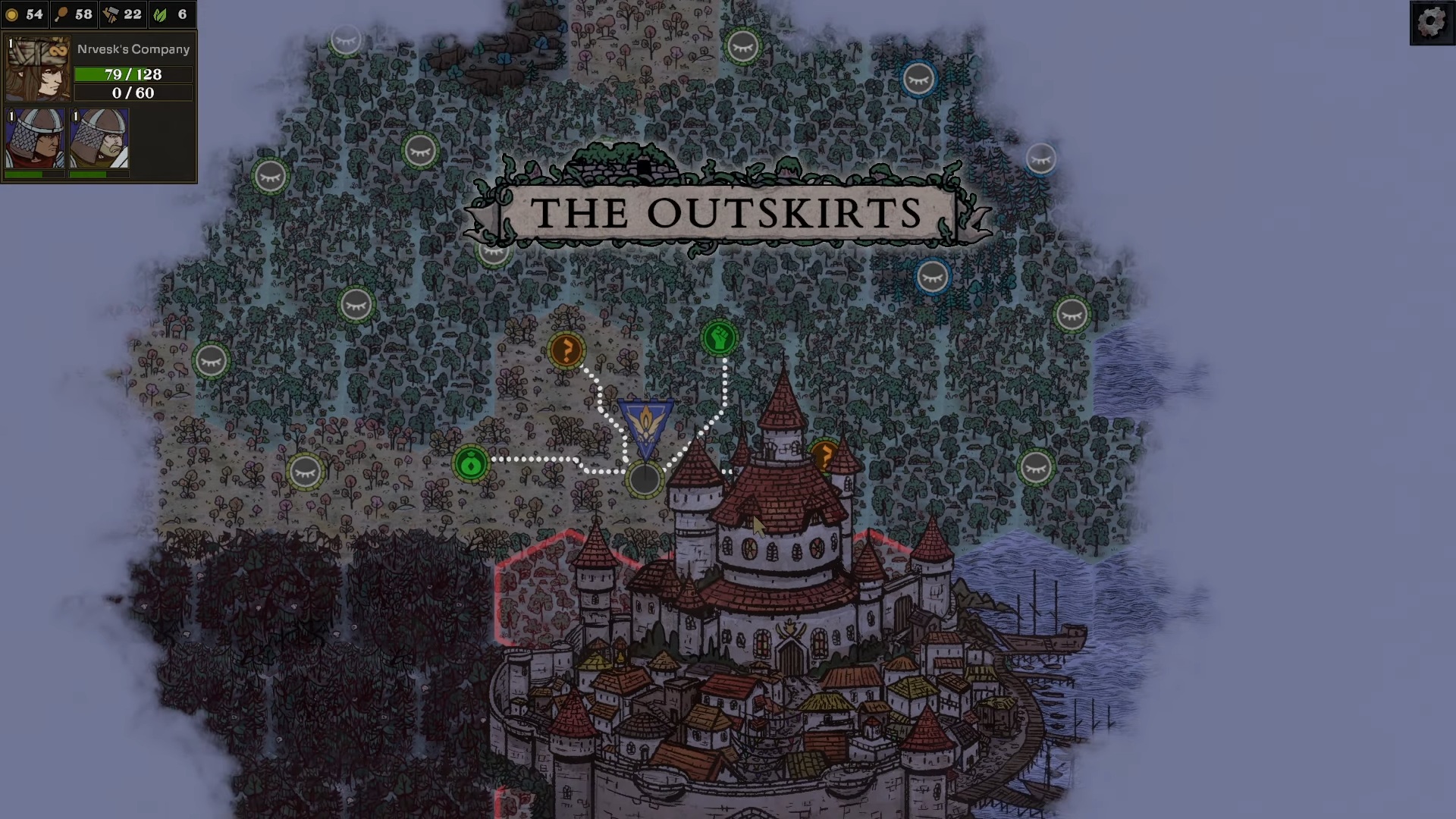
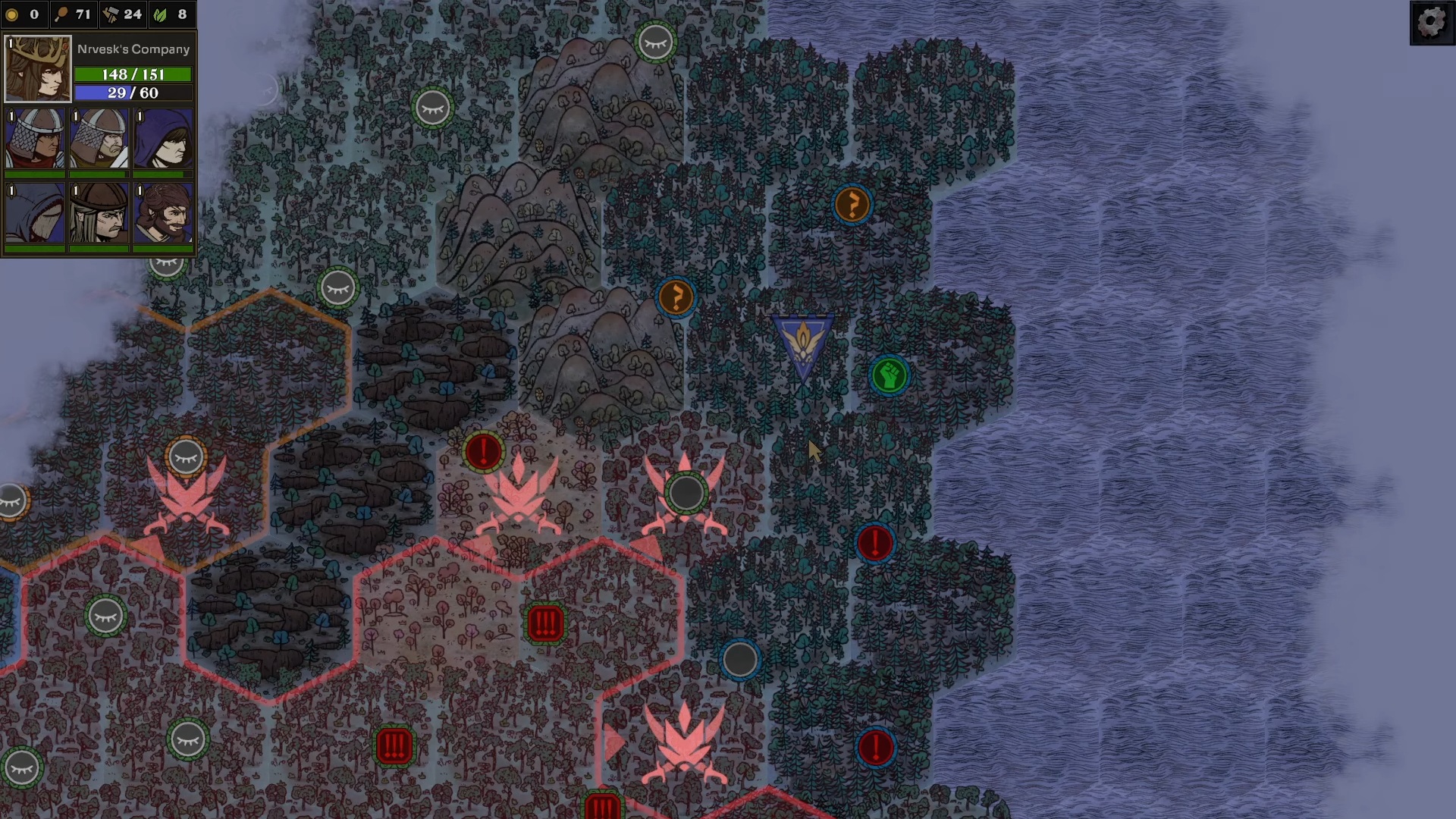
Lost in the Open offers a robust experience right from its initial version: five factions, over twenty unit types, three distinct zones, and six major boss confrontations. Everything is tied together by an atmosphere inspired by medieval art, where story and mechanics go hand in hand. Through the Atonement system, the narrative decisions of the central character, King Nrvesk, have direct consequences on gameplay, making each playthrough unique and meaningful.
To better understand how this project came to life, what its inspirations are, and how the team addresses development challenges, we spoke with Rafael Dolfe, Lead Developer at Black Voyage Games. Here's what he told us:
>>>
GRIND Magazine: Can you tell us about the origins of Black Voyage Games and what mission or vision drives the studio?
Rafael Dolfe: Black Voyage Games officially started in 2021, with Lost in the Open. I worked alone on a prototype for over a year. It was a personal project, a hobby built in Unity. Wanting to bring it to life aesthetically, I started looking for collaborators for small game jams. Through this process, I connected with an artist and a composer. That artist remains a core member of the team today, and those early collaborations marked the beginning of Black Voyage Games.
The studio's mission is to take players on a journey through the dark night. We want to evoke emotion and reflection, immersing players in harsh worlds where decisions are difficult and survival is uncertain. We focus on depth and honesty in gameplay and on telling mature stories through choices that have consequences.
<<<
GRIND Magazine: What was the initial spark behind Lost in the Open and how has the idea evolved into the game we see today?
Rafael Dolfe: The idea for Lost in the Open came to me in 2019, at a GameJam, as a naval survival game, where the player was fleeing by sea after being banished from an island, on a boat. The emotional and thematic idea of being “lost” in unknown territory, fleeing and fighting for survival, remained. However, the setting changed significantly. At first, I realised that creating a TRPG on a boat was too big a goal, so I decided on a simpler universe with forests, mountains, and swamps.
Our game draws inspiration from Battle Brothers and FTL: Faster Than Light, combining turn-based tactical combat with node-based exploration and a constant threat of being hunted. The progression system is designed to facilitate spontaneous decisions and difficulty challenges. In Lost in the Open, you will be at a disadvantage if you try to follow the same build or team composition in every playthrough.
<<<
GRIND Magazine: There are many tactical RPGs on the market. What differentiates Lost in the Open from others in this genre?
Rafael Dolfe: The game designer working on Lost in the Open and I have collectively played thousands of hours of tactical RPGs. We usually play on higher difficulties and enjoy a good challenge. We identified a recurring design pattern at high difficulties: victory is defined as “losing nothing” rather than “surviving.”
In most hardcore TRPGs, a successful battle is usually one where you win without losses and ideally without consuming resources. You are often rewarded for avoiding risks. Some titles, like Battle Brothers, break this pattern in the early-to-mid game, but most do not.
This pattern is not necessarily a problem. It is very satisfying to keep all your units alive and weigh multiple risks simultaneously. However, it is also nice to have battles where you don't have to worry about losses, where you can go “all out.” This usually happens at the final boss of a TRPG and offers a different experience compared to cautious play in regular battles.We want to combine these two dynamics in Lost in the Open, alternating between them and evoking the positive experiences of both styles. This is one of the contributions we want to bring to the genre.
<<<
GRIND Magazine: How have you approached storytelling in Lost in the Open and what themes or emotions do you want to convey to players?
Rafael Dolfe: We want the storytelling to be closely associated with consequences. The Atonement system consists of a series of events where King Nrvesk has the opportunity to reconsider his leadership, with direct consequences on gameplay depending on the decisions made.
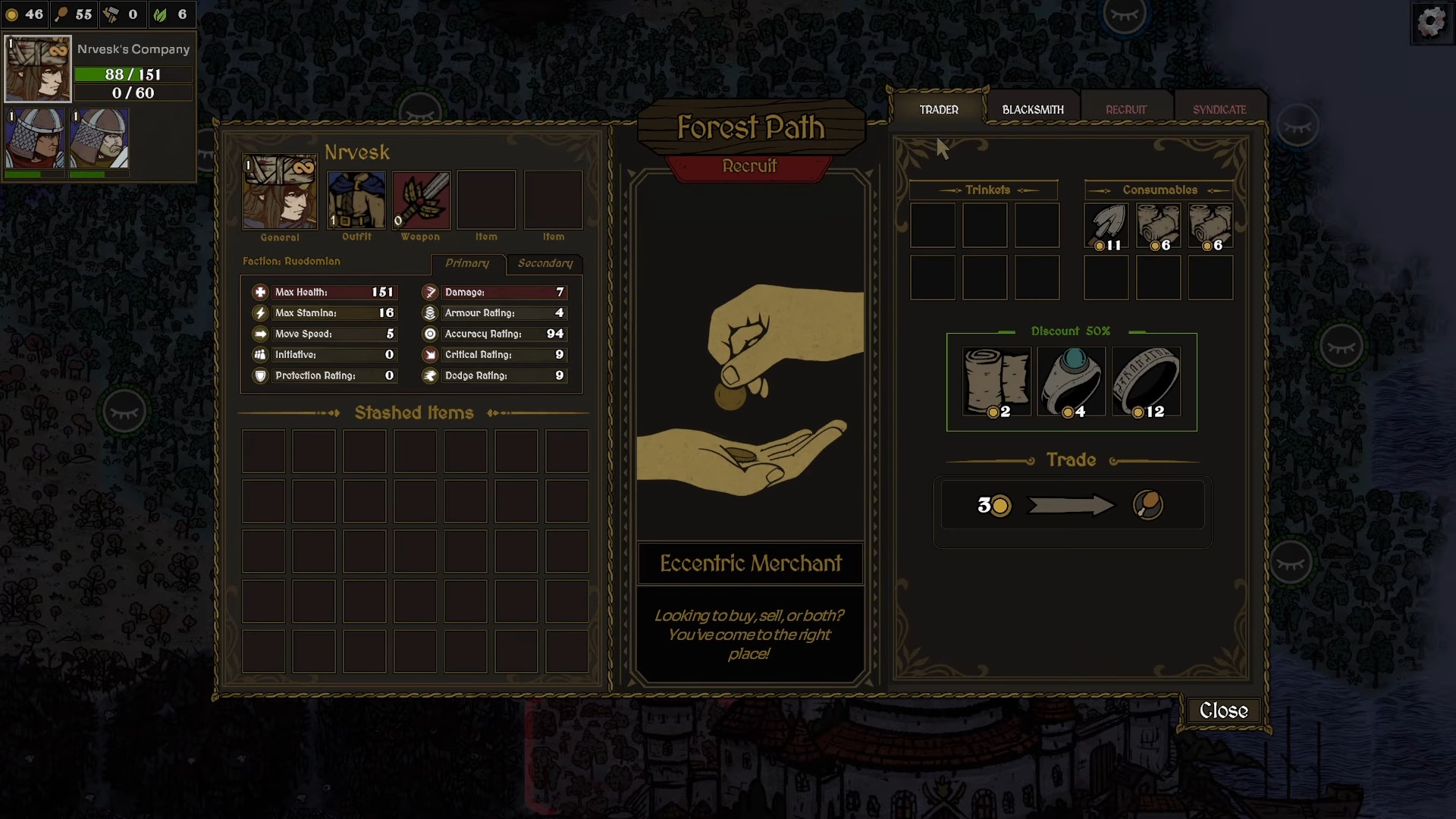
For example, when King Nrvesk throws away his crown in one of the first Atonement events, he humbles himself and his leadership abilities are improved in the long term. On the other hand, he permanently suffers higher prices from merchants, who are no longer intimidated by him. This is the storytelling we want to bring to LITO. The lore comes with consequences.
<<<
GRIND Magazine: The game combines tactical combat with roguelike elements. How did you find the balance between accessibility and depth?
Rafael Dolfe: Finding the right balance is a challenge.
Our game is aimed at a more hardcore audience, but we ensure that less experienced players can play on easier difficulties to understand the mechanics. The planned tutorial system will explain the more complicated mechanics as clearly as possible. Player feedback will also be very important.
<<<
GRIND Magazine: How important are player decisions in how the story and gameplay evolve?
Rafael Dolfe: The player makes decisions in each unique event presented. Usually, the decisions concern gameplay – do you want to engage in a frontal conflict with the bandits near the smoke rising from the forest or avoid them, risking an ambush by the Worfang?
At a macro level, the Atonement Path presents important events that affect Nrvesk's character, leading to different endings depending on the choices made throughout the playthrough. We will detail this aspect more as we approach version 1.0.
<<<
GRIND Magazine: The game has a distinctive aesthetic. What influences guided the artistic direction and atmosphere of Lost in the Open?
Rafael Dolfe: Our art director was inspired by medieval paper and quill pen style! This is one of the main artistic inspirations. In terms of atmosphere, we want to present a dark and harsh world, but with a glimmer of hope, to reflect Nrvesk's situation as faithfully as possible.
<<<
GRIND Magazine: As an independent studio, what have been the biggest challenges in bringing Lost in the Open to life?
Rafael Dolfe: Staying afloat! It was very important to have passionate members who would stick with us through difficult times. Every team member was flexible, making things work, taking on part-time jobs when needed. Without our team, LITO would not have been possible.
<<<
GRIND Magazine: How has player feedback influenced the game's development so far?
Rafael Dolfe: Feedback has been extremely helpful in identifying UX and UI issues. When you develop a game, you've spent hundreds of hours playing it and become blind to what might be intuitive for a new player. You need fresh eyes to understand what needs to be changed.
We also received valuable feedback on difficulty and many reports of bugs and broken combos.
<<<
GRIND Magazine: Do you see Lost in the Open as a standalone experience or could it evolve into a larger series or franchise?
Rafael Dolfe: It can certainly evolve into a larger series if there is interest. There is a lot of lore about Nrvesk and his kingdom Ruedome, as well as the neighbouring kingdom Stratha, whose betrayal triggers the story. A large part of the geographical area in the LITO universe is already mapped out.
<<<
GRIND Magazine: What advice would you offer to other indie developers trying to make their mark in the tactical RPG niche?
Rafael Dolfe: Play a lot of tactical RPGs. Observe what you like and what you don't like. Focus on what brings you joy. What were the moments that were truly fun and engaging? Once you know what experience you want to deliver, designing the mechanics becomes much easier.
>>>
The interview with Rafael Dolfe reveals a clear vision: Lost in the Open is not just an experiment, but an authentic attempt to bring freshness to a very competitive genre. The game starts from the simple question, “what does it mean to be truly lost in a hostile world?” and transforms it into a tactical experience where every choice matters, and survival always comes at a price.
As Black Voyage Games continues to develop the game in Early Access, and community feedback shapes the mechanics and balance, Lost in the Open has the chance to become one of the benchmarks of the tactical RPG genre. With the support of publisher WhisperGames, but especially through the passion and perseverance of an independent team, the game promises to bring a mature, intense, and memorable experience to the market. The original interview can be accessed HERE.
If the initial reactions are any indicator, then the future of the universe created by Rafael Dolfe and his team is just beginning, and the journey promises to be one to watch closely. Last but not least, we want to thank Rafael and Black Voyage Games for the insights shared exclusively with the Romanian video game-loving public. Of course, we must not forget the PR Hound team who made this interaction possible. That being said, guys, GAME ON!
