
Morbid Metal – Early Access Review

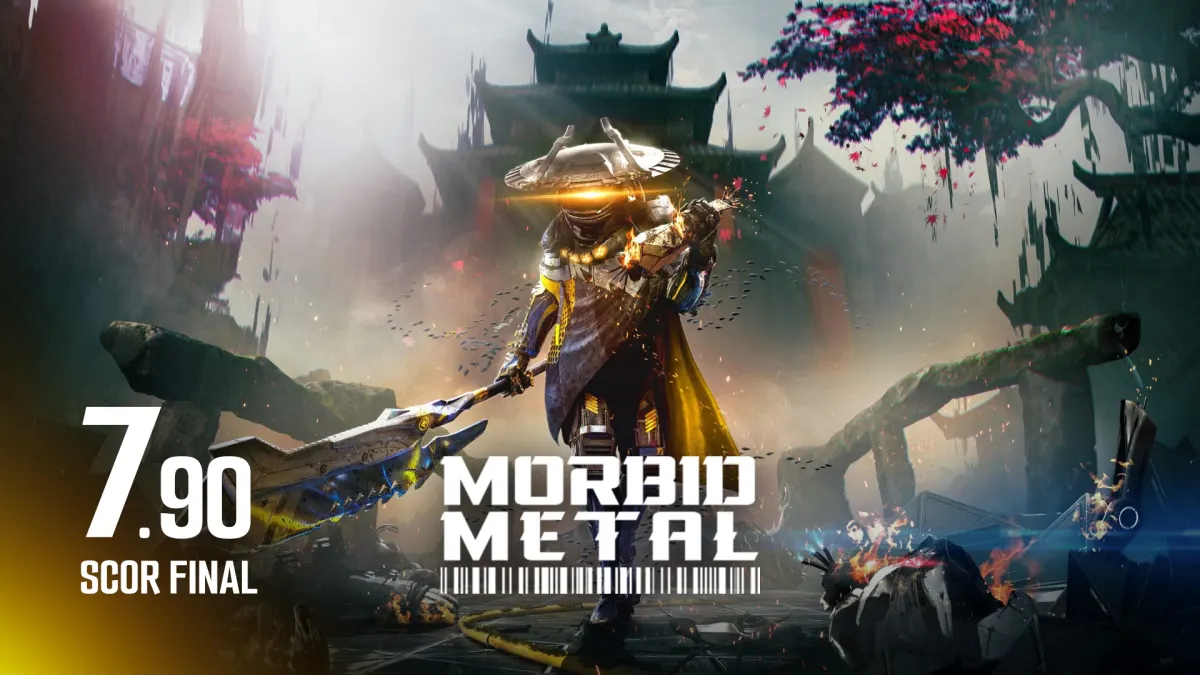
Genshin Impact and Warframe walk into a lift…
The roguelike era seems to be never-ending, which can only be good news if you're a fan of randomness, replayability, and gaming in short bursts. The latest carriage on the genre's train is Morbid Metal, an engaging hack and slash that I saw in a modest form last summer, if you remember.
Well, since then the Early Access version has been released, in which the number of robots we control has increased from two to three, we have two “worlds” at the end of each of which a boss awaits us, and combos and synergies gain a few vectors with potential.
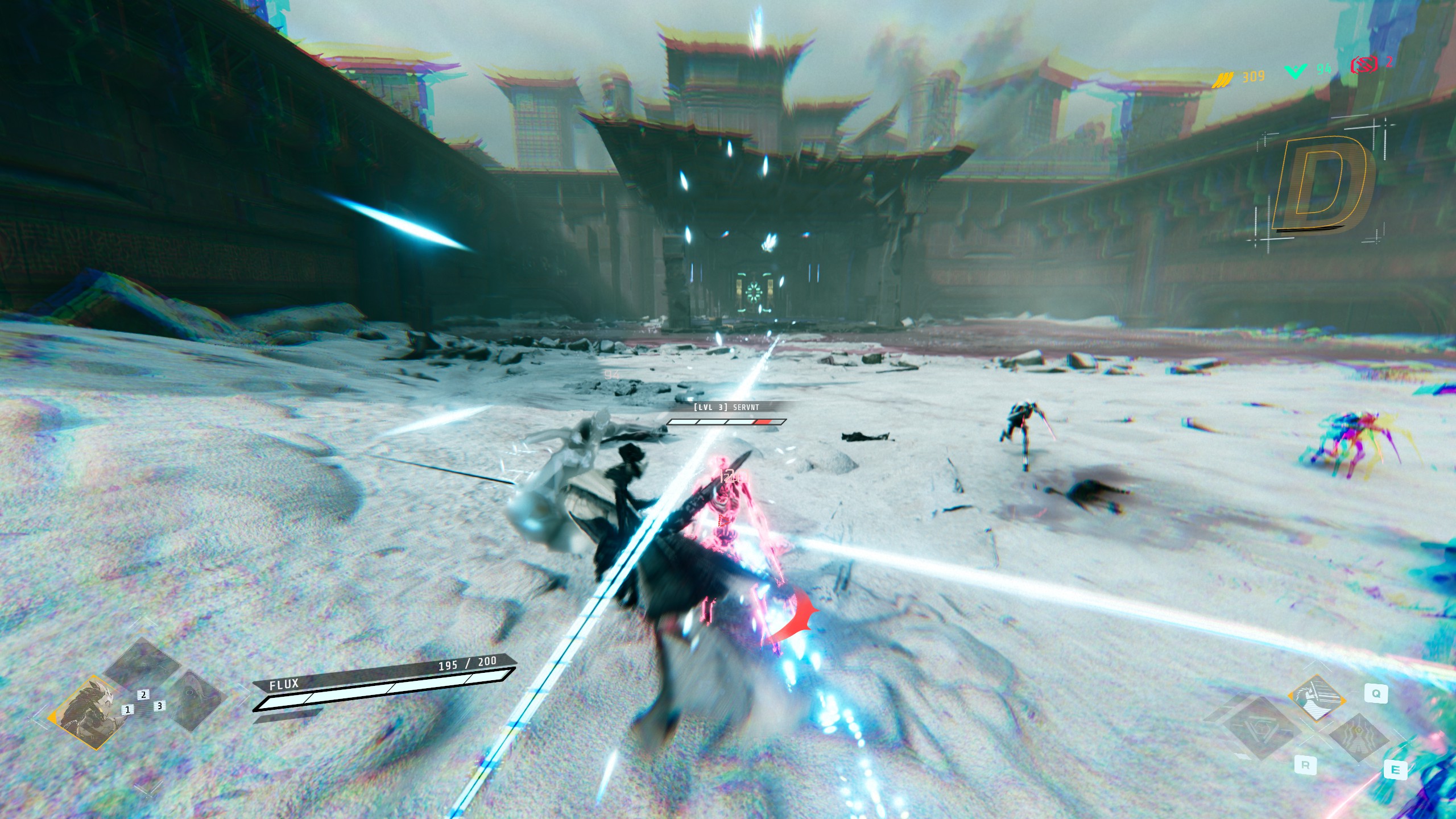
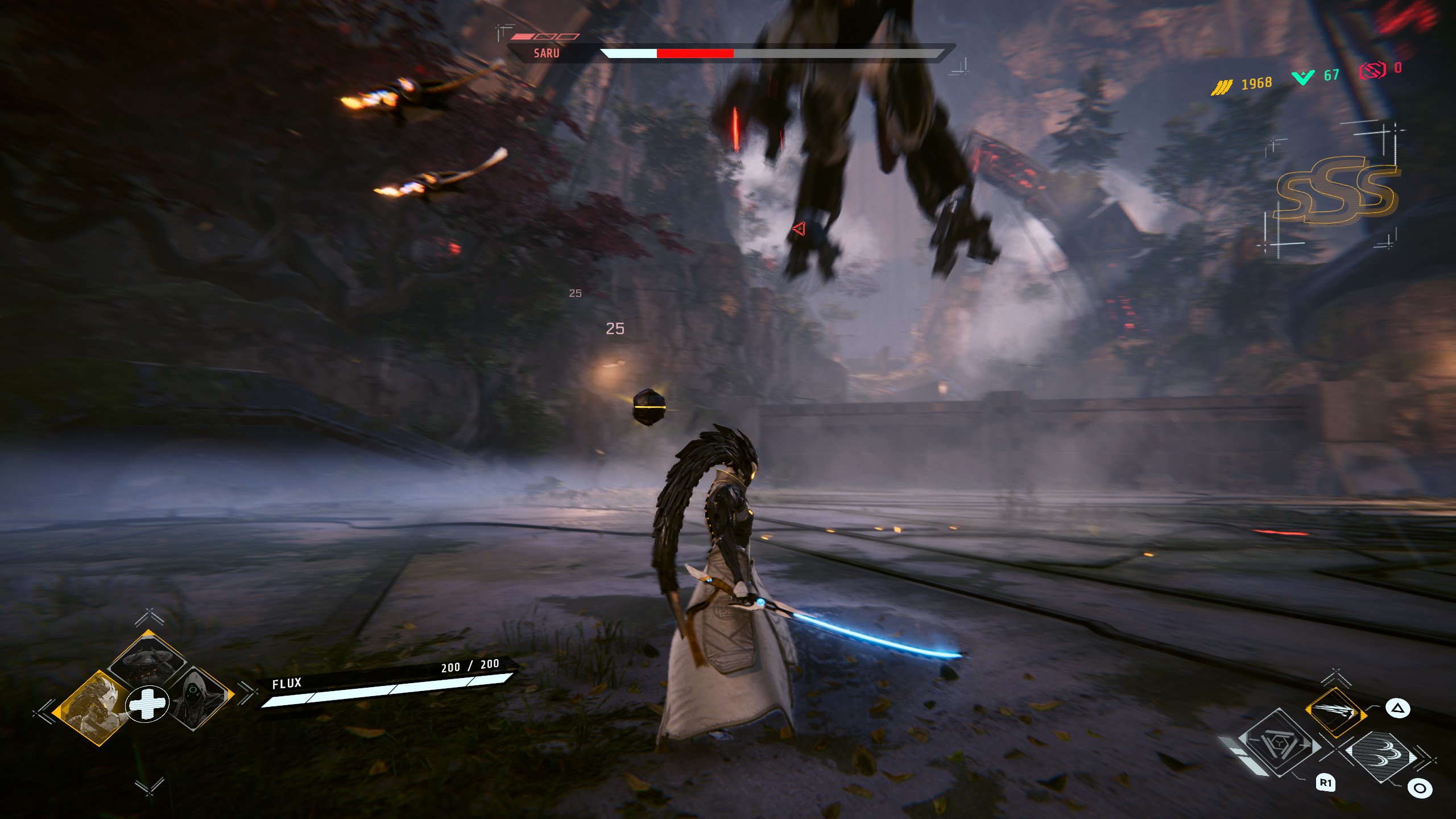
The essence has remained the same: you have the ability to transform into any of the three samurai-robots (Flux, Ekko, and Vekta), each with their own abilities (and cooldowns), in an environment with an aesthetic and a sense of movement reminiscent of Warframe, perfect for a chain of frantic battles where you dodge projectiles before launching a devastating rotation of attacks.
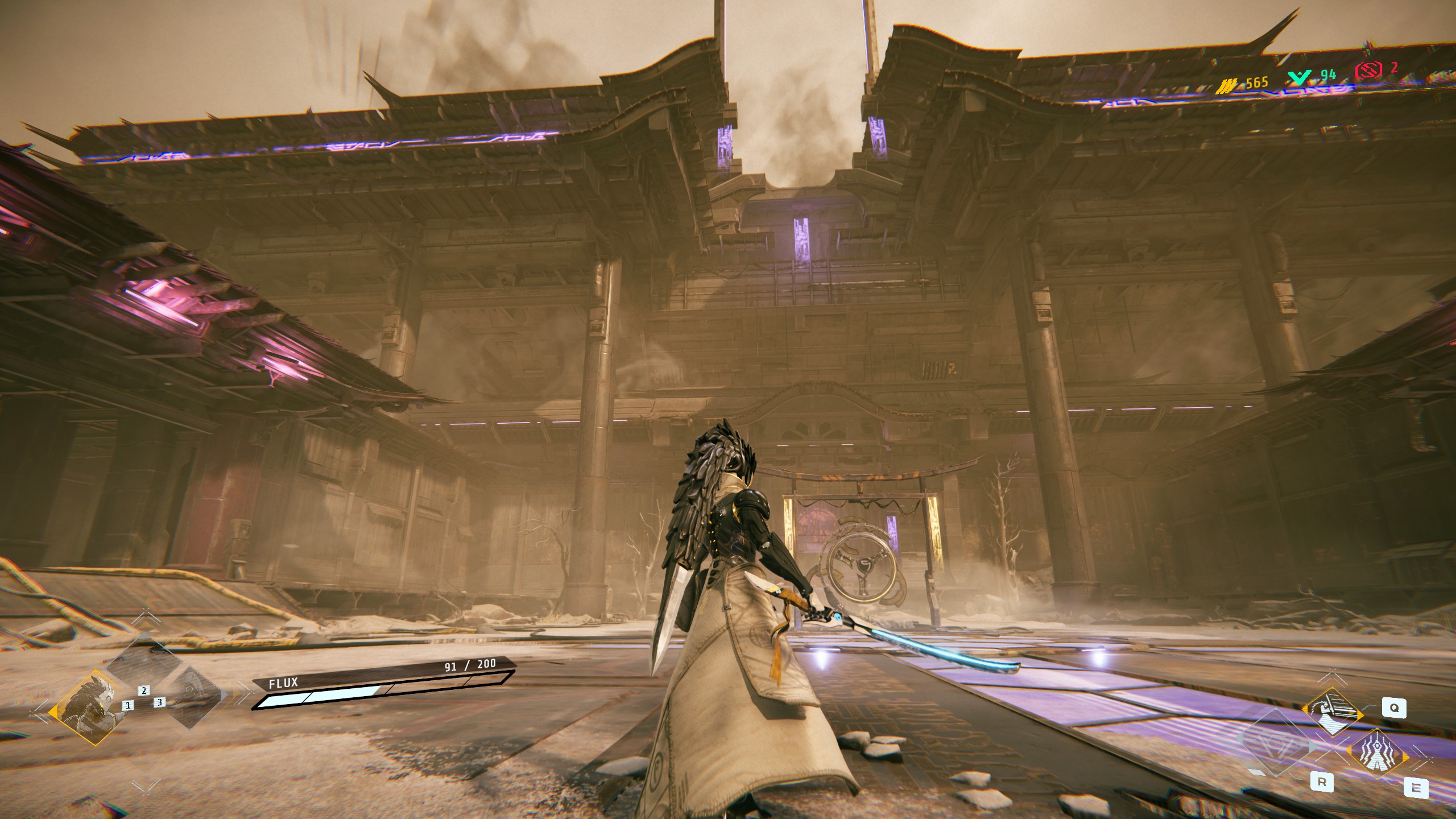
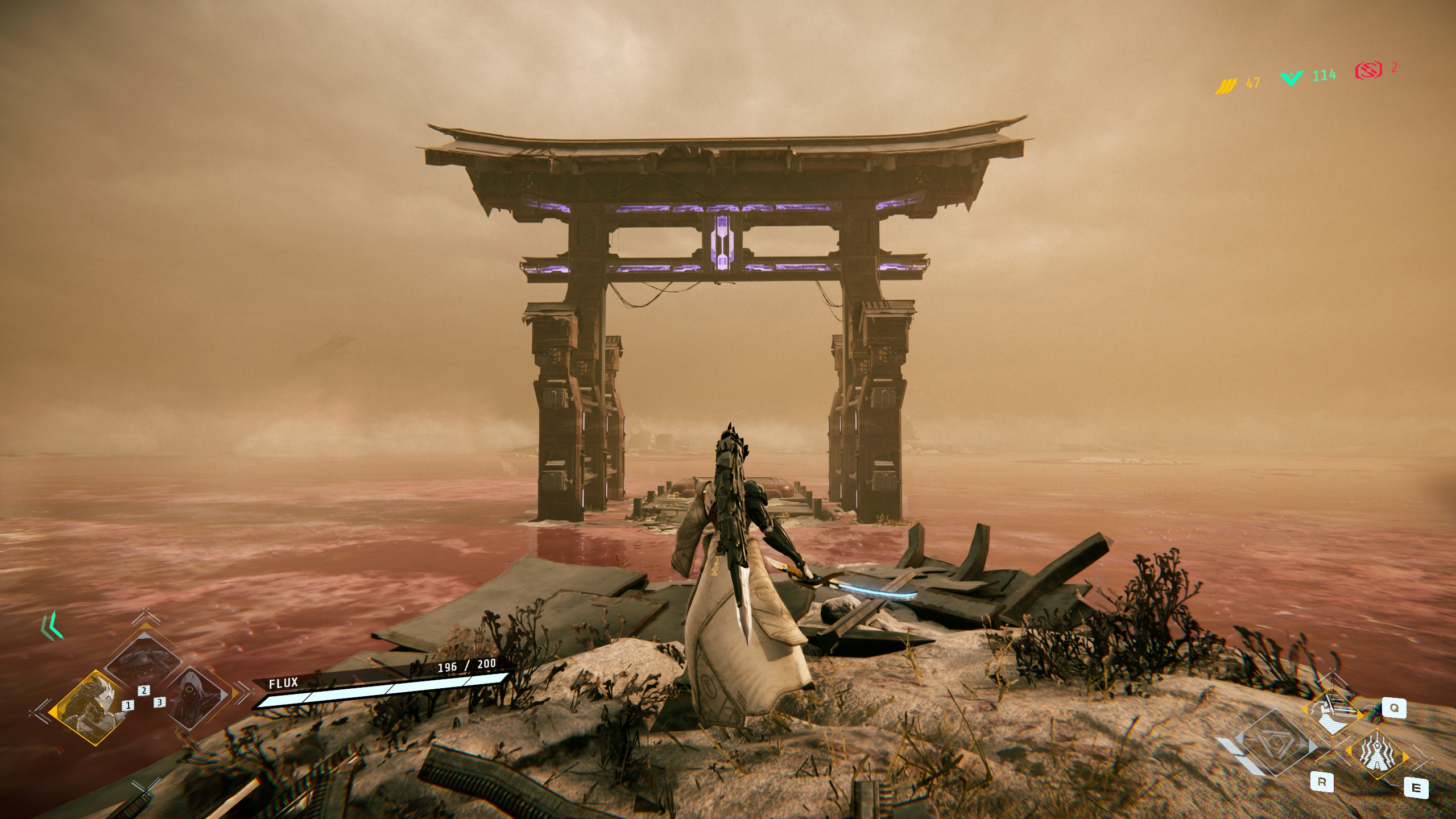
Each run (or iteration, in Morbid Metal's internal language) starts the same way, in an outdoor courtyard with clear Japanese influences, where you land after getting used to the controls and the camera shoved into the character's neck. After defeating the game's first gauntlet event, usually a simple setup of three enemies, you receive your first reward: a chest that marginally improves your arsenal for the challenges ahead.
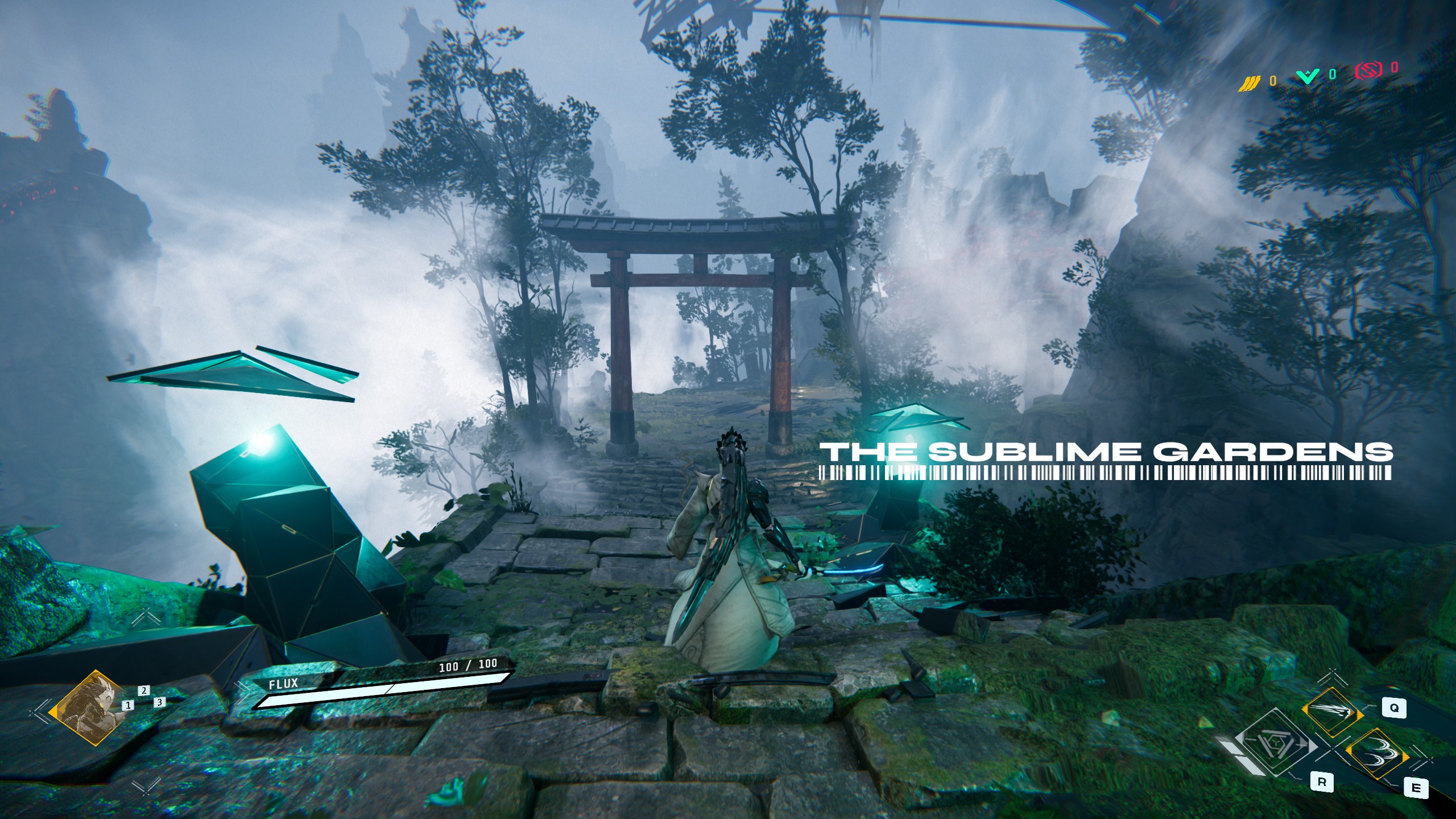
Further on, each door leads to a module chosen from a series, which can include combat, platforming, rewards, or a combination of the three. Along the way, you collect Nano Chips (money) and Void Matter (money for meta-progression) with which, once you reach the “shop”, you can acquire various passive and active abilities that accumulate and prepare you for the inevitable boss fight.
Sounds familiar, I'm sure. So, what's special here? The animations, tempo, and acrobatics link together in a fluid and sharp way, where hits have weight and there's a satisfaction in decisions and strategy, even if the difficulty is surprisingly low. At the same time, options are sprinkled with stat padding and there isn't much variation between builds, with a couple of more prominent synergies and a lot of things that make you stronger in a linear way but have no impact on gameplay style.
The action game side is spectacular, but the roguelike element is timid, tunnelled, and rigid, with too little variation to satisfactorily diversify each loop. What presents itself as an iteration often feels more like an exercise in finding differences in a system that inflates numbers more often than it changes rules.
Flux
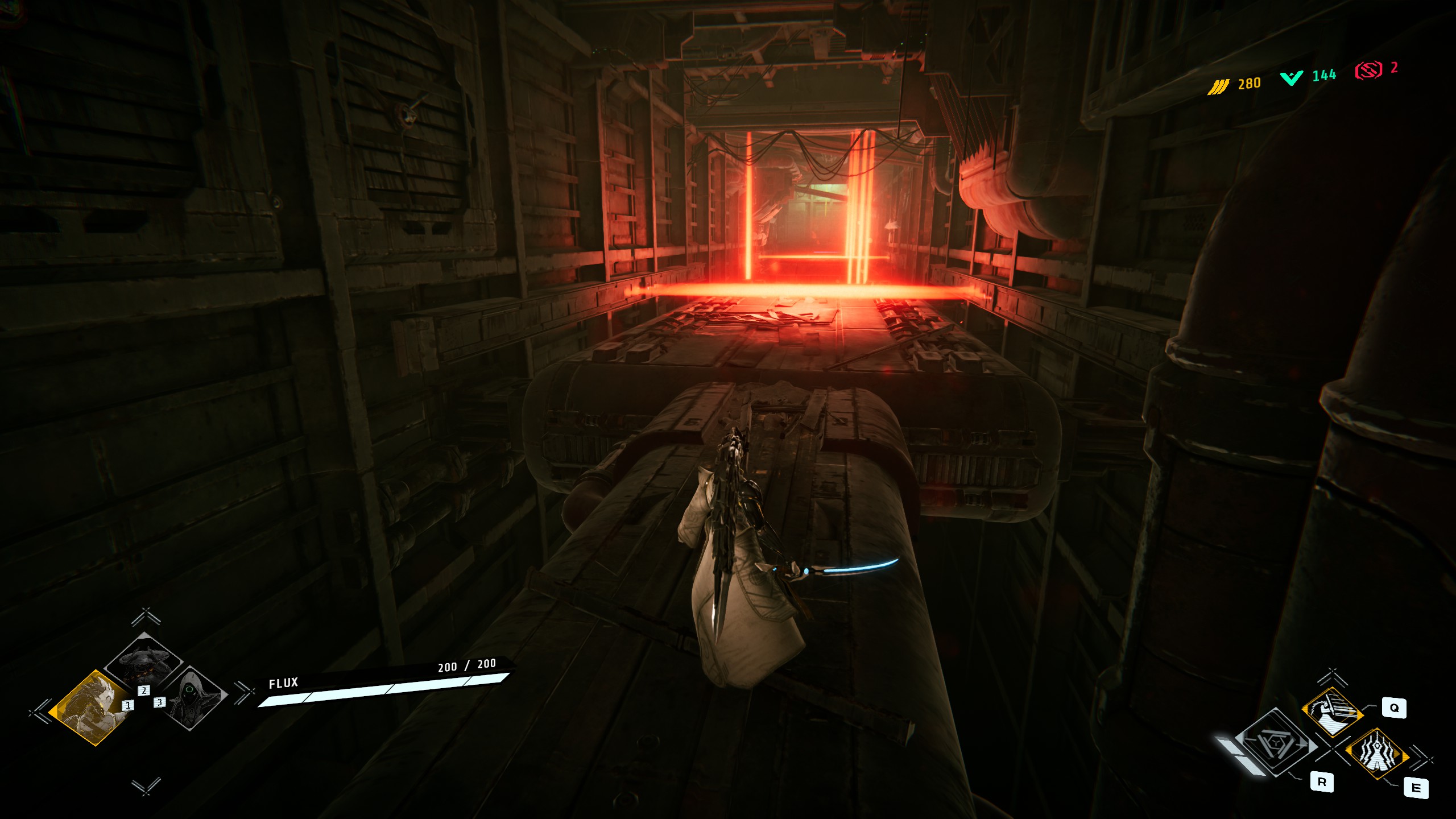
The first character, the only one you have access to from the start, is Flux. With fast attacks, abilities that increase mobility, and Tassadar's baptismal wardrobe, Flux is an excellent starting point in Morbid Metal's kinetics and the simplest and most direct fighter.
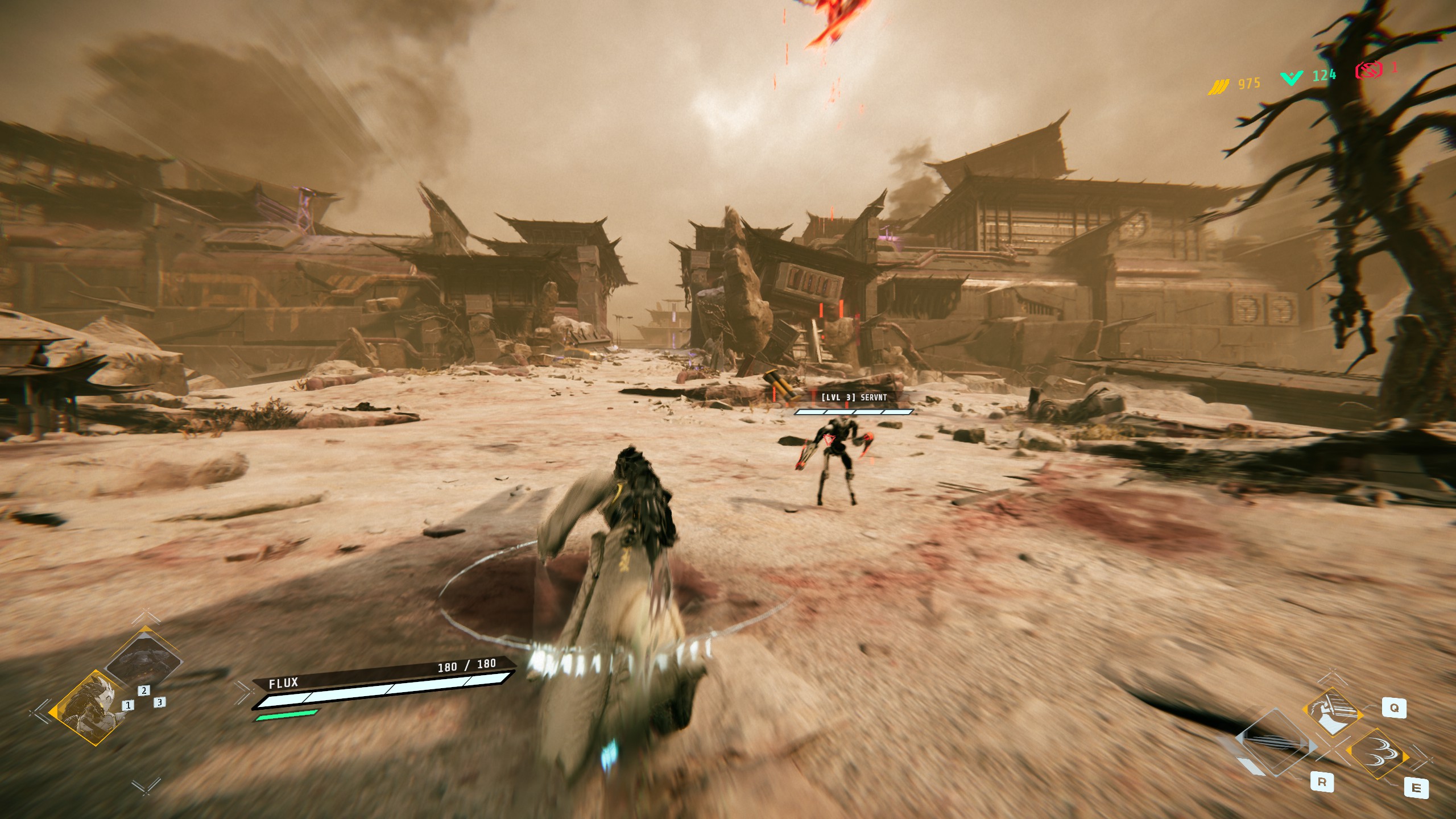
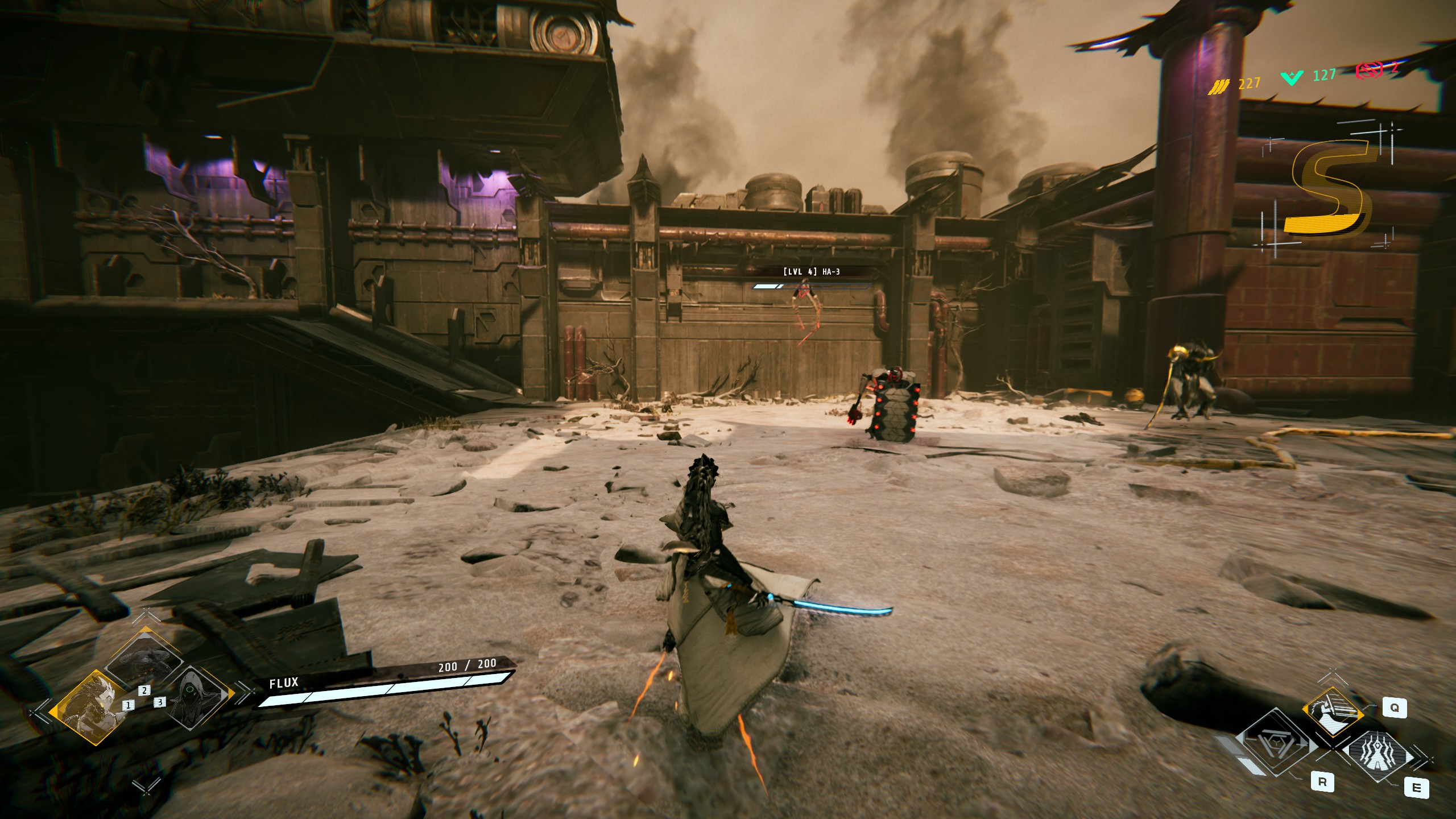
You have a single basic attack and two abilities on cooldown (initially, a blink strike and a ranged attack) along with an ultimate that you charge in combat and usually save for more robust enemies. The initial kit is simple enough to understand in the first few minutes, and enemy attacks are slow enough and well-telegraphed that they won't give you trouble as long as you keep them in your field of vision.
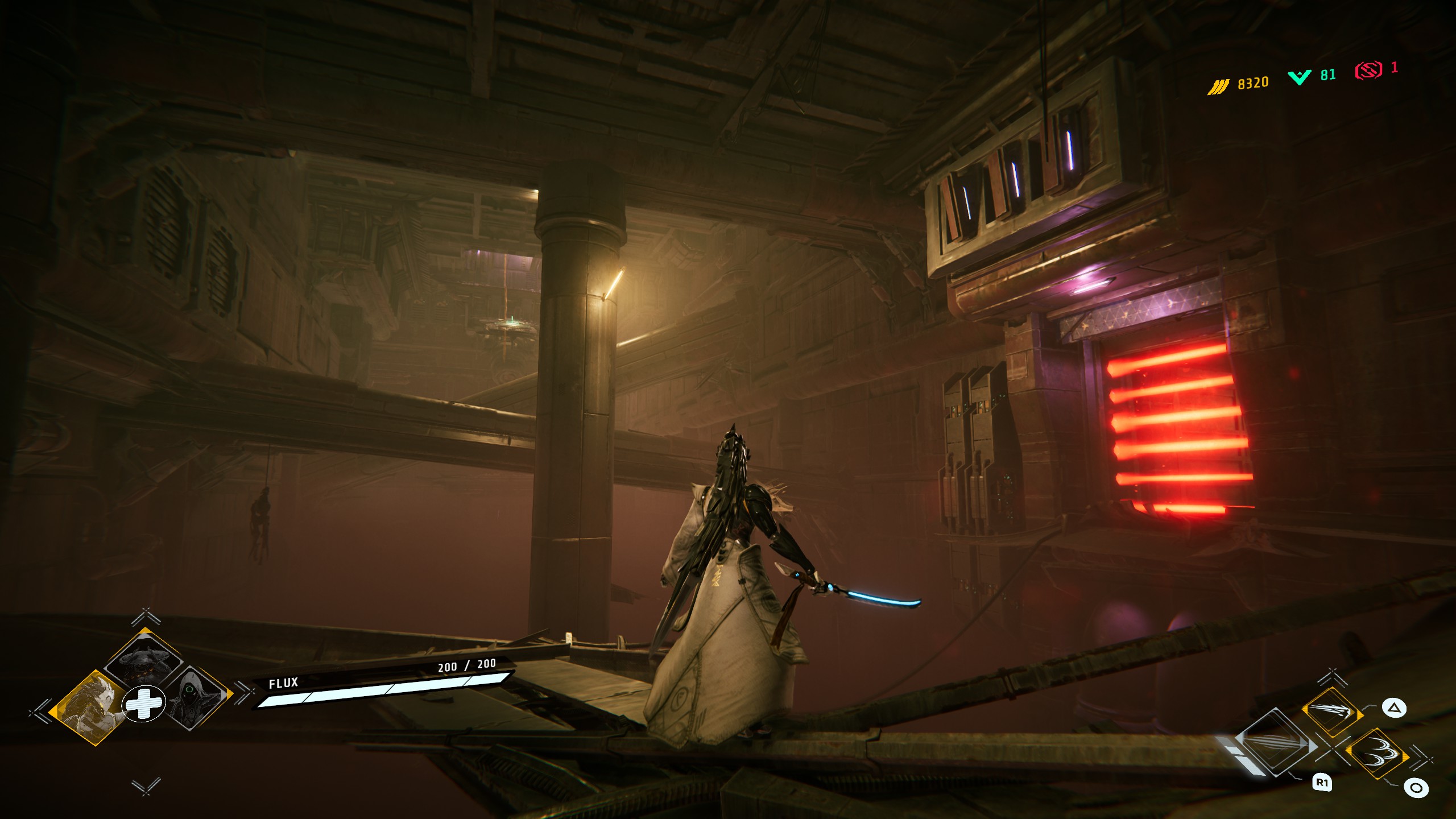
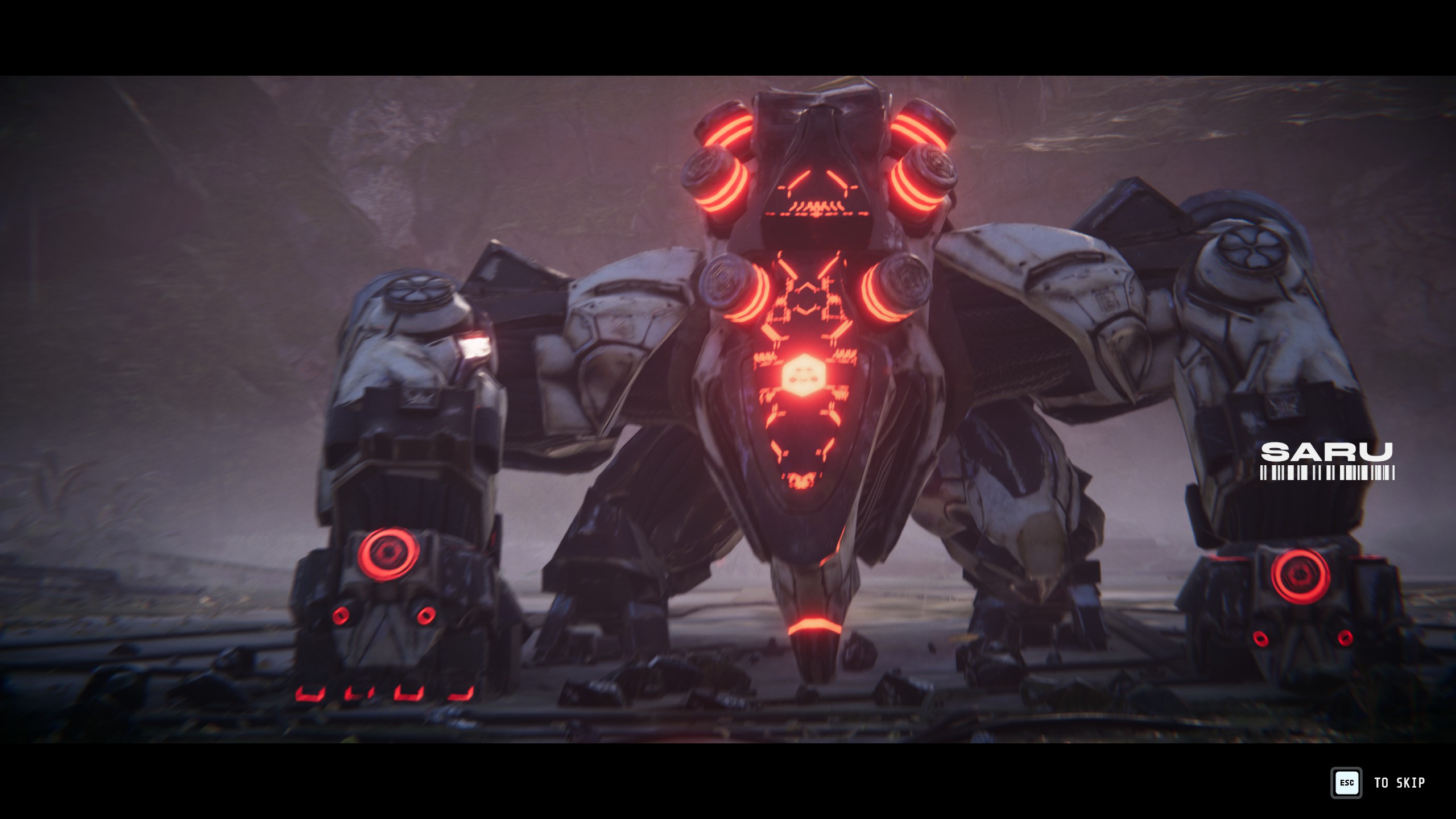
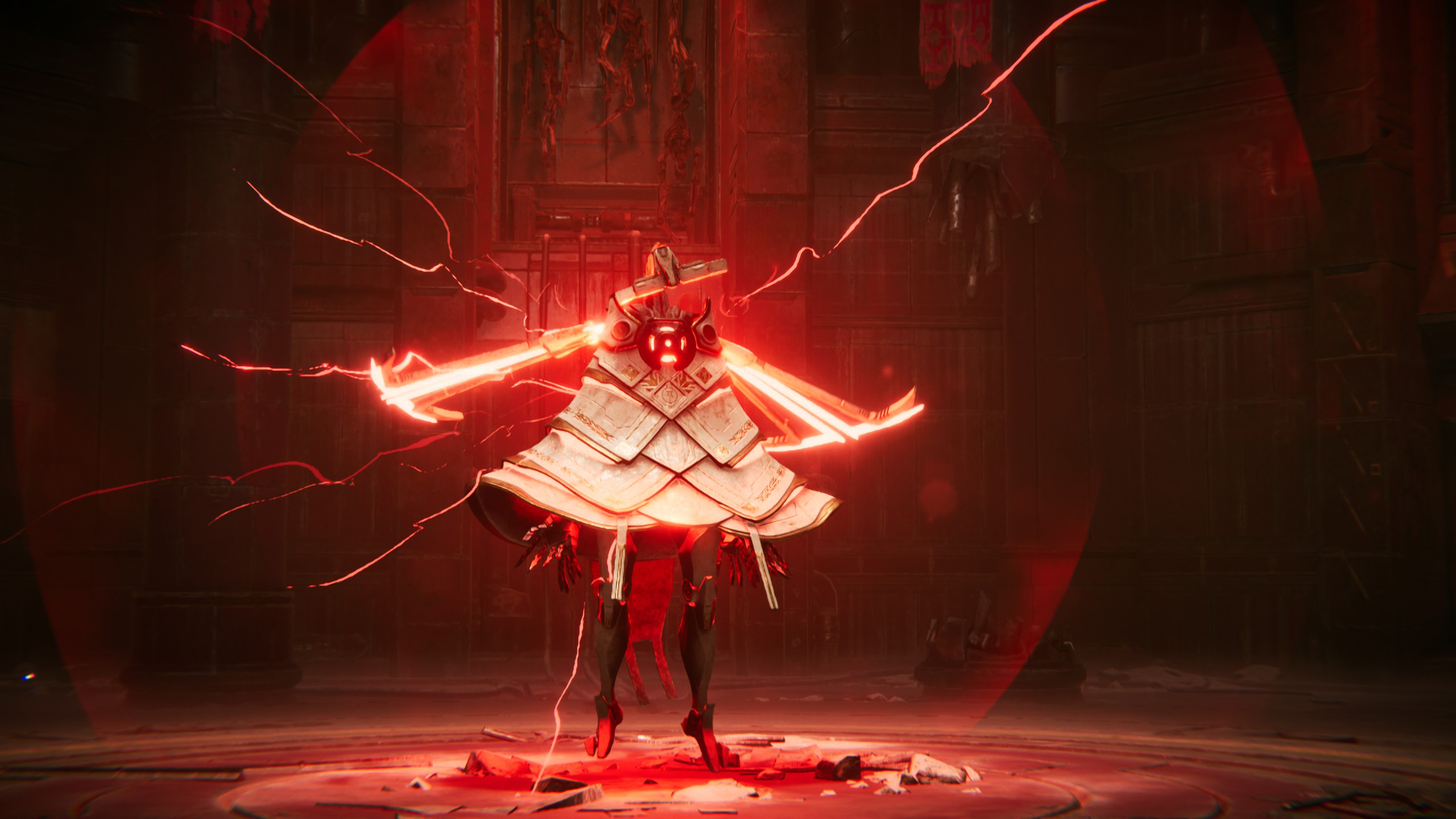
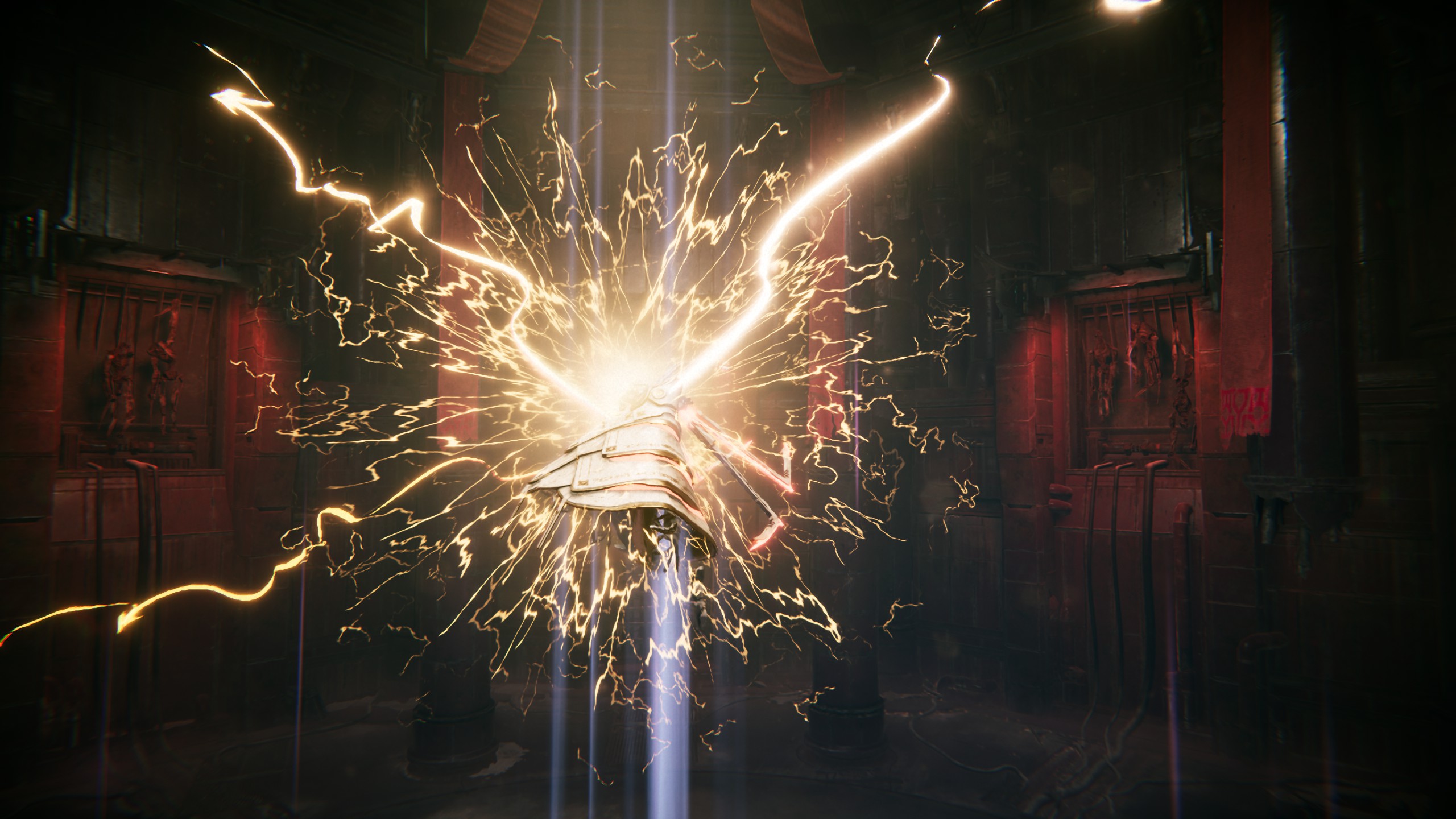
The latter come in three models initially: drones, lights, and brutes, but they have predictable behaviour and only one attack they can use against you. After a few arenas, laser tunnels, and bridges suspended in the air, you reach the first boss. Saru, a kaiju contraption in keeping with the menagerie of robots we've encountered, is capable of several different attacks spread across three phases, but about as slow as a run-of-the-mill heavy.
Ekko
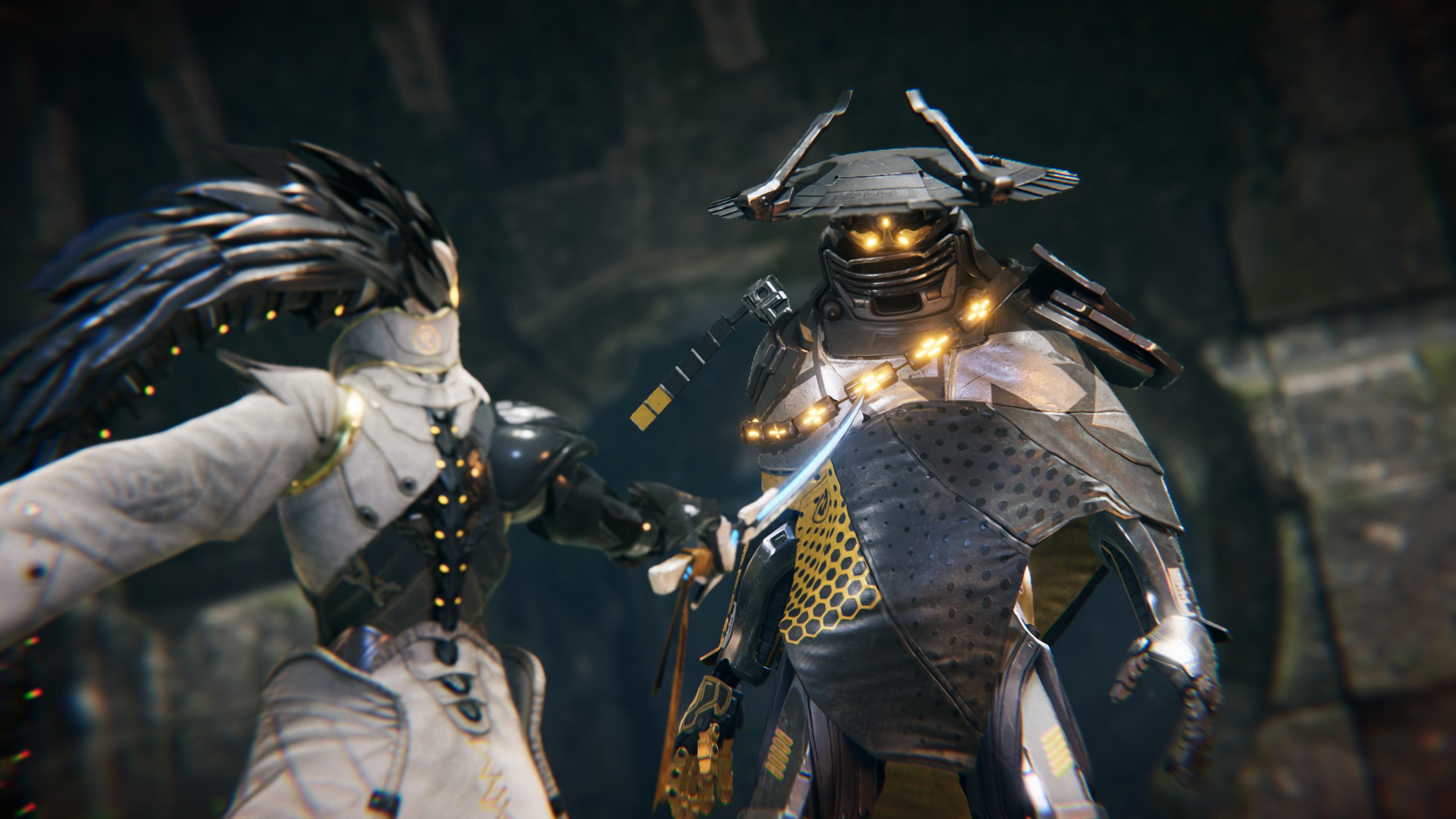
With the unlocking of Ekko, the second hero you can transform into, you get acquainted with the game's central mechanic. The giant cleaver he drags with two hands indicates the heavier but impactful style that defines his approach to combat.
The fact that you can freely switch between the two in the middle of the action allows you to correlate several synergy bonuses that exponentially increase your damage potential. For example, you have certain upgrades that apply debuffs after Flux's attacks, while an Ekko upgrade says that if you hit an enemy that has a debuff on them, you deal extra damage.
I would have liked to see more such synergies, but unfortunately, the development lines are so modest that you will have explored all ability permutations within the first 10 runs.
Ekko also introduces other classic hack and slash mechanics, such as juggling and AoE, which situationally complement Flux's strengths and offer more direct options compared to the evasive style of the first hero.
Someone who is good at action games will have finished the entire game within this interval. It took me 15. In total, about six hours, and another two for clean-up (fully unlocking the meta-progression tree), which is quite little for a $30 roguelike. The potential is still there, but for now, the otherwise solid foundation supports a modest block of content.
Vekta
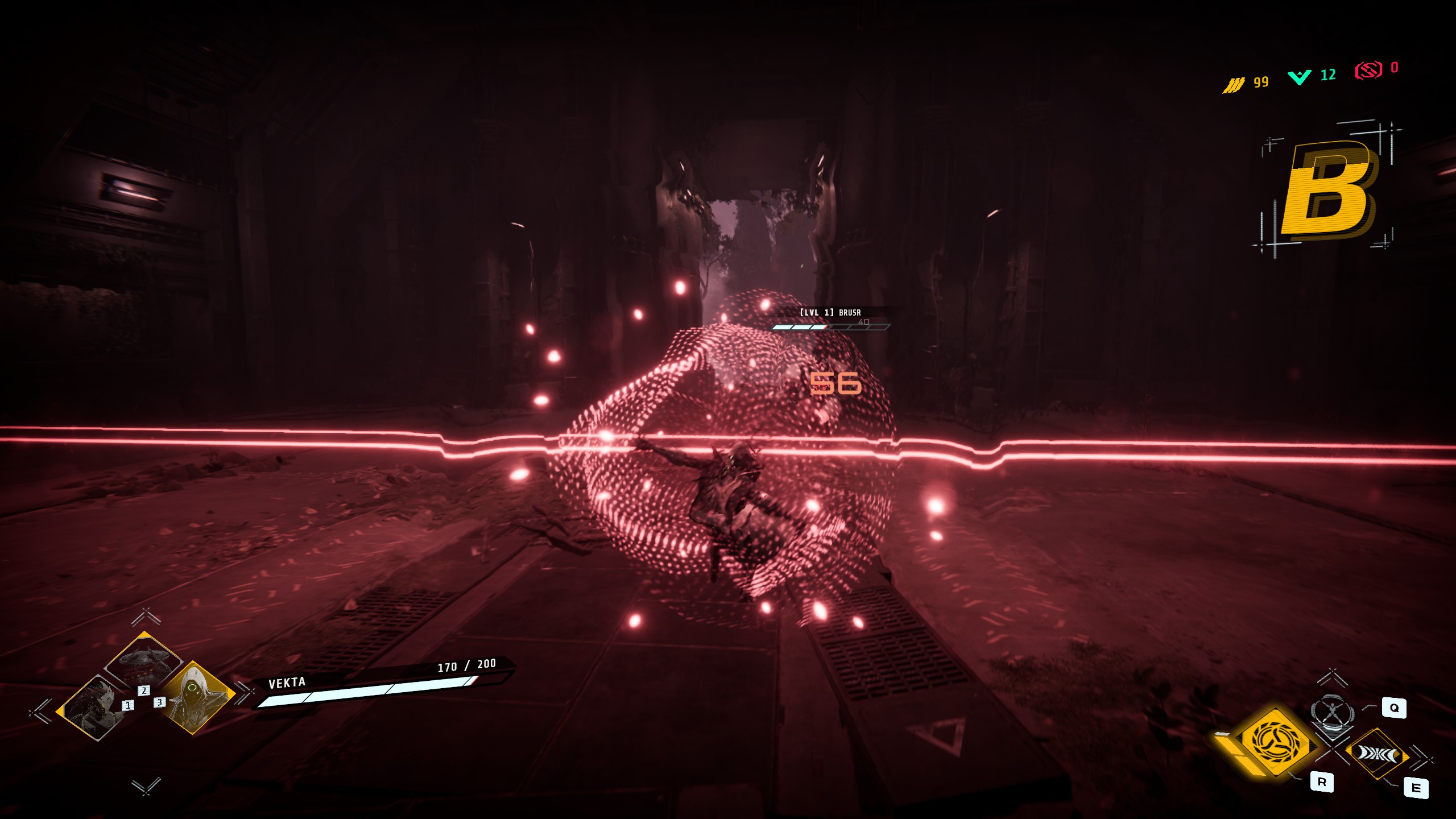
The only hero with a ranged basic attack, Vekta uses abilities with magnetic and crowd control effects. Of all the characters, he has the most mutually enhancing upgrades and implicitly offers you the greatest “safety”, because you can defeat almost any enemy before they have a chance to attack.
Given that you only unlock him after the first world (or Biome), you will have already gotten used to the dangers you might encounter, and the presence of three forms ensures an organic rotation, where you have options and abilities off cooldown at almost any moment. This is where I felt the game reached its peak, the segment of time where you have all the cards on the table but haven't yet determined the ideal order in which to play them.
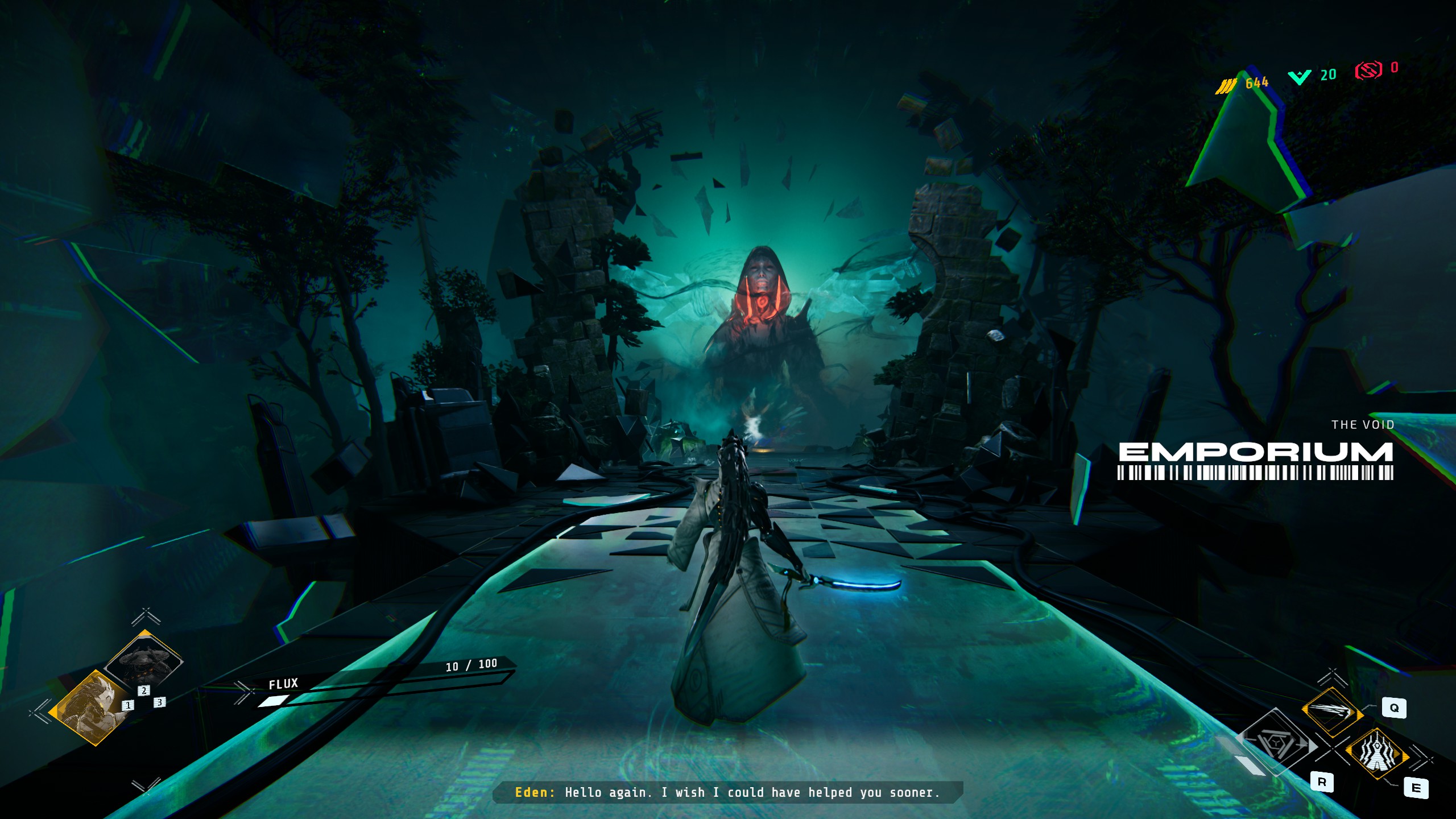
The second world swaps the rich vegetation grown over human structures for a desert that seems to have buried a complex of alien structures. The platforming becomes a bit more convoluted, but apart from a bifurcation before the end, we traverse the same sequence of rooms like a tunnel.
A few new enemy types appear, which heal or have area attacks, complementing the already known types. They are of a higher level, which implicitly means they have more health, but at this point you will have already accumulated enough improvements to keep up with the scaling.
The soundtrack, composed by Blue Stahli, is an electronic rock specific to the artist that perfectly fits the adrenaline-filled robot brawl, but which becomes a bit tiring and repetitive in the context that each of the two worlds has about four tracks in total that alternate for about ten encounters. Like other aspects of the game, the sound is well-polished but too modest in volume for how large the segments of time are in which it wants to capture your attention.
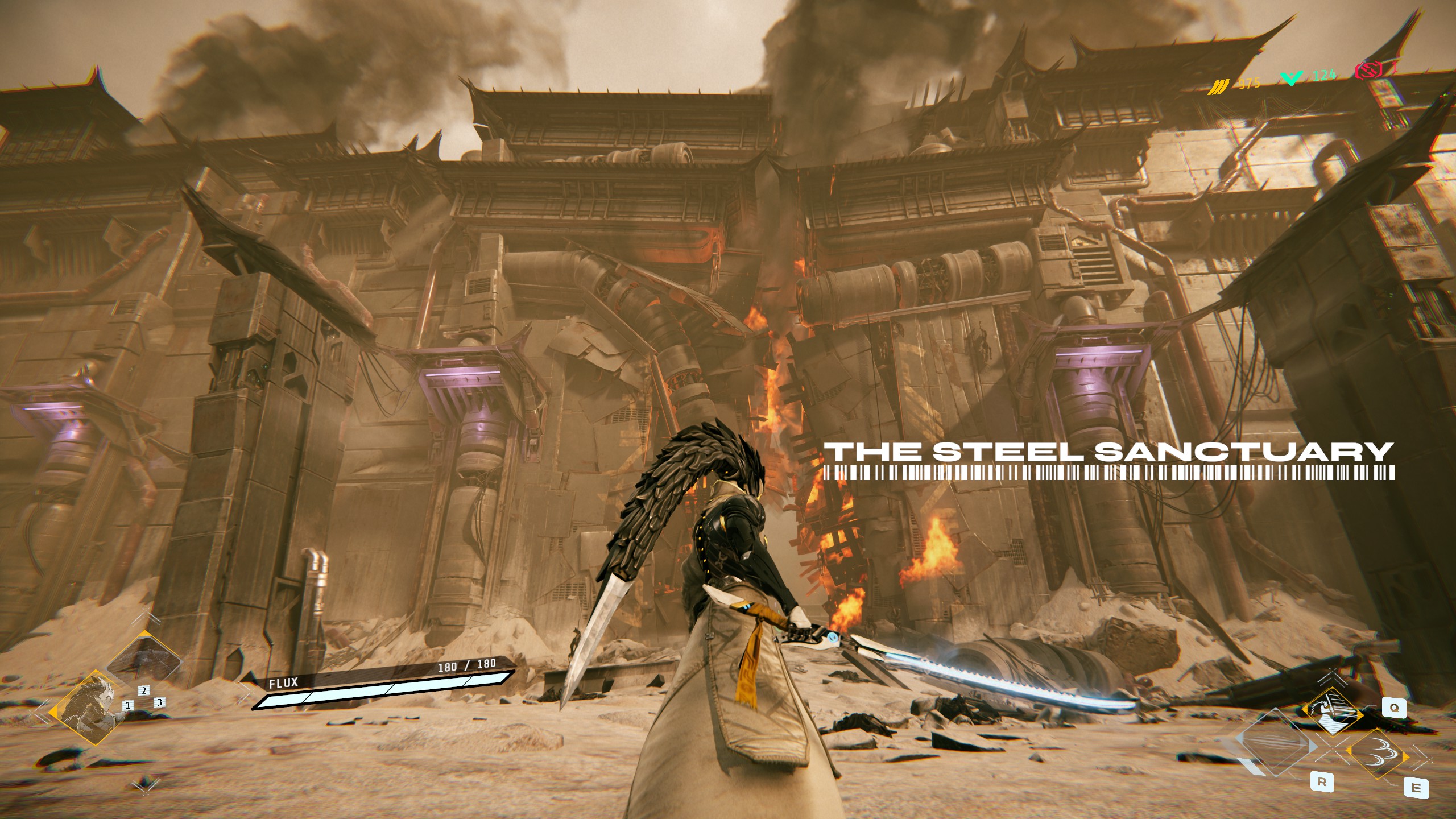
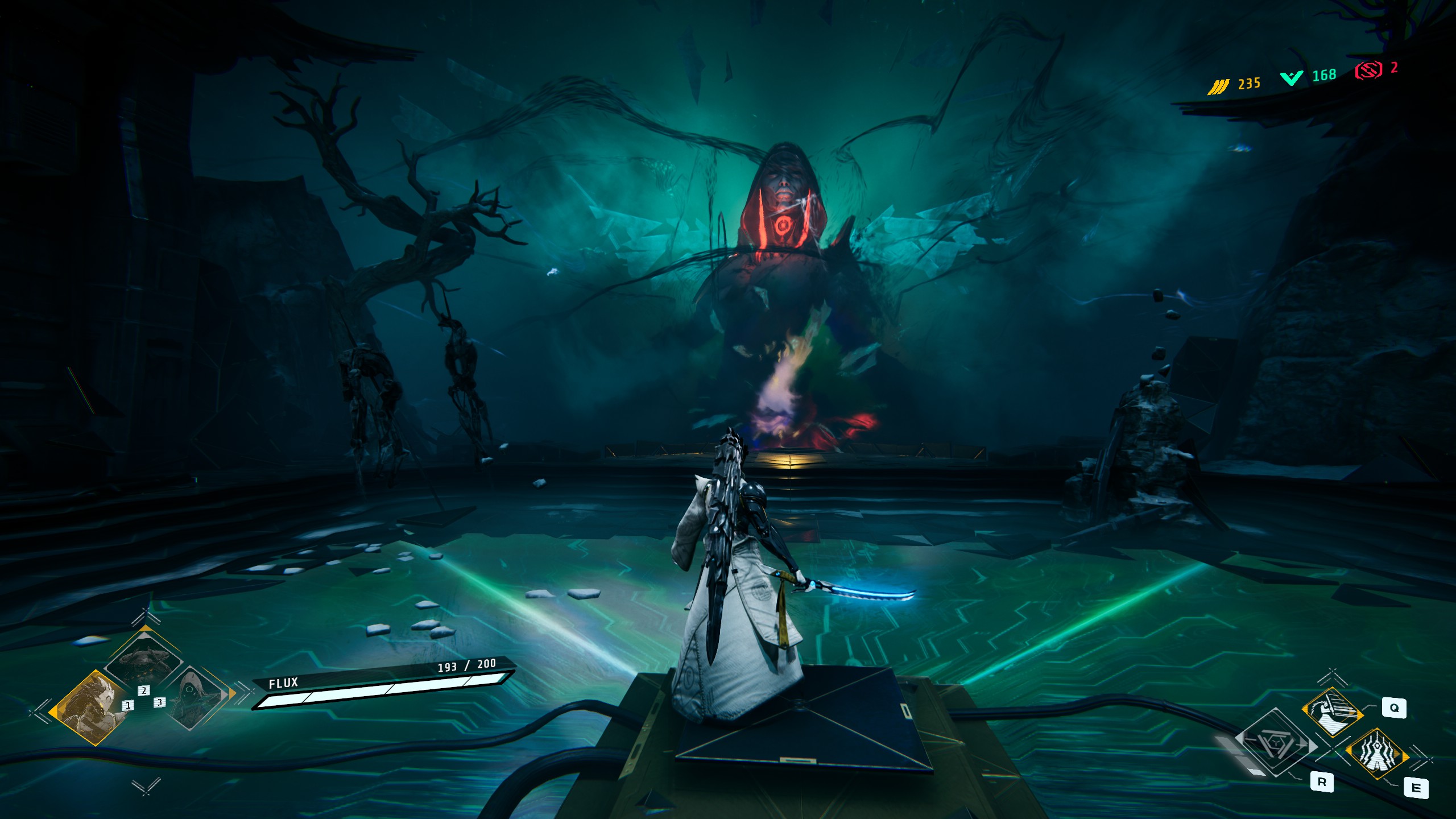
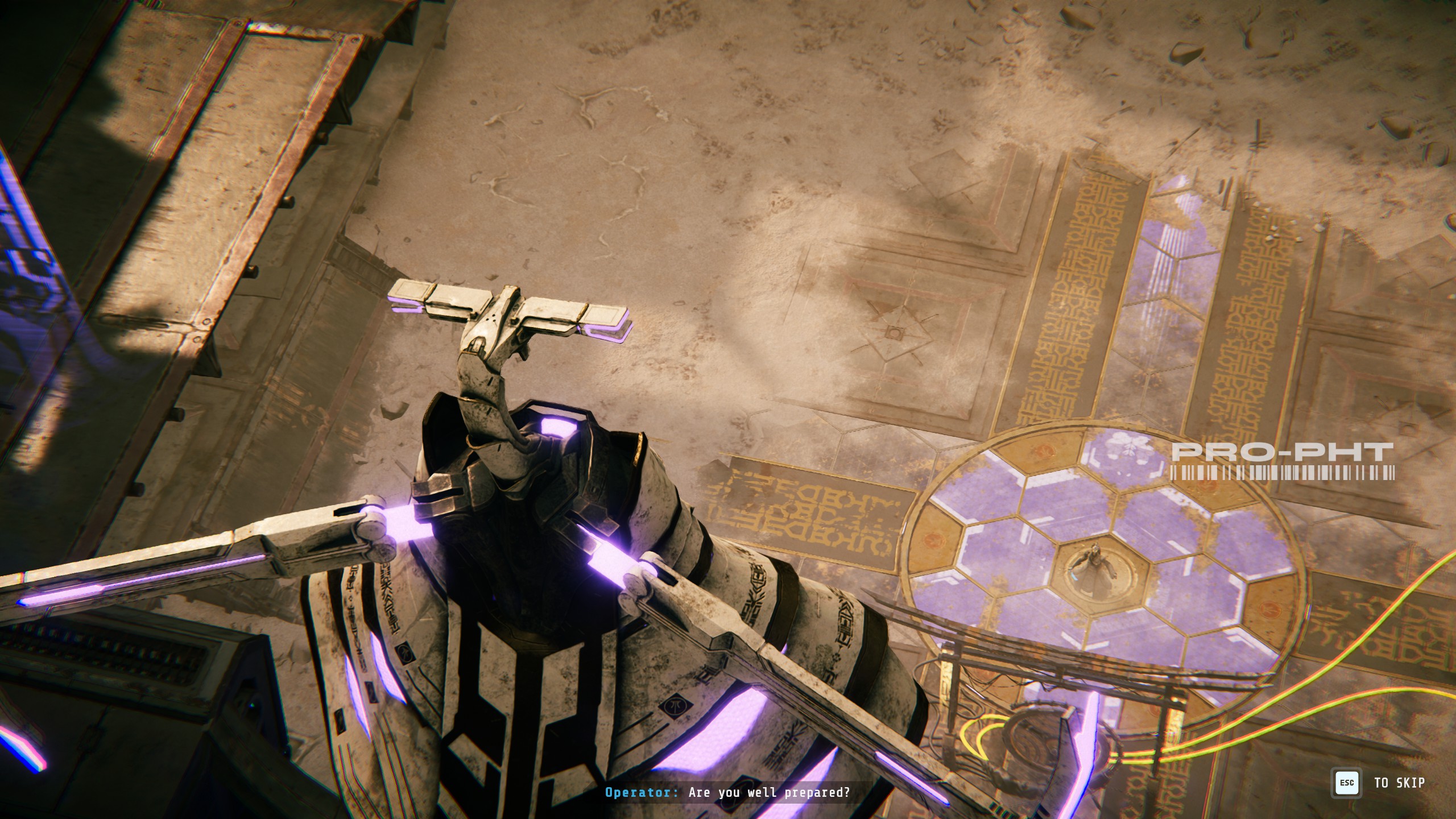
Then, the narrative structure is more a series of intentions sketched through design and a few cinematics and interactions; it disappears into the environment's atmosphere without communicating any concrete unfolding of the action. We occasionally find a Lore Codex in hidden corners and learn that the entire world is a post-apocalyptic simulation in which a mysterious entity called The Operator uses your performance from each iteration to weave the next step of human evolution, a species long extinct at the time these simulations began. The voice of this Operator is, incidentally, the voice that guides you between iterations, in an antechamber where you can permanently develop your attributes using resources collected in runs.
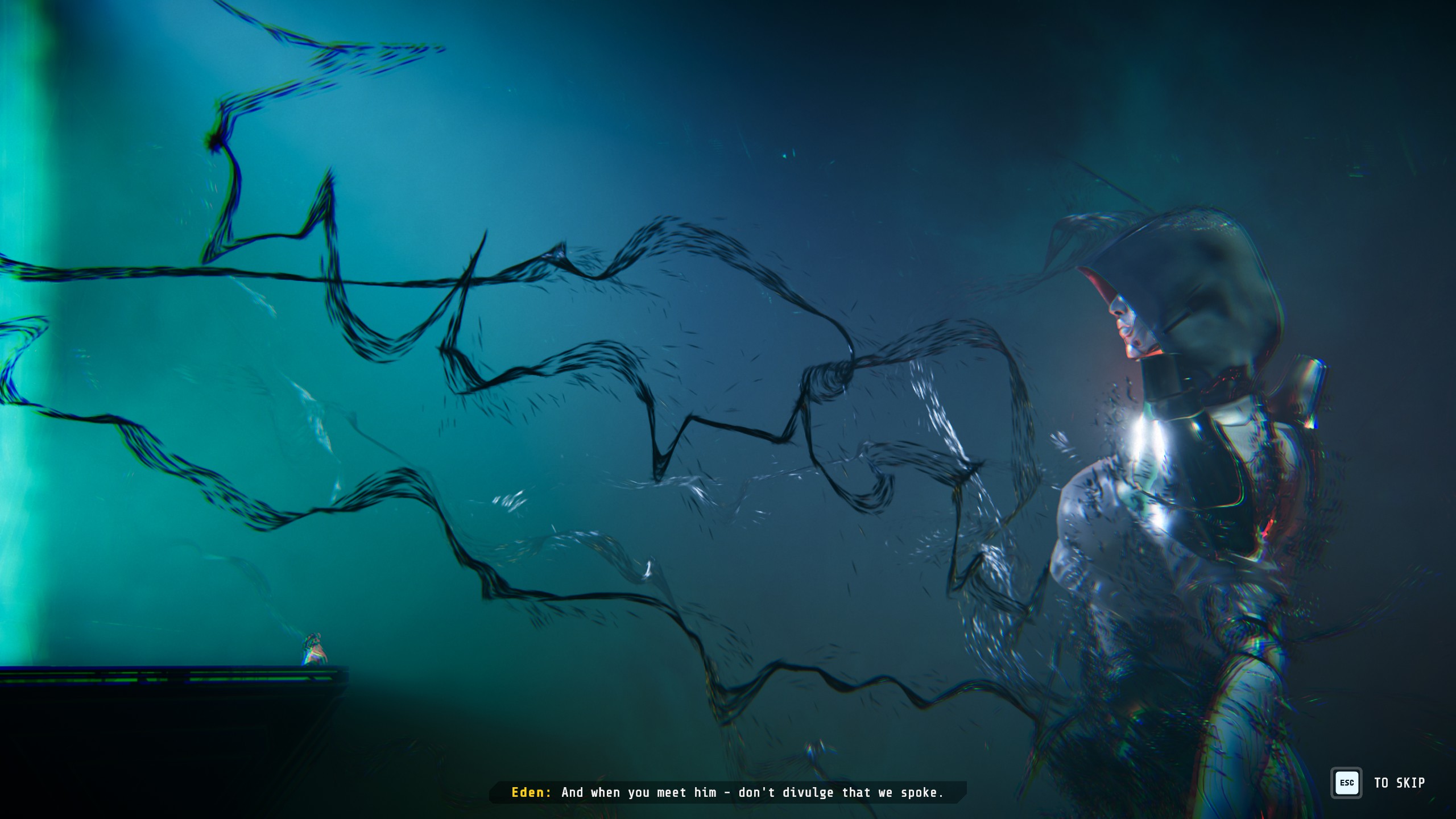
Another voice, Eden, whispers encouragement during respites and in the Emporium, a room between levels where you can acquire upgrades and abilities for any of the three forms. However, the worldbuilding seemed too ambiguous and thin even for a roguelike, and in the absence of a more clearly defined context, I can't appreciate the level design as more than a sequence of cool but shallow concepts.
Nor does the difficulty increase at the same rate as your combat abilities and reflexes develop: although laser beams appear, enemy group compositions diversify and sometimes include mini-bosses, by the time this happens you will have invariably memorised their attacks and it is extremely unlikely you will take damage outside of boss fights. And this happens after only a few hours; it's a learning curve where other roguelikes haven't even had time to show you all their mechanics.
Verdict: Fencing
When you put it on the scales, Morbid Metal seems too light to be pure gold. I say this not because it's broken, but incomplete. The action foundation, that acrobatic loop where you alternately use three kits to spectacularly massacre your enemies, exists – a still solid foundation for a potential overhaul of abilities, mechanics, and synergies.
Today, on 1 May 2026, we have a few hours of content where the dynamic parts don't offer enough diversity to justify the repetition, where exploration pretty much ends once you hit the efficiency plateau of the current builds, and all this happens in under ten hours.
We have a roadmap for the next year and the promise of a fourth character. I'm convinced the game will continue to evolve, but currently, it doesn't deliver the content standard you'd expect for thirty hard-earned dollars.
Thanks to UBISOFT for the review code and the opportunity to play MORBID METAL in advance!

Available on: PC
Played on: PC (Steam)
Release date: 8 April 2026
Developer: Screen Juice
Publisher: Ubisoft
Plus
- Fluid and engaging combat system
- Platforming well-woven into the world design
- Organic shapeshifting that doesn't slow down combat but always offers approach options
Minus
- Modest in content (around eight hours for 17.99 Euro)
- Roguelike aspect is primitive and repetitive
- Undertuned
0 votes
Scroll down here and stay on the page for at least 30 seconds to vote.
Pick a score from 0 to 10 (halves are allowed).