
Metroid Dread
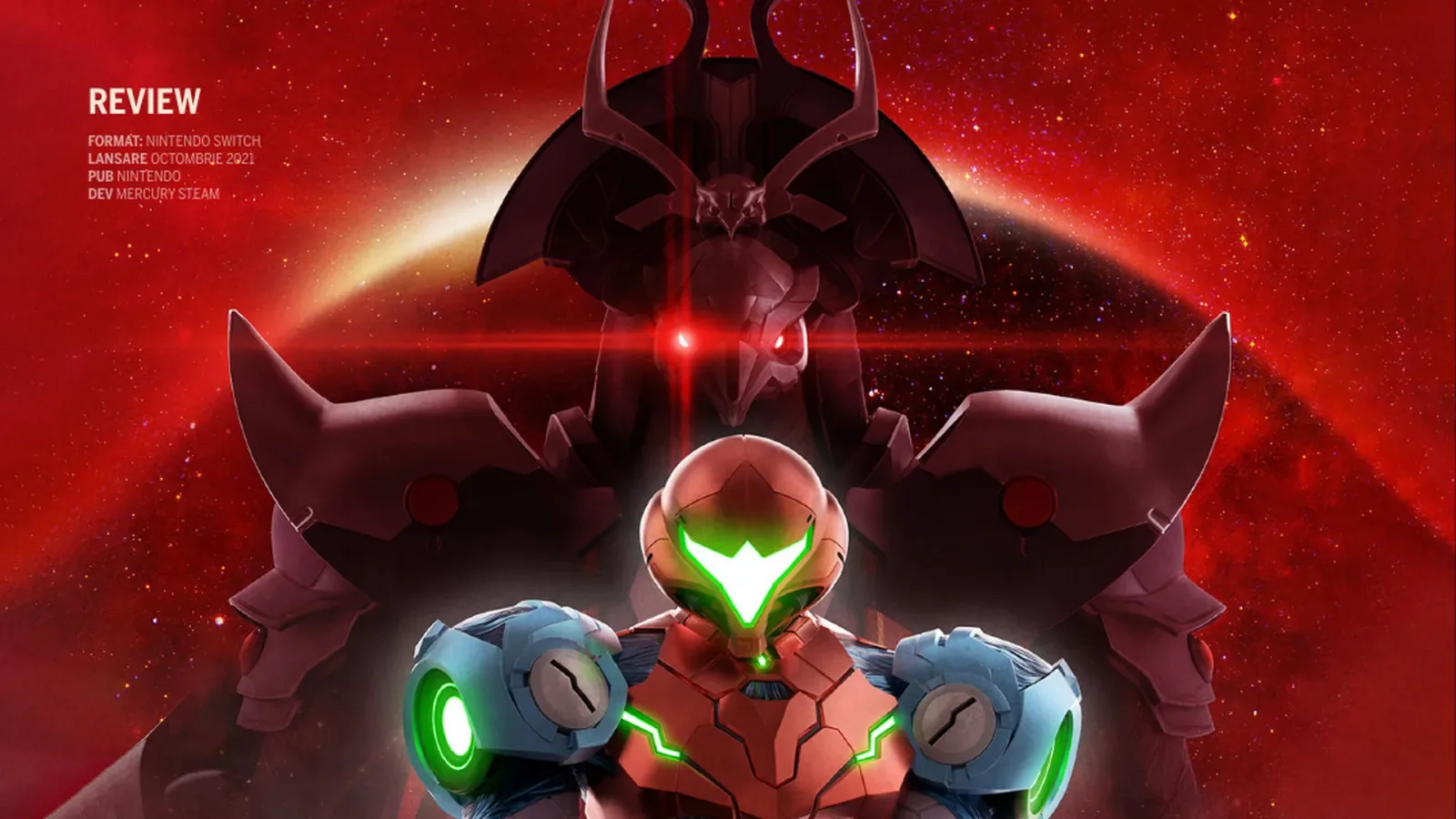
First published in GRIND II, pages 28–33.
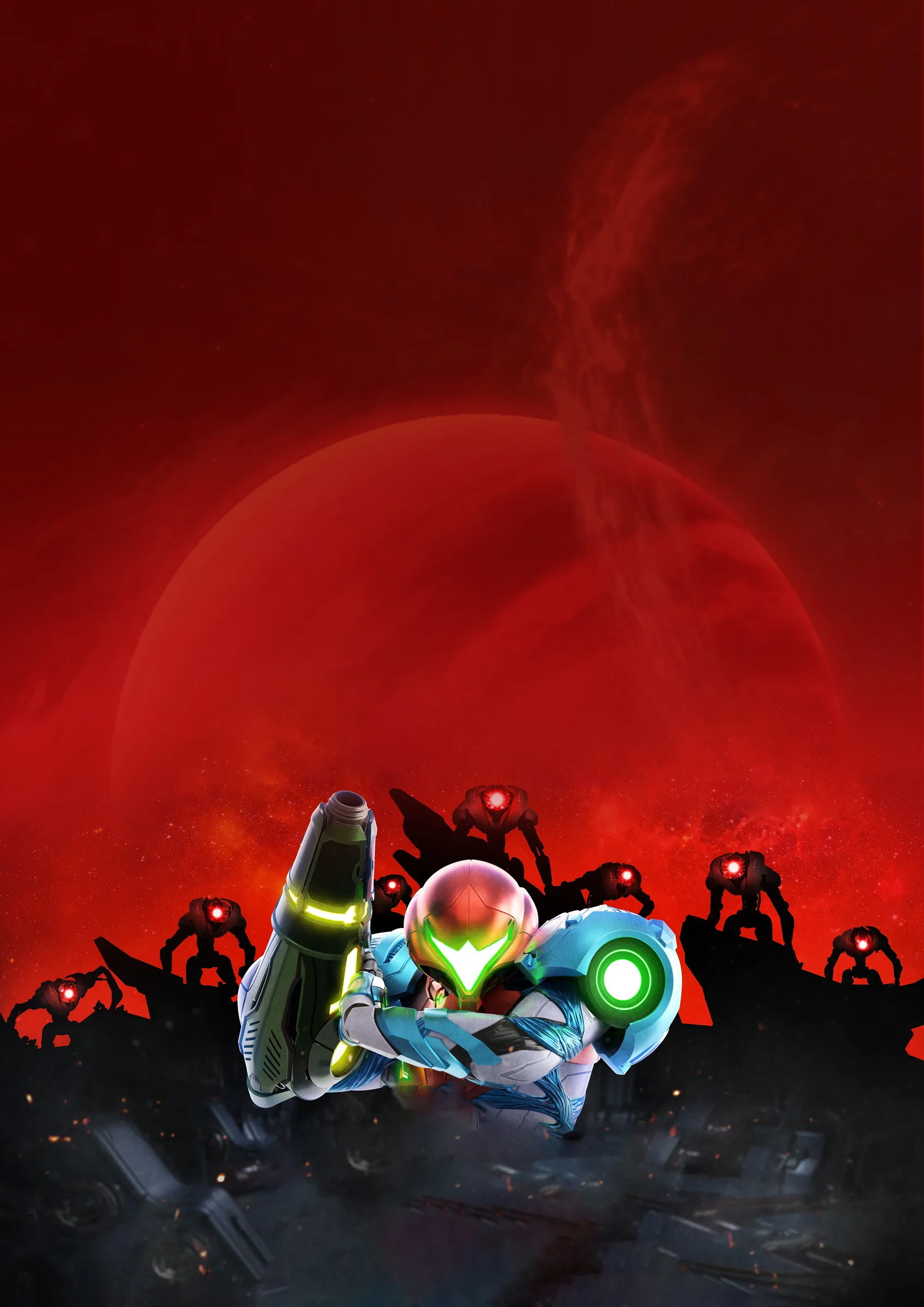
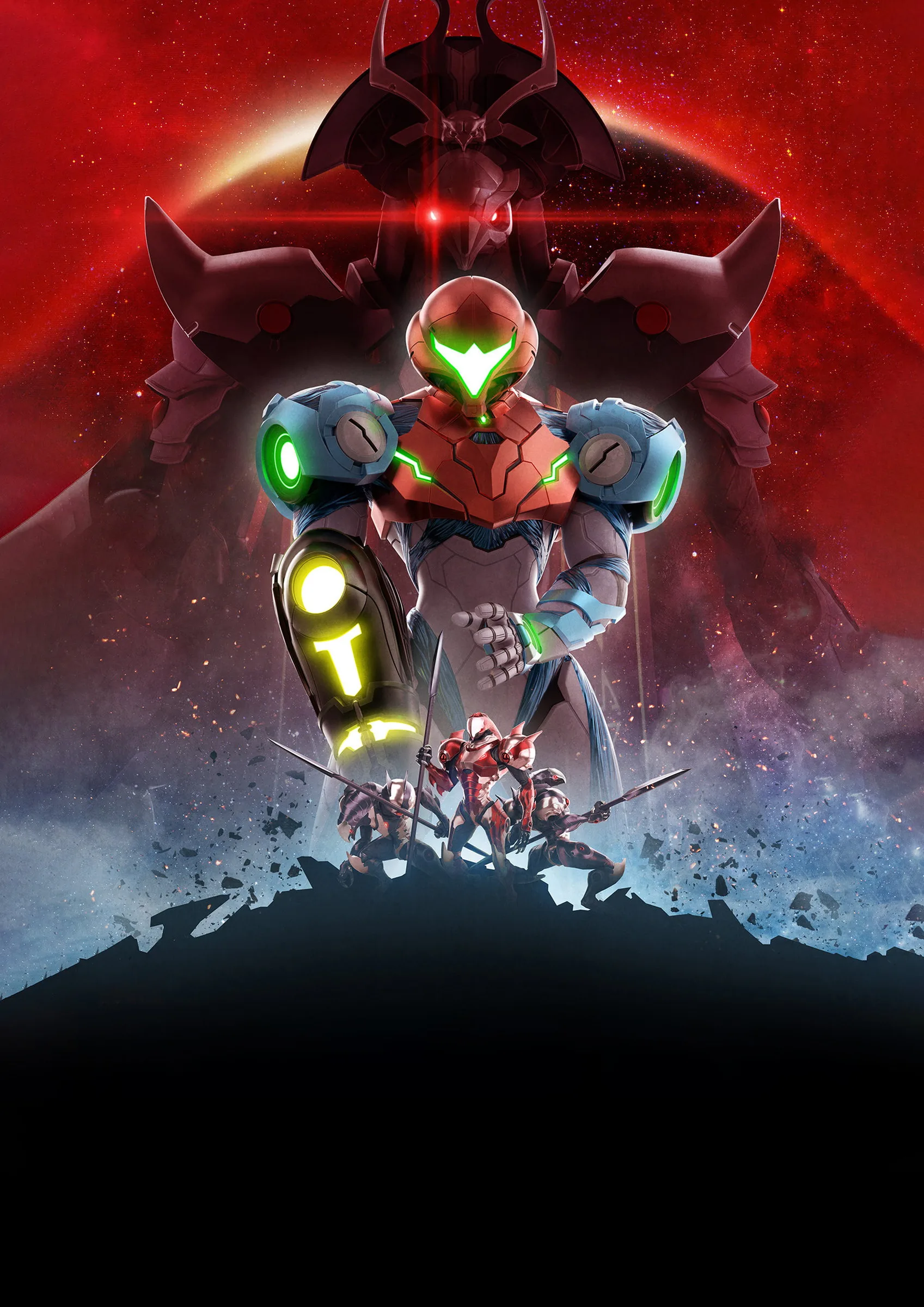
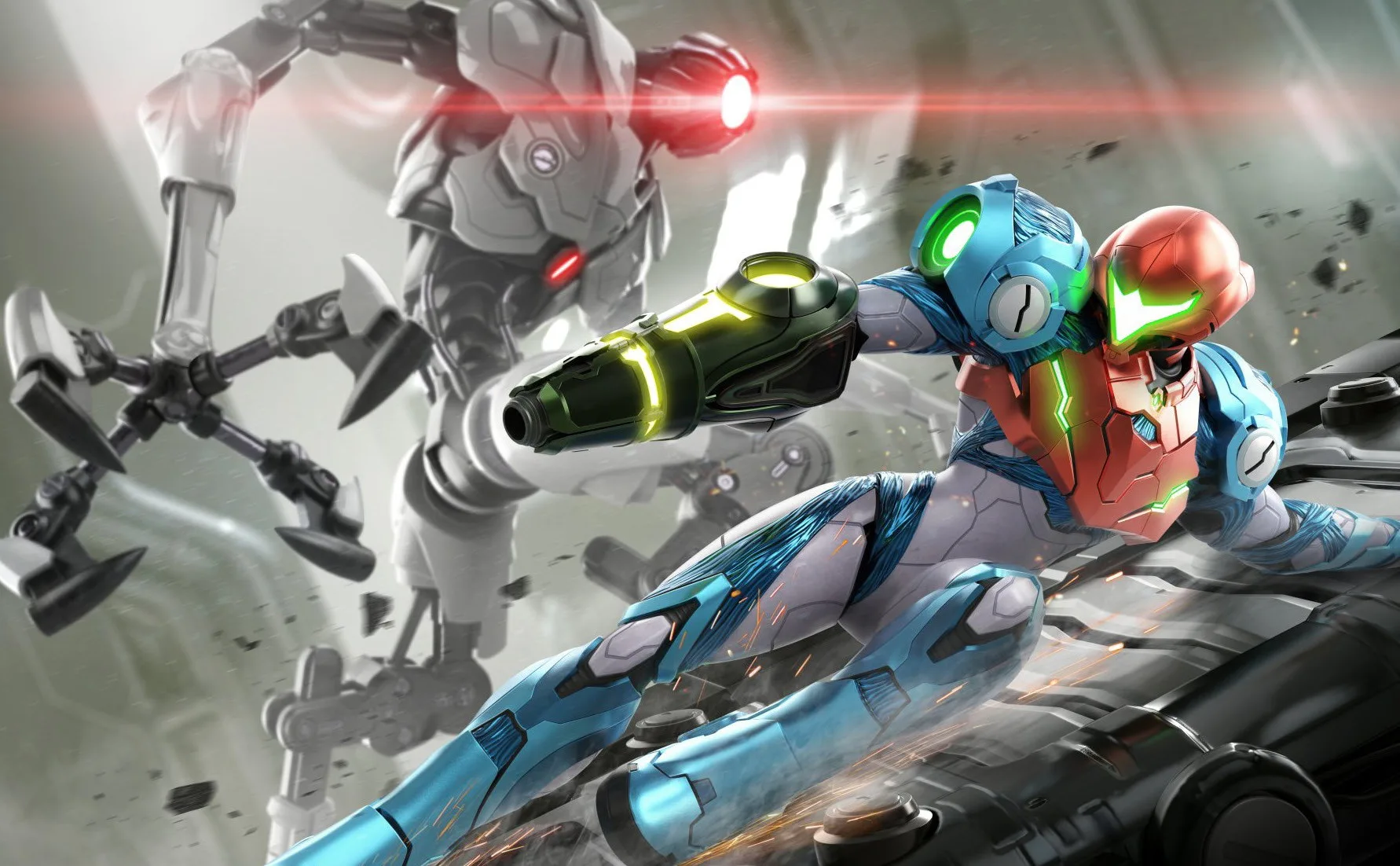
IN METROID DREAD!
The noun “dread”, in English, describes an oppressive state of fear or worry. It’s the feeling you get both in the face of imminent danger and on the evening before a decisive exam. And in the context of the latest release in the Metroid series, it’s exactly what you learn to overcome over hours of action and exploration.
I, however, wasn’t won over easily by Nintendo’s offer. Even though I’m a big fan of the series and have finished Super Metroid about 3 times, I found it hard to justify a $50 purchase (250 lei in Romania) when the game has 2D graphics and the story can be played through in 12–13 hours without missing anything important. Luck smiled on me in April 2022, though, when Altex rolled out the sort of discounts it puts on in months with low sales volumes: I managed to pick up Metroid Dread for 202 lei. At the time, I couldn’t find a better offer even on the auction sites for a second-hand game.
Was it worth being tight-fisted over 58 lei and waiting six months to experience Samus Aran’s latest adventure? For the most part, no. By the time I got my hands on the game I already knew what it was about, because I’d made the mistake of reading a few reviews and watching clips on YouTube. But by the time I actually started playing Metroid Dread, the specialist press had already turned its attention to Horizon: Forbidden West, Elden Ring and other next-gen titles showing off their polygons.
And between November 2021 and April 2022 I had more than enough time to step away from other people’s takes so that I could enjoy the adventure without any outside pressure.
When Metroid Dread launched in October 2021, plenty of critics rushed to nominate it for Game of the Year – a distinction it ended up winning in the action/adventure category at The Game Awards 2021. What’s more, speedrun enthusiasts (or rather professionals) sang the praises of the Spanish studio MercurySteam’s production. Apparently the game has something for every kind of abandoned-space-station explorer: action, suspense, a straightforward, well put-together story, little puzzles, ambient music and hundreds of secrets waiting to be found in every corner of the map. And if you learn a few tricks, you can reach the end screen in under an hour.
THE HARDEST METROID IN THE SERIES...
Metroid games are hard to describe in words. You can talk about frantic action and exploration, but you can’t quite put across the fluidity of the controls and how it feels to throw yourself into intense battles alongside Samus. And this time MercurySteam and Nintendo have pulled off the impossible: they’ve refined what already seemed perfect.
If you’ve played Super Metroid or Castlevania: Symphony of the Night, you already have a clear idea of how the characters handle. Well, everything is taken to the next level in Metroid Dread: Samus is more agile, more responsive to quick button presses and better able to take on whatever is thrown at her. To tip the balance, the level designers and programmers made sure to raise the difficulty and bring in new enemy types. So Dread becomes the hardest game in the entire Metroid series.
And this also makes up for my gripe about the relatively short length of the game. My favourite YouTube reviewers were talking about 12–13 hours. howlongtobeat.com mentions a range of only 9 hours for the main story. But the way it’s timed only counts successful attempts and leaves out the pile of failures that make you replay whole stretches of a level or sections of a fight. Officially, my completion time for Metroid Dread is 13:12:44. But if I add up the 263 times I bit the dust alongside Samus, we’re looking at a real playtime of 23:19:29. Maybe an hour of that went on the menu, or on leaving the console running while I looked up tips for certain boss fights.
A total playtime of 22 hours isn’t bad at all, and more than justifies the investment. Besides, I can always replay the game on a high difficulty setting – for my run, I went with “normal”.
A KIND OF
2.5D GRAPHICS!?
Before I get to the graphics (the last of my gripes), I want to point out that the increased difficulty comes with small compensating advantages that make your life easier. For instance, health and missiles recharge far more readily and need less grinding/farming than in other Metroid games.
And when you’re wiped out in a fight, the point you resume from is the very room before it. Unlike Super Metroid, you’re no longer punished with a trip back to the save points, and there’s more leniency when it comes to repeated attempts.
I could even say that being able to immediately retry a boss kill can be addictive – because there were plenty of moments when I got stubborn with myself and said “this time I’ll do it”. In other words, the extra difficulty comes with smoother controls and a gentler checkpoint system.
And yes, Metroid Dread goes back to its 2D origins… with a sort of 2.5D that brings out the depth or pulls the camera closer at the important moments. There are numerous fights where the perspective shifts to give you a more immersive and cinematic experience. But the depth on show relative to the backgrounds is an illusion, there just to tickle your eyeballs a little with spectacle: movement is still on a single plane. If you want to dodge an attack by stepping to the side, you’ve got the wrong game. That’s no bad thing at all for a Metroid title: the limitations are an advantage precisely because there are countless ways of reaching the same point. At first Samus can only jump, run and pull off spectacular slides that can get her out of tight spots. Along the way, the abandoned-space-station explorer learns to curl into a ball to squeeze through narrow gaps, to run fast enough to smash through obstacles, to cling to walls to reach areas that were off limits before, and to jump repeatedly in mid-air (the famous Screw Attack). For the most part, the powers and extras added to her cos- tume are the same as the ones we find in Super Metroid. But their handling is much more refined in the work of the lads at MercurySteam – so you can pull off combinations of moves and abilities that weren’t possible before. Samus’s real superpower isn’t dropping bombs, it’s agility.
What’s more, Samus can now parry attacks – a useful mechanic over the course of the game that tests your reflexes and pushes you to use a defensive manoeuvre for an offensive end. You can ignore the ability entirely, but the final battle will force you to prove how quickly you can react and counter attacks. On top of that, being able to escape fatal blows is a bonus that saves a lot of time.
But back to the graphics: they’re absolutely superb. It may not have millions of polygons, but it manages to put across the faintly sinister atmosphere of danger lurking in every corner of the ghost space station – and let’s not forget that Metroid takes its inspiration from the Alien films. At the same time, the colours draw you in and encourage you to keep exploring. Each area of the map has its own visual identity and palette, so it’s impossible to get lost (and yes, that’s a jab at the first game in the series). On top of that, the animations for Samus and the enemies are worthy of a game released in 2021, and they successfully mark the evolution of a series that invented and defined its own genre.
The fact that I hesitated to buy the game at launch price because of the 2D graphics is exactly the sort of preconceived opinion that helps certain studios keep their supremacy… while dragging the indie scene down. Metroid Dread isn’t AAA, but it isn’t indie either. It doesn’t come promising any technological revolution, but it offers the most refined experience in its genre instead. And the price of
200–250 lei is justified insofar as the game delivers on its promise to be good. Given that it’s a Nintendo exclusive, we probably won’t see any spectacular discounts – but for anyone who wants to try Metroid Dread, the studio offers a free demo covering the first hour of play… and Switch emulators for PC and Mac have become pretty advanced.
A STATE OF
UNEASE
FEAR OF THE
UNKNOWN
A significant contribution to the sinister atmosphere comes from the soundtrack too, which takes a slightly different approach to music. If earlier titles gave you tunes you could hum, now you're more likely to get ambient compositions that amplify the unease and the fear of the unknown.
The music in Metroid Dread entices us with synthesiser sounds built on polyphonic arpeggios, modulated to convey a sinister atmosphere. Even the violins and string ensembles have been run through a chain of effects specific to electronic music. Think of the soundtrack to the TV series “Stranger Things”, add an orchestra of synthesisers and inject a healthy dose of suspense. The result is far too ambient to stick in your head, but it ful-
AND fils its role of making you feel anxious, under pressure and permanently rushed.
Out of context, the music doesn't make much sense – if you try listening to it on its own in your free time, you just end up on edge for no reason. But when the soundtrack and the scenes it was written for line up the way they're meant to, everything falls into place.
Speaking of things falling into place, the level design is a masterclass in its field. Everything connects so well that you'll never get lost. Even the decisions that take you off the seemingly predestined path still land you where you need to be. Every section of the space base is put together with such craft that you'll be on the right road wherever you go. And that's because every step is planned so meticulously that the illusion of freedom stays just that – a satisfying illusion of the moment.
A pretty good metaphor for a few of the game's late revelations, which I'll leave you to discover for yourselves. The transitions between map sectors, on the other hand (done via lifts, cable cars and portals), deliver a disjointed adventure despite the obvious linearity.
Samus's goal is to win her powers back and prepare for the final confrontation – and I'm absolutely knocked out by the way those abilities are scattered around and by the immediate advantages that discovering them offers.
What's more, there are countless spots where experienced players can exploit small gaps that give access to far more advanced sections of the story. If you really know what you're doing, you don't have to fight every battle or take the long way round. But however you approach progression, you'll end up in the same place and you'll never get stuck. It's a Metroidvania staple, but one that shows maturity and mastery in Metroid Dread.
SEE YOU NEXT MISSION!
.
To close out the article, I'll talk about enemies and battles. For 95% of the adventure, Samus is vulnerable and fragile. Sure, health points and missiles are more plentiful and easier to get hold of than ever. But even the weakest enemies can get the better of you if you don't pay them enough attention. And as you progress, you'll find the difficulty level climbing even for common monsters.
The real spectacle, though, comes during the boss fights: genuine dance scenes where you have to learn the choreography through lightning reflexes or repeated attempts. And when I say 'choreography' I don't necessarily mean quick-time events that ask you to press certain buttons at the right moment (though a few of those do show up towards the end). Each sector baron has his own repetitive habits and attacks in cycles that keep changing shape. Either you pick up the rhythm on the fly, or you learn from failure.
There is no other way.
In its first stretch, Metroid Dread gave me the impression that it was a small homage to other games in the series. But after the first quarter it manages to carve out an identity of its own through fresh elements at the intersection of the ingenious battles of Mega Man and the rhythm-breaks that punctuate the final Dracula fights in Castlevania. And the most interesting part is that the two recurring clichés of Metroid games are entirely absent: super-antagonist Ridley and the Metroids themselves. Chronologically, the story takes place after Super Metroid (1994, SNES) and Metroid Fusion (2002, GBA). It could have pulled a Disney on Star Wars Episode IX, but the path chosen is the right one, offering a believable continuation of Samus's story. And I can only respect that.
And yes, the final battle is a genuine test of will and reflexes. It involves the ability to learn (because you will clearly lose several times) and pushes you to manage your resources carefully. Fortunately, you don't have to grind to be ready – however few health points and missiles you have, they'll prove sufficient thanks to a generous refill system between battle phases. But that generosity comes at the cost of a level of difficulty never before seen in a Metroid game.
I have to admit, I spent more than four hours trying to learn the final enemy's moves. That's because you have to approach it methodically and know its weaknesses at every moment.
If you choose to overwhelm it with missiles, you're guaranteed to lose. On the first day of the fight, I sat up late into the night studying its every move. And on the second day, even though I knew how to handle every situation, I still needed about 20 attempts to pull it off. But that's what it's all about: an honest victory, earned over time. That's why I came to love games towards the end of the 1990s, and it's why I write for a magazine called GRIND.
Those are the wins that become memorable over time.
And once I put the controller down, I understood perfectly well why the game is called Metroid Dread. I hope you get to make that discovery too.
Vlad Costea
0 votes
Scroll down here and stay on the page for at least 30 seconds to vote.
Pick a score from 0 to 10 (halves are allowed).